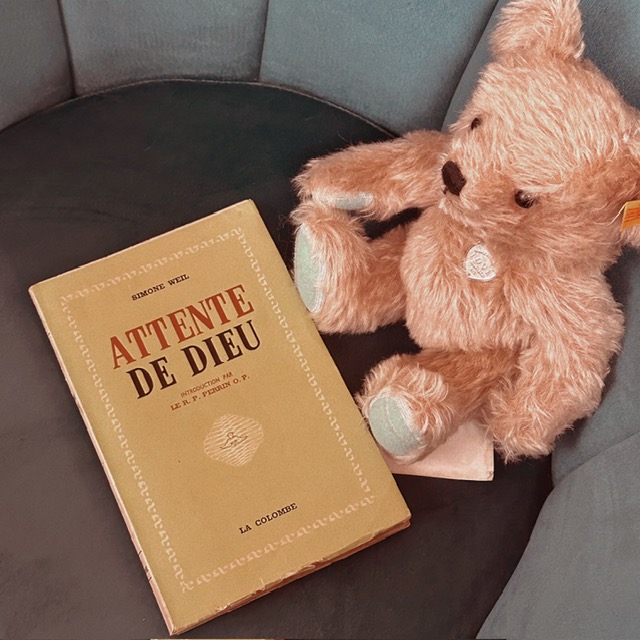
A ceux qui voudraient faire grief à Simone Weil, sur- tout présentée par un prêtre, de ses erreurs, de ses exagé- rations, volontiers je répondrais : « Que lui lance la pre- mière pierre celui qui n’a jamais péché contre la lumière, qui en a suivi toutes les exigences, qui a été jusqu’au bout fidèle! » (John 3:20, 8:7)Le mot immortel du grand converti d’Hip- pone remonte à mes lèvres : « Que ceux-là s’emportent contre vous, qui ignorent le prix de la vérité…
To those who would criticise Simone Weil, presented above all by a priest, for her errors and exaggerations, I would gladly reply: “Let the first stone be thrown at him by the one who has never sinned against the light, who has followed all its demands, who has been faithful to the end! (John 3:20, 8:7)
The immortal words of the great convert of Hippo come back to my lips: “Let those be angry with you who do not know the price of truth…
La joie d’avoir trouvé, ou plutôt d’avoir reçu la vérité, doit-elle nous rendre insensibles à la sagesse douloureuse et incomplète de ceux qui cherchent en gémissant et qui tâtonnent dans leur ascension? Fr. J.-M. PERRIN, Dominicain.
Should the joy of having found the truth, or rather of having received it, make us insensitive to the painful and incomplete wisdom of those who groan in their search and grope in their ascent? Fr. J.-M. PERRIN, Dominican.
The preface by Fr. Perrin, which is included in the Japanese translation, seems to be only available in the first French edition, and I bought it in a second-hand book, but it was not included in the book,
I bought it every time it came out on Kindle, and I tried to buy it several times, but I couldn’t get it because it couldn’t be sent to Japan or something, but eventually it arrived. It’s a book about ‘la sagesse’ (wisdom), ‘douloureuse’ (pain), ‘et incomplète’ (and incomplete), with ‘pain’ sandwiched between the incomplete and the wisdom. This is what I wanted to know.
C’est pourquoi j’ai intitulé ce livre Attente de Dieu, j’ai essayé par ce titre de traduire le « en upomèné », (Luke 8:15, 21:19)en patience de l’Evangile, un des mots que Simone savou- rait le plus, peut-être parce qu’elle y retrouvait une cer- taine saveur stoïcienne, mais plus certainement parce que c’était sa manière de se donner à Dieu, de s’en remet- tre à lui de tout rester en attente et en disponibilité totales.
That’s why I called this book Attente de Dieu (Waiting for God). With this title I’ve tried to translate the Gospel word “en upomèné”,(Luke 8:15, 21:19) in patience, one of the words that Simone liked best, perhaps because she found in it a certain Stoic flavour, but more certainly because it was her way of giving herself to God, of entrusting herself to him, of remaining in total expectation and availability.
I could also understand why Fr. Perrin, who is included in the Japanese version, chose “Attente de Diew”, a passage from Weil’s favourite Gospel.
la sagesse douloureuse et incomplète
For who has known the mind of the Lord, so that he may instruct him? But we have the mind of Christ. >>>>>>1st Corinthians : 2 : 16
The words of the Apostle Paul to the Corinthians. In this context Paul talks about wisdom and knowledge, pointing out the limits of human knowledge and understanding, ‘imperfect wisdom’. Other examples.
For my thoughts are not your thoughts, and your ways are not my ways, says the Lord.For just as the heavens are exalted above the earth, so also are my ways exalted above your ways, and my thoughts above your thoughts. >Isaiah : 55 : 8 – 9
Oh, the depths of the richness of the wisdom and knowledge of God! How incomprehensible are his judgments, and how unsearchable are his ways! For who has known the mind of the Lord? Or who has been his counselor?>>>-Romans : 11 : 33 -34
So similar stories are repeated throughout the Bible. The repetition changes slightly after the coming of Jesus, when Paul answers the question, “Who says that we know the mind of the Lord and counsel him?” by saying, “But we have the mind of Christ. This means that Paul himself and Christ’s followers are saying that by God’s grace they can accept Christ and respond to His teaching. So while Paul recognises that knowledge and wisdom are limited, he emphasises the importance of trusting in Christ and following his teachings.
As for Simone Weil’s “Waiting for God” (Attenet de Dieu), an edited version of a posthumous manuscript, I believe it is only possible because of this preface by Fr. Perrin. Having a priest like Fr. Perrin, who did not neglect his work with the poor, confirms that we have ‘the mind of Christ’.
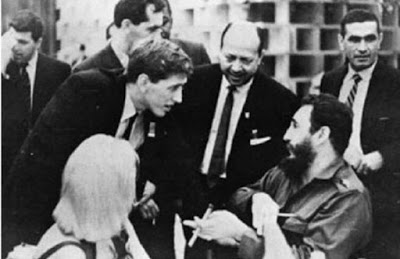
As an aside, I had written about ‘imperfect wisdom’ in 2016, in reference to the Bobby Fischer chess story, but I can’t quite remember why I wrote it up again, as it was never mentioned. It may be that I was struggling with something about writing it down, not knowing whether to write it down as a beautiful story or a realistic one, or even my ‘true intentions’.
I can only remember why it was chess.
Chess can be played against each other, as in Fischer’s case, or it can be played as an artistic form of ‘chess problem’. In mathematics there is also such a thing as uniqueness of solution, but the difference between a chess game and a chess problem can be divided into uniqueness and non-uniqueness. In ordinary chess, for example, if there are any number of moves for White, it is a matter of depreciation. In chess jargon this is called a dual. Chess problems are specific to the art, and sometimes the only condition is that only uniqueness can be found in the filling. If any other move is found, it is ‘incomplete’.
Uniqueness can also be found in the Bible. Of course it is only a ‘side issue’, as it depends on the context and historical background, but Judas still has to betray the story, John the Baptist has to warn Herod, and Jesus has to be executed. Any other option would certainly cease to be ‘holy’. So there are things that must not be moved. If we ask whether there is uniqueness in literature and philosophy, this may be the ‘incomplete wisdom’. Some are aware of the uniqueness in it, others are completely removed from it. Oscar Wilde’s Salome follows the uniqueness of what John the Baptist was like, with Salome being executed at the end. So does the death of Jane Eyre’s best friend. We are aware of the uniqueness of the house of God. What about Weil, some of which is unorthodox as an idea, but I think there is something completed by Father Perrin’s comments and criticisms.
There is an incomplete wisdom around uniqueness, something that cannot be reached by going around it. But it is painful because it is an attempt to move forward. To the joy of being human, as it were, “Attente de Dieu”.
****
****
This photograph shows chess player Bobby Fischer talking to President Castro. (Chairman Castro spears Fischer before the tournament).

 Chris Kyogetu