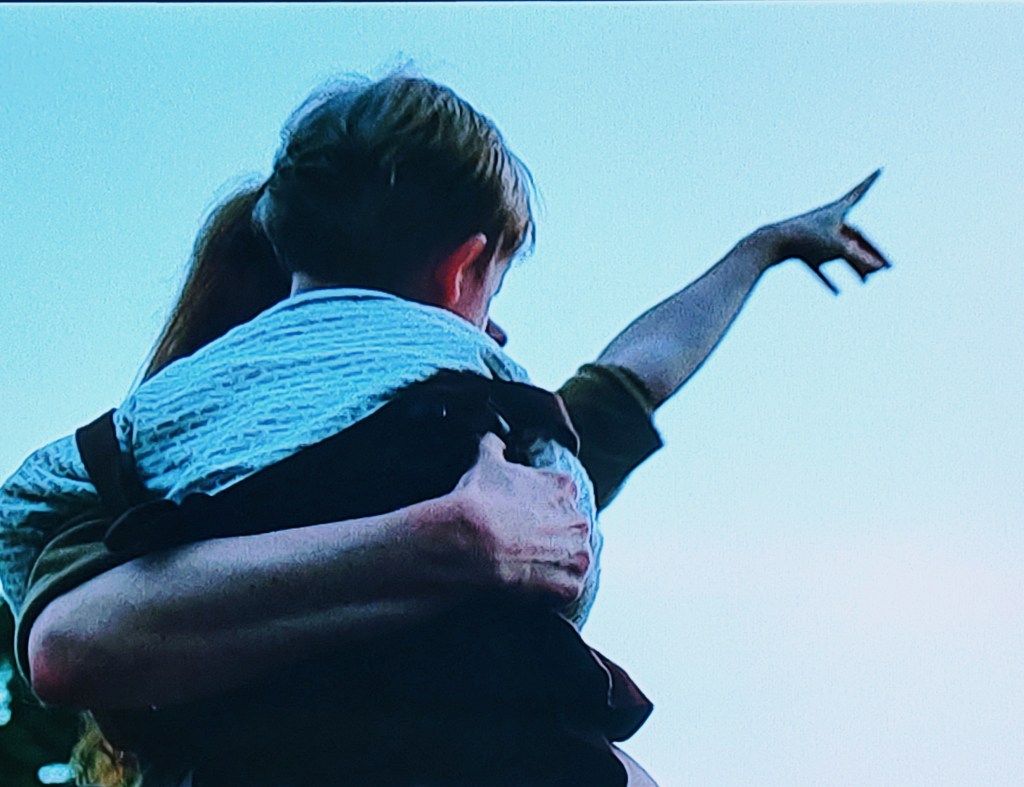
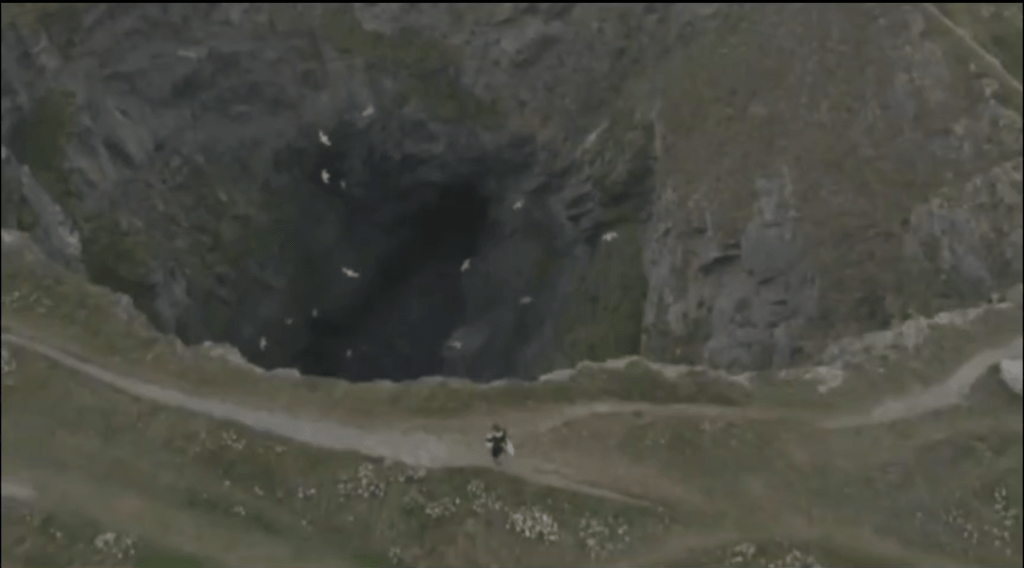
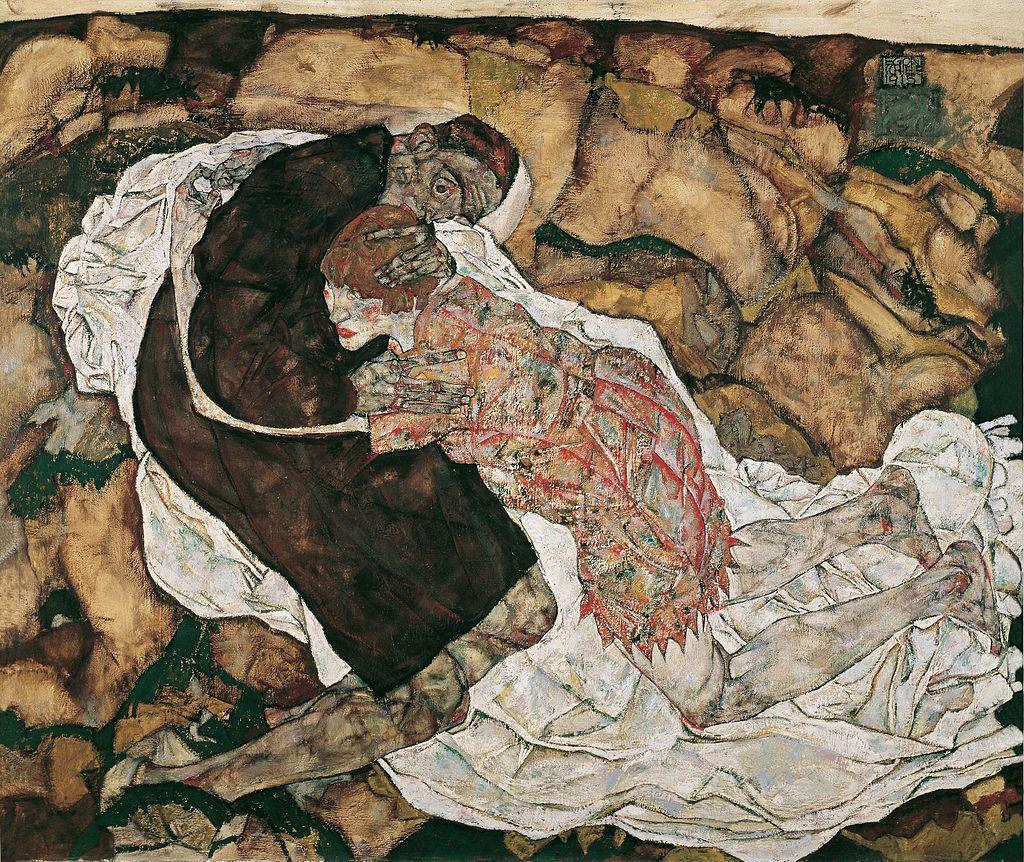
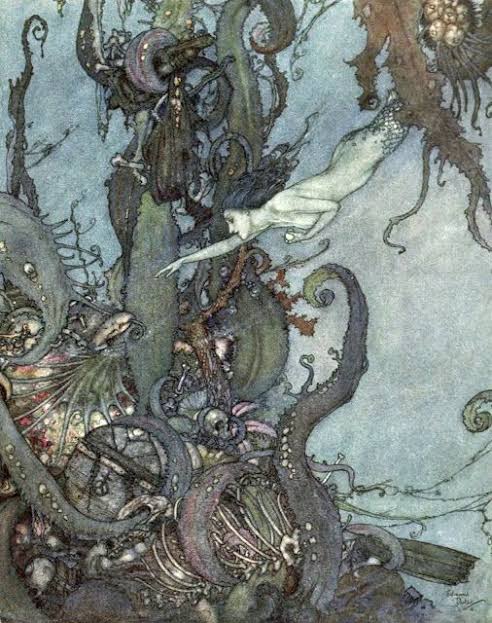
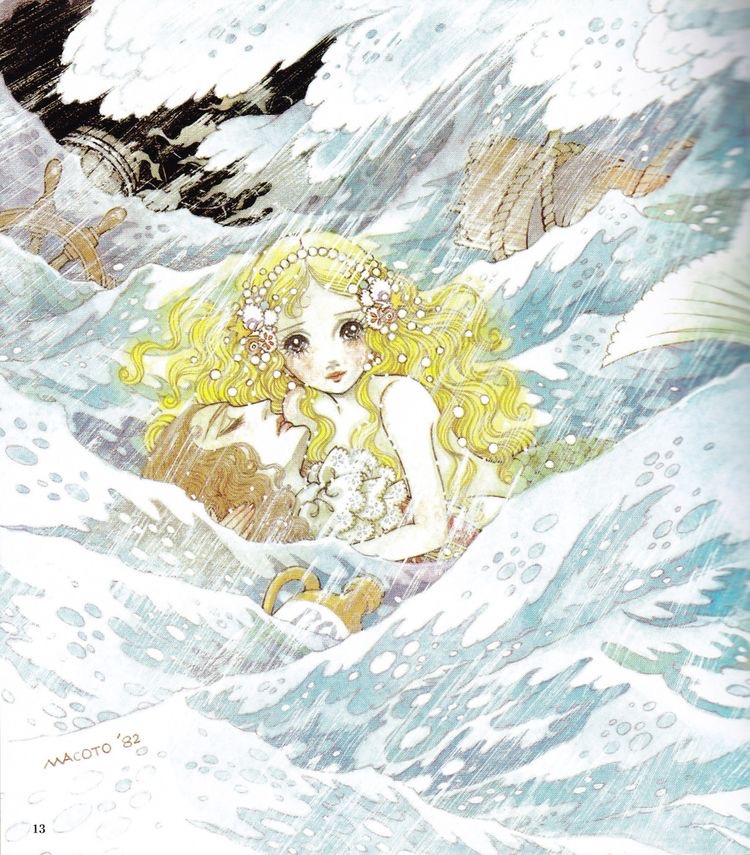
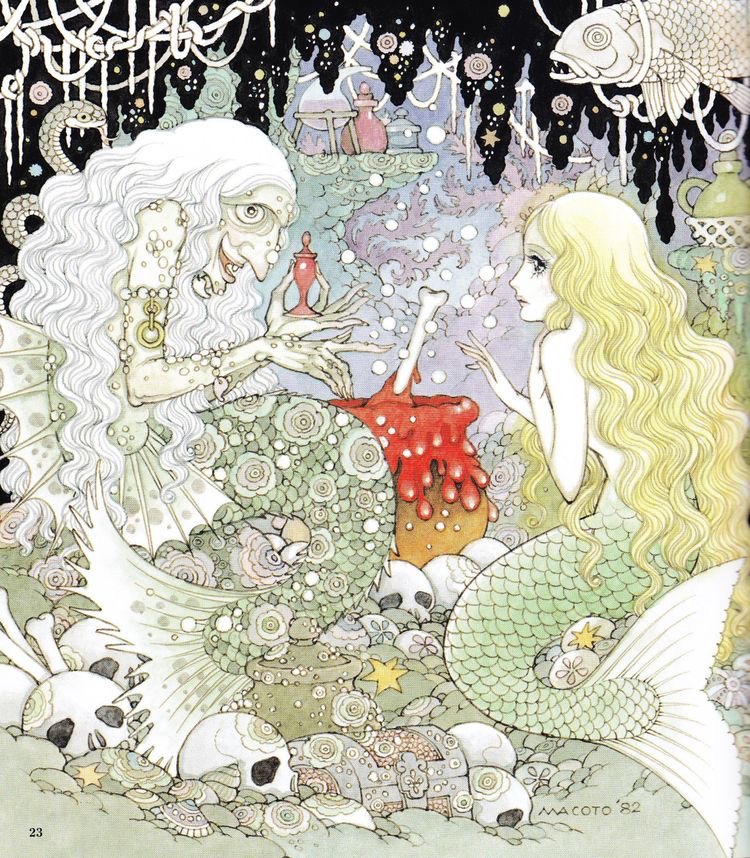
The Little Mermaid and Hans Christian Andersen.

the little mermaid Makoto Takahashi
If the soul lives in evil, it dies (abbreviated).
The soul becomes evil when it retreats from God,
It becomes righteous by advancing towards God".

Augustine, Reading from the Gospel of John. 19

Introduction.

Hans Christian Andersen is one of my favourite writers, although there was a period in the 80s and 90s when a lot of interpretative books were published that were too biased towards Freudian psychology, but even Freud was used in a superficial way and analysed in a ‘this is the real Andersen’ way, which was disturbing to me as a young child. He was ahead of Freud and pre-Jungian psychology in terms of the soul’s preference for sanctity, although for him there was a natural hatred of women and a contradiction in the soul’s attempt to approach God as a Christian. As I grew older, I may have gone through the four seasons of life. Spring, summer, autumn, winter and again in the milder seasons when he could see the traces of his soul. I believe that Andersen was blessed by God and left something important for us as Christians. In this article I will focus on The Little Mermaid and critique what I felt certain about, comparing my analysis with Andersen’s autobiography.

Ⅰ My Pilgrim’s Progress is a beautiful story.

How does one perceive God when misfortune strikes? Does it make you angry that you don’t believe in God, or do you seek salvation from God – Hans Christian Andersen was neither. There is a fairy-tale purification or sublimation in Andersen’s work, as if misery were a stage for the soul. His style as such did not drown out the Jesus-like love in the picture books sold in Japan, even when the Christian elements were removed. The characters’ actions and love are often accompanied by self-sacrifice. As a child I wondered why kind feelings were so beautiful. The world he radiated was beautiful, even if it was accompanied by pain and poverty.

Andersen’s life was not privileged. Not only was he poor, but his grandfather was a stereotypical schizophrenic and his grandmother a pathological liar. We don’t know who his father was, and as for his mother, she had a bad attitude and bad masculine habits. He was torn between loving his mother and despising her. Andersen had a fantasy wall about his grandmother. When his classmates mocked him for being poor, he would reply that he was really a child of the nobility and that an angel of God would come down to talk to him. 

Otherwise, the friendship would not have worked. If the stories of unhappiness are true, it is also a terrible way to introduce himself. For a child from such a background, it becomes a story about the family rather than an introduction to oneself. If I am a ‘phenomenon’ made up of nature and the lives of several people, as Kenji Miyazawa sometimes described the ‘phenomenon of the I’ in his AN ASURA IN SPRING, then I am in the middle stage of the experience of the ‘I’, which is an undifferentiated state, leaving the essence itself to the inner world and not to the values of others. It is not that one is positioned by others as a ‘poor person’, but that one must believe that the essence is growing in order to stand. (We want to believe) Believing in the essence leads to believing that God loves you. Deep inside there is enough mystery to bring you closer to God, but when you are young you don’t even know what it is. If it is too early to talk about The Light, once a writer’s talent is there, he or she has to lie in order to remain socially relevant. Every child in such a situation knows whether it will be a flowery embellishment or a lie to get closer to mediocrity. In the first place, it is socially necessary to tell a comfortable story, rather than a background that only makes those around you uncomfortable, or to be thought of as a beggar. Making up stories may be a way for the mind to show its primordial ego. The fate of the ‘light’ story depends on what it protects from the things that hurt it early on.

have‐nots

Andersen seemed to understand best the ‘lies’ he told himself as a child. He knows that the poor cannot live otherwise, and yet he represents punishment without pardon. In The Red Shoes, the girl Karen went to buy Communion shoes, but kept cheating her adoptive mother, who had poor eyesight, by buying her splendid, beautiful red shoes. The girl forgot how much she owed her foster mother for raising her and started going to balls instead of looking after her. An angel put a ‘curse’ on Karen that made her dance all the time. Karen became tired and bitter because she could not stop dancing. She asks the official who beheads condemned prisoners to cut off her legs. Karen really does get her foot cut off. The story is said to reflect Andersen’s decision to live as a bachelor, but it also seems to be a reflection on his life. The girl cherished her red shoes, which were originally made from pieces put together. It was her adoptive mother who threw them away. Things that were cherished in childhood are indeed beautiful. Even if they were beautiful in nature, they must be punished for their mistakes. Even if you choose a beautiful red shoe as compensation for the most precious thing, it still represents the harshness of having cheated.

Although much of Andersen’s work deals with innate ‘destiny’ and self-sacrifice, it should also be noted that he lived and worked before the birth of Freud and Jungian psychology. Perhaps he would have known of Descartes’ ‘innate theory’. What would he have made of the idea that the idea of being born was already given to him by God because he was a ‘poor’ man with dysfunctional parents? Perhaps he was certain in his ‘heart’. Perhaps he was conscious enough to talk to God. However, as for that which cannot be divided by the innate theory, perhaps he had a desire to be changed by the ‘magic’ of a mermaid becoming a human being. Or it could be the belief that there is no way to change one’s identity without magic. Andersen had a beautiful singing voice and wanted to become an opera singer, but was frustrated by a voice change. Knowing this upbringing, many people will probably agree with the fact that the Little Mermaid loses her voice instead of becoming human. The Little Mermaid, a girl who lived an unconscious and given life in the water, trying to become a human adult in exchange for her voice, overlaps with Andersen’s childhood and the experience of being robbed of it in order to become an adult. For him, losing his voice was the same as becoming a “have-not”.

Ⅲ Temporary me and fate

His fairy tales do not use magic just for convenience; for him, his father was always the Lord, God. It is certain that for him, whose parents did not function, the teacher of good and evil was the Bible. All his works, like Augustinian theology, reflect the difference between what the soul gives to the body and what God gives to the soul.

。When will the transient ‘I’ become ‘Who’, and his fairy tales show the stages of this soul. Among them, ‘The Little Mermaid’ is a well-known love story, but it also represents the unworthiness and ‘poverty’ of human beings in relation to mermaids. It is a story like the sequel to Fouquet’s ‘Undine’, where Undine was given the sacrament of marriage by a priest, but the mermaid was not. The priest who administers the sacrament does not appear. Undine was betrothed to a being of status in the human world, and if the man broke the marriage promise, Undine had to kill him. The severity of the punishment for betrayal is also seen as a religious punishment. Similarly, the mermaid princess is under a spell to continue living as a human if she can marry a prince of status. Water nymphs like Undine represent the ‘place of absolute nothingness’ where water pre-existed in God’s creation in Genesis. She was born out of the imagination of an underwater world that was never written about. Undine had to kill her spouse, but the mermaid princess chose to disqualify herself even if she did not marry the prince.

The mermaid can see the human world on her 15th birthday, but each of her sisters has seen a different world. This is similar to how baptised Catholics see a different world as they go through the same stages. Alternatively, in Jungian terms, the water could be interpreted as the unconscious world. The soul of the mermaid princess learned to love like a human, but the price was too high. The mermaid princess was given human legs, but every time she walked she was in great pain. For Andersen, who had a string of broken hearts, it was impossible to write about the fulfilment of adult love, but the dynamic of love is accompanied by pain, and this is reflected in the reality of the transition from girl to adult as a fairy tale and in the Christian teaching of ‘those who enter the kingdom of heaven’. This may have included the desire for women to love themselves, but he sublimates this desire as a fairy tale.

As if the author had forgiven the world, the mermaid princess, a poor creature, is blessed by God at the end. Because the story was written for an innocent child to read, the author’s upbringing was removed. And It was written in a clear style and in a beautiful mermaid world. The prince mistakenly believes that another woman saved him, when in fact it was he who saved the prince. For an ordinary woman, the end of a love affair would have been a passing phase in her life, but as a mermaid’s ‘fate’, the time given to her transient self, who had changed her identity, was short. This meant that when her one-time love ended, her life would end. It was so cruel that the mermaid’s sisters made a deal with the witch that if she killed the prince, she could return to being a mermaid and was given a knife, but the mermaid could not kill him even if she was given the knife. The Little Mermaid could not kill the prince, but she did not end up in a bubble. In the original story there was a sequel: the Little Mermaid became a genie. The mermaid princess, now a genie, finally kisses the prince’s bride on the forehead and leaves. The mermaid princess is told by other spirits that if she does good deeds for 300 years, she will eventually receive a soul that will never die and be entrusted with the never-ending happiness of mankind. If she finds a child who reciprocates her parents’ love, the Mermaid Princess will shorten the time she has a human soul by one year, but for every bad child she encounters and tears to pieces, she will extend it by one year.

****

What did Andersen learn from his young, transient self? In Japan, picture books were stripped of Christian elements, so many stories of The Little Mermaid ended in bubbles. That in itself was nothing but pessimism. But only The Little Mermaid, illustrated by Makoto Takahashi, included the story of how God transformed her into the daughter of the wind. I read it as a child. If we were to replace it with a modern version and compare it to the real world, it could only be a tragedy. This is not a story about a little girl who thinks dying is beautiful. Happiness is also about acquiring material things too. A healthy body, social status, family, friends, lovers, they are a mixture of the material and the sacred and cannot be dualistic. On the contrary, happiness that only enriches the soul creates a cult. Rather, fairy tales exist to nourish the inner life in a fictional world. They are not there to provide something pragmatic for today and tomorrow. Andersen certainly knew the reality that the poor can only achieve happiness through ‘death’. He did not remove this complex of poverty from his autobiography.

He went from a ‘transient’ existence to being loved even abroad as a ‘lucky grace’ through his fairy tales, which, like his creations, had an underlying sacredness. Fairy tales are not meant to be put into practice immediately, even if there is a lesson to be learnt. Even the faintest memory brings us closer to the love of Christ in which the author walked. But that may be just before the entrance to heaven, which will appear when we realise it from the fairy tale. The poor will not be saved tomorrow, some days I want to be saved and some days I want to help others. Even if you reach out to them, some days it doesn’t work. Some days you do something good and it backfires and you are resented. Injustice is not always condemned immediately. The right thing is not fruitful. Sometimes prayers lose their substance because it gets harder and harder to pray for miracles every day. Yet there is a spark in the back of people’s minds that wants to talk to God. Surely everyone has it. How can you hear it, the happiness of acquaintance, gratitude and much joy? trying to find the light on the other side of the needle’s hole. (Matthew 19:16-30)

He lied to himself as a child that he was a noble being who could talk to angels, and he was honest enough to make even that a creation. He made no attempt to hide himself. Psychoanalysis would only be able to analyse the rough outlines of the author’s desires. That is why there are so many analyses of the resentment of a lost love. To return to the story of the Little Mermaid, the book is full of descriptive beauty that I did not recognise in the picture book. He must have travelled and loved the world.

Last  Pilgrimage

He lied to himself as a child that he was a noble being who could talk to angels, and he was honest enough to make even that a creation. He made no attempt to hide himself. Psychoanalysis would only be able to analyse the rough outlines of the author’s desires. That is why there are so many analyses of the resentment of a lost love. To return to the story of the Little Mermaid, the book is full of descriptive beauty that I did not recognise in the picture book. He must have travelled and loved the world.

—-The mermaid lived in a sea as clear as crystal – far out to sea, where the water was as blue as the bluest cornflower. Don’t think it’s just a cold expanse of white sand at the bottom of the sea. There are strange trees and grasses, their stems and leaves swaying. Even the slightest movement of the water makes them sway as if they were alive. The fish, large and small, all swim swiftly between the branches, like just as birds flit about on land. —-From a world more dreamy than earthly, the mermaid princess chose love. Love makes us happy and makes us grow, if only temporarily. Even if love is not fruitful, it shows the value of loving. Why she was able to love the prince so much cannot be told. The story shows that no matter how hard it is on earth, you can love someone no matter what their status is.

Fairy tales take you to a place where no outside voices can reach you, like underwater. When we return to reality, we hope that our formed hearts will not be forgotten. ーfor children’s. Isn’t that why, at the end, he wrote that he wanted the mermaid’s soul to be good so that it could go to the kingdom of heaven?

There is no fairy tale where you can see the subtleties of the soul as well as in this one, where the soul breathes and wonders and wants. It made me think that the soul of a man who had faith was beautiful. In his case, it was not just soul worship. What I learned from him was to write with the belief that everyone has a heart that wants to talk to God. Despite knowing the cruel reality, the soul tries to approach God’s goodness. That is why the human heart knows goodness. He travelled a lot. It was probably a pilgrimage where the ‘I’, which for him was transitory, came to understand God. He was constantly broken in love, but he wrote about loving others in his fairy tales. He wrote about love when it should have been the most incredible thing. Isn’t that power? To bring out this pure feeling, we have to take them to the fairy tales. The love of family, of lovers and of agape, To teach ‘love’, to believe in love, to give love, because only human beings can do that. Jesus also needs people’s understanding and words. I used to want God to believe that I had light in my heart. That someone else had that heart too. It is not yet 300 years since The Little Mermaid was published. The Little Mermaid’s soul has not yet reached heaven. If she is good, her day will come a year earlier; if she is bad, her day will come a year later. This is the soul’s approach to God. ―― Light visible behind the eye of the needle, So If you want to tell many people, it is like sowing many seeds.

-----------

Links to other websites

My column (in Japanese).


… This time, I focused on The Little Mermaid. Andersen has other works that do not fit into this review, such as The Shadow, but I decided to focus on them in this second instalment. The first volume is here.
The Hole of the Needle (Matthew 19:16-30).

Andersen is a Protestant.
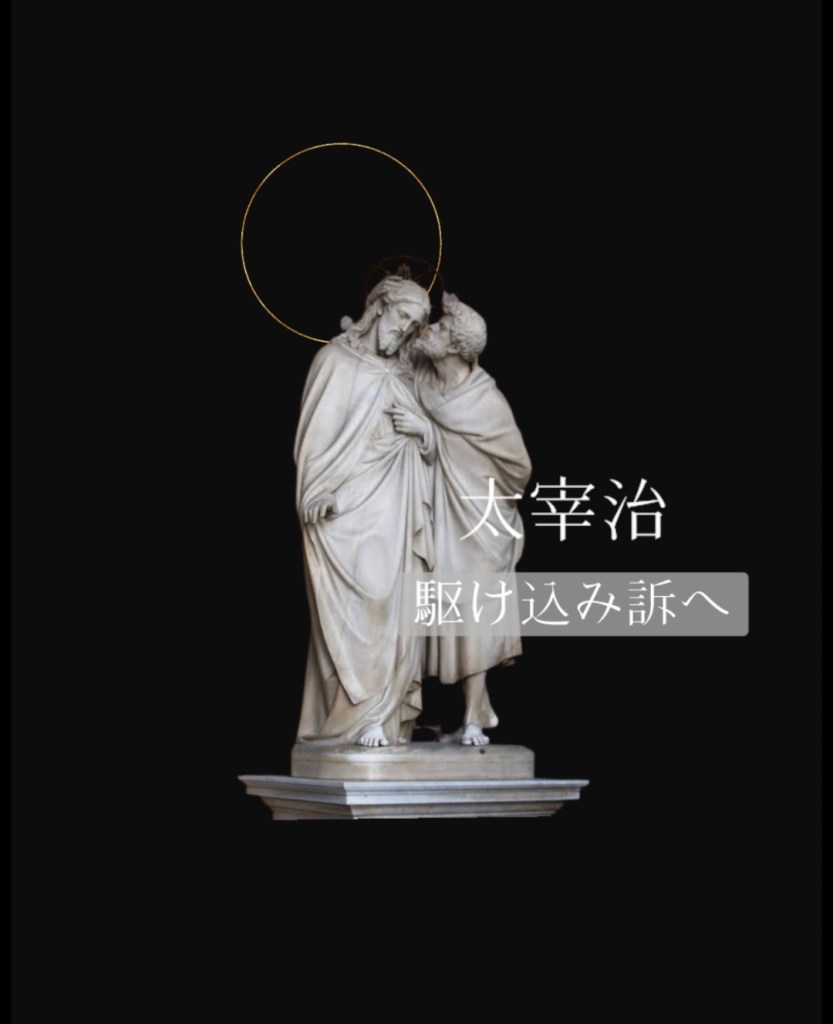
Heed My Plea Osamu Dazai

You know, wouldn't it be better if only your sincere father, who is out of sight, understood your loneliness, even if you didn't want others to understand? Don't you think so?
Loneliness is for everyone.
Heed My Plea, Osamu Dazai


  1. First:Osamu Dazai’s Heed My Plea
  2. Ⅰ.The Restoration of Leonardo da Vinci’s Last Supper
  3. Ⅱ.Osamu Dazai’s Heed My Plea and Its Resonance with Other Works
  4. Ⅲ.Judas in Heed My Plea
  5. Last

First:Osamu Dazai’s Heed My Plea

Heed My Plea by Osamu Dazai is an adaptation of Judas Iscariot’s betrayal of Jesus Christ, as told in the New Testament. In this retelling, Judas struggles with the act of selling out his beloved teacher, Jesus. Dazai weaves this story with an ease akin to a spider spinning its thread, drawing from his personal experience, just as Michiko transcribed it for him. Judas’s hesitation and inner turmoil are portrayed as though he were Dazai’s alter ego, reflecting the author’s own instability and ambivalence.

Judas, as a symbol of treachery, serves as the centrepiece of this narrative. Yet Dazai repeatedly reinterpreted his own experiences through the lens of betrayal, altering and refining his works over time, much as one would revisit a painting.

Once, many years ago, when I was engaged in painting, my teacher asked me a simple yet profound question: “When do you consider your work finished?”

This question touches the heart of what it means to complete something—a fundamental dilemma for all art.

What constitutes completion? Is it only for the artist to decide? Or does it require the recognition of others? If the work is created solely for oneself, does it even matter if it is imperfect? What do we ultimately seek—an audience, applause, friends? Or perhaps validation from God? Completion is not easily defined in a single word, but over time I began to understand that it resembles the final moments of Goethe’s Faust.

In the closing of Faust, good and evil both strive to move forward, yet time remains indifferent to their struggle. There is a moment when we awaken from darkness to a sudden glimmer of light. The one who can capture life in all its beauty, through both joy and sorrow, achieves something rare and precious.

“Time, you are beautiful.” These words embody the essence of true perfection.

Goethe: Faust.
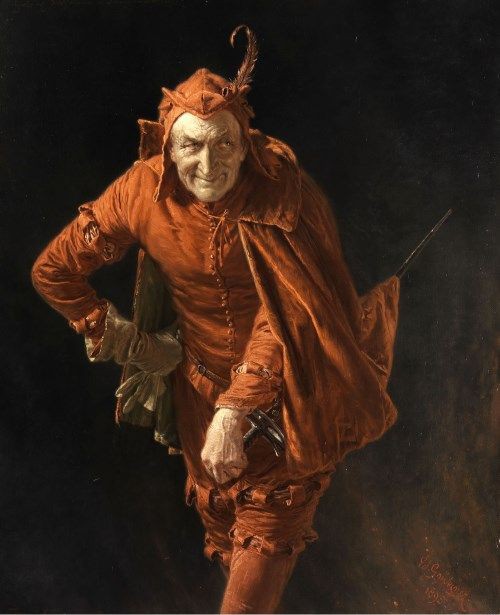
Mephistopheles.「Eduard von Grutzner 1895年」

Leonardo da Vinci, The Last Supper.

Ⅰ.The Restoration of Leonardo da Vinci’s Last Supper

The restoration of Leonardo da Vinci’s Last Supper took place between 1977 and 1999. In earlier depictions of the Last Supper, painted by artists before da Vinci, Judas Iscariot was traditionally seated opposite Jesus. However, da Vinci chose to place Judas at the far end of the table. Why did he make this choice?

In the restored version, it becomes evident that only Judas is shrouded in shadow. Yet, the positioning of the other figures is such that any small movement would cast them into shadow as well. This suggests that da Vinci did not adhere to a simplistic good-versus-evil dualism. Instead, his composition hints at a non-duality reminiscent of Buddhist philosophy, where good and evil are intertwined rather than opposed.

Da Vinci’s worldview aligns, in some respects, with the values of Machiavelli and Bacon, whose works emerged during the waning of Renaissance philosophy in the 16th century. A similar nuance can be found in the teachings of St Bernardino of Siena, a 15th-century Franciscan preacher. Bernardino condemned usury as morally wrong, yet acknowledged the essential role of bankers in economic development. This kind of moral ambiguity, where necessity coexists with sin, permeates much of the intellectual thought of the period.

Goethe’s Faust—inspired by the Book of Job—shares a similar complexity. Completed in the 16th century, the character of Satan in Faust diverges from the biblical depiction in Job. Rather than inflicting immediate suffering, Satan in Faust tempts Dr Faust subtly, offering him youth and pleasure instead of misery. This reflects the philosophical shift of the time, moving away from mystical German traditions towards a more rational, human-centred approach to philosophy.

Art, too, reflected this duality. Commissioning artworks served both spiritual and worldly purposes. On the one hand, patronage promised eternal salvation; on the other, it satisfied the vanity of the wealthy, who used their collections to display their status and refined taste.

Ⅱ.Osamu Dazai’s Heed My Plea and Its Resonance with Other Works

Osamu Dazai’s Heed My Plea reimagines the biblical story of Judas betraying Jesus for thirty pieces of silver. However, within Dazai’s own body of work, there is a strikingly similar story in terms of structure: A Tale of Honourable Poverty. This work, an adaptation of a Qing dynasty ghost story, explores the tension between “worldliness” and “anti-worldliness.” Through it, Dazai reflects on the struggle of being both an artist and a human being, wrestling with the desire to create while also living in the material world.

The story is set in the Edo period (1603–1868), where Sainosuke Mayama, a passionate chrysanthemum grower, takes in Saburo Tohmoto along with his siblings, Kie and her brother. Saburo is a master cultivator of chrysanthemums. He proposes that they sell the flowers to buy essential supplies like rice and salt, but Sainosuke, a man who takes pride in his poverty, protests. For him, selling the flowers for profit would be a disgrace to their beauty and meaning.

Despite Sainosuke’s objections, Kie and her brother go ahead and sell the chrysanthemums. In time, Sainosuke marries Kie, attempting to maintain a life of purity and poverty. However, he soon realises that his poverty is more of a compromise than a virtue. As time passes, his villas become larger and more extravagant. Beneath his disdain for selling the flowers lies jealousy—jealousy that Saburo is far more skilled at growing chrysanthemums than he could ever be.

In the story’s climax, Saburo vanishes like smoke, revealing his true nature as a chrysanthemum spirit. It is only then that Sainosuke realises his deep love for Kie, who, unlike the spirit, has not disappeared.

Heed My Plea and A Tale of Honourable Poverty were both published in 1940, the same year as The Grapes of Wrath. Steinbeck’s novel depicted the monstrous nature of capitalism, though the film adaptation of the story shifted its message to one of resilience: “The people will live on.”

In that same year, Disney released Pinocchio and Fantasia, both of which initially failed to find success in the American market. In Disney’s adaptation of Pinocchio, the fairies grant Pinocchio the gift of “good and evil” before sending him out into the world. Little Jiminy Cricket symbolises good, yet evil is not explicitly mentioned—perhaps because evil is implicit in the world Pinocchio must navigate. Jiminy’s guidance is insufficient to shield Pinocchio from temptation and neglect. In fact, it is evil that reaches out to Pinocchio—not as malicious intent, but as a silent invitation to follow along, unthinking and unchallenged.

In a curious parallel, Dazai’s works resonate with the themes found in these films. Pinocchio’s salvation lies not merely in Jiminy Cricket’s advice but in his spontaneous, unpremeditated actions. It is through this spontaneity that he rescues Geppetto from the belly of the whale. This form of goodness—one rooted in instinctive action rather than calculation—represents an eternal ideal. However, because Pinocchio lacked the glamour of Disney’s previous success, Snow White, it failed to generate enough revenue to keep the company out of financial trouble, even during wartime.

This sequence of events reflects an enduring challenge for humanity: the tension between the ideals of goodness and the harsh realities of survival.

Ⅲ.Judas in Heed My Plea

In Heed My Plea, Judas is cast as a symbol of betrayal in the Western tradition. Although the story draws directly from the Gospels’ account of Judas, it carries a unique tone, as if Judas has somehow possessed Dazai himself. The prose is familiar and unembellished—free from unnecessary words—yet every phrase is charged with tension. The focus of Judas’s obsession is “that man,” Jesus Christ, lending weight to every word he speaks.

A similarly Gospel-inspired work is Oscar Wilde’s Salome. Although Wilde’s Salome is a play, it also portrays the sacred through the lens of human depravity. Wilde reminds us that until we understand the full scope of the sacred, it remains elusive, swallowed by the terse expressions of human desire. As long as we remain blind to its meaning, the sacred can appear merely as self-indulgence or egoism. Yet, indulgence itself is not inherently wrong. Sanctity, as Bataille might argue, can manifest even within moments of sinful abandon. From one perspective, Satan may be dismissed as a mere monster, but what makes him human is the interplay of light and shadow—just as seen in Leonardo da Vinci’s Last Supper.

In painting, shadow sometimes mimics light, and similarly, Salome breaks a Catholic taboo by seeking the kiss of a divine figure. Her love is not boundless or pure; it is sharp and cutting, like a sword. After demanding and receiving the head of John the Baptist, Salome is executed, punished for transgressing sacred law.

Dazai’s Judas, however, is not presented as grand theatre like Salome, but instead takes the form of something akin to rakugo. Unlike plays that delve deeply into the human psyche, many rakugo tales—such as the well-known Manjuu Scary—tend to be light and humorous, focusing less on inner emotional turmoil. While Wilde added Salome’s execution after the death of Jokanaan, Dazai’s Heed My Plea notably avoids including a suicide scene for Judas. This omission is significant, considering Dazai’s own reputation for grappling with suicidal ideation. The fact that Dazai chose not to make Judas take his own life in pursuit of a sacred ideal suggests a deeper psychological insight. Instead, Dazai allows Judas to navigate several unspoken biblical codes, engaging with religious themes in a way that reveals the complexity of his inner struggle.

Dazai’s personal life was no less turbulent. A drug addict, he once sent desperate postcards begging to borrow old issues of Bible Knowledge, a publication that had become scarce. Dazai’s fascination with Christianity surpassed his interest in any other faith. Though he was never baptised, he believed himself to be seen by the Lord, aware that his sins were recorded by the Father. From a young age, he had attempted suicide using sleeping pills such as calmotine, not out of a desire for salvation, but as an act of confronting the defilement within his own heart—measuring himself against the commandments and always falling short.

Often regarded as one of the “three worst writers” in Japan, Dazai showed little awareness of the need to support his family with his earnings, as his wife, Michiko Tsushima, recounts in her memoirs. He was unfaithful to her and neglected responsibilities, even when taking in stray dogs. Yet, it was precisely this dissonance between his actions and emotions that fuelled his writing. At times, he wrote with sincerity; at other times, it seemed as if he were speaking on behalf of someone else entirely.

Psychologists might interpret these fluctuations as symptoms of mental illness, but it is this very instability that made Dazai an artist. Sensitivity—particularly at the level of the so-called “gifted”—cannot afford to wait for life to provide justification or meaning; if it waits, it perishes. Even today, we live in a world where possessing such heightened sensitivity is far from comfortable.

Critics who dislike Dazai’s work dismiss Heed My Plea as shallow. They argue that its contradictions lack depth and that its engagement with religion is superficial at best. Members of the clergy, too, might criticise Dazai’s portrayal of Judas as simplistic. Yet, this simplicity is precisely the point. Judas betrayed Jesus not out of elaborate malice, but through ordinary human weakness. There was no grand plan—just the kind of petty malice that festers quietly within us all.

In the Gospels, Judas is portrayed in the most negative light in John 6:70: “Have I not chosen you, the Twelve? Yet one of you is a devil.” Although it is primarily in the Gospels of John and Luke that Judas is associated with Satan, each of the four Gospels offers a distinct perspective. Their narratives, while multifaceted, invite readers to seek a deeper understanding by integrating these differing viewpoints.

Dazai’s portrayal of Judas does not depict him as a particularly malevolent or cunning figure, nor as an elevated Satan capable of bargaining with God, as seen in the accounts of Job or Faust. Instead, Dazai’s Judas recognises that Jesus was fully aware of his impending betrayal, and that this betrayal was inevitable. The form of “Satanic” influence captured by Dazai is not a force of grand destruction but one that subtly, gradually sets destiny into motion—reflecting the very contradictions inherent in human nature. Through Judas, Dazai explores the inner duality that resides in every individual.

Dazai often revisited his personal experiences in various forms: through adaptations in his stories, in his wife’s memoirs, in the diary of a lover who suffered a heart attack, and in the writings of his mentor, Masuji Ibushi. Yet, just as Judas defies any singular interpretation, so too do the darker aspects of Dazai’s life resist easy categorisation. His flaws are complex, their meaning shifting depending on who recounts them.

The message conveyed by Dazai’s depiction of Judas is not one of criminal cunning or calculated malice, but rather a warning: that even ordinary human emotions, when left unchecked, can grow into something far greater than intended. This fragility—this awareness that human weakness can spiral—is essential for any religion. It reminds us that spiritual guidance must address not only grand transgressions but also the quiet, everyday contradictions that dwell within us all.

Heed My Plea” is a quote from Matthew 23:25: “You are clean outside the cup and the plate, but inside you are satisfied with greed and riches.There are many crimes in this world that cannot be punished. In response to this, Dazai’s Judas seemed confused.

He wanted the reward, but he also wanted Jesus’ love. Judas expected great powers from the Messiah. But no.What Jesus does is only good for the poor. Thirty pieces of silver are worth the same as a slave in the Old Testament. A more competent and clever betrayer could have gained even greater riches. But Judas could not. That his little folly remains as a warning at the end of the Gospel is not far from the essence of Dazai’s adaptation. What was Judas’s punishment at the time? Judas had committed no crime according to the law of the time. And yet, He committed suicide. That alone should be enough to know what Jesus was like.

In A Tale of Honourable Poverty, the author’s own resistance to labor is expressed. At the same time, there is a search for a sacredness that cannot be converted into wages. Do people really want to labour? Have you ever thought about that? It is also true that people want to seek the sacred, not just to turn everything into recognition or money. But the Bible is also a book about labour. It is labour that has not progressed far enough to be called history. People have been working since Cain and Abel. That is why people had expectations of the labour of Jesus. Self-empowerment is not easy to achieve. It is man who cannot defy gravity, but what is the possibility of rising above it? This should be the original love. Dazai’s Judas wanted his soul to rise, but he lost that love for a measly sum because he could not defy gravity.

Last

“I just believe in its beauty. There is no one in the world as beautiful as he is. I truly love his beauty. That’s all. I don’t think of any reward.”— Heed My Plea, Osamu Dazai


Every human being is, at heart, well-intentioned. Within each of us lies a soul that weeps for what is truly sacred. I still believe that this is not a fairy tale—that it is the confusion born of our choices and judgments that clouds our vision. Jesus Christ recognised the potential within humanity, yet he also acknowledged the harsh reality: “It would have been better for him if he had not been born” (Matthew 26:24).

I do not need to justify how I interpret these words or why literature takes the shape it does. Writing need not involve seeking the approval of an audience. In the beginning, there was light—as it is written in Genesis, as well as in the opening of John’s Gospel. Yet, Satan has a way of reducing everything to meaninglessness, dragging even the brightest light into the dull weight of reality. It is necessary to reflect on this, but to see ourselves as worthless is to deny the very act of creation. How, then, do we turn towards love—towards a love that encompasses both ourselves and God? How do we find communion with the divine, beyond mere self-love?

The movement of the soul is like gravity: it is always falling. And at times, gravity severs the fragile thread of salvation. For the Christian, repentance and forgiveness are essential, but it is not always easy to see ourselves as we truly are. To grasp our own contradictions without slipping through them is no simple task. For writers, writing becomes an act of confession. Whether or not the events described are factual is irrelevant—the ritual begins the moment the story is told. Once words are set down, the speaker is judged for every utterance, even if the accusations are false or exaggerated.

When the manuscript becomes a confessional, there are no priests to offer absolution. Fate alone stands as witness. Even when we long for someone to understand us, we do not easily find such a partner. Dazai’s life was marked by relationships that ended in tragedy—multiple women chose to die alongside him. The destinies that draw us in cannot always be managed or planned. Confessors are urged to make amends to the world, but for the literary artist, there are two possible paths: Satanism or conversion. Both, however, can become art.

For Dr Faust, who sought knowledge with earnest intensity, his path led to the demonic. Goethe would have understood. Similarly, François Villon—whose name Dazai borrowed for Villon’s Wife—was a scoundrel and a thief, driven by reckless desire. There is something inherently flawed in the pursuit of perfection—when words that ought to be pure are forced into shape, they become tainted. In A Tale of Honourable Poverty, the man who refused to sell chrysanthemums doubted the purity of his own heart.

Having loved Jesus, Judas lost sight of his love and ended up laughing at himself like a clown. If Dazai had written a more coherent portrayal—whether psychologically, philosophically, or through poetic beauty—he might not have become Judas at all. What we do know is that Dazai continued to write, even when his life was steeped in discomfort and turmoil. Had he fully understood himself within his literary confessional, perhaps he would have openly criticised his own failings. In fact, that is exactly what I would do—just as one throws stones.

The reading to Heed My Plea has reached 10,000 views.(three days) The reader is male.

Sacred and Secular phenomenology.

Why is it beautiful?
While I keep on chasing it,
My heart knows better than I do. Where to go for it.

A Sacred and B Secular. Chris Kyogetu
  1. 1Artwork with a phenomenological gaze.
  2. 2The Death of the Author
  3. 3Sacred and Secular Phenomenology
  4. Last ständig vorangent

1Artwork with a phenomenological gaze.

Have you ever thought about sketching a building on a street you pass every day, just once? It is a building you should see every day. You may be able to describe the features of the building, but you cannot spontaneously say how many windows it has. If you were to draw it, you would start by counting them.

It is difficult to find a place for sensitivity to live. Sensitivity cannot be used as a simple form of communication: living in the 20th-21st century, we are exposed to works of ‘expressionism’ and ‘artistic supremacy’, we are taught that we have ‘freedom’ (freedom by breaking away from religion) in our hands. We will see famous works of art as if they had been chosen by the freedom and good will of man.

But on the contrary, many questions will arise in front of the painting as to why a single painting is so expensive. Few people can explain why this one painting is worth so much, and its magical survival strategy as a business strategy. Apart from the fact that the Church commissioned the painting, there are many lies about how the demand for it was created. We accept the world vaguely, without subdividing it, like a building that does not know how many windows it has, but always exists.

A building has a role to play. But when I, as an outsider, try to sketch it, when I try to mix the external time of the building with the mental image of the building, when I start to count the windows, I have an inner world of my own.

When religions chose paintings, the criteria were simple. All that had to be painted was a saint, even if there was no understanding on the part of the church. Once people were painted, the subjects became endless. It is not known how many people have synaesthesia, so why are they chosen? How can one person’s ‘dream’ cost hundreds of millions of dollars? Some people can choose one or the other: manifestation through recognition by others, or manifestation of a value that only they know. Some people cannot choose. I am one who could not choose. The reason is that it is not as simple as the dichotomy between the sacred and the secular.

That is why we can no longer distinguish between them and the ‘sacred’. That is why the first thing to be baptised, as a sublimation from sensitivity to sensibility, is to learn ‘interdit’ in the body. 

A misunderstanding of Bataille’s ‘transgression’ by many irreligious people is that they assume that transgression into prohibition is the abolition or removal of the ‘sacred’, thereby confusing it with evolution – freedom. (Erotisme coll 10/18, p. 68,69) 

The eroticism of Bataille and Baudelaire, the fetishism of Roland Barthes, are not new discoveries. They were philosophies of the original state of nature that broke taboos. They understood Catholic sanctity and were oppressed by it, but did not seek to abolish it. We must not think of them only and by the authority of religion.

Interdit is the French word for Catholic prohibition…Because Bataille is French.

The Death of the Author

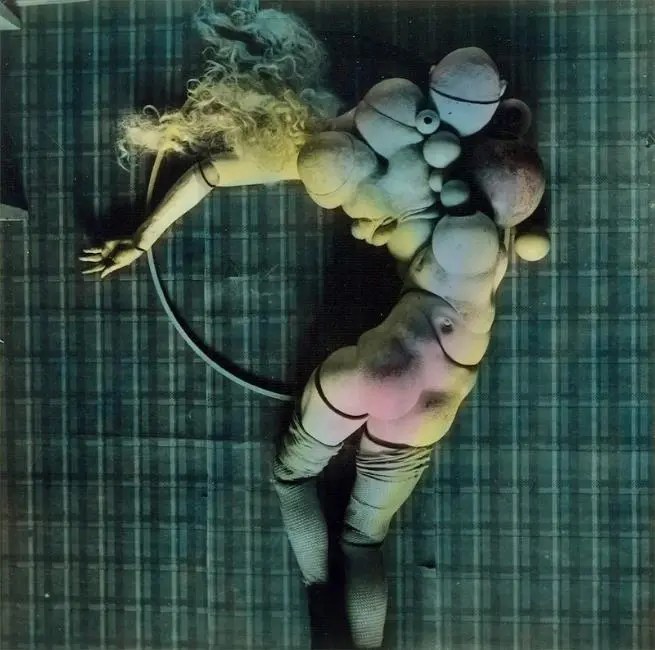
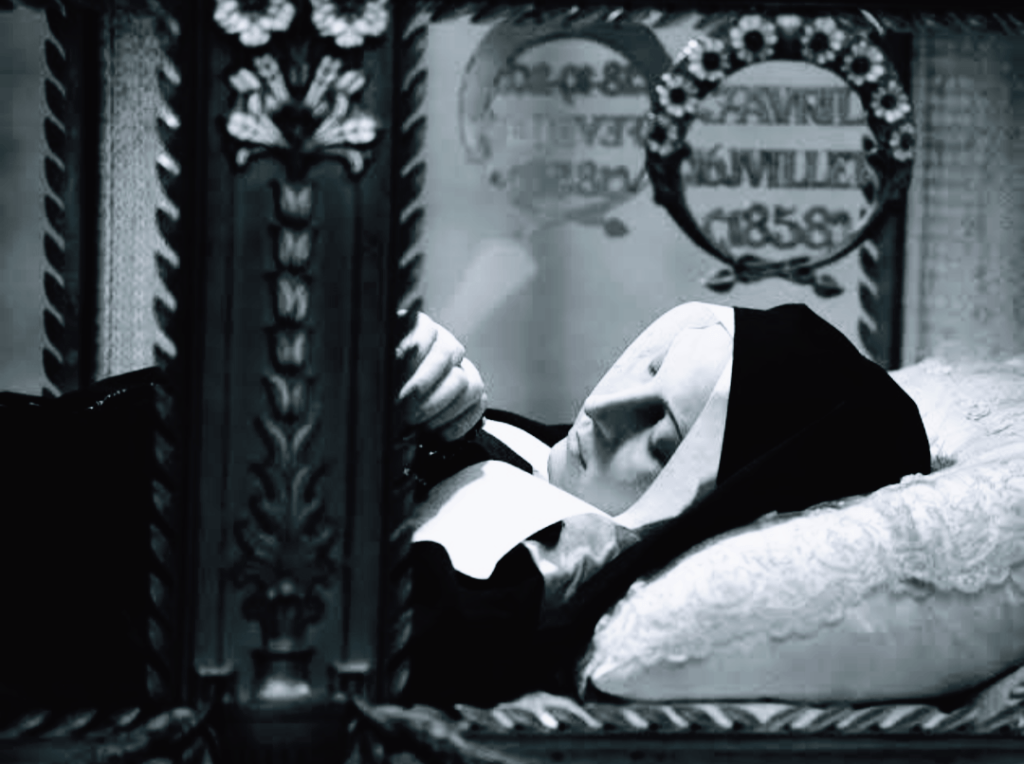
There are differences between the production processes of spherical-joint dolls and statues of the Virgin Mary. The statue of the Virgin Mary is dug out of a regular rectangle and does not show her nakedness (the skeleton and the flesh are conscious at the sculpting stage), but the spherically articulated doll is made out of material and is conscious of its nakedness.By associating the exposed genitals with the naked body and the mutilated corpse, it is even more related to the sexuality and death of the Battle philosophy.What is the entity confronting the spherically articulated doll? The answer is saints. Remember that St Bernadette is beautifully preserved as a mummy. She became not only a corpse, but a transcendent being, but does the doll qualify?

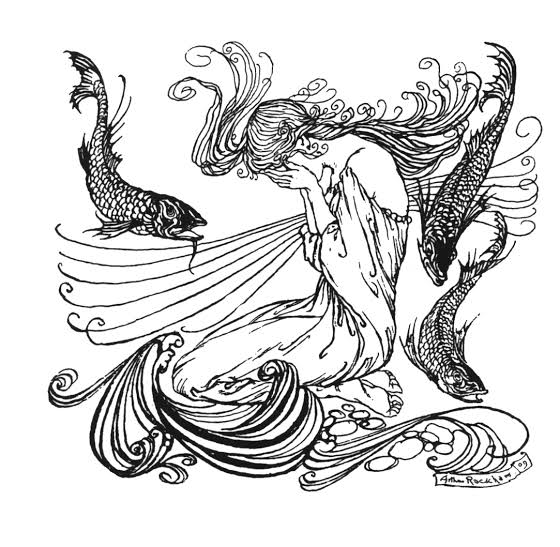
  At the intersection of the sacred and the profane in an A∩ B relationship lies the sacred part of art-humanity. Art in the Christian world is often like this. In literature, even in ‘Undine’, a Catholic priest creates the necessary conditions for the water nymph to become human.

But she dies because of human folly. What was the most beautiful thing in this story? It was the ‘love’ of the water nymph, who tried to approach the ‘human image’ defined by priests and Christian values. The tragedy of Undine having to kill the man who broke the contract is more love. Again, we can speak of a Bataillean transgression and interdit.

St Bernadette
Friedrich de la Motte Fouqué:Undine 
by Arthur Rackham

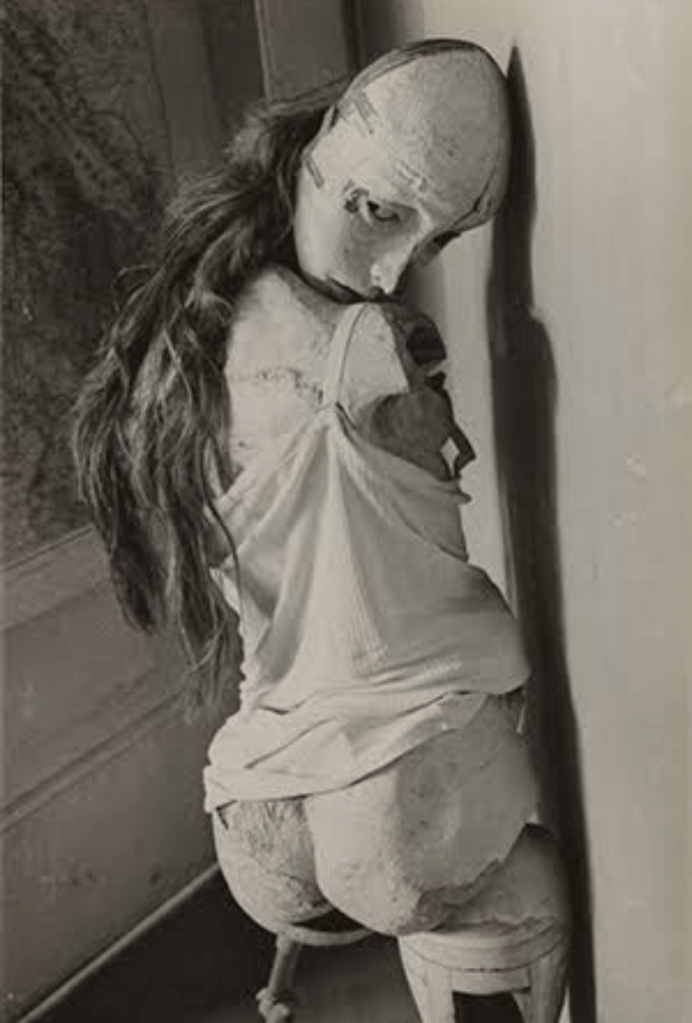
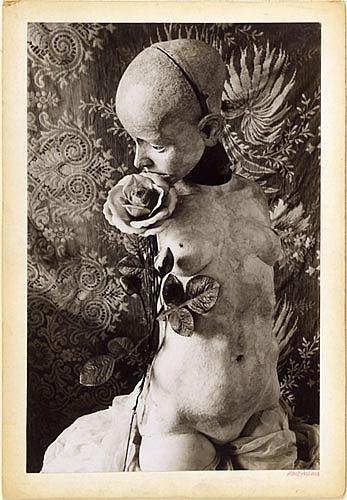
Hans Bellmeer’s doll is said to have left traces of secrets. It has a spherical belly, an artificial daughter, and it does not tell the story of its life. Dolls were toys, but this doll plays with the human psyche. Abstract works are often not judged by visual information alone and require a thesis from the painter, as in the case of Malevich. Nevertheless, what is always required is a work of sensitivity towards the reader or viewer. Whatever the author’s background, he or she emerges as a signifier. This is exactly what can be said of Roland Barthes’s ‘The Death of the Author’: the work and the author are two different ‘Ones’, and the work is not a manifestation of the author. However, an intuitive (synaesthetic) viewer may find fragments of the author. It is impossible to say when the effect of the symbols will be felt after a long period of time, but the role of symbolisation is to give form to ‘pain’ which is often overlooked in the world of war, racial oppression, ideas and writing.

One of the things that has left a painful legacy is the cross-holes left in the Auschwitz camps, but it is impossible for us to experience the same pain. So is a place like Auschwitz enough to document the ‘tragedy’? War cannot be documented in many other ways. In times of catastrophe, we revisit the catastrophic past. But puppets can be applied to war and other contemporary tragedies. Artworks are prepared to be applied to many different positions.

In a sketch, the external value of existence is like counting the number of windows. You don’t need to know the number to have everyday problems. But when you start counting, it shows your humanity.

…… For example, you are a teacher. When you ask your students to draw, they all draw different pictures.

Is this pure work the same as an unjust or immoral mind? Unfortunately, as human functions, they are the same. If we were to assign superiority or inferiority to them, it would depend on the moral ethics of the time. As proof of this, we remember that Gauguin’s paintings were treated as pornography in modern times.

3Sacred and Secular Phenomenology

What should be Epoché (phenomenological suspension) regarding the sacred and the profane is ‘happiness’. Today, happiness is divided into happiness that can be communicated to others and happiness as the value of one’s own existence. People always live in search of happiness and do not want their happiness to be violated. If they are uncomfortable with religious talk, it is because their own sense of the value of happiness is shaken. Therefore, you must suspend the urge to be happy. Phenomena are not driven solely by happiness. We must recognise that reality. Are you under the impression that works of art make you happy? Well, that is a mistake to begin with. One’s own sense of happiness interferes with the perception of the sacred. This is also true for religious people, whose awareness of true happiness can become a word unto itself and lead to unaccountable injustice.

It is not to denigrate faith that phenomenology is concerned with phenomena. Religion has also become an obstacle for those who associate philosophy with happiness, but that is exactly what must be done to Epoché. It is tantamount to not even understanding actual existence. For they have stopped thinking about where in the world they have been dropped by the values of happiness: ‘I could be happy with philosophy without religion.’ Today, just as the poet Baudelaire defined God and the secular not as a dualism but as a vertically equal position from the human point of view, I see the relationship between the sacred and the secular not as a dualism but as a set theory, like A∩B. As a world event, the sacred does not ‘attachment’ but ‘includes’.

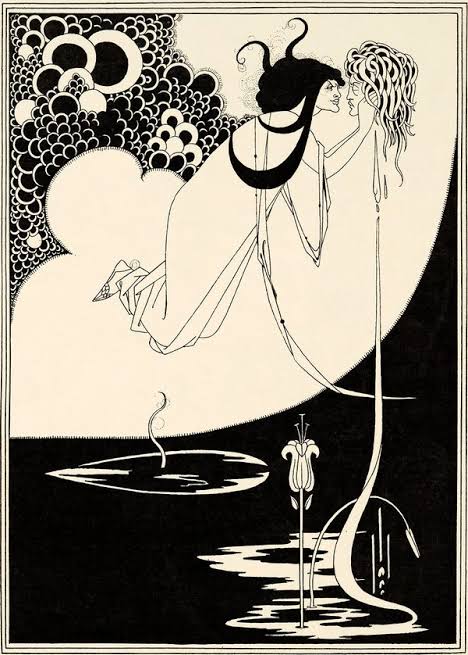
Oscar Wilde’s Salome example will be the last. John the Baptist, who was executed, was located at A-B. Oscar Wilde was an adaptation of the Bible but understood it well. Had he not attempted to convert to Catholicism, he would not have turned his attention to this ‘Interdit’.(prohibition)

Oscar Wilde’s Salome is not a simple indulgence. If he had chosen to tell an unregulated story, using only his imagination, he could have come up with an ending in which Jokanaan was not executed and Salome was not killed. He was well versed in freedom and law (Interdit) as to why Salome had to be killed. The evidence for this is that Oscar Wilde converted to Catholicism in his later years.

Jesus Christ crossed over to the people with his own feet, but Joan the Baptist (Jokanaan) obstinately refused to forgive King Herod’s unfaithfulness. In the Bible, Salome’s original book, John appeared to testify to the light (Gospel according to John, chapter 1) and to say that Jesus was the Son of God. John the Baptist was so righteous that he even advised against religious leaders. (Matthew 3:7-12)

I don’t know why Wilde understood this, however, it was biblically correct for him not to answer Salome’s love. Jesus can move from justice to love. It also makes sense to explain the Holy Spirit’s involvement in the events of this world that the Trinity has its own persona and that the Holy Spirit comes and goes.

Oscar Wilde: ‘Salome’.
Painting by Aubrey Beardsley.

The creator of a work of art dies, but we make a mistake if we see this death as just ‘death’. We must not forget that this ‘death’ is typical of Jesus. John the Baptist did not come back to life, Lazarus was a reanimation. Nor did Jesus’ resurrection give him another life, as in reincarnation. Even Mary, weeping at the tomb, did not recognise Jesus after the resurrection. Hans Bellmeer and other writers have also not been analysed and resurrected. They have only assumed their Creator, whom we have analysed from their writings and works.

It is banal for the transformation of the artist to be an observation only in the museum (and books). If it is to be a phenomenological reduction, it is to try to make the transformation everyday. Phenomenology is the philosophy of the everyday.

Last ständig vorangent

Jesus Christ, the number corresponding to the Hebrew letters, adds up to (Jesus 888 + Christ 1480 = 2368) These three together are a golden ratio of 3:5:8, but the Hans Bellmer doll is not St Bernadette, but the woman who modelled it lived while hiding the fact that she was a Jew There was a woman.

The golden section is already calculated and present before we recognise it. What you do for others, you will do for yourself, is the golden ratio in modern biblical interpretation (Matthew: 7, Luke: 6). What you do for others will come back to you, so much so that it’s even been written about in business books, and we don’t need the noun Christian to hold this idea in our hands. It is an undeniable fact that events are not driven by happiness alone, but if you are looking for happiness yourself, it is a wonder that you are attracted to ‘work’, even if you do not know the Golden Rule. People pray to the miracle of the saint, to the presence of Bernadette, but not to this doll that represents pain. What it imitates is the love of the artist. Because of love, there was anger in the world. And it represented the liberation of the soul. That is the meaning of free creation.

If you begin to look at the mystery of being, why you ‘exist’, rather than the glory of being recognised in life, you will experience communion with the sacred and the profane. Jesus Christ found the pain and sickness of the people. For this age, these were things that the world had rejected. Is there a difference between this act and the reflections and mere observations of philosophy?

Like Jesus, who was aware of his poor existence. It’s banal that a life ends just before someone’s authority is spread throughout the world. During the war, when it was common to see corpses lying around, there were artists who made dolls of the women they loved. Waiting for the war to end is the time of the mundane. The passage of time makes cities without the scars of war. It is a sacred time to look at the reality that hides the pain so that there is no pain, and to look at what is hidden.

In the original title of this article, ‘Sacred and Secular’, M. Eliade says that sacred time is time that can be repeated many times. The two types of time experienced by religious people and the phenomenological time scale are very similar. Chronos (outer time) or Kairos (inner time). Inner time has its own time axis. When the sacred and the religious (sacramental) come close together, it is a different story because it requires ‘faith’. Consciousness is at the door of faith. When we are in front of it this time, we are happy. Belief and faith are two different things, I will not go any further.

Faith and susceptibility are closely connected. It has euphoria and tragedy, as if it were a soul. To be a creator and to want to ‘manifest’, whether this is a mere performance of the brain or a gift from God, becomes from here an inseparable belief in philosophy, but I wish to be given new ‘eyes’ on the ‘happiness’ that I have kept hidden until now.

This article is a series of articles. It and a recounting of Salome and Undine, which I dealt with in my book Iconograph.
The Phenomenology of the Bird’s Nest, which is also my theme.
I drew inspiration from Simone Weil’s philosophy lectures, On Between Instinct and Function.

Birds form nests out of parts of their lives.
Is it the Word of God, as in Matthew 13, or inorganic parts?

Requiem 

Le vierge, le vivace et le bel aujourd’hui
Va-t-il nous déchirer avec un coup d’aile ivre
Ce lac dur oublié que hante sous le givre
Le transparent glacier des vols qui n’ont pas fui !

Un cygne d’autrefois se souvient que c’est lui
Magnifique mais qui sans espoir se délivre
Pour n’avoir pas chanté la région où vivre
Quand du stérile hiver a resplendi l’ennui.

Tout son col secouera cette blanche agonie
Par l’espace infligée à l’oiseau qui le nie,
Mais non l’horreur du sol où le plumage est pris.

Fantôme qu’à ce lieu son pur éclat assigne,
Il s’immobilise au songe froid de mépris
Que vêt parmi l’exil inutile le Cygne.

Stéphane Mallarmé Le cygne

First

Requiem

My grandfather told me that he had seen Osamu Dazai at a literary gathering before his death. My grandfather and Dazai were at the same university. However, my grandfather was poor, so his method of admission was different from that of Dazai and his friends. My grandfather was a brilliant man at the time, so much so that the state paid for him. Such was my grandfather’s desire to become a poet.

He seemed particularly fond of Mallarmé and was confident that he was Mallarmé’s successor because he was glittery. In this context, he seems to have once attended a meeting where Osamu Dazai was present. From his point of view, Dazai at that time looked like an idiot. Nevertheless, those around Dazai listened to him happily. When such Dazai discussed Mallarmé, my grandfather’s heart could not contain his anger. The writer he likes is told in a distorted way by someone he dislikes, but that person is better able to publish a book. My grandfather told me about this reality.If anything, feelings have left more of an impression on me than my grandfather’s words. This is because he, who spoke calmly about everything, was unusually excited and spoke of the scene as if it were right in front of him. I thought I could see a little of the scene of those days, the elated gathering of unknown writers and revolutionaries in a small, cramped room. My grandfather disgraced the gathering as a wayward affair, but he told me. ‘He talks about the boring things in the world in a funny way. People find it fun to be together with that. That sounds like you. Why don’t you become a writer? Because I never had that talent.”

At the time, I was in primary school and didn’t know much about Mallarmé or Dazai. In his study, Mallarmé and Valéry were on a bookshelf with a glass door like a sanctuary, and it was forbidden to open it. “If you want them, I’ll give you money for them,” he used to say. But I had a hunch about what kind of literature he liked.When I then went straight into law and psychology, which I did not do immediately, my grandfather said. ‘Don’t forget. Poetry is the greatest. But I didn’t listen. Inwardly, I instinctively wanted to surpass my grandfather’s bright glittering.

Second

When I was a student, psychology’s ‘unconscious’ was already oriented towards denial. The unconscious does not exist’ and the epistemology of the unconscious in phenomenology, in the midst of Jaspers’ scathing critique of Freud, worked to expand own horizons as much as possible.

I also wrote a dissertation on the collective unconscious as a student, it was like looking verge of death ‘fact’. After finishing one novel that drew on this experience, I moved my thoughts to the phenomenology of philosophy. Jung’s psychotherapy was confession, clarification, education and transformation, but it is probably self-evident how psychotherapy was formulated, since today we are mostly not told about such things. I won’t say much on this point, which touches on medical practice too much, But I don’t know whether the domain of the subconscious can be totally denied. In this article, I will talk a little about the chaos that is the influence behind the human phenomenon.

This time, A friend asked me to chat with him about the death of a family member. It was just that, but it made me remember my grandfather. It did not always have my grandfather in my consciousness. Neither Dazai nor Mallarmé had been touched by anything in the vicinity before or after that. Yet I remembered. I looked again at what my grandfather had told me, that Dazai had talked about Mallarmé, and I found a mention of Mallarmé in a story entitled Das gemeine.

Das Gemeine (The Commonplace) was German, so I was late to realise that it was related to Mallarmé, a French writer. Besides, Osamu Dazai is more prominent in other novels. Nevertheless, Dazai was certainly unusual in Das Gemeine in appearing himself as ‘Osamu Dazai’. It is uncertain whether his grandfather heard about the draft at the time. My recollections were consistent, although there was no evidence. I had a good time while searching for Mallarmé and Dazai Osamu. Tracing the attachments of the deceased, whose generations and values were far apart, was like following the traces of their souls.

 Remembering the deceased may not be all that can be immediately recalled. Takehiko Fukunaga’s chapter on love in his book ‘An Attempt at Love’ was an illustration regarding ‘blind spots’. Blind spots in life are not something that can be explained in academic terms. Thus, they are always in places where we are not conscious of them due to human subtleties.

As a child, my grandfather was from a family so poor that they did not even have electricity. In this situation, he went almost exclusively on scholarship to places where he was invited to attend meetings of Dazai and revolutionaries. The gatherings there was a silly affair for the rich and trivial for busy students like my grandfather. He said that those gatherings were all dreaming, fruitless, and a joke. But did my grandfather really think it was trivial, or was there something else besides consciousness? Otherwise, would he have said to me, “Why don’t you become a writer?”

Third

Jung and Freud emphasized ‘confession’ in psychotherapy. This is because people who are highly conscious speak reasonably well in their ‘explanations’ but do not ‘confess’. Confession is very difficult. There are not many such occasions. Too much unconscious bias can also lead to assumptions.

But questioning the unconscious, like metaphor, is going out of date. My grandfather’s statement did not show any purpose, it was simply a coincidence. I am sure of it, but I was a little girl when I said I would ‘take it back’ from Das gemeine – the commonplace – and if you look at me now, it is as if I had just lived for it. This story is a ‘confession’ that consciousness did not suppress.

For why, I was never able to ask my grandfather the truth about whether he liked Mallarmé and poetry or not. No one in the family knew. Surely they would not have understood it even if it had been told to them. And yet, the story of Mallarmé and my grandfather’s upbringing, and why Dazai didn’t like him just by talking about Mallarmé, is the only story that comes to light. Mallarmé tried to live by poetry, even without God.

Mallarmé was discouraged from committing suicide thanks to his poetry, but his views and beliefs on life and death were the exact opposite of Dazai’s. First, Mallarmé is difficult to understand and is considered difficult to visualize unless one has a good understanding of French. The Japanese translation of Mallarmé’s poems is difficult to imagine. The French book of Mallarmé seemed to have been given to my grandfather by the church. He also seemed to have read the Bible that was given to him with it, but my grandfather was not a Christian. 

He then said – what I find myself thinking there is no God does not coincide with the world. On the contrary, thinking that there is a God is also not in agreement with the world. He said that it is ” fault ” only to talk about the world in terms of what you absolutely think. He taught that one should always be aware of contradictions, even if they are religious or non-religious. Only poetry and literature can speak of ‘the world’. 

We live in constant contradiction.

There is no way of knowing exactly what my grandfather was thinking, but Mallarmé’s ‘swan sonnets’ reflected his soul: that the human world is empty, an existence that returns to nothing, and that even if it is godless and empty, there is ‘a beauty that exists without fail’. Whether it was hope or certainty, my grandfather seemed to believe in an existence that emerged from the concepts of absence and nothingness. It is not confined to images or language, but makes our hearts beat faster. 

Given the historical background of my grandfather’s time, I think it was a mystery that he saw while living in poverty and wartime: The reality, which could not easily believe in God or miracles. 

When the once shining swan fades away, being sadly aware why in the poem it was perceived as if it had broken the ice powerfully, the strength to be kept alive by the emotional image of the swan.

  How does it make sense for an absent object to flap its wings.

Last

Recently I was considering the Tale of the Heike. The world in sound, narrated by the biwa priest, does not make the meaning of language clear. In the world conveyed by sound, the characters forget that the dead are dead and the world of ‘sight’ expands. The Tale of the Heike is also a requiem to heal the souls of the dead, and one’s own soul, by listening to others’ stories. In today’s age of only directness, there are very few people who can get this story. People who do not know that their perceptions are limited are weak. Those who may believe in the possibility that even if they do not understand now, they will be capable of understanding later are strong. Mallarmé’s poem ‘The Swan sonnet’ would collapse as a poem if translated directly into Japanese, so I have drawn on my own interpretation. 

I am not familiar with Mallarmé due to the circumstances, but I took the opportunity to translate the poems in a hurry. I think I was able to do it this time because of the poets surrounding Mallarmé, the literary and philosophical paths, and the various experiences. The people I wanted to show the translation to will never see it, but it will be a requiem for the dead, left to those who are still alive. With an icy confession, that even in a place that is only an end, like a place of exile, life becomes a strong wish and a requiem, as the Cygnus shines. And in our hearts.

ーーーーーーー

Overview.

 My friend’s father died. So I was asked to chat about it, but it didn’t immediately spring to mind. But then I remembered my dead grandfather, if this is what you call unconsciousness. It was about my grandfather meeting the writer Osamu Dazai. In Japan, there is a story called The Tale of the Heike. That story is a great long story, a mixture of actual history and fantasy. The story is told by a blind monk. By doing so, he requiems the souls that are dead and the souls that are listening. Looking at oneself from a completely unrelated story is like Mallarmé’s poem ‘The Swan’. 

Poems about absence made my heart leap.

OsamuDazai

https://en.wikipedia.org/wiki/Osamu_Dazai

The tale of the Heike

https://en.wikipedia.org/wiki/The_Tale_of_the_Heike

Mallarm

https://en.wikipedia.org/wiki/St%C3%A9phane_Mallarm%C3%A9

Augustus-English

Mein Söhnlein, ich wünsche dir – ich wünsche dir –Ich wünsche dir, daß alle Menschen dich liebhaben müssen.“

I wish for you — I wish for you —“ “I wish for you that everyone will love you.”

Hermann Hesse. Augustus .


First

Mysterious neighbors lived in a house with beautiful music. When the little music box was playing, the mother prayed for her pre-baptized baby to be loved by everyone. It was the arrangement of that elderly neighbor. As soon as the music box stopped playing, the mother feared that she had made a mistake in her wish.

Why did the mother become so anxious and unable to stand after reciting her wish? Was it that she regretted the mistake of ‘witchcraft’, which is heresy, or that her mother knew the nature of social evil? Or is the mother under the spell too?  Consequently, the mother told her son, that anyone who loves you, I love you the most. Soon, the mother’s fears were spot on and her son became a beloved and ruthless person.

Second

The author Hermann Hesse’s work sometimes seems to have his own ‘record’ deep within the words. Here is a brief account of Hesse’s upbringing: first, he retires from the rigors of his pastor’s seminary and escapes. Then his parents ask for an exorcism, which is unsuccessful, He was followed by a suicide attempt. After a stay in a psychiatric ward, he enters the Gymnasium but is frustrated and escapes. His apprenticeship as a watchmaker is also a setback, and perhaps as a reflection of the introspection and self-discipline of the time, he once retired the booksellers,but is satisfied with his job as a clerk at the Heckenhauer bookshop. His ‘Unterm Rad‘ is a striking reflection of his upbringing in seminary, but ‘Demian‘, ‘Das Nachtpfauenauge‘ and others also seem to reveal a record of Hesse’s mind.

I sometimes think of the text as Hesse’s own voice speaking in transference to the characters. This may be due to his characteristic Buddhist look at destruction and creation, the broken, the passing of time and death. At the time, he himself was often asked by people whether he was a Buddhist, although he had travelled to India but had not studied Buddhism professionally. Augustus was written in 1913, before the First World War, and it remains as applicable to any period or life, not destroyed by war.

Third

Augustus is one of the works in ‘Märchen’, which I had read a little of as a child, and the story that made an impression on me was ‘Merkwurdige nachricht von einem andern stern‘, in which all the flowers to mourn were lost in a disaster. With only ten years of experience and imagination since birth, Augustus had difficulties. It was difficult because I had no special experience of being loved by anyone. At the time, I did not even really understand what love was, and I cannot remember ever having received love from anyone other than my parents.

I was taught that in the Christen nation, love is something that relates to you and nurtures you, but I never understood it. Sometimes I didn’t know whether even the word ‘gratitude’ was something I really felt, or whether it was something I felt for social reasons. In Buddhist school, I concentrated on listening to a talk about ‘death’, which began with the idea that from the moment we are born, we are on our way to death.

I did not dislike religious events, and I was an attendant, a kind of a Acolyte in Christianity. My classmates from schools without religious education told me they felt sorry for me having religious events. Even then, I probably didn’t think about who loved me. I was always looking for a place where I could love and be loved.  Sometimes the question of being alive made me hope for a successful me, and sometimes I wondered if there was any point in living as I would never become anything anyway. Nevertheless, I thought we all had a little bit of that, so I didn’t pay attention to it. I went to university, which had nothing to do with religion. There I translated Hesse in German.

Fourth

At the time, Augustus was not yet able to make an analysis. I probably learnt about this story, which embodies Matthew 5: ‘Blessed are the poor in spirit’, at university or in a commentary. For those young days when life was like walking on a balance beam, financial poverty was one thing, but poverty of heart was hard to accept. No matter how careful I was, I would fall, and for me, who kept myself alive in that way, poverty seemed to throw me off balance. Why did Augustus’ mother use witchcraft to raise her child, her fault was alien to me. She lost her husband, her father, soon after, and it seems to me that she was so poor that in the future her children would have to become university professors or kings to survive.

The neighbor, Binswanger and her friend Madam could each give her mother one silver coin, two in all, but he said he couldn’t do any more. He took pity on her and offered to grant her a wish. His mother’s wish that he should be loved by everyone was granted and Augustus manipulated people at will. Everyone loved him, no one doubted him, and everyone gave alms to him. This turned into a convenient position for his mother. Whether the mother’s love was due to witchcraft or essential motherhood, only the mother spoiled her son, but she was outraged by his excessive rudeness and coldness towards others. The mother subsequently dies of illness.

Leaving behind, Augustus fell in love with a widow, but soon grew tired of her. Next, he fell in love with a lady who had a husband and tried to take her away from him, although the lady said strangely, ‘ I can’t stop loving you, but I prefer to stay with my husband.’. It was as if she really cared for her husband but her love for him had been distorted by magic. Eventually he asked his neighbor to extinguish his power to be loved. After that, the public’s view of Augustus changed. All the resentments he had never felt and all the sins he had committed fell on him and he was put in jail. and When he came out of prison, he roamed the world through his illness, seeking a place where his love could live. Yet this time people loved him no one. They bullied him and shook his hand away. In the midst of it all, he loved and served people.

He died in the end with a richness of heart from all kinds of poverty. That story was not something I wanted to think about when I was young. If one was poor, one could not live, that is what I had to think. Poverty is not always financial, and there was something I did not want to acknowledge, even poverty about the heart. Certainly, as a fairy tale, poorness is a beautiful thing. But in Grimm’s fairy tales and others, such as “Die Sterntaler” alms were given to the poor, and hope for the common people was grace. However, religions sometimes teach that it is happiness to have nothing in return for grace.

It is not only Christianity, but Buddhism has similar teachings. However, I thought that idea would defeat the spirit and I don’t think it was a mistake. I was aware of how important it was, but it didn’t make an impression on me. Many years later, I never picked up the story or remembered it. In my professional life, I may talk about Hesse, but I pick up stories other than this one. Originally, I did not even pick up Matthew 5, even though I understood its meaning. This story was a so-called ‘blind spot’.

Fifth

In the Buddhist chapter on the Eight Verses, it is said that saints do not undergo sorting and are not caught up in delusional sorting. Delusional discernment – to be caught up in what one understands, which is Avidyā. (ignorance)This was in line with the ‘Blessed are the poor’ of Matthew*. In this passage, the saint is the Buddha, who taught his disciples the precept of peacefulness, not to separate oneself from the superior or the inferior. In another section, it is mentioned as one of the preparations before death not to be conceited in keeping the precepts.

Blessed be the Lord in the book of Matthew is one of Jesus’ Sermon on the Mount. The Ten Commandments of Moses in the Old Testament were sacred precepts. However, many people mistakenly believed that as long as they kept the law, they would be happy. So they oppressed and persecuted those who could not keep it. The poor people heard of Jesus’ ministry and followed him to the mountaintop. Luke’s Gospel, written from a different perspective, says ‘Blessed are the poor’ and refers only to financial poverty in Greek, whereas Matthew’s Gospel clearly means ‘the poor in spirit’ and internal, spiritual things as well. Jesus has continued to liberate the world’s marginalized people, the oppressed and sinners with love.

It was not the absolute power that people expected, and some were not sober. Jesus spoke of the ‘poor in heart’, the ‘sorrowful’, the ‘meek’, those who ‘hunger and thirst for righteousness’, as those for whom the kingdom of heaven is yours, blessed are you. When Jesus was asked by his disciples what was most important in the Law, he quoted from the Old Testament books such as Deuteronomy, saying that ‘love’ was the most important part of the Law. Love was not something that could be clearly defined as good or evil. That is why Jesus’ parables, and his light also generated a lot of emotion and misunderstanding. Nonetheless, this ‘Blessed are the poor in spirit’ has been handed down as the core of a long history. Even if you abhor this verse, you will eventually understand it if we continue in the life of faith.

Sixth

Was Augustus’ gift regarding ‘love’ a gift or a curse? This may be an indication of Hermann Hesse’s value of the gift. Hesse said, “I want to be a poet, otherwise I want to be nothing”, but as a man who attempted suicide, he would have known that a gift was also a handicap. A gift is a talent given by God, but we don’t know how to increase it. I am a recipient of grace, and we understand that, but we can’ t get any comfort from it. The human heart does not move according to the physical laws. Whether it’s physical hopelessness or blindness, it’s always hard to figure out how to live and where to find yourself.

This Märchen likened the two-sidedness that society possesses to ‘love’. If we say that the Providence of God us, hardship and grace are mundanely mixed and not easily identifiable. Augustus continued to receive love for the world. Others loved him and kept giving him things that were of no value to him. His growing ruthlessness signaled an allegory for a man who no longer felt God’s love. It seemed to be a projection of Hesse himself, who chose to commit suicide. He may have thought that way when he looked back on what it was like to choose death. Happiness does not come immediately after coming back to life, as manifested in his escapist habits and style. Nevertheless, Augustus knew that the world was wonderful and lovable. He thought he should travel the world in order to help people one way or the other and find places where he could show his love.

During this journey, Augustus fulfils his oppressed and distorted heart with happiness. Christianity teaches that those who had hoped for earthly things find their hope in God. But what does it mean for God, a higher being, to give us happiness? Sometimes it is difficult to understand this even when it is explained to us in words. God is far away, one wall away, if not everyday. The philosopher Simone Weil tries to put God in brackets for once (Epoché), but even Augustus fulfilled his heart on a journey where there is no such thing as happiness in the eyes of others, where he was marginalized and unloved. Buddhist ‘senselessness’ is close to this.

Er wunderte sich täglich, wieviel Elend es auf der Welt gäbe und wie vergnügt doch die Menschen sein können,

He was amazed each day at how much misery there was in the world and how content people could be nevertheless,

Das Menschenleben schien ihm vorzüglich eingerichtet.

To him, human life seemed marvelously well arranged.

so daß ihm schien, er habe die Welt niemals anders gesehen als heute; aber er war zufrieden und fand die Welt durchaus herrlich und liebenswert.

Gradually his memory too grew clouded so that it seemed to him as though he had never seen the world other than it was on that day. But he was content with it and found it altogether splendid and deserving of love.

He learned to love the world, although he was not loved or given expensive gifts as before. Besides, he dared to willingly choose hunger and suffering. So far, it ends up being Buddhist, but if I were to explain the difference, it would be that the Mächen has arrived at the point where ‘for theirs is the kingdom of heaven’. Augustus had reached his Godfather, the only kind man who had given him gifts and disabilities. The house was a house where music often played, and in his last days he felt as if he could hear his late mother’s voice, and he ascended to heaven.

Is this defeat and pessimism in life? I remember once thinking so. But it is different. Märchen’s death is different from death in the real world. He actually died, but it becomes an allegory and enters people’s hearts. What it means to be happy even if you are poor-hearted, as Jesus said in his parable, is something that cannot be explained by the laws of physics.

Yet everyone realizes that if you put yourself in a world of mystery and compare yourself with the allegory, you will find that the story is not particularly exotic either. We cannot explain how it can move our hearts. But when we connect God and Jesus, we call it the Holy Spirit. This may be the most difficult Holy Spirit to explain.

Last

We sometimes close our hearts only to what we can see and feel. Who will let us know that next to the death knell, there is life coming into being, the joy of the unseen? Thus hope must transcend what separates. Just as the ego awakens again and again in childhood, just as the familiar work of art seems to be buried in a dead corner and then reappears. People are always waiting for something to resonate in their souls, whether it is a day of joy or a day when they want to disappear in sorrow. As if one learns the name of the being in front of one’s eyes, one is moved by a familiar sight.

Augustus was poor himself but could see the poverty of others. He had become unloved and knew that his kindness and love could not be conveyed to others. By ‘poor-hearted ones’ he was addressing not only himself, but the world. He knew that the poverty he most wanted to convey could not deliver hope, that even though it was impossible to manipulate the Holy Spirit at will, who could move people’s hearts, he still knew what it meant to love, something that the world could still say was beautiful.

Beautiful music was the voice of a loved one. For him, it was his mother. The most beautiful music that has been flowing since before his death becomes the voice of his loved one. Overlapping the heavenly messenger with the voice of a loved one is both a desire and a happiness. I think I finally know why this passage is described as embodying the Gospel of Matthew, the poverty of heart that is universal no matter how much times change, and why this passage is taught as the core of being a Christian.

The mind dwells on the allegories given and the unknowable, and the places where we should be self-disciplined emerge and the poverty of our hearts. When the soul’s gaze by love looks out over the world, probably it raises the joy of being born into this world.

Rejoice and be glad.

Matthew 5:12


Postscript.

 Hermann Hesse’s Augustus is famous for embodying the ‘Blessed are the poor in spirit’ of Matthew 5.

This story is famous as the embodiment of the story. When I was a student, I was so desperate to be somebody that this story seemed like a defeat in life. I did not want to understand this poverty. Even now, I can’t say that understanding this poverty is right. But I do know that the words and love of Jesus, like the Holy Spirit of the Trinity, if this is something that needs to be understood with the heart, then the poverty of this story should be looked at with the gaze of the soul. If this is to be communicated to others, it is to know the suffering that cannot be communicated by force. Hesse’s suicide attempt and My experience overlapped with him. I had sympathy for Augustus. Even though the world loved me, I did not see it as love, I had become ruthless. I found myself becoming like Augustus. The fairy tales I couldn’t read as a child because I didn’t understand love, then the stories I ignored because poverty was so alien to me, became the stories I came closest to. Hesse.

wrote this in his work. “so familiar to him from childhood that it awoke echoes of the past in his soul.” About the love that Jesus wanted to convey not only to those who were wise or in authority.

Rest for the modern age that constantly tells us that this is the way it should be. Perhaps that is the hope.

My Buddhist boyfriend reads scripture in a familiar voice,
and ‘Rejoice and be glad‘ he recited from the Bible. It was so beautiful that it reminded me of Augustus by happenstance.

Continued in Matthew 13, Simone Weil

Casilda of Toledo – English

Cuando Casilda desplegó el manto, cayeronmuchas rosas.

When Casilda unfolded her cloak, many roses dropped from it.

‘Toledo’, located in central Spain, was a crossroads of Judaism, Islam and Christianity. It was a city at the crossroads of Judaism, Islam and Christianity. Famous as the favorite of the painter El Greco, it became the capital of the Visigoths in the 6th century, and from the 8th to the 11th century, during the reign of Fernando I, Toledo was under the rule of Muslim powers. The Moroccan king, Casilda of Almamun, was polite and kind-hearted, and carried food to the Christians his father had captured as prisoners of war. Casilda means ‘singing’ in Arabic, and she was kind to the captives, making a beautiful white rose bloom from a bad stem and extending the seeds of faith. Her retainers, who did not take it well, informed the king that they were going to execute Casilda.

The king loved his daughter, but he had no choice but to execute her after such an incident. When the retainer and the king pursued inside the cloak of Casilda, by God’s arrangement, the food that Casilda had hidden turned into white roses. She was acquitted of any blame.

Sacrifice, a self-sacrifice, and Deus Ex Machina, a mechanical god who casts a stone in a stifling situation. Casilda’s endgame can be described as deus ex machina. Self-sacrifice to gain an advantage exists in the world of chess, but Aristotle rejects the mechanistic god. I find it interesting that even in the seemingly inorganic world of chess, a world of logic, miracles happen. If you only play on the defensive, you will never make any progress, and pieces will always be taken. The value of the pieces constantly fluctuates, they attack, watch each other and choke. Every time a piece is taken in this context, it is analyzed to see if it is just a blunder or sacrificed. The game is constantly subjected to uncertainty, and sacrifice is established from the results.

The Christian self-sacrifice seems to be a measure, an ‘accident’ that represents to the invisible God. Does it include love? The only way to find out what God wants is to read the Bible in slowly and carefully. And above all, Jesus is only full of parables, and his stories must be replaced by our everyday life for us to consider. The words of Jesus must be lived in everyday life when faced with problems that are universally the same, even though Toledo and society changed in those days.

The Christian love, the kindness of Casilda, can be regarded as religious, but it is also the inherent goodness of human beings. Of course, some people did not show that goodness. She is unable to get prisoners out of prison. They carry food, although without consequence. Does that kindness, which does not leave the hungry behind, give strength to the misfortune of being a prisoner of war? On its own, Casilda was doomed to be executed as a traitor. However, We

 knows that miracles do not happen in everyday life.

Still, I want to stay awake to the goodness, to the love of God, because the breakout of miracles is indeed something that is always there.

Always that what we see and what we have in front of us is not everything.

The Tree of Life (English) 

“Where were you when I laid the earth’s foundation?
 Tell me, if you understand/ while the morning stars sang together
    and all the angels[a] shouted for joy?
Job 38:4~7

Introduction.

2011 film The film begins with a quote from the Book of Job, which refers to God-given suffering. The protagonist, Jack, has grown up and had a successful life, but on the anniversary of his brother’s death in the war, he looks back to his own childhood, 1950. A strict father, a kind mother, whether to live a worldly life or leave it to God’s grace.

This article will be updated as a critique during the winter of 2024

1

“When did you first touch my heart? “

I find myself saying the word world. When were we conscious of our ego and when were we conscious of God? The language of the book of the Bible attempts to take root in the nobility on a daily basis. For example, even Christians can choose their words biblically, conscious of the words of love, of the joy of birth and of the day on which they touched the world, or they can speak in modern terms, even without realizing it. Nevertheless, What has become the foundation of our sensitivity becomes Christian although we are not consciously aware of it. It is easy to match the words and values of the Bible over a long period of time, as they are latent in our daily lives. If you study the history of philosophy, including Western literature, you will know that Augustine put his object together in a philosophical way to God.( In Japan, the pursuit of bliss and spiritual freedom, which are also guaranteed in Japan, was at the origin of Christian values) We also have Christian values in our hands in this manner, without being aware of them. But we rarely get a chance to make contact with God’s Word. The film dynamically shows the world and the open air against the background of the evolution of times of a distant American family. Nature is celebrated, as in the Old Testament, but the tiny family world is irreplaceable.

In 1950, during the childhood years of the protagonist Jack O’Brien, the family reflected the conservative thinking of the Cold War period. But they were not dictated to by anyone.

but, as we grow up, Jack’s America is a place of skyscrapers, modern architectural homes, to which we feel a feeling of familiarity. This is because it closely resembles the cities we are witnessing. The family image was also, as the film begins, originally chosen by two persons who loved one another and created a family. And yet, if you show a strict father, a kind mother in neat clothes and a neighborhood woman of color, they settle into the structuralism of the ‘1950s’ era. The times are created by man, and if his work is freedom or stagnation, Considering this question, Or in philosophy, is it ‘structuralism’, the idea that what we think is unconsciously selected by our social systems? it is not surprising why the opening quotation was from the Old Testament book by Job. (Jack O’Brien for short: JOB)

Christianity is also often misunderstood, especially today, but the organization of Christianity does not directly determine one’s life. (Principle) Being a serious man, God gave Job all sorts of hardships. The story is about God answering Job’s questions. The meaning of this quotation from Job, about what controls the mind and makes it free, is to make us aware of the outer limits of those human creations. The exuberant natural beauty always present in the Old Testament stands for the very Father of Jesus in the New Testament: Jesus is also studying the Old Testament. When the mother in the film pointing to the sky and saying “That’s where God live”, it is the beginning of making the child aware of God, but is it the beginning of allegiance or a compass? To whom have we pledged our allegiance?  What about our compass? 

Some days the abode of God in the sky, where his mother taught him, is beautiful, and some days it is out of sight. God can give and God can take, and the remembrance that is with Job is no longer the time he had with his brother who was alive. It is a remembrance after the death of his brother. Why was the father so strict with his eldest son, the protagonist, it begins with the story of his father’s desire to become a musician. As a devout Christian, he never became a musician, preferring to work in a factory. His father was not proud of him and was rather stern with his eldest son, Jack, not wanting him to resemble him: Jack did what his dad said and was mature. While his father is away on business trip, he finds a brief rest with his sweet mother and a sense of freedom, But the neglect of his father’s absence brings Jack to turn slowly to delinquency. When his father returned from a business trip, Jack was rebellious.

Over time, the children grew up, only to receive news of their brother’s death in the war.

Research into the Vietnam War draft suggests that until 1975, conscription was by lottery. The eldest son, in contrast to his younger brother who passed away as a result of the lottery, became a winning adult, following in his father’s footsteps. With the details of how it happened, the film comes to the sea imagined by a spirit world that seems to be self-healing.

Is the father, who gives and takes away, like the God of the Old Testament? and the kind mother like the Virgin Mary? and yet where is Jesus, the savior Jesus is absent in this film.

Christianity is also often misunderstood, especially today, but the organization of Christianity does not directly determine one’s life. (Principle) Being a serious man, God gave Job all sorts of hardships. The story is about God answering Job’s questions. The meaning of this quotation from Job, about what controls the mind and makes it free, is to make us aware of the outer limits of those human creations. The exuberant natural beauty always present in the Old Testament stands for the very Father of Jesus in the New Testament: Jesus is also studying the Old Testament. When the mother in the film pointing to the sky and saying “That’s where God live”, it is the beginning of making the child aware of God, but is it the beginning of allegiance or a compass? To whom have we pledged our allegiance?  What about our compass? 

Some days the abode of God in the sky, where his mother taught him, is beautiful, and some days it is out of sight. God can give and God can take, and the remembrance that is with Job is no longer the time he had with his brother who was alive. It is a remembrance after the death of his brother. Why was the father so strict with his eldest son, the protagonist, it begins with the story of his father’s desire to become a musician. As a devout Christian, he never became a musician, preferring to work in a factory. His father was not proud of him and was rather stern with his eldest son, Jack, not wanting him to resemble him: Jack did what his dad said and was mature. While his father is away on business trip, he finds a brief rest with his sweet mother and a sense of freedom, But the neglect of his father’s absence brings Jack to turn slowly to delinquency. When his father returned from a business trip, Jack was rebellious.

Over time, the children grew up, only to receive news of their brother’s death in the war.

Research into the Vietnam War draft suggests that until 1975, conscription was by lottery. The eldest son, in contrast to his younger brother who passed away as a result of the lottery, became a winning adult, following in his father’s footsteps. With the details of how it happened, the film comes to the sea imagined by a spirit world that seems to be self-healing.

Is the father, who gives and takes away, like the God of the Old Testament? and the kind mother like the Virgin Mary? and yet where is Jesus, the savior Jesus is absent in this film.

My interpretation as a Christian is that the film portrayed Jesus’ absence. A celebrated absence from Jesus is the three days before his resurrection after the crucifixion, but there is also a story in the Gospel of Mark, for example, of a master who goes on a journey. The film repeatedly turned our attention from the inside to the outside, and the trick was to turn our awareness towards the ‘absence’. Early in the story, Peter Rabbit’s father goes to Mr McGregor’s house, where he is later killed. Next is the father’s absence on a business trip.

Next is the father’s business trip. The final would be his brother’s conscription. The absence by crucifixion is extraordinary, but the absence of Mark’s Gospel fits into everyday life. In Mark 13:32-37, Jesus says that a person who leaves his house to go on a journey should assign the servants He assigned them tasks, gave them responsibilities and told the ‘gatekeepers’ to stay awake. To be able to open the door when the messiah returns.

The film is based on the director’s own experience, his brother committed suicide (research 2022) I did not know this at the time of the film’s release in 2011, but when I looked it up recently, I heard the real story was his brother’s suicide, which seemed to make sense. The absence of Jesus (the Messiah) is a sign of this, and for the person concerned, it is an illusion that their faith has disappeared, but they have realized that this is not the case and that the sentiment is always Jesus who has gone on a journey. Nobody thinks that hope is on a trip when they are disappointed: Usually we see it as a loss of hope.

Having changed suicide to war death, the hatred of the father appears to be a transitory adolescent thing. By making these changes it seems like forgiveness to the director’s father.

There is one scene where the father admits and confesses that his educational policy was wrong, but the son, who grew up, forgives his father not to be wrong. Where did his brother’s soul go, did it go to heaven, “Why didn’t you (the Messiah) come?”, these are questions that cannot be answered easily. In the sense of creating something that cannot be settled, it celebrates the nature of the Old Testament, which is the Messiah travelling to the end of the world beyond our visibility. The reason why the Messiah’s presence was not clearly expressed is probably because the Messiah’s return is not certain.

Probably the reason he did not clearly express the presence of the Messiah is because we are not sure if he will return. Even if the noun faith becomes a verb, it cannot reveal its existence as a ‘noun’ to those who do not believe. Unless you find its existence in the other person’s mind, the messiah is in someone else’s thought. However, we are supposed to practice love as we should. That is kindness and forgiveness.

If you had to choose how to live, which one would you choose? Which life would you choose, to call the nature you witness worldly or to call it a blessing of God? Which would fulfil the heart of the real world you witness? Or which affliction would you accept? Suffering will always come no matter which you choose. When did the question definitively come to me?

At a Bible study group meeting, I was asked why I was baptized. One man replied that it was because of the miracles of Jesus. I had nothing to say. I can remember, in the middle of one of my seminars, I saw myself opening the revolving door and walking out. Looking up, all I see are skyscrapers and I lose my sense of direction. There was a scene in the movie where my dad lost his job: My father was also laid off from his company. This major restructuring of a large company was treated in a good way, as a rebirth of the company. My mother ran away from home and I had to rush to work, abandoning my dreams at the time. What did I need to know to be able to accept them, how many times the share price had increased with the sacking of my fathers?  If it was by God that I was deprived, I thought I could have it again. If it wasn’t God, I would just be deprived. But what I knew was that now God was absent. For me, too, the Messiah was absent. After a long time, however, this event has ceased to be of any importance. The major foreign companies that tormented employees of the father’s generation back then pulled out of Japan last year. My mother has also come home. Yet, for me, Jesus is always absent. Tree of Life was not a highly regarded film, even for Catholic priests. And that’s just as well, because they can’t say anything other than ‘be present’ to them. For example, “Ask and it will be given to you; seek and you will find; knock and the door will be opened to you.” (Matthew 7:7), the world may also need a presence that gives hope.

I have a lovely cat in my house. He understands whether a kind word or a harsh word is spoken. My mother did not believe in God. I held this child in my arms and taught him about God’s house. I never heard my mother talk about God, but I still loved her voice. I wonder if what a mother being tells her child is about God or the beautiful sky. Even in the moments of time that pass by, I have found that I too receive love and then give it again. It was not an elaborate declaration of faith that was important. It was the words I love you.――It came from the Kingdom of Heaven.

Summary.

Tree of Life, a film released in 2011.

Despite being described as a Christian film, I had never seen this film rated by the Ministry.

By quoting the Book of Job, we are deprived of many things: the death of a classmate, the loss of his father’s job, the death of his brother, but there was no scene worthy of praise from God at the end of the Book of Job. It was thought to be a self-sacrificing, paisicidal film, with love as pain, a Christian peculiarity, but when I watched it again for some reason, I recognize there was no figure similar to Jesus, followed by a father, a mother like Mary, who is a symbol of God. The master of Mark’s Gospel goes on a journey, however, to the place where the master of the Gospel is not. The master of Mark’s Gospel goes on a journey, But while waiting for a person to be the ‘keeper’, so ‘the absence of Jesus’ was noticed.

In the real story, his brother committed suicide. ‘The absence of Jesus’ has been with me for a long time. But recently, hope has been travelling about absence, about whether to live in the secular or in God’s grace.

If nature or God’s grace, then the visual beauty of that nature may be the journey of Jesus, or so it seemed to me. In the real story, his brother committed suicide. ‘The absence of Jesus’ has been with me for a long time. But recently, hope has been travelling about the absence. Whether to live in the world(Nature) or in God’s grace.

If nature – God’s grace, then the visual beauty of that nature may be the journey of Jesus, or so it seemed to me. So, “stay awake.”

Literature and Mob Justice-vigilantism(SoarⅡ)

For the wages of sin is death, Rome6:23

Introduction

Some people argue that the Bible is a form of literature, but I am more inclined to agree with the sentiment expressed by an unknown figure who proclaimed, ‘The Bible is not literature.’ When I was a young aspiring writer, I began by embracing the notion that my presence was akin to that of an ‘unnamed insect.’ While fiction serves as a means to articulate one’s innermost thoughts, the challenge lies in presenting these thoughts in a manner that resonates with readers. This necessitates a discerning eye during the process of revision, with a willingness to excise what does not align with the intended message.

Embracing this narrative of brutality, with the Bible serving as the pinnacle, I found my ego humbled. Recognizing that the entirety of past legacies is encapsulated within the Bible’s teachings, I embarked on my journey as a writer, mindful of the absence of virgin territory in the realm of imagination. One lingering challenge that persisted for me was the task of ‘penning tales of cruelty,’ particularly in the context of ‘vigilante justice.’(mob justice)

The passage from the Letter to the Romans, ‘For the wages of sin is death,’ traversed my manuscript in various iterations, at times serving as the prologue, while on other occasions, being voiced by characters who never graced the narrative world. It is pertinent to note that the biblical text extends beyond this aphorism to elucidate, ‘but the gift of God is eternal life in Christ Jesus our Lord,’ underscoring the concept of redemption offered by Jesus to individuals ensnared in the cycle of transgression, where the departed are absolved of the capacity to sin.

And Then There Were None and Bergson’s philosophy

During my recuperation from 2018 onwards, I also came to appreciate Agatha Christie’s “And Then There Were None.” This story does not involve a detective. It is narrated in the third person, where each deceased body seems to speak, and the truth is eventually encapsulated in a letter of Aposiopesis. Gathered here are ten individuals who have committed crimes that evade legal judgment. Among the victims was Emily Brent, a zealot who had driven her pregnant maid to suicide.

Perhaps anticipating her own demise, she sought solace in Psalm 91, which promises divine salvation: “You will not fear the terror of night, nor the arrow that flies by day, nor the pestilence that stalks in the darkness, nor the plague that destroys at midday.” However, despite her prayers, she met her end being fatally stung by a bee.

The unfolding tragedy on this secluded island is masterminded by a scheme to eliminate Justice Wargrave. Amidst the relentless passage of time, a Bergsonian disconnect between the time of consciousness and the time of the world is observed. Emily’s internal worldview of faith influences her outward decisions. She fixates on unpunished sins. Pure and inner awareness does not necessarily equate to enduring Christian love, light, or goodness: Philosophical purity extends to universality and transcends ethics.

The act of sanctioned killing illustrates the unwritten laws that emerge when philosophy and theology are constrained by ethical considerations. While religion offers admonition for human sins and promises divine forgiveness, societal justice does not always mirror these principles. The judge turned his attention to this disconnection and conceived this narrative. The enigmatic centerpiece of the story, the staged murders through figurines, draws inspiration from a Mother Goose poem.

Originally symbolizing black people, the poem was later reimagined to depict Indians. These figurative killings, mirroring oppression and persecution, blur the lines between matter, memory, and the ethereal nature of the mind. Time on the island is elusive, as none lay claim to it; the very existence of the characters becomes transient, manipulated by the enigmatic entity U.N. Owen, who has lured ten individuals to the island. Incorporeal forces dictate the island’s fate.

The relationship among matter, space, and memory, often overlooked as mere philosophical abstractions by most, manifests tangibly, particularly when the material takes on suggestive undertones. Individuals uncover meaning in Mother Goose’s verses and symbolic dolls, as they unwittingly play into the orchestrated plans of the true culprits. A mysterious gramophone voice exposes each individual’s missteps, echoing as haunting aural sensations that unsettle even the most stalwart of characters, eliciting fear in the interplay between matter and spirit—a philosophical quandary that may leave one drowsy and disoriented.

The scene must have been quite favorable for the magistrate who orchestrated it. Just like good table manners(killing game) at a meal, he carried out the murders in a beautifully orchestrated manner. As the sound of a gunshot rang out, the culprit, Wargrave, feigned his death. Then, as he rose, his spectral drama intensified. Wargrave’s self-absorption is evident in his association of himself with biblical figures Cain and Abel. Cain, responsible for the first murder in the Bible, also resorted to lies. Despite this, God prevented Cain from seeking revenge. Consequently, the judge found himself ensnared in an aesthetic illusion of justice. This is because private punishment or vigilantism(mob justice) goes against the will of God. However, private retribution and aesthetic perception are inherently intertwined.

For example, ‘soma rope’ drawn separately.

A ‘soma rope’ depicting a birdcage and a bird separately creates the illusion of a bird within the cage. By turning the ‘soma rope,’ the interplay between the bird and its enclosure suggests a symbiotic coexistence. This Literature is likely to have honed in on this nuanced relationship. Unlike literature, other artistic mediums such as painting and music avoid delving into the realm of ‘mob justice.’ When it comes to rendering judgment, paintings tend to veer towards religious iconography or stop short at depicting ‘public punishment’.

Words serve various roles, from divine scriptures to poetry, proverbs, fiction, and journalism. While painting and music may not be taken seriously by everyone, language is a skill possessed by all, capable of expressing love or falsehood, engaging individuals earnestly. However, words simply come and go with time. Even the declaration ‘I love you’ fades, as words necessitate perception, memory, and lived experiences. Love cannot subsist on words alone; it requires emotions and actions as companions. Nevertheless, the term ‘love’ readily evokes associations for many. Despite the elusive nature of profound love, a sense of direction can often be discerned.

Love prompts actions, enabling one to recognize it through conduct. On the contrary, the emotions of cause and effect behind acts like murder or vigilante justice are not easily comprehended. Mother Goose’s Indian poem, a stark depiction, concludes with the image of the last Indian tragically taking his own life by hanging. These ten individuals grasp the full significance of the poem. The existential threat to their lives transforms the pure continuity of consciousness and time from mere theoretical musings into poignant realities. Furthermore, their narratives do not culminate in penance, but rather conclude within the realm of the past as intertwined with past ≒ memory.

Souls by Mob Justice

“Like the ten invited guests, we do not see memory, time and space as separate objects.

According to Plato’s three ideas, (1) is the true, (2) beauty, (3) interest towards the good. Sternberg refers to this aesthetic interest in beauty. In the Bible we find such a composition in the Old Testament story of Hagar. Abraham’s wife Sarah could not have children, so she gave birth to a slave, Hagar. She gave the child the name Ishmael. Hagar’s situation is similar to that of Emily Brent, but in the end, Hagar is saved by God.

In the biblical world, “Thou shalt not kill” (Exodus 20.13) is based on faith, on the absolute God. But does literature write about evil, breaking its promises with mischief? Georges Bataille made us believe that the essence of literature lies in uncovering evil. Writers sometimes ponder whether to write based solely on imagination or experience. Eventually, they find that imagination alone is insufficient, and they seek to capture the essence of everyday life. That’s why this story is serene, providing only a surface-level view of the characters, as no detectives are present in the narrative.

If there is any confirmation of God’s existence, it’s when a fishing boat accidentally discovers a confession that a judge had placed in a bottle, never meant to be found. Christianity’s association with fishermen is deep-rooted, and such unexpected occurrences can challenge our perceptions. In the grand scheme of mystery novels, these aspects may seem insignificant, yet they add a layer of depth to our understanding of the world.

Paintings, if destroyed, lose their meaning, similar to Carel Fabritius’s artworks after the explosion. Literature, on the other hand, has the power to impact individuals in unique ways, transcending physical space and form. How does literature leave a mark on people? It serves as a vessel for abstract concepts and emotions, portraying the fluid and ever-changing nature of human experience. The phrase ‘And Then There Were None’ encapsulates the brutal reality of the literary realm.

Art faces its true test when it remains as a solely tangible form, bypassing any need for verbal explanation. While painting is tangible, literature remains alongside the Bible but lacks a visual aspect. As I reflect on my past as an artist, it becomes clear that my pursuit was not of painting flowers but of exploring existence and love through art.

In the modern world, we find a disconnect between philosophy, psychology, and the soul, necessitating a return to a more religious perspective in order to address these fundamental aspects. Nevertheless, literature remains a powerful medium for delving into the complexities of the human soul. Nietzsche’s concept of Ressentiment and the inversion of values find echoes in Agatha Christie’s ‘And Then There Were None’.

The murderer in the story indulges in his desires under the guise of proxy revenge and pleasure, embodying hidden motives and selfish pursuits on the isolated island. His actions reveal an inner struggle for acceptance and validation. Ultimately, his act of discarding his confession into the ocean signifies a search for absolution, where chance plays a pivotal role in determining his fate. This narrative unfolds as a cautionary tale of vigilante justice.

My artistic exploration, akin to a gathering of twigs for a bird’s nest, aimed to give form to beauty and emotion. Despite the thorns and perils, every element in this artistic creation is akin to a word from a higher power. The process remains an introspective journey into the essence of existence and beauty, yearning for a deeper understanding of the human psyche.

In my next work, I aspire to delve into the darker aspects of existence, much like the shadows that lurk beneath the surface of our consciousness.”

Literature and Mob Justice Overview

It took me six years to work on this theme. Writing about cruelty, akin to journalism, does not involve separating oneself from others. At times, it necessitates exposing one’s own malice.

I delved into Agatha Christie’s ‘And Then There Were None’ in light of Bergson’s philosophy. While the subject matter of matter and spirit, when explored philosophically, is often criticized for its abstraction, in the context of a deadly game, everyone comprehends its significance.

In this predatory tale, Indian dolls symbolize their lives as they perish according to the cryptic verses of a Mother Goose poem.

Philosophical consciousness does not mandate adherence to morality or ethics. It indicates a lack of necessity for religious notions of goodness, which I have encapsulated in this introductory exposition. My aim is to elevate my unpublished novel to the focal point of this narrative.

‘Mob Justice’ embodies a yearning for acknowledgment of the downtrodden and marginalized soul. Despite being driven to the brink, I do not view myself as a mere casualty. I shall return.

Related articles

Literature and Mob Justice(SoarⅡ)

For the wages of sin is death, Rome6:23

Introduction

Some people say the Bible is a piece of literature, but I believe the words of the unknown man who said, “The Bible is not literature. When I was a young aspiring writer, I started by accepting that I didn’t exist, like an “unnamed worm”. Fiction is also a way to leave behind what you want to say, but you can’t leave it behind if you write it the way it is. This is why it was necessary to think calmly and reject ideas by revising. Embracing that cruelty, with the Bible at the top, my ego is humbled. Because everything is written in the legacy of the past, with the Bible above:There is no virgin in the imagination, and that was the beginning of my life as a writer. It was about “writing a cruelty story”, especially about “Mob Justice”. The quotation from Romans, “The wages of sin is death”, continued to move across the manuscript as it has been rewritten many times:Sometimes it was the introduction, sometimes characters who never came into the world spoke about this quotation. Actually, the words of the Bible continue. “but the gift of God is eternal life in[a] Christ Jesus our Lord.“and it will be explained that Jesus offers forgiveness to those who cannot break the flow of sin, and that the dead cannot sin.

And Then There Were None and Bergson’s philosophy

I also preferred Agatha Christie’s “And Then There Were None” during my recuperation from 2018 onwards. There are no detectives in this story. From the perspective of the third person, each corpse appears to speak, and the truth is summed up in the letter of Aposiopesis. There are ten people gathered here who have committed crimes that cannot be judged by the law. One of the murdered victims, Emily Brent, was a fanatic who had driven her pregnant servant to suicide. Ten individuals gathered here have committed crimes that cannot be tried by law. One of the victims, Emily Brent, was a fanatic who forced her pregnant maid into suicide.

Maybe she thought she would be killed afterwards, but she tried to stabilize her mind with Psalm 91, which promises God’s salvation;” You will not fear the terror of night, nor the arrow that flies by day, nor the pestilence that stalks in the darkness, nor the plague that destroys at midday. But his prayers failed and he was bitten dead by a bee.

The tragedy of this isolated island is orchestrated by a plot to kill Justice Wargrave. In the relentless passage of time, it is Bergsonian that the time of consciousness and the time of the world do not always coincide, but Emily’s decisions in the inner world of faith distort the outer world. He focused on the sins of the unpunished. Pure and inner awareness does not necessarily mean pure and enduring Christian love, light and goodness: Philosophical purity refers to universality and does not limit itself to ethics.

Killing by sanction is the unwritten law of that which emerges when philosophy and theology are trapped and concealed by ethics. Our sins are condemned by our faith and remitted by God. However, that is not always the case in the society in which we were born. The judge looked at this and came up with this plan. The best part of the story, the apparent killing puppet, was based on a poem from Mother Goose.This poem is also old and was originally written by the poet Mother Goose, and is translated as “Indian doll” or “soldier doll”. This poem is also originally symbolized black people, but was later changed to Indians.

Imitate murder is performed with dolls symbolizing the occupation and persecution. Matter is memory, the dualism of mind and matter is present this murder story. The time on the island is not owned by anyone, the protagonists themselves do not exist, and they are manipulated by a fictional being, U. N. Owen who have invited ten people. Formlessness controls the destiny of this island. Matter, space and memory, the relationship between them, passes unnoticed as a philosophy by most people. Nevertheless, like dolls, they are aware as soon as the material becomes suggestive, and they are in danger of being themselves. They find significance in the poems and dolls of Mother Goose, and live in the plans of the true criminals. Elusive sounds live fluidly as aural sensations, a gramophone playing a mysterious voice that exposes the wrongs of each person. We find ourselves even frightened of the interplay of matter and spirit, a philosophy that makes us dull and sleepy.

Judge Wargrave must have been pleased with the sight. Like table manners, as if it were a rule that passes for manners, he enjoys playing the killing dinnder.【killing game】 With the sound of a gunshot, the killer Wargrave, made it look like he was dead. Rising from it, his Ghost Play accelerates further. Wargrave’s self-absorption is evident in the way he likens himself to the biblical Cain and Abel.

Cain committed the first murder in the Bible and lied about it, but God would not let Cain take his revenge. Therefore, the Judge is a clown with an aesthetic illusion of justice. Because God’s wish is that there should be no Mob Justice. However, Mob Justice and aesthetics are two sides of the same coin. The Thaumatropes, whose cage and bird are painted apart, looks like a bird in a cage.If you turn the picture, you can see the bird in the cage, as if they co-exist and are involved with one another. Literature was attracted to that. Other arts, including painting and music, do not deal with ” Mob Justice” Painting is confined to religious or “Public punishment” when it comes to judgement.

Words have various roles, from God’s word to poetry, proverbs, fiction and journalism. Painting and music are not taken seriously by everyone, while language is mastered by everyone, and everyone takes it seriously, sometimes speaking of love, sometimes speaking of lies. Words means simply disappear and disappear over time. For example, the phrase “I love you” also fades away, because words require perception, memory and experience. Love cannot live by words alone. Love is accompanied by feelings and actions. In addition, the word “love” is often associated with many human beings. Even before an incomprehensible love, we can recognize the direction. When love works, it knows that it is love by its deeds.:On the other hand, private killings and retributions do not allow us to easily understand feelings of cause and effect.  The Indian poem of Mother Goose is a cruel poem, and the last Indian hangs himself. These ten people are enough to understand the meaning of the Indian poem. Their lives are threatened so that the pure continuity of consciousness and time ceases to be a theory, and they end up in the past ≒ memory without redemption.

Souls by Mob Justice

Like the ten invited guests, we do not see memory, time and space as separate objects.

According to Plato’s three ideas, (1) is the true, (2) beauty, (3) interest towards the good. Sternberg refers to this aesthetic interest in beauty. In the Bible we find such a composition in the Old Testament story of Hagar. Abraham’s wife Sarah could not have children, so she gave birth to a slave, Hagar. She gave the child the name Ishmael. Hagar’s situation is similar to that of Emily Brent, but in the end, Hagar is saved by God.

In the biblical world, “Thou shalt not kill” (Exodus 20.13) is based on faith, on the absolute God. In the biblical world, “Thou shalt not kill” (Exodus 20.13) is based on faith, on the absolute God. But does literature write about evil, breaking its promises with mischief? “Literature and Evil”, Georges Bataille made us believe that the best of literature is to search for evil in the veins of the world. Writers sometimes sort philosophically if it is necessary to write only imagination or experience.Then imagination is no longer enough, and they seek to make everyday life more than a dramatic statement. So this story is quiet. In And Then There Were None, the characters, with the exception of the murderer, can only see the surface of humanity. There is no investigator in the movie, and evil is not the key to unlocking good. If there is any confirmation of God’s existence, it is when the “fishing boat” accidentally picks up the confession that the judge put in a bottle and was never meant to be picked up. Christianity has a profound connection with fishermen. Peter was a fisherman, and Jesus told him that he would be a fisherman who would catch men. Within the framework of a mystery novel, however, this point of view would be like wash for gold. (Gold dust) But wouldn’t the real world be insipid without such a ‘point of view’ and ‘consciousness’? The paintings are useless when they burn, as the paintings of Carel Fabritius are displayed as survivors of an explosion. How does literature affect people? Literature is of the nature that what words and concepts represent and people’s feelings do not have a fixed Buddhist substance. Therefore “And Then There Were None” shows the cruelty of the writing world.

 Painting can be explained in words, but it must exist as a picture. Literature can be placed beside the Bible, but it fails to achieve a visible space and form. In the past, when I painted, they congratulated me on my ability to draw and my sense of color. I was looking for myself in painting, with ideas and concepts. This is probably when my philosophical reflections became more impulsive. What cannot be put into words seeks no form, and then tries to rely on something to paint. It was a passion that emerged in my youth, but I wanted something more mature. I couldn’t stand the self-image that bounced back from my consciousness and my technique. It was a passion I had when I was young, but I wanted something more mature.

I couldn’t stand the picture of myself bouncing off my consciousness and technique.: Like Van Gogh with his sunflowers and his obsession with color, I could not do it, I only saw thoughts of love and existence.

In the 21st century, philosophy and psychology are moving away from the soul. That is because it requires an ethical, moral, or religious viewpoint to describe them. But literature is still allowed to write the soul. Nietzsche described vengeful feelings as Ressentiment. By morality, the weak demonize the strong. This inversion of values is weakened in Agatha Christie’s “And Then There Were None”. Murderers took pleasure in the guise of revenge by proxy. They were not killed with such vengeance or moral slavery.  It all comes down to poems and puppets by ten Indians, killed and gone. The artist’s need for approval is said to be greater in the story, which explains this killer. His hidden desires and the realization of his pleasures took place on an isolated island.  If he had wanted social honor, he would not have committed such a crime. He threw away his confession in a bottle, not knowing whether it would be picked up or not, which is another way of checking the soul. It is a “Mob Justice”. There is an impulse that can only be asserted in this way. In literature, “Mob Justice” is not an actual sanction. He throws his confession into a bottle, not knowing if we’ll pick it up or not. The only way to be sure of one’s soul is to leave it to chance at last. This is the end of the “Mob Justice”

 I did not select to paint flowers, my quest was collected as a bird’s nest and tried to form and It was a beautiful feeling, both as phenomenology and as poetical feeling. The plants and trees collected by the habits and coincidences of the birds are also the Word of God, but some herbs do not bear the image of God. It is the root rot, the weak grass, the dying grass,

 I would write such an “evil” in the next piece.

Literature and Mob Justice Overview

It took me six years to work on this theme. Writing about cruelty, like journalism, is not about separating oneself from others. Sometimes you have to reveal your own malice.

I dealt with Agatha Christie’s “And Then There Were None” and Bergson’s philosophy. An unfamiliar subject, matter and spirit, is criticized as abstract when read as philosophy, but in the face of a murderous game everyone understands its meaning.

Understood the meaning. Indian dolls represent their lives and die according to an unintelligible Mother Goose poem.

Philosophical consciousness is not a need to be confined to morality or ethics. It means that there is no necessity for religious goodness, and I have summarized these ideas in this introduction. I have tried to make my unpublished novel the main topic of this

Article. Mob Justice is the desire for recognition of the oppressed and erased soul. I do not consider myself a victim of being driven in this way. I will be back.

Related articles

To the poorest talent (English)

My dear, I implore you, will not die. Blind affection, as it calls itself,If you die, your Vacancy will be at my side forever.
Osamu Dazai, The Defeat of Thought


 Butterflies passing through the sea lie on the surface of the sea. And the wings, weighed by the water, fly away. Even if the little existence by the side of death disappeared, the ocean would only stir. The scent of the waves swallows you up, and Garcia Marquez compares the sea of dead bodies with the scent of roses. The smell of the tide is mixed with the smell of the rose and the perfume of the dream rose becomes thicker with the dark at sunset.

It falls asleep, the sun’s reverie.

Only the sound of the wave remains, and reverberation attempts. Nobody goes looking for the body of the butterfly.

Just the right amount of desperation, Debussy’s music called La Mer.

2018 was the centenary of Debussy’s death,

In the end, consciousness didn’t move a finger.

Psychology is the study of life and death, and the mechanism of mind has been proven and tested many times. Even what is natural to the mind is still at the research stage.

The research is released and then buried, In our epoch, Christianity was strong in its total affirmation of life. Doctrines existed as doctrines, the assumption that God’s love existed unchecked, and yet my heart was dry.

As for love, as far as human love is concerned, it is deduced in psychology through scores and circumstances. However, he may still be interested in me, he may still look at me sexually, but an inner love is unimpeded as faith. It was more certain that this supreme thing was God’s love than man’s ever-changing love.

Believe or not believe, the condition exists as a good response apart from consciousness.

Should I ask for the love of God to heal me, or the love of a man to heal me?

I couldn’t believe it either.

First of all, I couldn’t form words with my consciousness any more, if not in fragments.

Keeping it hidden, I kept quiet about how I couldn’t write my work anymore. In the middle of all this, I lied, thinking of my dried-up love.

I took a pill mid-way through the meeting,Another day I had to take a pill before I got to the hotel.

I paid extra for the water,The shell of the drug resembled this butterfly which was never searched. All secrets lie in my belly, devouring me alone.

There was an earthquake of magnitude 6 in June 2018. The earth quaked and I had no idea what had happened. I thought I could die, but I didn’t call the guy I was dating back then.

Because it would hurt me if he walked out on me,I avoided it because I was scared of the result. I should have said goodbye before.

Ugliness and malice exist in human love but love also includes believing. Love between human beings falls and becomes sinful, but the love of God goes beyond human understanding.

Human beings believe in protection,Human beings choose their own selves rather than the love of others, but God does not.

Psychology, philosophy, this unholy notion that without this ugliness, there would be no vitality in life. We are raised by fate, so we mix them together and, blushing through our enthusiasm, we are still precious today.

Each time I repeat a bit of despair, a smile fills my face and Little by little, we become increasingly convinced of our limitations.

――The angels come and mock us because we are not so happy in heaven.

Only today, 3 years later, did I read part of the suicide note. I was writing as if I didn’t hate anyone, when I really did. And the writing was terrible.

I can understand that my language was broken and that I could not write any more. It seems like I’ve been in a desperate situation, but I couldn’t write, not just today, I couldn’t write long ago.

It was in October, always warm and damp, the day of the International Mass. I was afraid of something, afraid of something, and hate spread from one form to another.

My friend cleaned the bloodstain and Adam the cat came. So I thought he was an angel. I remembered Lucifer that day, but he was missing. Adam had many blessings. Adam, why I need him forever brings me back to that day.

We often see people who have been victimized by others reveal their worst days when they succeed. People say” ” I took revenge on those who discriminated against me, I overcame the fact that I was oppressed” Well, people usually connect to their worst days and So we stay away from the best.

Quiet tames the bad days, but the best days are crushed by the bad days,Tranquility tames the worst days, but the best days are crushed by the worst days.

On this day in 2021, I did not dare choose any part of the Bible. I chose those words by Osamu Dazai, who says that if you die, I will miss the empty space. I was under the impression that his love for me was a divine word. Perhaps this is what I wanted to hear,But I couldn’t hear that.

I’ve been helped by so many people that I don’t know who thanks everyday.

I don’t know where I’m going since the most unwise day.

And that voice reading gave a beautiful voice to my long-lost world. It has been a long and thoughtful journey. I want to rest beside this beautiful voice now, so that the worst days are far away. I want to write something that will use that beautiful voice. The butterfly has awoken from sleep. I promised you a trip, and I’ll go someplace with you.

Readers and writers

To the poorest talent

Japanese

Adam

2016 I called an ambulance for chest pains.

2017 I was constantly on stabilizers, anti-vertigo, and various medications.

2018 Words became choppy in my consciousness.

2021 Recovering on heart and liver medication.(Stop taking psychotropic medication and change to heart medication such as Vasolan )

It was Dazai Osamu who wrote this suicide note: “I can no longer write”

I had no awareness of the words, but I knew them.

It’s not that I couldn’t think about a story, it’s just that there was a time when my words went missing. I don’t mean whether it was a psychological problem or a side effect of the medicine,It took me a while to settle everything without it getting too heavy.

Even after my Catholic conversion, in some of the best days of my life but I got flash backs from that day.

For instance, when people succeed, they expose the worst days of their lives.

I declare that I am overcome.

In my best days, I can’t stop thinking back to my worst days. For me, in the past three years, there has not been one day that I have been able to really rejoice, except for Adam.

I want to reorganize my articles and, in a number of ways, reconstruct them.

Starting with him doing the readings.

I would like to thank everyone for their help. Thank you very much.

The poorest talent, from the gospel. ” Blessed are the poor in spirit”.

人間失格と太宰治

最後にまだ、あなたのうちに神を探し求める道がある。すなわち、かぎられているものどもの除去の道がある。というのは、芸術家が木の魂のなかに王の顔を求める場合、
その御顔のために全てを捨て去るからである。 

ニコラス・クザーヌス
De quaerendo Deum49

「はじめに」

日本において太宰治の「人間の格」を語るとなると良い印象を持たれない。2021年現在、小林秀雄、柳田国男等の昭和の知の巨人と呼ばれる人と並ぶと、地位は高いのか低いのか、それさえも彼は定まらない。「有名」という地位であることは確かである。恐らく海外の人から見れば「文豪」であるだろうし、日本でも「文豪」ではあるが、彼は嫌われることも多い。ただ、私が太宰治を好むのは、私が太宰治を好むのは、単に話が素晴らしいからという理由ではない。三島由紀夫や谷崎純一郎等の作家を語ると、読書家が煩い。例えば、谷崎潤一郎作品の関西弁を下手に朗読した途端、「けったいな関西弁で不快やわ」と言われてしまう。それに比べて太宰治ファンは太宰の死にざまのせいか、徳が高くなかったせいか太宰を多少ミスリードしても批判されることは少ない。これほど穴場の作家はないと私は思っている。太宰文庫は夏に売れると聞くが、今でもそのようだ。彼の口語調の文体に重々たる文豪に備わっている理知的なものは存在しないと言う人もいる。当たり前に存在しているものを感性豊かな文章で書いたことは、宗教的にも哲学的にも問題提起と成り得る。そして、彼の感性というのは、国語辞書にしか載っていない特別な言葉が飾られるような技巧ではなく、極めて日常的に使われる言葉の羅列が多いことも特徴である。

二人の女性から見た太宰

太宰と関わった女性や著名人は他にも大勢いるが特に私が思う接点が深かった二人を軽く紹介する。

山崎富栄

 「死ぬ気で恋愛してみないか」と太宰治に口説かれた心中相手。太宰は学生時代にも心中事件を起こしているが、

それとは別である。学生時代の心中事件の死んだ女性について太宰は「人間失格」以外にも「道化の華」や他の作品に何度も書かれてある。太宰の結核の看病に必死、愛情を独り占めするために必死にらなければならない、と彼女はナイチンゲールのように太宰の看病をし続けた。富栄は太宰が戦後の変わりゆく日本人に対して苦悩しているということを知り、女が大きなものに巻かれて生きることしかない事を盲目に受け入れていたことに自覚する。冨栄は戦時中に、家族に行き遅れを恐れられ結婚し、その夫がフィリピンのマニラで帰らぬ人となった。彼女は未亡人となった。「所帯くずし」という言葉が存在する日本、当時の彼女の孤独を癒せるものはいなかった。富栄と太宰の心中後に、父親は娘の孤独を理解してやればよかったと後悔を残している。彼女は契約結婚とはいえ純粋にマニラに行った夫を愛していた。太宰は世間とは違い、昭和22年、6月3日に脱稿した「フォスフォレッセンス」で架空の花、phosphorescence(燐光を発すること)を中心に冨栄への愛と、夫への招魂祭を描いている。戦死した夫への愛情を何処へやったら良かったのか、富栄の鬱屈した気持ちを世間は許さなかったが、太宰だけが許し、夫への愛情も受け入れてくれた。「人間失格」は太宰治の遺作であり、冨栄が太宰を看病する中執筆された半自伝と言われている。

遺族が娘、富栄の風評被害を止めたいと日記を出版。

津島 美知子

 太宰治の妻で、夫の繰り返す不貞と我儘の中耐え抜いた。心中相手の山崎富栄の描写する太宰とは一転、そこには夫失格、暴君の太宰治が書かれてあった。太宰が「駆け込み訴え」を蜘蛛が糸を吐くように読み上げるのを書き上げただけあって文章が聡明。太宰治の文章が感傷的なら、妻の津島美知子の文章は理知的である。太宰の執筆世界の「妻」は文章が美しくない、と女として落ちぶれている女が書かれているが、現実の奥さんの文章は女としても柔らかく美しいさながら、太宰という困った夫と世間を静観している。「女生徒」は実際の若い女性の愛読者の日記に拠っている。これは「斜陽」のモデルとなった太田静子の例もあり、妻の日記には太宰にはそういった依頼が多かったようだ。女生徒の「胸のところに、小さい白い薔薇の花を詩集して置いた」というのを太宰は「赤い刺繍」と書いていた。これを「白」と言ったのは妻だそうだ。カトリックに属している私としてはこの中で誰よりも妻である津島美知子の献身的であり、夫婦、家族としての要を一人で守り、富栄よりも妻の努力を肯定せざるを得ない。この価値を理解したのは私も最近である。それだけ、家族の意味を理解するのには時間がかかるのだ。個人的な感想になるが、愛は何が素晴らしいと決定づけられないが、辛さや耐え抜いた先にもあるものだなと思わせた。愛という言葉すら陳腐になってしまうほどのものがあった。

「人間失格と太宰治」(感想)

 主人公の葉蔵は幼少期から美少年だったが、幸福というものへの思索に帰結出来ず、疑問を持っていた。彼の内部を覆う外皮、人々は彼を「仕合せ」と判断する。その言葉は何処か表面的で主人公の心には響かない。そして彼を取り巻く世界が日本の優等生かの如く、彼のような悩みを持つ者が見当たらない。主人公は世間に対して、彼等を「夜はぐっすり眠り、朝は爽快なのかしら」と思いに耽る。そして、見落とされるほどの少ない描写であるが葉蔵は子供のころに、下人に「悪戯」(性行為)されている。彼は両親に被害を訴えようとは思ったが、人間の落ちぶれている様、本質を眺めることに快感を得ていた。「道化の華」や他の作品でもこの人間失格の内容は多々見られることから、太宰は「人間失格」を書くために作家になったと定評がある。日本語という「品性」によって書かれてあるが、出来事だけを並べると仏教でいえば「人間の業」そのものである。言葉(センス)が人の中に住む「獣」を隠している、その緊張がこの作品は「道化の華」と比べて秀逸である。

葉蔵は繊細で、人間の本質を眺めることに快感を得ていた。日陰の人間に優しさを与えて、彼女らが感謝することによって自分が善人になれたような気がして酔っていた。そんな葉蔵は他郷の学校へと通うことになる。実家が最もやりにくい場所(演じにくい場所)だと彼は言っている。「道化」として周囲と調和を取って心の中を悟られないようにする。そんな中鉄棒から落ちた葉蔵を、見学していた竹一に「ワザ ワザ」(わざと)と見抜かれてしまう。葉蔵は竹一を殺したいと思うものの、それは本心ではないと思い直す。むしろ殺されたいのは自分だと意識が揺らめいていた。葉蔵は竹一を取り込んで彼の家へと行く。竹一は耳を悪くしていたので、葉蔵は彼の耳を掃除してあげると偽善の計画を立てた。すると竹一は第一の預言を葉蔵にする。

「お前は、きっと、女に惚れられるよ」

それは愛されるよ、というものではなく「惚れられる」ということだった。それがどう違うのか、好かれるというより「かまわれる」という事が如何に甘美な誘惑で不幸を招くのか彼は既に知っていた。竹一の姉妹もまた葉蔵に惚れているようだった。しかし、この時はまだ序章に過ぎなかった。竹一との交流がきっかけで、葉蔵は絵を描いてみるが、絵を描いたときに道化の自分とは正反対な陰惨な絵が仕上がった。それを見て、彼はその絵こそ自分の正体だと知るのだった。それによって「お前は、偉い絵描きになるよ」と竹一から第二の予言をされる。第二の手記の終盤は、太宰の繰り返される過去でもある「情死」事件である。葉蔵はツネ子という女と鎌倉の海に飛び込んだ。女だけは死んで、葉蔵は自殺ほう助罪で連行され、起訴猶予となった。

第三の手記の始まりで、竹一は第一の予言は当てたが、第二の予言は当てなかったようだと始まる。ここまでの流れだと、ヘッセのアウグストゥスとも似ている。アウグストゥスもまた美形で皆が彼を愛した。それによって、アウグストゥスは人を愛することを覚えず、人に酷いことをするまでになった。母親の死をきっかけに、彼は与えられた魔力であった愛されることを手放したいと懇願した。それによって彼は誰にも愛されずに、今までの行いの償いとして刑務所へ入れられる。ヘッセはキリスト教学校を抜け出したと言っても、アウグストゥスはキリスト教圏の価値観が根付いている。それは「惚れられる」というものを神の恩寵とせず「魔術」としているからである。それは宗教的な異端の魔術ではなく、メルヒェンとしてのものである。しかし、魔術だからこそ彼は手放すことが出来た。そこから彼は誰からも愛されず、嫌われながら人を愛した。マタイの福音書の5章の「心貧しい者は幸いなる」を体現するのである。

ヘッセも太宰と同じく自殺未遂をしている。共通項として彼等は二人とも聖書は愛読していたことである。特に太宰治は不倫相手の太田静子に会いに行くときも聖書を持って歩いていた。妻の回想録でも夫、太宰治は聖書を持っていたことを残している。心中相手の山崎富栄もYWCAでキリスト教とフランス語を学んだ。師匠は小林秀雄の実の妹の「高見澤潤子」だった。彼女は聖書を太宰と語り合っている。人格の違いは当然だが、ヘッセと太宰治、この分岐点は日本人の嵯峨を背負っている、と私は思わずにいられない。それは大衆キリスト教が声を張り上げる「恋と愛の違い」とは違う。多くの人が恋と愛を区別をし、愛のほうが素晴らしいと思い込んでいる。本当はそうではない。

「愛」でも「恋」でも大差ないことであり芽が出て花となり実のなる過程でしかない。大切なのは、イエスの愛を理解しながら、「贖罪」することだ。それこそアウグストゥスのように、身を粉にしなければならないこともある。それが真のキリスト信徒と、無宗教の違いである。「人間失格」の葉蔵は隣人を理解出来ないままだったが、隣人の幸福が気になって仕方なかった。人間に対して興味が持てない男の求愛は「道化」となる。父母の前でも溶け込めない葉蔵は成長するにつれて、孤独の香りが魅惑となり、女性たちに嗅ぎ当てられる。そして、彼は女性たちの秘密を守る色魔となっていく。葉蔵はバア(酒場)で飲んでいる葉蔵を止める十七歳のヨシちゃんと結婚する。彼は漸く分別のある男になり、友人の堀木と「喜劇名詞」「悲劇名詞」と感覚で云い合って酔っていた。罪の対語は「蜜」だと言った後に、妻であるヨシちゃんが下の階で他の男と不貞をしている姿を見てしまう。

ヨシ子は、信頼の天才。そうまで思っていた女性から裏切られていても、友人である堀木は葉蔵の生い立ちを知っているせいか、

「ゆるしてやれ お前だって、どうせ、ろくな奴じゃないんだから」と言ったのである。

相手の男は葉蔵に漫画を描かせている商人だった。

 葉蔵は妻が他の男と情事を重ねる本を読み漁っては、妻の秘め事であった堀木に恨みを募らせ、彼は妻との向き合い方を失っていた。「無垢なる信頼心は罪なりや」とは、聖母マリア(処女性)のように純粋だと信じ切っていた男ヨセフへの問いでもあるだろう。それは第一の手記に書かれてあった「人間への不信は必ずしもすぐに宗教の道に通じているとは限らないと、自分には思われるのですけど」「人間は、お互いの不信の中で、エホバも何も念頭に置かず、平気で生きているではありませんか「しかし、こんなのは、ほんのささやかな一例にすぎません。互いにあざむき合って、しかもいずれも不思議に何の傷もつかず、あざむきあっている事にさえ気がついていないみたいな、実にあざやかな、それこそ清く明るくほがらかな不信の例が、人間の生活に充満しているように思われます」という聖書物語は現実と乖離することと繋がっている。

 聖書を愛読しておきながら、太宰が描く葉蔵は「隣人を愛せ」である隣人の幸福が気になって仕方ないだけでなく愛し方を漸く覚えたと思えば妻に裏切られる。言葉では妻を許すと言いながら、友人を恨み、恨んだかと思えば考えが飽和する。葉蔵はより年齢に反して見た目が老いていく。今年27歳になります。白髪がめっきり増えたので、たいていの人から四十以上に見られます」というのは、これは太宰自身が40代でありながら、実際に起こしてしまった心中事件で女性だけを死なせた事への想いが込められていると思う。(実際にあるウェルナー症候群とは別として、これは心理的に寄せた一行だと全体を通して判断する)

心とは、何かもっと核があるものとして当然のごとく常に自分のところに存在しているものだと思いたい。それなのに

一向に心というものが感情として力を見せるのは「運次第」なところがある。その上、全くその思考過程が分からないという人も存在する。心と自分が離れていくような浮遊感、これを病気とするのなら解離症というが太宰には双極性障害の他に解離症もあったと推測される。幼少期の大人からへの性的暴行が事実だとするのなら、それはPTSDの影響であったのではないか。解離症は幸い、病気でありながらフランスやドイツ哲学や文学として混ざってもいたので、うまく使えば白痴から免れるところがあった。「主観」「客観」「現象」「存在」「意識」ここに疑問を持ち始めることは学問でもあった。シェークスピアの「ハムレット」のオフィーリが狂いながらも、兄が「狂人にも教訓があるとでもいうようなものだ」と彼女の散文詩は何処か意味があるように思えてしまった。オフィーリアも狂いながらも「イエスキリスト」の名は外さなかった。

Well,  God yield you!  They say the owl was a baker’s daughter. Lord, we know  what we are, but know not what we may be. God be at your  table.

――ありがとう、God yield you!  フクロウは元々はパン屋の娘、イエスから罰で姿を変えられたの。でもわたくしは違うのよ、こんな姿になってしまったのは。ねぇ、王様。私達は先のことは分かることは出来ないのよ、God be at your table.

–Ophelia

A document in madness, thought and remenbrance fitted.
――侠気にも教訓があるというものか、物を思っても忘れるなとでも言うようだな――

–Laertes

ハムレットの悲劇も人殺しの「贖罪」をしなかったことにある。これは日本文学より明確である。但し、それでも物語によって人は宗教以外の「教訓」を得てしまう。人間を知るための鏡として、人間模様の再現の舞台のように。それが文学の誘惑でもある。G・バタイユは「文学と悪」を研究するほど、清廉潔白な生活と現代文学は相性が悪い。何故ならその「悪」「弱さ」を残すことによって時に人の精神を救うからである。人間は思惑だけでは意識にはなれない。誰かの言葉によって意識化するのである。知らない誰かの言葉が、自分を形成する。より人間を知ること、それを担う文学というものは錬金術のように自分が毒に侵されながらも抽出することさえある。想像だけで書いた「愛」は大衆の想像力に当てはめやすい。人々の共通認識がその話を理解できるからである。

しかし、個性的な拗れた人生を送った作家が書いた愛の話は共感を得にくい。人の想像力では追い付かないからである。それと、イエスの磔刑の全人類を許した「愛」とは何が違うのか、それこそ「聖と俗」である。作家は自分たちが「俗」であることを自覚しなければならない。ダンテの「神曲」は今だからこそ神聖な扱いであるが当時はダンテは国外追放されたのだ。無実の文豪を私は知らない。聖と切り離してしまうことも出来ない、そのもがき苦しむことが意味があるからである。

芸術的感性は「自由の刑」に処されている、私はそう思っていた。それが20世紀以降ではないだろうか。特にサルトルの自由の刑を知る前から、子供ながらに「自由、自由、と言いながら、目に見えない世間に感謝しなければならない拷問だ」と思っていた。自分にとって神も「世間」も目に見えないものと同列だった。音感や色感、それが他人より敏感なこと、言葉で意識を噛み砕くのが他の人よりも繊細であること、それらは自由と言われながら、そうではない。その抱えた感情をどうしたらいいのか、誰も教えることは出来ない。どうしたらいいのか、藻掻いて探す他なかった。プラトンのイデアという「美」という理想があるとすれば、対義語は「現象」であるだろう。そしてもっと現象は哲学言語や芸術感性にとって美しい皮を被ることがあるが、無自覚に「人間失格」で有名な「それは世間が許さない」の「世間」にもなる。「世間というのは、君じゃないか」太宰は、見事に文学として宗教や哲学用語に依拠せずに適格な言葉を残したように思う。それだけで私は太宰に脱帽している。

 更に、「世間が許さないのではなく貴方」と世間という他人を装う名もなき人を彼はしっかりと掴んだ。それは「貴方」なんだと、世間という大きなものの影にかくれる卑怯な人格を彼は掴んだ。世間から削り取られていく自我と、当時の訳ありの女性たちは似ていたのかもしれない。女性は特に若ければ独身、次に家庭の中にいなければ人権が無いようなものだった。未亡人となれば、結婚を手段としてまた儀式的な再婚が待っている。川端康成を始め、彼を酷評する専門家は大勢いたが、彼を肯定してくれる女性たちによって、彼は生き始める。「人間失格」の葉蔵はその一人だろう。

存在を定義つけるものは、頭の中だけなのか。それとも「世間」か戸籍か、全ての理知的な哲学、神学を一蹴するものは何か、エロスとタナトスが抱擁した時である。エゴン・シーレの「死と乙女」にはエロスに生きようという衝動と安定的に生きたいというシーレの卑怯な人間性が死神に現れている。これも一つのシーレの「人間失格」だろう。遠目で見ていると、抱擁によって一蓮托生のようにも見えてしまう。けれども細部を見てみると、女はしっかりと死神を抱いているが、死神は女性の肩に手をかけている。この遠目では気づけない力加減は「人間失格」である。シーレの美は、宗教絵画のような美ではない。人間にとって神の光も目に見えないが、醜さも同等に隠すからである。人はどちらも見つけるとその存在に恍惚になる。だから神の光と人間模様は常に聖と俗を切り離せずに人々の芸術となってきた。

エゴン・シーレ「死と乙女」

シーレが十代をモデルにして逮捕され、教会との対立があった。私が十代の頃には自分自身がモデルになって好きに描けた。自画像は顔だけとは限らない。早くうまくなるには自分をモデルにすることだと教えてもらったので、私は自分の裸体を描き続けた。昔の人にとっての斬新さは現代において無意味になっていた。当時の自分にとって未経験なのは「愛」だけだった。中世の画家が人間の解剖をして人間を知ろうとしたことを、崇拝するような教えが多く、それが退屈で仕方なかった。文明と進化、それで私達は有難いと思うらしい。それは葉蔵の「空腹がわからない」というのと当時は重ねていた。若い頃に読む文学というのは体験と経験が足りているわけでもないので、想像によって、もしくは脳が錯覚して類似点で認識していく。それが他人から見れば、「全く違う」と言われることになっても、そうやって物事を認知していく他なかった。何故当たり前の「空腹」で人は言葉にするのか?というのと、当たり前に裸体ぐらい見れるのに、エロスをがキリスト教から離れたことについて斬新なアイディアのように現代美術は言うのか、それをよく重ねていた。いつしか、裸体、骨格を私の指先は覚えたようで、様々な想像上の人物を描いた。成人ヌードはいつでも手に入る。風俗に行けば、女でも陰部を簡単に見せてくれる。絵を描き始めたきっかけは、子供のころに色彩感覚が褒められたからだった。他の理由は忘我したように時間が過ぎて、自分の指で何かを成し遂げる、自分の小世界を作ることは楽しかった。ただ起きて、似たような毎日を過ごす中で、哲学的なことや、神を考えること、それを「表現」することによって何処かで世界の真理と繋がることがあるのか、それを夢見ながら書き続けた。プラトンの「イデア」のようにいつも何かを見つけられることを探していた。それは美しいものなのか、結局のところ探したいのは「自分」でもあった。否、今の自分を認められない自分が、新たな自分を作ろうとしていた、それが一番強いのだろう。しかし幼いというのは過去に何かあるのか、というほど過去が揃っていない。過去の温存がまだ中途半端だからだ。だから、未来への自分、新しい自分を作れることを期待する。それが私の若さだった。作品賞の批評で大人がバカにしたように「自分探しの作品は稚拙そのものだ」とよく言っていた。恐らく何点もの作品に見せられる「自我への問い」に飽き飽きしていたのだろう。そういう人は太宰治も決まって嫌い、太宰の批判をする。太宰は絵描きではなかったが、こういう場でも例として出てきてしまう。しかも悪い例として出てきてしまう、それほどの存在だということは凄いことかもしれない。

けれどもそういう人に限ってエゴン・シーレは褒める。教会との対立が日本人にとっては自我を貫いているように見えるようで、尊敬しているそうだ。話を聞きながら似てるようなものなのに、と私は心の中で笑った。私はこの当時、「人間失格」の内容の趣旨は分からなかったが、睡眠薬のカルモチンと下剤のヘノモチンを間違えて笑う心境を独自に重ねていた。きっとこの人は二人ともよく知らなくて、大恥をかくことも知らずに取り違えているのだと。私はこの時はこれが「喜劇名詞」なのかどうかまで分からなかった。喜劇とは滑稽な人間の様を笑う、本来は人間の哀しみである。この語りは所謂、私の思い出話で経験が違う人は「それは違う」という人も出てきたとしても、突き切る感情があること、自分の経験を書き尽くすこと、それが創造性にとって重要だということは確かだろう。カルモチンーヘノモチン、真面目な人はカタカナを読み間違えるほど主人公の病気が悪化したと思う。少し感性的に答えるのなら、下剤は食べたものの結末を速めるだけだと答える。結果としてくることを安易に早めてしまうことは良いこととは限らない。それは、冒頭の空腹というものが分からないという話とつなげることが出来る。食と下剤、肉体としては「空腹」状態である。身体はそうなったが、主人公は時間の無常に目を向けている。どうせ訪れる運命を速めることがどんな苦しみを持つのか、例えば「死期」もそうだ。舞台を司る神は、それすらも計画だとする。一切過ぎていく月日の出来事が、作者が経験を何度も噛み砕いて虚構となって、後に外せない必要な柱の一本になってしまったのはいつなのか?

それこそ舞台芸術の問いになりそうだが、彼には津島修二という本名があるが、その本名としての人格が殆ど残っていない。妻ですらも主人を「太宰」という名前で回想録に残していた。

私のように信仰がある者にとっては、虚構世界の中は守られていると思う。太宰である津島修二は家族や妻にとって、そしてイエス・キリストを裏切っている。彼が書いた「駆け込み訴え」のように、イエスを愛しながら裏切っていた。但し、彼等の行いは洗礼を受けてはいないので裏切っているとまで言えるかどうか定かではないが、殺人に近いので戒律は既に犯している。しかし太宰の分身、葉蔵は永遠に咎められることがない。「芸術家とは孤独」とは、アマチュア芸術家にとって甘美な言葉で、破天荒な行いで孤独になる、孤高な存在で孤独になると思い込んでいたようだが、ここで私の裸体の話に繋がる。本当の孤独とは神を裏切ることである。それでも書かなければならないという衝動が、悪魔的なのか啓示なのか不明なことが痛みである。

本来の教会法に基づいた「赦し」であるのなら、信徒は「罪の告白」によって孤立を防ぐ。けれども、虚構世界と繋がってしまった罪は「罪の告白」をすることが出来ない。許されてしまった後、どんな作品になってしまうのか怖いからだ。今にも罪を打ち明けたいと思っていたとしても、この混乱が、葛藤が執筆を勧めるのなら、神父には語れない。文学には「毒」が必要だからである。役者にも、役に入らず台詞だけで仕事をこなせる役者と、役に感情移入して成り済まして演じる役者もいる。太宰は、一番精神を混乱しかねない後者だったように思う。文学としての評価はこの作品の場合は、葉蔵は作者「太宰治」の人生の入り口を開けてしまっている。だから、他の作家の作品は作品と作者を切り離すことに成功できても、彼の場合は出来ないのである。

作中にあったように、そして彼等の人生を通してあるように、幾ら聖書を読んで感動したところで、イエスキリストと無関係で私達は生きていると思うほど、日本の生活はキリスト教とは離れている。妄信以外は皆、同じ体感だろう。それは「愛」のみでしか考えないからだ。愛に痛みが伴うこと、信徒の義務として「贖罪」と「許し」がある。これらを通して私達はイエスと繋がっていく。贖罪と許しから逃げ続けた恋慕、この業という業を自覚し、ここまで鮮明に残せたことは私は評価している。だから、私は太宰治の本は本棚に残している。キリスト教徒としてそれは自分は清廉潔白だと区別していまうこと、これが一番の妄信だと思うからだ。

 言葉で多様性は表現出来ない。それなのに理解されるか不確かな感情を書くことは報われないことが多い。大半は人の共通認識に合わせて言葉を選ばなければならない。彼等のように刹那に生きること、彼は世間の道化であり、彼の隠れなかった闇は人の精神に触れてくる。彼の作品の言葉は単純な愛の言葉のようで、芯が無いように見られるが、その単純な言葉を熱を込めて言ってくれること、ロマンは生きる上で重要な力になることを惜しみなく書いている。

「人間、失格」

もはや、自分は、完全に、人間で無くなりました。

この剪定されて落ちた枝のような言葉を私は何度も繰り返し読んだ。年齢ごとや気分によって感想は変わっていたが、「世間」から切り離された枝、その哀しみにイエスはいる。神は農夫でイエスは葡萄の木という話がある。(ヨハネの福音書15章)剪定とは、要らない存在を斬ることではなく、幹であるイエスも悲しんでいるという意味であり、「命の繋がり」を表している。剪定した後の木は樹液を出す。それをイエスの涙と例えられる。

剪定された枝の一つのように、時が過ぎ去るのを傍観する。それがこの作中の主人公であり、文学者の肉声だろう。私はこの孤立が遠い存在のように思えなかった。長らく私はキリスト教圏の文学は神と共に残っているが、日本文学は死と一緒に残すものだと信じていた。それほど過去の日本文豪はタナトスが多い。肉体の死と他に、精神の瀕死が存在すると昔から疑わなかったのと、それを何故か捨てたいとは思わなかった。この死の美学が分からない国の人になりたくない、とすら思っていた。タナトスとは幸福や不幸とまた別の美学であって、それによって生きたいのである。時々、取り込まれながら、抜け出しながら、再起を賭けたり絶望したりを繰り返して、「生」を感じていたいのである。

剪定された枝は無抵抗で無常を見つめること、「人間失格」は「世間」というものについて、嘘は書かなかった。彼の言葉には偽善がないのである。学生時代に鎌倉の海で死なせてしまった心中相手の女性について書き続けた彼は、何度も自分の罪とは向き合っていたように思う。一人の自殺未遂と、愛した人を巻き込んだ自殺はまた違う。

 法律では償えなった罪、大半の人間は罪の自覚の仕方すら知らないように思う。太宰もまたそのように苦しんでいたように感じ取れる。一生、償えない苦しみを自覚したら背負うことは恐ろしいだろう。イエスを裏切ったユダが自殺をしたのを思い出してほしい。イエスキリストが十字架を背負った事が如何に重要だったのかが分かる。

 人の不完全さを見つめる力がなければ宗教も文学も成り立たないのは同じである。自覚によってイエスと繋がることは「贖罪」と「赦し」であるが、常に意識していないところに神がいるのも真意である。太宰と女性の与えられた生涯に、自死という選択があったことに、神も泣いているということを忘れてはならない。この世界、神(愛)が泣かないとするのなら、第三者の死を愛をもって誰が泣くのだろうか。

太宰治の「人間失格」は特に読みながら自分を見てしまう。太宰作品でなくても話を読むというのは、皆、自分を見つめている。大半の読者は自分の死生観、恋愛観を見てしまうので、容易に葉蔵に辿り着かない。下人に悪戯された、妻が不倫された等を直接的に書いていないがために短編でありながらミスリードが多い作品だと思う。

 最後の葉蔵が「廃人」になったことについて、それは目に見えないものを追いかけた者の末路なのかもしれない。聖なる自分と、罪深い自分は常に共存する。罪深さが深い森へと案内とし、クザーヌス神学のように神が映る木を探す。そのために全てを捨て去るというのは、言葉だけではどうにもならない。私は道徳的に立派だった小説家を傍に置かない。私が選ぶのは「世間」から剪定された枝のような存在ばかりだ。特に最近はそうしている傍に置く。聖書と弱いもの、その相対性を持つことはキリスト者にとって、それは「手鏡」ではないだろうか。

愛や死に抱く想いは、上昇と下降を繰り返す。単純な言い回しの裏で、あの頃よりも音と思惑が深く響きながら何処かへ届くように、希っている。

(この記事は2021年の加筆版です)

再起:悪い状態から立ち直ること

ヨハネの福音書15章(1~12)

わたしはまことのぶどうの木、わたしの父は農夫である。
 わたしにつながっている枝で実を結ばないものは、父がすべてこれをとりのぞき、実を結ぶものは、もっと豊かに実らせるために、手入れしてこれをきれいになさるのである。
あなたがたは、わたしが語った言葉によって既にきよくされている。 わたしにつながっていなさい。そうすれば、わたしはあなたがたとつながっていよう。枝がぶどうの木につながっていなければ、自分だけでは実を結ぶことができないように、あなたがたもわたしにつながっていなければ実を結ぶことができない。 わたしはぶどうの木、あなたがたはその枝である。もし人がわたしにつながっており、またわたしがその人とつながっておれば、その人は実を豊かに結ぶようになる。わたしから離れては、あなたがたは何一つできないからである。 人がわたしにつながっていないならば、枝のように外に投げすてられて枯れる。人々はそれをかき集め、火に投げ入れて、焼いてしまうのである。 あなたがたがわたしにつながっており、わたしの言葉があなたがたにとどまっているならば、なんでも望むものを求めるがよい。そうすれば、与えられるであろう。 あなたがたが実を豊かに結び、そしてわたしの弟子となるならば、それによって、わたしの父は栄光をお受けになるであろう。 父がわたしを愛されたように、わたしもあなたがたを愛したのである。わたしの愛のうちにいなさい。 もしわたしのいましめを守るならば、あなたがたはわたしの愛のうちにおるのである。それはわたしがわたしの父のいましめを守ったので、その愛のうちにおるのと同じである。 わたしがこれらのことを話したのは、わたしの喜びがあなたがたのうちにも宿るため、また、あなたがたの喜びが満ちあふれるためである。わたしのいましめは、これである。わたしがあなたがたを愛したように、あなたがたも互に愛し合いなさい。

The Little Mermaid and Christian Existentialism(English.ver)

Edmund Dulac
Night after night, morning after morning, the little mermaid went to the beach to see if she could find her prince.

Andersen's The Little Mermaid

This article will be updated as a critique during the winter of 2024

Andersen’s The Little Mermaid has made me think many times. I will not comment on Disney’s version of The Little Mermaid, as I do not care for the story, but many commentaries on the original story end with the mermaid ending up in a bubble and dying, but in fact there is a continuation.

The mermaid who did not get a human soul does not go to heaven, but becomes a genie. It is explained to the mermaid that it is not a bad holy spirit and that after 300 years she can go to heaven. If she touches a good child, that day will come a day earlier, but if she meets a bad child, she will be a day later. Andersen’s message to the children is.

The Little Mermaid was to be a good child so that she could go to heaven as soon as possible.

The Little Mermaid is made up of three main elements.

(i) Existentialism

(ii) Love

(iii) Christian ideology.

 The Little Mermaid is said to have been influenced by Fouquet’s Undine. For the Christian world, the Holy Spirit of Water lives apart from the Grace of God. Perhaps it is based on the biblical interpretation that water originally existed at the beginning of Genesis. Such confrontational beings try to become human, thereby forcing the reader to imagine what it means to be human. The mermaid-like beings were set up to not have a short life span like humans. And above all, they are afraid of death: mermaids can live for 300 years, but after death they turn into bubbles. In the mermaid world, the old people have no doubt that they are happy to live 300 years longer and drift away in bubbles, and only the youngest mermaid princess yearns for human death and souls. At the same time, she begins to dream of the eternity of love.

For her, it was one ‘love’ that gave her that opportunity. The mermaid world can ascend to the human world at the age of 15. For these girls, it was their one and only chance to see the world created by God. Each of the sisters has seen many different human worlds. From the bottom of the water to the top of the water, what they see there is different. In Jungian psychology, water is the unconscious, through which girls go through the rituals of adulthood. This different landscape that they witness is also the same for human believers. Just as believers read the same Bible but have different personalities, so the landscape is different for each faith. Just as Kierkegaard said that we must quit chasing ‘truth’ and challenge philosophy by separating philosophy from theology (later refuted by Husserl), the immanent world of the mermaid is existentialist, divorced from the external world. These women live in another time, coexisting with the Christian world. Only the youngest of them, the mermaid, has acquired a ‘love’. First of all, love is the feeling of wanting to connect with the other person, but she has acquired the occult mysticism of a witch and has become human.

However, she loses her voice and her legs hurt. To get rid of this, she had to be discovered by the prince.

The Little Mermaid is also a symbol of the ‘poor’ for Andersen (note 1) It seems to have been an irony that people who had almost no human rights were coolly thinking about how they could gain them, and that it was a financial thing. Language is considered important in the biblical world. That is why in the first chapter of John’s Gospel, the Logos hymn, With God was the Word, which is also considered human, but she is deprived of her ‘language’. What was left of her as a human being was her body, and the pain in her feet, her heart. She had a heart that knew love and hurt.

The Little Mermaid was actually cherished by the prince, as a detailed reading of the original story shows. The commentary often overlooks the fact that the mermaid princess is searched for after she falls and disappears, which is also an important part of the story. The prince and princess are grieving the loss of the mermaid princess and gazing at the sea foam. The irony (sadness) is also expressed in the fact that the poorer people are, the less they are able to achieve substantial happiness and are forced to depend on God’s love, the love of adoration for God and the agape, the love that surrounds them. Andersen held until the end that the Little Mermaid had to obtain something substantial in order to exist as a human being. She had to belong to a prince-like existence in order to obtain human rights, and the marriage ceremony is the most mysterious thing in the Christian world, and is a sign of full-fledged existence, so much so that it is especially important for Catholics. Does the fact that it is unobtainable make a person’s existence worthless? Andersen put the important teachings of Jesus Christ, which are not confined to ritual as a fairy tale, into the ascending soul of the Little Mermaid. Christian existentialism, as I have named it, is also a religion that stands between the relativity of organisation and the absolute. Even if we go through the same Bible and rituals, there are personalities that are drowned out by injustice and relativity. In this context, just as the Little Mermaid chooses love over their determined and structured world, and seeks the existence of being loved by God as a person, so too the Christian has an existentialist philosophy, a ‘justice’ and ‘love’ that cannot be seen without the primacy of real existence over essence existence.

‘I fell in love with a prince’, which at first glance seems like an optimistic dream.

Compared to, for example, Charles Perrault’s read-aloud fairy tale of a nobleman’s daughter, Andersen’s cruelty draws a line in the sand. He portrayed God’s love in The Little Mermaid, where marriage and love were not connected.

He wanted the children to genuinely love the poor little mermaid.

And he wanted them to be good children so that they could go to heaven for a day.

This is not a sad story. It is a look at what we do.

(Note 1: I heard this in a psychology class in the UK, so I don’t know the source, so I can’t be certain)

Added on 3 January 2023.

MakotoTakahashi”The little Mermaid”

Part2

WordPress.com でブログを始める.

ページ先頭へ ↑