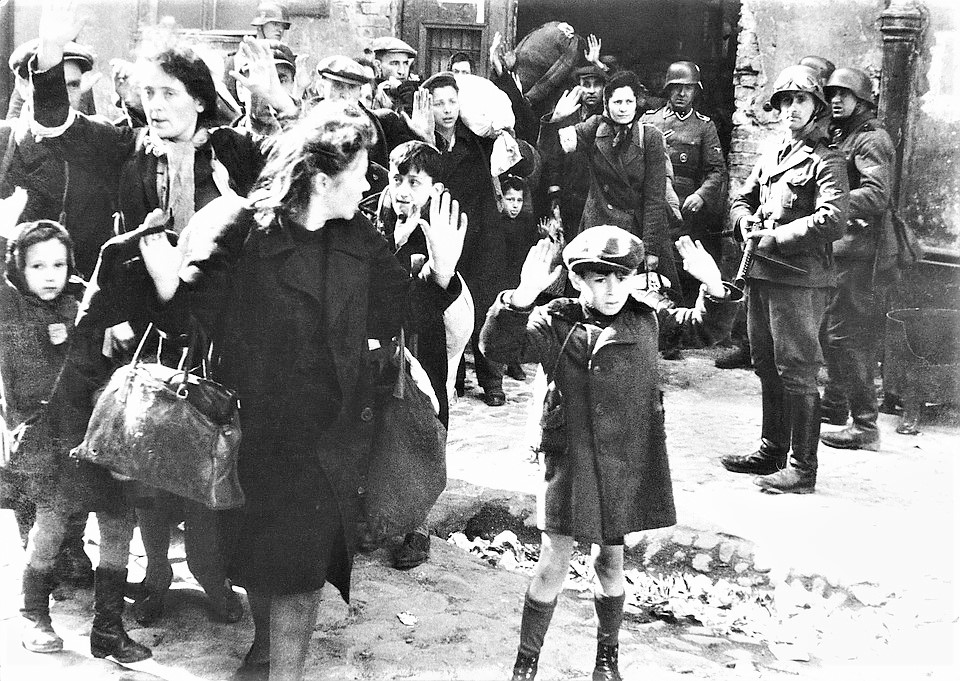
All of us in the camps knew and told each other that there was no happiness on earth that could compensate us for our troubles.

…trotzdem Ja zum Leben sagen:Ein Psychologe erlebt das Konzentrationslager
Viktor Emil Frankl
First
Room 18 in the basement of the Auschwitz camp was the prison where Father Kolbe was held. Why is there a small window there? What did the sunshine mean? It was such a space, a mediocre room that a painter could paint rest in a poor hut, if analogy could be made. It smelled like dust and rust on my nose, and I don’t remember what the temperature was that day. Painful seems to rob me of a sense of the four seasons. I continue to listen to the color of my skin floating in the dark space and the description not in my native language, and I only pay attention to the words of my phase. Cruel places where many people have died, in fact, are neither special nor exist in Japan. For example, the station where the sarin gas attack on the underground took place. I passed there many times when I was a student. Sometimes it is hard to describe the weight of the souls that were cruelly taken away from us.
Not only that, but the Auschwitz camp was also a place where God and Jesus Christ did not come to save. Evidence of this can be seen everywhere in the other prisons, where crosses were dug into the ground with nails. They would have begged and pleaded, but salvation never came. It signals the despair of the invisible soul.
Second
In the concentration camps prepared by Nazi-Deutschland, it was not only people who died in gas chambers or from poison. Others died of suicide, starvation and disease. Deaths in the facilities, all of which are lumped together in the death toll of the camps, make concentration camps the root of evil. There were other dictatorships in other countries, but it seems to be a chosen place that has been so clearly narrated and left behind. We cannot easily ask locals about dictatorships in other countries. Comparatively speaking, the camps in Poland, which can be visited like Auschwitz, are an asset.
Why would something that was a democracy produce such a tragedy, I will not go into the details of German history this time. However, the birth of Nazi Germany was also a democracy for its time. In the case of Japan, the first thing that comes to mind is national review. How effective the national review is (Article 79 of the Constitution of Japan) is not clear to most people, although we know how it works, because none of the judges have yet been dismissed from the national review.
Realizations always spring up ‘after the fact’. There is a delusion about ‘democracy’ and democratic politics, but if there is cruelty, it is now hidden in the micro rather than the macro. Emotions from personal experience are not a problem, but the emotions of incidents happening on the other side of the world are just ‘excitement’ when you get right down to it. For example, If a celebrity commits suicide, you have feelings about it as if it were your own family. but Today, that would be a nuisance to the bereaved family.
Even if the bereaved family cries for understanding in a TV broadcast, if viewers sympathies with them and post it on social media, they are sued for defamation. For the victims, they make a fuss about being told by others without their knowledge. Only equivalent celebrities have the right to sympathy for the people on the other side of the television. That has become the modern age. More and more we are being meta and not exposed to the phenomenon.
Thus, in contemporary discourse, the view that it is not the fault of a single building, such as a camp, becomes natural. medical malpractice, or the problems in the schools, about what happened in that one space. It was suicide, so it was self-inflicted – it was starvation, so it had nothing to do with it – the cause of death was illness. ‘They didn’t all die the same way in the same space. So there is no scientific basis for it’ That is the modern world.
The ‘counter-existence’ is formed by what is given by the ‘counter-other’. One, if it is called ‘death without evidence’, its existence is determined. How do we accept the gaze that determines it? Do we take on that gaze honestly, or do we have a subjective self as a ‘counter-self’ in the Sartre sense? The difference between the objective gaze and the subjective self is ‘freedom’. V. E. Frankl in Man’s Search for Meaning also held on to ‘hope’ in Auschwitz, against the positioned decision. This is not a particularly unusual story, as it has been a guiding principle since the time of the Epictetus regarding servitude and freedom.
Third
I was shown the Gulf War on television when I was in primary school. Classes were interrupted and we kept watching the bulletins, which showed people lying under the rubble. Night vision technology was a hot topic at the time, and we were shown how easy it was to hit the target, even in an operation to set fire to an oil field on the Iraqi side to spread smoke. After saying that they would have been killed, the comment was made that it was probably a mother and son. Whether it was a US soldier, my memory is not clear. It was so disheartening that I wondered if people had really died at this moment. The homeroom teacher at the time explained that if there is a war now, it will not be like Grave of the Fireflies, and that weapons have evolved like night vision devices.
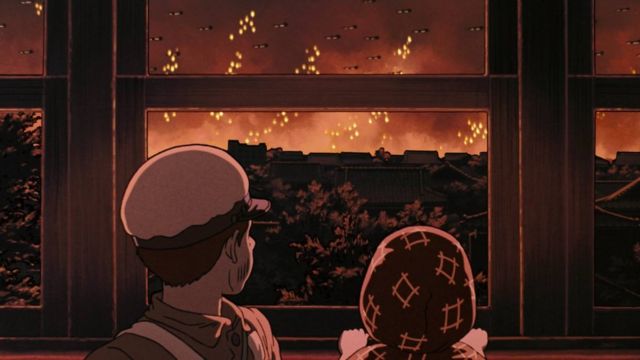
As well as not doubting that all human beings are equal, we vaguely believed (as a certainty) that we had peace with Article 9 of the Constitution. Nevertheless, having children write about their thoughts on peace was as if to say that they can only write about it when they are children. Why do adults make children write, and why do adults stop saying it? Why do parents and homeroom teachers end up ‘teaching’ children? Why are people who talk about peace guests? Teachers and people close to them do not talk about what they know. People whose personal lives are not affected go home talking about their war experiences.
Eventually, as they grow up, some of their friends wake up and realis that what they have received was a left-wing education. Why is Article 9 supposedly admired around the world, but the world does not emulate it? Other countries have armies as normal. When ‘we’ raise questions about it, the world accuses us of leaning to the right. Yet the world calls that awakening ‘evil’. But that is only a fragment of the world. We don’t know the essence of the world. Article 9 of the Constitution is only a corner of it. The country of Japan is not as ‘known’ as it should be. But this is just another world I have walked through. The world is a wide place. The right answer is probably just as complex and wide.
It is not certain that even the Gulf War images seen at that time were real. The only reliable fact that can be traced back is “Stock price”. Stock price records seem to be the universal language. Analysis is subject to interpretation, but the figures do not lie: after Iraq invaded Kuwait on 2 August 1990, stock prices fell vertically. This is followed by a slump in October and November, but a slight rebound in December.17 January 1991, the Gulf War begins with the bombing of Iraq by Multinational Force Iraq.
Afterwards, it recovers to the same level as before the invasion of Kuwait. What was the tragedy we saw in the classroom then, and did the parents and children really die then? As an adult, I look at stock prices and other prices as if to overcome my childhood fears. When the contingency of war is also a certainty, the market raises expectations. Stocks recover as if the feeling of fear is ignorance.
Fourth
I had a strong sense of existentialism when I went back to my memory. Probably the generation that saw the Gulf War as children tended towards existential philosophy. (Strictly, with the ideal that existentialism could change the frustration that builds up) And those who educated us were inclined towards structuralism. Even John Paul II praised the structuralist Lévi-Strauss as a good philosopher.
Sartre and Husserl phenomenology were overshadowed, but the more they were hidden, the more I followed my ‘uncertain certainties’, because there was no being close at hand to answer the experiences I felt. Is what you see reflected in my mind something that is connected to the world? Yet it exists, even outside of consciousness. Even while we are asleep, the real world is stirring outside our consciousness. News of war is only part of reality. Of course, it is difficult to make a clear distinction between structure or existence as to why I felt the way I did about what is handed to me by the world. In all of them there is something to sympathies with and feel.
Our generation was educated by those who did not benefit from the bursting of the Economic bubble, so the world was seen as ironic. At the same time, we were given a lot of dreams that never existed, such as ‘people are equal’. And even after a crisis like 911 in 2001, the economy always recovered: a 10% fall followed by a quick rebound. In fact, it was the Enron collapse in December 2001 and the WorldCom accounting fraud in June 2001 that caused the big drop. War would end the world, and it was only natural that this perception would fade.
Fifth
What do you think of Auschwitz? When asked that question, existence itself is a wall away for those of us who don’t think of everyday life in terms of war. What mattered was the world of peacetime. Man’s Search for Meaning were reinterpreted for 911 in a new translation in 2003. While the brutal images from the camps in the old translation have been erased, we have seen only the fireworks of peace slogans in the reality of the Iraq war. We bemoan the youth who don’t know human pain, but when we were children, we compensated for it with our imagination. But it didn’t mean anything when we understood it. The metadata personality of ‘not knowing human pain’ was formed that way even after the war. That would be an undeniable fact.
Hannah Arendt warned that people imprisoned at Auschwitz would be forgotten over time. She referred to the tortured deaths of those held at Auschwitz, and the deaths forgotten with the passage of time, as a double death. This would be the Auschwitz camp I visited. The records as historical are not imbued with the space. In Room 18, where Father Kolbe was, there was just an empty space inside. He lived his life without thinking in terms of contingencies, and that is a testimony. What would this place look like if you came here with no prior information and an English translation for tourists? Events do not speak beyond information. Existence precedes essence “We mean that man first of all exists” It is an endlessly silent, somehow felt suppression. The meaning of the building’s existence continues to be expressed by human beings. The marks of the cross engraved with nails do not name the scribe. The proof that God did not come is still only despair. They say that it was futile to pray, or that Sartre was an atheist, but Frankl, who was imprisoned in Auschwitz, as a psychologist, left ‘hope’ behind.
In Auschwitz, a place where there is no creative freedom, he remained strong that only his inner life would not be taken away from him. There would naturally be a hidden escape. Those who believed they would be liberated by Christmas committed suicide on Christmas Day with the current of the iron bars. That is why Frankl feared easy hope. In the camps, some people gave alms to others even though they were suffering, while others became mad demons. In the absence of any soul-operating experience, he said that only the value of attitude would not be taken away, even in a place where it was not known whether God would come or not. It includes ‘prayer’.
When Man’s Search for Meaning was published(new translation)in 2003, it was introduced that those of us who had not experienced anything as bad as Auschwitz should naturally have ‘hope’. I thought at the time that was a little different. I thought about the meaning of why Frankl wrote about ‘hope’, which he portrayed in the midst of cruelty, rather than the ‘cruelty’ of Auschwitz.
The historical fact of Auschwitz comes in different forms. That is because human misery is inevitable. I think, even in retrospect, that I was a Sartre ‘condemned to be free’. We have always been forced to feel happy because we are at peace. But in fact, this is not the case. Only those who have known misery can realis this. Even if there is no war, everyone has misfortune, like Hisako Nakamura, who lost both arms. Hisako, who lost both arms due to illness, was brought up strictly by her mother. Like her, everyone falls into a situation where the ‘home’ itself is like a prison camp. Hisako, who was missing both arms, was given a sewing kit by her mother. Without arms, sewing means using the mouth. Naturally, saliva would get on it, but her mother did not allow it. When Hisako learned to sew, she showed the audience how she sewed as the ‘Daruma Maiden’ at a freak show, still holding a grudge against her mother.
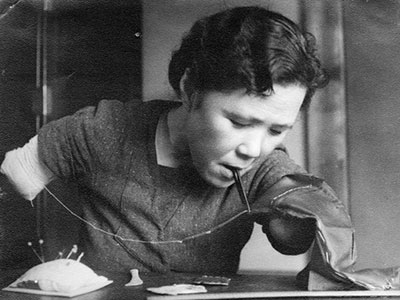
Nevertheless, Hisako forgave her mother and was grateful. While this was based on her Jodo Shinshu teachings, she did not take what she was taught for granted. She realized that it was because of her mother’s strictness that she was able to become independent. But even today in Japan, although this idea is a beautiful story, the mother’s position is that of ‘abuse’. Society must provide ‘comprehensive’ support through welfare and other means to prevent this from happening. Frankl quoted Nietzsche on the most painful human suffering. ‘Suffering itself is not the problem. It is the lack of an answer to the cry ‘what is the cause of suffering’ that is the problem.”
This idea is a ‘freedom’ held by subjectivity, objecting to a given ‘being’. Frankl was also given the ‘fate’ of a dying Jew. But he held out hope. It is freedom but suffering. How freedom is a responsibility, and how heavy it is. Hisako is no different. From her position of being without both arms, she achieved a feat that was almost impossible. It is suffering, and it is ‘freedom’ that tried to overcome her position. All they are integrated into life as untold history. Auschwitz has become a metonymized entity: in Room 18, Father Kolbe took over the dying fate of other Jews. The world does not speak of them. It is ‘man’ who records them to the world. And yet, how many years can one leave behind? Why is it that the faces of anguish in paintings from centuries ago are still recognizable today? For example, Will Shakespeare still be around a hundred years from now? Why is it that what Father Kolbe did is still great today? It is man who makes sure that records are kept, but who creates the destiny that allows them to be kept?
Last
Sartre, who was a genius, missed his prediction before the Second World War when he said that Germany would not go to war. How did a dictatorship arise in Germany, which was supposed to be a democracy? The question can still be asked today. However, there is inevitably no end to speech and violence. This is because there is a ‘will’ in people. The will cannot be unified: the Covid19 epidemic has not subsided, the war between Russia and Ukraine, and in Japan the controversy continues after the assassination of former Prime Minister Shinzo Abe on 8 July 2022. I cannot recall a word from my childhood when I could so easily reject these conflicts. Children today may be cleverer, but a child’s words are not allowed to cross the world. Maybe that is why it is children who can go to the Kingdom of Heaven. (Matthew 19:13-15)
Our pursuit of human goodness is not always beautiful. We move away from heaven little by little as we defile our souls, as we defile ourselves, as we struggle. We cannot abandon it because we must live with ‘will’. Even if we put an end to today’s challenges, is it something that will dissolve into history and be forgotten, or is it something that will be imprinted on individual souls?
Keeping silent, like the adults of the past, certainly seems like a bad thing. But what if we cannot protect our precious beings if we do not answer the demands of fate? If adults fight, children lose their place in the world. If teachers have made deviant statements, children feel insecure. Maybe that’s why they kept quiet back then. Was it adult self-deception? Or was ‘consideration’? It is not possible in heaven to know the complexity of human beings. Is that not the will to struggle to live? If the dead sleep-in peace, the living must awaken. It will come, even in silence.
We must have experienced hardships and cruelty in each of our growing up years. We should not compare our misfortunes with others. Invariably, there is some trivial love left in people. The driving force behind Frankl’s books can be said to be Agape. Faith in human goodness would be to remember that. Even if, in any future situation.
Weeds were beautiful in Auschwitz.
――Like Mary at the feet of Jesus.

 Chris Kyogetu