La pesanteur et la grâce La mal (Simone Weil)
Le faux Dieu change la souffrance en violence. Le vrai Dieu change la violence en souffrance.
“The false God turns suffering into violence. The true God turns violence into suffering”
Alors, où mettre le mal ?
“So, where does evil belong?”
Il faut le transférer de la partie impure dans la partie pure de soi-même, le transmuant ainsi en souffrance pure. Le crime qu’on a en soi, il faut l’infliger à soi.
“It has to be transferred from the impure part to the pure part of oneself, thus transforming it into pure suffering. We must inflict the crime within us upon ourselves”
Grammar
The use of the definite article, such as ‘Le faux Dieu’ or ‘Le vrai Dieu’, refers to a specific deity.
Verbs such as ‘change’, in the direct present tense, and ‘transférer’ refer to the transfer of a thing to another place.
Verbs such as ‘change’ in the direct present ‘transférer’ indicate that the thing in question is transferred to another place.
The expression ‘de soi-même’ is used to indicate the myself, the self.
The expression ‘qu’on a en soi’ indicates the self and refers to a sin related to the aforementioned part.
The expression ‘à soi’ indicates taking action against the self.
Note:
For some reason, ‘So where does evil belong’ was of interest to me. Weil seems to speak only to his own inner ‘mystery’ and ‘imperfection’. It seems like Nietzsche’s ‘self-transcendence’, which argued that the purpose of human life is self-realisation and transcending one’s own limitations and constraints.
However, the evil in the Catholic prayer ‘Lead us not into temptation, but deliver us from evil’ means ‘Satan’, so Weil, although a philosopher, is influenced by Catholicism, so in this case evil includes Nietzschean evil, but is also close to the Satan positioned by Catholicism is also close to the Devil.
Here, briefly, about Satan. The etymology of the word exorcism does not mean exorcism, but is derived from the Greek word ‘to swear severely, to declare’.
It is a declaration of faith by a person possessed or seduced by an evil spirit, acknowledging the absolute rule of God in Jesus.
Just as in the film The Vatican Exorcist, ‘sin finds itself’, so in the Gospels Jesus speaks of taking up his cross.
Satan, I can’t say for sure at the moment because I have no experience of exorcism ceremonies regarding Satan myself, but I think the story wanted to say that the true God turns violence (satanic) into suffering (cross), and with a false God, when he claims to perform miracles of God, he makes them satanic.
Reference
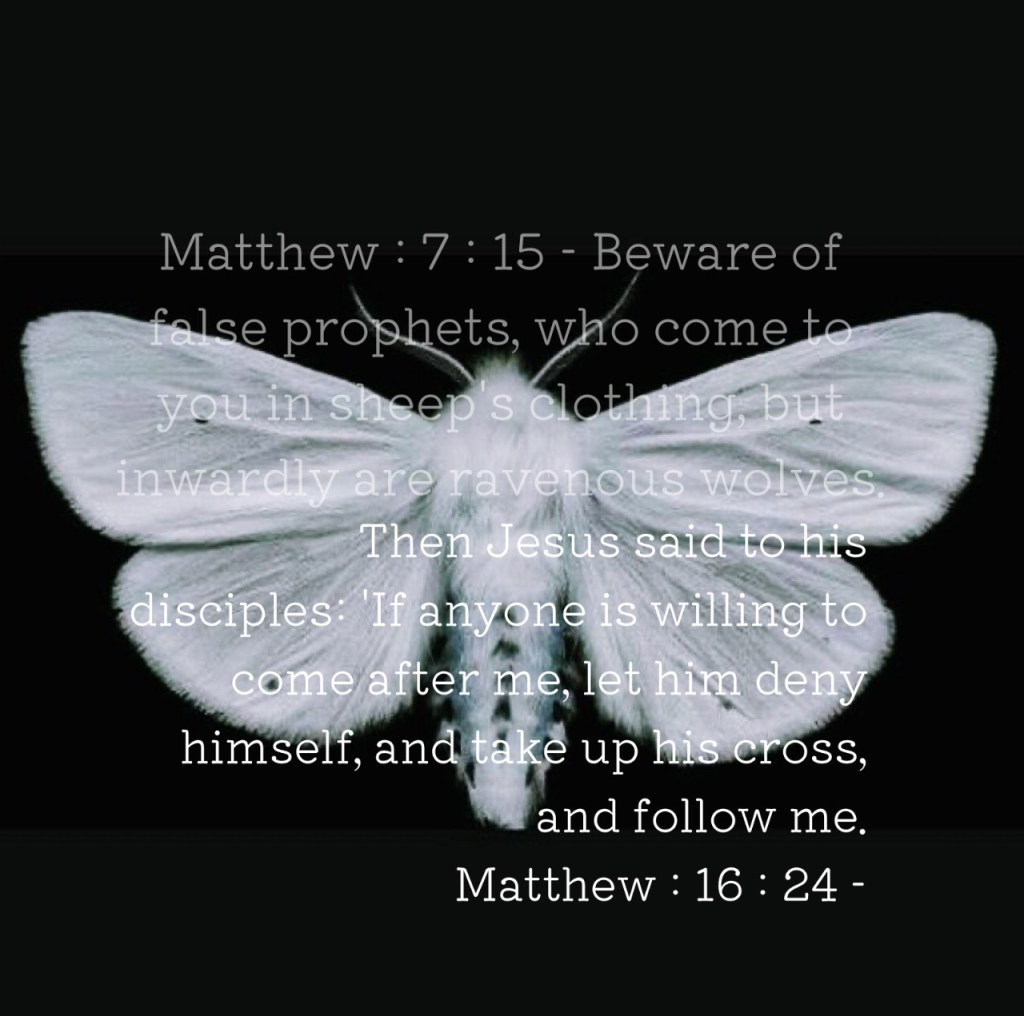
Matthew : 16 : 24 – Then Jesus said to his disciples: ‘If anyone is willing to come after me, let him deny himself, and take up his cross, and follow me.
Luke : 9 : 21 – But speaking sharply to them, he instructed them not to tell this to anyone,
Luke : 9 : 22 – saying, ‘For the Son of man must suffer many things, and be rejected by the elders and the leaders of the priests and the scribes, and be killed, and on the third day rise again.’
PATER noster, qui es in caelis, sanctificetur nomen tuum. Adveniat regnum tuum. Fiat voluntas tua, sicut in caelo et in terra. Panem nostrum quotidianum da nobis hodie, et dimitte nobis debita nostra sicut et nos dimittimus debitoribus nostris. Et ne nos inducas in tentationem, sed libera nos a malo. Amen.
(Pater Noster)

 Chris Kyogetu