The First Night-English

My rosary broke, prompting me to buy a new one.

Seizing this moment, I’ve decided to start sharing my dream diary openly.

Before my father passed away, he recounted to me a story from the “Tale of the Heike.” Following the Heike’s fall in the capital, a nun of the second rank entered the waters with the young Emperor Antoku. The three sacred objects she carried with the infant sank to the depths, and only the replicas of the mirror and sword, excluding the magatama, were passed down to subsequent generations. These sacred objects were meant to remain unseen by the emperor, leaving him uncertain whether the ones still preserved are indeed the legendary items. My father would often remark, ‘It’s better not to talk about the imitations outside.’ For it is political to those of ignoble spirit. To renounce the beauty of illusion is an act more ignoble than witnessing the demise of myth itself. Yet, given the world’s perpetual ignobility, we alone are left to breathe life into these phantasms. My father’s manner of speaking, rich with the suggestion that such matters were best left unsaid beyond our walls, seemed to uniquely encapsulate his character. In its entirety, this became my own Tale of the Heike, a treasured story woven into the fabric of my existence.

This is what I dreamed:I found myself standing in a fine drizzle, feeling as if suspended between worlds. The sodden earth beneath my feet seemed to whisper of days upon days of unending rain. Sheltered under the conifers, uncertain if the rain would relent or intensify, I stumbled upon the imprint of a sheep’s hoof. Though I couldn’t fathom why I attributed it to sheep, there was a certainty within me that a verdant meadow lay just beyond, yet I felt unable to proceed further. The light of day was muted, never yielding to darkness.

“A psalm of David.”

“The Lord is my shepherd; I shall not want.”

“He makes me lie down in green pastures,”

“He leads me beside quiet waters,”

“He restores my soul. For His name’s sake, He guides me in paths of righteousness.”

“Even though I walk through the valley of the shadow of death,”

Who recited that psalm? I was uncertain of the language in which it was spoken, yet it was evident to me that I was among the living, for I recognised it as the 23rd chapter of the Psalms. In the realm beyond, where life relinquishes its grasp, the ego and personality dissolve, and we transcend this passage as beings beyond imagination. Monks have said that in death, we become free of anger and sorrow. Yet, I felt not so privileged; I bore with me the full spectrum of emotions—joy, anger, sadness, and grief. Thus, it dawned upon me that this was all ensconced within a dream. The sound of my heart’s steady beat confirmed it; I was dreaming. I turned and posed a question that lingered in my mind: ‘I understood this psalm to be a trial for those who live, but does its reach extend to the departed as well?’

I asked this and then awoke.

Regarding this 23rd chapter, Augustine states that ‘the Church speaks to Christ.’ Who was it I intended to turn and question, who recited Psalm 23 to me? It was neither light nor shadow. The choice of interpretation seemed to rest solely with me. Boldly, I assert it was both. What lay within my grasp was both a void and a celestial realm, but I could never truly know it, for I couldn’t traverse it further.

This dream appeared to emanate from the mind. Impermanence, elusive to the senses, left me wondering whether the Holy Spirit had reached out and touched me beyond its speculation. The sacred, submerged in the depths of my mind, remains by my side as a discrepancy, a reproduction. Thus, it manifested as a ‘dream’.

The unsaid words and misplaced affections faded into eternity. For me, as a ‘phenomenologist’, the act of ‘bracketing’ (Epoché)these unidentifiable aspects and extracting only the experience from them was what I had been striving for all along.

Perhaps the fact that my father’s funeral adhered to the Jodo Shinshu tradition also played a role, yet I refrained from mentioning Christ altogether while delivering my eulogy before the coffin. I attuned myself to the atmosphere, contemplating what would be most appropriate for that particular moment. Neither did I delve into tales like the Tale of the Heike; rather, I spoke of more mundane matters. This approach brought a certain clarity, yet simultaneously compelled me to ponder my faith: ‘Could it be that the life devoted to emulating Christ is merely a “dream” during our mortal existence?’It might also signify an acceptance of having been defeated in thought. For me, such an entity had simply “vanished.” While dreams are chronicled in the Book of Daniel as a conduit to divinity, they can equally be construed within the human psyche. Innately, I could not assert Christ’s presence as “absolute” in the manner of a sovereign decree. And so, even if these were dreams of a fleeting existence, I found myself replacing a broken rosary.

‘Whose son are you?’

I wish to keep in mind that Jesus Christ, who drew nearest to the mystery of the ‘Father’, was executed. It is said in Revelation 2:17 that there exists a name known only to God and the one who receives it.My reflections often dwell not solely on his resurrection but also on his death. The question arises: what is truly sacred? Does Jesus reside within the rosary? The answer is no, and yet, why did I find myself compelled to repurchase it?

I have resolved to believe that these discrepancies between reality and mystery are what allow us to retain our humanity. More pressing, perhaps, is the question of what we would wish to do if we and our cherished existences were truly to dissolve into ‘nothingness’. Death is the ‘fruit’ that sinks to the ocean floor, prompting those who follow to strive to create substitutes for that which was lost. In the realm of the living, death assumes the guise of a dream, slightly misaligned with the otherworldly. Much like Jesus not residing in the rosary, yet the rosary remains an essential item. Hence, a certain misalignment must exist where this world intersects with the next. There are religious factions that oppose the three sacred artefacts, but the Christ shaped by skewed historical narratives and political ideology diverges from the true Christ. To skew mythologies within a favoured ideology betrays a lack of sincerity towards the sacred.

Some literary figures have remarked that literature often dwells more on death than on love. For me, a myth that stands in contrast to Jesus’ love and death is, for example, Orpheus. While Jesus bequeathed love to the world, Orpheus, overcome by love and awe, looked back despite his covenant with Hades. This fateful glance sent his wife Eurydice back to the realm of the dead, leaving only death in its wake. Even before his crucifixion, Jesus did not waver or look back when faced with betrayal by his disciples, rejection by the people, or the death of John the Baptist; he continued steadfast on his journey.

In narrative terms, both tales embody a form of love that brushes against the valley of the shadow of death, spinning a story that knows no end.Therefore, to accept only the impermanence of things or love alone was something I could never do.

Husserl’s phenomenology calls for fidelity not to the ‘things themselves’ but to phenomena as they manifest in consciousness, thereby implying that all that is seen, felt, or dreamt holds equivalent value to ‘reality’. My truth, as a phenomenon, possessed a surety. This dream may vary from Nebuchadnezzar’s dream, as interpreted by Daniel.

Yet within this, what do we decide to take from the scant items available before death claims us? Concerning this, I choose henceforth to employ the nebulous realm and vocabulary of dreams.

Within this domain, I seem to discover my core essence.

My conviction stands firm that my strength lies in accepting that absence, settled at the ocean’s depths.

As the first night draws to its close, were I to leave something unsaid,

Before the coffin, I longed to say: ‘You were, to me, like Joseph.’
Sacred and Secular phenomenology.

Why is it beautiful?
While I keep on chasing it,
My heart knows better than I do. Where to go for it.

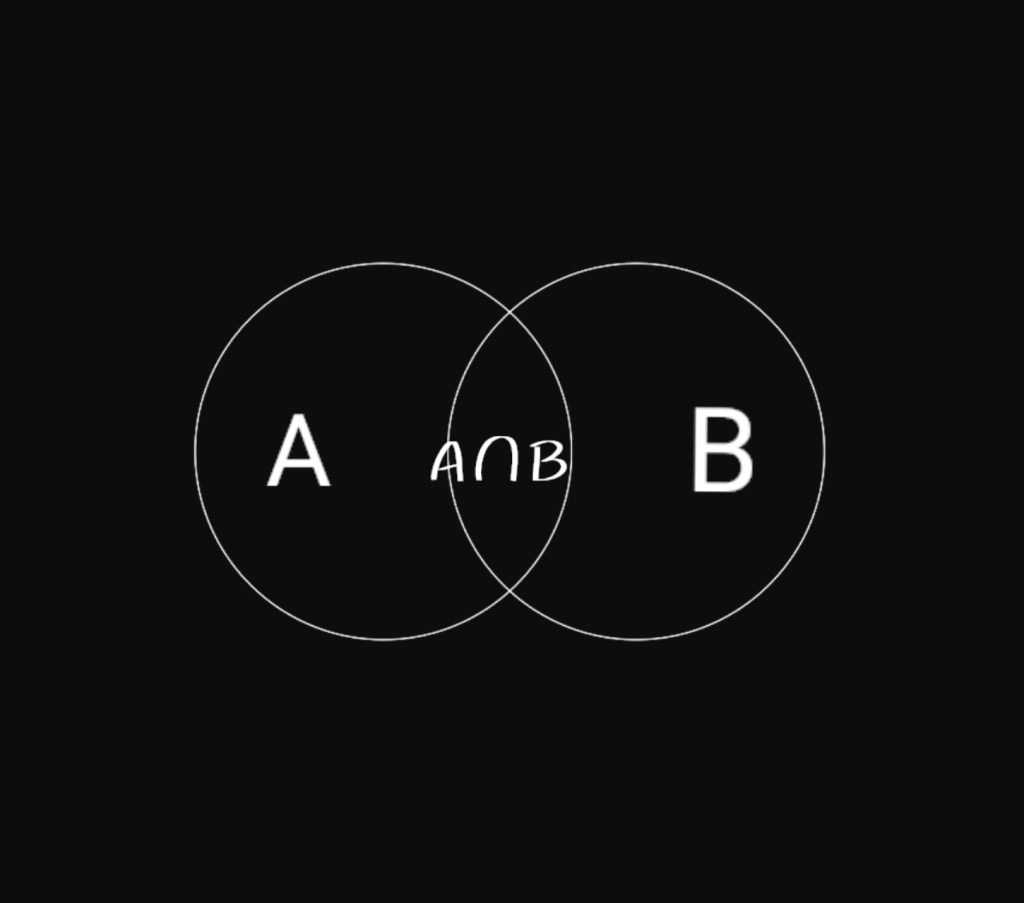
A Sacred and B Secular. Chris Kyogetu
  1. 1Artwork with a phenomenological gaze.
  2. 2The Death of the Author
  3. 3Sacred and Secular Phenomenology
  4. Last ständig vorangent

1Artwork with a phenomenological gaze.

Have you ever thought about sketching a building on a street you pass every day, just once? It is a building you should see every day. You may be able to describe the features of the building, but you cannot spontaneously say how many windows it has. If you were to draw it, you would start by counting them.

It is difficult to find a place for sensitivity to live. Sensitivity cannot be used as a simple form of communication: living in the 20th-21st century, we are exposed to works of ‘expressionism’ and ‘artistic supremacy’, we are taught that we have ‘freedom’ (freedom by breaking away from religion) in our hands. We will see famous works of art as if they had been chosen by the freedom and good will of man.

But on the contrary, many questions will arise in front of the painting as to why a single painting is so expensive. Few people can explain why this one painting is worth so much, and its magical survival strategy as a business strategy. Apart from the fact that the Church commissioned the painting, there are many lies about how the demand for it was created. We accept the world vaguely, without subdividing it, like a building that does not know how many windows it has, but always exists.

A building has a role to play. But when I, as an outsider, try to sketch it, when I try to mix the external time of the building with the mental image of the building, when I start to count the windows, I have an inner world of my own.

When religions chose paintings, the criteria were simple. All that had to be painted was a saint, even if there was no understanding on the part of the church. Once people were painted, the subjects became endless. It is not known how many people have synaesthesia, so why are they chosen? How can one person’s ‘dream’ cost hundreds of millions of dollars? Some people can choose one or the other: manifestation through recognition by others, or manifestation of a value that only they know. Some people cannot choose. I am one who could not choose. The reason is that it is not as simple as the dichotomy between the sacred and the secular.

That is why we can no longer distinguish between them and the ‘sacred’. That is why the first thing to be baptised, as a sublimation from sensitivity to sensibility, is to learn ‘interdit’ in the body. 

A misunderstanding of Bataille’s ‘transgression’ by many irreligious people is that they assume that transgression into prohibition is the abolition or removal of the ‘sacred’, thereby confusing it with evolution – freedom. (Erotisme coll 10/18, p. 68,69) 

The eroticism of Bataille and Baudelaire, the fetishism of Roland Barthes, are not new discoveries. They were philosophies of the original state of nature that broke taboos. They understood Catholic sanctity and were oppressed by it, but did not seek to abolish it. We must not think of them only and by the authority of religion.

Interdit is the French word for Catholic prohibition…Because Bataille is French.

The Death of the Author

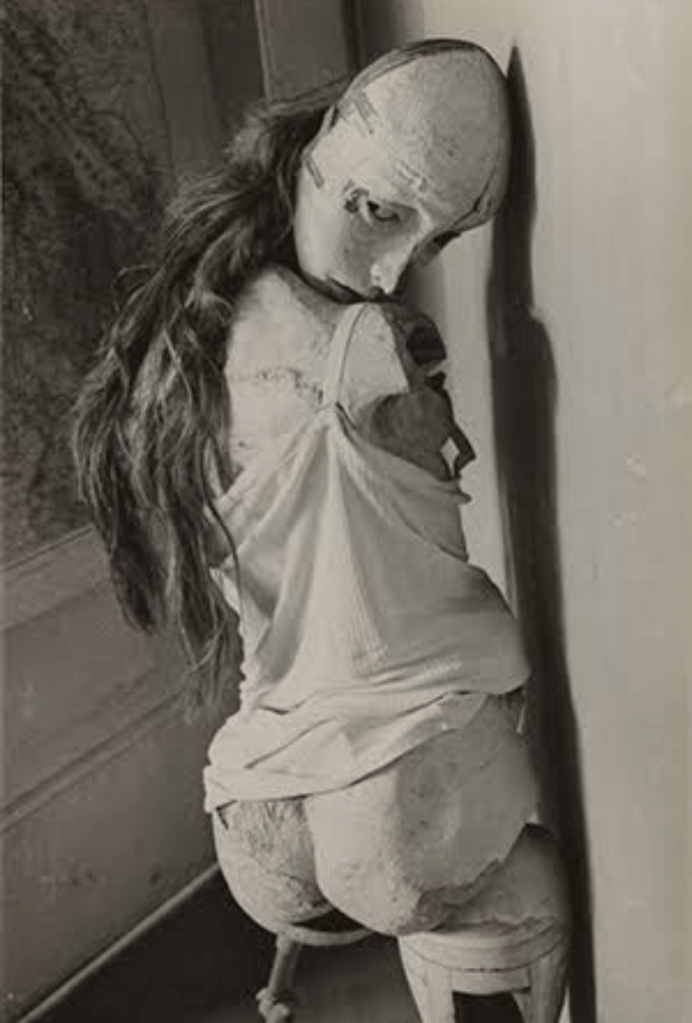
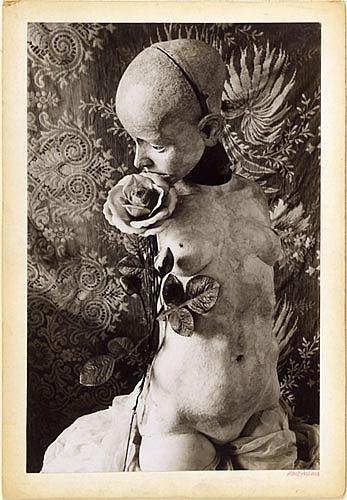
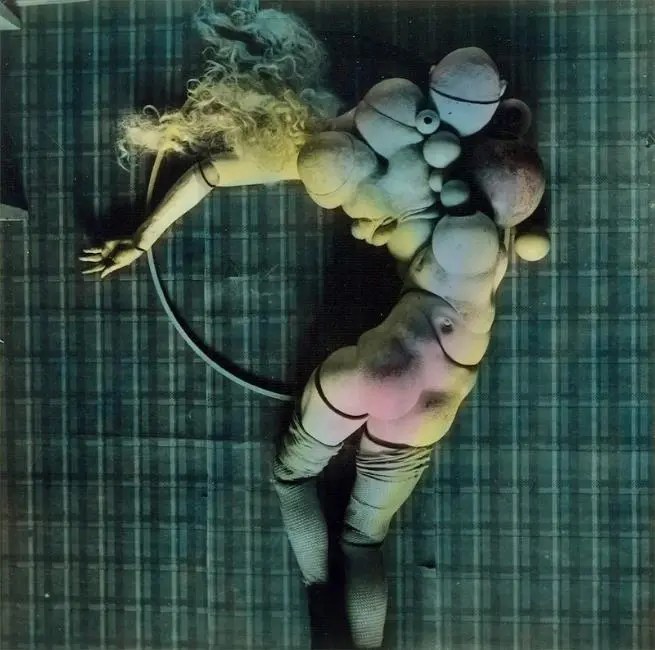
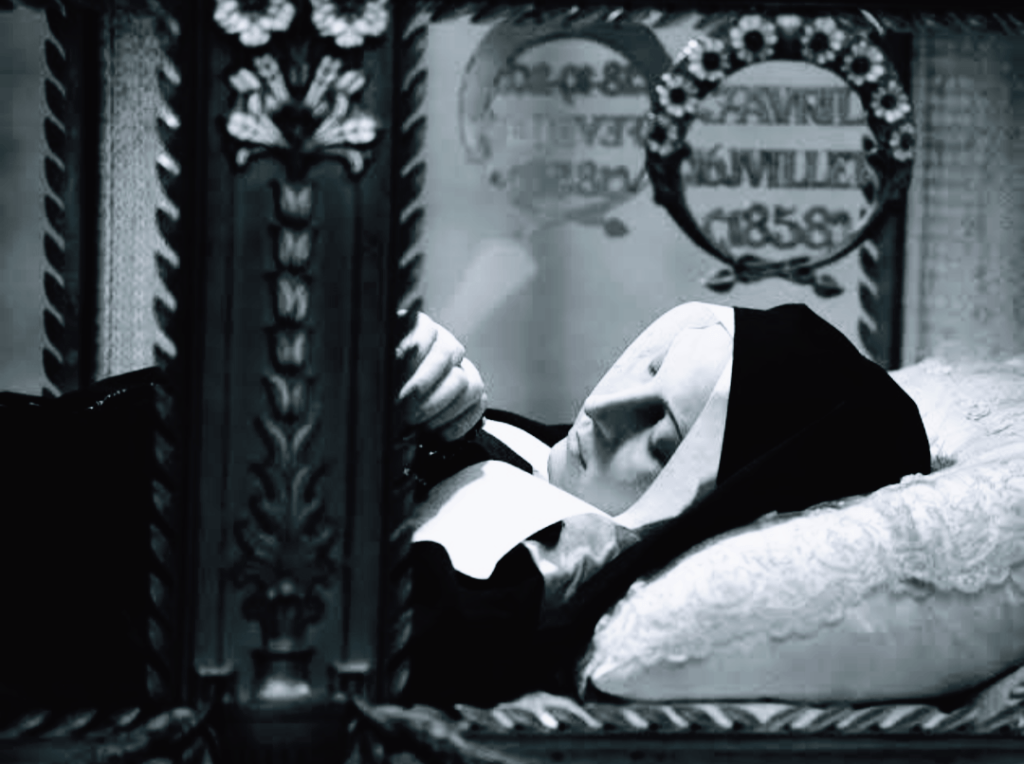
There are differences between the production processes of spherical-joint dolls and statues of the Virgin Mary. The statue of the Virgin Mary is dug out of a regular rectangle and does not show her nakedness (the skeleton and the flesh are conscious at the sculpting stage), but the spherically articulated doll is made out of material and is conscious of its nakedness.By associating the exposed genitals with the naked body and the mutilated corpse, it is even more related to the sexuality and death of the Battle philosophy.What is the entity confronting the spherically articulated doll? The answer is saints. Remember that St Bernadette is beautifully preserved as a mummy. She became not only a corpse, but a transcendent being, but does the doll qualify?

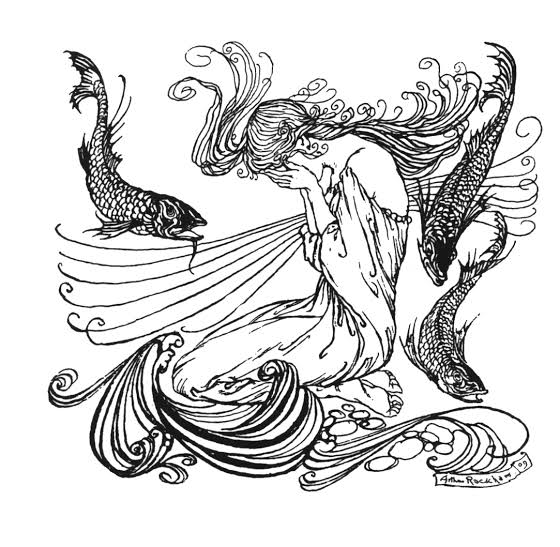
  At the intersection of the sacred and the profane in an A∩ B relationship lies the sacred part of art-humanity. Art in the Christian world is often like this. In literature, even in ‘Undine’, a Catholic priest creates the necessary conditions for the water nymph to become human.

But she dies because of human folly. What was the most beautiful thing in this story? It was the ‘love’ of the water nymph, who tried to approach the ‘human image’ defined by priests and Christian values. The tragedy of Undine having to kill the man who broke the contract is more love. Again, we can speak of a Bataillean transgression and interdit.

St Bernadette
Friedrich de la Motte Fouqué:Undine 
by Arthur Rackham

Hans Bellmeer’s doll is said to have left traces of secrets. It has a spherical belly, an artificial daughter, and it does not tell the story of its life. Dolls were toys, but this doll plays with the human psyche. Abstract works are often not judged by visual information alone and require a thesis from the painter, as in the case of Malevich. Nevertheless, what is always required is a work of sensitivity towards the reader or viewer. Whatever the author’s background, he or she emerges as a signifier. This is exactly what can be said of Roland Barthes’s ‘The Death of the Author’: the work and the author are two different ‘Ones’, and the work is not a manifestation of the author. However, an intuitive (synaesthetic) viewer may find fragments of the author. It is impossible to say when the effect of the symbols will be felt after a long period of time, but the role of symbolisation is to give form to ‘pain’ which is often overlooked in the world of war, racial oppression, ideas and writing.

One of the things that has left a painful legacy is the cross-holes left in the Auschwitz camps, but it is impossible for us to experience the same pain. So is a place like Auschwitz enough to document the ‘tragedy’? War cannot be documented in many other ways. In times of catastrophe, we revisit the catastrophic past. But puppets can be applied to war and other contemporary tragedies. Artworks are prepared to be applied to many different positions.

In a sketch, the external value of existence is like counting the number of windows. You don’t need to know the number to have everyday problems. But when you start counting, it shows your humanity.

…… For example, you are a teacher. When you ask your students to draw, they all draw different pictures.

Is this pure work the same as an unjust or immoral mind? Unfortunately, as human functions, they are the same. If we were to assign superiority or inferiority to them, it would depend on the moral ethics of the time. As proof of this, we remember that Gauguin’s paintings were treated as pornography in modern times.

3Sacred and Secular Phenomenology

What should be Epoché (phenomenological suspension) regarding the sacred and the profane is ‘happiness’. Today, happiness is divided into happiness that can be communicated to others and happiness as the value of one’s own existence. People always live in search of happiness and do not want their happiness to be violated. If they are uncomfortable with religious talk, it is because their own sense of the value of happiness is shaken. Therefore, you must suspend the urge to be happy. Phenomena are not driven solely by happiness. We must recognise that reality. Are you under the impression that works of art make you happy? Well, that is a mistake to begin with. One’s own sense of happiness interferes with the perception of the sacred. This is also true for religious people, whose awareness of true happiness can become a word unto itself and lead to unaccountable injustice.

It is not to denigrate faith that phenomenology is concerned with phenomena. Religion has also become an obstacle for those who associate philosophy with happiness, but that is exactly what must be done to Epoché. It is tantamount to not even understanding actual existence. For they have stopped thinking about where in the world they have been dropped by the values of happiness: ‘I could be happy with philosophy without religion.’ Today, just as the poet Baudelaire defined God and the secular not as a dualism but as a vertically equal position from the human point of view, I see the relationship between the sacred and the secular not as a dualism but as a set theory, like A∩B. As a world event, the sacred does not ‘attachment’ but ‘includes’.

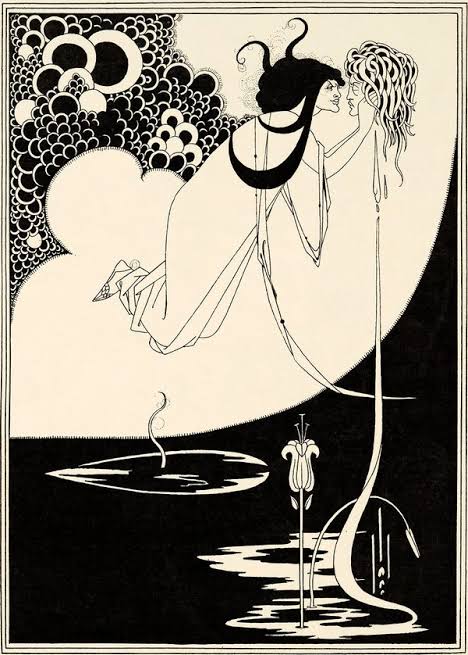
Oscar Wilde’s Salome example will be the last. John the Baptist, who was executed, was located at A-B. Oscar Wilde was an adaptation of the Bible but understood it well. Had he not attempted to convert to Catholicism, he would not have turned his attention to this ‘Interdit’.(prohibition)

Oscar Wilde’s Salome is not a simple indulgence. If he had chosen to tell an unregulated story, using only his imagination, he could have come up with an ending in which Jokanaan was not executed and Salome was not killed. He was well versed in freedom and law (Interdit) as to why Salome had to be killed. The evidence for this is that Oscar Wilde converted to Catholicism in his later years.

Jesus Christ crossed over to the people with his own feet, but Joan the Baptist (Jokanaan) obstinately refused to forgive King Herod’s unfaithfulness. In the Bible, Salome’s original book, John appeared to testify to the light (Gospel according to John, chapter 1) and to say that Jesus was the Son of God. John the Baptist was so righteous that he even advised against religious leaders. (Matthew 3:7-12)

I don’t know why Wilde understood this, however, it was biblically correct for him not to answer Salome’s love. Jesus can move from justice to love. It also makes sense to explain the Holy Spirit’s involvement in the events of this world that the Trinity has its own persona and that the Holy Spirit comes and goes.

Oscar Wilde: ‘Salome’.
Painting by Aubrey Beardsley.

The creator of a work of art dies, but we make a mistake if we see this death as just ‘death’. We must not forget that this ‘death’ is typical of Jesus. John the Baptist did not come back to life, Lazarus was a reanimation. Nor did Jesus’ resurrection give him another life, as in reincarnation. Even Mary, weeping at the tomb, did not recognise Jesus after the resurrection. Hans Bellmeer and other writers have also not been analysed and resurrected. They have only assumed their Creator, whom we have analysed from their writings and works.

It is banal for the transformation of the artist to be an observation only in the museum (and books). If it is to be a phenomenological reduction, it is to try to make the transformation everyday. Phenomenology is the philosophy of the everyday.

Last ständig vorangent

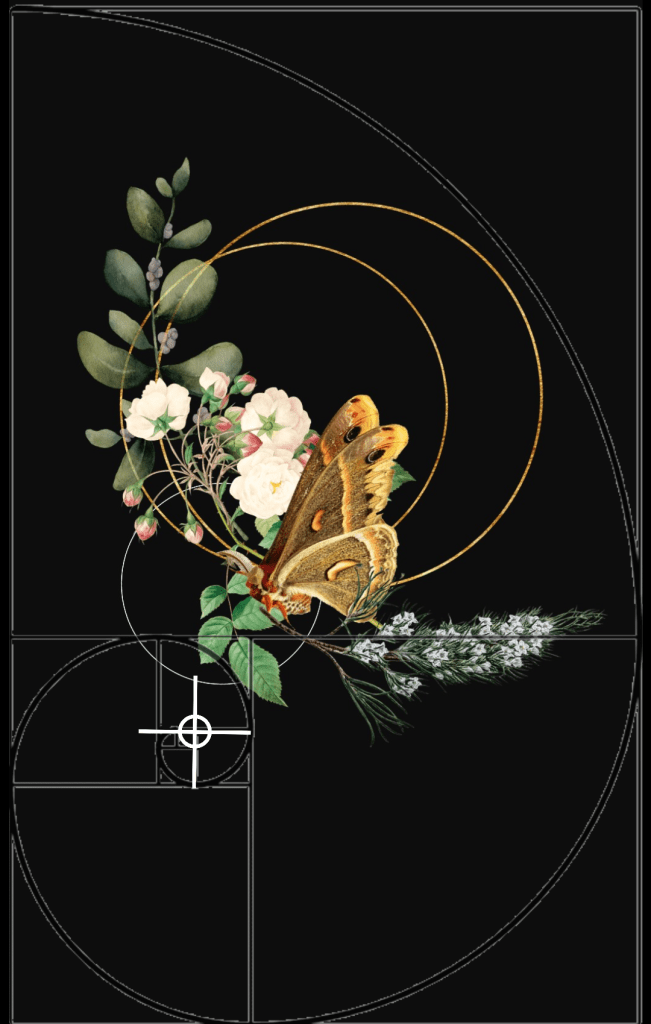
Jesus Christ, the number corresponding to the Hebrew letters, adds up to (Jesus 888 + Christ 1480 = 2368) These three together are a golden ratio of 3:5:8, but the Hans Bellmer doll is not St Bernadette, but the woman who modelled it lived while hiding the fact that she was a Jew There was a woman.

The golden section is already calculated and present before we recognise it. What you do for others, you will do for yourself, is the golden ratio in modern biblical interpretation (Matthew: 7, Luke: 6). What you do for others will come back to you, so much so that it’s even been written about in business books, and we don’t need the noun Christian to hold this idea in our hands. It is an undeniable fact that events are not driven by happiness alone, but if you are looking for happiness yourself, it is a wonder that you are attracted to ‘work’, even if you do not know the Golden Rule. People pray to the miracle of the saint, to the presence of Bernadette, but not to this doll that represents pain. What it imitates is the love of the artist. Because of love, there was anger in the world. And it represented the liberation of the soul. That is the meaning of free creation.

If you begin to look at the mystery of being, why you ‘exist’, rather than the glory of being recognised in life, you will experience communion with the sacred and the profane. Jesus Christ found the pain and sickness of the people. For this age, these were things that the world had rejected. Is there a difference between this act and the reflections and mere observations of philosophy?

Like Jesus, who was aware of his poor existence. It’s banal that a life ends just before someone’s authority is spread throughout the world. During the war, when it was common to see corpses lying around, there were artists who made dolls of the women they loved. Waiting for the war to end is the time of the mundane. The passage of time makes cities without the scars of war. It is a sacred time to look at the reality that hides the pain so that there is no pain, and to look at what is hidden.

In the original title of this article, ‘Sacred and Secular’, M. Eliade says that sacred time is time that can be repeated many times. The two types of time experienced by religious people and the phenomenological time scale are very similar. Chronos (outer time) or Kairos (inner time). Inner time has its own time axis. When the sacred and the religious (sacramental) come close together, it is a different story because it requires ‘faith’. Consciousness is at the door of faith. When we are in front of it this time, we are happy. Belief and faith are two different things, I will not go any further.

Faith and susceptibility are closely connected. It has euphoria and tragedy, as if it were a soul. To be a creator and to want to ‘manifest’, whether this is a mere performance of the brain or a gift from God, becomes from here an inseparable belief in philosophy, but I wish to be given new ‘eyes’ on the ‘happiness’ that I have kept hidden until now.

This article is a series of articles. It and a recounting of Salome and Undine, which I dealt with in my book Iconograph.
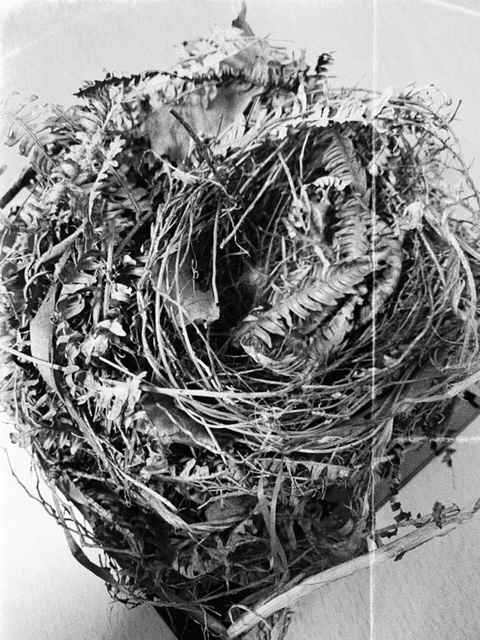
The Phenomenology of the Bird’s Nest, which is also my theme.
I drew inspiration from Simone Weil’s philosophy lectures, On Between Instinct and Function.

Birds form nests out of parts of their lives.
Is it the Word of God, as in Matthew 13, or inorganic parts?

SoarⅠ (English.ver)

Catholicism had yet to be philosophically organized.
Simone weil

There are many genres of fiction today, One of the things I love about literature is that it makes use of what is really only a record. A simple lost love can be embellished by a single word, a forgotten dead can have a meaning. The loneliness that people tell us to forget, the happiness that seems so ordinary, all depend on our own sensibility, and we can decide whether our life is just a record with oblivion or a shining life.

It is left to the sensibility of the writer to verbalize and leave behind the succession of moments that disappear from the world that no one picks up. Perhaps those who have such a point of view are those who are terrified of the moment disappearing as it is. Some people are happier to forget, others to talk about their misfortunes, so that their loneliness becomes cathartic through monologue.

For these people, the ability to speak their own language is important.

As for me, I create in the fictional world the heat that I did not live in the real world. There may be many emotions that I have killed for social reasons, but the emotions that I could not delete and the place where my faith lives is the fictional world. It is an introversion, but an extroversion that challenges the world. I’ve never been pessimistic about it.

Artists are left with only two choices: mere madness or genius. Van Gogh and Caravaggio are good examples. And Emilie Bronte, whose inner world was immeasurably darker than the one she wrote about in “Wuthering Heights”. A true artist does not look for “genius” to win the admiration of others. The poetic sentiment and the way of looking at things that he could not abandon is a God-given gift, and that is what he is in Christianity. The sensibility that almost killed me many times when I was urged to be social was never socially disadvantageous to me in life. What’s next is to find out if this really was a gift from God.

I want to know the answer to the question of whether it really was. Vladimir Nabokov’s “The Gift” is such a story, and it is also the story of Nabokov’s alter ego in exile in Russia.

One term I have coined is “Soar point”. It has taken me many years to get this theory down to an understanding.

I’m going to write about it in an irregular series.

 In the fictional world, there is no standard height of land. It is a world of language.

I try to write about light, temperature, color and space. The writing is plain, sober, rhyming, It is pregnant with poetic sentiment,

The words are like music, even the spaces between the letters are meaningful, and the protagonist walks through the world I have created, manipulating them.

The first work, ‘Pangaea Doll’, is based on a real patient in a laboratory in England. She was a patient who was strange, but who did not know where she had gone in the real world. The intersection of dream and reality was a psychological and scientifically possible delusion. But the name of the disease was something I made up. It was my first fictional world.

In the second work, “Iconograph”, there is no prominent fictional object, but the clock tower of a mechanical clock becomes imaginary. The phenomenology of the “bird’s nest” is based on the 13th chapter of Matthew’s Gospel.

Jesus was at sea, on a boat where no plants could grow. So he compared the Word of God to a seed. Some seeds can be sown in one place, but the birds will come and eat them. Other seeds fell on stony ground, where the soil was not deep enough and they sprouted quickly, but when the sun came up, they were burnt and withered away because they had no roots. It is difficult for the plant, the Word of God, to grow. ”Listen if you have ears.“The boy who hears these words and The protagonist, Kawamura Koune, goes on a journey of thought to hear God’s blessing. In Japan, Christianity is frowned upon if you don’t like it, and the characters cross over from longing for faith to oblivion, to disgust, and back to blessing. If this were the only explanation, people would mistakenly believe that there is no romance in this novel. That’s the trouble. There is love and death in this story too.

But the first reason I don’t say this is because I believe that waiting for the assessment of a mediocre love affair or death is just an emotional assessment. It is a sad fact that the real world is the same way. Death is equal, but there are special graves for special deaths, and classes for the deaths of the unconscious and the body. But the soul is equal, and the literary world can save even the most unlikely of beings. Literature must have the fervor to express what the masses have ceased to say. Love and death cannot be conveyed by begging only for sympathy, even if it is true. The soul may live without emotional sympathy if it is metaphorically told how the world works and how God works in it. The external world is rarely captured. But the enrichment of the inner world can make even an empty life seem like a footnote.

Many times I have been opposed to adding philosophy or religion to literature, but I have never given in. Perhaps it is because I know how cruel it is to assess the feelings of others. It follows that one’s own words do not grow, and that the same is true of God.

If the Word of God is a plant, it is the bird that spins it into a nest that grows beautifully. The bird’s nest is not only a bird’s nest, but also a part of the human world that it picks up and builds.

My fictional world is such a phenomenology. It represents the formation of orientation, the world created by orientation, while waiting for the analysis of existence. My literature is thus an amalgamation of spins, and there is no such thing as a complete lie. The heat that did not live in this world becomes a fiction.

Just as a bird’s nest still does not know exactly how to nest with precision, so I weave my experiences, my fantasies.  From the fictional “land” of the precise nest, uncertain of how it is completed, my story takes Soar. And the seeds dropped by these birds of fancy can grow or disappear. The reader’s understanding constructs a third world as a plant that grows. That image is both sad and hopeful.

The story must always take flight and Soar .

I have called it the ‘Soar point’.

Continued from (2) (Irregular)

WordPress.com でブログを始める.

ページ先頭へ ↑