There are various accounts of how Lafcadio Hearn, also known as Koizumi Yakumo, lost the vision in his left eye. Some claim that a rope from a swinging carousel struck his eye, while others attribute it to a cricket incident. What is clear is that he lost his father at a young age, struggled to fit in at Catholic school, and always concealed his blind left eye by keeping his head down. He wrote a story that goes like this. A young samurai was impoverished by the fall of his lord. The woman he took as his wife was beautiful and kind, but he began to think that he wanted to marry a more respectable woman from a more respectable family and rise in the world. So he left his wife and took a new one, and achieved the position he longed for, but all he could think of was his former wife in Kyoto. Years went by, and when the term of his master, the provincial governor, expired, this man again selfishly left even his new wife and went to Kyoto to see his former wife. His former wife’s house was so dilapidated that it seemed uninhabitable, but when he reached her favourite room, the light was on and she was sewing.
“When did you come back to Kyōto? How did you find your way here to me, through all those black rooms?”The woman greeted the man who had abandoned her, still as beautiful as the memories she held of him.
The man acknowledged his past mistakes and asked the woman to forgive him. The woman showed no sign of anger and quickly accepted the man, saying that he had left because he was ‘poor’ and that she was ‘happy’ with the time he had spent with him. The man decided that he would no longer be with anyone but her and lay down on the floor. The man and woman talked all night to make up for the time they had been apart. The man felt satisfied with their conversation and eventually fell asleep. However, when he woke up in the morning, he was shocked to find himself in a dilapidated mansion. He realized that the woman he thought he had been talking to was, sadly, a rotting corpse.
When the man pretended to be a stranger to his neighbour and asked “what had happened to his wife’s house”he person questioned said.”It used to belong to the wife of a Samurai who left the city several years ago. He divorced her in order to marry another woman before he went away; and she fretted a great deal, and so became sick. She had no relatives in Kyōto, and nobody to care for her; and she died in the autumn of the same year,—on the tenth day of the ninth month….”
The death of his wife represents the transience of this world. The critic Kobayashi Hideo wrote: ‘Because memories rescue us from becoming mere animals.’ This young samurai, being self-centered, also abandons his wife for the sake of his career, but he suffers from it and longs for the beautiful memories, thinking he can regain them. However, he comes to understand the impermanence when he realizes that his wife has long since become a rotting corpse. This is how I came to know the transience of the world. In contrast to transience, this could be called grace in Christian terms, as some people die without having the chance to learn about impermanence.
There is an anecdote in Buddhism that when the Buddha entered Vesali, he became aware of the rapid decline of life. However, he was willing to live beyond the normal human lifespan by divine power if his disciples and the people desired it. He told Ananda that he would live longer and serve others−if only they truly wished it.However, Ananda seemed somewhat preoccupied. He could not understand the Buddha’s true intentions. Apparently, an evil spirit had attached itself to Ananda, and his mind was being deceived by it. Upon seeing Ananda’s attitude, the Buddha decided to enter Nirvana after three months.
Just as the young samurai in the story chose to leave his beloved wife for his own benefit, so Arnanda remained selfish and did not try to understand the Buddha’s true intentions. It is this selfishness that hinders the understanding of impermanence. Koizumi Yakumo’s blindness in his left eye signifies loss and absence, while simultaneously reminding us of the ever-changing nature of things. He likely wanted to leave behind the ‘moment’ of his first wife’s life, which he had to cherish.
People tend to realize the importance of something after they have lost it and often forget their responsibilities. We must be prepared to understand the extent of our betrayal towards others.
However, I chose this story because this woman waited for her husband even while she was a ‘phantom’ (ayakashi). Some of the ghosts in Yakumo’s ‘Ghost Stories and Strange Tales’ are stories of demons who have become evil spirits. The woman had a tragic fate like that of Gretchen in Goethe’s Faust or Ophelia in Shakespeare’s Hamlet, mentally trapped but devoted. It may be true that true beauty and eternal love reside in the soul, as the Lord said to Samuel in the Old Testament: “For man sees those things that are apparent, but the Lord beholds the heart.” (1 Samuel 16:7). The being that became a phantom was not embellished or poisoned by “time”, but in a preserved state, “reconciled” with the man who abandoned her and remained in the world. The shadow of the phantom was there to remind the samurai of the impermanence of the world. Love encompasses feelings of jealousy and attachment, but it also possesses a selfless aspect that is not solely driven by personal gain and selfish desires.Therefore, love is always seeking direction as it carries significance for the soul.To others, this phantom may seem pathetic. Yet this is why it may bring grace to places overlooked by human perception.
“To me, this story was a delicate gear—driven by love, memory, and loss..”
Note on Koizumi Yakumo: Born as Lafcadio Hearn in 1850, Koizumi Yakumo was a writer of Greek-Irish descent who later naturalized as Japanese. His blindness in one eye, troubled youth, and eventual fascination with Japanese folklore deeply informed his ghost stories. Though rooted in Buddhism and Shinto traditions, Yakumo’s work often reflected a universal longing for grace, memory, and the unseen. His vision—both physical and literary—remains a powerful lens through which impermanence and devotion continue to resonate.
“Sooner or later, you will die.” When the shadow uttered these words, the scholar must have taken them as a reference to some distant point in time, unaware that death was, in fact, looming near.
During his travels to the sweltering countries, the people he encountered acquired a complexion like mahogany. Mahogany, perhaps not the easiest colour to picture, is a rich, deep reddish-brown, often seen in finely crafted furniture.
The scholars dedicated their studies to the pursuit of ‘truth, goodness, and beauty.’ Those scholars, along with their shadows, found it impossible to endure the oppressive heat of the day and would wait for the relief of nightfall to stretch out and rest. One evening, the scholar fell hopelessly in love with a woman on a nearby balcony, where beautiful flowers bloomed, and music seemed to take root in the air.
As his shadow stretched over to the edge of the woman’s balcony, he playfully instructed it, “Go on, slip into her room and keep her company.” Bowing slightly, the scholar directed the shadow toward the woman’s chamber, adding with a sly smile, “Even you, shadow, should make yourself useful now and then.” To his surprise, the shadow obeyed—and vanished altogether.
The scholar grew restless in the absence of his shadow, but he continued his work on his manuscript. Strangely, it seemed there were precedents in this fictional world where shadows disappeared, with similar tales existing even in colder climates.
Then, one day, a knock came at his door. Standing before him was a well-dressed gentleman. The scholar stared, utterly puzzled, unable to place the man’s face.
The man smiled and spoke: “I am the one who used to be your shadow.”
Ⅰ Personality and personas
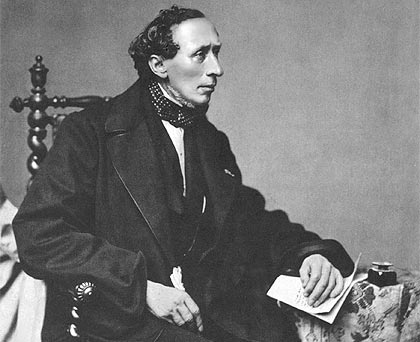
Andersen’s era preceded the development of Jungian and Freudian psychology, yet the concept of persona bears similarities to those later theories. While the word ‘persona’ is sometimes associated with divine aspects—such as roles within the Christian Trinity—it also refers to the human self, which is unified as one.
The term persona originates from the Latin word meaning ‘mask,’ which itself derives from a Greek word for ‘face.’ In its earliest usage, it referred to the masks worn by actors on stage. Over time, however, it came to denote not the physical mask but the role the actor played. In this way, it is easy to see parallels between the idea of the Christian Trinity—Father, Son, and Holy Spirit—as three distinct roles that ultimately unite as one.
For Jung, the shadow represents repressed aspects of the psyche and takes an Aristotelian form. By contrast, Plato projected the concept outward, focusing on the ideal form of truth. Jung’s framework, in which the unconscious represents unachieved aspects of the self, offers an interesting lens through which to view Andersen’s tale. As a work of art, the story endows the scholar with an externalised, autonomous shadow, representing not merely an unconscious element but a fully embodied being.
In Andersen’s time, scholars were enraptured by the pursuit of the good, the beautiful, and the true. Yet the shadow in this story is not an unconscious reflection of the scholar’s mind—it is a conscious, embodied presence. To better understand this, one might consider Andersen’s own youthful ambition to become an opera singer. He longed to remain on the stage, if only his voice would transform to meet the demands of the role. This raises a curious question: is a role merely another facet of the self?
A persona typically returns to unity as a single identity when not performing. However, a role demands more—it requires the actor to use their entire body and presence to become someone entirely different. On stage, identities shift with names, yet the performer remains inseparably linked to their true self. Even if one plays the role of a ‘scholar,’ that character is inherently fused with the actor’s underlying personality.
In The Shadow, one figure must always play the subject, while the other takes on the role of the shadow. As a ‘thinking entity’ that extends the human psyche, the shadow assumes multiple meanings. However, the shadow-actor in this story achieves happiness in a way the original form—the scholar—cannot. This suggests that the shadow’s identity transcends individual judgement, belonging more to the collective consciousness.
Indeed, the shadow belongs to society far more than the scholar does. It is the shadow that finds fulfilment by engaging with the group, suggesting that individuality must, at times, give way to collective identity.
Ⅱ Plato and the ‘shadow’.
What exactly was the shadow to the scholar? The way in which the shadow detached itself and operated independently recalls Plato’s Allegory of the Cave. In this allegory, prisoners are confined within a cave, unable to see the fire burning behind them. All they perceive are the shadows of puppets, projected by the fire onto the walls before them. However, one prisoner manages to escape the cave and discovers that the world outside—illuminated by the sun—is the true reality. Upon returning to the cave to share his discovery, the other prisoners refuse to believe him, mistaking the shadows for the only truth they know.
Similarly, in Andersen’s tale, the scholar’s shadow takes on a life of its own, leaving the scholar’s side and venturing into the world. The departure of the shadow raises questions: was it truly a distinct being, or merely an alter ego of the scholar? Andersen deliberately obscures the connection between the two, leaving room for ambiguity. Upon the scholar’s return to the cold lands of his homeland, he discovers that a new shadow has emerged to replace the old one. Meanwhile, the original shadow, now freed from its former master, has pursued ‘outer truth’ and transformed into something magnificent.
In this altered state, the shadow presents itself to the scholar, appearing in splendid attire. Despite the transformation, the scholar warmly welcomes the shadow as though it were an entirely new personality. The reader may initially assume that the scholar and the shadow share a dual identity, but Andersen offers no such resolution. Instead, it becomes clear that the shadow has evolved into a completely independent entity, no longer tethered to the scholar.
“The most beautiful thing in the world is poetry,” the shadow declares, speaking of the woman the scholar had fallen in love with during his travels in the hot country. Through his connection with the woman, the shadow’s own sense of self is awakened. He begins to desire material comforts—shoes, clothes, and the kindness of others—and people take pity on him, offering him aid. Having enjoyed these indulgences, the shadow resumes its journey, continuing to explore the world on its own terms.
Plato’s philosophy, particularly in his dialogue Philebus, equates the concept of the Good with that of the One. He states: “It would do more harm than good if, having all other knowledge, one lacked knowledge of the highest Good.” The scholar represents an individual in pursuit of such ideals—truth, goodness, and beauty. However, in Andersen’s narrative, the shadow evolves into a separate existence entirely. It becomes a being that embodies these ideals not through intellectual pursuit, but through experience and interaction with the world.
Ⅲ ’Uniqueness’ and monads.
The shadow eventually returned to the scholar, who continued to write stories about ‘truth, goodness, and beauty.’ However, despite his efforts, the scholar made little progress in his career. At this stage, the shadow remained amicable and even suggested that they travel together. Yet, there was one condition: “You will be my shadow.” The scholar, unwilling to submit to such terms, flatly refused, saying, “I don’t want to do that.” He declined, even though the shadow offered to cover the travel expenses.
The ideals the scholar pursued—truth, goodness, and beauty—were, to most people, as meaningless as giving a rose to a cow. This sense of futility weighed heavily on the scholar, and he soon fell ill. When the shadow repeated his offer, proposing again that the scholar travel with him and become his shadow, the scholar—now weakened—reluctantly agreed.
At first, they got along well. However, their relationship shifted when the shadow raised the question of how they should address one another. The shadow insisted on addressing the scholar informally as ‘you’. This provoked the scholar, who retorted, “This is absurd.” His irritation grew: “It’s ridiculous that I must say ‘buggerlugs’ while he calls me ‘old bean’.”
This linguistic tension is particularly challenging to translate. In Danish, it is expressed as: “Det er dog vel galt,” tænkte han, “at jeg må sige De og han sige du, men nu måtte han holde ud.”
In this sentence, ‘De’ is a formal, respectful pronoun, while ‘du’ is a more familiar, personal one. The protagonist resents being addressed with the informal du—not merely because it implies familiarity, but because it reflects a shift in authority. The once-masterful scholar feels humiliated, now reduced to a subordinate role. This wordplay recalls the whimsical language of Lewis Carroll, but here it underscores the scholar’s existential crisis: the loss of his autonomy.
For someone devoted to the ideals of the Platonic school—where eidos (form) must remain within one’s grasp—the notion that a shadow could surpass him in influence is intolerable. In philosophy, where perception and understanding are traditionally the purview of the self, it is the self that ventures outside Plato’s cave to gain knowledge. Yet in Andersen’s tale, the scholar, despite his intellectual pursuits, is eclipsed by his shadow, who succeeds while he struggles even to complete his writing.
What, then, has the shadow taken from the scholar? Or perhaps the scholar, without realising it, has relinquished something vital to the shadow—an exchange that Andersen deliberately leaves unresolved.
At a resort, they encounter a beautiful princess afflicted with an unusual condition: she “sees things too clearly.” Intrigued by the shadow’s charm, she falls in love with him as they dance together. The shadow introduces the scholar as “the shadow who knows everything.” When the princess is told, “When you ask him questions, treat him like a human being,” she complies and poses many questions to the scholar. Impressed by the depth of the shadow, the princess decides to marry him, admiring the extraordinary qualities his ‘shadow’ (the scholar) possesses.
Despite this arrangement, the shadow turns to the scholar and says, “From now on, you will be my shadow.” Once more, the scholar refuses. However, on the day of the wedding, the scholar meets his tragic end, killed without fanfare or resistance.
Leibniz’s principle of sufficient reason asserts that every event must have a reason for occurring. The idea also implies that the existence of something—ratio in Latin—relies on clear cause and effect. Leibniz’s concept of the monad, representing unity, hinges on the presence of self-consciousness. To possess uniqueness, an individual must first be aware of themselves as a distinct entity. Perhaps Leibniz’s obsession with uniqueness stemmed from his scientific mind—after all, the observer and the object observed must both be understood with certainty. Where duality arises, certainty vanishes. Only by existing as both the observer and the observed can one claim true singularity.
This tension plays out in Andersen’s story: why could the scholar and the shadow not live as separate beings? Modern psychology might interpret the shadow as a manifestation of repressed aspects of the self. However, Andersen obscures the connection between the two characters, suggesting that the shadow transcends the scholar’s consciousness. Over time, the shadow integrates with the surrounding world—melding with the scholar’s cognition, soul, and persona. Notably, this transformation culminates in the marriage to the princess, a union symbolising monogamy, as prescribed by Christian tradition.
A similar theme appears in Andersen’s “The Goloshes of Fortune” (Lykkens Kalosker). In this tale, the story moves between cold and hot countries, explicitly named as Switzerland and Italy. The characters include a young servant called ‘Happiness’ and an old fairy named ‘Sorrow.’ Happiness, a servant to the goddess, carries joy wherever she goes. Sorrow, by contrast, works alone. On her birthday, Happiness receives a pair of magical boots, which grant any wish to their wearer. However, Sorrow warns that these boots may bring misfortune instead of joy.
The boots pass through several hands—a legal adviser, a night watchman, and a scribe—bringing each of them unexpected tragedy despite granting their wishes. Finally, the boots fall into the possession of a seminarian, who wishes to travel from the cold climate of Switzerland to the warmth of Italy. However, after some time, he tires of travel and blames his physical body for his fatigue. In a desperate wish, he asks to be freed from his body—and dies.
Two figures appear in the room where the seminarian lies. The Fairy of Sorrow turns to the Servant of Happiness and asks, “What happiness have you given him?” Happiness responds, “I believe I granted him eternal happiness, for he now sleeps peacefully.” Sorrow, however, disagrees: “He died by his own will, so he was not summoned.”
Sorrow then offers the seminarian grace. She removes the boots, and the young man is revived. At the same moment, the Fairy of Sorrow disappears, taking the boots with her. In the end, the boots—intended to bring happiness—belong to Sorrow.
The scholar’s death in The Shadow parallels the seminarian’s near-fatal journey. Both characters fail to recognise their true gifts—those destined for them by fate. Andersen’s story is ultimately about missed opportunities and the consequences of not understanding oneself. However, unlike The Goloshes of Fortune, The Shadow refrains from explicitly addressing human experiences such as sorrow or happiness. Instead, the shadow’s meaning remains ambiguous, open to multiple interpretations.
Leibniz argued that not everything possible is realised—possibilities remain unrealised, existing merely as potential. Reality emerges from countless unrealised possibilities. Drawing on Leibniz’s ideas of reason and chance, the scholar’s death in The Shadow might be seen as a tragic accident born of ignorance. This echoes the Greek concept of tyche (luck)—a force beyond human control.
While Leibniz and Plato shared an interest in the nature of ideas, Leibniz’s philosophy diverged from Descartes’ by asserting that ideas are not merely subjective but inherently representational. The scholar’s pursuit of truth, goodness, and beauty reflects his belief in these ideals. Yet, like Leibniz, the scholar fails to reach the ultimate realisation of these truths in his lifetime. His failure lies not in his intellectual pursuits but in neglecting to recognise the shadow as part of himself—a unique, indivisible being.
Andersen’s story leaves us with a tantalising question: Was the shadow truly the ‘opposite of good,’ or something more nuanced? This ambiguity draws us closer to later psychological interpretations of shadows and personas, leaving us to ponder the elusive nature of selfhood.
Last Lazarus of Bethany
The shadow, like a prisoner released from Plato’s cave, ventured into the world and uncovered many truths. It must have been a journey towards becoming whole, to achieve oneness without being recognised. In this tale, the shadow represents yet another persona—an extension of the author’s reflections on themes such as marriage, a recurring motif in Andersen’s fairy tales. Here, the coexistence of two beings—scholar and shadow—becomes impossible, as they cannot remain united within a singular form, an Eidos. The shadow believed this was his moment of triumph, but the scholars could not bring themselves to accept it.
Andersen’s personal longing for the stage runs through this story. Yet, from an actor’s perspective, we might wonder: was there ever truly a ‘shadow’? Could it be that the scholar played every role, not through a split personality but simply as a man in search of meaning, travelling endlessly to understand the world? This would explain his failure to complete the manuscript on truth, goodness, and beauty. He was too preoccupied with his journey to attend to his work. The room remained empty, the manuscript neglected. Perhaps, like an empty tomb, there was no princess, no wedding—only absence.
And yet, in Andersen’s world, death cannot be a void. Death must be present, for the actor must bow at the end of the play and return to unity—the One. After enduring life’s cruelty, which version of the self takes the final bow before the curtain falls?
In The Goloshes of Fortune, the seminarian, guided by the Fairy of Sorrow (Sorgen), is given a second chance at life. The scholar, however, has no such guide. Why did the scholar lack a companion like Sorrow? What meaning lies within this omission? Could it reflect Andersen’s own fear—not just of death, but of a life without mourning, without sorrow to give meaning to loss? Perhaps the one who did not mourn the scholar’s death was, unmistakably, the scholar himself.
Andersen’s stories frequently contemplate the deaths of the poor. His sensitivity to death was deeply personal, permeating his narratives. The seminarians in The Goloshes of Fortune reflect both Andersen’s hopes and his fears—hence, their resurrection. In contrast, the death of the scholar in The Shadow seems to signal acceptance, as though Andersen were embracing death’s inevitability.
What makes The Shadow a profoundly melancholic tale is that it offers no miracles, no divine intervention. Jesus wept at the death of Lazarus, but here, there are no such tears—no prayers to resurrect the fallen. Yet, those who read Andersen’s fairy tales may recognise his hidden persona: a voice suggesting that happiness can only be found in death. Perhaps the scholar’s tragedy lies in the many things he neglected while still alive. And in the end, faced with life’s cruelties, Andersen might have hoped that his readers, like Jesus, would feel righteous indignation, that they too would mourn such losses with tears.
It is here, in this sorrow, that we find the thread of sanctity running through Andersen’s work—the sense that life, even in its frailty, holds profound meaning. I cannot help but imagine that this is how the author himself appears when he has fulfilled his role: a persona complete in its purpose.
Remember, Jesus always mourns your death. Whenever you feel your worth slipping away, whenever you believe your death would make no difference, know that there is someone who loves you enough to grieve your loss.
When he heard this, Jesus said, “This sickness will not end in death. No, it is for God’s glory, so that God’s Son may be glorified through it.” – John 11:4
When my persona can no longer return to unity,
I pray that, as the curtain falls, I may return to this heart.
*The English translations of the quotations are original.


 Chris Kyogetu