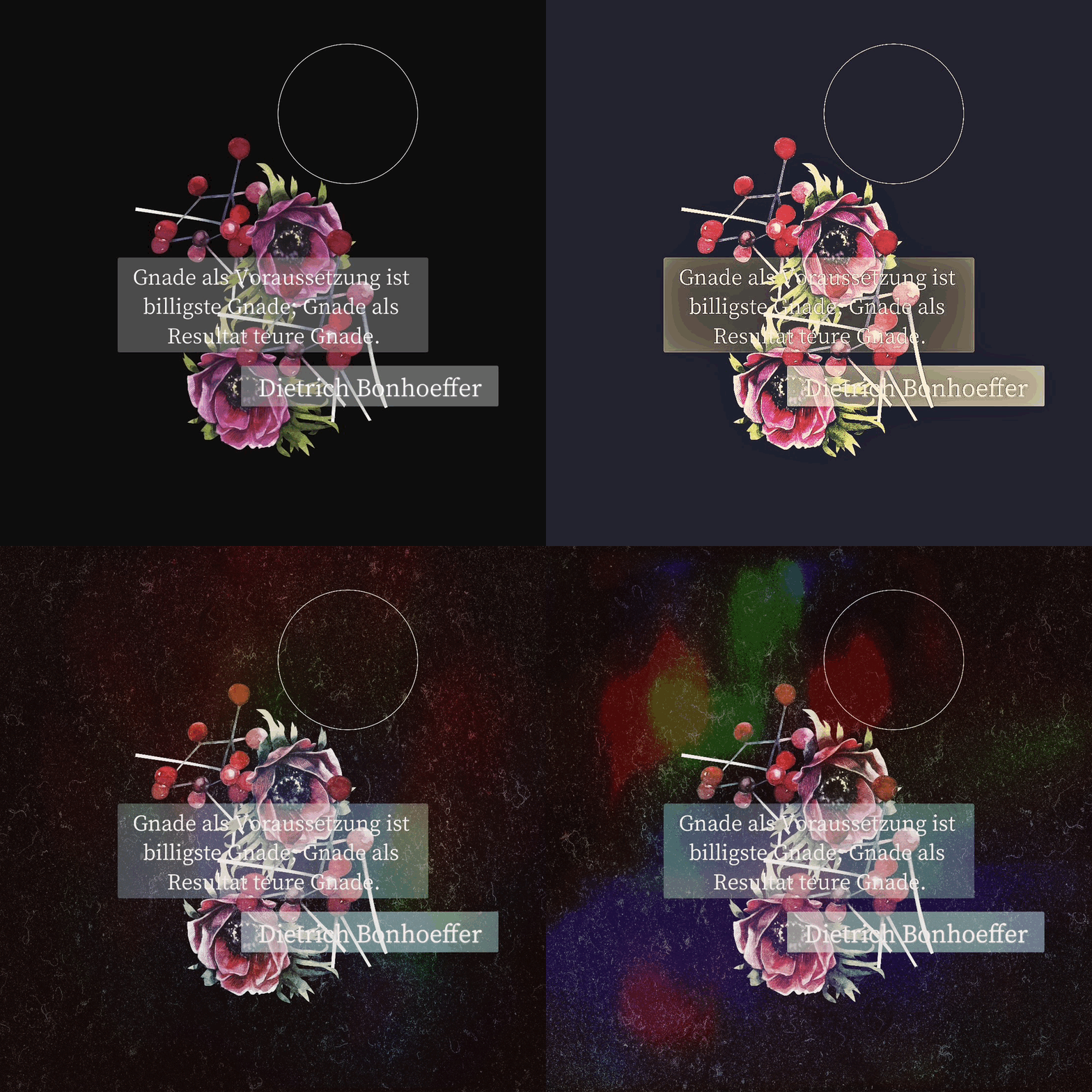
Cahier 2024/03/25 English


Und leider auch Theologie Durchaus studiert, mit heißem Bemühn. Da steh' ich nun, ich armer Tor, Und bin so klug als wie zuvor! And, alas, I studied theology too, with great zeal. Here I stand, poor fool, and am as wise as before!
Goethe, 'Faust'Der Tragödie erster Teil Nacht 

I. Die teure Gnade(2)Nachfloge:Dietrich Bonhoeffer

・Aus der Rechtfertigung des Sünders in der Welt wurde die Rechtfertigung der Sünde und der Welt. Aus der teuren Gnade wurde die billige Gnade ohne Nachfolge.

・Sagte Luther, daß unser Tun umsonst ist,・・

Die Erkenntnis der Gnade war für ihn der letzte radikale Bruch mit der Sünde seines Lebens, niemals aber ihre Rechtfertigung. Sie war im Ergreifen der Vergebung die letzte radikale Absage an das eigenwillige Leben, sie war darin selbst erst eigentlich ernster Ruf zur Nachfolge. Sie war ihm jeweils „Resultat“, freilich göttliches, nicht menschliches Resultat. Dieses Resultat aber wurde von den Nachfahren zur prinzipiellen Voraussetzung einer Kalkulation gemacht. Darin lag das ganze Unheil. Ist Gnade das von Christus selbst ge-schenkte „Resultat“ christlichen Lebens, so ist dieses Leben keinen Augenblick dispensiert von der Nachfolge. Ist aber Gnade prinzipielle Voraussetzung meines christlichen Lebens, so habe ich damit im voraus die Rechtfertigung meiner Sünden, die ich im Leben in der Welt tue. Ich kann nun auf diese Gnade hin sündigen, die Welt ist ja im Prinzip durch Gnade gerechtfertigt. Ich bleibe daher in meiner bürgerlich-weltlichen Existenz wie bisher, es bleibt alles beim alten, und ich darf sicher sein, daß mich die Gnade Gottes bedeckt. Die ganze Welt ist unter dieser Gnade „christlich“ geworden, das Christentum aber ist unter dieser Gnade in nie dagewesener Weise zur Welt geworden.

・Wenn Faust am Ende seines Lebens in der Arbeit an der Erkenntnis sagt: „Ich sehe, daß wir nichts wissen können“, so ist das Resultat, und etwas durchaus anderes, als wenn dieser Satz von einem Studenten im ersten Semester über-nommen wird, um damit seine Faulheit zu rechtfertigen (Kierkegaard). Als Resultat ist der Satz wahr, als Voraussetzung ist er Selbstbetrug. Das bedeutet, daß eine Erkenntnis nicht getrennt werden kann von der Existenz, in der sie gewonnen ist. Nur wer in der Nachfolge Jesu im Verzicht auf alles, was er hatte, steht, darf sagen, daß er allein aus Gnaden gerecht werde.


English translation

Luther said that our actions are in vain.・・・etc

The recognition of grace was for him the final radical break with the sin of his life, but never its justification. In seizing forgiveness, it was the final radical renunciation of the self-willed life, and therein itself truly a serious call to discipleship.It was always a “result” for him, a divine result, not a human one. However, this result was turned by his descendants into a fundamental precondition for their calculations.

If grace is the “result” of Christian life given by Christ Himself, then this life is not exempt from discipleship for a single moment. But if grace is the fundamental prerequisite of my Christian life, then I already have the justification of my sins that I commit in my life in the world beforehand. I can now sin in light of this grace; after all, the world is justified in principle by grace.

So I remain in my bourgeois-worldly existence as before, everything stays the same, and I can be certain that God’s grace covers me. The whole world has become “Christian” under this grace, but Christianity, under this grace, has become the world in an unprecedented way.

When Faust, at the end of his life, says in his work on knowledge: “I see that we cannot know anything”, the result is quite different from when this sentence is adopted by a student in his first semester to justify his laziness (Kierkegaard). As a result the sentence is true, as a premise it is self-deception. This means that an insight cannot be separated from the existence in which it is gained. Only those who follow Jesus by renouncing everything they had can say that they are justified by grace alone.

Consideration

In this text, Bonhoeffer focuses his discussion on ‘grace’. According to him, ‘grace’ is described as the ultimate deliverance from his sins and a sincere call to follow him for its bestowal. However, he points out the problem of his descendants merely accepting this ‘grace’ through rational calculation. Many Christians assume that ‘grace’ forgives sins and act as if they can continue to sin. By doing so, they assure the world of being protected by God’s grace. It is mentioned that the entire world has become ‘Christian’, but as a result, it has become more secular than ever before.

The understanding of God’s grace is described as his final radical conversion and decisive break with the sins of life.

The main clause “When Faust at the end of his life says in the work of knowledge” is the previous sentence.

“Gnade als Voraussetzung ist billigste Gnade; Gnade als Resultat teure Gnade. Es ist erschreckend, zu erkennen, was daran liegt, in welcher Weise eine Es ist dasselbe Wort von der Rechtfertigung aus Gnaden allein; und doch führt der falsche Gebrauch desselben Satzes zur vollkommenenen Zerstörung seines Wesens.”

It corresponds to. Grace is the cheapest grace, and the grace that follows is a costly grace. Understanding what lies behind the way Christian truth is stated and used can be surprising. It has been equated with justification by grace alone (justificatio). But the wrong use of the same word leads to the complete destruction of its essence.

Thought

Some clergy argue that in Catholicism, “forgiveness” and rituals are more important than Lutheranism. There are many prominent priests who currently avoid discussing the issue of deceitful clergy. They often present superficial and empty statements, despite their growing influence. The same can be said for the faithful who reflect on these matters. It is a sin to not pay attention to the essence of things and this group paralysis affects these victims. They should realize that they are depriving themselves of faith.

Even in Catholicism, Pope Francis, in the Apostolic Constitution Paschite Glegem Dei, has made the observance of disciplinary penalties an obligation that cannot be separated from pastoral duties. Specifically, the responsibility for correctly applying these penalties lies with the pastor and the superior of each community. I can only lament the Church’s continuous tolerance and “wait-and-see” attitude towards the shameful acts and offenses committed in the sacrament of absolution that have been revealed this time. Bonhoeffer’s emphasis on the relationship between knowledge and being, faith and action, and his assertion that true knowledge is connected to liberation from self-deception; could this also be applicable to Catholicism?

reference

“From an actual lawsuit in Japan:

“A victimized woman shares her real name and confesses, having believed in “being saved from suffering by following the priest,” the approximately five years of “sexual violence” she endured from a Chilean priest in the Catholic Church and the unjust actions of the religious order.””

2024/3/15の週刊女性Prime

https://www.jprime.jp/articles/-/31182?page=5

I quickly wrote down the details for the moving process this time as well.
Cahier 2024/03/25


Und leider auch Theologie Durchaus studiert, mit heißem Bemühn. Da steh' ich nun, ich armer Tor, Und bin so klug als wie zuvor!

口惜しいが神学までも、熱心に勉強し、底の底まで究めて、こうしてたっているが、ずっと変わらず
愚か者のままだ! ゲーテ・ファウスト「夜」Der Tragödie erster Teil Nacht 

I. Die teure Gnade(2)Nachfloge:Dietrich Bonhoeffer

・Aus der Rechtfertigung des Sünders in der Welt wurde die Rechtfertigung der Sünde und der Welt. Aus der teuren Gnade wurde die billige Gnade ohne Nachfolge.

・Sagte Luther, daß unser Tun umsonst ist,・・

Die Erkenntnis der Gnade war für ihn der letzte radikale Bruch mit der Sünde seines Lebens, niemals aber ihre Rechtfertigung. Sie war im Ergreifen der Vergebung die letzte radikale Absage an das eigenwillige Leben, sie war darin selbst erst eigentlich ernster Ruf zur Nachfolge. Sie war ihm jeweils „Resultat“, freilich göttliches, nicht menschliches Resultat. Dieses Resultat aber wurde von den Nachfahren zur prinzipiellen Voraussetzung einer Kalkulation gemacht. Darin lag das ganze Unheil. Ist Gnade das von Christus selbst ge-schenkte „Resultat“ christlichen Lebens, so ist dieses Leben keinen Augenblick dispensiert von der Nachfolge. Ist aber Gnade prinzipielle Voraussetzung meines christlichen Lebens, so habe ich damit im voraus die Rechtfertigung meiner Sünden, die ich im Leben in der Welt tue. Ich kann nun auf diese Gnade hin sündigen, die Welt ist ja im Prinzip durch Gnade gerechtfertigt. Ich bleibe daher in meiner bürgerlich-weltlichen Existenz wie bisher, es bleibt alles beim alten, und ich darf sicher sein, daß mich die Gnade Gottes bedeckt. Die ganze Welt ist unter dieser Gnade „christlich“ geworden, das Christentum aber ist unter dieser Gnade in nie dagewesener Weise zur Welt geworden.

・Wenn Faust am Ende seines Lebens in der Arbeit an der Erkenntnis sagt: „Ich sehe, daß wir nichts wissen können“, so ist das Resultat, und etwas durchaus anderes, als wenn dieser Satz von einem Studenten im ersten Semester über-nommen wird, um damit seine Faulheit zu rechtfertigen (Kierkegaard). Als Resultat ist der Satz wahr, als Voraussetzung ist er Selbstbetrug. Das bedeutet, daß eine Erkenntnis nicht getrennt werden kann von der Existenz, in der sie gewonnen ist. Nur wer in der Nachfolge Jesu im Verzicht auf alles, was er hatte, steht, darf sagen, daß er allein aus Gnaden gerecht werde.


翻訳(日本語)

・ルターは、私たちの行いは無駄だと言った。(略)

ルターにとって、恵みの認識は、彼の生涯の罪との最後の断絶であり、決してそれを正当化するものではなかった。赦しを理解することは、自己中心的な生き方を根本的に否定することであり、それ自体が弟子への最初の熱心な呼びかけなのである。それは彼にとって “結果 “であり、人間的な能力や性質による結果ではなく、神聖な神の恵みによる結果であった。しかしこの結果は、後に信仰を合理的に評価し、分析するための判断基準となってしまった。そこにすべての災いがあったのだ。恵みがキリストご自身によって与えられたキリスト者としての「結果」であるならば、弟子としてこの信仰から片時も外れることはない。もし恵みがキリスト教徒としての基本的な前提であるならば、私はこの世での生活で犯した罪の義認をあらかじめ得ていることになる。この世は恵みによって正当化されているのだ。(この恩寵は私たちが罪を犯すことを許容しているわけではなく、むしろ私たちをキリストの後継者としての責任を果たす者として駆り立てる)それゆえ、私は以前と同じように世俗的な存在にとどまり、神の恵みが私自身を覆っていることには変わりがないことを確信できる。この恵みのもとで、全世界は「キリスト教」になったが、キリスト教はこの恵みのもとで、前例のない形で世界になったのである。

・もしファウストが彼の人生の終わりに「われわれは何も知ることができないのだな」と言うことは、学生が怠惰で同じような気持ちで嘆くのと全く違う意味を持っている。(キルケゴール)結果としてこの文章自体は悟りにおいて「真」であるが、前提としては自己欺瞞である。つまり、悟りは、それが得られた存在から切り離すことはできない。イエスに従い、自分の持っていたすべてを放棄した者だけが、恵みのみによって義と認められると言えるのである。

考察

この文章では、ボンヘッファーは「Gnade(恩寵/神の恵み)」を中心に議論している。彼にとって、「恩寵」は罪からの最後の断絶であり、それが与えられることで彼の後に続くための真剣な呼びかけであると述べられている。けれども、彼の子孫たちはこの「Gnade」を合理的な計算によって受け入れるだけになってしまったことに問題であると指摘する。多くのキリスト教徒が「恩寵」について、罪は許されると前提し、その上で罪を犯すことができると振る舞ってしまった。彼らは世界を神の恩寵に守られることを保証するようになった。よって、世界全体が「キリスト者」となったが、これによってかつてないほど世俗的なものとなってしまったと述べられている。

「Wenn Faust am Ende seines Lebens in der Arbeit an der Erkenntnis sagt」の主節はその前の文章の

“Gnade als Voraussetzung ist billigste Gnade; Gnade als Resultat teure Gnade. Es ist erschreckend, zu erkennen, was daran liegt, in welcher Weise eine evangelische Wahrheit ausgesprochen und gebraucht wird. Es ist dasselbe Wort von der Rechtfertigung aus Gnaden allein; und doch führt der falsche Gebrauch desselben Satzes zur vollkommenen Zerstörung seines Wesens.”

に該当する。「恵みとは最も安価な恵みであり、結果としての恵みは高価な恵みである。キリスト教の真理がどのように述べられ、使用されるのか、その背後にあるものを理解することは驚くべきことがわかる。。それは、唯一の恵みのみによる義認(justificatio)と同等に扱われてきた。しかし、同じ言葉の間違った使い方は、その本質を完全に破壊することにつながる」

ファウストの引用について:Und leider auch Theologie (あぁ残念なことに、leiber)

感想

カトリックで重要なのは「赦し」であり儀式であって、ルター的ではないという聖職者がいたことがあったが、昨今のトリックの聖職者の問題に触れない著名な神父というのは(拡散力があるのにも関わらず)表層的でボンヘッファーでいう「安価な言葉」をよく述べている。それに目を瞑る信者も同じで、物事の本質に目を向けないことや、「赦し」に隠れていることは罪ではないかと思う。そういった集団の麻痺が、被害者の信仰を奪っていることに気づくべきだ。 

カトリックでも「使徒憲章 パシーテ・グレジェム・デイ」でフランシスコ教皇により、刑罰に関する規律の遵守について、規律を正しく適用する責任は、特に司牧者や各共同体の上長にある「司牧的任務(munus pastorale)から切り離すことができない義務としている。私は今回、発覚した「赦しの秘蹟」での卑劣な愚行、犯罪を犯したことに関して黙認し続けている教会側、「見守るだけ」の組織に遺憾でしかない。

ボンヘッファーは知識と存在、信仰と行為についての関係性を強調しており、真の知識は自己欺瞞からの解放と関係していると主張しているが、カトリックにも言えることではないであろうか。

参照

実際に起こっている日本の訴訟から

「神父に従えば苦しみから救われる」と信じ続けた被害者女性が実名告白、カトリック教会のチリ人神父から受けた約5年間の「性暴力」と修道会の不道理:2024/3/15の週刊女性Prime

https://www.jprime.jp/articles/-/31182?page=5

*筆者、引っ越し作業のために今回も簡単に書きました。 

前回のカイエの続きです。

Cahier(2023/11/17/)English

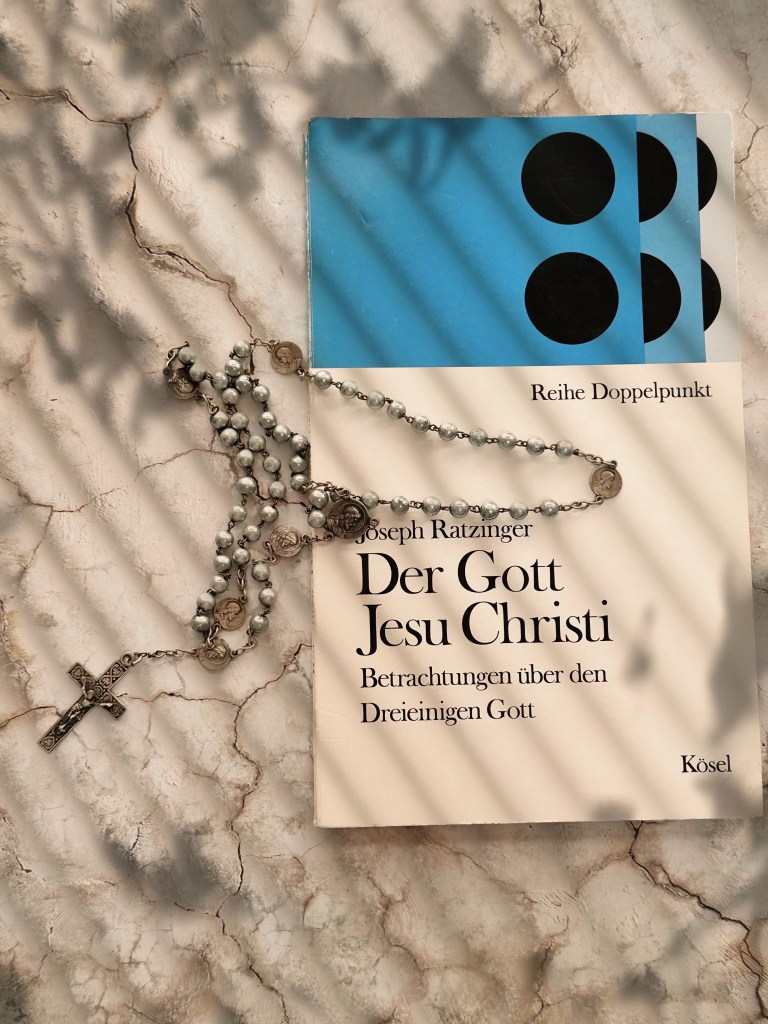
Der Gott Jesu Christi Betrachtungen über den Dreieinigen Gott.

Wieder kann man von hier versuchen, ahnend etwas über Gottes inneres Geheimnis zu sagen: Vater und Sohnsind die Bewegung reinen Schenkens, reiner Übergabe an- einander In dieser Bewegung sind sie fruchtbar, und ihre Fruchtbarkeit ist ihre Einheit, ihr völliges Einssein, ohne daß sie dabei selbst zurückgenommen und ineinander aufgelöst werden. Für uns Menschen heißt Schenken, Sichselbergeben, immer auch Kreuz.(Das trinitarische Ge- heimnis übersetzt sich in der Welt in ein Kreuzesgeheim- nis: Dort ist die Fruchtbarkeit, aus der der Heilige Geist kommt.

English translation:Once again, we can attempt to glimpse something of God’s inner mystery from this point: the Father and the Son are the movement of pure giving, pure surrender to one another. In this movement, they are fruitful, and their fruitfulness is their unity, their complete oneness, without being absorbed or dissolved into each other.For us human beings, giving of the self always entails the cross. (The mystery of the Trinity is translated into the world as the mystery of the cross: It is from this fruitfulness that the Holy Spirit emerges.)

Characteristics of the text

The text mentions ‘God’s inner mystery’, the distinctive parts of which contain mainly religious-philosophical elements.

「Vater und Sohn sind die Bewegung reinen Schenkens, reiner Übergabe aneinander.」:it contains philosophical discussions and analyses of individual words and concepts. The images of parent-child relationships and mutual gifts presented here represent ideas about the existence and nature of God.

・ 「In dieser Bewegung sind sie fruchtbar, und ihre Fruchtbarkeit ist ihre Einheit, ihr völliges Einssein, ohne daß sie dabei selbst zurückgenommen und ineinander aufgelöst werden.」:this statement illustrates the argument about the triune nature of God. It says that God’s existence is expressed as fullness and that this fullness is related to the unity of the Trinity.

・「Für uns Menschen bedeutet Hingabe, Selbsthingabe, immer auch Kreuz (Das trinitarische Geheimnis übersetzt sich in der Welt in ein Kreuzesgeheimnis: Dort ist die Fruchtbarkeit, aus dem der Heilige Geist kommt).」:In the interpretation of the Trinity of God in human experience and faith, the image of the cross and the concept of the Holy Spirit are themes often discussed in religious philosophy and theology and are also illustrated here.

As is characteristic of Benedict XVI’s writings, his texts are highly philosophical and show deep thought. He deals with religious themes and expresses mystical concepts. His writing is concise but dense, and each sentence is full of meaning. His style is rigorous and is used to convey certain concepts clearly. Benedict XVI sometimes uses a dialogical style, explaining his ideas in a supposed dialogue with his readers. This dialogue format may represent the one-dimensional personality of the one and only distant ‘Pope’. His writings show a fusion of rational argument and philosophy of faith. In particular, he uses ethical arguments to show that ‘faith’ and ‘reason’ are compatible. He seems to focus on communicating complex theological concepts in a way that is accessible to the general reader.

Summary

An attempt is made by Benedict XVI to understand the ‘secret of the Trinity’ together with the reader. The Father and the Son are described as engaged in a pure act of giving, in a work of ‘total devotion’ to each other. This work results in their fruitfulness, which is described as their perfect unity and oneness. However, it is also clarified that this process does not lead to their annihilation or merging into each other. It is further asserted that for human beings, giving and self-giving are always associated with the Cross. The secret of the Trinity is seen as manifesting in the world as the secret of the Cross. The explanation offered is that through the Holy Spirit, the Cross holds within it the potential for fruitfulness and abundance.

The difference between philosophical writing and everyday writing.

A philosophical text can be described as a multifaceted yet concise exploration of topics related to deep thinking and philosophical concepts. The term philosophia, coined by Socrates, encompasses the love of knowledge, also known as philosophy. These writings often employ logical reasoning. Both the current Pope, Pope Francis, and his predecessor, Pope Benedict XVI, can be seen as having philosophical elements in their teachings. They delve into concepts such as reflections on existence and religion, including faith, eternal life, the Last Judgement, the law of love, and the relationship with God. However, it is also necessary to provide more specific and succinct explanations using everyday language. For example, ‘Hingabe’ and ‘Selbsthingabe’ are German words meaning ‘devotion’ or ‘devotion to self’. To better comprehend their meanings, specific examples or situations can be used to explain them.

「Für uns Menschen bedeutet Hingabe, Selbsthingabe, immer auch Kreuz (Das trinitarische Geheimnis übersetzt sich in der Welt in ein Kreuzesgeheimnis: Dort ist die Fruchtbarkeit, aus dem der Heilige Geist kommt).」If the original text of the following were to be shown in more everyday terms,

「In unserem menschlichen Verständnis bedeutet Hingabe immer auch Opfer (Das Geheimnis der Dreifaltigkeit offenbart sich in der Welt als das Geheimnis des Kreuzes: Hier liegt die Fruchtbarkeit, aus der der Heilige Geist entspringt)」In our human understanding, devotion always implies sacrifice as well. (The mystery of the Trinity is meant to be unveiled to the world as the mystery of the Cross.)

「In unserem menschlichen Verständnis bedeutet Hingabe immer auch Opfer」The translation is more of an everyday expression than a philosophical reflection on ‘what it means to give of oneself’, in line with the idea that true human commitment always needs to involve some sacrifice (e.g. time, comfort).

Finally, to return to the original again.

Für uns Menschen heißt Schenken, Sichselbergeben, immer auch Kreuz.(Das trinitarische Ge- heimnis übersetzt sich in der Welt in ein Kreuzesgeheim- nis: Dort ist die Fruchtbarkeit, aus der der Heilige Geist kommt.

“The reason why there are two instances of ‘der der’ is that the first one, ‘aus der’, translates directly as ‘from’, indicating that something is coming out of ‘der Fruchtbarkeit’ (abundance). In this context, it signifies the coming out of ‘der Heilige Geist’ (the Holy Spirit) from abundance. The second ‘der Heilige Geist kommt’ consists of the definite article ‘der’ and the noun ‘Heilige Geist’, signifying the arrival of the Holy Spirit. These elements represent the mysteries of the Trinity, which are of different natures yet closely intertwined.

If we were to write this without ‘der der’, for example,…”

Für uns Menschen bedeutet Hingabe, Selbsthingabe, immer auch Kreuz (Das trinitarische Geheimnis übersetzt sich in der Welt in ein Kreuzesgeheimnis: Dort ist die Fruchtbarkeit, aus dem der Heilige Geist kommt.(* Changing ‘Schenken’ and ‘Sichselbergeben’ to ‘Hingabe’ and ‘Selbsthingabe’ maintains consistency in context.)

“This is a trial translation and we would be grateful for any comments.

Following on from the previous edition, we have decided to include a memo-like section called “Cahier.”

Japanese

How to “renovate” the Catholic Church.

'If the Catholic Church needs to constantly “renovate” itself, then it needs to continue to strive to increase its own holiness.'   「カトリック教会は刷新できるか」
阿部仲麻呂/田中昇 編
教友社


First

For example, if you do not have a good impression of the Catholic Church, that is a very reasonable opinion and you are right. However, I would like to say, if I could say it here, that some clergy and lay people are trying to deal with various issues in a ‘realistic’ way. The book is developed in technical terms, but it not only stays within a religious framework, but it is written by priests in office who do not hide what is already in the news and the problems that people away from the Church have. But few have the strength to recognise the problem.   I hope that as many people as possible will use this article as an opportunity to find out. I would also like people studying religion in philosophy and other subjects to pick up this book as a realistic religion.

Second

The book begins by looking at the current situation of the Church, examining its reality and the quality of faith, and developing a timeline of proof and verification from traditional biblical interpretation to synod and synodality, based on the ‘sensus fidei’ (sense of faith) that the Pontifical International Theological Commission claims to emphasise. Sense of faith’ is a familiar and easily found term in Catechism No. 92, which refers to the supernatural understanding of faith (sensus fidei) when it indicates universal agreement in matters of faith and morals, from the bishops to the faithful. At the Angelus Domini, Pope Francis quoted the story of a humble woman he once met. Without the Lord’s forgiveness, this world could not exist,” the Pope said, marvelling that “this is the wisdom that the Holy Spirit gives us”.

Surely this was a statement that combined faith and morality and promoted true wisdom. I was particularly reminded of ‘speaking in tongues’ in chapter 12 of his first letter to the Corinthians. Paul preached to the Corinthian believers who were preoccupied with tongues that they were ‘love’ and that their words contained ‘love’ (agape/caritas). (p.95 Catholics derive their ‘sense of faith’ and ‘love’).   What can be done to ‘RENOVATE’ the present state of the Catholic Church? The book attempts to develop a ‘sense of faith’ in response to the question ‘What is the sense of faith?’, but it allows the vague religious beliefs of the faithful to be organised together with Catholic doctrine. This attempt is similar to that of the philosopher Heidegger. He too traced the question of ‘existence’, which had long been questioned in philosophy, back to Greek philosophy and other etymological analyses, and tried to overcome the forgetfulness of existence by means of “Daseinanalyse” (a form of psychopathology). This not only revises the sensus fidei, sensus fidelium, but also deepens the relationship between the Bishops and the Synod, and this too is certainly an attempt to overcome the forgetfulness caused by the illness of the whole organisation. Above all, it should be noted that the current situation continues to think of the development of the Church only in terms of what “renewal” means. The Catholic Church cannot develop without leaving its problems behind, and “RENOVATE” means, as a first step, that each of us becomes aware of our “sensus fidei“.And as the ‘religiosity of the masses’, people have a self-generated ‘religiosity’. Explained in dichotomous terms, the sensus fidei and the religiosity of the masses appear to be in opposition, but they are closely related. It is a mistake to distinguish between the sensus fidei and public or majority opinion, and we must bear in mind that the experience of the Church is not only the efforts of theologians and the teachings of the majority of bishops, but that the “truth of the faith” is defended in the hearts of the faithful. The principle of discernment is linked to popular religiosity and the evangelical instinct for the sensus fidei. By not separating it from the religiosity of the masses, we have to look at the shortcomings of Catholicism. There are many judgments that are wrong as sensus fidei. (Illegal clergy)The contents of the book should be used more in conferences, etc, To be judged by the Vatican as being interested in such matters by Japanese Catholics,Invenescit Ecclesia with,  …… That it is not a “fideis mortua”but a living faith. And above all, that the image that remains after a long textual experience should strive to become the Holy Family, a compass for many faiths.   Jesus replied: “That you believe in him whom God has sent, that is the work of God’s Opus Dei”. May we remember this and may our senses be sharpened with the possibility of a waking.  

    *Why did they translate it as Renovate? : To look at the various problems of the Catholic Church. Instead of ‘developing’ and leaving the defects behind, it is necessary to try to defect and repair them, because they need to be reformed while preserving their traditions.  –Invenescit Ecclesia

Aufheben(English.ver)

Nothing in the world is central, just outside the world. 
Simone Weil

The question is to what extent we can speak of God and still say that we have perceived him to be trustworthy.

The language of this perception is the Aufheben of theology and philosophy. In the history of philosophy, philosophy has coexisted with God. There was a time when it coexisted with the Greek God and then with the Christian God. When did these two disciplines separate? Was it Nietzsche, Marx and Freud, the triumvirate of thought? Was it Nietzsche, Marx and Freud, or Hobbes’s “state of nature”? I would put it around the first century of the Council of Nicaea. The Fathers of that time said, “Not like philosophers, but like fishermen”, that to reach the depths of humanity was not a human word, like philosophy, which never gets old. But they were then, Benedict XVI argued, stuck in Aristotle’s “homoousis”. He still wished to believe ” more like the fisherman than the philosopher”.

Thomas Aquinas, in his Scholastic philosophy, held that “philosophy is the offspring of theology”. Ockham, in his “Ockham’s Razor”, argued that philosophy should be separated from theology. Nevertheless, Descartes’s proof of the existence of God has been challenged by many philosophers, but even in this century it has not been defeated.

Spinoza advocated “pantheism”, which was considered heretical. Leibniz’s concept of the monad as the atomic equivalent of spiritual existence. Neither the smallest nor the largest of worlds can be grandfathered to us. However, the world was not created by chance, and these monads were “scheduled harmony” in that the world was designed to be the best it could be. Barkley, who was a clergyman, believed that while no one was looking, God was. He called it existence. Kant, a devout Protestant, wrote to Swedenborg, then a mystic, protesting against him, and held that true faith was reason. Hegel, also an empirical believer, objected to Kant’s objectivity as unrecognizable. This is the cessation (Aufheben) of the dialectic. Since the Industrial Revolution, when industrialization led people to work harder, to worry more about the environment, and to question their own well-being, Kant’s dialectic has been the basis for the development of a new way of thinking. began to question their happiness. Faith in Christianity at the time was also waning.

The need for man to have a core conscience and beliefs was symbolized by Nietzsche with the words “God is dead”. Nietzsche identified two kinds of nihilism: active nihilism, in which people create new values for themselves, and passive nihilism, in which people lose hope in life because of the existence of existing values.

Husserl’s phenomenology led to the study of human consciousness, orientation and human perception and existence. With Heidegger, who was a Catholic theologian, he attempted to de-Catholicism the human being as a born-again “Dasein”.

Nevertheless, the “face” of Levinas also led to a return to the Old Testament. Levinas succeeded in refuting Husserl’s ‘interpersonal inertia’. This is Levinas’s ‘l’Autre’.This is Levinas’s ‘theory of the Other’.  As you can see in French, it is “”beings who cannot enter my world”.  “. He held that recognizing the ‘face’ of the other could resolve this chasm.

Levinas miraculously survived the concentration camps, but the world existed. This formless, subject-less thing that exists even when it is lost is what he calls ‘Ilya’. To him, the person who existed may have looked like the beast of the Apocalypse, which has no name, but only a number.

Quoting from the Old Testament, “Thou shalt not kill”, he said that the way out of the Iliad is to get to know “the face of the other”, to engage with the other from indifference. This philosophy was regarded by John Paul II as a philosopher who should not be forgotten.

It has been said that theology is on the wane. Nevertheless, Balthasar, with his beautiful writing and logic, speaks to us academically and to our emotions about the mystery of the love of the Trinity. Theology, too, has never existed without the philosopher.(Neoplatonism)

Philosophy has probably progressed to the denial of God since the end of Paul Ricoeur coexistence of religion and philosophy. Theology has moved on from a skeleton world to the existence of God as the answer.

In the history of theology there has never been a time when the masses were pure and innocent. It does not seem so far removed from other non-religious histories. It does not seem to be so far removed from other non-religious histories. It is not without its perplexities to take them both, but it is Aufheben. While waiting for the results of science, man follows his perceptions when even science remains imperfect.

Philosophy and theology are probably on the same track.

They are both on the verge of death, and they are both working themselves to death.

As we cut ourselves down, the soul is revealed.

It is our wisdom, our weakness, our strength, our gift.

It is a gift.

 The world outside is beautiful. But to be able to be aware of it, we need to love the depths of our inner world. Even if you lose your memory due to illness, your mind and the world are still connected. Even if I forget myself because of illness, God and I are connected. We love many things while we are alive. In time, the outer world may be whittled away by the decline of the body. Still, it is the soul that sees the light. The soul’s sight of the external world is the core of the world.

WordPress.com でブログを始める.

ページ先頭へ ↑