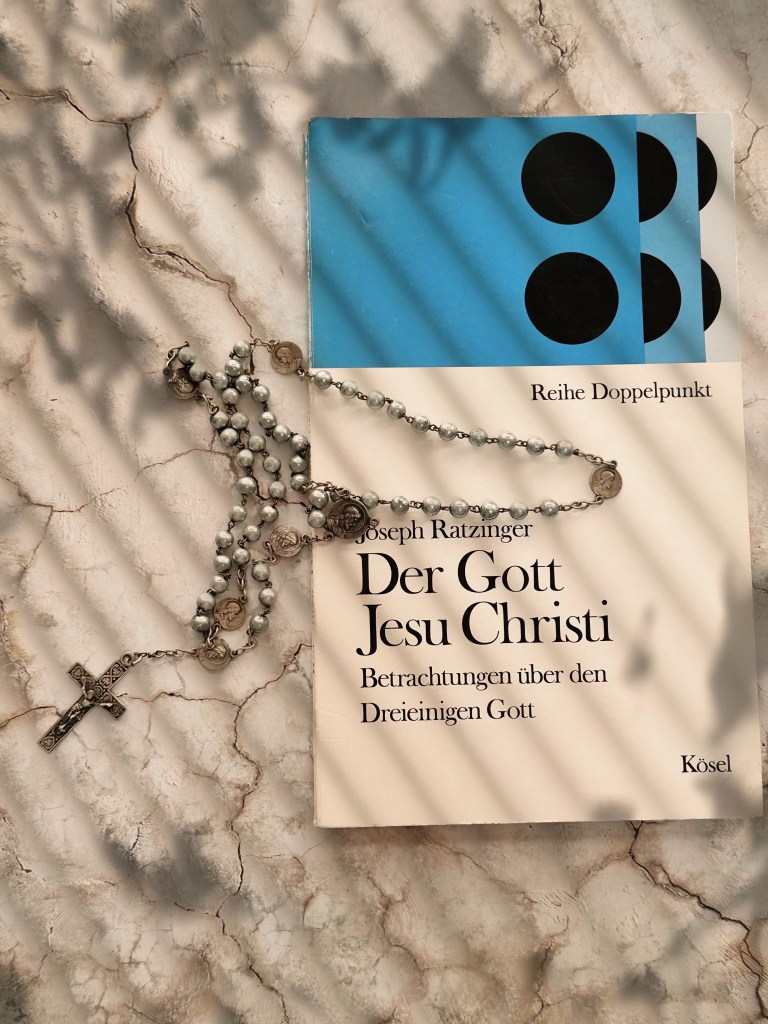
第一夜

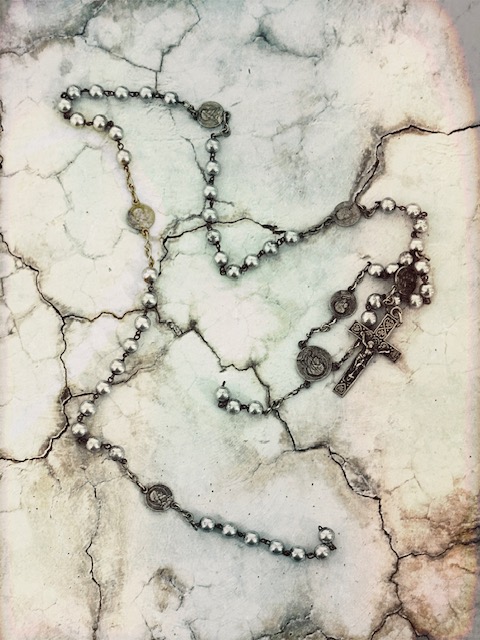
ロザリオが壊れたので買い直した。

これをきっかけに今度から夢日記を表に出していこうと思う。

 父は生前、平家物語の話をしてくれた。平家の都落ちによって、二位の尼は幼帝安徳を連れて入水する。尼が幼子と一緒に携えていた三種の神器が水の底に沈んでいき、勾玉以外の鏡と剣の複製品が受けつがれるようになった。三種の神器は天皇は直接見てはならないものなので、今でも保管されているものが伝説のものなのか確認が不可能なようだ。父は「複製品の話はあまり外で言わない方がいいね」と言った。それは卑しい人間にとって政治的だからだろう。幻想の美を否定してしまうこと、それは神話の死よりも、卑しい。けれども世というものは常に卑しいのだから、私たちだけでその幻想を活かそうとする。そのために「外で言わない方がいいね」と含みを持たせた言い方が、父の性格を表しているようだった。それを含めて、私にとっての平家物語だった。

これらは複製品と言っても、神霊が憑依しているということはさて置き、父の葬儀の1週間後に旧約聖書の詩篇の23章の夢を見た。まだ49日もなっていなかった頃だったので気持ちの整理がついているはずがなかった。「よく霊的な話をしていた人が消えてしまった」というのは言葉に言い表せることも出来ない程の大きな喪失だったようで、あれだけ生死について喋っていた人なのだから、夢にでも現れてくれるのではないかと待っていたけれども、父は消えてしまった。そのことによって、この話が一番好きだったと言いそびれたまま終わってしまったと無常そのものだった。

こんな夢を見た。夢現に霧雨の中に立っていた。土の様子を見ていると、この雨は何日も降っていることを知っているようだった。雨は止むのか、強くなるのか分からない針葉樹の下で、羊の足跡を見つけた。どうして、それを羊のものだと思ったのかは分からなかったが、この先に牧草地があることを私は知っていたが、私は、その先は進めなかった。日の光は弱いが、暗くなることはなかった。

「ダビデ自身のための詩」

「主はわたしの羊飼い、わたしは何も事欠かないだろう」

「主はわたしを草原の原で休ませ」

「憩いの水のほとりに伴い」

「わたしの魂を向き変えらせてくださった。主は御名のために、わたしを義の道に導かれた」

「例え死の陰の谷を行く時も」

誰がその詩を読んだのか、言葉も何処の言葉なのか分からなかったが、わたしがこれを詩篇の23章と気づくことは生きているのだと分かっていた。死後というものは、自我や勿論、人格もなくなり、想像がつかない存在となって、この峠を越える。過去に僧侶からは怒りや悲しみがない存在になるとも聞いたことがある。私はそうではなかった。喜怒哀楽全てを抱えていた。だから、これは「夢の中」であるということも気づいてしまった。自分の心臓の鼓動が聞こえる。だから、これは夢なのだ。私は振り返って尋ねた。「この詩篇は生きている人の試練だと思っていたけれども、死者にも通じるものなの?」

そして私は目が覚めた。

この23章についてアウグスティヌスは「教会がキリストに向かって語っている」としている。

私が振り返って尋ねようとしたのは誰だったのか、詩篇23章を読んでくれたのは誰だったのか、それは光でもなく、闇でもなかった。どちらと思いたいのか、それは私に委ねられていたのだろう。敢えて、私は両方だったと位置付けるとする。私が抱いているのは空虚でもあったし、天の国でもあったが、その先に進めないので知ることはなかった。

この夢は、精神世界が見せたものだろう。無常というものは感性で捉えることができないものであるが、その思惑を超えて聖霊が私を触ったのか、そういったことを私は問わないが、水の底に沈んだ神聖は、複製品という齟齬となって私のそばにある。例えば、このように「夢」となった。言いそびれた言葉も、愛情も掛け違えたまま永遠の中に姿を消した。「現象学」をやっている私にとって、この確認できないことに対して「括弧」にして経験だけを抽出することは、生き様のようなものだった。

父の葬儀が浄土真宗だったものも影響があったのかもしれないが、棺の前で忌辞を唱える際に、キリストのことは一切言わなかった。場の空気をよく読んで、その「時間」にとっての最善を考えた。平家物語の話もしなかった。もっと、日常的なものを言った。それによって、出来た光と同時に、信仰について「キリストに倣うという生き方は、所詮は生きている間の<夢>に過ぎないのかもしれない」と思わざるを得なかった。それは敗北も受け入れることなのかもしれない。私にとっては、それだけの存在が「消えた」のだ。夢というのはダニエル書などで、神との繋がりも記録されているが、人間の精神世界で説明がついてしまうこともある。私はキリストの存在を権威のように「絶対」と言いきってしまうことも出来ない性分だった。それらが生きている間の夢だとしても、私は壊れたロザリオを買い直した。

「あなたは誰の息子なのか」

念頭におきたいのは「父」という神秘に一番近づいたイエス・キリストは処刑されたことだ。黙示録の2章17節には、神とその人だけが知る、本質的な名があるそうだ。イエスについて復活だけでなく、私はその死を考えることが多かった。神聖なものとは、ロザリオにイエスは宿るのか、そうではない。それでもなぜ、買い直したのか?

そういった現実と神秘の齟齬が、私たちが人間としていられるものだと思うことにしている。むしろ問われるのは、本当に自分自身も大切な存在が「無」になってしまうのなら、今、何がしたいのだろうかということだろう。死というものは「実」が海の底に落ちてしまって、後世が失ったものの代わりのものを残そうとする。この世にとっては死は夢の中、あの世とは少しすれ違っている。 ロザリオにイエスが宿るわけじゃないことと同じだが、ロザリオは必ず必要なものであった。このように、この世とあの世は、交差しながら不一致があるはずだ。三種の神器に対して抗議する宗教団体があるが、歪んだ歴史認識と左翼思想で作り上げたキリストは、本来のキリストとは一致しない。見たい思想の中で神話を歪めることは、神聖なものに誠実とは言えないだろう。

 文学は愛よりも死の方が多いと言っている文学者がいた。私にとってイエスの愛と死の対峙的な神話はオルフェウスだと思う。イエスは愛を残したけれども、オルフェウスは愛情と畏れがあるが故に、ハデスとの契約がありながらも振り返り、妻ユリディスは黄泉の国に戻されて死が残った。イエスは、磔刑の前もイエスは弟子たちが裏切っても、民に拒絶されても、そして洗礼者ヨハネが死んでも振り返らずに、そのまま旅に出た。

両者とも物語論で考えると、「死の陰の谷」に触れた愛の形が、終わりなき物語を語っている。

よって、無常と愛の片方だけを受け入れるということは自分にはありえなかった。

 フッサール現象学は「物自体」ではなく、意識に現れる現象そのものに忠実になることであるが、見えたものや、感じたもの、夢で経験したものは全て「現実」と同じ価値を持っていることになる。私の「現象」としての真実は確かなものだったと言える。この夢は、ダニエルが解いたネブカドネツァルの夢と同じものではないのかもしれない。

 それでも、死ぬまでに持っていけるものはほんの僅かなものについて、一体、何を選ぶのか。それについて、今後は夢という曖昧な場所と言葉を借りることにした。

そこに自分自身の本質があるように思える。

海の底に沈んだ、その不在を受け入れることが私の強さであると確信する。

第一夜の最後に、言い残すとするのなら、

棺の前で、「貴方はヨセフのような人だった」と言いたかった。

*「こんな夢を見た」夏目漱石の夢十夜より

*「精神世界」英訳ではmindと翻訳

*括弧 Epochéのこと

Cahier 2024/02/19 English

La pesanteur et la grâce (Gravity and grace)Simon Weil

・Tous les mouvements naturels de l’âme sont régis par des lois analogues à celles de la pesanteur matérielle. La grâce seule fait exception.

・Il faut toujours s’attendre à ce que les choses se passent conformément à la pesanteur, sauf intervention du surnaturel.

・Deux forces règnent sur l’univers : lumière et pesanteur.

Translation

The natural movements of the soul follow laws similar to those of physical gravity, with the exception of grace.

It is always to be expected that things will happen in accordance with gravity, unless supernatural forces intervene.

The universe is governed by two forces: light and gravity.

note 1

So begins Gravity and Grace, a compilation of Simone Weil’s posthumous notebooks. She tries to explain human behaviour and interaction around the concepts of pesanteur (gravity) and grâce (grace).

She explains that the natural movements of our soul follow laws similar to the physical law of gravity. The only thing other than gravity is grace, and we should always expect things to proceed according to gravity, unless there is supernatural intervention.

Tous les mouvements naturels de l’âme sont régis par des lois analogues à celles de la pesanteur matérielle. La grâce seule fait exception.

The grammatical features of this sentence are as follows

Subject: ‘Tous les mouvements naturels de l’âme’ (all the natural movements of the mind)

Predicate: ‘sont régis par des lois analogues à celles de la pesanteur matérielle’ (governed by the same laws as physical gravity).

Auxiliary verb: ‘sont’ (to be).

Verb: ‘régis’ (to be governed).

Object: ‘des lois analogues à celles de la pesanteur matérielle’ (laws similar to those of physical gravity).

Adverb: ‘seule’ (the only one).

La grâce seule fait exception. (But only grace is an exception).

It is as though the bestowal of grace rests solely in God, the epitome of singularity.

Le Roi Lear et la pesanteur.

・Pesanteur. – D’une manière générale, ce qu’on attend des autres est déterminé par les effets de la pesanteur en nous ; ce qu’on en reçoit est déterminé par les effets de la pesanteur en eux. Parfois cela coïncide (par hasard), souvent non.

・Pourquoi est-ce que dès qu’un être humain témoigne qu’il a peu ou beaucoup besoin d’un autre, celui-ci s’éloigne ? Pesanteur.

Lear, tragédie de la pesanteur. Tout ce qu’on nomme bassesse est un phénomène de pesanteur.

D’ailleurs le terme de bassesse l’indique. L’objet d’une action et le niveau de l’énergie qui l’alimente, choses distinctes.・・・・・・

Translation

・Pesanteur. – Generally speaking, what we expect from others is determined by the effects of in us; what we receive from them is determined by the effects of gravity in them. Sometimes this coincides (by chance), but often it does not.

・Why is it that as soon as one person testifies that he needs another a little or a lot, the other person moves away? Pesanteur.

・Lear, tragedy of heavyiness. Everything that is called vileness is a phenomenon of gravity.

・Moreover, the term vileness indicates this. The object of an action and the level of energy that feeds it are different things. ・・・・・・

note2

Matthew 23:12 – says, ‘But whoever has exalted himself, shall be humbled. And whoever has humbled himself, shall be exalted.’, but here the scribes and Pharisees were sitting on Moses’ throne. They put heavy burdens on people’s shoulders, but they would not do anything themselves. Jesus told the crowd and his disciples that there was no ‘teacher’ or ‘master’ on earth, only Christ.

Simone Weil equated William Shakespeare’s King Lear with gravity. Lear asks his three sisters about the depth of their love for him. The two sisters were verbal, but the youngest, Cordelia, could not speak, but showed it from her heart. He could not forgive Cordelia, so he banished her and shared his territory with the other two who had shown him affection. Then his tragedy began. In making this superlative judgement of Lear, he was betrayed by two of his daughters and lost his soldiers through indecision.

What Lear shared with them was territory, a symbol of his wealth, but as if he had shared his organs, his fate was cast into exile. Having misjudged who to trust, Lear ends up losing Cordelia, who truly loved and saved him.

The Bible also says in Proverbs, “Whoever responds before he listens, demonstrates himself to be foolish and deserving of confusion.” (Proverbs 18:13), but also in verse 12, “The heart of a man is exalted before it is crushed and humbled before it is glorified.”, verse 15, “A prudent heart shall possess knowledge. And the ear of the wise seeks doctrine.”, not just superficial things, but a wise and enlightened mind.

The preoccupation with ”gift expaned” in Proverbs (Proverbs 18:16) is precisely what makes following Jesus a priority and warns against dependence between people: ‘Whoever loves father or mother more than me is not worthy of me. And whoever loves son or daughter above me is not worthy of me.’ (Matthew 10:37). “But it is not to be this way among you. Instead, whoever would become greater shall be your minister;and whoever will be first among you shall be the servant of all.” (Mark 10:43-44).

Coincidentally, Leah said these words when she lost her soldier. “O, reason not the need: our basest beggars “Lear here questions his own reason and his material needs. This line foreshadows the beginning of King Lear’s spiritual collapse and self-reflection, forcing him to reassess his own folly and values.

Again, it is interesting to note that reviewing one’s mistakes is also accompanied by spiritual collapse, falling into what psychologists call psychological defences or a collapse of self-esteem. Catholics (and Christians in general) regard the discovery of sin as the starting point for repentance and conversion. Indeed, recent trials involving Catholics have revealed a psychological defence mechanism to avoid a collapse of self-esteem in clergy who break church law, who protest their innocence, and in lay people who beat their victims. It is as if they cannot see themselves in the mirror (now they see dimly as in a mirror: 1 Corinthians 13:12), as if love is the key to perfect knowledge and understanding, and that perfection is realised in love, but they are unwilling to see even that love. So God’s love and human sin are opposites, but in the same reflection. The art of recognising this is shown in Psalm 51, where King David confesses his sins before God and asks for forgiveness with a repentant heart. I note that in this Psalm King David expresses that he “repents with a sincere heart, looks at his sins and is honest with God in the depth of his heart”.

Jesus Christ also speaks of His teaching in Matthew 18:21-22, which calls for forgiveness to be given to sinners “not seven times, but seventy times” (Matthew 18:21-22). This teaching points to a heart attitude of looking at the sins of others and offering forgiveness.

D’ailleurs le terme de bassesse l’indique. l’objet d’une action et le niveau de l’ The act of lowering is indeed King Lear’s misjudgement, but the ‘sustenance’ of the subsequent wavering of his spirit with the realisation of his folly towards himself is the equivalent of staring into a mirror. The ‘sustenance’ of King Lear’s subsequent wavering spirit with the realisation of his own folly is equivalent to his gazing into a mirror. He was able to recognise the love of his three wives because he had recognised their love for him. (Although Cordelia is killed.)

*Est-ce que (What) Interrogative

Vulgarity and Grace.

・Le bas et le superficiel sont au même niveau. Il aime violemment mais bassement : phrase possible. Il aime profondément mais bassement : phrase impossible.

・ ––− une vertu basse est peut-être à certains égards mieux à l’épreuve des difficultés, des tentations et des malheurs qu’une vertu élevée.

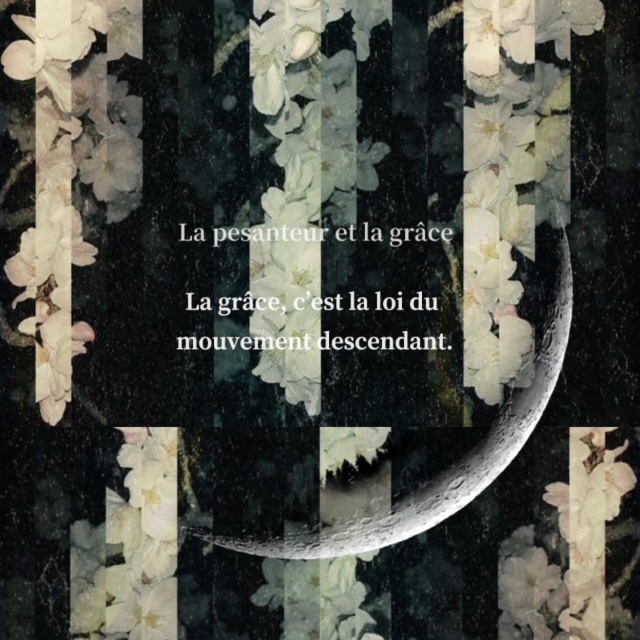
・La grâce, c’est la loi du mouvement descendant.

Translation

・The base and the superficial are on the same level. He loves fiercely but basely: possible proposition. He loves deeply but basely: impossible sentence.

・A low virtue is perhaps in some respects a better proof against difficulties, temptations, and misfortunes than a high virtue.

・Grace is the law of downward motion.

note3

––une vertu basse est peut-être à certains égards mieux à l’épreuve des difficultés, des tentations et des malheurs qu’une vertu élevée ––According to Simone Weil, a lower virtue may, in certain respects, prove to be more resilient in the face of difficulties, temptations, and misfortunes than a higher virtue. She contends that actions and feelings rooted in lower-dimensional motives and emotions hold equal value. In other words, she does not diminish the significance of lower dimensions but instead embraces them as if they represent the truth.

According to Weil, the concept of ‘gravity’ (pesanteur) represents the notion of ‘lower’ behavior and emotions in humanity. She argues that these ‘lower’ aspects are a manifestation of gravity. Additionally, she asserts that both ‘low’ and ‘superficial’ are comparable in their level of significance. The pronoun ‘he’ she uses alludes to the fact that intense emotions can coexist with lowly behavior, as exemplified by characters like King Lear. Moreover, Weil contends that it is impossible to simultaneously love in both a lowly and deep manner. She does not shy away from acknowledging the impact of heaviness and vulgarity in human behavior and emotions. It is as if she is gazing into a philosophical reflection, rather than an ecclesiastical one tied to religious institutions. Weil believes that actions and feelings originating from ‘lower motives’ are of equal value to those rooted in higher dimensions.

While there are no direct stories in Christianity that parallel King Lear’s mistakes, there are teachings and warnings in Christianity regarding human judgment and deceit. One such example is the parable of the Pharisees.

In the course of Jesus’ numerous miracles, the Pharisees are portrayed as religious leaders who sought to emphasize their adherence to religious laws and principles. However, they were self-centered and proud, as their focus on external actions and beliefs lacked inner transformation and genuine love for others. Through this parable, Christianity cautions against superficial faith and self-righteous attitudes, asserting that true faith is rooted in inner transformation and compassionate love for others.

In the case of King Lear, his initial choice may have appeared to be the right one, but it ultimately proved to be a mistake. This story not only teaches us the importance of focusing on inner truth and love rather than superficial judgments and words, but it also speaks to the concept of grace, which is bestowed upon us even though we cannot defy gravity.

Gravity can be succinctly translated as the scientific term ‘Zwaartekracht’, referring to the weight of an object on Earth due to the gravitational pull exerted by the planet. It encompasses the combined force of the universal gravitational pull of Earth and its rotation. The nature of mass suggests that objects do not attract each other directly, but instead, they distort the space around them, resulting in mutual attraction. While gravity governs the entire universe, its force is inherently weak, allowing birds to soar and us to move about freely. It remains weak as long as it asserts its dominion.

Leah’s ability to feel and suffer from Cordelia’s presence was subject to the influence of this never-ending, but never overpowering, force of gravity. So, too, her love must have been intertwined with God’s love.


This profound realization from Simone Weil’s choice of ‘Gravity’ suggests that the presence of gravity is necessary for the emergence of its opposite, ‘grace’.

*This is the Cahier, but if you have any suggestions, please contact us.

Cahier 2024/02/19 Japanese

La pesanteur et la grâce (重力と恩寵)シモーヌ・ヴェイユ

・Tous les mouvements naturels de l’âme sont régis par des lois analogues à celles de la pesanteur matérielle. La grâce seule fait exception.

・Il faut toujours s’attendre à ce que les choses se passent conformément à la pesanteur, sauf intervention du surnaturel.

・Deux forces règnent sur l’univers : lumière et pesanteur.

・魂の自然な動きはすべて、物質的な重力に類似した法則に支配されている。恩寵だけは例外に排除される。

・超自然的なものが介入しない限り、私たちは常に重力に従って物事が起こることを期待しなければならない。

・宇宙には光と重力という2つの力が支配している。

memo 1

シモーヌ・ヴェイユの遺作となったノートをまとめた「重力と恩寵」の始まりはこのようになっている。彼女は、「pesanteur(重力)」と「grâce(恩寵)」という概念を軸に人間の行動や相互作用を説明しようとしている。

この文では、私たちの魂の自然な動きは、物理的な重力の法則に似た法則に従っていると述べられています。重力以外のものは、恩寵のみであり、超自然的な介入がない限り、常に重力に従って事が進むことを期待する必要がある。

この文の文法的特徴は次のとおりです:

  • 主語:「Tous les mouvements naturels de l’âme」(心の自然な動きすべて)
  • 述語:「sont régis par des lois analogues à celles de la pesanteur matérielle.」(物理的な重力と同様の法則によって統制される。)
  • 助動詞:「sont」(~である)
  • 動詞:「régis」(支配される)
  • 目的語:「des lois analogues à celles de la pesanteur matérielle」(物理的な重力と同様の法則)
  • 副詞:「seule」(唯一・唯一の人)
  • 「La grâce seule fait exception.」(ただし、恩寵のみは例外である)

まるで「恩寵」を与える存在が神という唯一性であるかのようだ。

リア王と重力

・Pesanteur. – D’une manière générale, ce qu’on attend des autres est déterminé par les effets de la pesanteur en nous ; ce qu’on en reçoit est déterminé par les effets de la pesanteur en eux. Parfois cela coïncide (par hasard), souvent non.

・Pourquoi est-ce que dès qu’un être humain témoigne qu’il a peu ou beaucoup besoin d’un autre, celui-ci s’éloigne ? Pesanteur.

Lear, tragédie de la pesanteur. Tout ce qu’on nomme bassesse est un phénomène de pesanteur.

D’ailleurs le terme de bassesse l’indique. L’objet d’une action et le niveau de l’énergie qui l’alimente, choses distinctes.・・・・・・

・重力。- 一般的に言って、私たちが他者から期待するものは、私たちの中にある重力の影響によって決まり、私たちが他者から受け取るものは、他者の中にある重力の影響によって決まる。時にはこれは(偶然に)一致することもあれば、多くの場合は一致しない。

・なぜ、ある人間が他者を、かなり必要としていると証言したとたん、その他者は離れていくのだろうか? 重力のため。

・リア王、重力の悲劇。私たちが「低さ」と呼ぶものはすべて重力の現象による。

 ・実際、”低さ “という言葉はそれを示している。行為の対象と、それを糧とするエネルギーは異なるものなのだ。(割愛)

memo2

マタイによる福音書 23:12 -に「誰でも、高ぶる者は低くされ、へりくだる者は高められる」とあるが、ここでは律法学者たちやファリサイ派の人たちが、モーセの座についていた。彼らは重いものを人の肩に乗せるが、自分たちは何もしようとしなかった。イエスは群衆と弟子たちに、「先生」や「師」というのは地上にはおらず、キリスト一人とした。

シモーヌ・ヴェイユはウィリアム・シェイクスピアの「リア王」と「重力」を同質とした。リアとは三姉妹に自分への愛情の深さを尋ねた。二人の姉妹は言葉巧みに語るが、末娘は言葉で語れず心の中で示した。彼は、三女を許さず追放し、愛情を示してくれた二人に領土を分け与えた。それからが、彼の悲劇の始まりだった。リアのこの上辺だけで判断することで、娘二人に裏切られ優柔不断で兵を失ってしまう。

リアが分け与えたのは、富の象徴とも言える「領土」であったが、それがまるで彼の臓器を分け与えたかのように、彼の運命は流浪の身へと翻弄されていく。本当に信頼すべき人を誤ってしまったリアの末路は、自分を本当に愛してくれ、救ってくれた三女であるコーデリアを失うこととなる。

聖書にも箴言で「よく聞きもせずに言葉を返す 無知も恥辱もこういう者のこと」(箴言18:13)とあるが、他にも12節、「破滅に先立つ高慢、誉れに先立つ謙遜」15節「分別ある心は知識を得、知恵のある耳は知識を求める」と、表面だけのことにとらわれず、知恵深い悟りを持っている人間によって「究極の判断」ができるとされる。

箴言にもある前途ある「貢ぎ物」とは(箴言18:16)これこそ、イエスについていくことを優先とし、人間同士の依存について警告を出している「私よりも父や母を愛する者は、私にふさわしくない」(マタイによる福音書10:37)マルコによる福音書では「あなたがたの間では、そうではない。あなたがたの中で偉くなりたい者は、皆に仕える者となり、あなた方の中で、頭になりたい者は、すべての人の僕(しもべ)になりなさい」と述べている(マルコ10:43-44)。

奇しくもリアは兵士を失った時に、このような言葉を述べている。「なんだと、必要を論ずるな。最も卑しい乞食でさえ、その貧しい持ち物の中に何かしら余分な物を所有しておるわ」リアは、ここで気分自身の理性と、物質的な必要性を問いかけている。このセリフはリア王の精神的な崩壊や自省の始まりを予示していて、彼は自らの愚かさや価値観の見直しを迫られている。

ここで、自らの過ちを見直すことは精神的な崩壊も伴うこと、心理学でいう心理的防衛機制(psychological defense mechanisms)、自己評価の崩壊(self-esteem collapse)に相当することにも陥っていることも興味深い。カトリック(キリスト教全般)は罪を見つけることは悔い改めと回心の出発点とされている。実際に、昨今のカトリック関連の訴訟によって、無実を訴える教会法違反聖職者や、被害者を叩く信徒に自己評価の崩壊を避けるがための心理的防衛機制が見受けられる。まるで自分自身を鏡を見ることが出来ないような、(今は、鏡に映して見るようにおぼろげに見ている:1コリント人への手紙13:12)愛は、完全な知識や理解を得るための鍵であり、愛の中で完全性が実現するとされているが、彼等はその愛ですら見ようとしていない。そのように、神の愛と人間の罪というのは対極でありながらも同じ鏡像にある。それを見つける術は、詩篇51篇では、ダビデ王が神の前で自分の罪を告白し、悔い改めの心で赦しを求めている。この詩篇の中で、ダビデ王は「真心で悔い、罪を見つめ、心の奥底で神に正直になります」と表現していることに私は着目する。

また、イエス・キリストも、マタイによる福音書18章21-22節で、罪人に対して「7回どころか70倍」(マタイ18:21〜22)赦しを与えることを求める教えを語っている。この教えは、相手の罪を見つめ、赦しを与える心の姿勢を示している。

D’ailleurs le terme de bassesse l’indique. L’objet d’une action et le niveau de l’énergie qui l’alimente, choses distinctes. 低めることへの行為とはリア王の誤った判断のことをさすが、その後のリア王の自分自身への愚かさへの気づきと共に精神が揺らいでいくことについてのは「糧」というのは、鏡を見つめたということに相当する。何故なら、彼は三女の愛に気づけたからだ。(但し、三女コーデリアは殺されるが)

est-ce que (What) 疑問系 

低めたものと「恩寵」

・Le bas et le superficiel sont au même niveau. Il aime violemment mais bassement : phrase possible. Il aime profondément mais bassement : phrase impossible.

・ ––− une vertu basse est peut-être à certains égards mieux à l’épreuve des difficultés, des tentations et des malheurs qu’une vertu élevée.

・La grâce, c’est la loi du mouvement descendant.

・低いものと浅いものとは、同一のレベルにある。彼は激しく愛するが、低級に。彼は深く愛しているが、低級に:とは不可能な判決だ。

・−–−恐らく低い徳の方が、高い徳よりも、様々な困難や誘惑、不幸に耐えられることもあるだろう。

・恩寵とは、下降運動の法則である。

memo3

この引用は、シモーヌ・ヴェイユが低いものと浅いものについて考えていることを示している。ここでは引用が長くなってしまうので割愛させてもらったが、––une vertu basse est peut-être à certains égards mieux à l’épreuve des difficultés, des tentations et des malheurs qu’une vertu élevée.−−彼女は、低次元の動機や感情に基づく行動や感情は、高次元のものと同じように価値があると主張している。言い換えれば、彼女は低次元のものを軽視することなく、まるで真理がそこにあるかのように汲み取っています。

ヴェイユは「重力」(Pesanteur)という概念を通じて、人間の行動や感情における“basse”「低級な」という言葉が示すものについて言及しているようだ。彼女は「低める」行動や感情は、重力の現象であると述べている。また、「低さ」と「表面的」は同じレベルにあると述べており、彼女が指す「彼」とは、リア王のように、強烈な感情を持ちながらも低俗な行動をすることがあり得ると繋がっているだろう。それと同時にヴェイユは「深さ」だけでなく「低俗に」愛することは不可能であると主張している。彼女は「鏡」を見つめるかのように、人間の行動や感情の内部に存在する重さや低俗さの影響について目を逸らすことなく、教会的(この意味では世俗的な教会を指す)ではなく哲学的な考察だと考えられる。

ヴェイユは「低級の動機」や感情に基づく行動や感情は、高次元のものと同じように価値があるとしている。

キリスト教には、リア王と同じような過ちを犯した人物の物語は「直接的」には存在しないが、ただし、キリスト教においては、人間の判断や欺瞞性に対する警告や教訓がある。たとえば、パリサイ派の人たちへの譬えがそれに当たる。

イエス・キリストが数々の奇跡を行う中で、パリサイ派は自分たちの正統性や高潔さを強調しようとする宗教指導者たちについて述べられた。彼らは自己中心的で誇り高く、外見上の行為や信仰を重視して内面的な変化や他の人々への深い愛に欠けていたからだ。この物語を通じて、キリスト教は表面的な信仰や独善的な態度を警戒し、真の信仰は内なる変化と他者への愛に基づくことを教えている。

リア王の場合も、彼の選択は一見正しく思われたかもしれないが、実際には誤った選択となってしまった。この話から私たちは、言葉の表面や外見だけで判断せず、内面の真実や愛を重視する大切さを学ぶことができるだけでなく、重力に逆らうことが出来ない中でも与えられた「恩寵」についても書かれてあるのかもしれない。

重力とは簡潔に科学的に言えばZwaartekracht の訳語で、地球上の物体が地球上の引力によって、物体の重さとなっている。地球の万有引力と「自転」による合力である。質量の本質とは、物体同士が引き寄せ合うのではなく、空間を歪めて引き寄せ合う。重力は宇宙全体を支配しているが、その力は、鳥が飛ぶように、そして私たちが飛び跳ねられるように弱い。決して、強くはない。その「重力」の支配下の中で、リアはコーデリアの存在に気づいた。その愛は、神の愛に通じたのだろう。

*これはカイエです。深くは掘り下げていませんが、何か教示があったらコメントまで。

Cahier 2023/12/25 English

La pesanteur et la grâce La mal (Simone Weil)

Le faux Dieu change la souffrance en violence. Le vrai Dieu change la violence en souffrance.

“The false God turns suffering into violence. The true God turns violence into suffering”

Alors, où mettre le mal ? 

“So, where does evil belong?”

Il faut le transférer de la partie impure dans la partie pure de soi-même, le transmuant ainsi en souffrance pure. Le crime qu’on a en soi, il faut l’infliger à soi.

“It has to be transferred from the impure part to the pure part of oneself, thus transforming it into pure suffering. We must inflict the crime within us upon ourselves”

Grammar

The use of the definite article, such as ‘Le faux Dieu’ or ‘Le vrai Dieu’, refers to a specific deity.

Verbs such as ‘change’, in the direct present tense, and ‘transférer’ refer to the transfer of a thing to another place.

Verbs such as ‘change’ in the direct present ‘transférer’ indicate that the thing in question is transferred to another place.

The expression ‘de soi-même’ is used to indicate the myself, the self.

The expression ‘qu’on a en soi’ indicates the self and refers to a sin related to the aforementioned part.

The expression ‘à soi’ indicates taking action against the self.

Note:

For some reason, ‘So where does evil belong’ was of interest to me. Weil seems to speak only to his own inner ‘mystery’ and ‘imperfection’. It seems like Nietzsche’s ‘self-transcendence’, which argued that the purpose of human life is self-realisation and transcending one’s own limitations and constraints.

However, the evil in the Catholic prayer ‘Lead us not into temptation, but deliver us from evil’ means ‘Satan’, so Weil, although a philosopher, is influenced by Catholicism, so in this case evil includes Nietzschean evil, but is also close to the Satan positioned by Catholicism is also close to the Devil.

Here, briefly, about Satan. The etymology of the word exorcism does not mean exorcism, but is derived from the Greek word ‘to swear severely, to declare’.

It is a declaration of faith by a person possessed or seduced by an evil spirit, acknowledging the absolute rule of God in Jesus.

Just as in the film The Vatican Exorcist, ‘sin finds itself’, so in the Gospels Jesus speaks of taking up his cross.

Satan, I can’t say for sure at the moment because I have no experience of exorcism ceremonies regarding Satan myself, but I think the story wanted to say that the true God turns violence (satanic) into suffering (cross), and with a false God, when he claims to perform miracles of God, he makes them satanic.

Reference

Matthew : 16 : 24 – Then Jesus said to his disciples: ‘If anyone is willing to come after me, let him deny himself, and take up his cross, and follow me.

Luke : 9 : 21 – But speaking sharply to them, he instructed them not to tell this to anyone,

Luke : 9 : 22 – saying, ‘For the Son of man must suffer many things, and be rejected by the elders and the leaders of the priests and the scribes, and be killed, and on the third day rise again.’

PATER noster, qui es in caelis, sanctificetur nomen tuum. Adveniat regnum tuum. Fiat voluntas tua, sicut in caelo et in terra. Panem nostrum quotidianum da nobis hodie, et dimitte nobis debita nostra sicut et nos dimittimus debitoribus nostris. Et ne nos inducas in tentationem, sed libera nos a malo. Amen.

(Pater Noster)

Nietzsche #Simone Weil.

Evil #Gospel.

Exorcism.

Cahier 2023/12/25

「重力と恩寵」 悪(La mal)シモーヌ・ヴェイユ

Le faux Dieu change la souffrance en violence. Le vrai Dieu change la violence en souffrance.

「偽物の神は、苦しみを暴力に変える。真の神は、暴力を苦しみに変える」

Alors, où mettre le mal ? 

「それでは悪をどこへしまい込めばいいのか」

Il faut le transférer de la partie impure dans la partie pure de soi-même, le transmuant ainsi en souffrance pure. Le crime qu’on a en soi, il faut l’infliger à soi.

「自分の中の不純な部分から純粋な部分へと悪に移し、悪を純粋な苦しみに変えなければならない。自分の中の罪を自分自身が背負わなければならない」

文法

・「Le faux Dieu」や「Le vrai Dieu」といった定冠詞を使って、特定の神に言及する。

・ 「change」は直接法現在「transférer」といった動詞は、対象の物事を他所に移すことを示す。

・「La partie impure」と「La partie pure」は、定冠詞を使って特定の部分を指している。

・「de soi-même」という表現は、myself、自己を示すために使われる。

・ 「qu’on a en soi」という表現は、自己を示し、前述の部分に関連する罪を指す。

・ 「à soi」という表現は、自己に対して行動を起こすことを示す。

Note:

何故だか、「それでは悪をどこへしまい込めばいいのか」が気になった。ヴェイユはあくまでも自分自身の内面にある「神秘性」と「不完全」に語りかけているようだ。人間の生の目的は自己実現であり、自分自身の限界や制約を超えることを提唱したニーチェの「自己超克」(Übermensch)のようにも思える。

しかし、カトリックのお祈りの「わたしたちを誘惑におちいらせず、悪からお救いください」の悪(ラテン語:malo)とは、「悪魔」を意味する。ヴェイユは哲学者でありながらも、カトリックの影響を受けているので、この場合の悪はニーチェ的な悪も含んでいるが、カトリックの位置付けている悪魔にも近いと思う。

ここで軽く、悪魔について。エクソシズムの語源は悪魔祓いという意味ではなく、「厳格に誓う、宣言する」というギリシャ語が語源とされている。悪霊に取り憑かれた人、もしくは悪霊の誘いを受ける人がイエスにおいて神の絶対的な支配を認め、信仰を宣言するものである。

映画、「ヴァチカンのエクソシスト」でも「罪は自分自身を見つける」とあったように、福音書でも、イエスは自分の十字架を背負うことを語っている。

悪魔、と言い切ってしまうと、私自身は悪魔に関しては祓魔式の経験もないので、今の所はっきりとは言えないが、真の神は、暴力(悪魔的な)ものを苦しみ(十字架)に変え、偽物の神とは、神の奇跡を謳っては、悪魔的なものにする、と、この話は言いたかったように思う。

#ニーチェ #シモーヌヴェイユ

#悪 #福音書

#エクソシズム

参照

PATER noster, qui es in caelis, sanctificetur nomen tuum. Adveniat regnum tuum. Fiat voluntas tua, sicut in caelo et in terra. Panem nostrum quotidianum da nobis hodie, et dimitte nobis debita nostra sicut et nos dimittimus debitoribus nostris. Et ne nos inducas in tentationem, sed libera nos a malo. Amen.

(ラテン語の主の祈り:Pater Noster)

それから、弟子たちに言われた。「私について来たい者は、自分を捨て、自分の十字架を負って、私に

従いなさい。自分の命を救おうと思うものは、それを失い、私のために命を失うものはそれを得る。

マタイによる福音書16:24から25

それから、イエスは皆に言われた。「私に付いて来たい者は、自分を捨て、日々、自分の十字架を負って、私に従いなさい。

ルカによる福音書9:23

Cahier(2023/11/27)English

A ceux qui voudraient faire grief à Simone Weil, sur- tout présentée par un prêtre, de ses erreurs, de ses exagé- rations, volontiers je répondrais : « Que lui lance la pre- mière pierre celui qui n’a jamais péché contre la lumière, qui en a suivi toutes les exigences, qui a été jusqu’au bout fidèle! » (John 3:20, 8:7)Le mot immortel du grand converti d’Hip- pone remonte à mes lèvres : « Que ceux-là s’emportent contre vous, qui ignorent le prix de la vérité…

To those who would criticise Simone Weil, presented above all by a priest, for her errors and exaggerations, I would gladly reply: “Let the first stone be thrown at him by the one who has never sinned against the light, who has followed all its demands, who has been faithful to the end! (John 3:20, 8:7)

The immortal words of the great convert of Hippo come back to my lips: “Let those be angry with you who do not know the price of truth…

La joie d’avoir trouvé, ou plutôt d’avoir reçu la vérité, doit-elle nous rendre insensibles à la sagesse douloureuse et incomplète  de ceux qui cherchent en gémissant et qui tâtonnent dans leur ascension? Fr. J.-M. PERRIN, Dominicain.

Should the joy of having found the truth, or rather of having received it, make us insensitive to the painful and incomplete wisdom of those who groan in their search and grope in their ascent? Fr. J.-M. PERRIN, Dominican.

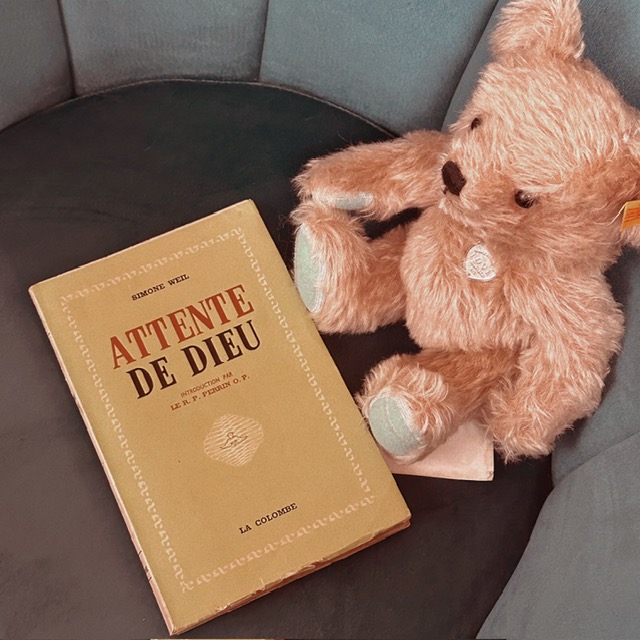
The preface by Fr. Perrin, which is included in the Japanese translation, seems to be only available in the first French edition, and I bought it in a second-hand book, but it was not included in the book,

I bought it every time it came out on Kindle, and I tried to buy it several times, but I couldn’t get it because it couldn’t be sent to Japan or something, but eventually it arrived. It’s a book about ‘la sagesse’ (wisdom), ‘douloureuse’ (pain), ‘et incomplète’ (and incomplete), with ‘pain’ sandwiched between the incomplete and the wisdom. This is what I wanted to know.

C’est pourquoi j’ai intitulé ce livre Attente de Dieu, j’ai essayé par ce titre de traduire le « en upomèné », (Luke 8:15, 21:19)en patience de l’Evangile, un des mots que Simone savou- rait le plus, peut-être parce qu’elle y retrouvait une cer- taine saveur stoïcienne, mais plus certainement parce que c’était sa manière de se donner à Dieu, de s’en remet- tre à lui de tout rester en attente et en disponibilité totales.

That’s why I called this book Attente de Dieu (Waiting for God). With this title I’ve tried to translate the Gospel word “en upomèné”,(Luke 8:15, 21:19) in patience, one of the words that Simone liked best, perhaps because she found in it a certain Stoic flavour, but more certainly because it was her way of giving herself to God, of entrusting herself to him, of remaining in total expectation and availability.

I could also understand why Fr. Perrin, who is included in the Japanese version, chose “Attente de Diew”, a passage from Weil’s favourite Gospel.

la sagesse douloureuse et incomplète 

For who has known the mind of the Lord, so that he may instruct him? But we have the mind of Christ. >>>>>>1st Corinthians : 2 : 16

The words of the Apostle Paul to the Corinthians. In this context Paul talks about wisdom and knowledge, pointing out the limits of human knowledge and understanding, ‘imperfect wisdom’. Other examples.

For my thoughts are not your thoughts, and your ways are not my ways, says the Lord.For just as the heavens are exalted above the earth, so also are my ways exalted above your ways, and my thoughts above your thoughts. >Isaiah : 55 : 8 – 9

Oh, the depths of the richness of the wisdom and knowledge of God! How incomprehensible are his judgments, and how unsearchable are his ways! For who has known the mind of the Lord? Or who has been his counselor?>>>-Romans : 11 : 33 -34

So similar stories are repeated throughout the Bible. The repetition changes slightly after the coming of Jesus, when Paul answers the question, “Who says that we know the mind of the Lord and counsel him?” by saying, “But we have the mind of Christ. This means that Paul himself and Christ’s followers are saying that by God’s grace they can accept Christ and respond to His teaching. So while Paul recognises that knowledge and wisdom are limited, he emphasises the importance of trusting in Christ and following his teachings.

As for Simone Weil’s “Waiting for God” (Attenet de Dieu), an edited version of a posthumous manuscript, I believe it is only possible because of this preface by Fr. Perrin. Having a priest like Fr. Perrin, who did not neglect his work with the poor, confirms that we have ‘the mind of Christ’.

As an aside, I had written about ‘imperfect wisdom’ in 2016, in reference to the Bobby Fischer chess story, but I can’t quite remember why I wrote it up again, as it was never mentioned. It may be that I was struggling with something about writing it down, not knowing whether to write it down as a beautiful story or a realistic one, or even my ‘true intentions’.

I can only remember why it was chess.

Chess can be played against each other, as in Fischer’s case, or it can be played as an artistic form of ‘chess problem’. In mathematics there is also such a thing as uniqueness of solution, but the difference between a chess game and a chess problem can be divided into uniqueness and non-uniqueness. In ordinary chess, for example, if there are any number of moves for White, it is a matter of depreciation. In chess jargon this is called a dual. Chess problems are specific to the art, and sometimes the only condition is that only uniqueness can be found in the filling. If any other move is found, it is ‘incomplete’.

 Uniqueness can also be found in the Bible. Of course it is only a ‘side issue’, as it depends on the context and historical background, but Judas still has to betray the story, John the Baptist has to warn Herod, and Jesus has to be executed. Any other option would certainly cease to be ‘holy’. So there are things that must not be moved. If we ask whether there is uniqueness in literature and philosophy, this may be the ‘incomplete wisdom’. Some are aware of the uniqueness in it, others are completely removed from it. Oscar Wilde’s Salome follows the uniqueness of what John the Baptist was like, with Salome being executed at the end. So does the death of Jane Eyre’s best friend. We are aware of the uniqueness of the house of God. What about Weil, some of which is unorthodox as an idea, but I think there is something completed by Father Perrin’s comments and criticisms.

There is an incomplete wisdom around uniqueness, something that cannot be reached by going around it. But it is painful because it is an attempt to move forward. To the joy of being human, as it were, “Attente de Dieu”.

****

****

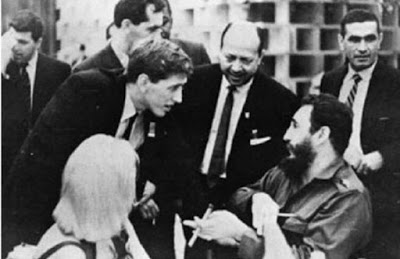
This photograph shows chess player Bobby Fischer talking to President Castro. (Chairman Castro spears Fischer before the tournament).

Cahier(2023年11月27日)

A ceux qui voudraient faire grief à Simone Weil, sur- tout présentée par un prêtre, de ses erreurs, de ses exagé- rations, volontiers je répondrais : « Que lui lance la pre- mière pierre celui qui n’a jamais péché contre la lumière, qui en a suivi toutes les exigences, qui a été jusqu’au bout fidèle! » Le mot immortel du grand converti d’Hip- pone remonte à mes lèvres : « Que ceux-là s’emportent contre vous, qui ignorent le prix de la vérité…

>>> 特に一司祭が紹介する「シモーヌ・ヴェイユ」について、その誤りや誇張を不満とする人々に対しては、私は進んでこう答えたい。「光に反して罪を犯したことはなく、光のすべての要求に従い、最後まで忠実であった人は、彼女に最初の石を投げるが良い」(ヨハネ福音書3:20、8:7)・・・・・・ヒッポの偉大な改宗者(アウグスティヌスのこと)の不滅の言葉が私の唇にのぼる。「真理の価値を知らない人々はあなた方に怒るがよい・・・・・・」

La joie d’avoir trouvé, ou plutôt d’avoir reçu la vérité, doit-elle nous rendre insensibles à la sagesse douloureuse et incomplète  de ceux qui cherchent en gémissant et qui tâtonnent dans leur ascension? Fr. J.-M. PERRIN, Dominicain.

うめきつつ求め、上昇のために手さぐりする悩める不完全な知恵に対して、私達は自分が真理を持っているという喜び、あるいはむしろ自分が真理を受けいれたという喜びによって無感覚であるべきだろうか? ――シモーヌ・ヴェイユ著・神を待ち望む・ペラン神父の序文――

日本語訳に収録されているぺラン神父序文は、フランス語版は初版しかないようで、古本で購入しましたが収録されておらず、

キンドルで出るたびに買ったり、何度か買おうとトライしてますが日本には送れませんとかで手に入らなかったのが漸く届きました。la sagesse (知恵)douloureuse(痛み) et incomplète(そして不完全)と、不完全と知恵に「痛み」が挟まっている。これが知りたかった。

C’est pourquoi j’ai intitulé ce livre Attente de Dieu, j’ai essayé par ce titre de traduire le « en upomèné », en patience de l’Evangile, un des mots que Simone savou- rait le plus, peut-être parce qu’elle y retrouvait une cer- taine saveur stoïcienne, mais plus certainement parce que c’était sa manière de se donner à Dieu, de s’en remet- tre à lui de tout rester en attente et en disponibilité totales.

私がこの本を「神を待ち望む」と題したのはそのためであって、シモーヌが最も気に入っていた言葉のひとつである福音の「忍耐のうちに」« en upomèné »(ルカによる福音書8:15、21:19)という言葉を翻訳しようとしたものである。 おそらく彼女は、ある種のストア学派的な香りを、この言葉に感じていたのだろうが、より確実なのは、それが神に身を委ね、完全な期待と可能性の中にとどまるという彼女の方法だったからである。

日本語版に収録されている何故、ぺラン神父が「神を待ち望む」としたのか、ヴェイユの好きな福音書から選んだという箇所も見れた。

悩める不完全な知恵

「誰が主の思いを知り、主に助言するというのか」しかし、私たちは、キリストの思いを抱いています。1コリントの信徒への手紙 2:16 (共同訳:以下同じ)

使徒パウロがコリントの信徒たちに対して述べた言葉。この文脈では、パウロは知恵や知識について語っていて、人間の知識や理解力には限界があること「不完全な知恵」について指摘している。他にも

1. イザヤ書55:8-9「『わたしの思いは、あなたたちの思いと異なり、わたしの道は、あなたたちの道と異なる』と主の仰せ『天が知よりも高いのに わたしの道はあなた型の道より高く』

2. ローマ書11:33-34「ああ、神の富と知恵と知識のなんと深いことか。神の裁きのいかに究め難く、その道のいかに辿り難いことか。誰が主の思いを知っていたであろうか。誰が主の助言者となっただろうか。誰がまず主に与えて その報いを受けるであろうか」

というように聖書には似たような話が繰り返されている。イエスの到来以降、その繰り返しが少し変わるのは、「誰が主の思いを知り、主に助言するというのか」という問いに対して、パウロは「しかし、私たちは、キリストの思いを抱いています」と答えるところにある。これは、パウロ自身やキリストの信徒たちは、神の恵みによってキリストを受け入れ、キリストの教えに応じることができると言っていることを意味する。したがって、パウロは知識や知恵が限定的であることを認識しながらも、キリストに信頼を置き、キリストの教えに従うことの重要性を強調している。

シモーヌ・ヴェイユの「神を待ち望む」(Attenet de Dieu)について、死後に集められた原稿を編集したものだが、私はこのペラン神父の序文があってこそ成り立っていると思っている。ペラン神父のように、貧しい人への活動を怠らなかった聖職者がつくことによって、「キリストの思いを抱いていること」を肯定される。

2016年に「不完全な知恵」に関して、チェスのボビーフィッシャーの話に準えて書いたことがあったけれども、何故私が並べたのかは記載がなかったため、その理由をいまいち思い出せない。ただ単に、書き残すことについて、美談にするか現実的に書くのか、「本意」すらもわからない状態で何かをもがいていたのかもしれない。

なぜ、チェスだったのか、それだけ触れることはできる。

チェスはフィッシャーのように対戦するものと、芸術性を表す「チェスプロブレム」というものがある。数学でも、解の一意性というものがあるけれども、チェスの対戦とチェスプロブレムの違いは、一意性であるか、ないかの違いに分かれる。普通のチェスは、例えば白にとって何手でも打つ手が存在する場合、減価事項となる。チェスの専門用語でこれをデュアルと言う。チェスプロブレムというのは、芸術に特化したもので、詰め方に一意性だけしか見当たらないものが条件だったりする。他の手が見つかると「不完全」となる。

 聖書にも一意性はあったりする。勿論、文脈や時代背景に左右されるのであくまでも「側面」的なことではあるが、ユダはやはり裏切らないと話が進まないし、洗礼者ヨハネはヘロデに警告しなければならないし、イエスは処刑されなければならない。他の選択肢があったら「聖」でなくなる。このように、動かしてはならないものがある。文学や哲学において一意性というのは存在するのか、といえばそれこそ「不完全な知恵」なのかもしれない。それには一意性を意識しているものであれば、完全に離れていくものもある。オスカーワイルドサロメは、サロメが最後に処刑されるという、洗礼者ヨハネとはどういう存在だったかという一意性に沿っている。ジェーンエアの親友の死もそうだ。神の家というものの一意性を意識している。ヴェイユはどうだったのだろうか、思想として正統派ではないものもあるが、ペラン神父が注釈や批評をつけていることによって完成した何かがあると思っている。

一意性を巡った不完全な知恵は迂回しながら、何処かへ向かおうとする。痛みを伴うのは、進もうとするからである。それこそ「神を待ち望む」ように。

他サイトリンク(カトリック・あい)私が書いたコラムです。

>>二枚目の写真について:チェスプレイヤーのボビー・フィッシャーがカストロ議長と話している写真である。(カストロ議長はトーナメント前にフィッシャーに横槍を入れている)

Cahier(2023/11/17/)English

Der Gott Jesu Christi Betrachtungen über den Dreieinigen Gott.

Wieder kann man von hier versuchen, ahnend etwas über Gottes inneres Geheimnis zu sagen: Vater und Sohnsind die Bewegung reinen Schenkens, reiner Übergabe an- einander In dieser Bewegung sind sie fruchtbar, und ihre Fruchtbarkeit ist ihre Einheit, ihr völliges Einssein, ohne daß sie dabei selbst zurückgenommen und ineinander aufgelöst werden. Für uns Menschen heißt Schenken, Sichselbergeben, immer auch Kreuz.(Das trinitarische Ge- heimnis übersetzt sich in der Welt in ein Kreuzesgeheim- nis: Dort ist die Fruchtbarkeit, aus der der Heilige Geist kommt.

English translation:Once again, we can attempt to glimpse something of God’s inner mystery from this point: the Father and the Son are the movement of pure giving, pure surrender to one another. In this movement, they are fruitful, and their fruitfulness is their unity, their complete oneness, without being absorbed or dissolved into each other.For us human beings, giving of the self always entails the cross. (The mystery of the Trinity is translated into the world as the mystery of the cross: It is from this fruitfulness that the Holy Spirit emerges.)

Characteristics of the text

The text mentions ‘God’s inner mystery’, the distinctive parts of which contain mainly religious-philosophical elements.

「Vater und Sohn sind die Bewegung reinen Schenkens, reiner Übergabe aneinander.」:it contains philosophical discussions and analyses of individual words and concepts. The images of parent-child relationships and mutual gifts presented here represent ideas about the existence and nature of God.

・ 「In dieser Bewegung sind sie fruchtbar, und ihre Fruchtbarkeit ist ihre Einheit, ihr völliges Einssein, ohne daß sie dabei selbst zurückgenommen und ineinander aufgelöst werden.」:this statement illustrates the argument about the triune nature of God. It says that God’s existence is expressed as fullness and that this fullness is related to the unity of the Trinity.

・「Für uns Menschen bedeutet Hingabe, Selbsthingabe, immer auch Kreuz (Das trinitarische Geheimnis übersetzt sich in der Welt in ein Kreuzesgeheimnis: Dort ist die Fruchtbarkeit, aus dem der Heilige Geist kommt).」:In the interpretation of the Trinity of God in human experience and faith, the image of the cross and the concept of the Holy Spirit are themes often discussed in religious philosophy and theology and are also illustrated here.

As is characteristic of Benedict XVI’s writings, his texts are highly philosophical and show deep thought. He deals with religious themes and expresses mystical concepts. His writing is concise but dense, and each sentence is full of meaning. His style is rigorous and is used to convey certain concepts clearly. Benedict XVI sometimes uses a dialogical style, explaining his ideas in a supposed dialogue with his readers. This dialogue format may represent the one-dimensional personality of the one and only distant ‘Pope’. His writings show a fusion of rational argument and philosophy of faith. In particular, he uses ethical arguments to show that ‘faith’ and ‘reason’ are compatible. He seems to focus on communicating complex theological concepts in a way that is accessible to the general reader.

Summary

An attempt is made by Benedict XVI to understand the ‘secret of the Trinity’ together with the reader. The Father and the Son are described as engaged in a pure act of giving, in a work of ‘total devotion’ to each other. This work results in their fruitfulness, which is described as their perfect unity and oneness. However, it is also clarified that this process does not lead to their annihilation or merging into each other. It is further asserted that for human beings, giving and self-giving are always associated with the Cross. The secret of the Trinity is seen as manifesting in the world as the secret of the Cross. The explanation offered is that through the Holy Spirit, the Cross holds within it the potential for fruitfulness and abundance.

The difference between philosophical writing and everyday writing.

A philosophical text can be described as a multifaceted yet concise exploration of topics related to deep thinking and philosophical concepts. The term philosophia, coined by Socrates, encompasses the love of knowledge, also known as philosophy. These writings often employ logical reasoning. Both the current Pope, Pope Francis, and his predecessor, Pope Benedict XVI, can be seen as having philosophical elements in their teachings. They delve into concepts such as reflections on existence and religion, including faith, eternal life, the Last Judgement, the law of love, and the relationship with God. However, it is also necessary to provide more specific and succinct explanations using everyday language. For example, ‘Hingabe’ and ‘Selbsthingabe’ are German words meaning ‘devotion’ or ‘devotion to self’. To better comprehend their meanings, specific examples or situations can be used to explain them.

「Für uns Menschen bedeutet Hingabe, Selbsthingabe, immer auch Kreuz (Das trinitarische Geheimnis übersetzt sich in der Welt in ein Kreuzesgeheimnis: Dort ist die Fruchtbarkeit, aus dem der Heilige Geist kommt).」If the original text of the following were to be shown in more everyday terms,

「In unserem menschlichen Verständnis bedeutet Hingabe immer auch Opfer (Das Geheimnis der Dreifaltigkeit offenbart sich in der Welt als das Geheimnis des Kreuzes: Hier liegt die Fruchtbarkeit, aus der der Heilige Geist entspringt)」In our human understanding, devotion always implies sacrifice as well. (The mystery of the Trinity is meant to be unveiled to the world as the mystery of the Cross.)

「In unserem menschlichen Verständnis bedeutet Hingabe immer auch Opfer」The translation is more of an everyday expression than a philosophical reflection on ‘what it means to give of oneself’, in line with the idea that true human commitment always needs to involve some sacrifice (e.g. time, comfort).

Finally, to return to the original again.

Für uns Menschen heißt Schenken, Sichselbergeben, immer auch Kreuz.(Das trinitarische Ge- heimnis übersetzt sich in der Welt in ein Kreuzesgeheim- nis: Dort ist die Fruchtbarkeit, aus der der Heilige Geist kommt.

“The reason why there are two instances of ‘der der’ is that the first one, ‘aus der’, translates directly as ‘from’, indicating that something is coming out of ‘der Fruchtbarkeit’ (abundance). In this context, it signifies the coming out of ‘der Heilige Geist’ (the Holy Spirit) from abundance. The second ‘der Heilige Geist kommt’ consists of the definite article ‘der’ and the noun ‘Heilige Geist’, signifying the arrival of the Holy Spirit. These elements represent the mysteries of the Trinity, which are of different natures yet closely intertwined.

If we were to write this without ‘der der’, for example,…”

Für uns Menschen bedeutet Hingabe, Selbsthingabe, immer auch Kreuz (Das trinitarische Geheimnis übersetzt sich in der Welt in ein Kreuzesgeheimnis: Dort ist die Fruchtbarkeit, aus dem der Heilige Geist kommt.(* Changing ‘Schenken’ and ‘Sichselbergeben’ to ‘Hingabe’ and ‘Selbsthingabe’ maintains consistency in context.)

“This is a trial translation and we would be grateful for any comments.

Following on from the previous edition, we have decided to include a memo-like section called “Cahier.”

Japanese

Cahier(2023年11月17日)

イエス・キリストの神(三位一体の神についての省察)教皇ベネディクト16世

Der Gott Jesu Christi Betrachtungen über den Dreieinigen Gott.

Wieder kann man von hier versuchen, ahnend etwas über Gottes inneres Geheimnis zu sagen: Vater und Sohnsind die Bewegung reinen Schenkens, reiner Übergabe an- einander In dieser Bewegung sind sie fruchtbar, und ihre Fruchtbarkeit ist ihre Einheit, ihr völliges Einssein, ohne daß sie dabei selbst zurückgenommen und ineinander aufgelöst werden. Für uns Menschen heißt Schenken, Sichselbergeben, immer auch Kreuz.(Das trinitarische Ge- heimnis übersetzt sich in der Welt in ein Kreuzesgeheim- nis: Dort ist die Fruchtbarkeit, aus der der Heilige Geist kommt.

和訳:ここで再び、神の内なる神秘について、おぼろげながらに語ることができます。父と子は、お互いに純粋に与え合い、純粋に引き渡し合う運動です。この動きの中で、両者は実り豊かであり、その実り豊かさとは、互いに引き取られ、溶け合うことのない両者の「一つ」、完全な「一つ」なのです。

私たち人間にとって、自己を捧げることは常に十字架を意味します(三位一体の神秘は、この世では十字架の神秘に翻訳されなければなりません:そこには聖霊が臨む実りがあるのです)。

特徴

この文章では、「Gottes inneres Geheimnis」(神の内なる秘密)について言及されていますが、その特徴的な部分は主に宗教哲学的な要素が含まれています。

・ 「Vater und Sohn sind die Bewegung reinen Schenkens, reiner Übergabe aneinander.」:個別の言葉や概念についての哲学的な議論や分析を含んでいます。ここで示されている親子関係と相互の贈り物のイメージは、神の存在や本性についての考え方を表しています。

・ 「In dieser Bewegung sind sie fruchtbar, und ihre Fruchtbarkeit ist ihre Einheit, ihr völliges Einssein, ohne daß sie dabei selbst zurückgenommen und ineinander aufgelöst werden.」:この文は、神の三位一体の性質に関する議論を示しています。神の存在が豊かさとして表され、そしてその豊かさが三位一体の一体性と関連していることが述べられています。

・「Für uns Menschen bedeutet Hingabe, Selbsthingabe, immer auch Kreuz (Das trinitarische Geheimnis übersetzt sich in der Welt in ein Kreuzesgeheimnis: Dort ist die Fruchtbarkeit, aus dem der Heilige Geist kommt).」:神の三位一体を人間の経験や信仰の中で解釈する際に、十字架のイメージや聖霊の概念は、宗教哲学や神学で頻繁に論じられる主題でありますが、ここでもそれが示されています。

ベネディクトベネディクト16世の文章の特徴として、彼の文章は非常に哲学的であり、深い思考を示しています。彼は宗教的なテーマを扱い、神秘的な概念を表現しています。 文章は簡潔ですが、密度があり、一文一文が多くの意味を含んでいます。彼の文体は厳格であり、特定の概念を明確に伝えるために使用されています。ベネディクト16世は時々、対話形式を使用していて、読者との対話を想定して思想を解説する。この対話形式が唯一の遠い存在である「教皇」の一面的な人格を表すことになるのかもしれない。彼の文章は、理性的な議論と信仰的な哲学の融合を示しています。特に彼は「信仰」と「理性」が両立可能であることを示すために、倫理的な議論を使用してる。彼は複雑な神学的な概念を一般の読者にも理解しやすく伝えることに重点を置いているように思えます。

要約

ベネディクト16世による、読者との「三位一体の秘密」を理解しようとする試みが述べられています。父と子は純粋な与え合う動きであり、互いに「完全な献身」の働きにあるとされています。この働きにおいて彼らは実り豊かであり、その実り豊かさが「彼らの」統一であり、完全な一体感(一つ)であるとされています。しかしその過程で彼ら自身が取り消されたり、互いに融解したりすることはないとも述べられています。また、人間にとって与えること、自己を捧げることは常に十字架とも関連しているとされています。この三位一体の秘密は、世界においても十字架の秘密として現れます。そして、十字架の中には聖霊による実り豊かさがあるという説明になっています。

「哲学的な文章と日常的な文章との違い」

哲学的な文章とは何か、一面的でありながらも簡潔に述べると、ソクラテスがフィロソフィア(知を愛する=哲学)という言葉を定着させたことは有名ですが、一般的に思考や哲学的な概念に関連するテーマを探求し、深い洞察を提供することなどがあげられます。これらの文章には論理的な推論が含まれていたりします。現教皇である、フランシスコ教皇や前任のベネディクト16世も、哲学的な要素を含んでいると言えます。彼らが掘り下げる概念は、信仰、永遠のいのち、最後の審判、愛のおきて、神との関係など、存在と宗教に関する考察を含んでいます。一方、日常的な言葉の説明を行う場合は、より具体的で簡潔な説明が必要となるでしょう。例えば、「Hingabe」や「Selbsthingabe」はドイツ語で「献身」や「自己への献身」を意味する言葉ですが、これらの言葉の意味を説明する際には、具体的な例や状況を用いてより理解しやすい説明が求められることがあります。例えば、「Für uns Menschen bedeutet Hingabe, Selbsthingabe, immer auch Kreuz (Das trinitarische Geheimnis übersetzt sich in der Welt in ein Kreuzesgeheimnis: Dort ist die Fruchtbarkeit, aus dem der Heilige Geist kommt).」の原文を、より日常用語として示すとしたら、

「In unserem menschlichen Verständnis bedeutet Hingabe immer auch Opfer (Das Geheimnis der Dreifaltigkeit offenbart sich in der Welt als das Geheimnis des Kreuzes: Hier liegt die Fruchtbarkeit, aus der der Heilige Geist entspringt)」私たち人間の理解では、献身は常に犠牲も意味します。(三位一体の神秘は、十字架の神秘としてこの世に啓示されることになる)

「In unserem menschlichen Verständnis bedeutet Hingabe immer auch Opfer」というのは、人間が真の献身を示す際には、常に何らかの犠牲を伴う(例えば、時間や快適さ)必要があるという考えに即した翻訳で、「自己を捧げると言うこと」ということについて哲学的考察というより、日常寄りの表し方にしています。

最後に、再度、原文に戻ると

原文:Für uns Menschen heißt Schenken, Sichselbergeben, immer auch Kreuz.(Das trinitarische Ge- heimnis übersetzt sich in der Welt in ein Kreuzesgeheim- nis: Dort ist die Fruchtbarkeit, aus der der Heilige Geist kommt.

何故、derderが2回続くのかというと、1回目の「aus der」は、直訳すると「… から出てくる」という意味です。この文脈では、「der Fruchtbarkeit」(豊かさ)から「der Heilige Geist」(聖霊)が出てくることを表現しています。2回目の「der Heilige Geist kommt」は、定冠詞の「der」と、名詞の「Heilige Geist」から成り立っています。これは、聖霊が来ることを示しています。三位一体の神秘がそれぞれ異なる性質を持ち、しかも密接に関連しています。

例えばderderを使わないで書くとしたら、

Für uns Menschen bedeutet Hingabe, Selbsthingabe, immer auch Kreuz (Das trinitarische Geheimnis übersetzt sich in der Welt in ein Kreuzesgeheimnis: Dort ist die Fruchtbarkeit, aus dem der Heilige Geist kommt.(*「Schenken」と「Sichselbergeben」を「Hingabe」と「Selbsthingabe」に変えることで文脈に一貫性を保っている)

これは試訳ですので、指摘がありましたらよろしくお願いします。

前回に続き、カイエというメモ的なページを掲載することにしました。

Cahier(15 November 2023). English

Introduction.

Starting this month, I will post “just a short analysis” of a text I like. The title will be Cahier (date).

I will also continue to update my previous critiques.

La pesanteur et la grâce 1

Today it is Simone Weil.

Ce n’est pas la faute qui constitue le péché mortel, mais le degré de lumière qui est dans l’âme quand la faute, quelle qu’elle soit, est accomplie. La pureté est le pouvoir de contempler la souillure.L’extrême pureté peut contempler et le pur et l’impur ; l’impureté ne peut ni l’un ni l’autre : le premier lui fait peur, le second l’absorbe. Il lui faut un mélange. —L’attention et la volonté 

In terms of gravity and grace (La pesanteur et la grâce), this is what is described in “L’attention et la volonté” (Attention and will).

Simone Weil was a 20th century philosopher, so the French language itself is not ancient. Simone Weil’s original text (in French).

The characteristic feature is a literary melody, and this quotation does not rhyme, but some words and ideas are repeated, so there is a sense of rhythm,The choice of words and phrases are thought-provoking and complex in a short text.

 Translation: It is not the fault that constitutes mortal sin, but the level of enlightenment present in the soul at the time of the transgression, regardless of its nature. Purity is the ability to contemplate impurity. Extreme purity can contemplate both the pure and the impure; impurity can do neither: the former frightens it, the latter engulfs it. It requires a mixture.

・The term “mortal sin” or “sin unto death”, although not a direct reference, is found in the New Translation of the Bible, 1 Romans 6:23: “For the wages of sin is death. But the free gift of God is eternal life in Christ Jesus our Lord. ”, etc., may also derive from Christian doctrine. Le péché mortel (‘the sin that leads to death’)

is translated as ‘mortal sin’.

Contempler (plural: contemple)’ is used, usually in the context of ‘to look at, introspection’, which is deeper than observation(look). The usual meaning is ‘regarder la souillure’, which means ‘to look at the dirt’.

Summary: This text is a short summary of the exploration of sin and purity. It states that sinning is not in itself a fatal sin, but the degree of light in the soul is what matters.

It states. It is because we are very pure beings that we have the power to see what is pure and what is impure. An impure thing is something that has been mixed with the impure thing.

So in terms of mixing, it is necessary to look not only at the pure but also at the impure.

Cahier(2023年11月15日)

はじめに

今月から、気に入った文章の「簡単な分析だけのもの」を投稿していきたいと思います。

その際はタイトルはCahier(日付)とします。

今までの批評の更新も、今後も続けていきたいと思います。

La pesanteur et la grâce (1)

今日はシモーヌヴェイユです。

Ce n’est pas la faute qui constitue le péché mortel, mais le degré de lumière qui est dans l’âme quand la faute, quelle qu’elle soit, est accomplie. La pureté est le pouvoir de contempler la souillure.L’extrême pureté peut contempler et le pur et l’impur ; l’impureté ne peut ni l’un ni l’autre : le premier lui fait peur, le second l’absorbe. Il lui faut un mélange. −L’attention et la volonté 

重力と恩寵(La pesanteur et la grâce)でいえば「L’attention et la volonté」(注意と意志)に記載されているものです。

シモーヌ・ヴェイユは20世紀の哲学者ですので、フランス語自体は古いものではありません。シモーヌ・ヴェイユの原文(フランス語)の

特徴は、文学的な旋律があり、今回のこの引用は韻律はありませんが、一部の言葉や考えが繰り返されているのでリズム感があり、

言葉選びや、フレーズは思索的な複雑さを短い文章の中で孕んでいます。

和訳:死すべき罪を定めるのは過失ではなく、その過失がどのようなものであれ、過失が成し遂げられたときに魂の中にある光の度合いである。純粋さとは、汚れを注視する力である。極限の純潔は、純粋なものと不純なものを注視することができるが、不純なものはそのどちらもすることができない。前者(純粋)はそれを恐れさせ、後者(不純)はそれに溶け込んでいる。これには混ざり合うことが必要だ。

・「死すべき罪」もしくは「死にいたる罪」とは、直接的な言及ではないけれども、新訳聖書の1ローマ信徒への手紙6:23「罪の支払う報酬は死です、しかし、神の賜物は、私たちの主イエス・キリストにある永遠の命なのです」等キリスト教教義にも由来しているかもしれません。

「死にいたる罪」(Le péché mortel)は「致命的な罪」と訳されます。

・「contempler(複数形:contemple)」が使用されていますが、通常は「凝視、内省する」という文脈で使用され、より思索として深くなっています。普通に「汚れを見つめる」という意味でなら「regarder la souillure」となります。

ー要約:この文章は、罪と純粋についての探求を短くまとめています。罪を犯すこと自体が致命的な罪ではなく、魂の内にある光の程度が重要であるとしています。純粋なものと、不純なものを見る力を持つのは、非常に純粋な存在であるためです。不純なものというものは、不純なものに溶け込んでしまっている。なので、混ざり合うことについて、必要なことは純粋さのみではなく、不純にも目を向けることだということになります。

試訳ですので、指摘がありましたらお願いします。

**

WordPress.com でブログを始める.

ページ先頭へ ↑