The Beauty and Poetry of Labour(2) Simone Weil /English


Continued from the previous article

  1. Ⅶ. The Labourer and Poetry: Jesus Christ, ed
  2. Ⅷ. Reflections 


Ⅶ. The Labourer and Poetry: Jesus Christ, ed

In this context, it seems reasonable to conclude that Weil is referring to the Catholic Eucharist, or Eucharistia hostia. This is, of course, an intuitive conjecture, yet it remains plausible to suggest that Weil maintained a critical perspective towards the monotonous and arduous nature of factory labour. Moreover, she implies that the hostia has been reduced to a mere habit—an observation aligned with her critique of the increasing materialism and secularisation of the Church. I argue that this insight emerged from her personal experience as a labourer, leading her to realise that the act of consuming food and drink, devoid of the accompanying physical effort, could be seen as a more materialistic pursuit.

My preference for Weil, over many other philosophers and theologians, lies in her focused exploration of the condition of the ‘labourer’. Furthermore, her spiritual ‘turns’, which many find challenging to interpret, are consistently anchored in the figure of Jesus Christ. The issue of poverty tied to labour remains a pervasive and universal challenge, even in modern contexts. It is also worth noting that Jesus himself had a profound connection to labour, given that Joseph, his foster father, was a carpenter.

***

・Travail manuel. Pourquoi n’y a-t-il jamais eu un mystique ouvrier ou paysan qui ait écrit sur l’usage du dégoût du travail ? La pesanteur et la grâce

・(Manual labour. Why has there never been a labourer or peasant mystic who wrote about the experience of disgust towards work?

Travail manuel. Le temps qui entre dans le corps. Par le travail l’homme se fait matière comme le Christ par l’Eucharistie. Le travail est comme une mort.

***

This assertion appears in Gravity and Grace (La pesanteur et la grâce), where Weil reflects on the mystery of labour, drawing a parallel between work and the transformation that Christ undergoes in the Eucharist. This connection evokes Christ’s anguished cry from the cross: “My God, my God, why hast thou forsaken me?”—an expression of divine abandonment. Christ suffered fully as a human being, and conveying the meaning behind these beliefs can be profoundly challenging. Faith is often deeply intuitive and internal, making it difficult to articulate through rational discourse alone. From a Catholic perspective, reflecting on why one might embrace Catholicism involves recognising the inherent contradictions within the institution, which may serve as part of its appeal.

In early Christianity, the teachings of Jesus were transmitted orally and through personal encounters, embodying a distinctly spiritual and individual approach to faith. As the Church’s influence expanded within the Roman Empire, however, faith became increasingly institutionalised, with doctrines and rituals formalised over time. This evolution established faith as an entity rooted in institutional authority, often intertwined with political power. Catholicism continues to value mystery and intuition, yet these elements have also been absorbed into its institutional framework. Although Weil’s exact reasons for embracing Catholicism remain unknown, I believe it was the very contradictions within the faith that captivated her. Amidst the materialism and corruption that taints some members of the clergy, she found solace in her connection with the humanitarian Fr Perrin. When I challenged Fr Perrin on the Church’s practice of excommunication, he replied in writing, comparing it to an act of weeping. Regrettably, this letter never reached Weil.

Weil recounts three significant encounters with Catholicism following her factory experience. The first occurred in a small Portuguese village, where she witnessed fishermen’s wives singing sorrowful hymns. This encounter led her to perceive Christianity as a “religion of slaves,” realising that those who suffer need faith for solace—and that she, too, was one of these “slaves.” The second encounter took place in Assisi in 1937, where, for the first time, she knelt in a small chapel associated with St Francis, experiencing a profound reverence for God. She also immersed herself in the liturgy at Solesmes, enduring severe headaches but finding comfort in the beauty of the hymns and words. These experiences offered her a glimpse into the possibility of understanding divine love beyond human suffering, etching the Passion of Christ deeply into her spiritual consciousness.

For her third encounter, Weil committed to reciting the Lord’s Prayer (Pater) in Greek each morning with complete focus. During these prayers, she often experienced a profound silence, sometimes feeling as though her thoughts transcended her physical body, enabling her to sense the loving presence of Christ. This practice of prayer became a vital means of direct contact with the divine for her. Her engagement with Catholicism left a significant imprint on her thoughts and beliefs.

The term “Catholicism” in this context encompasses the formal doctrines, rituals, and institutions of the Catholic Church, along with its social and cultural impact. The Pope is viewed as the supreme authority, and Catholicism emphasises the institutional and public dimensions of tradition-based education and social action. It can be described as an “outward-looking” phenomenon, centred on the officially recognised doctrines and institutions of the Roman Catholic Church. Although personal “intuition” remains vital for practising Catholics, it is noteworthy that Weil—despite her deep involvement—never received baptism, or passed away before she could do so, suggesting that her spirituality transcended institutional boundaries.

Weil’s factory experience allowed her to empathise with the suffering of others and to recognise herself as a “slave.” This realisation profoundly shaped her spirit, leading her to see herself as an anonymous figure within society, much like Christ, who bore the weight of human suffering.

The Psalms of the Old Testament offer a poetic connection between God and humanity, expressing a spectrum of emotions through praise, prayer, and lament. Other biblical texts, such as the Song of Solomon, Job, Proverbs, Lamentations, and sections of Jeremiah and Isaiah, also contain poetic elements. However, the New Testament does not portray Jesus Christ in poetic form.

Why, then, is Jesus not praised through poetry? This absence may reflect the early Christian focus on spreading the faith and establishing communities within the material world. The practical need to communicate teachings clearly and accessibly took precedence over poetic expression, leaving any poetic sentiment about Jesus to the reader’s interpretation. The narrative structure and instructive parables used in the Gospels were essential for conveying the message to diverse audiences across different cultures and languages.

In this context, Weil’s concept of the ‘labourer’ serves as a symbolic connection to Jesus. It is not merely physical sustenance that labourers require, but rather the nourishment of the soul and imagination.

Even today, the issues surrounding poverty and labour are not easily categorised as either social problems or matters of personal responsibility; they remain deeply intertwined, presenting challenges without clear solutions. Viewing poetry solely as an act of creative expression reflects a subjective perspective, reminiscent of Plato’s theories. However, my focus has been on Weil’s engagement with Catholicism, despite her not being baptised.

Can we view labourers not as mere material beings but as individuals who share in Christ’s suffering?

While the hostia, representing Christ’s flesh, may exist within sacred rituals, it is undeniable that institutional corruption often reduces it to mere bread. Labourers need more than this—they require a poetic sentiment capable of inspiring and enriching their lives. Historically, poetry has expressed devotion and reverence towards God, articulating moral and ethical ideals. To what extent, though, can humanity embrace such ideals today?

Weil does not deny the necessity of bread in addressing physical hunger; rather, she distinguishes between this and the spiritual nourishment she seeks. Her writings call for a deeper exploration of suffering and the human experience, frequently referencing Jesus Christ as a guiding figure. In doing so, she reveals a profound religious intuition that underpins her perspectives on contradiction and transformation.

Ⅷ. Reflections 

Perhaps you may glimpse poetic sentiment in the theme of ‘light and shadow.’ I wonder what thoughts stir within you as you observe the shadows cast by trees and the way light dances upon an outdoor wall. The delicate interplay between light and shadow conjures countless associations. Shadows, it could be said, are ephemeral—born from the presence of light, yet perpetually shifting and fleeting. If we draw upon Plato’s allegory of the cave, we might surmise that what we perceive as reality is but a shadow of the true essence, a projection on the wall that we mistake for the real. This enchanting scene offers only a fragment of truth, revealing but a glimpse of a larger whole.

In Japanese thought, this interplay evokes the concept of mujo—impermanence—capturing the transient meeting and parting of light and shadow. In Japanese literature, cherishing such seemingly insignificant moments is, in itself, a literary act. Gaston Bachelard, for his part, refrained from naming such experiences, instead drawing profound meaning from the essence of the fleeting moment.

While some may interpret this view as offering solace to labourers, my perspective has been shaped by Christian evangelism. Light and shadow, deeply symbolic throughout tradition, reveal beauty wherever the heart is open to see it. Yet if we are to embrace the full scope of Weil’s reflections on ‘labour,’ we must look beyond the mere interplay of light and shadow. We are called to confront the very symbol of ‘labour’ itself, not in its economic sense, but as a representation of poverty. Symbols, which merge the tangible with the abstract, demand both conceptual understanding and authentic engagement with reality.

One might say that while poetic sentiment grants us a certain freedom, we must also tread the path of poverty that Jesus embodies.

In Matthew 25:40, Jesus offers a parable that illuminates his royal worthiness: “Whatever you did for one of the least of my brethren, you did for me.” Conversely, he warns, “What you did not do for one of these least, you did not do for me.” These words convey that service to the most vulnerable is, in essence, service to Jesus himself. Yet bound within this message are daunting challenges, tangled with complexity, leading us away from the realm of poetry and heartfelt inspiration.

Indeed, those who place their faith in Jesus Christ may encounter moments of profound intuition, a deep sense of spiritual insight. Yet to articulate the poverty that Jesus embraced, and to share its meaning with others, is no easy task. The human heart, it seems, is caught in tension—yearning to draw nearer to the divine mystery, while fearing to lose itself within it. In recognising my own impermanence, I discover within myself a compassion tinged with humility—a challenge that mirrors my understanding of Jesus. This reflection becomes the essence of my redemption: not a pursuit of abstract beauty, but of a beauty that longs to take tangible form.

Amid the complexities of doctrine and the mysteries of faith, I have anchored my thoughts in the figure of the ‘labourer.’ Honouring Joseph, the earthly father of Jesus, I pay tribute to Simone Weil, whose words resonate with this enduring theme. Through her eloquence, Jesus walks the landscape of the heart, emerging as a poetic sentiment. Though the New Testament does not portray Jesus in the language of poetry, it was perhaps Weil who most profoundly conveyed that the journey to discover this poetic truth lies within us.

Lastly, I have chosen to translate “Work” consistently as “Labour.” In English, “Labour” encompasses not only work but also the pains of childbirth, whereas French distinguishes between these meanings with different words. For Weil, however, the shared Latin root may have embodied a deeper connection. She left us with these poignant words in her notebooks: “Writing is akin to childbirth. One cannot help but strive to the point of feeling limits.” This is an experience familiar to anyone who has engaged deeply in writing, regardless of their grasp of Latin. Yet knowing Weil, it is likely she uncovered within this act a profound mystery.

In this light, perhaps she was indeed a ‘teacher’ in the truest and most profound sense.

Comments:

*Although this work does not engage with Kantian thought, it is possible to reflect elements of Kant’s philosophy.

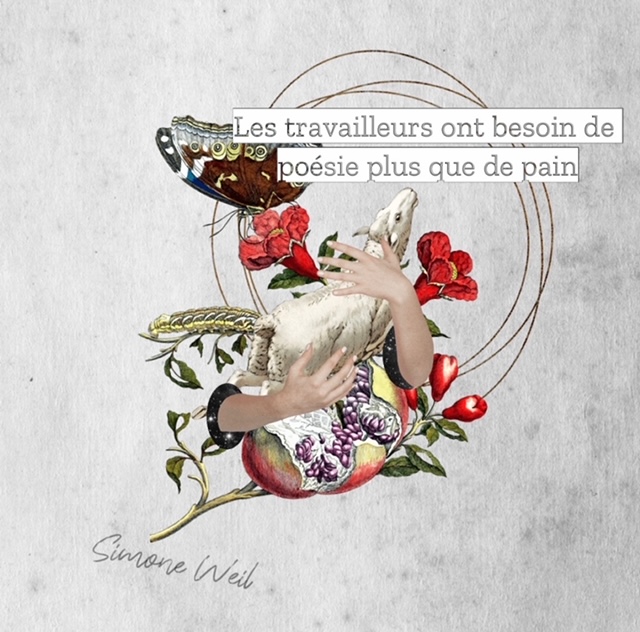
Les travailleurs ont besoin de poésie plus que de pain is part of the “Workers and Mysteries” chapter in Gravity and Grace, and it continues with Seule la religion peut être la source de cette poésie. (Only religion can be the source of this poetry).

*I hope you will accept this critique, even though it references literature. While it does not mention Kantian thought, it can reflect it as well.

Les travailleurs ont besoin de poésie plus que de pain appears in the “Workers and Mysteries” chapter of Gravity and Grace, followed by Seule la religion peut être la source de cette poésie. (Only religion can be the source of this poetry).

References:

• Simone Weil 『La pesanteur et la grâce』『La Condition ouvrière』『Attente de Dieu』『La pesanteur et la grâce』

• Tome VI, volume 2, Cahiers 2 (septembre 1941- février 1942), Paris, Gallimard, 1997.

• George G. Humphreys, Taylorism in France, 1904-1920: The Impact of Scientific Management on Factory Relations and Society

• Plato / Allen, R. (TRN), 『The Republic』

暗い時代の三人の女性, 晃洋書房

シモーヌヴェイユ アンソロジー, 河出出版

Please note that, as of now, this paper does not provide references to literature specifically addressing Catholic sacraments. The relevant details will be submitted at a later date.
労働者の美と詩(2)シモーヌ・ヴェイユ

前回はこちら


Ⅵ.「労働者と詩」イエス・キリスト編

私は、このヴェイユのパンというのをカトリックの聖体拝領、エウカリスティアのホスチアも指していると思っている。これは単なる直観に過ぎないが、ヴェイユは工場勤務によって、単調で過酷な仕事に対して、批判的な意見を持っていた。そしてそれは、ホスチアが、単なる「習慣」であり、

物質的になっていく世俗化された教会の問題も彼女は知っていただろう。それは彼女が労働者になった経験で、過酷な労働で、ただ飲み食いするだけのことをより物質的だと実感したことに繋がっている。

私が数多い哲学者や神学者を差し置いて、ヴェイユを選ぶ理由は彼女が「労働者」について着目しているからだった。そして、彼女が難解ともされる「転回」を繰り返す背景には、イエス・キリストという軸があることである。労働による貧困は現代にも通じ、そして普遍的な課題である。

イエス・キリストもヨセフが大工だったので、労働者ということが、より一層深く思えた。

***

・Travail manuel. Pourquoi n’y a-t-il jamais eu un mystique ouvrier ou paysan qui ait écrit sur l’usage du dégoût du travail ? La pesanteur et la grâce

・(肉体労働。なぜ、これまで労働の嫌悪をどう活かしていくかについて書いた神秘家が、労働者の中からも、農民の中からも一人もいなかったのか)

Travail manuel. Le temps qui entre dans le corps. Par le travail l’homme se fait matière comme le Christ par l’Eucharistie. Le travail est comme une mort.

(肉体労働。肉体の中へと入ってくる時間。労働を通じて、人間は物質となる。キリストが聖体の秘蹟を通じて、そうなるように。労働は、死のようなものである)

***

これは、「重力と恩寵」の労働の神秘に同じく収録されている断章だが、「キリストが生体の秘蹟を通じてそうなるように」とは、キリストが処刑前に「わが神、わが神、なぜわたしをお見捨てになったのですか」と詩編第22章を叫んだことに通じている。彼は人として苦しんだ。これらは信仰の理由を伝える際に、なぜそれらを説明できるのか、直観的、内的であるが故に、人に伝えようとすると、途方もなく疲れてくる。カトリック信者である私からみても、何故、彼女がカトリックを選んだのかという点は、この団体そのものが持つ「矛盾」への探究心がそうさせたのだと捉えている。

キリスト教の初期は、イエスの教えは口伝や直接の体験を通じて伝えられ、非常に霊的で個人的な信仰の形を持っていた。やがて教会がローマ帝国の中で影響力を持ち始めると、信仰は組織化され、教義や儀式が形式化されて、この過程で、教会は信仰を制度や権威に基づくものとして確立し、時には政治的な力とも結びついていった。カトリック内では神秘や直観も重視される一方、利権や制度化された側面も存在していた。彼女がカトリックを選んだ心理はわからないが、私はそこにある矛盾に惹かれたのだと思う。堕落した物質主義的な聖職者も多い中、人道主義のペラン神父と交流を持つようになる。ぺラン神父に、教会の「破門」について異論を述べ、ぺラン神父は、それについて破門によって教会が泣いている、と書き記したが、その手紙はヴェイユには届かなかった。(1942年)

彼女は工場勤務の後に、3回ほどカトリシズムに触れたと記録している。一回目はポルトガルの小さな村で、漁師の妻たちが悲痛な聖歌を歌う姿に触れた彼女は、キリスト教が「奴隷の宗教」であり、苦しむ者たちが信仰を必要とすることを直観する。彼女自身もまた、そのような「奴隷の一人」であることを理解した。二回目は1937年にアッシジでは、聖フランチェスコにゆかりのある小聖堂で初めて膝をつき、神への畏敬を感じた。さらに、ソレームでは典礼に没頭し、激しい頭痛に苦しみながらも聖歌と言葉の美しさに慰めを得る。この経験を通して、彼女は不幸を超えて神の愛を理解する可能性を見出し、キリストの受難が深く心に刻まれることになる。三回目、ヴェイユは毎朝、完全な集中をもって「主の祈り」(パーテル)をギリシア語で唱えることを自身の務めとした。祈りの中で深い静寂を体験し、時には思考が身体から離れ、キリストの愛に満ちた現存を感じることになる。この祈りの実践は、彼女にとって神との直接的な接触を可能にする重要な行為となった。彼女が「カトリシズム」に接触した経験は、彼女の思想や信仰に重要な影響を与えたものでした。彼女が接触した「カトリシズム」は、組織的な教会の教義や制度としての宗教的側面と、個人の内面的な霊性体験や神秘主義とは異なるニュアンスを持つべきものとして理解する。

   「カトリシズム」とは、カトリック教会の正式な教え、儀式、制度、そして社会的・文化的影響を広く意味し、ここでは、教皇を最高権威とし、伝統に基づく教育や社会的活動といった制度的・公的性格が強調される。「カトリシズム」とは、ローマ・カトリック教会の公認された教義や制度を中核に、信仰の実践と社会的役割を含む「外向き」の宗教的現象ともいえる。カトリックでも、当然ながらこの個人の内面的な「直観」はとても重要なことであるが、

しかし、彼女がカトリックで洗礼を受けなかった、もしくは受ける前に亡くなってしまったことも配慮すると、思想家として、宗教にとらわれない内的な神秘も持ち合わせていたと捉えている。工場での経験により、自分を含む多くの人々の不幸を身をもって感じ、自らを「奴隷」として認識するようになった。この体験は、彼女の精神に深い烙印を刻み、以降、自分を社会の中で名もなき存在と見なすようになっていった。これはキリストが人としても苦しみを背負ったことに通じている。

本来なら、神と詩を結びつけたとするのが旧約の「詩篇」が代表的で、これは多様な感情や状況において、神への賛美、祈り、嘆きなどを表現している。他にも雅歌、ヨブ記、箴言、哀歌、預言の箇所で詩的な表現や格言を含むエレミヤ書、イザヤ書とあるが、新約聖書では詩でイエス・キリストを表してはいない。

何故、イエス・キリストへの賛美は詩ではなかったのか。これは考察に過ぎないが、初代キリスト教が、現実世界での布教活動や共同体形成を目的としたため、教えを具体的かつ、実用的に伝わるようにし、詩的表現よりも説明や教義の明確な伝達が優先された。よって、イエスへの詩情というものは、読者の想像力に委ねられている。イエスを伝道する際、重要なのは物語形式や教訓的な逸話であり、異文化、異言語の人々が理解しやすい形式である必要性があった、と考えられる。

 ヴェイユの「労働者」を象徴として、イエスと繋げるとこのようになる。「労働者に必要なのは、パン(物質的なもの)ではなく、詩(直観)が必要」と私は思ったのである。

現代に置き換えて考えたとしても、貧困や労働者の問題は、社会の問題か、自己責任か、境界線を引こうと思って簡単に引けるものではなく、四方八方に問題や課題があり、出口がない。詩というものを創作活動のみで考えることも、彼女のプラトンの国家論の解釈を借りれば「好きか嫌いか」という各々の捉え方だと思うが、私は、ヴェイユが洗礼を受けなかったとしてもカトリックと交流していたことに焦点を当てた。

人は「労働者を物質的な存在ではなく、人の苦しみを受けたイエスと同等に見れるのか」

イエスの肉と表されているホスチアも、儀式の中に存在こそするが、団体の堕落によって、単なる「パン」になっている現実も否めない。労働者に与えるものはそのようなものでなく、

それらに感化され、深かまるほどの「詩情」が必要だということだと私は思う。かつては詩は神への忠誠と賛美であり、道徳も倫理も誓えるほどのものだった。人間は何処までそれを受け入れることができるのか。

彼女は空腹だからこそ、パンを食べることを否定していない。だからこそ、そのパンとは違うのだと私は思っていた。もっと精神的に、そして霊的に、不幸に光を当てるものをと考えると、背景にイエスを考えざるを得ないほど、彼女はイエス・キリストについて書き残している。

そこに彼女の宗教的な直観を感じてやまない。彼女の深化した「転回」と「矛盾」の視点を支えているとすら思うのである。

Ⅶ.考察 

例えば「光と影」について詩情を浮かべるとする。屋外の壁に映る木々の影と光の揺らめきについて、貴方は何を想うのだろうか。壁に映る光と影は、様々なものを連想させる。影は瞬間的なものであり、光に依存して生じている。その一方で常に変化していく。この「瞬間」でしかないものを、プラトンの「洞窟の比喩」に結びつけるとするのなら、現実に見えるものは本質の影であり、私たちは、壁に映る影を現実と思い込んでいるだけなのかもしれない。この美しい光景は、私たちが認識できる一部分に過ぎない真理の断片とも言えるだろう。

日本の感覚では、これは「無常」であり、光と影の出会いと別れ、日本文学ではこの何気ない瞬間を愛でることが文学的な行為となる。ガストン・バシュラールは、この光景に名前をつけず「瞬間」を感じることに意味を見出した。

こういった視点を持つことが、労働者に必要だという解釈も一部ではあるが、私はキリスト教伝道の視点で見るようになった。光と影、そのような伝統的な詩の象徴となるものは、何処までも心次第で美しくなれる。けれども、彼女が「労働者」と関連づけたことについて、全てを呑み込むとするのなら、労働者が光と影を見を向けるのではなく、自分自身が「労働者」という象徴を見つめなければならない。経済学における「労働」ではなく、それは象徴としての「貧しさ」である。象徴というものは、現実と連想を兼ねて私たちに抽象的理解を要してくるが、現実的である必要がある。

謂わば、自由な詩情を保証されながらも、イエスが示す貧しさを通らなければならない。

マタイによる福音書 25:40で、イエスが王に値することについての譬え話だが、彼はこう言った。「これらの最も小さい者のひとりに対してしたのは、わたしに対してしたことなのです。」「この最も小さな者の一人にしなかったのは、すなわち、私にしなかったのである」この言葉は、特に弱者や困っている人々への奉仕が、イエスへの奉仕と同等であることを示している。しかし、そこには出口の見えない課題や、問題が集まっている。それは詩からも感動からも遠ざかっていくものでもある。確かにイエス・キリストに信仰を持ったものは、直観による感動を色々と知っているだろう。それを、伝え、共有することが困難なのは、イエスが立った貧しさの上にある。そこには人間的なものが神秘から離れようとしながら、近づこうともする。無常が根底にある私自身に、憐れみ、そして地を指して、課題を与える。それが私のイエス像なのである。それは私の贖罪も含んでいる。それは造形的な美ではないが、形を持とうとする美である。

私は教義や様々な神秘へのアプローチの中で、必ずこの「労働者」と言うものを軸にするようになった。イエスの育ての父がヨセフという労働者であったことから、その先駆者的な存在のシモーヌ・ヴェイユに敬意を払っている。イエスは彼女の心を歩き、ヴェイユの言葉によって詩情として現れている。新約聖書では詩となったイエスは存在していなかったが、それは人が見つけ出すことだと、もっとも伝えたのは彼女だったように思える。最後に、「労働」をなるべく英訳では「Labor」とする際の意味について述べたい。英語では「Labor」には陣痛の痛み、苦しみという意味もあるが、フランス語では別々の単語になっている。彼女にとって共通しているのは、語源となったラテン語だったのかもしれない。彼女は『カイエ』にこのような言葉も残している。「執筆とは出産である。もう限界だと思える努力もせずにはいられない」これは執筆をしていたら、誰もがラテン語の知識がなくとも体験することだが、彼女のことだから神秘を発見した気持ちで気づいていたのだろう。

やはり彼女は「先生」だったのかもしれない。

注釈:

*これは文献を参照しつつも評論です。カント思想について触れてはいませんが、カント哲学を

反映することもできます。

*Les travailleurs ont besoin de poésie plus que de pain.は重力と恩寵の「労働者と神秘」の章であり、Seule la religion peut être la source de cette poésie.この詩の源になれるのは宗教だけだ、と続きがあります。

*I hope you will accept this critique, even though it refers to literature. While it does not mention Kantian thought, it can also reflect.

**Les travailleurs ont besoin de poésie plus que de pain. is the ‘Workers and Mysteries’ chapter of Gravity and Grace, and Seule la religion peut être la source de cette poésie. only religion can be the source of this poem. It continues with.

参照文献

Simone Weil 『La pesanteur et la grâce』『La Condition ouvrière』『Attente de Dieu』『La pesanteur et la grâce』

Tome VI, volume 2, Cahiers 2 (septembre 1941- février 1942), Paris, Gallimard, 1997.

George G. Humphreys『Taylorism in France, 1904-1920: The Impact of Scientific Management on Factory Relations and Society

Plato/ Allen, R. (TRN)『The Republic』

暗い時代の三人の女性 晃洋書房

シモーヌヴェイユ アンソロジー 河出出版

本稿では、カトリックの秘蹟に関する文献については、現在のところお示しできませんが、その詳細については、後日提出します。

Cahier 2023/12/25 English

La pesanteur et la grâce La mal (Simone Weil)

Le faux Dieu change la souffrance en violence. Le vrai Dieu change la violence en souffrance.

“The false God turns suffering into violence. The true God turns violence into suffering”

Alors, où mettre le mal ? 

“So, where does evil belong?”

Il faut le transférer de la partie impure dans la partie pure de soi-même, le transmuant ainsi en souffrance pure. Le crime qu’on a en soi, il faut l’infliger à soi.

“It has to be transferred from the impure part to the pure part of oneself, thus transforming it into pure suffering. We must inflict the crime within us upon ourselves”

Grammar

The use of the definite article, such as ‘Le faux Dieu’ or ‘Le vrai Dieu’, refers to a specific deity.

Verbs such as ‘change’, in the direct present tense, and ‘transférer’ refer to the transfer of a thing to another place.

Verbs such as ‘change’ in the direct present ‘transférer’ indicate that the thing in question is transferred to another place.

The expression ‘de soi-même’ is used to indicate the myself, the self.

The expression ‘qu’on a en soi’ indicates the self and refers to a sin related to the aforementioned part.

The expression ‘à soi’ indicates taking action against the self.

Note:

For some reason, ‘So where does evil belong’ was of interest to me. Weil seems to speak only to his own inner ‘mystery’ and ‘imperfection’. It seems like Nietzsche’s ‘self-transcendence’, which argued that the purpose of human life is self-realisation and transcending one’s own limitations and constraints.

However, the evil in the Catholic prayer ‘Lead us not into temptation, but deliver us from evil’ means ‘Satan’, so Weil, although a philosopher, is influenced by Catholicism, so in this case evil includes Nietzschean evil, but is also close to the Satan positioned by Catholicism is also close to the Devil.

Here, briefly, about Satan. The etymology of the word exorcism does not mean exorcism, but is derived from the Greek word ‘to swear severely, to declare’.

It is a declaration of faith by a person possessed or seduced by an evil spirit, acknowledging the absolute rule of God in Jesus.

Just as in the film The Vatican Exorcist, ‘sin finds itself’, so in the Gospels Jesus speaks of taking up his cross.

Satan, I can’t say for sure at the moment because I have no experience of exorcism ceremonies regarding Satan myself, but I think the story wanted to say that the true God turns violence (satanic) into suffering (cross), and with a false God, when he claims to perform miracles of God, he makes them satanic.

Reference

Matthew : 16 : 24 – Then Jesus said to his disciples: ‘If anyone is willing to come after me, let him deny himself, and take up his cross, and follow me.

Luke : 9 : 21 – But speaking sharply to them, he instructed them not to tell this to anyone,

Luke : 9 : 22 – saying, ‘For the Son of man must suffer many things, and be rejected by the elders and the leaders of the priests and the scribes, and be killed, and on the third day rise again.’

PATER noster, qui es in caelis, sanctificetur nomen tuum. Adveniat regnum tuum. Fiat voluntas tua, sicut in caelo et in terra. Panem nostrum quotidianum da nobis hodie, et dimitte nobis debita nostra sicut et nos dimittimus debitoribus nostris. Et ne nos inducas in tentationem, sed libera nos a malo. Amen.

(Pater Noster)

Nietzsche #Simone Weil.

Evil #Gospel.

Exorcism.

Cahier 2023/12/25

「重力と恩寵」 悪(La mal)シモーヌ・ヴェイユ

Le faux Dieu change la souffrance en violence. Le vrai Dieu change la violence en souffrance.

「偽物の神は、苦しみを暴力に変える。真の神は、暴力を苦しみに変える」

Alors, où mettre le mal ? 

「それでは悪をどこへしまい込めばいいのか」

Il faut le transférer de la partie impure dans la partie pure de soi-même, le transmuant ainsi en souffrance pure. Le crime qu’on a en soi, il faut l’infliger à soi.

「自分の中の不純な部分から純粋な部分へと悪に移し、悪を純粋な苦しみに変えなければならない。自分の中の罪を自分自身が背負わなければならない」

文法

・「Le faux Dieu」や「Le vrai Dieu」といった定冠詞を使って、特定の神に言及する。

・ 「change」は直接法現在「transférer」といった動詞は、対象の物事を他所に移すことを示す。

・「La partie impure」と「La partie pure」は、定冠詞を使って特定の部分を指している。

・「de soi-même」という表現は、myself、自己を示すために使われる。

・ 「qu’on a en soi」という表現は、自己を示し、前述の部分に関連する罪を指す。

・ 「à soi」という表現は、自己に対して行動を起こすことを示す。

Note:

何故だか、「それでは悪をどこへしまい込めばいいのか」が気になった。ヴェイユはあくまでも自分自身の内面にある「神秘性」と「不完全」に語りかけているようだ。人間の生の目的は自己実現であり、自分自身の限界や制約を超えることを提唱したニーチェの「自己超克」(Übermensch)のようにも思える。

しかし、カトリックのお祈りの「わたしたちを誘惑におちいらせず、悪からお救いください」の悪(ラテン語:malo)とは、「悪魔」を意味する。ヴェイユは哲学者でありながらも、カトリックの影響を受けているので、この場合の悪はニーチェ的な悪も含んでいるが、カトリックの位置付けている悪魔にも近いと思う。

ここで軽く、悪魔について。エクソシズムの語源は悪魔祓いという意味ではなく、「厳格に誓う、宣言する」というギリシャ語が語源とされている。悪霊に取り憑かれた人、もしくは悪霊の誘いを受ける人がイエスにおいて神の絶対的な支配を認め、信仰を宣言するものである。

映画、「ヴァチカンのエクソシスト」でも「罪は自分自身を見つける」とあったように、福音書でも、イエスは自分の十字架を背負うことを語っている。

悪魔、と言い切ってしまうと、私自身は悪魔に関しては祓魔式の経験もないので、今の所はっきりとは言えないが、真の神は、暴力(悪魔的な)ものを苦しみ(十字架)に変え、偽物の神とは、神の奇跡を謳っては、悪魔的なものにする、と、この話は言いたかったように思う。

#ニーチェ #シモーヌヴェイユ

#悪 #福音書

#エクソシズム

参照

PATER noster, qui es in caelis, sanctificetur nomen tuum. Adveniat regnum tuum. Fiat voluntas tua, sicut in caelo et in terra. Panem nostrum quotidianum da nobis hodie, et dimitte nobis debita nostra sicut et nos dimittimus debitoribus nostris. Et ne nos inducas in tentationem, sed libera nos a malo. Amen.

(ラテン語の主の祈り:Pater Noster)

それから、弟子たちに言われた。「私について来たい者は、自分を捨て、自分の十字架を負って、私に

従いなさい。自分の命を救おうと思うものは、それを失い、私のために命を失うものはそれを得る。

マタイによる福音書16:24から25

それから、イエスは皆に言われた。「私に付いて来たい者は、自分を捨て、日々、自分の十字架を負って、私に従いなさい。

ルカによる福音書9:23

聖と俗の現象学

何故、それが美しいと言えるのか。
追いかけ続ける間に、
私の心は、私よりも知っている。そのために


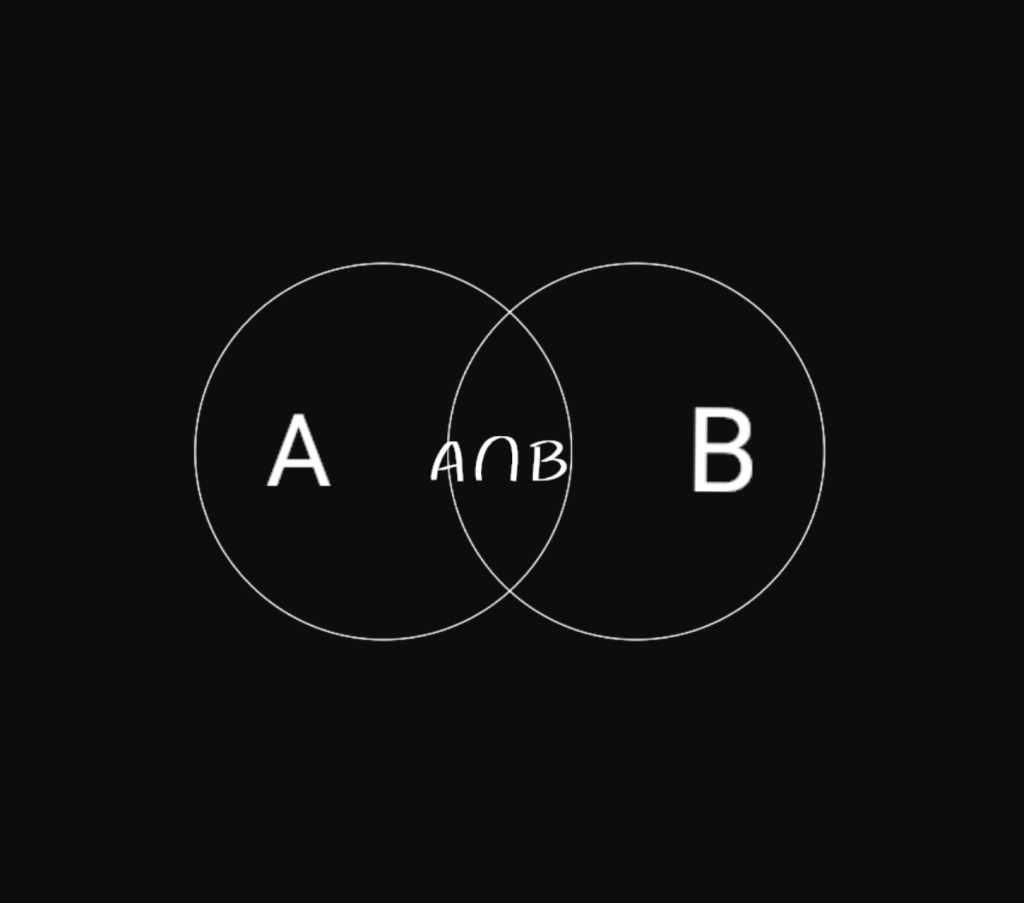
Aを聖、Bを俗とする Chris Kyogetu

  1. 1 芸術と聖なるもの
  2. 2 芸術作品と作者の死
  3. 3 聖と俗の現象学
  4.  4 ständig vorangent(絶えず先立っていること)

1 芸術と聖なるもの

何気なくよく見ている建物を一度でも描いてみようと思ったことがあるだろうか。毎日見ているはずの建物、その建物の特徴を語ることは出来ても咄嗟に窓の数を言えるだろうか。描くということは、それを知ることから始める。

感受性というものが感性となって生きていく場所を定めることは困難である。単純なコミュニケーションの一つとして使えないのも感受性だった。20‐21世紀に生きる私達は「表現主義」や「芸術至上主義」の作品に触れ、私達は「自由」を手にしていると教わった。恰も自由と人の善意によって選ばれたように有名な作品を見ていく。

しかし、かえってこの一枚が何故生き残れているのか、高価なのか、絵画を目の前に多くの疑問が浮かんでくるようになった。何故この一枚の絵画が有名になったのか、その魔術的な生存戦略を経営学のように説明できる人は少ない。教会が絵画を要求した時代以外は、その需要がどのように生まれるのか、これもまた多くの嘘が溢れている。それらを細分化せずに漠然と私達は世界を受け入れている、それが窓の数も知らない、でもいつも建っている建物である。一つの建物には役割がある。しかしそれを外部の一人がスケッチしようとするとき、その建物の持つ外的な時間と、窓を数え始め心象を混ぜようとするのなら、それによって自己の内面世界を持つことになる。

宗教が絵画を選んでいた頃の判断基準はシンプルだった。そこに教会側の理解が及んでいなかったとしても、描く事は聖人であればよかった。それから人間の心理を描くことによってテーマは無限大となった。「共感覚」をどれほどの人間が持っているのか定かではない中で、何故彼等は選ばれるのか。一人の「夢」がどうして何億もするのか。他者から認められることによっての顕在化と、自分だけが知っている価値の顕在化、人によっては、片方を選ぶことが出来る。人によっては選ぶことが出来ない人がいる。私は選ぶことが出来なかった人だ。それは聖と俗を二分化するように、単純なことではない。

だからこそ区別できなくなったのが「神聖」である。「神聖」への一歩として感受性から感性への昇華としてまず洗礼を受けるべきこと、それが「禁止」を身体で覚えることである。バタイユの「禁止」について、多くの無宗教者が誤解をするのは、禁止への侵犯のことを「神聖」の廃止や取り除くことだと思い込み、それによって進化‐自由だと勘違いしていることである。(Erostisme coll P68,69)

バタイユやボードレールのエロティシズム、ロラン・バルトのフェテシズムとは新しい発見ではない。元々あった自然状態を彼等はタブーを侵しながら哲学とした。彼等はカトリック、キリスト教の神聖を理解し、抑圧を受けていたが、神聖を廃止しようとしなかった。それを漠然と権威によるものだとは思ってはならない。

2 芸術作品と作者の死

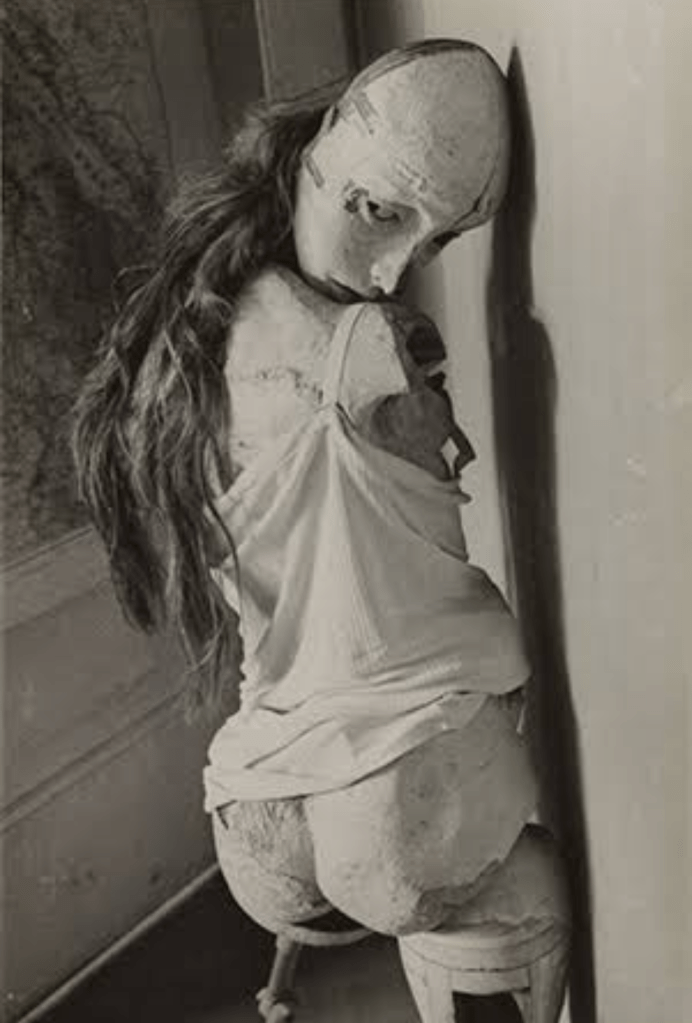
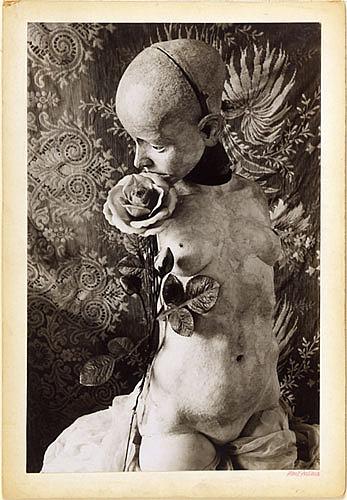
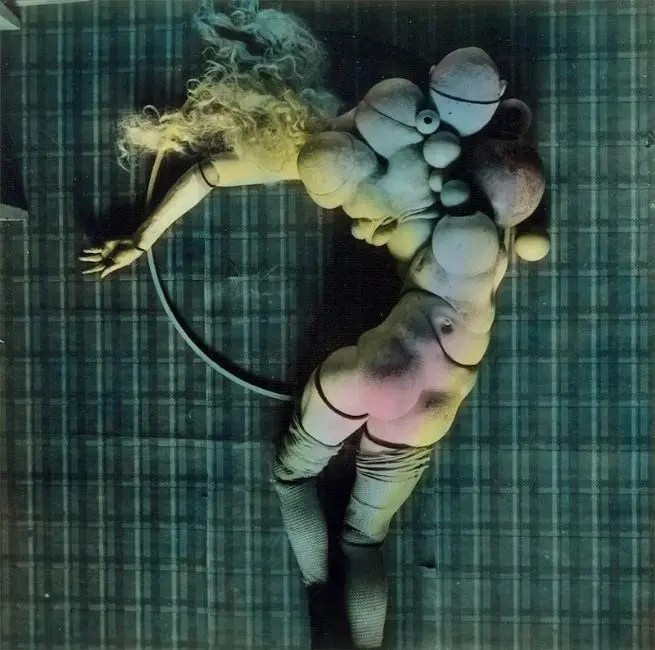
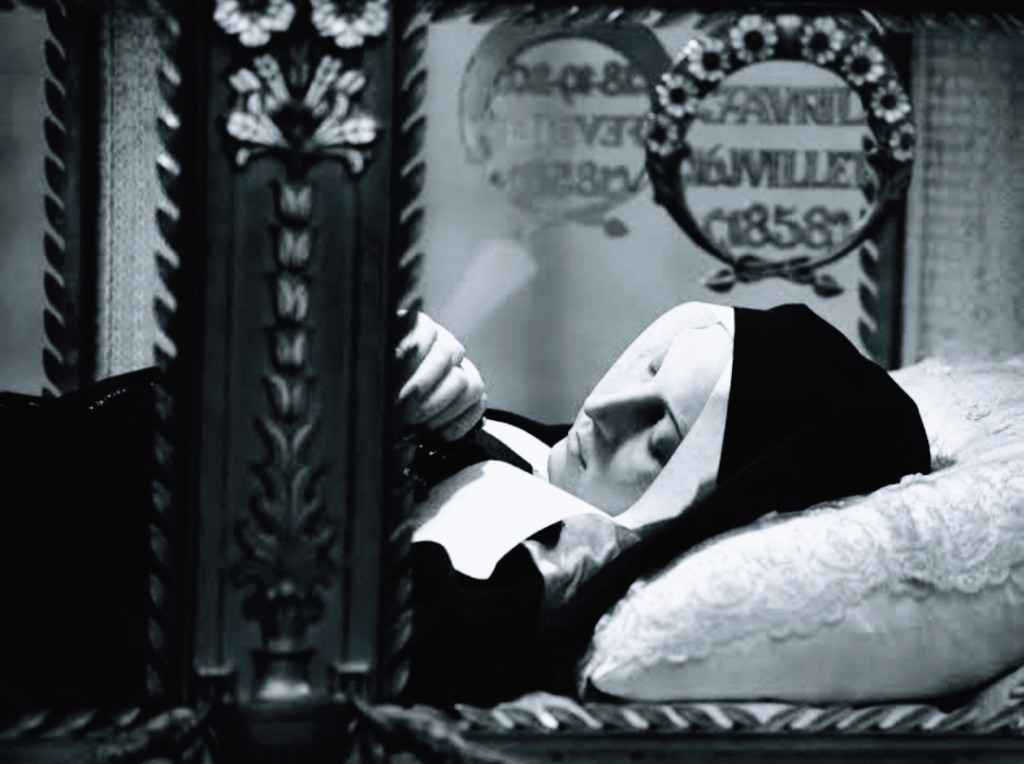
 球体関節人形と聖母マリア像の工程は違う。聖母マリア像は裸体を意識していることを隠すように直方体から掘るが(彫刻の範囲で骨組みと肉感は意識する)球体関節人形は材質を捏ねて裸体こそ意識する。例えばハンス・ベルメールの作品の意識された裸体は、痛々しい姿だからこそ、痛みを連想させる。露わに移される性器と裸体、切断された遺体を連想させることで一層バタイユ哲学の性と死とも結びつく。球体関節人形の対峙している存在とは何か、それは聖人である。聖ベルナデッタは不朽体として綺麗に温存されていることを思い出してほしい。彼女も遺体を超越した存在になっているが、人形にはその資格があるのだろうか。

聖ベルナデッタ
ウンディーネ 画アーサー・ラッカム

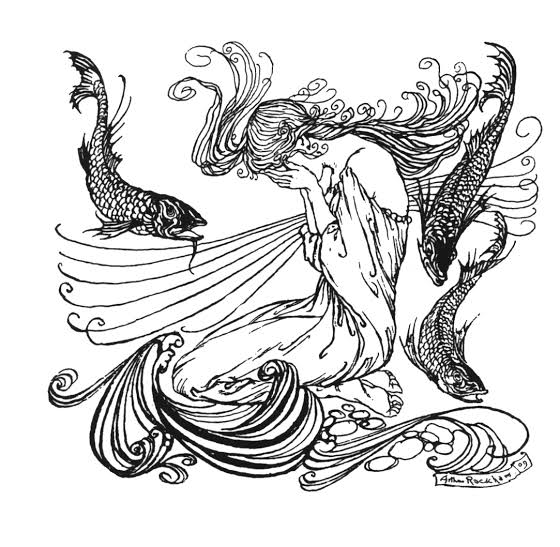
聖と俗はA∩Bの関係であって交わるとろに芸術‐人間の神聖部分がある。文学で例えるのなら、キリスト教圏内の童話「ウンディーネ」でも水の精が人間になるための必要な条件をカトリックの司祭が用意する。それでも彼女は人間の愚かさによって魂を得られず死んでしまう。この話の最も美しい事は何だったのか。司祭やキリスト教的価値観によって定義される「人間像」に近づこうとする水の精の「愛」だった。契約を破ってしまった男を殺さなければならなかったウンディーネの悲壮感がより一層愛となって現れている。ここでもバタイユ的な「禁止」と「侵犯」と言える。ハンス・ベルメールの人形は秘密の証拠を残したとされる。腹部の球体、人工的な娘、彼女は自分の生い立ちを語らない。人形とは玩具であったが、この人形は人間の精神を弄ぶ。

抽象作品とは視覚情報だけでは判断出来ないことが多く、マレーヴィチのように画家の論文を要する。それでも常に求められるのは読者や観客への感受性の働きである。作者がどんな生い立ちであっても、彼等は記号化した存在となって現れる。それこそロラン・バルトの「作者の死」と言える。作品と作者は別の「物」であって作品は作者の顕在化ではない。但し、勘のいい(共感覚)鑑賞者が作者の断片を見出すことがある。長い月日を経て記号の効果がいつ出るのかは分からないが、記号化が担う役割は戦争や、人種弾圧、観念や文章の世界では、忘れがちな「痛み」が形となって現れることである。

アウシュビッツ収容に残された十字架の爪痕がその一つだが、同じ痛みを体験することは不可能だ。ではアウシュビッツのような場所さえあれば、「惨劇」を伝えることについて事足りてしまうのかといえば違う。戦争の記録は戦争に、災害の時は災害の過去を持ち出す。しかし人形は戦争にも、現代の別の惨劇にも当てはまるようになる。芸術作品は色んな立場に当てはまる準備をしている。

外的存在としての価値とは、スケッチでいえば窓の数を数えるようなものである。数を知らなくても日常に困ることは無い。しかし数え始めたところに人間性が表れる。

「例えば貴方が教師で、生徒達に建物を描かせたらそれぞれ違うのは想像できる」

その純粋な作業と、不正や不道徳な心と同じことなのか。残念ながら人間の機能としては同列である。優劣をつけるとしたら時代による道徳倫理に左右される。その証拠に現代になってゴーギャンの絵がポルノ扱いになったことは記憶に新しい。

3 聖と俗の現象学

聖と俗に関して掘り下げるためにエポケー(現象学用語:判断停止)しなければならないのは「幸福」である。現代において幸福とは、咄嗟に他者に伝える幸福、自身の存在価値としての幸福と分かれている。常に幸福を求めて生き、幸福を侵害されたくないと思う。宗教の話を気嫌う場合は、自身の幸福の価値観が揺らぐからだ。だから、自身の幸福という衝動を停止させなければならない。事象は幸福のみで動いていない。その現実をまず見開かなければならない。漠然と芸術作品は自分を幸せにしてくれる、と思い込んでいないか。それがそもそもの間違えである。自身の幸福感が聖への認識を邪魔する。それは宗教者にも言えることであって、真の幸福という意識が阻害し、言葉だけが独り歩きをし不正に及ぶことがある

現象学が「事象」に拘るのは信仰を批判するためではない。哲学と幸福を結び付けている人にとって宗教は邪魔な存在にもなっているが、それこそエポケーしなければならない。それは現存在すら理解していないに等しい。「宗教がなくても哲学で幸せになれた」と、幸福の価値観によって世界の何処に落とされたのかを思考停止しているからである。現代は詩人ボードレールが位置付けたように神と世俗は二元論ではなく、人間から見て垂直に同等の位置にある。私は聖と俗の関係を二元論ではなく、A∩Bのように集合論として捉えている。世界の事象として聖は「接続attachment」しているのではなく「含んでいるinclude」のである。

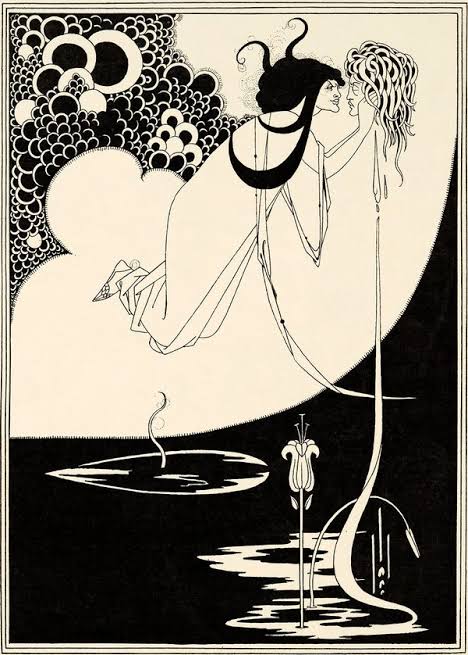
オーブリー・ビアズリー画「サロメ」オスカー・ワイルド

 オスカーワイルドのサロメの例を最後にする。処刑された洗礼者ヨハネはA-Bに位置していた。オスカーワイルドは聖書の脚色でありながらよく理解していた。彼がカトリックに改宗しようと試みなかったのなら、この「禁止」へと目に向けられなかっただろう。オスカーワイルドの「サロメ」は単なる耽美ではない。もしも彼が無秩序に想像力のみを豊にするのであれば、ヨカナーンは処刑されず、サロメも殺されない結末も考えられた。そうしなければならなかった、彼は自由と掟(Interdit)を熟知していた。その証拠にオスカーワイルドは晩年にカトリックに改宗をしている。イエス・キリストは自分の足で人々の元へ渡り歩いたが、洗礼者ヨハネ(ヨカナーン)はヘロデ王の不貞を頑なに許さなかった。サロメの元となった聖書ではヨハネはどのように位置づけられているのか、ヨハネは光を証するために現れた(ヨハネによる福音書1章)、そしてイエスこそが神の子だと言うためである。洗礼者ヨハネは、宗教指導者に対しても忠告するほどの正義の存在だった。(マタイによる福音書3:7~12)

ワイルドがそれを理解した理由は知らないが、サロメの愛に答えなかったのは聖書としても正解だったのである。イエスは正義から愛へと動ける。三位一体がそれぞれのペルソナを持ち、聖霊が行き来するというのもこの世界の事象に聖が関わってくることを説明するのに理に叶っている。

芸術作品の作り主は「死」を迎えるが、この死を単なる死だと捉えると勘違いをする。この「死」はイエス的だということを見落としてはならない。洗礼者ヨハネは生き返らず、ラザロは蘇生だった。イエスの復活は輪廻転生のように別の生が与えられたわけでもない。墓の傍で泣いていたマリアですら復活後の姿が分からなかった謎が残っている。ベルメールや他の作家もそのまま蘇生しているわけではない。私達が記録や作品から分析した作り主を想定しているに過ぎない。

作者の変容を、美術館の中だけ(本のみ)の観察となるのは凡庸である。現象学的還元にするのであれば、その変容を日常的にしようと試みることである。現象学は日常の哲学である。

 4 ständig vorangent(絶えず先立っていること)

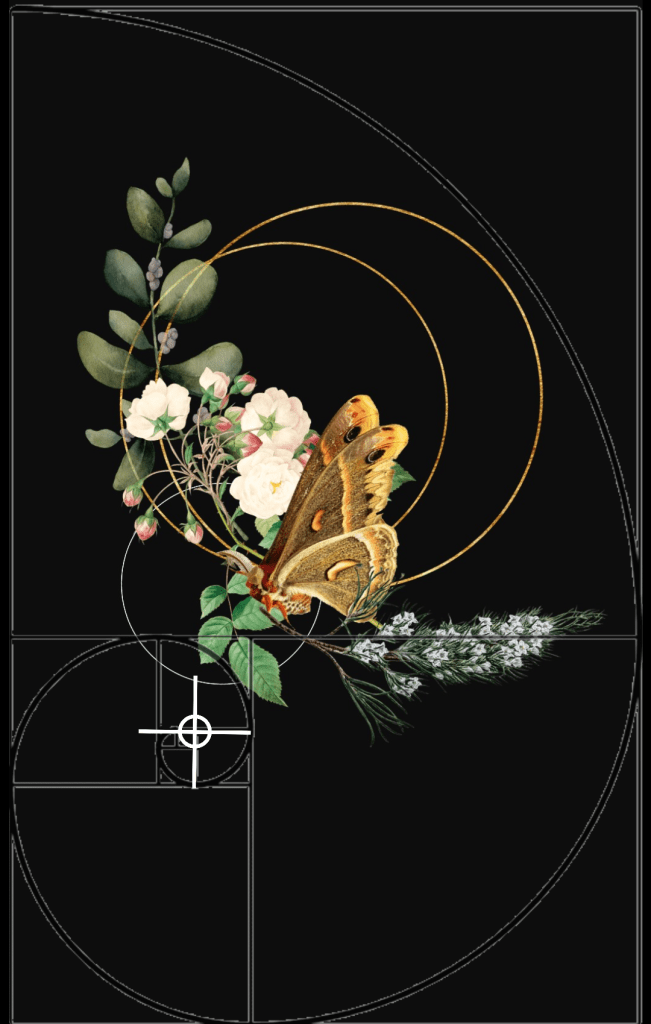
イエス・キリストは、ヘブライ文字に対応する数を合計すると、(イエス888+キリスト1480=2368)これら三つを並べると3:5:8と黄金比であるが、ハンス・ベルメールの人形は聖ベルナデッタではないが、モデルになった女性にユダヤ人ということを隠しながら生きた女性がいた。黄金比は、認識する前に既に組み込まれて存在している。人にしてもらいたいことを自分が行うというのは近代聖書解釈の中で黄金比とされる。(マタイ:7,ルカ:6)人にしたことは自分にも返ってくる等ビジネス書にもなっているほど、この考えはキリスト教という名でなく私達は手にとっている。幸福のためだけに事象は動いていない、それは紛れもない事実だが、何故、貴方はその「作品」に惹かれたのか、黄金比を知らずとしても目に行くことがある。聖人の奇跡、ベルナデットの存在に人は祈るが、痛みを表したこの人形には祈らない。誰が彼女を模したのか、それは作家の愛である。愛がある故に世に怒りがあった。そして魂の解放を表した。何か意味があるもの、それを表す決まりはない。そこに自由創作の意義がある。

もしも人生において栄光を認められることよりも、何故「存在」しているのか、存在に目を向けだしたら聖と俗との交わりを経験することになる。イエス・キリストは民の元へと赴き痛みや病を見つけた。この時代にとっては、これらは見放されていたものである。この行為と哲学の反省や純粋観察の違いはあるのだろうか。

貧しい存在を意識したイエスが居たように。俗とは誰かの権威が世の中に広まるまでに、一つの生が刹那に終わることだ。遺体が転がることが珍しくなかった戦時中に、愛する女性の人形を作った作家がいた。戦争の終わりを待つこと、これは俗の時間である。時の流れは戦争の傷を残さず都市を作る。痛みが無いように隠してしまう現実、その隠れたものに眼差しを向けることは聖なる時間といえる。

タイトルにもなった「聖と俗」の元になったM・エリアーデは聖なる時間とは幾度となく繰り返すことが可能であるとしている。宗教的な人間が体感する時間の二種類と、現象学の時間軸は酷似している。クロノス(外的時間)かカイロス(内的時間)か。内面の時間は独自の時間軸を持つ。聖と宗教(主に秘跡)が密接になってくると「信仰」を要するのでまた別の話になってくる。意識が信仰という扉の前に立つ。今回、その手前まで来られたのなら本望である。信じることと、信仰とは別の話であり、私はこれより先は語らない。

信じることと、感受性は密接に関わりあっている。それが魂とでも言うかのように、多幸感と悲劇を持ち合わせている。造り主となって「顕在化」させたいと思うこと、これは単なる脳の性能なのか、神の賜物なのか、ここから哲学では不可分の信仰になるが、これまで隠しておいた「幸福」について新しい「眼」が与えられることを祈る。

このページは飛翔点についての第三弾です。サロメ、ウンディーネは出版作「Iconograph」でも扱った。

鳥は日常から摘み取って巣をつくる。それはただのパーツなのか、もしくは神の御言葉なのか(マタイ13章)

この作品でも出てきた鳥の巣の現象学の続きです。「生かされていることや生きていること、信じていること、私達それぞれ違うこと、それらが一致を夢見て、離れてはお互いに締め付けながら、茨のように締め付けあいながら巣を作る」Iconograph引用

シモーヌ・ヴェイユの哲学講義の鳥の巣について「機能と本能とあいだの一連の中間的な事実」

https://atomic-temporary-188649724.wpcomstaging.com/2022/02/25/%e6%96%87%e5%ad%a6%e3%81%a8%e7%a7%81%e5%88%91%e3%80%80%e9%a3%9b%e7%bf%94%e7%82%b9%ef%bc%88%ef%bc%92%ef%bc%89/

https://atomic-temporary-188649724.wpcomstaging.com/2022/06/05/%e3%83%9e%e3%82%bf%e3%82%a4%e3%81%ab%e3%82%88%e3%82%8b%e7%a6%8f%e9%9f%b3%e6%9b%b813%e7%ab%a0/

WordPress.com でブログを始める.

ページ先頭へ ↑