Cahier/2024/04/16 English

Die Aufzeichnungen des Malte Laurids Brigge / by Rainer Maria Rilke

Original text

①Und ich war es in der Tat. Ich war beschäftigt, ihn mir vorzustellen, ich unternahm die Arbeit, ihn einzubilden, und der Schweiß trat mir aus vor Anstrengung. Denn ich mußte ihn machen, wie man einen Toten macht, für den keine Beweise mehr da sind, keine Bestandteile; der ganz und gar innen zu leisten ist. Ich weiß jetzt, daß es mir ein wenig half, an die vielen abgenommenen Christusse aus steifigem Elfenbein zu denken, die bei allen Althändlern herumliegen. Der Gedanke an irgendeine Pietà trat vor und ab –: dies alles wahrscheinlich nur, um eine gewisse Neigung hervorzurufen, in der sein langes Gesicht sich hielt, und den trostlosen Bartnachwuchs im Wangenschatten und die endgültig schmerzvolle Blindheit seines verschlossenen Ausdrucks, der schräg aufwärts gehalten war.

②Ich wußte sofort, daß meine Vorstellung wertlos war. Die durch keine Vorsicht oder Verstellung eingeschränkte Hingegebenheit seines Elends übertraf meine Mittel.

(Zeitungsverkäufer)

③Ich will nur sagen, daß sie an ihm waren wie das Weicheste auf eines Vogels Unterseite. Er selbst hatte keine Lust daran, und wer von allen (ich sah mich um) durfte meinen, dieser Staat wäre um seinetwillen?

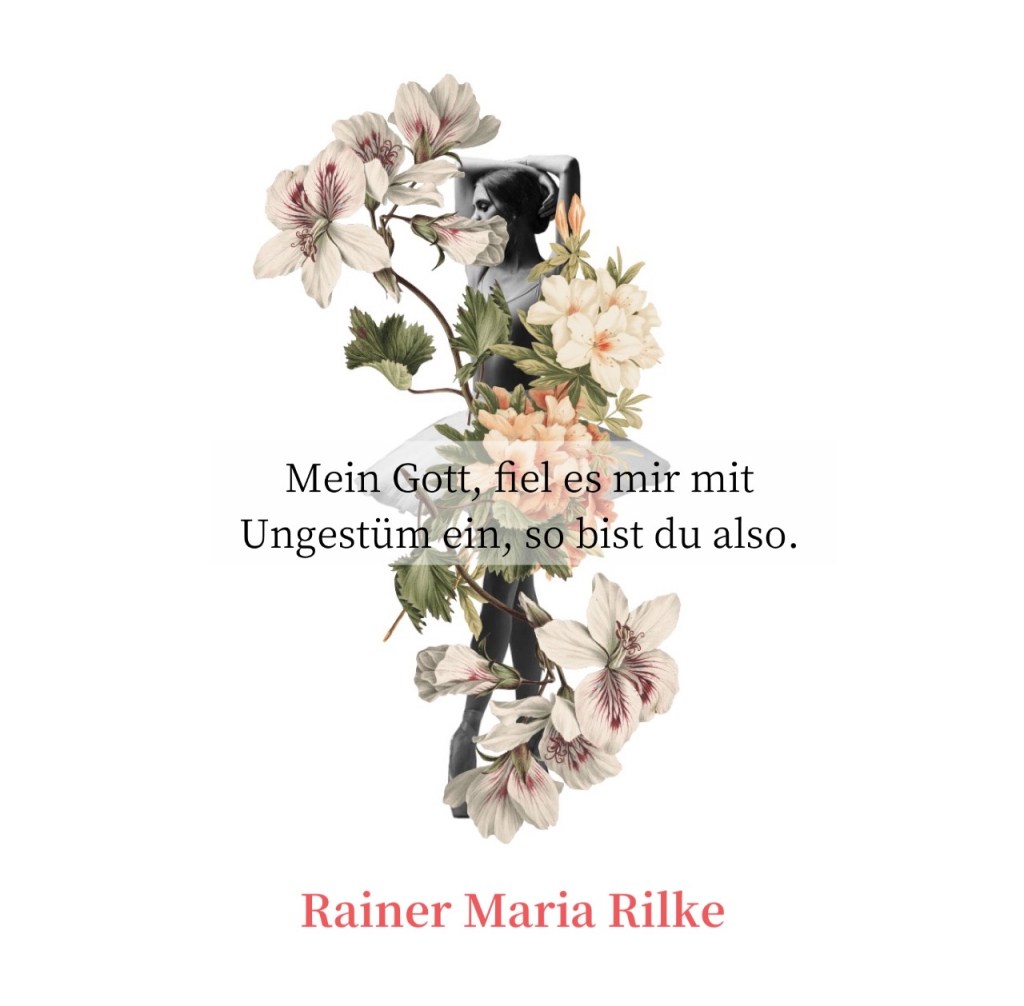
④Mein Gott, fiel es mir mit Ungestüm ein, so bist du also. Es gibt Beweise für deine Existenz. Ich habe sie alle vergessen und habe keinen je verlangt, denn welche ungeheuere Verpflichtung läge in deiner Gewißheit. Und doch, nun wird mir’s gezeigt. Dieses ist dein Geschmack, hier hast du Wohlgefallen. Daß wir doch lernten, vor allem aushalten und nicht urteilen. Welche sind die schweren Dinge? Welche die gnädigen? Du allein weißt es. Wenn es wieder Winter wird und ich muß einen neuen Mantel haben, – gib mir, daß ich ihn so trage, solang er neu ist.

⑤Es ist nicht, daß ich mich von ihnen unterscheiden will, wenn ich in besseren, von Anfang an meinigen Kleidern herumgehe und darauf halte, irgendwo zu wohnen. Ich bin nicht soweit.

English translation

①And indeed it was myself. I was busy imagining him, I undertook the work of imagining him, and sweat broke out on me with exertion. For I had to create him, as one creates a dead man, for whom there is no longer any evidence, no components; to be entirely accomplished within. I now know that it helped me a little to think of the many detached Christs made of stiff ivory lying around at all the antique dealers.The thought of some Pietà came and went -: all this probably only to evoke a certain inclination in which his long face held itself, and the desolate growth of beard in the shadow of his cheeks, and the final painful blindness of his closed expression, held obliquely upwards.

②I knew immediately that my representation was worthless. The unbounded surrender of his misery, unrestricted by caution or pretense, exceeded my capabilities.

③I only want to say that they were on him like the softest thing on a bird’s underside. He himself had no desire for it, and who among all (I looked around) could think that this state was for his sake?

④My God, it occurred to me with impetuosity, so this is how you are. There is evidence of your existence. I have forgotten them all and have never asked for any, for what a tremendous obligation would lie in your certainty.And yet, now it is revealed to me. This is your preference, here you find delight. If only we could learn to endure above all and not judge. What are the burdensome things? What are the merciful ones? You alone know. When winter comes again and I must have a new coat – grant me that I may wear it so long as it is new.

⑤It’s not that I want to differentiate myself from them when I walk around in better clothes that are truly mine from the beginning and insist on settling somewhere. I am not that far yet.

Consideration

If I were to introduce him, I would say that he is not a philosopher or a theologian, but a poet. It wouldn’t be enough to simply say he is a poet from the beginning. It is through these denials that the true value of being a poet emerges. Rainer Maria Rilke, in my opinion, is such a person.

Although I have not yet reached a conclusion, the theological and philosophical inquiries raised by the quotations (1) to (5) remain unanswered.

This is Rilke’s autobiographical work, but it appears as if he is writing “in disguise” as the character Marthe. However, this is also a creative piece with an underlying confessional aspect. He acknowledges that he perceives God (Jesus Christ) in a state of poverty, yet he confesses that he is unprepared for the unimaginable life of a newspaperman. Simultaneously, he raises questions about the Kantian notion of representation, suggesting that it is an essential faculty for comprehending external objects, but also viewing it as an activity of the individual subjective mind rather than an independent existence separate from the object.

Descartes attempted to provide a logical proof for the existence of God, while Kant argued that existence cannot be deduced solely from concepts, emphasizing the significance of “faith” (practical principles). In Christian theology, specifically without aligning to any particular denomination, “Vorstellung” refers to the concrete concepts and images that individuals hold about God, often associated with the concept of “Form.” For instance, in Catholicism, “Form” represents the embodiment or essential qualities of God’s divinity. Additionally, the emphasis lies on the incarnation, sacraments, and the recognition of the unseen mysteries concealed beneath the “visible.” Despite this ambivalence, Rilke acknowledges the limitations of capturing the representations of Christ and Mary in the Pietà as a questioning of existing religions.Rilke, although embracing this dual nature, expressed the poetic sensibility of one dressed in his Sunday best in modest attire, bearing the weight of profound responsibility in confirming the presence of God. (Mein Gott, fiel es mir mit Ungestüm ein, so bist du also )Nevertheless, Rilke personally encountered a sensation of connection between God and the world.

He seeks to explore the existence of God and delve into the experience of limits(Grenze), but this is done as a poet, confessing his fear of becoming impoverished. What were the limits for Rilke?

An antique statue of Christ, Mary of Pietà with historical value, keeping one feeling like wearing a new coat, the expensive clothes of the poor, the life of an unnamed bird?

Rilke does not explicitly define them as “poetry,” but rather portrays them in a sincere manner as the ascent and descent of the “soul,” which cannot be directly described by philosophy and theology.

****

*Grenze, also explored by philosophers such as Kant and Hegel, are also pursued theologically by Bonhoeffer.

*This is a thoughtful note. There are no answers.
If you have any comments on the translation, please write them in the comments section.

Thank you
Cahier(2023/11/17/)English

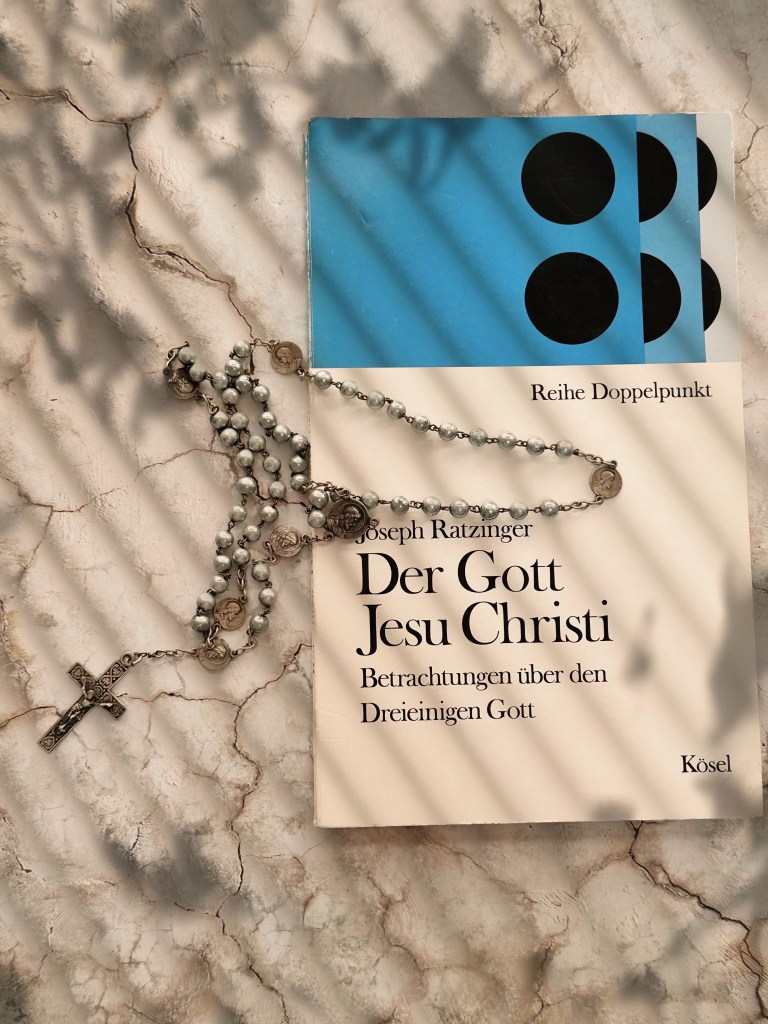
Der Gott Jesu Christi Betrachtungen über den Dreieinigen Gott.

Wieder kann man von hier versuchen, ahnend etwas über Gottes inneres Geheimnis zu sagen: Vater und Sohnsind die Bewegung reinen Schenkens, reiner Übergabe an- einander In dieser Bewegung sind sie fruchtbar, und ihre Fruchtbarkeit ist ihre Einheit, ihr völliges Einssein, ohne daß sie dabei selbst zurückgenommen und ineinander aufgelöst werden. Für uns Menschen heißt Schenken, Sichselbergeben, immer auch Kreuz.(Das trinitarische Ge- heimnis übersetzt sich in der Welt in ein Kreuzesgeheim- nis: Dort ist die Fruchtbarkeit, aus der der Heilige Geist kommt.

English translation:Once again, we can attempt to glimpse something of God’s inner mystery from this point: the Father and the Son are the movement of pure giving, pure surrender to one another. In this movement, they are fruitful, and their fruitfulness is their unity, their complete oneness, without being absorbed or dissolved into each other.For us human beings, giving of the self always entails the cross. (The mystery of the Trinity is translated into the world as the mystery of the cross: It is from this fruitfulness that the Holy Spirit emerges.)

Characteristics of the text

The text mentions ‘God’s inner mystery’, the distinctive parts of which contain mainly religious-philosophical elements.

「Vater und Sohn sind die Bewegung reinen Schenkens, reiner Übergabe aneinander.」:it contains philosophical discussions and analyses of individual words and concepts. The images of parent-child relationships and mutual gifts presented here represent ideas about the existence and nature of God.

・ 「In dieser Bewegung sind sie fruchtbar, und ihre Fruchtbarkeit ist ihre Einheit, ihr völliges Einssein, ohne daß sie dabei selbst zurückgenommen und ineinander aufgelöst werden.」:this statement illustrates the argument about the triune nature of God. It says that God’s existence is expressed as fullness and that this fullness is related to the unity of the Trinity.

・「Für uns Menschen bedeutet Hingabe, Selbsthingabe, immer auch Kreuz (Das trinitarische Geheimnis übersetzt sich in der Welt in ein Kreuzesgeheimnis: Dort ist die Fruchtbarkeit, aus dem der Heilige Geist kommt).」:In the interpretation of the Trinity of God in human experience and faith, the image of the cross and the concept of the Holy Spirit are themes often discussed in religious philosophy and theology and are also illustrated here.

As is characteristic of Benedict XVI’s writings, his texts are highly philosophical and show deep thought. He deals with religious themes and expresses mystical concepts. His writing is concise but dense, and each sentence is full of meaning. His style is rigorous and is used to convey certain concepts clearly. Benedict XVI sometimes uses a dialogical style, explaining his ideas in a supposed dialogue with his readers. This dialogue format may represent the one-dimensional personality of the one and only distant ‘Pope’. His writings show a fusion of rational argument and philosophy of faith. In particular, he uses ethical arguments to show that ‘faith’ and ‘reason’ are compatible. He seems to focus on communicating complex theological concepts in a way that is accessible to the general reader.

Summary

An attempt is made by Benedict XVI to understand the ‘secret of the Trinity’ together with the reader. The Father and the Son are described as engaged in a pure act of giving, in a work of ‘total devotion’ to each other. This work results in their fruitfulness, which is described as their perfect unity and oneness. However, it is also clarified that this process does not lead to their annihilation or merging into each other. It is further asserted that for human beings, giving and self-giving are always associated with the Cross. The secret of the Trinity is seen as manifesting in the world as the secret of the Cross. The explanation offered is that through the Holy Spirit, the Cross holds within it the potential for fruitfulness and abundance.

The difference between philosophical writing and everyday writing.

A philosophical text can be described as a multifaceted yet concise exploration of topics related to deep thinking and philosophical concepts. The term philosophia, coined by Socrates, encompasses the love of knowledge, also known as philosophy. These writings often employ logical reasoning. Both the current Pope, Pope Francis, and his predecessor, Pope Benedict XVI, can be seen as having philosophical elements in their teachings. They delve into concepts such as reflections on existence and religion, including faith, eternal life, the Last Judgement, the law of love, and the relationship with God. However, it is also necessary to provide more specific and succinct explanations using everyday language. For example, ‘Hingabe’ and ‘Selbsthingabe’ are German words meaning ‘devotion’ or ‘devotion to self’. To better comprehend their meanings, specific examples or situations can be used to explain them.

「Für uns Menschen bedeutet Hingabe, Selbsthingabe, immer auch Kreuz (Das trinitarische Geheimnis übersetzt sich in der Welt in ein Kreuzesgeheimnis: Dort ist die Fruchtbarkeit, aus dem der Heilige Geist kommt).」If the original text of the following were to be shown in more everyday terms,

「In unserem menschlichen Verständnis bedeutet Hingabe immer auch Opfer (Das Geheimnis der Dreifaltigkeit offenbart sich in der Welt als das Geheimnis des Kreuzes: Hier liegt die Fruchtbarkeit, aus der der Heilige Geist entspringt)」In our human understanding, devotion always implies sacrifice as well. (The mystery of the Trinity is meant to be unveiled to the world as the mystery of the Cross.)

「In unserem menschlichen Verständnis bedeutet Hingabe immer auch Opfer」The translation is more of an everyday expression than a philosophical reflection on ‘what it means to give of oneself’, in line with the idea that true human commitment always needs to involve some sacrifice (e.g. time, comfort).

Finally, to return to the original again.

Für uns Menschen heißt Schenken, Sichselbergeben, immer auch Kreuz.(Das trinitarische Ge- heimnis übersetzt sich in der Welt in ein Kreuzesgeheim- nis: Dort ist die Fruchtbarkeit, aus der der Heilige Geist kommt.

“The reason why there are two instances of ‘der der’ is that the first one, ‘aus der’, translates directly as ‘from’, indicating that something is coming out of ‘der Fruchtbarkeit’ (abundance). In this context, it signifies the coming out of ‘der Heilige Geist’ (the Holy Spirit) from abundance. The second ‘der Heilige Geist kommt’ consists of the definite article ‘der’ and the noun ‘Heilige Geist’, signifying the arrival of the Holy Spirit. These elements represent the mysteries of the Trinity, which are of different natures yet closely intertwined.

If we were to write this without ‘der der’, for example,…”

Für uns Menschen bedeutet Hingabe, Selbsthingabe, immer auch Kreuz (Das trinitarische Geheimnis übersetzt sich in der Welt in ein Kreuzesgeheimnis: Dort ist die Fruchtbarkeit, aus dem der Heilige Geist kommt.(* Changing ‘Schenken’ and ‘Sichselbergeben’ to ‘Hingabe’ and ‘Selbsthingabe’ maintains consistency in context.)

“This is a trial translation and we would be grateful for any comments.

Following on from the previous edition, we have decided to include a memo-like section called “Cahier.”

Japanese

Cahier(15 November 2023). English

Introduction.

Starting this month, I will post “just a short analysis” of a text I like. The title will be Cahier (date).

I will also continue to update my previous critiques.

La pesanteur et la grâce 1

Today it is Simone Weil.

Ce n’est pas la faute qui constitue le péché mortel, mais le degré de lumière qui est dans l’âme quand la faute, quelle qu’elle soit, est accomplie. La pureté est le pouvoir de contempler la souillure.L’extrême pureté peut contempler et le pur et l’impur ; l’impureté ne peut ni l’un ni l’autre : le premier lui fait peur, le second l’absorbe. Il lui faut un mélange. —L’attention et la volonté 

In terms of gravity and grace (La pesanteur et la grâce), this is what is described in “L’attention et la volonté” (Attention and will).

Simone Weil was a 20th century philosopher, so the French language itself is not ancient. Simone Weil’s original text (in French).

The characteristic feature is a literary melody, and this quotation does not rhyme, but some words and ideas are repeated, so there is a sense of rhythm,The choice of words and phrases are thought-provoking and complex in a short text.

 Translation: It is not the fault that constitutes mortal sin, but the level of enlightenment present in the soul at the time of the transgression, regardless of its nature. Purity is the ability to contemplate impurity. Extreme purity can contemplate both the pure and the impure; impurity can do neither: the former frightens it, the latter engulfs it. It requires a mixture.

・The term “mortal sin” or “sin unto death”, although not a direct reference, is found in the New Translation of the Bible, 1 Romans 6:23: “For the wages of sin is death. But the free gift of God is eternal life in Christ Jesus our Lord. ”, etc., may also derive from Christian doctrine. Le péché mortel (‘the sin that leads to death’)

is translated as ‘mortal sin’.

Contempler (plural: contemple)’ is used, usually in the context of ‘to look at, introspection’, which is deeper than observation(look). The usual meaning is ‘regarder la souillure’, which means ‘to look at the dirt’.

Summary: This text is a short summary of the exploration of sin and purity. It states that sinning is not in itself a fatal sin, but the degree of light in the soul is what matters.

It states. It is because we are very pure beings that we have the power to see what is pure and what is impure. An impure thing is something that has been mixed with the impure thing.

So in terms of mixing, it is necessary to look not only at the pure but also at the impure.

Cahier(2023年11月15日)

はじめに

今月から、気に入った文章の「簡単な分析だけのもの」を投稿していきたいと思います。

その際はタイトルはCahier(日付)とします。

今までの批評の更新も、今後も続けていきたいと思います。

La pesanteur et la grâce (1)

今日はシモーヌヴェイユです。

Ce n’est pas la faute qui constitue le péché mortel, mais le degré de lumière qui est dans l’âme quand la faute, quelle qu’elle soit, est accomplie. La pureté est le pouvoir de contempler la souillure.L’extrême pureté peut contempler et le pur et l’impur ; l’impureté ne peut ni l’un ni l’autre : le premier lui fait peur, le second l’absorbe. Il lui faut un mélange. −L’attention et la volonté 

重力と恩寵(La pesanteur et la grâce)でいえば「L’attention et la volonté」(注意と意志)に記載されているものです。

シモーヌ・ヴェイユは20世紀の哲学者ですので、フランス語自体は古いものではありません。シモーヌ・ヴェイユの原文(フランス語)の

特徴は、文学的な旋律があり、今回のこの引用は韻律はありませんが、一部の言葉や考えが繰り返されているのでリズム感があり、

言葉選びや、フレーズは思索的な複雑さを短い文章の中で孕んでいます。

和訳:死すべき罪を定めるのは過失ではなく、その過失がどのようなものであれ、過失が成し遂げられたときに魂の中にある光の度合いである。純粋さとは、汚れを注視する力である。極限の純潔は、純粋なものと不純なものを注視することができるが、不純なものはそのどちらもすることができない。前者(純粋)はそれを恐れさせ、後者(不純)はそれに溶け込んでいる。これには混ざり合うことが必要だ。

・「死すべき罪」もしくは「死にいたる罪」とは、直接的な言及ではないけれども、新訳聖書の1ローマ信徒への手紙6:23「罪の支払う報酬は死です、しかし、神の賜物は、私たちの主イエス・キリストにある永遠の命なのです」等キリスト教教義にも由来しているかもしれません。

「死にいたる罪」(Le péché mortel)は「致命的な罪」と訳されます。

・「contempler(複数形:contemple)」が使用されていますが、通常は「凝視、内省する」という文脈で使用され、より思索として深くなっています。普通に「汚れを見つめる」という意味でなら「regarder la souillure」となります。

ー要約:この文章は、罪と純粋についての探求を短くまとめています。罪を犯すこと自体が致命的な罪ではなく、魂の内にある光の程度が重要であるとしています。純粋なものと、不純なものを見る力を持つのは、非常に純粋な存在であるためです。不純なものというものは、不純なものに溶け込んでしまっている。なので、混ざり合うことについて、必要なことは純粋さのみではなく、不純にも目を向けることだということになります。

試訳ですので、指摘がありましたらお願いします。

**

WordPress.com でブログを始める.

ページ先頭へ ↑