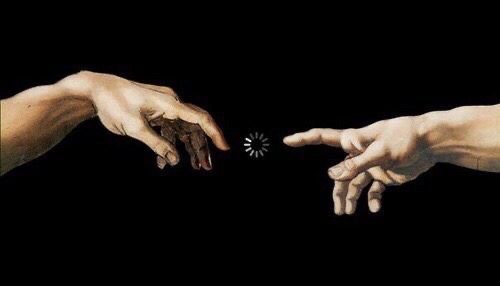
And lastly, there's still a way to seek God in you. That is, there are ways of doing away with things that are limited. For if artists look for the face of the King in the soul of a tree, they will leave everything behind for the love of that face.
Nicolaus Cusanus-De quaerendo Deum 49
Foreword
When it comes to talking about Osamu Dazai’s ‘character’ in Japan, he does not make a good impression on society. This does not mean that Osamu Dazai is not recognised as a great writer by the public in Japan. However, it is a common topic of conversation among intellectuals to talk about their dislike of Dazai . You should definitely come to Japan to experience this unique feeling. It is a feeling that is beyond words.
In 2021, he is not even sure whether he will have a high or low status alongside the intellectual giants of the Showa period, such as Hideo Kobayashi and Kunio Yanagida . What is certain is that Osamu Dazai’s status is that of ‘famous’. I prefer Osamu Dazai not only because his stories are great. When I talk about writers like Mishima Yukio and Tanizaki Junichiro, the literary maniacs bother me. As soon as I badly recite Junichiro’s Tanizaki’s Kansai dialect, they tell me to fuck off because it is so bad and offensive. Osamu Dazai fans, on the other hand, are rarely criticised, even if they get Dazai a bit wrong, perhaps because of the Dazai heart attack, or perhaps because he was not as virtuous in his lifetime as he was on the left. I think there is no other writer who is so easy to talk about. I hear that Dazai’s library sells well in the summer, and that still seems to be the case. Some people say that his colloquial style lacks the intellectualism of the great writers. The fact that he writes with sensitivity about things that are taken for granted can raise both religious and philosophical questions. And his sensitivity is not a technique embellished with special words that can only be found in a national dictionary, but is also characterised by a large number of words used in everyday life.
Dazai and two women.
Tomie Yamazaki
“Why not risk your life in love?” suggested Osamu Dazai. Dazai had another heart-suicide case when he was a student.
Dazai also had a murder-suicide when he was a student, but it was with a different person. The dead woman in the student heart-suicide incident is mentioned many times in Dazai’s other works, such as ‘Douka no Hana’ (Flower of a Clown) and others, in addition to ‘Ningen Shikkaku’ (Human Disqualification). She continues to care for Dazai like a nightingale, desperately caring for his tuberculosis and desperately trying to keep his affection for herself. Tomiei learns that Dazai is distressed by the changes in post-war Japan, and realises that she has blindly accepted that women can only live wrapped up in the big things. Tomiei was rushed into marriage by her family, and her husband went to the war zone in Manila, Philippines, never to return. She became a widow. In Japan, where the term ‘所帯くずし’ existed, no one could cure her loneliness at that time. After Tomiei and Dazai’s suicide, her father regretted that he should have understood his daughter’s loneliness. She genuinely loved her husband, who had gone to Manila, even though it was an arranged marriage. Unlike the rest of the world, in 1947 Dazai depicted her love for Tomiei and her invocation festival for her husband, centred on the fictional flower phosphorescence, in Phosphorescence, which was created on 3 June. The world did not forgive Tomiei’s depression over what to do with her love for her husband who was killed in the war, but only Dazai forgave her and accepted her love for him. Ningen Shikkaku is Osamu Dazai’s last work and is said to be a semi-autobiography written while Tomiei was nursing Dazai.
The family published the diary to stop rumours about their daughter Tomiei.
Michiko Yusima
As the wife of Osamu Dazai, she endured her husband’s repeated infidelities and selfishness. In contrast to the Dazai described by Yamazaki Tomiei, her husband’s partner in suicide, the novel describes Dazai Osamu as a tyrant and an unqualified husband. The writing is so intelligent that she can write on the blackboard while listening to Dazai read “Heed My Plea ” like a spider spitting threads. If Osamu Dazai’s writing is sentimental, his wife Michiko Tsushima’s is rational. In Dazai’s world of writing, ‘Wife’ is written by a woman whose writing is not beautiful and who has fallen as a woman, but in reality his wife’s writing is soft and beautiful as a woman, and she is calm about her troubled husband, Dazai, and the world at large. The Jogakusei is based on the diary of a real young female lover. This is also the case with Ota Shizuko, the model for Shayo, and it seems that Dazai had many such requests for his wife’s diaries. The student “placed a small white rose on her breast in a collection of poems”, which Dazai described as “red embroidery”. It was his wife who called it ‘white’. I’m Catholic,I am compelled to affirm the efforts of my wife, Michiko Tsushima, who, more than anyone else in this group, has defended the key elements of husband and wife and family, and more than Tomiei. It is only recently that I too have understood this value. That is how long it takes to understand the meaning of family.Personally, I cannot determine what kind of love is great, but there was an emotion that others could not understand beyond the pain and endurance. There was something about it that made even the word ‘love’ a cliché.
“No longer human” and “Osamu Dazai”
Yozo, the protagonist, has been a beautiful boy since childhood, but he has doubts that cannot be attributed to his contemplation of happiness. People judge him as ‘happy’ because of the outer skin that covers his inner self. These words are somewhat superficial and do not resonate with Yozo. And, as if the world around him were a Japanese honour student, he can’t find anyone else with his kind of problems. The protagonist thinks to the world, “Do they all sleep at night without deep thoughts and feel refreshed in the morning?” He is lost in thought. And in an almost overlooked detail, Yozo was ‘mistreated’ (raped) by a servant as a child. He thought about complaining to his parents about the damage, but took pleasure in watching the fall of man and his nature. The content of this human disqualification can be found in many of his other works, such as “Douka no Hana”and it is said that Dazai became a writer to write ‘Ningen Shikkaku’. It is written in the Japanese language, a language of ‘character’, but if you look at the events alone, they are the very essence of ‘human karma’ in the Buddhist sense. The language (meaning) conceals the ‘beast’ that lives in man, and this tension makes this work superior to ‘Douka no Hana’.
Yozo was sensitive and enjoyed looking at human nature. He was intoxicated by showing kindness to dubious people and felt that he had become a good person through their gratitude. Yozo was then sent to school in another hometown. He says his parents’ home is the hardest place to work (and play). As a ‘clown’, he tries to keep in harmony with his surroundings so as not to reveal his mind. When Yozo falls from the bars, Takeichi, who was watching the performance, sees through his ‘waza waza’ (deliberate) act. Yozo wants to kill Takeichi, but then realises that this is not his true intention. In fact, he was shocked to realise that it was he who wanted to be killed. Yozo takes Takeichi with him and goes to his house. Takeichi had a bad ear, so Yozo planned hypocrisy by offering to clean his ear for him. Takeichi then makes the first prophecy to Yozo.
I’ll bet lots of women will fall for you.
It was not that he would be loved, but that he would be ‘made to fall in love’. He already knew the difference, and how being ‘annoyed’ rather than liked was a sweet temptation that could lead to unhappiness. Takeichi’s sisters also seemed to be in love with Yozo. But that was only the beginning. His interaction with Takeichi led Yozo to try his hand at painting, but when he painted, the result was a gruesome picture that was the complete opposite of his clownish self. When he saw it, he knew that the painting was his like true identity. This leads to a second prophecy from Takeichi: “You will be a great painter”. The final part of the second memoir is the ‘emotional death’ incident, which is also a recurring event in Dazai’s past. Yozo jumped into the sea in Kamakura with a woman named Tsuneko. Only the woman died, and Yozo was charged with assisting suicide, but the charges were dropped.
At the beginning of the third memoir, Takeichi says that he seems to have guessed the first prophecy, but not the second. So far, this is similar to Hesse’s Augustus. Augustus was also beautiful, and everyone loved him. This led Augustus to the point where he never learned to love people and did terrible things to them. After his mother died, he begged to give up the magic he had been given, which was to be loved. This led to him being loved by no one and being sent to prison as atonement for his past deeds. Although Hesse left the Christian school, Augustus is rooted in the values of the Christian world. It was ‘witchcraft’ rather than divine grace that made ‘many women fall in love with him’. It was not the witchcraft of religious heresy, but as a fairy tale. But because it was witchcraft, he could let it go. From then on, he loved people while being hated and loved by no one. He embodied Matthew 5: ‘Blessed are the poor in spirit’.
Like Dazai, Hesse attempted suicide. One thing they had in common was that they both loved to read the Bible. In particular, Osamu Dazai carried a Bible with him when he visited his adulterous lover, Shizuko Ota. In his wife’s memoirs, she also mentions that her husband, Osamu Dazai, carried a Bible with him. His lover, Tomiei Yamazaki, also studied Christianity and French at the YWCA. His teacher was Junko Takamizawa, Hideo Kobayashi’s own sister. She discussed the Bible with Dazai. Although their personalities are different, I cannot help but think that this intersection between Hesse and Osamu Dazai carries the saga of the Japanese people. This is because the difference between falling in love and nurturing love, which is expressed by popular Christianity, is a mistake. Many people make a distinction between the two and assume that nurturing love is more wonderful. In truth, it is not.
Falling in love’ or ‘nurturing love’ makes little difference. They are just the process of germinating, blossoming and bearing fruit. What is important for Christians is to ‘redeem’ the love of Jesus by understanding it. That is what we must be dedicated to, like Augustus. This is the difference between true Christians and the irreligious. Yozo in Ningen Shikkaku remained unable to understand his neighbour, but he doubted his neighbour’s happiness. The courtship of a man who has no interest in people becomes ‘clownish’. Unable to fit in even in the presence of his parents, Yozo’s scent of loneliness becomes seductive as he grows up and is sniffed out by women. He becomes a colourful demon who guards the women’s secrets. Yozo marries a seventeen-year-old ‘Yoshi’ whom he meets in a bar. He finally becomes a reasonable man and gets drunk with his friend Horiki, who calls him ‘comedic noun’ and ‘tragic noun’ with his senses. After saying that the opposite of sin(Tumi) is ‘honey’(Mitu), he sees his wife Yoshi being unfaithful to another man downstairs.
Yoshiko is a genius of trust. Even though she is betrayed by the woman she thought she could trust, her friend Horiki, perhaps because he knows Yozo’s upbringing.
Horiki told Yozo.
You should forgive her. You’re not a good person either.
The man she had an affair with was a merchant who had Yozo draw manga.
Yozo read a book about his wife’s sexual affair with another man. The husband did not blame his wife. Rather, he resented Horiki for taking the trouble to tell him about the hidden things. He had lost his way with his wife. ‘God,I ask you,non-resistance asin?” could be a question to Joseph, a man who believed he was as pure as the Virgin Mary (virginity). This is connected to the fact that the biblical narrative in the first epistle, “I fail to see, however, that distrust for human begins should necessarily lead directly to religion. “I am convinced that human life is filled with many pure, happy, serene examples of insincerity, truly splendid of their kind-of people deceiving one another without (strangely enough) any wounds being inflicted, of people who seem unaware even that they are deceiving one another.” The reality in Japan does not show any obstacles in daily life, even if it differs from Christianity.
Despite his love of the Bible, Yozo, as Dazai wrote, was not about ‘loving your neighbour’, but about doubting his neighbour’s happiness. Just when he thought he had finally learned how to love after his marriage, his wife betrayed him the next time. He said in words that he forgave his wife but resented his friend, but his resentment did not last and his thoughts became saturated. He is ‘unable to put his being together’. Yozo looks and ages more defiantly than his age. -I will be 27 this year. I have a lot of grey hair, so most people see me as over forty – I think this is a reference to the fact that Dazai himself was in his forties when he caused the death of only one woman in a double suicide that he actually committed.
I would like to believe that the heart is something that always exists in us naturally, as something with more core.
but it is ‘by chance’ that the mind shows its power as an emotion. There are some readers who cannot understand Yozo’s thought process at all. Yozo’s floating feeling of being separated from his mind is called dissociative disorder, but it is believed that Osamu Dazai had both dissociative disorder and bipolar disorder. If the childhood sexual assaults by adults are true, they may have been the result of PTSD. Fortunately, while dissociative disorder was a disease, it was also mixed in with French and German philosophy and literature, ‘Subjectivity’, ‘objectivity’, ‘phenomena’, ‘existence’, ‘consciousness’ – to begin to question these was also an academic discipline. Ophelia in Shakespeare’s Hamlet was mad, but her prose poems somehow seemed to make sense, as her brother said: ‘It’s as if there’s a lesson in madness’. Ophelia was mad too, but she did not remove the name ‘Jesus Christ’.
Well, God yield you! They say the owl was a baker’s daughter. Lord, we know what we are, but know not what we may be. God be at your table.
–Ophelia
A document in madness, thought and remenbrance fitted.
–Laertes
The tragedy of Hamlet is that he did not ‘atone’ for his murderers. This is clearer than in Japanese literature. But people still get ‘lessons’ other than religious ones from the story. As a mirror for getting to know people, as a stage for the reproduction of the human condition. It is also the temptation of literature: the pure life and modern literature are incompatible, so much so that G. Bataille studied “literature and evil”. This is because it sometimes saves the human spirit by leaving behind its ‘evil’ and ‘weakness’. Man cannot become conscious through his thoughts alone. He becomes conscious through someone’s words. The words of another person, whom he does not know, shape him. To know man better, and literature, which is responsible for this, can even extract him by poisoning itself, like alchemy. Love’, written only from the imagination, is easy to apply to the popular imagination. This is because people’s common perception can understand its story.
But love stories written by writers who have lived unique, sultry lives are less likely to be understood. This is because people’s ordinary imagination cannot understand them. What is the difference between that and the ‘love’ that the whole of humanity allowed in the crucifixion of Jesus, which is what is ‘sacred and secular’? Writers must realise that they are ‘worldly’. Dante’s Divine Comedy is treated as sacred because it is sacred now, but at the time Dante was deported. I know of no innocent writers. So it cannot be separated from the sacred, because its struggle is meaningful.
The tragedy of Hamlet is that he did not ‘atone’ for his murderers. This is clearer than in Japanese literature. But people still get ‘lessons’ other than religious ones from the story. As a mirror for getting to know people, as a stage for the reproduction of the human condition. It is also the temptation of literature: the pure life and modern literature are incompatible, so much so that G. Bataille studied “literature and evil”. This is because it sometimes saves the human spirit by leaving behind its ‘evil’ and ‘weakness’. Man cannot become conscious through his thoughts alone. He becomes conscious through someone’s words. The words of another person, whom he does not know, shape him. To know man better, and literature, which is responsible for this, can even extract him by poisoning itself, like alchemy. Love’, written only from the imagination, is easy to apply to the popular imagination. This is because people’s common perception can understand its story.
But love stories written by writers who have lived unique, sultry lives are less likely to be understood. This is because people’s ordinary imagination cannot understand them. What is the difference between that and the ‘love’ that the whole of humanity allowed in the crucifixion of Jesus, which is what is ‘sacred and secular’? Writers must realise that they are ‘worldly’. Dante’s Divine Comedy is treated as sacred because it is sacred now, but at the time Dante was deported. I know of no innocent writers. So it cannot be separated from the sacred, because its struggle is meaningful.
Artistic sensibility was condemned to a ‘free sentence’, or so I thought. This has been the case since the 20th century. When childish, I didn’t know about Sartre’s punishment of freedom in particular, but as a child I thought it was a torture in which I had to thank the invisible world by saying ‘freedom, freedom’. For me, both God and ‘the world’ were on a par with the invisible. The sense of sound and colour, that it is more sensitive than others, that it is more sensitive than others to chew up consciousness with words, they are said to be free, but in fact they are not. I had no choice but to find him while drowning. If there is an ideal of beauty, Plato’s idea, its counterpart would be the phenomenon. And more phenomena can be a beautiful veneer for philosophical language and artistic sensibility, but they can also unconsciously be the ‘Society won’t stand for it’, as in the famous ‘No longer human’. Dazai seems to have left a word that is perfectly qualified as literature, without resorting to religious or philosophical terminology. For this reason alone, I am impressed by Dazai.
He also grasped the nameless entity that masquerades as the world: “It’s not that the world won’t allow it, it’s you. It is you”, he grasped the cowardly personality hiding in the shadow of the big thing called the world. The ego that was being chipped away by the world may have been similar to the women of that time who had a reason to be. Women, especially if they were young, had to be single, then in a family, or they had no human rights. If widowed, they had to undergo another ritual remarriage through marriage. Although there were many experts, including Kawabata Yasunari, who criticised him harshly, he began to live with the women who affirmed him. Yozo in Ningen Shikkaku (No longer human) would be one such woman.
Is what defines existence only an event in our minds? Or must there also be a ‘world’ or a chain of family registers? If there is one thing that has power beyond all rational philosophy and theology, it is the embrace of Eros and Thanatos. In Egon Schiele’s Death and the Maiden, Schiele’s impulse to live erotically and his cowardly humanity to live stably are manifested in the Grim Reaper. This would be Schiele’s ‘No longer human’. From a distance, they appear to be one and the same. On closer inspection, the woman is holding the Reaper tightly, but the Reaper has his hand on the woman’s shoulder. This forcefulness, unnoticeable from a distance, is inhuman. Schiele’s beauty is not the beauty of a religious painting. God’s light is also invisible to the eye, because man also hides his ugliness. When people find both, they seem to become ecstatic about their presence. That is why the light of God and the human figure have always been the art of man, inseparable from the sacred and the profane.
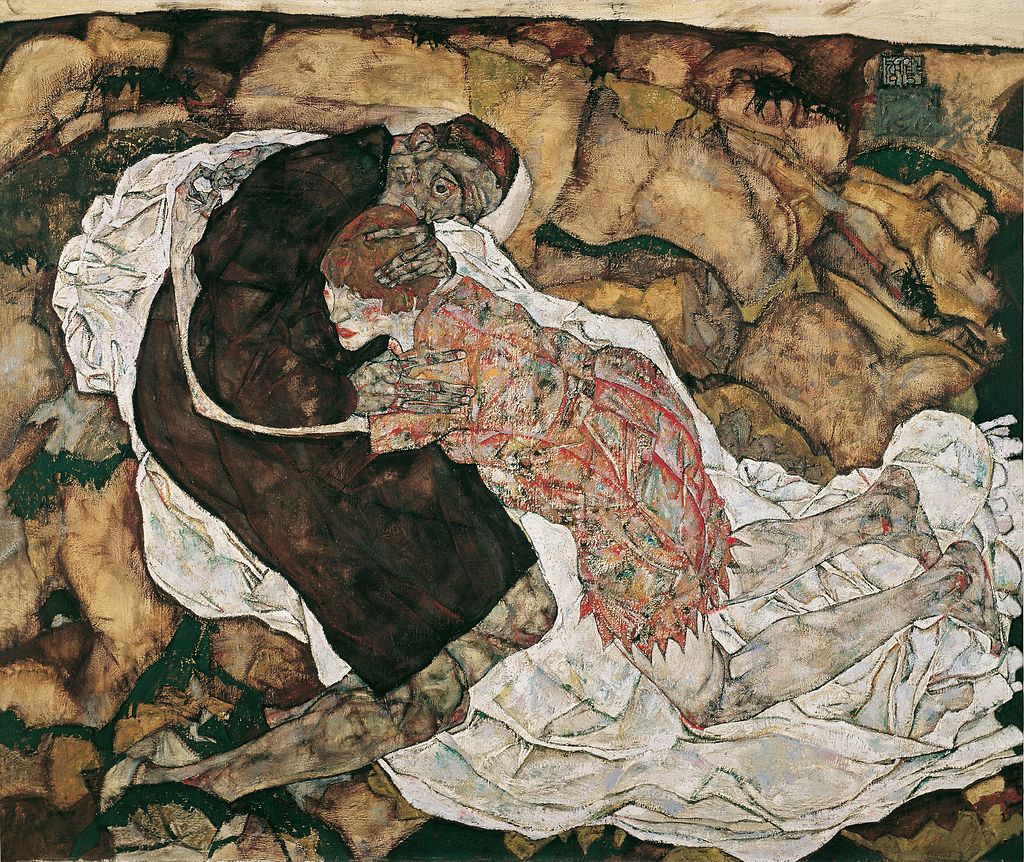
Schiele was arrested for using teenagers as nude models and had conflicts with the church; in the 2000s, when I was a teenager, I could model myself and paint whatever I wanted. Self-portraits are not always about faces. I continued to paint my own nudes. The only thing I was inexperienced in at that time was love. I was bored by the medieval painters’ attempts to get to know people by dissecting them, away from God, because they said it was ‘evolution’. Civilisation and evolution, they say, and we are grateful. I thought it was a similar feeling to Yozo’s ‘I don’t understand hunger’. The literature we read when we are young is not enough experience, so we perceive it through imagination, or through the brain’s illusion of similarity. That is how I had to perceive things, even if others said they were completely different.Why do people go out of their way to lament the word hunger when it is so commonplace? It seemed to me that this and the search for ‘humanity’ in the novel ideas of contemporary art are the same thing. At some point my fingertips seemed to learn the naked body, the skeleton, and I drew various imaginary figures. You can always hire adult nudes. If you go to a sex club, prostitutes can easily show you their pubic hair. The reason I started drawing was that as a child I was praised for my sense of colour. Other reasons were that I forgot about time and it was fun to create my own little world, to achieve something with my own fingers. I just woke up and kept writing, dreaming of philosophical things, thinking about God, connecting with the truth of the world somewhere by ‘expressing’ it in a similar daily routine. I was always looking for something to find, like Plato’s idea. Is it something beautiful, because what I wanted to find was also ‘myself’. No, I was trying to create a new self, which is probably the strongest thing, because I couldn’t accept who I am now. But being young is something in the past, or immature in the way it preserves the past. So I expect to be able to create a new self, a self for the future. That was my youth. I used to say, when adults used to make fun of me in the Best Picture criticism, that the work of self-discovery was itself bad work. Perhaps they were tired of the ‘questioning of the ego’ that was evident in much of my work. Such people also strongly disliked and criticised Osamu Dazai. Dazai was not a painter, but he is an example even in such a situation. Moreover, it may be a good thing that he is such an important figure that he comes out as a bad example.
But he praised Egon Schiele. They respect him because his confrontation with the Church seems to the Japanese to be a way of keeping his ego in check. I laughed heartily at the similarity as I listened to him. At the time, my understanding of the purpose of the content of No longer human was still limited, but I could relate my feelings to those of Yozo, who laughed when he mistook the sleeping pill Calmotin for the laxative Henomotin in the work. I was sure that these two people did not know each other well and made the mistake without realising that they would be very embarrassed. I didn’t even know if it was a ‘comedy noun’, because I knew at the time. Comedy is laughing at the comical human condition, essentially human suffering. Even though this story is called my memoirs and some people with different experiences might say “that’s not true”, it is certainly important for creativity to have emotions to pierce through and to write down one’s experiences. Calmotin – Henomotin, I think the main character’s illness got so bad that serious people misread the katakana. If I had to answer a little sensitively, I would say that laxatives only speed up the consequences of what you eat. It is not always a good thing to simply speed up what comes as a consequence. This is related to what I said at the beginning about not knowing what hunger is. laxatives, as a body, are in a state of ‘hunger’. The body has become so, but the protagonist is looking at the impermanence of time. What kind of suffering does he have to go through to hasten a fate that is coming anyway, for example ‘mortality’. The god who controls the stage assumes that even this is a plan. The life that passes becomes a fiction that the author recalls and elaborates on many times. When does this fictional world become one of the necessary pillars that cannot be removed from the composition of the author’s life?
That would be a question for the performing arts, but he has a real name, Shuji Tsushima, but little of his personality remains as his real name. Even his wife referred to him in her memoirs as ‘Dazai’.
For those like me who believe in the Trinity, I believe that a fictional world is always protected. Osamu Dazai’s reality, ‘Shuji Tsushima’, was a betrayal of his family, his wife and Jesus Christ. He loved Jesus but betrayed him, as in the work he wrote, ‘Heed My Plea’. However, it is not clear that their actions can be called betrayal, as they were not baptised, but what they did was close to murder, so they had already broken a commandment. Reform is at odds with the question of whether anything is acceptable for the sake of art. In fact, Dazai’s alter ego Yozo is forever blameless.
An artist is solitary” is a sweet phrase for an amateur artist who seems to have assumed that he is solitary in his unprecedented deeds, solitary in his solitary existence, which brings me here to my aforementioned nude drawings. Drawing nudes is not loneliness. Rather, they are appreciated with increased competence. True solitude is to betray God. The pain is that the impulse to write is still uncertain, whether it is satanic or a revelation.
When ‘forgiveness’ is based on the original Church law, the congregation prevents isolation by ‘confessing sins’. But sins associated with the fictional world cannot be ‘confessed’. This is because they are afraid of what kind of work they will become after being forgiven after confession. Even if I wanted to confess my sins at any moment, if this confusion, this conflict encourages me to write, I can’t talk to the priest. Because literature needs ‘poison’. Even among actors, there are those who can do their job with only dialogue, without getting into the role, and there are also those who can pretend to be emotionally involved in the role and pretend to be the character. Dazai seems to have been the latter, which can be the most confusing to the mind. In the case of this work, which is considered literature, Yozo has opened the door to the life of the author ‘Osamu Dazai’. So while it is possible to separate the work from the author in the works of other writers, it is not possible in his case.
As in the story and throughout her life, Japanese life is so far removed from Christianity that no matter how much we are moved by reading the Bible, we feel that we are living without Jesus Christ. This is because we only think in terms of ‘love’. Love involves pain, and the duty of believers is ‘Atonement’ and ‘Forgiveness’. This is how we connect with Jesus. I appreciate the fact that he is aware of this karma of love, a karma that keeps running away from redemption and forgiveness, and that he was able to leave it so vividly. That is why I have Osamu Dazai’s books on my bookshelf.
As Christians, it is the most delusional thing we can do to present ourselves as clean and innocent.
Language cannot express diversity. Yet it is often not worthwhile to write about feelings that are not certain to be understood. Most of the time, words have to be chosen in accordance with people’s common perceptions. To live like them for a moment, he is the clown of the world, and the darkness from which he does not hide touches the human psyche. The language of his work seems to be simple love language and is seen as having no core, but he writes generously that he says these simple words with passion and that romance is an important force in life.
Disqualified as a human being.
I had now ceased utterly to be a human being.
I read these words over and over again, like a cut and fallen branch. My impressions changed with each age and with my mood, but Jesus is the branch cut off from the ‘world’ and in his sorrow. There is a story that God is the farmer and Jesus is the vine. (John 15) Pruning does not mean cutting off an unwanted entity, but that Jesus, the trunk, is also grieving and represents the ‘life connection’. After pruning the tree produces sap. This is compared to the tears of Jesus.
Like one of the pruned branches, he stands by as time passes. This would be the protagonist of this work, the literary voice of the flesh. This isolation did not seem far-fetched to me. For a long time I thought that Christian literature remained with God, while Japanese literature went with death. So much of Japanese literature in the past was about Thanatos. For a long time I had no doubt that, in addition to the death of the body, there is also the death of the spirit, and for some reason I did not want to throw it away. I even thought that I did not want to be a person from a country that did not understand the aesthetics of this death. Thanatos is an aesthetic different from happiness and misery, and I want to live by it. I want to feel ‘life’, sometimes being taken in, sometimes getting out, sometimes risking a second chance, sometimes despairing.
The pruned branch is to gaze irresistibly at impermanence, No longer man wrote no lies about the world of emptiness. There is no hypocrisy in his words. He went on to write about the woman with whom he had a heart-to-heart relationship, who died in the sea in Kamakura when he was a student, and he seems to have faced his own sins on many occasions. A person’s attempted suicide is different from the suicide of a loved one.
The law cannot atone for sins, and I don’t think most people even know how to recognise their sins. We can feel that Dazai also suffered in this way. It would be terrible to carry the suffering that cannot be atoned for for the rest of one’s life if one is aware of it. Remember that Judas, who betrayed Jesus, committed suicide. You can see how important it was for Jesus Christ to carry the cross.
The same is true of religion and literature without the ability to look at human imperfection. Connecting with Jesus through self-awareness is ‘Atonement’ and ‘forgiveness’, but it is also true that God is always present in places we are not aware of. We must not forget that God also weeps over the choice of suicide in the life given to Dazai and the woman.If God does not weep for this death: Who will?
Osamu Dazai’s ‘No longer human’ makes me look at myself when I read it. Reading a story, even if it is not Dazai’s work, is about looking at oneself. Most readers cannot easily reach Yozo because they see their own view of life, death and love. The work is a short story, but it is misleading because it does not directly mention that he was mistreated by a servant, that his wife had an affair, etc.
As for Yozo’s ‘crippling’ at the end, this may be the end of those who pursue the invisible. The holy self and the sinful self always coexist. Sinfulness leads us into the deep forest and, as in the theology of Cusanus, we look for the tree in which God is reflected. Leaving everything behind for this purpose is not something that can be done with words alone. I do not take the side of novelists who were morally respectable. I choose only those who are like pruned branches from ‘the world’. I place them next to those who have done so, especially recently. The Bible and the weak, with its relativity, is a ‘hand mirror’ for the Christian.
Thoughts of love and death are in an ascending and descending flight. Beyond the unadorned phrases, I fervently hope that the sounds and thoughts will reach somewhere, echo deeper than they did back then.
John15:1~12
I am the true vine, and my Father is the gardener.He cuts off every branch in me that bears no fruit, while every branch that does bear fruit he prunes so that it will be even more fruitful.You are already clean because of the word I have spoken to you.Remain in me, and I will remain in you. No branch can bear fruit by itself; it must remain in the vine. Neither can you bear fruit unless you remain in me.”I am the vine; you are the branches. If a man remains in me and I in him, he will bear much fruit; apart from me you can do nothing.If anyone does not remain in me, he is like a branch that is thrown away and withers; such branches are picked up, thrown into the fire and burned.If you remain in me and my words remain in you, ask whatever you wish, and it will be given you.This is to my Father’s glory, that you bear much fruit, showing yourselves to be my disciples.”As the Father has loved me, so have I loved you. Now remain in my love.If you obey my commands, you will remain in my love, just as I have obeyed my Father’s commands and remain in his love.I have told you this so that my joy may be in you and that your joy may be complete.
My command is this: Love each other as I have loved you.

 Chris Kyogetu