Cahier2024/01/22 English

Simone Weil, ‘Illusions’ (Gravity and Grace).La pesanteur et la grâce

・On se porte vers une chose parce qu’on croit qu’elle est bonne, et on y reste enchaîné parce qu’elle est devenue nécessaire.

・Les choses sensibles sont réelles en tant que choses sensibles, mais irréelles en tant que biens.

・L’apparence a la plénitude de la réalité, mais en tant qu’apparence. En tant qu’autre chose qu’apparence, elle est erreur.

L’illusion concernant les choses de ce monde ne concerne pas leur existence, mais leur valeur.

L’image de la caverne se rapporte à la valeur. Nous ne possédons que des ombres d’imitations de biens. C’est aussi par rapport au bien que nous sommes captifs, enchaînés (attachement). Nous acceptons les fausses valeurs qui nous apparaissent, et quand nous croyons agir, nous sommes en réalité immobiles, car nous restons dans le même système de valeurs.

ceux qui ont nourri et vêtu le Christ ne savaient pas que c’était le Christ.

English

・We are drawn to something because we believe it is good, and we remain attached to it because it has become necessary.

・Sensible things exist as sensible things, but are unreal as goods. Images possess the fullness of reality, but only as images.

・The illusion regarding the things of this world pertains not to their existence, but to their value.

・The illusion concerning the things of this world does not concern their existence, but their value. The image of the cave is related to value. We only possess shadowy imitations of goods. It is also in relation to goodness that we are captives, bound (through attachment). We accept false values that appear to us, and when we believe we are acting, we are actually immobile, as we remain within the same system of values.

・Those who fed and clothed Christ did not know that it was Christ.

1L’apparence

L’apparence means ‘appearance’ in French, but in legal philosophy and sometimes in psychology it is translated as ‘provisional image’. While a virtuality has the integrity of reality, it can also be misleading, not only with regard to the appearance of reality, but also with regard to other objects. This may be a feeling that is not common in Japanese concepts. Although Husserl distinguished between ‘imaginative action’ and ‘fantasy’, in phenomenology Husserl provided an approach to the idea of the provisional and value. The distinction between phenomena (physical sensation) and value (provisional representation) is also mentioned in Weil’s quotation.

ceux qui ont nourri et vêtu le Christ ne savaient pas que c’était le Christ.

・Phonological beauty: in this sentence there is a balance between vowels and consonants and a sense of rhythm. For example, the phrase ‘nourri et vêtu’ feels beautiful because the sounds are delicate and echo each other.

2 ’provisional image’ versus ‘conjectural’.

Provisional image refers to an image in the mind of an object or event that has not been directly experienced in the real world, based on imagination or speculation. Assumption is an unquestioning perception distorted by subjectivity with concepts that are different from provisional images. In essence, provisional images are realistic and contain misperceptions, but they are also correctable. Assumptions, on the other hand, are often not correctable. For example, in advertising and marketing, provisional images are used to attract people and make them stick to a product or service. We need to make sure that we do not miss the real value and benefit behind individual products and services. In the area of self-development and relationships, it is also important to focus on one’s own true needs and wellbeing, rather than getting caught up in the provisional images and expectations of others.

3 ’Good’ and ‘justice’.

Weil’s declamations seem to have philosophy at their heart, even though they are poetic in nature. This quotation, for example, may be based on the ‘good’ and ‘justice’ of ‘Platonic’ philosophy. In Plato’s ‘Republic justice is attributed to the soul. I think that the image of a ‘cave’ here is undoubtedly an analogy for the cave in Plato’s ‘Republic’.

The parable describes a situation in which people are trapped in a cave and live by seeing shadows projected on the walls by a fire at the back of the cave. They believed the shadows to be real and never left the cave. However, when a person escapes from the cave and sees the outside world, he or she discovers true reality for the first time. There were concepts and things that were different from the shadows he saw in the cave, such as light, colour and shape. This person discovered new knowledge and truths and tried to communicate their existence to the others in the cave, but they were convinced of the shadow world and refused to accept the truths of the outside world. This parable represents Plato’s ideas about the acquisition of knowledge and truth. The cave symbolises the material world and sensory experience, while the shadow represents knowledge through perception. On the other hand, the world outside, as seen by the person leaving the cave, would refer to the world of ideas and metaphysical truths. Plato’s parable of the cave is a metaphor for the fact that we can only see things in their provisional image or shadow form, not in their real form. The people in the cave only see shadows projected on the walls and cannot know the true reality, so although there are ‘provisional images’ in the cave, they cannot be said to be the true existence or reality. It suggests that the world we perceive is part of reality and that there is a truth or essence beyond it. It emphasises that ‘provisional images’ exist in some sense, but that they are not a complete picture of truth or reality.

This is also an example of the fact that truth and knowledge must be obtained through reason, and that true understanding is impossible as long as we are trapped in the material world and sense experience.

In Plato’s Republic, the desire to know the truth about justice interacts with the idea of the good, which is also characteristic of the French word Nous ne possédons que des ombres d’imitations de biens. C’est aussi par rapport au bien que nous sommes captifs, enchaînés. In Bient in, it can mean ‘good’, but it can also mean ‘possession’.

For example, what does it mean when translated as ‘property’?

We are trapped in a cave whose walls reflect the shadows of our possessions. But these shadows are not real possessions, they are only imitations. Because we are trapped in these shadows, we cannot know true ownership and luxury. If we could come out of the cave, we would experience true possessions and true wealth.

Even as ‘property’ he points to our obsession with material possessions and our missing out on true happiness and abundance.

So what if we think in terms of the good, which is the correct translation?

Trapped in a cave, what we see is not the real world but shadows, which are imitations or representations of reality. Shadows reflect true reality, but are themselves incomplete, and we cannot know true reality accurately. Goodness’ becomes the knowledge and rational understanding of true reality. By going outside the cave and seeing true reality directly, we can understand and accept true goodness. However, trapped in the cave, we cannot have knowledge of the true good and remain trapped in the shadow of mere imitation.

This parable is consistent with Plato’s advocacy of an ideal state and his insistence that philosophers should play a role in pursuing the true good and communicating it to others. It also suggests that in order to gain knowledge of the true good, we need to go outside the cave and engage in self-knowledge and self-transcendence.

Continuing the section, Weil adds a passage from the biblical Gospel of Matthew, chapter 26, verse 37, where he gives him food and clothing without recognising him as Jesus. This shows the difficulty of understanding Christ’s presence and the need to open people’s spiritual eyes. By treating this account in a provisional image, Weil may have been trying to express the universal theme of people’s contact with Christ (or a divine being) but their inability to understand his presence and truth, as well as the difficulty of mystical experience.

The biblical position on ‘property’ (in money),


Matthew : 6 : 19 – 21

Do not choose to store up for yourselves treasures on earth: where rust and moth consume, and where thieves break in and steal. Instead, store up for yourselves treasures in heaven: where neither rust nor moth consumes, and where thieves do not break in and steal. For where your treasure is, there also is your heart. 

This is not just a denial of material possessions, but a question of where the heart is. Those who gave food and clothing without knowing Jesus may have earthly possessions, heavenly treasures and ‘heart’. This is also related to Platonic ‘goodness’ and ‘justice’. As Plato wrote in the Republic, biblical ‘goodness’ and ‘justice’ do not just enrich the inner life of an individual. He believed that an individual’s goodness and justice is made up of a collection of individual goodness and justice. He taught that through the pursuit and practice of goodness and justice by individual souls, the nation as a whole can also realise goodness and justice. Reality, however, exists alongside provisional images and is difficult to put into practice. Provisional images’ are questions for the philosopher.

*This is not an explanation.
Cahier 2023/12/25 English

La pesanteur et la grâce La mal (Simone Weil)

Le faux Dieu change la souffrance en violence. Le vrai Dieu change la violence en souffrance.

“The false God turns suffering into violence. The true God turns violence into suffering”

Alors, où mettre le mal ? 

“So, where does evil belong?”

Il faut le transférer de la partie impure dans la partie pure de soi-même, le transmuant ainsi en souffrance pure. Le crime qu’on a en soi, il faut l’infliger à soi.

“It has to be transferred from the impure part to the pure part of oneself, thus transforming it into pure suffering. We must inflict the crime within us upon ourselves”

Grammar

The use of the definite article, such as ‘Le faux Dieu’ or ‘Le vrai Dieu’, refers to a specific deity.

Verbs such as ‘change’, in the direct present tense, and ‘transférer’ refer to the transfer of a thing to another place.

Verbs such as ‘change’ in the direct present ‘transférer’ indicate that the thing in question is transferred to another place.

The expression ‘de soi-même’ is used to indicate the myself, the self.

The expression ‘qu’on a en soi’ indicates the self and refers to a sin related to the aforementioned part.

The expression ‘à soi’ indicates taking action against the self.

Note:

For some reason, ‘So where does evil belong’ was of interest to me. Weil seems to speak only to his own inner ‘mystery’ and ‘imperfection’. It seems like Nietzsche’s ‘self-transcendence’, which argued that the purpose of human life is self-realisation and transcending one’s own limitations and constraints.

However, the evil in the Catholic prayer ‘Lead us not into temptation, but deliver us from evil’ means ‘Satan’, so Weil, although a philosopher, is influenced by Catholicism, so in this case evil includes Nietzschean evil, but is also close to the Satan positioned by Catholicism is also close to the Devil.

Here, briefly, about Satan. The etymology of the word exorcism does not mean exorcism, but is derived from the Greek word ‘to swear severely, to declare’.

It is a declaration of faith by a person possessed or seduced by an evil spirit, acknowledging the absolute rule of God in Jesus.

Just as in the film The Vatican Exorcist, ‘sin finds itself’, so in the Gospels Jesus speaks of taking up his cross.

Satan, I can’t say for sure at the moment because I have no experience of exorcism ceremonies regarding Satan myself, but I think the story wanted to say that the true God turns violence (satanic) into suffering (cross), and with a false God, when he claims to perform miracles of God, he makes them satanic.

Reference

Matthew : 16 : 24 – Then Jesus said to his disciples: ‘If anyone is willing to come after me, let him deny himself, and take up his cross, and follow me.

Luke : 9 : 21 – But speaking sharply to them, he instructed them not to tell this to anyone,

Luke : 9 : 22 – saying, ‘For the Son of man must suffer many things, and be rejected by the elders and the leaders of the priests and the scribes, and be killed, and on the third day rise again.’

PATER noster, qui es in caelis, sanctificetur nomen tuum. Adveniat regnum tuum. Fiat voluntas tua, sicut in caelo et in terra. Panem nostrum quotidianum da nobis hodie, et dimitte nobis debita nostra sicut et nos dimittimus debitoribus nostris. Et ne nos inducas in tentationem, sed libera nos a malo. Amen.

(Pater Noster)

Nietzsche #Simone Weil.

Evil #Gospel.

Exorcism.

Simone Weil-For laborer English

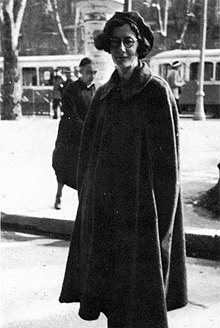
Simone Weil in Marseilles, early 1940s
・People who are considered 'invisible' need beauty and poetry.

・Laborers need beauty and poetry more than bread.

・Poets create beauty by giving attention to the real. Love acts the same way.

・It is only by chance that the most precious things in the world start to be called progress, or 'the genius that makes a statement through the ages'. It is unbearable to imagine that even the most precious things in this world are left to chance.

・Unbearably absent God. In this sense the world is God itself.

Simone Weil.


First

Simone Weil went to Germany in 1932-1933, a year before she entered the factory, to understand the foundations of fascism. She reported that the Nazis were not only taking advantage of the petty bourgeoisie, but also many unemployed and other vulnerable groups.

Weil wrote a letter to Father Perrin during her stay of a little more than two months. The contents of the letter were: She wrote to Father Perrin without hiding her own over-influence on collectivity, “If everyone sings Nazis songs, then I’ll sing them too, which is my weakness, but this is the way I exist.” and it did not hide the fact that it could be influenced by the negative impacts of negative influence. She was saving German exiles and raising her own questions about labor, unemployment and collectivity. At the end of 1934, Simone Weil left her teaching job to work in a factory as a pressman and decided to face the ‘monde réel’(Real)Before she joined the factory, she was obsessed with writing to ‘masterpieces’ and ‘posthumous works’. However, the idea was feel some delicacy about the real world. ‘I began to think that the interchangeable parts were laborer. Parts have more civil rights than people’, she said as she walked through the gate, showing her ID card with the number on her chest,

Simone Weil wrote a core called ‘Beauty and Poetry for laborer’.

I have long remained unsure of this vital nucleus. She quoted a poem by Homerosu at the beginning of her ‘Factory Diary’ (Reflections on Labor and Life). She had many reflections on classical literature, but at the same time she knew that poetry was meaningless to the laborer. She had experienced first-hand the mental and physical exhaustion of hard laborer and was thus troubled by the pointlessness of trying to be philosophical through the Bible. This is reflected in her own record of almost jumping into the Seine in disgust with factory life.

Her writings are characterized by a large number of disconnected chapters, as they were not formally prepared for publication in book form. It seems to be an inclusion structure, a structure in which statements implying contradictions make sense inclusively and mutually, as in the words of Qohelet(Ecclesiastes) in the Old Testament. For example, she knew that art meant nothing in labor. At the same time, she talks about clocks and artists. She held that a made clock can work without love, but created art cannot work without love. Why did she define such a thing as ‘what the laborer needs more than bread is beauty and poetry’?  Even if we were to write out an outgrowth of this as a logic as a definition, it would be difficult to delve into the labor of the time and write it out. One commentary on ‘labor’ explained it in Hayao Miyazaki’s ‘Spirited Away’, but if that is to be used as an analogy, it fails to convey the suffering and weight of labor. Indeed, even if the protagonist who lost his name in that worldview, the dragon god having lost his memory, and the otherworldly beings who follow him obediently represent the structure of labor, nevertheless, labor is completely meaningless in allegory and structural understanding. You cannot catch up with Weil’s philosophy unless you are actually exhausted by labor and conscious of death by labor. The cartoon analogy is a poor outgrowth for the students who are the target of this lecture because they cannot understand the suffering of labor, so they have little outgrowth to formulate logic. As a result, students try to end up with a ‘mind set‘ about labor. Most believe that happiness as a laborer is poetry and beauty, depending on how you ‘mind set’. As a result, It is just an empty theory on the table and something else entirely. To know Weil is to know that hard labor means that poetry, beauty or even faith becomes utterly meaningless. One must strike this reality into one’s heart and suffer that one is wasting one’s time. In modern times, these still seem to make sense through ‘peace of mind’. That would be the explanation of this animation. The students are satisfied with the idea that labor makes sense if they change the way they look at the outside world and the other world and use philosophical terms to describe them. If you can live well enough to go to university in modern Japan, it is unlikely that you will experience the labor Weil describes. As barriers to understanding Simone Weil, one is the suffering of labor, the second is suffering with limitations, and the third is suffering through faith, is important. Without knowing these three things, one may perceive something in Weil’s poetic sentiment and follow it later with logic. I was one of them, and that may be what she calls an overlap of coincidences. That is why, by the time I was over the age of Weil’s death, I left for a time because it even seemed to me that these philosophies were only heading towards death, just as she was heading towards guest death.

Second

Even if one decides that “it is beautiful”, poetry and beauty ask for emotion and heart, and it is difficult to express them and to appeal to them with logic. The same applies to pain and unhappiness. Unhappiness is a great mystery in life. One cannot accept the idea of this misfortune, of abandoning the imagination that you are at the center of the world, of acknowledging that the real center is outside the world, that we are a ‘point’. Descartes’ ‘I think, therefore I am’ should not be left behind in everyday life. Sartre refuted it, but it is still incomplete. So much so that the I and consciousness must not be separated. Clerics such as Father Perrin, with whom she interacted, make sense of such misfortunes. Because that is their job, They seldom look back on whether or not Jesus really felt unhappy. Jesus was the Son of God, but as a man he studied the Old Testament. Before his execution, the Son of God cried out “My God, my God, why have you forsaken me?”, Psalm 22. If Jesus was God, he would not have originally suffered. Jesus suffered as a human being. Suffering and misery are enigmatic for people, just as Jesus’ suffering is a beautiful story. Even today, people’s unhappiness is swelling day by day, although the world is full of measures and words that could solve their misery.

Many people still think today that Weil is not a philosopher, but for those who understand theology and faith, it was philosophical. Why is that, because she phenomenologically Epoché what people of faith cannot always erase or stop, ‘pray thinking there is no God‘ She did not flirt with religious people in the Caillet.

Religious people admonish Jesus to bear the suffering of labor, but Weil did not. Keeping philosophical questions and answers to religious understandings impoverishes the human mind to the extreme. From a religious perspective, there is even a saying, “Be a fisherman rather than a philosopher”. Wisdom is a condition for becoming poor. 【Proverbs28:11】If the saint’s condition is to perform miracles, the philosopher expects miracles but excludes them himself. That is the purification of knowledge. That purification may be the only way to realize one’s true nature. However, we do not know if that essence is something that can cross over into the world. In fact, she died because she refused treatment. Although contemporary ethics cannot touch on it, Weil’s focus on the ‘labor’ can be said to be neighborly love. She was in the same position as the poor, as was Jesus. She did not ridicule the poor laborer.

In 1937, Simone Weil, who had also become a poet enough to have Paul Valéry write a review of her books, also wrote about art. She loved Jesus so much that she was never unaware that he had descended into Hades. She descended as in ‘Gravity and Grace’.

Simone Weil used the example of Andromaque to show that tragedy is what people will not listen to unless it is represented by a creation, but she did leave a written record of her labor. If she had not died at the young age of 34, I don’t know if this fact would have been created, but that ‘Coincidence’ record of her labor is something that has to be experienced to be understood, just as there are deaths from overwork and suicides even today. Few students or professors are aware of the cruelty of her record. I was one of them. We can only be vaguely aware of the toil. I immediately play it on the basis of my own faith and experience. Not so much that it is a ‘sin’, but while I am unaware of labor, even that seems like beautiful poetry. For the sick, there were nightingales, but for the laborer, every artist makes a beautiful story. That is just raising people who can read books, but only such people try to be the voice of people’s labor.

Yet, she was still waiting for a miracle for the weak. As a seeker, she would read the Bible into her mind.She wrote like a philosophical thinker, organizing the mysteries in philosophical reflections and thinkers. about it I often asked myself what she kept doing it for.  She also became ill and poor again in her later years. Despairing too, she understood her gifts. She was estranged from her destiny and was constantly fighting against it. Maybe she waited for a miracle to figure out what she could write. For example, as manifested in her interpretation of Prometheus and Grimm’s fairy tales, she did not touch the deus ex machina – the mechanical god. That is not the same as Aristotle, who was in denial. She was choosing a god or destiny to reach out to suffering. She was informing despair so that miracles would happen to the laborer and so that the artist would invoke the god of mechanical contraptions. Despair is the stripping away of all hope. Despair is not something that comes. Sometimes others feel differently from you. Hopelessness is the stripping away of expectations in order to fall into despair yourself. St Cassilda was carrying food for the Christians, who were heretics at the time, when she was stopped by her vassals and the king and told to show them the food she had hidden. If the food was found, the death penalty awaited her, but God turned the food into roses. Simone Weil’s miracle for the laborer in waiting, in my opinion, is this. She epokayed(epokhế) God as a philosophy, but she assumed the world was God.

Like Casilda’s stripped cloak, after all hopes and expectations were stripped away, the prayer was indeed pure.

Last

Jesus was the closest to the Father, and misfortune came to him. Those who understand know that to be close to the Mystery is most unfortunate. Whether it is just inorganic unhappiness or unhappiness due to the Mystery. When I was a seeker, I believed that the unhappiness at the time was due to the mystery. Not by hope. My faith began with misfortune. I had a desire to believe and a doubt whether souls are really equal. Unspeakable and difficult-to-surface thoughts were stirring me. The objections of the world were constant: the feeble believe in mysteries.

Light enters the eye with a single blink of an eye. Nevertheless, there are days when it does not illuminate the heart. Those who write with words begin by struggling with words they cannot communicate to express the light that transcends wisdom. Just as a musician cannot separate himself from sound, what he expresses in words cannot separate himself from words. Just as music is said to be incomprehensible, words cannot be understood, they need to be understood in the heart. How to call upon the heart is always a struggle as well. From such despair we must write down real miracles, so that light may shine on the mysteries of misery.

I think she has managed to turn it into a teaching guide so that we can get there.

Will she be a philosopher, a thinker or a seeker? She is treated as rootless by an undefined reputation. So, We have forgotten. That she was a teacher.

She was the ‘teacher’.

I could find her as a real person, a ‘teacher’. As an‟poètes”

Jesus’ Gospel walk is full of unnamed poor people. The labor she experienced is the embodiment of these unnamed people. Jesus stands in suffering outside the church.

Jesus was a laborer.

____________________

The overview will be updated in due course.→ 

https://en.wikipedia.org/wiki/Simone_Weil

Liberation Theology and Existence.(English)

(movie: Japanese)
La vulnérabilité des choses précieuses est belle parce que la vulnérabilité est une marque d’existence.

Something of value is vulnerable and helpless, and it's beautiful. Because their weakness is a sign of their existence.

Simone Weil
La Pesanteur et Grâce(Coincidences)


This article contains information on suicide.

Weil wrote in a letter to Gustave Dupont: ‘The right way to write a text is to write it as if you were translating it …… and not to add anything to it.

It is a pen without hesitation that always seems to have an idea (Plato) and is not swept away by the images that spread from the text. I too try to cut out the useless. I couldn’t write everything, no matter how sad it was and no matter how much hatred there was. Even if what I want to convey is painful, even if it is my own voice, I look at what is useless. What you really want to leave behind, like a ‘poem’, will be left in the trail of the scraped-off pieces. It is one of God’s graces – ‘time’ – that must be obtained for healing. It is a lonely task in the extreme, but the joys and sorrows born of it are a given.

I was told that I could read a book before the death of a nun(仏教). At the time I did not think much of the fact that she had sought salvation from Catholicism before she was ordained. It was in the Church that she first opened her eyes and sought salvation in her predicament. But, contrary to Catholic doctrine, which abandoned my child to adultery, she was rejected. Even after her ordination, she remained popular for her humorous take on human problems. I was encouraged to go to her after the accident in 2018 by an older person who respected her and was also a writer. In fact, when I was accepted, she politely refused because I was a Catholic.

She was my last line of communication and afterwards, in the cold February weather, I kept asking myself. (2019)

At the time, I was disturbed by the left-wing activities and opulence of my own church, but the other faithful liked the priest so much that That priest is a good man. You forget him. So I tried to go back to no religion. It is true that I talk more with my friends when I am not religious. Talking about shopping, it is more ‘normal’ in Japan to buy luxury brands every day. They are even respected for their wealth. Still, my days became empty. I began to hate myself. And although I wanted to ask for help, I had forgotten how to ask for it. It was in the early summer of 2019 that I started thinking about suicide for the second time. My second decision was because I couldn’t go back to being non-religious. Establishing themselves as writers. I decided that I would be treated as ‘crazy’ in this country. If that was confirmed, I could stand as a religious person, but that was no longer the case. I am just a mad, ordinary person. The breakdown of the negotiations with this nun accelerated things. When you are in a tight spot, you gradually stop looking for reconciliation of souls. In fact, as was the case with me, PTSD caused me to lose my memory several times during my first suicide attempt in 2018. It’s as if the floor is oiled and the thoughts can’t get up and slide away. People in distress are in distress and the words that come out of their bodies are sometimes incoherent. I who cannot speak well, I who have reduced intelligence, me who…… That is why my ugliness was the trauma of secondary damage.

During my time in the convalescent home, I was also encouraged by friends not to live as a Christian, but to stay at the level of liking the Bible as a hobby. I knew that this would be better for me in Japan. But I could not find anything affirming in the non-religious world. When I look for arguments for soul and holiness instead of income and work, I find that the non-religious are all a mishmash of other religions. There is nothing original. Still, something was missing for me that most Japanese could live with in a way that made sense to them.

I kept running away from my faith. I was also looking for ‘normalcy as a Japanese’. But last year (2020), the Catholic Church and the bishops helped me when I was in trouble. In retrospect, they accepted this bishop even though they would not have had the advantage of accepting me at that time. That was a step in my conversion on the way to God.

I decided to take a step on the path of repentance.

A series of ‘coincidences’ becomes destiny. People want to eliminate them as much as possible, but coincidences are born.

I think that the ‘theology of liberation’, which originated in South American Catholicism, is necessary. Neither the clergy nor the laity should be the gate that closes the gap between a person in need and Jesus. It is only in times of need that the soul tries to leave. The great reconciliation of the wounded takes time.

I tried to focus on Jesus Christ because, unlike other studies, he was the equal, apart from religious groups.

Other disciplines are constantly exposed to absurdities. And they are subject to the reputation of society, even though they also affirm their own existence. Who can say “I am I”? If you can’t, you check yourself in the ‘mirror’ of others. I has no need of that. He has only loyalty and that is who I am
. With this I can be an investment, I can enter into society, even if it is painful, and I can make sense of it. No other study or life can be achieved in the same way. If I am poor, I cannot even open a book. Other religions have barriers because of different races. But the word of the Bible was accessible without money. I think this is unique. Christianity is not absolute, but I was so poor. Not just my heart, but everything was poor. But I could still love the world because of Jesus Christ, who showed me the way to love and live. Jesus said to the man who could not walk. Without any treatment, he said to the man, ‘You can stand. What is faith after baptism?

That’s what it means.

The clergy have hurt us a lot. However.
Faith exists in the words of Jesus: ‘Stand up’.

Of course, the ugliness of the religious community does not erase my own loyalty to Jesus.

I thought God gives you time to find out. Vaguely given time is inorganic, but God-given time was certain. Knowing weakness and struggling to reconcile the soul is God-given time. My weakness was ‘proof of existence’.

postscript

I met a priest who teaches ecclesiastical law.
So I was saved even more.

解放の神学と魂の存在

La vulnérabilité des choses précieuses est belle parce que la vulnérabilité est une marque d’existence.

貴重なものが傷つきやすく無防備なのは美しい。なぜなら、その弱さは存在の証なのだから。
シモーヌ・ヴェイユ

「重力と恩寵」偶然の章


この話は自殺に関する記事があります。

「文章の正しい書き方は、翻訳するように書くことです……そこには何も付け加えないということです」とヴェイユがギュスターヴ・デュポンへの手紙でそう書き記した。

それは、常にイデアがあるようで、文章から広がるイマージュに振り回されない迷いないペンである。私も無駄なものは削ぎ落とすようにしている。どんなに哀しいことがあっても、そしてそんな憎悪があろうとも全部を書くわけにいかなかった。伝えたいことが辛いことでも、自分の声であっても何が無駄か見つめることだ。削ぎ落とされた跡に「詩」のように本当に残したいものが残る。それは神の恩寵の一つである「時間」という癒しを手に入れなければならないのである。極めてそれは孤独な作業だが、そこで生まれた喜怒哀楽は与えられたものである。


 ある尼僧の生前に本を読んでもらえると一報を頂いた。その当時の私はこの尼僧が出家前にカトリックに救いを求めたというのを、あまり深く考えていなかった。窮地に陥った彼女が最初に見開いて救いを求めたのは教会にあった。それでも、不倫に我が子を見捨てたカトリックの教理に反していた彼女は断られた。その人は出家後も人の煩悩に対してユーモラスな視点で人気を得ていた。 私は2018年の事故後、彼女を尊敬する年配から作家でもある彼女の元へ行くように勧められた。確かに、一旦は受け入れてもらったが、私がカトリックだったので丁重に断られた。

彼女が最後の便りの綱だったので、その後、2月の寒空の下で自問自答を繰り返していた。(2019)

私は、当時は自分の所属教会の極左活動と豪遊に悩まされていたが、他の信者はその神父が好きなので私の異議申し立てに対して「もっと気楽に考えてください」と私は一人ぼっちになった。だから無宗教に帰ろうとしていた。確かに無宗教のほうが友達とも話が合う。買い物の話、ラグジュアリーブランドを買いまくる毎日のほうが、日本では「正常」なのである。寧ろその財力に尊敬すらされる。それでも毎日は空しくなっていった。次第に、その自分を憎むようになった。そして助けを求めようにも求め方も忘れてしまっていた。二度目の自殺を考え始めたのは2019年の初夏である。二度目の決意は無宗教に戻れなかったからだった。この国だと「頭おかしい」という扱いだろうと、それが決め手になった。もしも、これで肯定されれば私は宗教者として立つことができたが、そうではなくなった。ただの、頭がおかしい一般人である。この尼僧との交渉決裂は更にそれを加速させた。窮地に陥ったとき、魂の和解を次第に求めなくなる。実際に私もそうだったが、PTSDで2018年の一度目の自殺未遂で何度も記憶が飛んでしまう。まるで床にオイルを塗ったように思考が立ち上がれず滑ってしまう。窮地に陥った人間は、切羽詰まっていて、身から出てくる言葉は支離滅裂な時もある。だからこそ、自分の醜態こそが二次被害のトラウマとなった。

療養期間の時に特にキリスト教徒ではなく、趣味で聖書が好きだというレベルでいることも勧められた。しかし、私を肯定するものは無宗教には見つからなかった。収入や仕事ではなく、魂や神聖さの論拠をたどると無宗教は、すべて寄せ集めである。オリジナルがない。それでも腑に落ちて生きていける何かが私には欠落していた。

私は何度も何度も信仰に戻ることから逃げてはいた。それでも、昨年(2020)私は窮地に陥ったときにカトリック教会と司教が助けてくれた。思い返せば、その時に私を受け入れる利点は無かったはずなのに、この司教を受け入れてくれた。それが回心の一歩だった。

もしも救われた場合、救われなかった平行線の世界を想像する。救われなかった人もいることは知っている。

しかし、私は一歩回心の道を歩くことにした。

「偶然」の連続が運命となる。人はそれを出来るだけ解消したいと思うが、偶然は生まれる。

南米カトリック発祥の「解放の神学」は必要であるとは思う。聖職者も信徒も、窮地に陥った人間とイエスの間を閉じる門であってはならない。窮地に陥ったときこそ、魂が残そうとする。傷ついた大いなる和解は時間を要する。

私がイエス・キリストを軸にしようとしたのは、宗教団体とは別に他の学問と違って彼こそ平等だったからである。

他の学問は常に不条理に晒されている。そして自分自身の存在も肯定するのに、社会からの評価に左右される。「私は私」だと誰が自身を持てているのだろうか。持てないのだから人という「鏡」に自分の姿を試すのではないか。イエスにはその必要がない。忠誠心のみでそれが自分の姿である。これがあれば私は投資でも、社会に入っていける、苦しくても、そのことに意味を持つことができる。他の学問や生活は平等に得ることは出来ない。貧しければ、本すら開けない。他の宗教は、人種が違うことで壁がある。しかし、聖書の御言葉はお金がなくても手に取ることができた。これは他にないと思っている。キリスト教こそが絶対ということはないが、私がそれだけ貧しかった。心だけではなく全てが貧しかった。それでも世界を愛せるのは、愛し方や生き方を道しるべとしてくれたイエスキリストがいたからである。イエスは歩けない男に言った。何の治療もせず男に「お前は立てる」と言った。洗礼後の信仰とは

そういうことだ。

それに気付けるまでの時間とは神が与えるのだと思った。漠然と与えられた時間は無機質だが、神から与えられた時間は確かだった。弱さを知り、魂の和解に苦しむことは神が与えた時間である。私の弱さこと、「存在の証」だったのだ。

L’éternel substitut(jp and english ver)

Le temps est une image de l’éternité, mais c’est aussi un ersatz de l’éternité.

時間は永遠を映すものである。けれども、また永遠の代用品でもある。

Time is a reflection of eternity. But it is also a substitute for eternity.

Simone Weil (Renoncement au temps)

l’éternité

解説: 永遠というのは時間を伴うが、時間が有限であるのに対して永遠は無限を表す。しかし、私達は永遠を知覚することは出来ない。時の区切りは、永遠の一部、だから永遠の代用品。la éternitéの略。

Explanation: Eternity involves time, while time is finite, eternity represents immutability. However, we cannot perceive eternity. Time is part of eternity and therefore a substitute for eternity.

カイエについて(1)

シモーヌ・ヴェイユ カイエⅡ
「キリストに対して忠実であるのは困難なことであった。それは真空状態に対して忠実であることだった。ナポレオンに対してなら、死に至るまで忠実であることも、ずっと容易なのだ。まだ、のちの殉教者たちにとっても、忠実であることは容易であった。なぜなら、すでに教会という一つの力、地上での成就の約束をともなう一つの力が存在していたからである。人は強いもののためになら死ねるが、弱いもののためには死なない。今は一時期的に弱くても、力の後光をいただいているもののために死ぬにすぎない。
「まことにあなたは隠られておられる神である」そして同時に、「かれらは、神を明らかに示している世界によって、神を知ることが出来た。」世界は神を明らかに示し、また神を隠す。
 第二作のイコノグラフは教会の良いところ、キリスト教の良いところを手探りで探って書き上げたが、第三作目によってカトリックから距離を置いている。イエスはイデアのようにアイディアの宝庫であるが、キリスト教という組織自体は、どうも哲学や文学にとっては同じ軌道を回っている存在だが、相性が悪いようだ。ヴェイユも同じ気持ちだっただろうなと少し思う。
真空とは空気もなにもない状態のこと、彼女は造語かのようにこの真空についてよく語っている。彼女の言っている真空とは何か、それは彼女の語りに耳を澄ますしか方法がない。
今回の場合、何もない空間に忠実であるべきだったと記されている。見返りも求めず、愛も求めず、何もない場所への忠実=キリストに対しての忠実としている。
それが人は出来ない。少なくともナポレオンのように多少の即物的な対価を
下さる現時点で生きている人を選ぶのが世の常である。
*****
第三作発売しました。5日間で320部達成しましたが、友人の話から
アップル製品等、macから購入する人、ipad、iphone
から購入する人が苦戦しているようです。

酒井司教、女子パウロ会、松本准平監督、瀬戸内寂聴からも楽しんで読んでもらえた
イコノグラフはこちらで買えます。

アマゾン→https://www.amazon.co.jp/Icon-graph-Chris-Kyogetu/dp/153493037X/ref=sr_1_2?s=books&ie=UTF8&qid=1512118298&sr=1-2

紀伊国屋→https://www.kinokuniya.co.jp/f/dsg-02-9781976279713

WordPress.com でブログを始める.

ページ先頭へ ↑