In this context, it seems reasonable to conclude that Weil is referring to the Catholic Eucharist, or Eucharistia hostia. This is, of course, an intuitive conjecture, yet it remains plausible to suggest that Weil maintained a critical perspective towards the monotonous and arduous nature of factory labour. Moreover, she implies that the hostia has been reduced to a mere habit—an observation aligned with her critique of the increasing materialism and secularisation of the Church. I argue that this insight emerged from her personal experience as a labourer, leading her to realise that the act of consuming food and drink, devoid of the accompanying physical effort, could be seen as a more materialistic pursuit.
My preference for Weil, over many other philosophers and theologians, lies in her focused exploration of the condition of the ‘labourer’. Furthermore, her spiritual ‘turns’, which many find challenging to interpret, are consistently anchored in the figure of Jesus Christ. The issue of poverty tied to labour remains a pervasive and universal challenge, even in modern contexts. It is also worth noting that Jesus himself had a profound connection to labour, given that Joseph, his foster father, was a carpenter.
***
・Travail manuel. Pourquoi n’y a-t-il jamais eu un mystique ouvrier ou paysan qui ait écrit sur l’usage du dégoût du travail ? La pesanteur et la grâce
・(Manual labour. Why has there never been a labourer or peasant mystic who wrote about the experience of disgust towards work?)
・Travail manuel. Le temps qui entre dans le corps. Par le travail l’homme se fait matière comme le Christ par l’Eucharistie. Le travail est comme une mort.
(Manual labour. Time enters the body through labour. Through work, man becomes matter, just as Christ becomes matter through the Eucharist. Labour is akin to death.)
***
This assertion appears in Gravity and Grace (La pesanteur et la grâce), where Weil reflects on the mystery of labour, drawing a parallel between work and the transformation that Christ undergoes in the Eucharist. This connection evokes Christ’s anguished cry from the cross: “My God, my God, why hast thou forsaken me?”—an expression of divine abandonment. Christ suffered fully as a human being, and conveying the meaning behind these beliefs can be profoundly challenging. Faith is often deeply intuitive and internal, making it difficult to articulate through rational discourse alone. From a Catholic perspective, reflecting on why one might embrace Catholicism involves recognising the inherent contradictions within the institution, which may serve as part of its appeal.
In early Christianity, the teachings of Jesus were transmitted orally and through personal encounters, embodying a distinctly spiritual and individual approach to faith. As the Church’s influence expanded within the Roman Empire, however, faith became increasingly institutionalised, with doctrines and rituals formalised over time. This evolution established faith as an entity rooted in institutional authority, often intertwined with political power. Catholicism continues to value mystery and intuition, yet these elements have also been absorbed into its institutional framework. Although Weil’s exact reasons for embracing Catholicism remain unknown, I believe it was the very contradictions within the faith that captivated her. Amidst the materialism and corruption that taints some members of the clergy, she found solace in her connection with the humanitarian Fr Perrin. When I challenged Fr Perrin on the Church’s practice of excommunication, he replied in writing, comparing it to an act of weeping. Regrettably, this letter never reached Weil.
Weil recounts three significant encounters with Catholicism following her factory experience. The first occurred in a small Portuguese village, where she witnessed fishermen’s wives singing sorrowful hymns. This encounter led her to perceive Christianity as a “religion of slaves,” realising that those who suffer need faith for solace—and that she, too, was one of these “slaves.” The second encounter took place in Assisi in 1937, where, for the first time, she knelt in a small chapel associated with St Francis, experiencing a profound reverence for God. She also immersed herself in the liturgy at Solesmes, enduring severe headaches but finding comfort in the beauty of the hymns and words. These experiences offered her a glimpse into the possibility of understanding divine love beyond human suffering, etching the Passion of Christ deeply into her spiritual consciousness.
For her third encounter, Weil committed to reciting the Lord’s Prayer (Pater) in Greek each morning with complete focus. During these prayers, she often experienced a profound silence, sometimes feeling as though her thoughts transcended her physical body, enabling her to sense the loving presence of Christ. This practice of prayer became a vital means of direct contact with the divine for her. Her engagement with Catholicism left a significant imprint on her thoughts and beliefs.
The term “Catholicism” in this context encompasses the formal doctrines, rituals, and institutions of the Catholic Church, along with its social and cultural impact. The Pope is viewed as the supreme authority, and Catholicism emphasises the institutional and public dimensions of tradition-based education and social action. It can be described as an “outward-looking” phenomenon, centred on the officially recognised doctrines and institutions of the Roman Catholic Church. Although personal “intuition” remains vital for practising Catholics, it is noteworthy that Weil—despite her deep involvement—never received baptism, or passed away before she could do so, suggesting that her spirituality transcended institutional boundaries.
Weil’s factory experience allowed her to empathise with the suffering of others and to recognise herself as a “slave.” This realisation profoundly shaped her spirit, leading her to see herself as an anonymous figure within society, much like Christ, who bore the weight of human suffering.
The Psalms of the Old Testament offer a poetic connection between God and humanity, expressing a spectrum of emotions through praise, prayer, and lament. Other biblical texts, such as the Song of Solomon, Job, Proverbs, Lamentations, and sections of Jeremiah and Isaiah, also contain poetic elements. However, the New Testament does not portray Jesus Christ in poetic form.
Why, then, is Jesus not praised through poetry? This absence may reflect the early Christian focus on spreading the faith and establishing communities within the material world. The practical need to communicate teachings clearly and accessibly took precedence over poetic expression, leaving any poetic sentiment about Jesus to the reader’s interpretation. The narrative structure and instructive parables used in the Gospels were essential for conveying the message to diverse audiences across different cultures and languages.
In this context, Weil’s concept of the ‘labourer’ serves as a symbolic connection to Jesus. It is not merely physical sustenance that labourers require, but rather the nourishment of the soul and imagination.
Even today, the issues surrounding poverty and labour are not easily categorised as either social problems or matters of personal responsibility; they remain deeply intertwined, presenting challenges without clear solutions. Viewing poetry solely as an act of creative expression reflects a subjective perspective, reminiscent of Plato’s theories. However, my focus has been on Weil’s engagement with Catholicism, despite her not being baptised.
Can we view labourers not as mere material beings but as individuals who share in Christ’s suffering?
While the hostia, representing Christ’s flesh, may exist within sacred rituals, it is undeniable that institutional corruption often reduces it to mere bread. Labourers need more than this—they require a poetic sentiment capable of inspiring and enriching their lives. Historically, poetry has expressed devotion and reverence towards God, articulating moral and ethical ideals. To what extent, though, can humanity embrace such ideals today?
Weil does not deny the necessity of bread in addressing physical hunger; rather, she distinguishes between this and the spiritual nourishment she seeks. Her writings call for a deeper exploration of suffering and the human experience, frequently referencing Jesus Christ as a guiding figure. In doing so, she reveals a profound religious intuition that underpins her perspectives on contradiction and transformation.
Ⅷ. Reflections
Perhaps you may glimpse poetic sentiment in the theme of ‘light and shadow.’ I wonder what thoughts stir within you as you observe the shadows cast by trees and the way light dances upon an outdoor wall. The delicate interplay between light and shadow conjures countless associations. Shadows, it could be said, are ephemeral—born from the presence of light, yet perpetually shifting and fleeting. If we draw upon Plato’s allegory of the cave, we might surmise that what we perceive as reality is but a shadow of the true essence, a projection on the wall that we mistake for the real. This enchanting scene offers only a fragment of truth, revealing but a glimpse of a larger whole.
In Japanese thought, this interplay evokes the concept of mujo—impermanence—capturing the transient meeting and parting of light and shadow. In Japanese literature, cherishing such seemingly insignificant moments is, in itself, a literary act. Gaston Bachelard, for his part, refrained from naming such experiences, instead drawing profound meaning from the essence of the fleeting moment.
While some may interpret this view as offering solace to labourers, my perspective has been shaped by Christian evangelism. Light and shadow, deeply symbolic throughout tradition, reveal beauty wherever the heart is open to see it. Yet if we are to embrace the full scope of Weil’s reflections on ‘labour,’ we must look beyond the mere interplay of light and shadow. We are called to confront the very symbol of ‘labour’ itself, not in its economic sense, but as a representation of poverty. Symbols, which merge the tangible with the abstract, demand both conceptual understanding and authentic engagement with reality.
One might say that while poetic sentiment grants us a certain freedom, we must also tread the path of poverty that Jesus embodies.
In Matthew 25:40, Jesus offers a parable that illuminates his royal worthiness: “Whatever you did for one of the least of my brethren, you did for me.” Conversely, he warns, “What you did not do for one of these least, you did not do for me.” These words convey that service to the most vulnerable is, in essence, service to Jesus himself. Yet bound within this message are daunting challenges, tangled with complexity, leading us away from the realm of poetry and heartfelt inspiration.
Indeed, those who place their faith in Jesus Christ may encounter moments of profound intuition, a deep sense of spiritual insight. Yet to articulate the poverty that Jesus embraced, and to share its meaning with others, is no easy task. The human heart, it seems, is caught in tension—yearning to draw nearer to the divine mystery, while fearing to lose itself within it. In recognising my own impermanence, I discover within myself a compassion tinged with humility—a challenge that mirrors my understanding of Jesus. This reflection becomes the essence of my redemption: not a pursuit of abstract beauty, but of a beauty that longs to take tangible form.
Amid the complexities of doctrine and the mysteries of faith, I have anchored my thoughts in the figure of the ‘labourer.’ Honouring Joseph, the earthly father of Jesus, I pay tribute to Simone Weil, whose words resonate with this enduring theme. Through her eloquence, Jesus walks the landscape of the heart, emerging as a poetic sentiment. Though the New Testament does not portray Jesus in the language of poetry, it was perhaps Weil who most profoundly conveyed that the journey to discover this poetic truth lies within us.
Lastly, I have chosen to translate “Work” consistently as “Labour.” In English, “Labour” encompasses not only work but also the pains of childbirth, whereas French distinguishes between these meanings with different words. For Weil, however, the shared Latin root may have embodied a deeper connection. She left us with these poignant words in her notebooks: “Writing is akin to childbirth. One cannot help but strive to the point of feeling limits.” This is an experience familiar to anyone who has engaged deeply in writing, regardless of their grasp of Latin. Yet knowing Weil, it is likely she uncovered within this act a profound mystery.
In this light, perhaps she was indeed a ‘teacher’ in the truest and most profound sense.
Comments:
*Although this work does not engage with Kantian thought, it is possible to reflect elements of Kant’s philosophy.
*Les travailleurs ont besoin de poésie plus que de pain is part of the “Workers and Mysteries” chapter in Gravity and Grace, and it continues with Seule la religion peut être la source de cette poésie. (Only religion can be the source of this poetry).
*I hope you will accept this critique, even though it references literature. While it does not mention Kantian thought, it can reflect it as well.
*Les travailleurs ont besoin de poésie plus que de pain appears in the “Workers and Mysteries” chapter of Gravity and Grace, followed by Seule la religion peut être la source de cette poésie. (Only religion can be the source of this poetry).
References:
• Simone Weil 『La pesanteur et la grâce』『La Condition ouvrière』『Attente de Dieu』『La pesanteur et la grâce』
• Tome VI, volume 2, Cahiers 2 (septembre 1941- février 1942), Paris, Gallimard, 1997.
• George G. Humphreys, Taylorism in France, 1904-1920: The Impact of Scientific Management on Factory Relations and Society
• Plato / Allen, R. (TRN), 『The Republic』
• 暗い時代の三人の女性, 晃洋書房
• シモーヌヴェイユ アンソロジー, 河出出版
Please note that, as of now, this paper does not provide references to literature specifically addressing Catholic sacraments. The relevant details will be submitted at a later date.
Simone Weil’s life and philosophy were characterised by numerous intricate twists, as reflected in her writings, which offer a breadth of interpretations that often elude certainty as to whether she herself foresaw them. Her notebooks comprise a collection of fragmented reflections, which, after her death, were organised, edited, and published by her friends and fellow believers. Among her works, the celebrated Gravity and Grace (La pesanteur et la grâce) stands as a masterpiece, owing in no small part to the editorial contributions of Gustave Thibon.
The recurrent themes of ‘turning points’ and ‘contradictions’ in her philosophy, I argue, demonstrate a persistent consistency throughout Weil’s thought, especially in relation to her spiritual quest and profound engagement with Jesus Christ. Weil’s exploration of Jesus Christ led her to confront numerous religious and philosophical questions, which, I believe, served as a central axis that imparted coherence to her seemingly disparate transformations. Her efforts to reconcile faith with reason, and to deepen her understanding of life’s inherent suffering, demand thoughtful reflection, no matter how often one revisits them.
For me, engaging with her work remains an enduring source of profound joy.
Ⅱ.Premonition
In 1932–1933, a year before beginning her work in a factory, Simone Weil travelled to Germany to gain deeper insight into the foundations of fascism. In a letter dated 20 August, she observed that the Nazi Party had garnered support not only from the petit bourgeoisie but also from a significant number of unemployed individuals and other vulnerable groups. Although her stay in Berlin lasted just over two months, she retained vivid impressions of the city’s atmosphere. Former engineers struggled to obtain even a cold meal, yet no military personnel were visible on the streets.
At that time, Germany was grappling with widespread unemployment and severe hardship. In 1942, Weil confided in a letter to Father Perrin, with whom she shared a close relationship, expressing an inner conflict: “I know that if twenty German youths were to sing a Nazi song in unison before me at this moment, a part of my soul would instantly resonate with that of the Nazis. This is my profound vulnerability, yet it is how I exist.”
Upon her return from Germany, her analysis of the country encountered criticism from orthodox Marxists. Nevertheless, she endeavoured to support German exiles to the fullest extent possible.
Ⅲ .Turning Points and Contradictions
In his book Strength to Love, Martin Luther King Jr. draws on a quote attributed to a French philosopher, asserting that “a person who lacks a clear and prominent antithesis in their character is not strong.” However, the identity of the philosopher in question remains uncertain. King frequently invoked philosophical concepts in his speeches and writings, often referring to thinkers like Hegel to emphasise the necessity of balancing opposing forces to achieve harmony and progress. Hegel’s notion that truth emerges through the synthesis of thesis and antithesis aligns with King’s message of deriving strength and understanding through the reconciliation of differences and unity. Moreover, King observed that Jesus also preached about the fusion of opposites, as seen in his admonition: “I am sending you out like sheep among wolves,” and the instruction to “be wise as serpents and innocent as doves.” Although this teaching is undoubtedly demanding, it reflects the expectations that Jesus placed on his followers.
That said, Hegel was a German philosopher, which raises the question: which French philosopher might King have been referencing? Given the period, Gaston Bachelard is a plausible candidate. However, I argue that Simone Weil is equally likely. In late 1934, having resigned from her teaching post, Weil began working as a press operator in a factory, driven by a determination to confront the demands of the “real world.” Before embarking on this factory work, she had been preoccupied with the idea of creating “masterpieces” and “posthumous works.” Yet, the ideals she cherished proved difficult to sustain in the face of the harsh realities of factory life. She reflected on these experiences, recording: “I can’t help but think that interchangeable parts are like labourers. The parts seem to have more citizenship than we do,” as she entered the factory gate, displaying her numbered ID.
Simone Weil left behind a pivotal statement that encapsulates her philosophy: “What labourers need is not bread, but poetry.” During her time in Germany, she observed the plight of the unemployed and expressed her feelings of inadequacy to Father Perrin. The contradictions she grappled with in her philosophical and theological inquiries reflect the inherent complexity of human existence. Indeed, the notion that human essence is fundamentally complex has been explored by philosophers long before the advent of psychology. Plato’s tripartite conception of the soul and Aristotle’s examination of human nature in relation to logical virtues laid the foundation for this discourse. The exploration of human reason, emotion, and self-awareness evolved through the works of philosophers such as Descartes, Kant, and Hegel during the Middle Ages and Renaissance, expanding our understanding of the human mind. In the modern era, Freud’s scientific approach marked a critical turning point in this tradition.
Returning to Simone Weil, her assertion that “What labourers need is not bread, but poetry.” might appear paradoxical when juxtaposed with the brutal conditions of factory work. In such an environment, uncovering beauty and poetry presents a profound challenge. This tension echoes Hegel’s dialectic of thesis and antithesis. However, Weil’s philosophy, I contend, offers a distinctive perspective that requires deeper engagement with the complexities of the human spirit and psyche.
Weil also recognised that poetry could seem irrelevant to labourers, given the harshness of their daily struggles. She herself experienced the exhaustion and disillusionment intrinsic to physically demanding labour. Her philosophical explorations, particularly those rooted in biblical engagement, reflected the inner turmoil she faced. She even recorded that her distress in the factory was so overwhelming that she contemplated suicide by throwing herself into the River Seine.
Weil’s intellectual transitions and fragmented thoughts seem to form an inclusio structure, wherein statements that appear contradictory—much like the reflections of Koheleth in the Old Testament—gain coherence when examined in relation to one another. While Weil acknowledged that artistic expression had little relevance in the context of labour, she also explored the interplay between timepieces and artistry. She remarked that a clock, even when crafted with precision, functions without love, whereas a work of art requires love to resonate meaningfully. One may wonder why Weil insisted that “What labourers need is not bread, but poetry.” Even if we were to systematically outline the logical implications of her statement, conveying the mental state induced by labour at that time remains an arduous task.
I intend to unravel this challenge in my own way.
Ⅳ ouvrière and ouvrier
The direct translation of Simone Weil’s La Condition ouvrière is The Condition of the Labourer. The term ouvrière refers to female labourers, and in this work, Weil distinguishes between ouvrière and ouvrier, using the former to denote female labourers, including herself, and the latter to refer to male labourers. This distinction follows standard French grammatical conventions.
-mais jusqu’à quel point tout cela résisterait-il à la longue ? – Je ne suis pas loin de conclure que le salut de l’âme d’un ouvrier dépend d’abord de sa constitution physique.-
I am close to concluding that the salvation of a labourer’s soul depends primarily on their physical constitution.” While this idea is subjective, her use of ouvrier reflects an awareness of the collective and universal role of labourers. This distinction thus signifies both the importance of individual existence and a broader, societal perspective.
“mais jusqu’à quel point tout cela résisterait-il à la longue ? – Je ne suis pas loin de conclure que le salut de l’âme d’un ouvrier dépend d’abord de sa constitution physique. Je ne vois pas comment ceux qui ne sont pas costauds peuvent éviter de tomber dans une forme quelconque de désespoir – soûlerie, ou vagabondage, ou crime, ou débauche, ou simplement, et bien plus souvent, abrutissement – (et la religion ?). La révolte est impossible, sauf par éclairs (je veux dire même à titre de sentiment). D’abord, contre quoi ?”On est seul avec son travail, on ne pourrait se révolter que contre lui –La Condition ouvrière Simone Weil
Next, we turn to:
“But to what extent would all this endure over time? I am close to concluding that the salvation of a worker’s soul depends primarily on their physical constitution. I cannot see how those who are not robust can avoid falling into some form of despair—whether it be drunkenness, vagrancy, crime, debauchery, or simply, and far more often, stupefaction—and what of religion? Revolt is impossible, except in fleeting moments (even as a feeling). First, against what? One is alone with their work; one could only rebel against it.”
Weil’s expressive power is paradoxically revealed through her encounter with the flower of evil, exemplified by her exposure to the Bessarabo Affair (l’affaire Bessarabo) in 1920, when a man was murdered by his wife, and his body transported by train. This incident reflects the human longing for goodness, even in the midst of moral decay. Weil argues that the concept of sainthood—particularly of a female saint—is ultimately flawed. She possessed the strength to maintain opposition to idealised moral righteousness. Furthermore, her factory experience gave her first-hand insight into the lives of individuals lacking the resilience she had cultivated.
By ‘individuals lacking resilience,’ Weil refers to those without the physical and psychological endurance necessary to withstand harsh conditions. In this context, the physiological and psychological composition of the individual becomes critical in resisting social and economic pressures. For those with limited physical capacities, the risk of succumbing to despair in difficult environments increases substantially, often manifesting in addiction, social deviance, delinquency, or emotional paralysis. Moreover, their rebellions are typically reduced to brief emotional outbursts; without a clear target of opposition, the potential for meaningful change remains blocked.
映画:「渇水」
(Drought -渇水)
This tension is also evident in the increasingly complex nature of contemporary poverty. The film Drought (渇水) portrays the struggles of a municipal water department worker tasked with visiting households and businesses in arrears on their water bills. When payment cannot be collected, he must carry out water shut-offs, cutting off access to water. During a summer heatwave, the residents affected by these shut-offs do not always present sympathetic cases. Some have fallen into despair, losing any sense of priority or financial planning. Others appear selfish, failing to pay their bills due to gambling addictions. In some cases, mothers in arrears prioritise their smartphones over their families’ essential needs.
In this context, the term labourers primarily refers to the water department employees. These workers often bear the brunt of public frustration, facing insults such as, “You’re just working for taxpayer money.” This conflict illustrates the tension between institutional policy and individual responsibility. Water shut-offs are implemented based on public policy, which must be applied uniformly to all users to maintain fairness and sustainability. However, these workers, despite being agents of the system, are human and must enforce these policies while facing resentment from those unable to pay. This dynamic extends to vulnerable groups, including single mothers, some of whom depend on men who leave them financially and emotionally stranded. In such cases, financial survival—not mere pleasure—drives their behaviour. Even under these circumstances, the water department employee may assist by helping families store water before shutting off their supply.
(Social Support and Institutional Constraints)
Support systems within institutions and society must continuously evolve to accommodate the needs of the vulnerable. Conversely, decisions to withdraw support on a personal level become necessary to safeguard mental health and the sustainability of shared resources. As individuals do not possess infinite emotional or material resources, boundaries must sometimes be established to preserve long-term relationships. In practice, however, people rarely have the clarity to assess these considerations when overwhelmed by hardship. This may partly explain why society often seems indifferent to individual tragedies.
Weil’s writings highlight how institutional inadequacies and injustices—such as precarious employment and insufficient social security—constrain individuals and perpetuate cycles of poverty. However, her reflections transcend the conflict between institutions and individuals by focusing on human fragility. Her philosophical inquiries explore what individuals can do and what emotions ought to be nurtured between people. Yet, the boundaries of these inquiries remain ambiguous. Weil’s search for meaning unfolds through the ‘hypothetical truths’ she articulated in her factory diaries. It is here that her concepts of ‘turns’ and ‘contradictions’ demand both lived experience and abstract understanding.
Ⅴ The labourer and Poetry’ (1) Plato, ed.
In the secondary literature surrounding Simone Weil’s renowned work “Poetry for the Labourer,” many interpretations suggest that labourers may find salvation by cultivating sensitivity and mystical richness through engaging with poetry. However, I find that this reading does not align with my understanding of her text.
First and foremost, poetry revolves around ‘intuition,’ a concept that both the author and the reader must grasp. Yet, articulating such a concept within an academic or self-help framework is exceedingly difficult. Intuition resides in a realm that language may only partially express, never fully resolving it. While language is a powerful medium for conveying human experience and emotion, it remains inherently limited.
Spiritual fulfilment and cultural experiences often transcend the boundaries of language, relying on intuitive understanding and sensitivity. This realm encompasses complexities, depth, and contradictory emotions that resist verbal expression, manifesting instead as inner transformations and profound realisations. Weil herself noted that persuading others is challenging when relying solely on impressions without concrete evidence, yet she asserted that human misery could only be expressed through impressions: “Misery is constituted solely of impressions.” Through her writing, she captures the nuanced layers of human experience that extend beyond words.
In early 20th-century France, Taylorism—a system of scientific management developed by Frederick Winslow Taylor in the United States—was widely criticised. Taylorism divided labour into smaller tasks to maximise productivity, clarifying the roles of individual workers. However, the outbreak of World War I forced France to adopt Taylorist principles to facilitate the mass production of munitions. The need for efficiency and large-scale output led to the application of task specialisation and standardisation, improving productivity but rendering the work more monotonous and exhausting. Labourers faced faster-paced tasks with reduced autonomy, and both women and children entered the workforce. After the war, France pursued economic reconstruction and industrialisation, often under difficult conditions. Many factories operated with lax safety standards, subjecting workers to long hours and constant risks of injury. Wages were low, leaving working-class families in crowded, dilapidated housing, barely able to meet their basic needs. In this environment, Weil encountered the dehumanising aspects of factory work and observed the suppression of labourers’ potential.
Despite its limitations, recognising the value of language remains essential for fostering empathy and holistic understanding. Beauty, sensitivity, and intuition play crucial roles in bridging the gaps left by verbal expression. At the age of 16 in 1925, Weil demonstrated an early appreciation for the symbolic nature of wisdom, observing that “Plato’s thought is most beautiful when revealed through myths.” Although she frequently referenced Plato, her interpretations of Books VI and VII of The Republic were uniquely her own.
Weil engages with Plato’s metaphor of the ‘gigantic animal’ (θηρίον μέγα) in Book VI of The Republic, in which the state and society are likened to a vast and ferocious creature. This creature possesses distinct likes and dislikes, controlled by a ‘keeper’ who knows its tendencies well. What the creature favours is deemed “good,” and what it rejects is labelled “evil.” The key insight of this metaphor is that moral judgments are dictated by the preferences of the masses, symbolised by the animal. Plato warned of the dangers posed by societies governed by such relative and arbitrary standards. Weil aligns with this critique, emphasising that social morality is merely the reflection of collective preferences—nothing more than the likes and dislikes of a gigantic animal. She contended that morality, governed by social necessity, is inherently relative and can only be transcended through divine intervention. True goodness, in her view, must be directly revealed by God to the human soul.
Weil extends her engagement with Plato by reinterpreting Book VII of The Republic through the lens of love and ethics. Using the famous allegory of the cave, she argues that “humans must turn towards the good and love beyond themselves,” advocating for ethical growth grounded in a relationship with God rather than in intellectual achievements alone. Her interpretation moves beyond Plato’s educational theories, emphasising the moral and religious dimensions of human development. In Plato’s original text, the allegory of the cave depicts the gradual progression from ignorance to knowledge. While the focus is not on love, Weil reinterprets the allegory as a meditation on the capacity to love and the impossibility of self-love, comparing the eye’s inability to see itself directly with the limits of self-love.
Even in modern times, based on my own experience, when I worked part-time as a newspaper collector in 2013, I had to visit households to collect payments. The area I was assigned to mainly consisted of elderly people living in poverty. As solicitation and collection were handled by different personnel, I often received complaints about discrepancies between what had been promised and what was delivered. When payments could not be collected, I had to visit the same households two or three times. In practice, several elderly individuals were locked into auto-renewed newspaper subscriptions, unable to read what they purchased or withdraw cash due to physical infirmities. In some instances, I found elderly women wearing adult nappies, unable to dress themselves, calling out for help. Despite their circumstances, collectors could only leave notifications of unsuccessful payment attempts. Rooms were often filled with neglect and strong odours, a testament to the overwhelming difficulties these individuals faced.
Collectors lacked the authority to cancel contracts, even when it was clear that the other party could not fulfil their obligations. Without an explicit request to cancel, I had no power to advise them otherwise. These experiences revealed the limitations of personal enlightenment and sensitivity in addressing poverty and incapacity.
Collection work, while straightforward, does not cultivate transferable skills or essential competencies. It is a task that even children could perform, offering those without experience or qualifications an opportunity to earn a modest income. However, it requires patience and a significant degree of inner resolve. In stark contrast, proficiency in my primary occupation, details of which I will withhold, directly correlates with skill development through the completion of tasks. Skills gained from collection work, however, rarely translate into other career opportunities.
It is important to acknowledge that the situations I witnessed in these homes could one day become my own reality. Life viewed through a strictly materialistic lens suggests that a severe brain injury could render me incapable of sustaining my current lifestyle. If existence is reduced to mere materiality, the erosion of human dignity becomes an ever-present risk.
It may be argued that Simone Weil’s exploration of love and God was profoundly influenced by Platonic thought, particularly by reflections on the absurdity of Socrates’ execution, which deeply affected Plato himself. Articulating such abstract concepts is no small feat, requiring the translation of intuitive insights into verbal expression. Yet, for Simone Weil, this task was indispensable.
Following the Platonic tradition, Weil believed that liberation from the tyranny of society’s ‘great beast’ could only be achieved by transcending egocentric perspectives and locating one’s value in a relationship with God. For Weil, the inherent human capacity for love manifests in turning one’s attention beyond the material world, discovering true goodness through divine connection. This pursuit, for her, embodied the Platonic “Idea.” Plato’s exploration of ideal societies and true beauty rested on the notion that material existence is transient, with real value residing in the intangible. This resonates with Weil’s yearning for spiritual depth, symbolised by her emphasis on “poetry.”
Continued in ‘Labour and Poetry (2): The Christ Edition.
'If the Catholic Church needs to constantly “renovate” itself, then it needs to continue to strive to increase its own holiness.'   「カトリック教会は刷新できるか」
阿部仲麻呂/田中昇 編
教友社
First
For example, if you do not have a good impression of the Catholic Church, that is a very reasonable opinion and you are right. However, I would like to say, if I could say it here, that some clergy and lay people are trying to deal with various issues in a ‘realistic’ way. The book is developed in technical terms, but it not only stays within a religious framework, but it is written by priests in office who do not hide what is already in the news and the problems that people away from the Church have. But few have the strength to recognise the problem. I hope that as many people as possible will use this article as an opportunity to find out. I would also like people studying religion in philosophy and other subjects to pick up this book as a realistic religion.
Second
The book begins by looking at the current situation of the Church, examining its reality and the quality of faith, and developing a timeline of proof and verification from traditional biblical interpretation to synod and synodality, based on the ‘sensus fidei’ (sense of faith) that the Pontifical International Theological Commission claims to emphasise. Sense of faith’ is a familiar and easily found term in Catechism No. 92, which refers to the supernatural understanding of faith (sensus fidei) when it indicates universal agreement in matters of faith and morals, from the bishops to the faithful. At the Angelus Domini, Pope Francis quoted the story of a humble woman he once met. Without the Lord’s forgiveness, this world could not exist,” the Pope said, marvelling that “this is the wisdom that the Holy Spirit gives us”.
Surely this was a statement that combined faith and morality and promoted true wisdom. I was particularly reminded of ‘speaking in tongues’ in chapter 12 of his first letter to the Corinthians. Paul preached to the Corinthian believers who were preoccupied with tongues that they were ‘love’ and that their words contained ‘love’ (agape/caritas). (p.95 Catholics derive their ‘sense of faith’ and ‘love’). What can be done to ‘RENOVATE’ the present state of the Catholic Church? The book attempts to develop a ‘sense of faith’ in response to the question ‘What is the sense of faith?’, but it allows the vague religious beliefs of the faithful to be organised together with Catholic doctrine. This attempt is similar to that of the philosopher Heidegger. He too traced the question of ‘existence’, which had long been questioned in philosophy, back to Greek philosophy and other etymological analyses, and tried to overcome the forgetfulness of existence by means of “Daseinanalyse” (a form of psychopathology). This not only revises the sensus fidei, sensus fidelium, but also deepens the relationship between the Bishops and the Synod, and this too is certainly an attempt to overcome the forgetfulness caused by the illness of the whole organisation. Above all, it should be noted that the current situation continues to think of the development of the Church only in terms of what “renewal” means. The Catholic Church cannot develop without leaving its problems behind, and “RENOVATE” means, as a first step, that each of us becomes aware of our “sensus fidei“.And as the ‘religiosity of the masses’, people have a self-generated ‘religiosity’. Explained in dichotomous terms, the sensus fidei and the religiosity of the masses appear to be in opposition, but they are closely related. It is a mistake to distinguish between the sensus fidei and public or majority opinion, and we must bear in mind that the experience of the Church is not only the efforts of theologians and the teachings of the majority of bishops, but that the “truth of the faith” is defended in the hearts of the faithful. The principle of discernment is linked to popular religiosity and the evangelical instinct for the sensus fidei. By not separating it from the religiosity of the masses, we have to look at the shortcomings of Catholicism. There are many judgments that are wrong as sensus fidei. (Illegal clergy)The contents of the book should be used more in conferences, etc, To be judged by the Vatican as being interested in such matters by Japanese Catholics,Invenescit Ecclesia with, …… That it is not a “fideis mortua”but a living faith. And above all, that the image that remains after a long textual experience should strive to become the Holy Family, a compass for many faiths. Jesus replied: “That you believe in him whom God has sent, that is the work of God’s Opus Dei”. May we remember this and may our senses be sharpened with the possibility of a waking.
*Why did they translate it as Renovate?: To look at the various problems of the Catholic Church. Instead of ‘developing’ and leaving the defects behind, it is necessary to try to defect and repair them, because they need to be reformed while preserving their traditions. –Invenescit Ecclesia
Apart from the beginning of the first memoir, “Mine has been a life of much shame”, in Osamu Dazai’s No longer human, I found it banal and incomprehensible to me as a student. First of all, I didn’t know the northeastern countryside, so I had no idea, and I was rather bored by the description of the countryside, partly because I had lived in the Kyushu countryside, which overlapped with the countryside in an unnecessary way. I could not pay attention to that scene because for me it was a landscape I wanted to leave.
What we can see recently is that No longer Human was a story that had been conceived many times since his youth, as I wrote in another article. This rural landscape is exactly the one that Dazai had been thinking about since his youth. Or perhaps he was imagining himself as an old man. When you are young and passionate, the landscape shines like fresh green. His earlier similar works are characterised by youthfulness. Even dead trees would still have the strength to sprout in the spring, So the light that remains. While you are young, despair, rejection and emptiness cannot hide the power that when you only close the door on yourself. It is not clear what maturing is, or what you have to experience to be able to do it. I am sure that Dazai’s youthful ‘predictable figure like my old self’ has indeed turned out as predicted, or that he has chosen such a life. As an adult, I realised that the words “Now I have neither happiness nor unhappiness” were the very description of this landscape. The landscape is neither light nor dark. It is not like Van Gogh saying that the colours are more vivid at night, or thinking about the cypress tree that was supposedly used for the crucifixion of Christ.
It is in the first person, but also includes the hometown as a future perspective and identity: ‘Now I have neither happiness nor unhappiness’. Middle age can be described as still young, but it is also an age that moves steadily towards death. We also learn that most things are washed away and forgotten, like stones downstream. Some may have become a stone that is only thick with pain and cannot seek happiness. Or some will have stopped thinking in words and concepts. Young passions are only false if they are forced to act them out. One day they will realise that it is no longer easy to write about the countryside where idyllic cherry blossoms are in full bloom. Therefore, I analyse that the youth of Yamazaki Tomie, Dazai’s heart-to-heart partner, was necessary as a proofreader for the manuscript. Yamazaki Tomie was ‘twenty-eight’ years old. This may be a ‘coincidence’ – but it is not. And so, in the realisation of the mental images that he had accumulated like layers since his youth, the old self that the young Dazai was trying to see is completed.
This reading overlapped with the end of the first and third memoirs because of the short story structure. The person who did the reading was close to the age of Yozo, the protagonist of the work, at twenty-seven, and I, who came up with the images, am not the age of Dazai, who wrote them, but I am getting closer. Van Gogh died at the age of thirty-seven, but I can still remember the colours at that time. I was the same. But after that, the world looks different. I forget how young I was, just as I forget how impressed I am that a branch whose leaves have fallen can still bud in spring. I finally get the maturity I wanted, but I lose my passion. That was the reality that came to me. So I start teaching young people and looking at young people. I don’t just want to write about despair. I want to leave behind the fact that there was hope because I wanted to write. Even the coldest mental images require the hope that spring will come and that the last light will be on the seashore.
The video is poorly made by me, but the composition came to me only now. The perfection of the video is low for a video, but no one else can make our memories. This combination of my age and his age will never happen again. he real youthfulness of his voice ‘twenty-seven’ remains. , but the real youthfulness remains. And ‘youth’ is not just a choice. Just as Dazai chose Yamazaki Tomie, “Why not risk your life in love?” is what he was to me. I won’t put it into words any more than that.
This reading was presented on the anniversary of Dazai’s death. I don’t look at ‘suicide’ any more these days because I’m tired of it. But it made sense to publish it on the anniversary of his death. I expected something as colourful as Van Gogh to come back, but his sincerity made me more inclined to live as a Christian. It’s not the same as following what you’ve been taught. First of all, before the word of God, you have to wish the other person well. That must be the entrance.
I believe that many lovers also experience things that make them hold their breath as if they were drowning in water. Do not let anything sad happen to separate the Trinity from the person you have fallen in love with. It is a mistake to reject someone because of their teachings. The ‘place’ where Jesus was is significant, even if some people do not listen. Jesus appeared in human form. Warmth to the place. Keep them warm rather than luring them to the bottom of cold water. It also takes mutual wisdom to leave traces that both of you have been there and done something meaningful. If you just let love take over, you will drown in love and disappear. So wisdom is necessary. This is also true of faith, but I will talk about that separately. That there is always an encounter in love and that we can live without forgetting that. That no matter how it ends, many lovers can still be thankful that they met each other.
Restrictions in faith should not be suppressed by clerical injustice. This time, the comparison and criticism of contemporary canon law and the reality of the Catholic Church with Franz Kafka’s The Judgement and Michael Haneke’s The White Ribbon is a step towards promoting the values and moral principles common to Japanese society in this country, which is not a state religion, and that the teachings of Jesus Christ are not misunderstood in a distorted way, as a step towards not being afraid to fight for peace rather than superficial peace.
The goal of rights-law is peace and the means to achieve it is struggle.
The life of Right=Law is struggle.
With one hand she holds the scales to weigh the rights = law. In the other hand the Goddess of Justice holds the sword to pierce rights=law.
Jhering ‘The Struggle for Rights’.
Ⅰ Natural law and Positive law
Josef K. was arrested. It must have been someone who slandered him’ If I were to be judged by a law I could not remember – Kafka’s ‘The Judgement’ was such a story. The story begins with a stranger who comes in after ringing the breakfast bell and tells K that the identity card he offers is meaningless and that he is a lowly worker who doesn’t care about such things, he just watches K and gets paid for it. The story is unfinished, but it is important to note that K says early on that he does not know of such a law. This is because K is not immediately sent to prison, but is on his way to die, looking for a woman or someone to help him.
One of the clergymen tells K that ‘the sentence is not pronounced immediately, but the trial gradually turns into a sentence’, but the story ends with Kafka’s death, without K knowing what ‘something’ he is bound by, as he said ‘the law I don’t know’. The story ends with K being treated cruelly, ‘like a dog’, and ends with a death that leaves him in shame.
Kafka’s The Judgement does not deal specifically with natural or positive legal norms. The novel focuses on the impact of social and political systems on the individual, particularly the legal system. It brings a unique perspective to the narrative by highlighting the powerlessness, absurdity and arbitrariness of human judgement in the face of the legal system.
Although much misunderstood, Catholicism is not just natural law, nor are social norms dictated by the values of a single individual. In fact, Catholicism has both natural law and positive law. Positive law refers to the codified law enacted by the Diet in Japan. In other words, laws, ordinances, cabinet orders and imperial decrees. Substantive law is enacted on the basis of the Constitution and has a hierarchy of laws. Substantive laws are enacted according to a specific procedure and come into effect after they have been passed and enacted by the issue so that the general public can be aware of them. For this reason, substantive law is expected to be widely known and respected by a large number of citizens. Catholic substantive law includes the decrees, teachings and canon law issued by the Pope. As natural law, it is based on ethical and moral principles and principles derived from the Bible and tradition. The teachings and laws of the Catholic Church are strictly respected in substantive law, but they are supposed to be based on natural law. Secondly, what is the position of ecclesiastical law today?
Ⅱ Ecclesiastical law for Japan – The social consequences of non-compliance.
First, as we learn in secondary school world history, between the establishment of the Roman Empire by Caesar and its decline due to the invasion of the Parthians and Germans from the east, after the death of Jesus, the doctrine of faith in him as Christ (Greek for Messiah) spread through the missionary work of his disciple Peter and Paul from Asia Minor in 313. Emperor Constantine authorised this by issuing the Edict of Milan. He also began to settle doctrinal disputes, and at the Council of Nicaea in 325 he declared the Athanasian view to be orthodox. The Athanasian view was later established as the Trinity. Later, at the end of the 4th century, Emperor Theodosius banned all religions except Christianity. This laid the ‘foundation’ for Christianity as the unifying religion of the European world. What has been the relationship between church and state since then? Countries and religions went through schisms and revolutions until, for example, there are seven countries where there is a ‘church tax’ – Iceland, Austria, Switzerland, Sweden, Denmark, Germany and Finland – and some countries where church taxes are not compulsory. Ecclesiastical law spread with the birth of Christianity, and although the early Christian churches met among fellow believers, there had to be some kind of resolution in case of conflict. It developed under the influence of Roman law, which led to the adoption of canon law in 395. Once Christianity became the state religion, however, disputes over status and rights arose. Gregory I played the first important role in the development of canon law.
Ecclesiastical law developed in the Middle Ages, but when the Reformation took place in the 16th century, the authority of ecclesiastical law fell away as religion was separated from the state. Ecclesiastical law lost its role as the law of the state, with the law of the state taking precedence in judicial and administrative matters. In the 19th century, the Catholic Church attempted to make a comeback, and in 1917 the ‘Church Code’ was enacted. However, after the Second Vatican Council in 1962, the ‘Church Code’ was revised to ensure that the Catholic Church had the flexibility to respond to changes in society. Vatican City is the only country where the Code of Canon Law is equivalent to the law of nations. For other countries, it has limited validity, for example for legal proceedings within Catholicism.
Japan is a state of separation of church and state, a mixed night watchman and welfare state, and as a night watchman state it focuses on maintaining security and has a strong security dimension, including a police force and self-defence forces. On the other hand, as a welfare state, it has a well-developed social security, welfare and health care system, but its role as a welfare state is being challenged by a low birth rate, an ageing population and economic inequality. The integration of religion is mainly left to individual choice and lies in social norms such as morality and ethics.
For Japanese Catholics, Canon Law is a type of religious law, a set of rules and regulations governing beliefs and practices within the Catholic Church. It is structured on the basis of the biblical faith, the traditional faith and the continuing faith of the Catholic Church. For believers who belong to the Catholic Church, adherence to canon law means both the protection of the community and the expectation that they will live a life of faith. Since ‘canon law’ does not have the legal force inherent in the Japanese legal system, if we were to replace it with the situation in Kafka’s ‘The Judgement’, K’s invisible ‘judge’ and ‘supreme court’ have something in common with Christians in Japan. This is not just a psychological state, but also the fact that church law is not even legally enforceable, and the only way to claim damages is through civil lawsuits. Second, What is the problem with simply taking a case to court through civil litigation or national social norms?
It is that there are too many clergymen who do not show any sign of offence, as if trials and the voices of victims were mosquito nets. The negative effects on society of this failure to live canon law can be discussed in several ways. In the case of problems such as sexual abuse or injustice within society,: the damage to society as a whole is magnified. Believers are also members of society, and it is impossible for an organisation whose ethics have been neglected not to cause harm to society. the absence of functioning canon law means that victims do not receive just compensation or a fair trial. The lack of functioning church law also increases the harm to society as a whole, as internal church misconduct may go unchecked and criminal acts may be covered up. Although it may seem to have little impact in Japan, the lack of a living Church law leads to the possibility of a decline in the general ethical standards of society. Awareness of this crisis is particularly low among Japanese Catholics. The fact that the Church violates the law is not just a matter of faith. It raises the possibility of undermining the rule of law and the fair trial system. The Church’s failure to regulate itself means that it does not accept legal responsibility. Failure to protect victims means causing enormous emotional distress. Organisations and individuals that break the law are perceived as organisations that are not subject to the rule of law.
Therefore, even though it is not an important law in Japan, Catholics must make full use of ecclesiastical law as a discipline for society as a whole.
Ⅲ The Law of the Gates (Kafka’s Judgment insert)
There is an interpolated story in Kafka’s The Judgement. It is told by a clergyman as “The Law of the Gates”. (This also exists as a separate short story.) The story is that a man tries to enter the Gate of the Code, but the gatekeeper refuses to let him in. He told him that even if he went through his gate, there would be a stronger gatekeeper next to him. The man gave the gatekeeper gifts and other things, but he refused to open the gate. Gradually the man became aware that he was being rejected because of the gatekeeper’s decision. Finally, when the man’s life was about to end, he asked the gatekeeper. Why doesn’t anyone but me try to pass through here? The gatekeeper replied, “This gate was only for you. Why is it absurd to say that the gatekeeper has done his duty as a gatekeeper? The code of the gate represents the unjust nature of rules enacted for the purpose of judging individuals who withhold. If a legal code gives rise to the possibility of inequality, it must be flexible and include provisions for dealing with it. Gatekeeping rules are opaque powers and the law must be clear and fair to protect individual rights and interests. If this does not work, the position of the individual is suppressed and the law becomes meaningless. The gate was a pretended law, and people had no right to pass through it, only to be held back. This is the irony.
Ⅳ How to solve the Catholic Community’s problems.
Certainly, Catholicism has more tradition and less radical methods of baptism and propaganda than other emerging religions, and there is nothing in the criminal psychology that can be directly linked to ‘cult murders’, but child sexual abuse, embezzlement, etc. have often been committed against priests in the past. These incidents have caused problems not only in terms of lack of faith, but also in terms of abuse of power by those in authority and the hierarchical nature of the organisation. From a criminal psychology perspective, the reasons for such incidents in Catholicism range from a loss of trust in ethical and moral leaders, cover-ups of criminal acts by those in power, taboos about sexual treatment, and the concentration of power within hierarchical social structures.
The solutions to the problems of the Catholic Church are many and varied, but in this issue we will try to summarise them in four points:
1 Improving transparency: Transparency – setting up an auditing body run by the Church situation, clarifying where misconduct can be reported, and transparency in the disclosure of information.
2Improving victim support systems: considering the position of victims, not running away to defend themselves, but going back to what Jesus taught and improving systems to provide psychological and legal support.
3Expand education and awareness-raising activities: Education is an essential part of the way society is constituted. We call for the expansion of education and awareness-raising activities for believers and clergy.
4 Review the management and training of clergy: This means reviewing the way clergy are selected and trained, and working to prevent problematic behaviour. In recent years there has been a spate of sexual abuse of minors in the entertainment industry and in school education, but there has been no improvement in organisation. There is a need for Catholics to take the lead and set an example in tackling this problem. Otherwise, religion will lose more and more of its meaning. No matter how much faith you have, you cannot cover up Catholic injustice and clerical negligence, and I hope you will feel a sense of crisis that you are exposed to this situation.
In order to move towards a solution to these four problems, it is essential to change the mindset within the Church. For this reason, all those who work within the Church must be aware of this problem.
Ⅴ Michael Haneke, The White Ribbon: The Silent Majority.
Let’s take a story where 1-4 did not work well as an example.
In Michael Haneke’s film The White Ribbon, the 19th century is a closed village where a repressive pastor and a doctor who sexually exploits his own children hold sway. The First World War begins, but the adults pursue their immediate interests as if they had no egos and show no fear of war. With their backs turned, the children grow up, but they grow up to become members of the Nazi Party. There was no footage of actual Nazi Party members, but what did the story show? The film is in black and white, with little dialogue, and shows the evil ‘silence’ of the people. It can be described in social psychology as a ‘silent majority’.They demonstrate a change in their own values and behaviour to conform to social norms and expectations, but in closed village societies where power and conformity are seen as important and injustice and despicable behaviour are seen as normal. This silent majority as a psychological
This silent majority as their psychological state is greatly exaggerated, making it difficult to see the opinions and attitudes of the majority. It is therefore assumed that they became members of the Nazi Party in order to participate in society and try to improve their situation.
A similar trend can be observed in contemporary Catholic affairs. Sexual harassment, embezzlement by clergy, etc. continued to be covered up in the Catholic Church. This is due to the existence of a silent majority of clergy, laity and others, but it is so small that the seriousness of the problem is played down and there is a regression in the sense of ethics.
Ⅵ Evidence
Is there really a silent majority? There is a rare article by an active priest on this situation from a pastoral perspective. In “Lack of Faith and Nullity of Marriage in the Texts of the Pontifical International Theological Commission in 2020” by Father Noboru Tanaka, the laziness of the clergy is described even today. As for the Sacrament of the Eucharist, which is the life of the Church, the keystone of unity, the source and summit of the life of faith (art. 897 of the Code of Canon Law, Catechism nos. 1324-1327), the faithful do not pray quietly during Communion, nor do the priests put so much heart into the words of the formula when they say them. Some celebrate Mass in a spectacular and inorganic way. In the worst cases, some priests do not even say a word of Scripture in their homilies, but end up making small talk. The sacrament of ordination from deacon to priest (article 1008 of the Catechism of the Catholic Church, catechism nos. 1534-1536) says that priests are to be Christ’s representatives, carrying out the duties of teaching, sanctifying and pastoring as those of Christ.
Nevertheless, various problematic practices of the clergy in recent years, ranging from power, sexual and moral harassment to sexual violence, privatisation and misappropriation of church property, continue without improvement. The role of the priest is to communicate God’s grace and mercy in a practical way, to surround people with the love of Christ and to heal them.
Until I found Father Noboru Tanaka’s papers and books, the voice of a single believer was silenced by the verbal abuse of arrogant priests. It was these priests who did the injustice. But this time I was able to write this criticism as evidence in my university registered thesis. And I am confident that it is a good argument. The importance of the silent majority was illustrated by the term used by US President Richard Nixon in his 1969 speech on the Vietnam War, when he spoke of the ‘silent majority’. At the time, there was a strong belief in social change in US society, including the anti-war movement and the counter-culture, and Nixon sought to win over Americans with pro-war and conservative values, known as the silent majority, to suppress these movements. Nixon believed that the Silent Majority was the real healthy force in America, and that under their leadership the war in Vietnam would be won. In business, recognising the silent majority also helps to identify needs and improve poverty and services as much as possible, he said. It is important for companies to use this information to improve their products and services in order to increase their competitiveness, he said.
In the New Testament, Jesus Christ himself was more in conflict with the majority of the lawyers and clergy and refused to follow orthodox doctrine. (Mark 2:13-17) The early Christians were also persecuted for not following the political and religious system of the majority Roman Empire. History repeats itself, and although the historical background on which Kafka’s “The Judgement” and the film “The White Ribbon” were based has already been written about by human reflection, there is not a single development in the present day. This is the cruelty of our mediocrity, which is above all the result of our lack of progress. Kafka’s “The Judgement” was a story that exemplified reality, as if it represented what cannot be divided by civil lawsuits and what will surely come to pass. In the love and justice of Jesus Christ, love can be interpreted in any number of convenient ways, but we who are awakened to justice are the silent majority. We are likened to believers and clergy who remain silent and do nothing to make the teachings of Jesus Christ a gate of ‘pretence’.They maintain stability by flirting with those around them. Even to the point of ignoring their personal obligations and conscience. And we extinguish our egos for the sake of friendship and trust. What does this mean for faith? From the point of view of the non-religious, doesn’t it look like a cult if you don’t confront our injustices and cover-ups and talk about the love of Jesus in a matter-of-fact way? In social psychology, this is due to the ‘bystander effect’. Also, the majority of Catholics in Japan lack the interpretation that an organisation with disordered ethics commits crimes against society by indulging in what the world does not expect.
Last
Kafka’s ‘The Judgement’, he compared the oppression of the individual by an opaque authority to things inside Catholicism, where the law does not live. In the episode ‘The Gates of Justice’, he compared the pitiful waiting at the gates of hypocrisy with the situation of Catholics. Next, Michael Haneke’s ‘The White Ribbon’ drew out the silent majority from a psychological point of view stronger than that of the judge, and how buried voices can have power if they are not kept alive. The two films were chosen for their similarities to Kafka’s The Judgement, in which invisible authority and oppression prevented them from freely choosing their own actions and beliefs.Why are we ‘sick’ as Christians? It is that we are silent when we violate laws and ethics only within our organisation, without considering the structure of society as a whole and without knowing the implications for society. If it were from God, people would only misunderstand religion.And if you bring up the Bible and preach as if you understand it, everyone gets scared. Not being understood is certainly painful, but we mistakenly believe that the target of criticism is ‘irreligion’ or ‘atheism’.‐For now we see only a reflection as in a mirror; then we shall see face to face. Now I know in part; then I shall know fully, even as I am fully known.1 Corinthians 13:12‐We should always remember the humility that no matter how much wisdom we have, we only know part of it. We should also consider what it takes to see clearly.
These are metaphors in which a fairy tale is not isolated from reality, and an organisation whose ethics are not alive will be an untrustworthy organisation in the eyes of society.
Have you ever considered that if there is a group that inhibits an individual’s ability to reason? that it does not stay within the church, but affects the outside world.
Why do you think that you are in such a group and that crime does not seem to does not seem to happen?
If you pray with self-deception, you will always have falsehoods. Will we continue to live without knowing what we are? The words of the Our Father, its meaning. To deceive them would be like Kafka’s “Judgement”, like a death that would leave only a final “shame”.
These stories do not sound like fairy tales, even if they are far away. How much better it would have been if abstract, cruel stories were fairy tales without reality. Unfortunately, those who ignore justice are praying for a world of bad dreams. When will the liars who are drunk on agape – it’s so fake agape – day after day wake up?
This is reality.
Peace of the Lord
Reference.
Franz Kafka celebrates the 140th anniversary of his birth this year, on 3 July 2023.
・Franz Kafka, ‘The Judgement’, Aozora Bunko.
・“Lack of Faith and Nullity of Marriage in the Texts of the Pontifical International Theological Commission in 2020”, Nanzan University 45 (March 2022), pp. 87-169: Fr. Noboru Tanaka, pp. 87-96 -For some time now, the mission of the Church has not been going well, the vocations of clergy and laity have also been declining. For some time now the mission of the Church has not been going well, and the vocations of clergy and laity have been declining. The Church is not doing well in its mission, and the number of vocations to the priesthood and religious life is declining.
「家庭の友」: 2023 Apr, by Noboru Tanaka.
P.6 The Church is a place where people encounter “holiness” and are allowed to grow by grace, without finding an identity, without understanding the Word of God, without prayer, without teaching about the Church and without a sense of morality. The Church is nothing more than a private entity with a sense of achievement and mission in social movements and organisational management. P7,The Catholic Church has always been questioned as to whether or not it is a legitimate religion.
・Fundamentals of Law, 2nd edn, Shigemitsu Danto, p35 – If the law becomes totally divorced from social morality, it means that it can no longer function as law.
Mein Söhnlein, ich wünsche dir – ich wünsche dir –Ich wünsche dir, daß alle Menschen dich liebhaben müssen.“

I wish for you — I wish for you —“  “I wish for you that everyone will love you.”

Hermann Hesse. Augustus .
First
Mysterious neighbors lived in a house with beautiful music. When the little music box was playing, the mother prayed for her pre-baptized baby to be loved by everyone. It was the arrangement of that elderly neighbor. As soon as the music box stopped playing, the mother feared that she had made a mistake in her wish.
Why did the mother become so anxious and unable to stand after reciting her wish? Was it that she regretted the mistake of ‘witchcraft’, which is heresy, or that her mother knew the nature of social evil? Or is the mother under the spell too? Consequently, the mother told her son, that anyone who loves you, I love you the most. Soon, the mother’s fears were spot on and her son became a beloved and ruthless person.
Second
The author Hermann Hesse’s work sometimes seems to have his own ‘record’ deep within the words. Here is a brief account of Hesse’s upbringing: first, he retires from the rigors of his pastor’s seminary and escapes. Then his parents ask for an exorcism, which is unsuccessful, He was followed by a suicide attempt. After a stay in a psychiatric ward, he enters the Gymnasium but is frustrated and escapes. His apprenticeship as a watchmaker is also a setback, and perhaps as a reflection of the introspection and self-discipline of the time, he once retired the booksellers,but is satisfied with his job as a clerk at the Heckenhauer bookshop. His ‘Unterm Rad‘ is a striking reflection of his upbringing in seminary, but ‘Demian‘, ‘Das Nachtpfauenauge‘ and others also seem to reveal a record of Hesse’s mind.
I sometimes think of the text as Hesse’s own voice speaking in transference to the characters. This may be due to his characteristic Buddhist look at destruction and creation, the broken, the passing of time and death. At the time, he himself was often asked by people whether he was a Buddhist, although he had travelled to India but had not studied Buddhism professionally. Augustus was written in 1913, before the First World War, and it remains as applicable to any period or life, not destroyed by war.
Third
Augustus is one of the works in ‘Märchen’, which I had read a little of as a child, and the story that made an impression on me was ‘Merkwurdige nachricht von einem andern stern‘, in which all the flowers to mourn were lost in a disaster. With only ten years of experience and imagination since birth, Augustus had difficulties. It was difficult because I had no special experience of being loved by anyone. At the time, I did not even really understand what love was, and I cannot remember ever having received love from anyone other than my parents.
I was taught that in the Christen nation, love is something that relates to you and nurtures you, but I never understood it. Sometimes I didn’t know whether even the word ‘gratitude’ was something I really felt, or whether it was something I felt for social reasons. In Buddhist school, I concentrated on listening to a talk about ‘death’, which began with the idea that from the moment we are born, we are on our way to death.
I did not dislike religious events, and I was an attendant, a kind of a Acolyte in Christianity. My classmates from schools without religious education told me they felt sorry for me having religious events. Even then, I probably didn’t think about who loved me. I was always looking for a place where I could love and be loved. Sometimes the question of being alive made me hope for a successful me, and sometimes I wondered if there was any point in living as I would never become anything anyway. Nevertheless, I thought we all had a little bit of that, so I didn’t pay attention to it. I went to university, which had nothing to do with religion. There I translated Hesse in German.
Fourth
At the time, Augustus was not yet able to make an analysis. I probably learnt about this story, which embodies Matthew 5: ‘Blessed are the poor in spirit’, at university or in a commentary. For those young days when life was like walking on a balance beam, financial poverty was one thing, but poverty of heart was hard to accept. No matter how careful I was, I would fall, and for me, who kept myself alive in that way, poverty seemed to throw me off balance. Why did Augustus’ mother use witchcraft to raise her child, her fault was alien to me. She lost her husband, her father, soon after, and it seems to me that she was so poor that in the future her children would have to become university professors or kings to survive.
The neighbor, Binswanger and her friend Madam could each give her mother one silver coin, two in all, but he said he couldn’t do any more. He took pity on her and offered to grant her a wish. His mother’s wish that he should be loved by everyone was granted and Augustus manipulated people at will. Everyone loved him, no one doubted him, and everyone gave alms to him. This turned into a convenient position for his mother. Whether the mother’s love was due to witchcraft or essential motherhood, only the mother spoiled her son, but she was outraged by his excessive rudeness and coldness towards others. The mother subsequently dies of illness.
Leaving behind, Augustus fell in love with a widow, but soon grew tired of her. Next, he fell in love with a lady who had a husband and tried to take her away from him, although the lady said strangely, ‘ I can’t stop loving you, but I prefer to stay with my husband.’. It was as if she really cared for her husband but her love for him had been distorted by magic. Eventually he asked his neighbor to extinguish his power to be loved. After that, the public’s view of Augustus changed. All the resentments he had never felt and all the sins he had committed fell on him and he was put in jail. and When he came out of prison, he roamed the world through his illness, seeking a place where his love could live. Yet this time people loved him no one. They bullied him and shook his hand away. In the midst of it all, he loved and served people.
He died in the end with a richness of heart from all kinds of poverty. That story was not something I wanted to think about when I was young. If one was poor, one could not live, that is what I had to think. Poverty is not always financial, and there was something I did not want to acknowledge, even poverty about the heart. Certainly, as a fairy tale, poorness is a beautiful thing. But in Grimm’s fairy tales and others, such as “Die Sterntaler” alms were given to the poor, and hope for the common people was grace. However, religions sometimes teach that it is happiness to have nothing in return for grace.
It is not only Christianity, but Buddhism has similar teachings. However, I thought that idea would defeat the spirit and I don’t think it was a mistake. I was aware of how important it was, but it didn’t make an impression on me. Many years later, I never picked up the story or remembered it. In my professional life, I may talk about Hesse, but I pick up stories other than this one. Originally, I did not even pick up Matthew 5, even though I understood its meaning. This story was a so-called ‘blind spot’.
Fifth
In the Buddhist chapter on the Eight Verses, it is said that saints do not undergo sorting and are not caught up in delusional sorting. Delusional discernment – to be caught up in what one understands, which is Avidyā. (ignorance)This was in line with the ‘Blessed are the poor’ of Matthew*. In this passage, the saint is the Buddha, who taught his disciples the precept of peacefulness, not to separate oneself from the superior or the inferior. In another section, it is mentioned as one of the preparations before death not to be conceited in keeping the precepts.
Blessed be the Lord in the book of Matthew is one of Jesus’ Sermon on the Mount. The Ten Commandments of Moses in the Old Testament were sacred precepts. However, many people mistakenly believed that as long as they kept the law, they would be happy. So they oppressed and persecuted those who could not keep it. The poor people heard of Jesus’ ministry and followed him to the mountaintop. Luke’s Gospel, written from a different perspective, says ‘Blessed are the poor’ and refers only to financial poverty in Greek, whereas Matthew’s Gospel clearly means ‘the poor in spirit’ and internal, spiritual things as well. Jesus has continued to liberate the world’s marginalized people, the oppressed and sinners with love.
It was not the absolute power that people expected, and some were not sober. Jesus spoke of the ‘poor in heart’, the ‘sorrowful’, the ‘meek’, those who ‘hunger and thirst for righteousness’, as those for whom the kingdom of heaven is yours, blessed are you. When Jesus was asked by his disciples what was most important in the Law, he quoted from the Old Testament books such as Deuteronomy, saying that ‘love’ was the most important part of the Law. Love was not something that could be clearly defined as good or evil. That is why Jesus’ parables, and his light also generated a lot of emotion and misunderstanding. Nonetheless, this ‘Blessed are the poor in spirit’ has been handed down as the core of a long history. Even if you abhor this verse, you will eventually understand it if we continue in the life of faith.
Sixth
Was Augustus’ gift regarding ‘love’ a gift or a curse? This may be an indication of Hermann Hesse’s value of the gift. Hesse said, “I want to be a poet, otherwise I want to be nothing”, but as a man who attempted suicide, he would have known that a gift was also a handicap. A gift is a talent given by God, but we don’t know how to increase it. I am a recipient of grace, and we understand that, but we can’ t get any comfort from it. The human heart does not move according to the physical laws. Whether it’s physical hopelessness or blindness, it’s always hard to figure out how to live and where to find yourself.
This Märchen likened the two-sidedness that society possesses to ‘love’. If we say that the Providence of God us, hardship and grace are mundanely mixed and not easily identifiable. Augustus continued to receive love for the world. Others loved him and kept giving him things that were of no value to him. His growing ruthlessness signaled an allegory for a man who no longer felt God’s love. It seemed to be a projection of Hesse himself, who chose to commit suicide. He may have thought that way when he looked back on what it was like to choose death. Happiness does not come immediately after coming back to life, as manifested in his escapist habits and style. Nevertheless, Augustus knew that the world was wonderful and lovable. He thought he should travel the world in order to help people one way or the other and find places where he could show his love.
During this journey, Augustus fulfils his oppressed and distorted heart with happiness. Christianity teaches that those who had hoped for earthly things find their hope in God. But what does it mean for God, a higher being, to give us happiness? Sometimes it is difficult to understand this even when it is explained to us in words. God is far away, one wall away, if not everyday. The philosopher Simone Weil tries to put God in brackets for once (Epoché), but even Augustus fulfilled his heart on a journey where there is no such thing as happiness in the eyes of others, where he was marginalized and unloved. Buddhist ‘senselessness’ is close to this.
Er wunderte sich täglich, wieviel Elend es auf der Welt gäbe und wie vergnügt doch die Menschen sein können,
He was amazed each day at how much misery there was in the world and how content people could be nevertheless,
Das Menschenleben schien ihm vorzüglich eingerichtet.
To him, human life seemed marvelously well arranged.
so daß ihm schien, er habe die Welt niemals anders gesehen als heute; aber er war zufrieden und fand die Welt durchaus herrlich und liebenswert.
Gradually his memory too grew clouded so that it seemed to him as though he had never seen the world other than it was on that day. But he was content with it and found it altogether splendid and deserving of love.
He learned to love the world, although he was not loved or given expensive gifts as before. Besides, he dared to willingly choose hunger and suffering. So far, it ends up being Buddhist, but if I were to explain the difference, it would be that the Mächen has arrived at the point where ‘for theirs is the kingdom of heaven’. Augustus had reached his Godfather, the only kind man who had given him gifts and disabilities. The house was a house where music often played, and in his last days he felt as if he could hear his late mother’s voice, and he ascended to heaven.
Is this defeat and pessimism in life? I remember once thinking so. But it is different. Märchen’s death is different from death in the real world. He actually died, but it becomes an allegory and enters people’s hearts. What it means to be happy even if you are poor-hearted, as Jesus said in his parable, is something that cannot be explained by the laws of physics.
Yet everyone realizes that if you put yourself in a world of mystery and compare yourself with the allegory, you will find that the story is not particularly exotic either. We cannot explain how it can move our hearts. But when we connect God and Jesus, we call it the Holy Spirit. This may be the most difficult Holy Spirit to explain.
Last
We sometimes close our hearts only to what we can see and feel. Who will let us know that next to the death knell, there is life coming into being, the joy of the unseen? Thus hope must transcend what separates. Just as the ego awakens again and again in childhood, just as the familiar work of art seems to be buried in a dead corner and then reappears. People are always waiting for something to resonate in their souls, whether it is a day of joy or a day when they want to disappear in sorrow. As if one learns the name of the being in front of one’s eyes, one is moved by a familiar sight.
Augustus was poor himself but could see the poverty of others. He had become unloved and knew that his kindness and love could not be conveyed to others. By ‘poor-hearted ones’ he was addressing not only himself, but the world. He knew that the poverty he most wanted to convey could not deliver hope, that even though it was impossible to manipulate the Holy Spirit at will, who could move people’s hearts, he still knew what it meant to love, something that the world could still say was beautiful.
Beautiful music was the voice of a loved one. For him, it was his mother. The most beautiful music that has been flowing since before his death becomes the voice of his loved one. Overlapping the heavenly messenger with the voice of a loved one is both a desire and a happiness. I think I finally know why this passage is described as embodying the Gospel of Matthew, the poverty of heart that is universal no matter how much times change, and why this passage is taught as the core of being a Christian.
The mind dwells on the allegories given and the unknowable, and the places where we should be self-disciplined emerge and the poverty of our hearts. When the soul’s gaze by love looks out over the world, probably it raises the joy of being born into this world.
Rejoice and be glad.
Matthew 5:12
Postscript.
Hermann Hesse’s Augustus is famous for embodying the ‘Blessed are the poor in spirit’ of Matthew 5.
This story is famous as the embodiment of the story. When I was a student, I was so desperate to be somebody that this story seemed like a defeat in life. I did not want to understand this poverty. Even now, I can’t say that understanding this poverty is right. But I do know that the words and love of Jesus, like the Holy Spirit of the Trinity, if this is something that needs to be understood with the heart, then the poverty of this story should be looked at with the gaze of the soul. If this is to be communicated to others, it is to know the suffering that cannot be communicated by force. Hesse’s suicide attempt and My experience overlapped with him. I had sympathy for Augustus. Even though the world loved me, I did not see it as love, I had become ruthless. I found myself becoming like Augustus. The fairy tales I couldn’t read as a child because I didn’t understand love, then the stories I ignored because poverty was so alien to me, became the stories I came closest to. Hesse.
wrote this in his work. “so familiar to him from childhood that it awoke echoes of the past in his soul.” About the love that Jesus wanted to convey not only to those who were wise or in authority.
Rest for the modern age that constantly tells us that this is the way it should be. Perhaps that is the hope.
My Buddhist boyfriend reads scripture in a familiar voice, and ‘Rejoice and be glad‘ he recited from the Bible. It was so beautiful that it reminded me of Augustus by happenstance.
Cuando Casilda desplegó el manto, cayeronmuchas rosas.

When Casilda unfolded her cloak, many roses dropped from it.
‘Toledo’, located in central Spain, was a crossroads of Judaism, Islam and Christianity. It was a city at the crossroads of Judaism, Islam and Christianity. Famous as the favorite of the painter El Greco, it became the capital of the Visigoths in the 6th century, and from the 8th to the 11th century, during the reign of Fernando I, Toledo was under the rule of Muslim powers. The Moroccan king, Casilda of Almamun, was polite and kind-hearted, and carried food to the Christians his father had captured as prisoners of war. Casilda means ‘singing’ in Arabic, and she was kind to the captives, making a beautiful white rose bloom from a bad stem and extending the seeds of faith. Her retainers, who did not take it well, informed the king that they were going to execute Casilda.
The king loved his daughter, but he had no choice but to execute her after such an incident. When the retainer and the king pursued inside the cloak of Casilda, by God’s arrangement, the food that Casilda had hidden turned into white roses. She was acquitted of any blame.
Sacrifice, a self-sacrifice, and Deus Ex Machina, a mechanical god who casts a stone in a stifling situation. Casilda’s endgame can be described as deus ex machina. Self-sacrifice to gain an advantage exists in the world of chess, but Aristotle rejects the mechanistic god. I find it interesting that even in the seemingly inorganic world of chess, a world of logic, miracles happen. If you only play on the defensive, you will never make any progress, and pieces will always be taken. The value of the pieces constantly fluctuates, they attack, watch each other and choke. Every time a piece is taken in this context, it is analyzed to see if it is just a blunder or sacrificed. The game is constantly subjected to uncertainty, and sacrifice is established from the results.
The Christian self-sacrifice seems to be a measure, an ‘accident’ that represents to the invisible God. Does it include love? The only way to find out what God wants is to read the Bible in slowly and carefully. And above all, Jesus is only full of parables, and his stories must be replaced by our everyday life for us to consider. The words of Jesus must be lived in everyday life when faced with problems that are universally the same, even though Toledo and society changed in those days.
The Christian love, the kindness of Casilda, can be regarded as religious, but it is also the inherent goodness of human beings. Of course, some people did not show that goodness. She is unable to get prisoners out of prison. They carry food, although without consequence. Does that kindness, which does not leave the hungry behind, give strength to the misfortune of being a prisoner of war? On its own, Casilda was doomed to be executed as a traitor. However, We
knows that miracles do not happen in everyday life.
Still, I want to stay awake to the goodness, to the love of God, because the breakout of miracles is indeed something that is always there.
Always that what we see and what we have in front of us is not everything.
The doctor said to me, “Gradually it will become possible to see. The light moved without being able to decide where to stay, and tried to create space, but the shapes were dreaming too much in my heart, and I was afraid of waking up. Outside is a nightmare, or is it possible to wake up?
The emotional conflict inside of the shadows and the light seemed to overwhelm me.
Outline
I am left with the memory that I was blind. When I say, ” touching the world,” it’ s not a metaphor. It is a recurring memory of the day I was blind and could see for the first time. And yet, the emotion of “that day” when I could see has faded, and this memory is like a stranger.
I wonder if I’ve come back to life or am I a stranger.
On a summer’s day the painter contemplated death, and on a winter’s day the writer found the body of a musician. Fleeing footprints were burst shot by the photographer.
By the way, where you were “that day”?
From the Author.
As for my own experience, there was a six-year period when I couldn’t write since my last publication (2016). Then I structured the novel in seven chapters based on the seven days of Creation in Genesis.
Publication schedule: Winter 2022 – Spring 2023
Language: Japanese and English
English version may be requested from a translator.
I adapted this photograph to show the protagonist, who experienced a past of blindness, repeating his/her memories. “The emotional conflict inside of the shadows and the light seemed to overwhelm me“
And lastly, there's still a way to seek God in you. That is, there are ways of doing away with things that are limited. For if artists look for the face of the King in the soul of a tree, they will leave everything behind for the love of that face.
Nicolaus Cusanus-De quaerendo Deum 49
Foreword
When it comes to talking about Osamu Dazai’s ‘character’ in Japan, he does not make a good impression on society. This does not mean that Osamu Dazai is not recognised as a great writer by the public in Japan. However, it is a common topic of conversation among intellectuals to talk about their dislike of Dazai . You should definitely come to Japan to experience this unique feeling. It is a feeling that is beyond words.
In 2021, he is not even sure whether he will have a high or low status alongside the intellectual giants of the Showa period, such as Hideo Kobayashi and Kunio Yanagida . What is certain is that Osamu Dazai’s status is that of ‘famous’. I prefer Osamu Dazai not only because his stories are great. When I talk about writers like Mishima Yukio and Tanizaki Junichiro, the literary maniacs bother me. As soon as I badly recite Junichiro’s Tanizaki’s Kansai dialect, they tell me to fuck off because it is so bad and offensive. Osamu Dazai fans, on the other hand, are rarely criticised, even if they get Dazai a bit wrong, perhaps because of the Dazai heart attack, or perhaps because he was not as virtuous in his lifetime as he was on the left. I think there is no other writer who is so easy to talk about. I hear that Dazai’s library sells well in the summer, and that still seems to be the case. Some people say that his colloquial style lacks the intellectualism of the great writers. The fact that he writes with sensitivity about things that are taken for granted can raise both religious and philosophical questions. And his sensitivity is not a technique embellished with special words that can only be found in a national dictionary, but is also characterised by a large number of words used in everyday life.
Dazai and two women.
Tomie Yamazaki
“Why not risk your life in love?” suggested Osamu Dazai. Dazai had another heart-suicide case when he was a student.
Dazai also had a murder-suicide when he was a student, but it was with a different person. The dead woman in the student heart-suicide incident is mentioned many times in Dazai’s other works, such as ‘Douka no Hana’ (Flower of a Clown) and others, in addition to ‘Ningen Shikkaku’ (Human Disqualification). She continues to care for Dazai like a nightingale, desperately caring for his tuberculosis and desperately trying to keep his affection for herself. Tomiei learns that Dazai is distressed by the changes in post-war Japan, and realises that she has blindly accepted that women can only live wrapped up in the big things. Tomiei was rushed into marriage by her family, and her husband went to the war zone in Manila, Philippines, never to return. She became a widow. In Japan, where the term ‘所帯くずし’ existed, no one could cure her loneliness at that time. After Tomiei and Dazai’s suicide, her father regretted that he should have understood his daughter’s loneliness. She genuinely loved her husband, who had gone to Manila, even though it was an arranged marriage. Unlike the rest of the world, in 1947 Dazai depicted her love for Tomiei and her invocation festival for her husband, centred on the fictional flower phosphorescence, in Phosphorescence, which was created on 3 June. The world did not forgive Tomiei’s depression over what to do with her love for her husband who was killed in the war, but only Dazai forgave her and accepted her love for him. Ningen Shikkaku is Osamu Dazai’s last work and is said to be a semi-autobiography written while Tomiei was nursing Dazai.
The family published the diary to stop rumours about their daughter Tomiei.
Michiko Yusima
As the wife of Osamu Dazai, she endured her husband’s repeated infidelities and selfishness. In contrast to the Dazai described by Yamazaki Tomiei, her husband’s partner in suicide, the novel describes Dazai Osamu as a tyrant and an unqualified husband. The writing is so intelligent that she can write on the blackboard while listening to Dazai read “Heed My Plea ” like a spider spitting threads. If Osamu Dazai’s writing is sentimental, his wife Michiko Tsushima’s is rational. In Dazai’s world of writing, ‘Wife’ is written by a woman whose writing is not beautiful and who has fallen as a woman, but in reality his wife’s writing is soft and beautiful as a woman, and she is calm about her troubled husband, Dazai, and the world at large. The Jogakusei is based on the diary of a real young female lover. This is also the case with Ota Shizuko, the model for Shayo, and it seems that Dazai had many such requests for his wife’s diaries. The student “placed a small white rose on her breast in a collection of poems”, which Dazai described as “red embroidery”. It was his wife who called it ‘white’. I’m Catholic,I am compelled to affirm the efforts of my wife, Michiko Tsushima, who, more than anyone else in this group, has defended the key elements of husband and wife and family, and more than Tomiei. It is only recently that I too have understood this value. That is how long it takes to understand the meaning of family.Personally, I cannot determine what kind of love is great, but there was an emotion that others could not understand beyond the pain and endurance. There was something about it that made even the word ‘love’ a cliché.
“No longer human” and “Osamu Dazai”
Yozo, the protagonist, has been a beautiful boy since childhood, but he has doubts that cannot be attributed to his contemplation of happiness. People judge him as ‘happy’ because of the outer skin that covers his inner self. These words are somewhat superficial and do not resonate with Yozo. And, as if the world around him were a Japanese honour student, he can’t find anyone else with his kind of problems. The protagonist thinks to the world, “Do they all sleep at night without deep thoughts and feel refreshed in the morning?” He is lost in thought. And in an almost overlooked detail, Yozo was ‘mistreated’ (raped) by a servant as a child. He thought about complaining to his parents about the damage, but took pleasure in watching the fall of man and his nature. The content of this human disqualification can be found in many of his other works, such as “Douka no Hana”and it is said that Dazai became a writer to write ‘Ningen Shikkaku’. It is written in the Japanese language, a language of ‘character’, but if you look at the events alone, they are the very essence of ‘human karma’ in the Buddhist sense. The language (meaning) conceals the ‘beast’ that lives in man, and this tension makes this work superior to ‘Douka no Hana’.
Yozo was sensitive and enjoyed looking at human nature. He was intoxicated by showing kindness to dubious people and felt that he had become a good person through their gratitude. Yozo was then sent to school in another hometown. He says his parents’ home is the hardest place to work (and play). As a ‘clown’, he tries to keep in harmony with his surroundings so as not to reveal his mind. When Yozo falls from the bars, Takeichi, who was watching the performance, sees through his ‘waza waza’ (deliberate) act. Yozo wants to kill Takeichi, but then realises that this is not his true intention. In fact, he was shocked to realise that it was he who wanted to be killed. Yozo takes Takeichi with him and goes to his house. Takeichi had a bad ear, so Yozo planned hypocrisy by offering to clean his ear for him. Takeichi then makes the first prophecy to Yozo.
I’ll bet lots of women will fall for you.
It was not that he would be loved, but that he would be ‘made to fall in love’. He already knew the difference, and how being ‘annoyed’ rather than liked was a sweet temptation that could lead to unhappiness. Takeichi’s sisters also seemed to be in love with Yozo. But that was only the beginning. His interaction with Takeichi led Yozo to try his hand at painting, but when he painted, the result was a gruesome picture that was the complete opposite of his clownish self. When he saw it, he knew that the painting was his like true identity. This leads to a second prophecy from Takeichi: “You will be a great painter”. The final part of the second memoir is the ‘emotional death’ incident, which is also a recurring event in Dazai’s past. Yozo jumped into the sea in Kamakura with a woman named Tsuneko. Only the woman died, and Yozo was charged with assisting suicide, but the charges were dropped.
At the beginning of the third memoir, Takeichi says that he seems to have guessed the first prophecy, but not the second. So far, this is similar to Hesse’s Augustus. Augustus was also beautiful, and everyone loved him. This led Augustus to the point where he never learned to love people and did terrible things to them. After his mother died, he begged to give up the magic he had been given, which was to be loved. This led to him being loved by no one and being sent to prison as atonement for his past deeds. Although Hesse left the Christian school, Augustus is rooted in the values of the Christian world. It was ‘witchcraft’ rather than divine grace that made ‘many women fall in love with him’. It was not the witchcraft of religious heresy, but as a fairy tale. But because it was witchcraft, he could let it go. From then on, he loved people while being hated and loved by no one. He embodied Matthew 5: ‘Blessed are the poor in spirit’.
Like Dazai, Hesse attempted suicide. One thing they had in common was that they both loved to read the Bible. In particular, Osamu Dazai carried a Bible with him when he visited his adulterous lover, Shizuko Ota. In his wife’s memoirs, she also mentions that her husband, Osamu Dazai, carried a Bible with him. His lover, Tomiei Yamazaki, also studied Christianity and French at the YWCA. His teacher was Junko Takamizawa, Hideo Kobayashi’s own sister. She discussed the Bible with Dazai. Although their personalities are different, I cannot help but think that this intersection between Hesse and Osamu Dazai carries the saga of the Japanese people. This is because the difference between falling in love and nurturing love, which is expressed by popular Christianity, is a mistake. Many people make a distinction between the two and assume that nurturing love is more wonderful. In truth, it is not.
Falling in love’ or ‘nurturing love’ makes little difference. They are just the process of germinating, blossoming and bearing fruit. What is important for Christians is to ‘redeem’ the love of Jesus by understanding it. That is what we must be dedicated to, like Augustus. This is the difference between true Christians and the irreligious. Yozo in Ningen Shikkaku remained unable to understand his neighbour, but he doubted his neighbour’s happiness. The courtship of a man who has no interest in people becomes ‘clownish’. Unable to fit in even in the presence of his parents, Yozo’s scent of loneliness becomes seductive as he grows up and is sniffed out by women. He becomes a colourful demon who guards the women’s secrets. Yozo marries a seventeen-year-old ‘Yoshi’ whom he meets in a bar. He finally becomes a reasonable man and gets drunk with his friend Horiki, who calls him ‘comedic noun’ and ‘tragic noun’ with his senses. After saying that the opposite of sin(Tumi) is ‘honey’(Mitu), he sees his wife Yoshi being unfaithful to another man downstairs.
Yoshiko is a genius of trust. Even though she is betrayed by the woman she thought she could trust, her friend Horiki, perhaps because he knows Yozo’s upbringing.
Horiki told Yozo.
You should forgive her. You’re not a good person either.
The man she had an affair with was a merchant who had Yozo draw manga.
Yozo read a book about his wife’s sexual affair with another man. The husband did not blame his wife. Rather, he resented Horiki for taking the trouble to tell him about the hidden things. He had lost his way with his wife. ‘God,I ask you,non-resistance asin?” could be a question to Joseph, a man who believed he was as pure as the Virgin Mary (virginity). This is connected to the fact that the biblical narrative in the first epistle, “I fail to see, however, that distrust for human begins should necessarily lead directly to religion. “I am convinced that human life is filled with many pure, happy, serene examples of insincerity, truly splendid of their kind-of people deceiving one another without (strangely enough) any wounds being inflicted, of people who seem unaware even that they are deceiving one another.” The reality in Japan does not show any obstacles in daily life, even if it differs from Christianity.
Despite his love of the Bible, Yozo, as Dazai wrote, was not about ‘loving your neighbour’, but about doubting his neighbour’s happiness. Just when he thought he had finally learned how to love after his marriage, his wife betrayed him the next time. He said in words that he forgave his wife but resented his friend, but his resentment did not last and his thoughts became saturated. He is ‘unable to put his being together’. Yozo looks and ages more defiantly than his age. -I will be 27 this year. I have a lot of grey hair, so most people see me as over forty – I think this is a reference to the fact that Dazai himself was in his forties when he caused the death of only one woman in a double suicide that he actually committed.
I would like to believe that the heart is something that always exists in us naturally, as something with more core.
but it is ‘by chance’ that the mind shows its power as an emotion. There are some readers who cannot understand Yozo’s thought process at all. Yozo’s floating feeling of being separated from his mind is called dissociative disorder, but it is believed that Osamu Dazai had both dissociative disorder and bipolar disorder. If the childhood sexual assaults by adults are true, they may have been the result of PTSD. Fortunately, while dissociative disorder was a disease, it was also mixed in with French and German philosophy and literature, ‘Subjectivity’, ‘objectivity’, ‘phenomena’, ‘existence’, ‘consciousness’ – to begin to question these was also an academic discipline. Ophelia in Shakespeare’s Hamlet was mad, but her prose poems somehow seemed to make sense, as her brother said: ‘It’s as if there’s a lesson in madness’. Ophelia was mad too, but she did not remove the name ‘Jesus Christ’.
Well, God yield you! They say the owl was a baker’s daughter. Lord, we know what we are, but know not what we may be. God be at your table.
–Ophelia
A document in madness, thought and remenbrance fitted.
–Laertes
The tragedy of Hamlet is that he did not ‘atone’ for his murderers. This is clearer than in Japanese literature. But people still get ‘lessons’ other than religious ones from the story. As a mirror for getting to know people, as a stage for the reproduction of the human condition. It is also the temptation of literature: the pure life and modern literature are incompatible, so much so that G. Bataille studied “literature and evil”. This is because it sometimes saves the human spirit by leaving behind its ‘evil’ and ‘weakness’. Man cannot become conscious through his thoughts alone. He becomes conscious through someone’s words. The words of another person, whom he does not know, shape him. To know man better, and literature, which is responsible for this, can even extract him by poisoning itself, like alchemy. Love’, written only from the imagination, is easy to apply to the popular imagination. This is because people’s common perception can understand its story.
But love stories written by writers who have lived unique, sultry lives are less likely to be understood. This is because people’s ordinary imagination cannot understand them. What is the difference between that and the ‘love’ that the whole of humanity allowed in the crucifixion of Jesus, which is what is ‘sacred and secular’? Writers must realise that they are ‘worldly’. Dante’s Divine Comedy is treated as sacred because it is sacred now, but at the time Dante was deported. I know of no innocent writers. So it cannot be separated from the sacred, because its struggle is meaningful.
The tragedy of Hamlet is that he did not ‘atone’ for his murderers. This is clearer than in Japanese literature. But people still get ‘lessons’ other than religious ones from the story. As a mirror for getting to know people, as a stage for the reproduction of the human condition. It is also the temptation of literature: the pure life and modern literature are incompatible, so much so that G. Bataille studied “literature and evil”. This is because it sometimes saves the human spirit by leaving behind its ‘evil’ and ‘weakness’. Man cannot become conscious through his thoughts alone. He becomes conscious through someone’s words. The words of another person, whom he does not know, shape him. To know man better, and literature, which is responsible for this, can even extract him by poisoning itself, like alchemy. Love’, written only from the imagination, is easy to apply to the popular imagination. This is because people’s common perception can understand its story.
But love stories written by writers who have lived unique, sultry lives are less likely to be understood. This is because people’s ordinary imagination cannot understand them. What is the difference between that and the ‘love’ that the whole of humanity allowed in the crucifixion of Jesus, which is what is ‘sacred and secular’? Writers must realise that they are ‘worldly’. Dante’s Divine Comedy is treated as sacred because it is sacred now, but at the time Dante was deported. I know of no innocent writers. So it cannot be separated from the sacred, because its struggle is meaningful.
Artistic sensibility was condemned to a ‘free sentence’, or so I thought. This has been the case since the 20th century. When childish, I didn’t know about Sartre’s punishment of freedom in particular, but as a child I thought it was a torture in which I had to thank the invisible world by saying ‘freedom, freedom’. For me, both God and ‘the world’ were on a par with the invisible. The sense of sound and colour, that it is more sensitive than others, that it is more sensitive than others to chew up consciousness with words, they are said to be free, but in fact they are not. I had no choice but to find him while drowning. If there is an ideal of beauty, Plato’s idea, its counterpart would be the phenomenon. And more phenomena can be a beautiful veneer for philosophical language and artistic sensibility, but they can also unconsciously be the ‘Society won’t stand for it’, as in the famous ‘No longer human’. Dazai seems to have left a word that is perfectly qualified as literature, without resorting to religious or philosophical terminology. For this reason alone, I am impressed by Dazai.
He also grasped the nameless entity that masquerades as the world: “It’s not that the world won’t allow it, it’s you. It is you”, he grasped the cowardly personality hiding in the shadow of the big thing called the world. The ego that was being chipped away by the world may have been similar to the women of that time who had a reason to be. Women, especially if they were young, had to be single, then in a family, or they had no human rights. If widowed, they had to undergo another ritual remarriage through marriage. Although there were many experts, including Kawabata Yasunari, who criticised him harshly, he began to live with the women who affirmed him. Yozo in Ningen Shikkaku (No longer human) would be one such woman.
Is what defines existence only an event in our minds? Or must there also be a ‘world’ or a chain of family registers? If there is one thing that has power beyond all rational philosophy and theology, it is the embrace of Eros and Thanatos. In Egon Schiele’s Death and the Maiden, Schiele’s impulse to live erotically and his cowardly humanity to live stably are manifested in the Grim Reaper. This would be Schiele’s ‘No longer human’. From a distance, they appear to be one and the same. On closer inspection, the woman is holding the Reaper tightly, but the Reaper has his hand on the woman’s shoulder. This forcefulness, unnoticeable from a distance, is inhuman. Schiele’s beauty is not the beauty of a religious painting. God’s light is also invisible to the eye, because man also hides his ugliness. When people find both, they seem to become ecstatic about their presence. That is why the light of God and the human figure have always been the art of man, inseparable from the sacred and the profane.
Egon Schiele, ‘Death and the Maiden’.
Schiele was arrested for using teenagers as nude models and had conflicts with the church; in the 2000s, when I was a teenager, I could model myself and paint whatever I wanted. Self-portraits are not always about faces. I continued to paint my own nudes. The only thing I was inexperienced in at that time was love. I was bored by the medieval painters’ attempts to get to know people by dissecting them, away from God, because they said it was ‘evolution’. Civilisation and evolution, they say, and we are grateful. I thought it was a similar feeling to Yozo’s ‘I don’t understand hunger’. The literature we read when we are young is not enough experience, so we perceive it through imagination, or through the brain’s illusion of similarity. That is how I had to perceive things, even if others said they were completely different.Why do people go out of their way to lament the word hunger when it is so commonplace? It seemed to me that this and the search for ‘humanity’ in the novel ideas of contemporary art are the same thing. At some point my fingertips seemed to learn the naked body, the skeleton, and I drew various imaginary figures. You can always hire adult nudes. If you go to a sex club, prostitutes can easily show you their pubic hair. The reason I started drawing was that as a child I was praised for my sense of colour. Other reasons were that I forgot about time and it was fun to create my own little world, to achieve something with my own fingers. I just woke up and kept writing, dreaming of philosophical things, thinking about God, connecting with the truth of the world somewhere by ‘expressing’ it in a similar daily routine. I was always looking for something to find, like Plato’s idea. Is it something beautiful, because what I wanted to find was also ‘myself’. No, I was trying to create a new self, which is probably the strongest thing, because I couldn’t accept who I am now. But being young is something in the past, or immature in the way it preserves the past. So I expect to be able to create a new self, a self for the future. That was my youth. I used to say, when adults used to make fun of me in the Best Picture criticism, that the work of self-discovery was itself bad work. Perhaps they were tired of the ‘questioning of the ego’ that was evident in much of my work. Such people also strongly disliked and criticised Osamu Dazai. Dazai was not a painter, but he is an example even in such a situation. Moreover, it may be a good thing that he is such an important figure that he comes out as a bad example.
But he praised Egon Schiele. They respect him because his confrontation with the Church seems to the Japanese to be a way of keeping his ego in check. I laughed heartily at the similarity as I listened to him. At the time, my understanding of the purpose of the content of No longer human was still limited, but I could relate my feelings to those of Yozo, who laughed when he mistook the sleeping pill Calmotin for the laxative Henomotin in the work. I was sure that these two people did not know each other well and made the mistake without realising that they would be very embarrassed. I didn’t even know if it was a ‘comedy noun’, because I knew at the time. Comedy is laughing at the comical human condition, essentially human suffering. Even though this story is called my memoirs and some people with different experiences might say “that’s not true”, it is certainly important for creativity to have emotions to pierce through and to write down one’s experiences. Calmotin – Henomotin, I think the main character’s illness got so bad that serious people misread the katakana. If I had to answer a little sensitively, I would say that laxatives only speed up the consequences of what you eat. It is not always a good thing to simply speed up what comes as a consequence. This is related to what I said at the beginning about not knowing what hunger is. laxatives, as a body, are in a state of ‘hunger’. The body has become so, but the protagonist is looking at the impermanence of time. What kind of suffering does he have to go through to hasten a fate that is coming anyway, for example ‘mortality’. The god who controls the stage assumes that even this is a plan. The life that passes becomes a fiction that the author recalls and elaborates on many times. When does this fictional world become one of the necessary pillars that cannot be removed from the composition of the author’s life?
That would be a question for the performing arts, but he has a real name, Shuji Tsushima, but little of his personality remains as his real name. Even his wife referred to him in her memoirs as ‘Dazai’.
For those like me who believe in the Trinity, I believe that a fictional world is always protected. Osamu Dazai’s reality, ‘Shuji Tsushima’, was a betrayal of his family, his wife and Jesus Christ. He loved Jesus but betrayed him, as in the work he wrote, ‘Heed My Plea’. However, it is not clear that their actions can be called betrayal, as they were not baptised, but what they did was close to murder, so they had already broken a commandment. Reform is at odds with the question of whether anything is acceptable for the sake of art. In fact, Dazai’s alter ego Yozo is forever blameless.
An artist is solitary” is a sweet phrase for an amateur artist who seems to have assumed that he is solitary in his unprecedented deeds, solitary in his solitary existence, which brings me here to my aforementioned nude drawings. Drawing nudes is not loneliness. Rather, they are appreciated with increased competence. True solitude is to betray God. The pain is that the impulse to write is still uncertain, whether it is satanic or a revelation.
When ‘forgiveness’ is based on the original Church law, the congregation prevents isolation by ‘confessing sins’. But sins associated with the fictional world cannot be ‘confessed’. This is because they are afraid of what kind of work they will become after being forgiven after confession. Even if I wanted to confess my sins at any moment, if this confusion, this conflict encourages me to write, I can’t talk to the priest. Because literature needs ‘poison’. Even among actors, there are those who can do their job with only dialogue, without getting into the role, and there are also those who can pretend to be emotionally involved in the role and pretend to be the character. Dazai seems to have been the latter, which can be the most confusing to the mind. In the case of this work, which is considered literature, Yozo has opened the door to the life of the author ‘Osamu Dazai’. So while it is possible to separate the work from the author in the works of other writers, it is not possible in his case.
As in the story and throughout her life, Japanese life is so far removed from Christianity that no matter how much we are moved by reading the Bible, we feel that we are living without Jesus Christ. This is because we only think in terms of ‘love’. Love involves pain, and the duty of believers is ‘Atonement’ and ‘Forgiveness’. This is how we connect with Jesus. I appreciate the fact that he is aware of this karma of love, a karma that keeps running away from redemption and forgiveness, and that he was able to leave it so vividly. That is why I have Osamu Dazai’s books on my bookshelf.
As Christians, it is the most delusional thing we can do to present ourselves as clean and innocent.
Language cannot express diversity. Yet it is often not worthwhile to write about feelings that are not certain to be understood. Most of the time, words have to be chosen in accordance with people’s common perceptions. To live like them for a moment, he is the clown of the world, and the darkness from which he does not hide touches the human psyche. The language of his work seems to be simple love language and is seen as having no core, but he writes generously that he says these simple words with passion and that romance is an important force in life.
Disqualified as a human being.
I had now ceased utterly to be a human being.
I read these words over and over again, like a cut and fallen branch. My impressions changed with each age and with my mood, but Jesus is the branch cut off from the ‘world’ and in his sorrow. There is a story that God is the farmer and Jesus is the vine. (John 15) Pruning does not mean cutting off an unwanted entity, but that Jesus, the trunk, is also grieving and represents the ‘life connection’. After pruning the tree produces sap. This is compared to the tears of Jesus.
Like one of the pruned branches, he stands by as time passes. This would be the protagonist of this work, the literary voice of the flesh. This isolation did not seem far-fetched to me. For a long time I thought that Christian literature remained with God, while Japanese literature went with death. So much of Japanese literature in the past was about Thanatos. For a long time I had no doubt that, in addition to the death of the body, there is also the death of the spirit, and for some reason I did not want to throw it away. I even thought that I did not want to be a person from a country that did not understand the aesthetics of this death. Thanatos is an aesthetic different from happiness and misery, and I want to live by it. I want to feel ‘life’, sometimes being taken in, sometimes getting out, sometimes risking a second chance, sometimes despairing.
The pruned branch is to gaze irresistibly at impermanence, No longer man wrote no lies about the world of emptiness. There is no hypocrisy in his words. He went on to write about the woman with whom he had a heart-to-heart relationship, who died in the sea in Kamakura when he was a student, and he seems to have faced his own sins on many occasions. A person’s attempted suicide is different from the suicide of a loved one.
The law cannot atone for sins, and I don’t think most people even know how to recognise their sins. We can feel that Dazai also suffered in this way. It would be terrible to carry the suffering that cannot be atoned for for the rest of one’s life if one is aware of it. Remember that Judas, who betrayed Jesus, committed suicide. You can see how important it was for Jesus Christ to carry the cross.
The same is true of religion and literature without the ability to look at human imperfection. Connecting with Jesus through self-awareness is ‘Atonement’ and ‘forgiveness’, but it is also true that God is always present in places we are not aware of. We must not forget that God also weeps over the choice of suicide in the life given to Dazai and the woman.If God does not weep for this death: Who will?
Osamu Dazai’s ‘No longer human’ makes me look at myself when I read it. Reading a story, even if it is not Dazai’s work, is about looking at oneself. Most readers cannot easily reach Yozo because they see their own view of life, death and love. The work is a short story, but it is misleading because it does not directly mention that he was mistreated by a servant, that his wife had an affair, etc.
As for Yozo’s ‘crippling’ at the end, this may be the end of those who pursue the invisible. The holy self and the sinful self always coexist. Sinfulness leads us into the deep forest and, as in the theology of Cusanus, we look for the tree in which God is reflected. Leaving everything behind for this purpose is not something that can be done with words alone. I do not take the side of novelists who were morally respectable. I choose only those who are like pruned branches from ‘the world’. I place them next to those who have done so, especially recently. The Bible and the weak, with its relativity, is a ‘hand mirror’ for the Christian.
Thoughts of love and death are in an ascending and descending flight. Beyond the unadorned phrases, I fervently hope that the sounds and thoughts will reach somewhere, echo deeper than they did back then.
John15:1~12
I am the true vine, and my Father is the gardener.He cuts off every branch in me that bears no fruit, while every branch that does bear fruit he prunes so that it will be even more fruitful.You are already clean because of the word I have spoken to you.Remain in me, and I will remain in you. No branch can bear fruit by itself; it must remain in the vine. Neither can you bear fruit unless you remain in me.”I am the vine; you are the branches. If a man remains in me and I in him, he will bear much fruit; apart from me you can do nothing.If anyone does not remain in me, he is like a branch that is thrown away and withers; such branches are picked up, thrown into the fire and burned.If you remain in me and my words remain in you, ask whatever you wish, and it will be given you.This is to my Father’s glory, that you bear much fruit, showing yourselves to be my disciples.”As the Father has loved me, so have I loved you. Now remain in my love.If you obey my commands, you will remain in my love, just as I have obeyed my Father’s commands and remain in his love.I have told you this so that my joy may be in you and that your joy may be complete.
My command is this: Love each other as I have loved you.
"Was the author of the Book of Revelation really not under the influence, so to speak, of a being who was in conflict with Jesus Christ? of the 'Schatten', as it is called in psychology" C. G. Jung, "The Aion".
A great sign appeared in heaven: a woman clothed with the sun, with the moon under her feet and a crown of twelve stars on her head. She was pregnant and cried out in pain as she was about to give birth. Then another sign appeared in heaven: an enormous red dragon with seven heads and ten horns and seven crowns on its heads. Its tail swept a third of the stars out of the sky and flung them to the earth. The dragon stood in front of the woman who was about to give birth, so that it might devour her child the moment he was born. 5She gave birth to a son, a male child, who “will rule all the nations with an iron scepter.”And her child was snatched up to God and to his throne. The woman fled into the wilderness to a place prepared for her by God, where she might be taken care of for 1,260 days.
Then war broke out in heaven. Michael and his angels fought against the dragon, and the dragon and his angels fought back. But he was not strong enough, and they lost their place in heaven. The great dragon was hurled down—that ancient serpent called the devil, or Satan, who leads the whole world astray. He was hurled to the earth, and his angels with him.
Then I heard a loud voice in heaven say:
“Now have come the salvation and the power
and the kingdom of our God,
and the authority of his Messiah.
For the accuser of our brothers and sisters,
who accuses them before our God day and night,
has been hurled down……
Revelation:12
On August 15, 2014, Assumption of the Blessed Virgin,I was baptized as a Catholic. Most people are baptized in the spring at Easter, but this was the only year that the baptismal service was also held in the summer. I had planned to attend a baptismal course with my fiancé at the time, but I went to the church he had chosen in June, just to see what it was like. While I was taking baptism alone, I had to attend a year-long study group, but the priest in charge at the time said he could fit me into the baptismal service in August. I asked my fiancé to let me in without asking for confirmation. At that time I didn’t know if it was an invitation from God or a betrayal, but I didn’t know that my relationship with him would deteriorate.
He intended to continue to love the Bible without being baptized, But I was convinced that he would come later, and I found myself with a bunch of lilies on August 15.
When the Bible reading began, “The temple of God in heaven was opened, and the …… woman was pregnant, but because of the pain and suffering of giving birth to a child, the …… dragon wanted to give birth to a child,” I turned my head and began to I had the chills when the reading started. is Revelation 12, the maiden, and the dragon. The dragon is said to be a heretical being and the woman is the Virgin Mary. This world of Revelation is the end of humanity and is depicted in cryptic prose and lyricism. In this chapter alone, This prefigures the dream of Joseph in Genesis 37, and the Bible itself writes about the beginning and end of the world.
The reason why I was so moved by the story is that the maiden and the dragon is a Jungian archetype, which I also dealt with in my work “Pagaea Doll”, in which I compared it to the dragon legends of East and West. Like the protagonist “Shoko”, I have been pursuing the “virginity of the imagination” since I was a child. As in the story of Borges, one can imagine and still resemble someone else. Without sympathy and admiration, the imagination is wounded, flattered, thirsty and lonely, aging and dying.
When I was painting in my teenage years, I sometimes thought that when I was free to create, I couldn’t find what I wanted to paint because I couldn’t find what I wanted to paint. The world I wanted to paint depends on my capacity to describe it, and I couldn’t even approach it. What I found out, what I might have known if I had studied philosophy, Hadd was already a pioneer in philosophers. It’s always changing my mind, searching for new discoveries. The time when the eye blinks, or the time to fall asleep, the opportunity is unpredictable and even the notebook is not ready. Without any time to think, drawing assignments arrive, study assignments arrive, and I waste my time on dreams.
When I finally said that I wanted to make a religious painting, the adults did not agree with me, and I set off on a journey to concretize myself, without financial means.
Jung’s “archetypes” are even deeper than Freud’s unconscious: C.G. Jung remarked that Jesus and Mary do not appear directly in dreams as much as church people do. The Sun is Jesus, the Lilies are Mary, and they exist as symbols in the field of collective unconsciousness. Freud did not deny this statement from his own, but said he was having problems with it.I would later learn that Freud was right. Jung’s work is laborious for a man as exhausted as his patient. Myth and faith may have been a fading influence of 19th century science, but even if Jung’s theory was correct, it was probably obvious that neither theology nor religion, or more specifically myth and fable, would become stronger in the 20th and 21st centuries, and that the masses would no longer understand them. That is why the “archetypes” are so isolated from their patients.
I was in primary school when I wrote the story of the dragon. I already had an idea for the story of Shoko’s childhood in “PangaeaDoll”. I knew the book of Revelation chapter 12 from a Bible I found in a Christian friend’s house. I didn’t know what it meant, but it fascinated me as a fantasy story about the dynamism of this wriggling dragon and the obsession with a maiden (the Immaculate Heart of Mary).
What do I want to show? I was looking for a place for the significance of the “something” that was born. Eventually I quit painting because I no longer wanted to be understood, and I lived in my writing. I will live for my existence, even though no one in particular asks me to. In order not to be crushed by others, my thoughts go beyond my language and my imagery and become even more passionate. An inexpressible pain in my chest, my soul dreams of rising. For such a man, the dragon was a symbol of uncontrollable ” Sensation “. It followed the maiden Mary as she fled from the clutches of King Herod. It was such a struggle to have faith or not to have faith. There was doubt and a constant shadow of the Bible. Such is the world of the unconverted. It was always ridged like a serpent and moved with a lot of heat.
The dragon who wanted to eat the maiden (Jesus) seemed to me to be a conflicted baptismal candidate itself. Especially the dragon of chapter 12, which followed Mary, may be so. The Baptist is also a pagan.
Nevertheless, after his baptism in 2014, the maiden and the dragon were not read until today, in 2021. Even the Assumption of the Blessed Virgin Mary festival was not attended after this. Even though they participated in other ordinary Masses and ceremonies. They were not there. For a long time, I never regained the sense of baptism.Part of the reason I wanted to write another track, and also because I had already lost the dragon to my heart. I never thought about grief, a pagan symbol.
Every time I went to mass, I wore a white veil, but after my friend died, I wore a black veil. I began to remove the veil in time, and although I always carried a Bible, I no longer do.
The world I saw after my baptism was a world of grace and solitude waiting for me. The soul of an artist can only live in his work, and with that revelation in my heart, I had been hopeful, only to find myself on the edge of a cliff.
In 2018, I was standing in front of suicide.
Sound is said to be uninformed, and so is the existential nature of language. The tongue is a background of symbols, on which concepts exist. A concept has a meaning as a word, but it is synthesized by a series of words. The linguistic world is a composite one. Languages are not by themselves. Although you need someone to understand it, it is often not understood.
It was Christianity that clarified why words existed, as John’s Gospel says: “In the beginning was the word, and the word was with God”. Just as in Russia, where there was no clear language in the beginning, language was created as Christianity spread.
The language is isolated. But it is to God, it is the mystery of the word. and I didn’t feel so alone.
Many have said to me, “Why won’t you write free?”
I’ve been asked by many people, but I’ve never answered. I don’t feel lonely with this question any more, because I realize that I don’t need to answer it in particular. What started as giving up is already “freedom”.
The beginning was a painful “freedom”. Baptism did indeed give freedom. The surrogate mother who wiped the holy water dripping from my hair, the priest who celebrated, all those who surrounded me, we will never gather in the same place again. They will never come together again. The bouquet of lilies that I carried at that time is still blooming in my memory, although it has vanished already. The people I loved then, the people I left, the people I met, the sight I saw when I looked up, where I smiled towards, the characters of this moment, my emotions, will never represent my “now” again, they will never come into my sight.
For a long time I wondered whether I should accept this disappearance or leave it as a memory of my baptism again.
After seven years of hesitation, I finally looked back on this time.
Indeed, at the time of my baptism, my soul was joyful.
" life does not seem to be so sure and prosperous.

Arimasa Mori (By the Streams of Babylon)
In a story, there is a protagonist who reveals what seems to be true feelings. This is what makes a story simple to understand, and is often the case in Manga. But when it comes to art, to the pursuit of an idea, it is possible to write about people and leave the audience behind. If there is a time limit to the number of pages in a work, or to the duration of a film, then a life is artificially speeded up within that limit. Perhaps it is Roy Andersson’s “Om det oändliga” that falls short. There is no narrative technique here. It seems to me that human life is a series of inorganic things, and that there is an existence in motion that others cannot see. It is not a horror, it is a comical story.
For me, the scene in which a human imitation of Jesus walks down Golgotha Hill was comical. The modern costumes, cut down to the expense of a modern opera, the farce of a narcissistic director by his side, were truly an expression of the irony of the modern artist. Or perhaps this is a fashion show for a high brand that makes you think meaningfully. It was irony at its best in this day and age, when critics will praise anything to get a sale, even a bad one, because they want a job. The dream is of a pastor who has lost his faith.
And the pastor, who drinks a glass of wine before the service, was very funny.
People’ expectations of a story begin with their perception of it in their conscious world. It requires imagination to find commonalities and differences between one’s own conscious world and the conscious world of the work, and to fill them. Next, we move on to our own ideals. It is at this point that the work is sometimes evaluated as deviating from its essence. Some people are disciplined enough to read the intentions of the work, while others judge it on the basis of whether it conforms to their own desires.
Descartes found consciousness and innate ideas, but he could not find the real mind.
Science has returned to Descartes again and again, but the real mind is still unclear, even in neuroscience. For anyone who has been able to sort out consciousness from Husserl’s establishment of intersubjectivity to Heidegger’s immanence,
If you are able to organize your consciousness from Husserl’s inter-subjectivity to Heidegger’s immanence, you may find that this film is close to what Heidegger calls “Das Man”.
There is no wise man in this world who lives in his true nature. The film portrays a man who is always buried in a world of cloudy skies and non-essentials. We expect the existence of a person who has stepped out of the world like a person who lives his true nature. One of them is the presence of a role model in the character’s ” truthfulness “.
One of them is the presence of a model student.
I think that the truthfulness is more difficult to find than love. True feelings and love are related to each other, but But they work in different ways.
For example, I have a cat, Adam, who sometimes wakes me up suddenly in the morning. I am sleepy and have a hard time, but I don’t mean to, I don’t feel obliged to, and I always get up, even if I am a little late.
I never complain, I feel that I feel that I really love him.
Love is thus unplanned. If the camera had followed the description of Adam’s embrace and the treatment of him, we would have seen love there. But if the film stops only at my drowsy inability to wake up quickly, my true feelings seem to be exhausted. My true feelings are unreliable and uninteresting to judge in a short time.
“Om det oändliga” lacks that kind of description that we expect.
People probably assume that there is something “truthfulness” in the work, but the truthfulness is cut out.
However, they can see their own expectations in it. If we wanted to see an unbelieving pastor turn. It would be I can forgive him for drinking wine twice before the service.
That’s how much I value the Holy Family, and how little I know about my own consciousness.
It’s the opposite of what the PR people want, but it’s a place where what you want has been cut out. However, I thought it was a kaleidoscope in which I could see what I wanted in what was cut out.
I think I will continue to delve into the real heart, good and evil, and love.
A lighter version of this is on twitter, but the interpretation is subject to change.
I see it as a new kind of realism. It might be an irony for people who, in more recent years, have lost sight of the authority of the individual voice, and who are no longer able to do more than make a fuss on social media about just that. It is now only celebrities and cartoons that pretend to be conscience or good. But is it possible to enjoy a fictional world that is not so different from the real one? This world exists like a painting, a fictional world itself.
And it is realistic. People don’t think about the rest of the story that was not shown. We look at the outside world with a narrow perception, unaware that it represents so much of who we are. We don’t realism that we are living in a world that has forgotten to enrich the inner world. I don’t understand the meaning of this film because I’m not aware of it.
Catholicism had yet to be philosophically organized.
Simone weil
There are many genres of fiction today, One of the things I love about literature is that it makes use of what is really only a record. A simple lost love can be embellished by a single word, a forgotten dead can have a meaning. The loneliness that people tell us to forget, the happiness that seems so ordinary, all depend on our own sensibility, and we can decide whether our life is just a record with oblivion or a shining life.
It is left to the sensibility of the writer to verbalize and leave behind the succession of moments that disappear from the world that no one picks up. Perhaps those who have such a point of view are those who are terrified of the moment disappearing as it is. Some people are happier to forget, others to talk about their misfortunes, so that their loneliness becomes cathartic through monologue.
For these people, the ability to speak their own language is important.
As for me, I create in the fictional world the heat that I did not live in the real world. There may be many emotions that I have killed for social reasons, but the emotions that I could not delete and the place where my faith lives is the fictional world. It is an introversion, but an extroversion that challenges the world. I’ve never been pessimistic about it.
Artists are left with only two choices: mere madness or genius. Van Gogh and Caravaggio are good examples. And Emilie Bronte, whose inner world was immeasurably darker than the one she wrote about in “Wuthering Heights”. A true artist does not look for “genius” to win the admiration of others. The poetic sentiment and the way of looking at things that he could not abandon is a God-given gift, and that is what he is in Christianity. The sensibility that almost killed me many times when I was urged to be social was never socially disadvantageous to me in life. What’s next is to find out if this really was a gift from God.
I want to know the answer to the question of whether it really was. Vladimir Nabokov’s “The Gift” is such a story, and it is also the story of Nabokov’s alter ego in exile in Russia.
One term I have coined is “Soar point”. It has taken me many years to get this theory down to an understanding.
I’m going to write about it in an irregular series.
In the fictional world, there is no standard height of land. It is a world of language.
I try to write about light, temperature, color and space. The writing is plain, sober, rhyming, It is pregnant with poetic sentiment,
The words are like music, even the spaces between the letters are meaningful, and the protagonist walks through the world I have created, manipulating them.
The first work, ‘Pangaea Doll’, is based on a real patient in a laboratory in England. She was a patient who was strange, but who did not know where she had gone in the real world. The intersection of dream and reality was a psychological and scientifically possible delusion. But the name of the disease was something I made up. It was my first fictional world.
In the second work, “Iconograph”, there is no prominent fictional object, but the clock tower of a mechanical clock becomes imaginary. The phenomenology of the “bird’s nest” is based on the 13th chapter of Matthew’s Gospel.
Jesus was at sea, on a boat where no plants could grow. So he compared the Word of God to a seed. Some seeds can be sown in one place, but the birds will come and eat them. Other seeds fell on stony ground, where the soil was not deep enough and they sprouted quickly, but when the sun came up, they were burnt and withered away because they had no roots. It is difficult for the plant, the Word of God, to grow. ”Listen if you have ears.“The boy who hears these words and The protagonist, Kawamura Koune, goes on a journey of thought to hear God’s blessing. In Japan, Christianity is frowned upon if you don’t like it, and the characters cross over from longing for faith to oblivion, to disgust, and back to blessing. If this were the only explanation, people would mistakenly believe that there is no romance in this novel. That’s the trouble. There is love and death in this story too.
But the first reason I don’t say this is because I believe that waiting for the assessment of a mediocre love affair or death is just an emotional assessment. It is a sad fact that the real world is the same way. Death is equal, but there are special graves for special deaths, and classes for the deaths of the unconscious and the body. But the soul is equal, and the literary world can save even the most unlikely of beings. Literature must have the fervor to express what the masses have ceased to say. Love and death cannot be conveyed by begging only for sympathy, even if it is true. The soul may live without emotional sympathy if it is metaphorically told how the world works and how God works in it. The external world is rarely captured. But the enrichment of the inner world can make even an empty life seem like a footnote.
Many times I have been opposed to adding philosophy or religion to literature, but I have never given in. Perhaps it is because I know how cruel it is to assess the feelings of others. It follows that one’s own words do not grow, and that the same is true of God.
If the Word of God is a plant, it is the bird that spins it into a nest that grows beautifully. The bird’s nest is not only a bird’s nest, but also a part of the human world that it picks up and builds.
My fictional world is such a phenomenology. It represents the formation of orientation, the world created by orientation, while waiting for the analysis of existence. My literature is thus an amalgamation of spins, and there is no such thing as a complete lie. The heat that did not live in this world becomes a fiction.
Just as a bird’s nest still does not know exactly how to nest with precision, so I weave my experiences, my fantasies. From the fictional “land” of the precise nest, uncertain of how it is completed, my story takes Soar. And the seeds dropped by these birds of fancy can grow or disappear. The reader’s understanding constructs a third world as a plant that grows. That image is both sad and hopeful.
Johan Liebert is the titular character in “Monster“but Not drawn by the author. It’s a homage. Author unknown. Additions are required.
At that moment, that monster appeared in front of me.

Was Mom trying to help me?
Was she confusing me with my sister?
Which one?

Mom! don't let go!

Monster Naoki Urasawa
Sometimes I believe that being a victim is like being in a prison camp. Once you have tasted it, you can’t communicate it to others, even in your own language.
Since birth, I have found myself in the camps many times. The first one I remember was when I was seven years old. It was a female teacher. If my ego, my present experience, was broken, it was because of this teacher. Still, no one helped me. In the midst of hatred and sorrow, I found the light. That was the first liberation. I don’t know who was teaching me at that time. But my monologue grew as I acquired a phenomenological vision. The sky in my memory was always blue, but the words were always gloomy. This was affirmed by psychology. It said that man is a coexistence of the definite and the anti-definite.
In phenomenology, the “moment”, the present rather than the future or the past, becomes prominent. In it, the childhood mind imagined the light of the future in the “moment”. That was my sustenance. As he entered the camp again and again, he noticed that the light was becoming weaker and weaker. When the light gets weaker, I notice that I have compatriots. I can see better in the dark, I guess that’s a sign that I’ve grown up.
I’ve seen all kinds of victims, and I’ve seen people who choose to go to jail. The highest penalty for perpetrators is the death penalty and victims also go to jail.
I’ve seen it happen to some people, they think they’re going to die.
I find myself saying to myself.
“Forget it”
Then the signal for release rings and I am let out. My wounds had healed and I had no right to speak. My words became a barrier between us and the rest of the camp.
On love and justice, I have written repeatedly since the opening of this blog that love and justice can be contradictory, but this time I would like to talk about John Paul II. Mehmet Ali Ağca , a Turk, shot John Paul II on May 13, 1981, but saved his life. Mehmet Ali Ağca was sentenced to life in prison, but was pardoned by the Pope who shot him.
John Paul II was later the victim of another assassination attempt, and in his later years he suffered from Parkinson’s disease and the after-effects of the assassination attempt.
Mehmet Ali Ağca was saddened by the Pope’s death and was only allowed to offer flowers; I only know that he hopes to be a Catholic priest in 2016, but I am not certain.
I don’t know what was truly in John Paul II’s heart, but his writings are full of light.
I do not know the true heart of John Paul II, but his writings are full of light, and they are also full of darkness. It is beside the light.
It is not a warning to blind sinners, but a guide to the lost sheep.
In the chapter “The Rejection of the World” of ” Opens the Door to Hope” he says: “When the true teaching is unpopular. When the true teaching is unpopular, it is unacceptable to seek easy popularity”.
The camps in which the victims were held were also filled with rivalries. Invariably, people with revolutionary fantasies would begin to attack others.
They start attacking people. Then there is a thinly-veiled gathering of those who have been “deceived by simple words”.The victims suffer not only temporary damage, but also secondary and tertiary damage, the rejection of the world.
Jesus Christ says in Matthew 7:13,14 that the road to eternal salvation is neither wide nor comfortable, but rather narrow and difficult. The Saviour Christ, whom the masses misunderstand, does not teach a comfortable way.
He does not teach a comfortable path. In fact, many people mistake God for the Saviour and criticise him.
Sometimes the Saviour is really an “idol” created for the world or by popular desire.
Victims are the “idols” to whom we must pay attention. If you know what this means, you know what it was like to be a victim in a prison camp. When they go out, they will not forget what it was like there. Those who don’t know what it means are hypocrites who don’t know that they are the mass media and that they are hurting people. He is a delusional revolutionary who never doubts his own “goodness”.
People who don’t know the threat of the sword are hurting many people with their pens.
They are no longer heading for the camps of the victims.
It is heading for the real prison, where criminals go.
In the book of Revelation, the beast is a number and has no name. Revelation 13 speaks of a beast with ten horns and seven heads, “Who can stand against this beast? Who can fight against this beast? The answer was a demand for wisdom. (Verse 18)
The wise man should consider what the number of the beast means.
The number represents man.
The beast is man. Those who know this are humble.
The hypocrite only wants others to bear arms. The Saviour lets them know that he heals.
The hypocrite is quick to invite sympathy with weakness. The Saviour bears his wounds in silence. For he knows that the hypocrite will come soon.
I couldn’t say “forget it” to one of the victims who was more pitiful than me.
I will never forget the darkness, because it is still on my mind. I wonder where he was taken.
I wonder where he was taken. I wonder if he ever saw the light.
It is the hypocrites of today who have cut off the network of communication.
What is easy to understand tells us about darkness. What is hard to understand is that we all have it.
We all have it. We all have a beast in our hearts.
I could go on for a long time with this parable.
If you are a victim facing the death penalty, all I can say is this.
This death sentence can be retried. Demand it.
There have been many invitations to die, but I hope you live to shame.
Naoki Urasawa’s Monster stirred a young mind in me. It was rare to find a manga that taught me the difference between a saviour and a god when everyone else was so chaotic and “I don’t believe in god”. It was popular in the UK and I read it in the UK. The main character, Tenma, knows Johan’s real name, but it is not revealed until the end. He was a beast, but he was also a man. He was the victim of an East German conspiracy, but he was also a sinner.
That is why they did not give the saint the same name as his real name. He was wonderfully faithful to Revelation 13, which he used as a quote.
Revelation is about a man named John, but the author is unknown.
Night after night, morning after morning, the little mermaid went to the beach to see if she could find her prince.

Andersen's The Little Mermaid
This article will be updated as a critique during the winter of 2024
Andersen’s The Little Mermaid has made me think many times. I will not comment on Disney’s version of The Little Mermaid, as I do not care for the story, but many commentaries on the original story end with the mermaid ending up in a bubble and dying, but in fact there is a continuation.
The mermaid who did not get a human soul does not go to heaven, but becomes a genie. It is explained to the mermaid that it is not a bad holy spirit and that after 300 years she can go to heaven. If she touches a good child, that day will come a day earlier, but if she meets a bad child, she will be a day later. Andersen’s message to the children is.
The Little Mermaid was to be a good child so that she could go to heaven as soon as possible.
The Little Mermaid is made up of three main elements.
(i) Existentialism
(ii) Love
(iii) Christian ideology.
The Little Mermaid is said to have been influenced by Fouquet’s Undine. For the Christian world, the Holy Spirit of Water lives apart from the Grace of God. Perhaps it is based on the biblical interpretation that water originally existed at the beginning of Genesis. Such confrontational beings try to become human, thereby forcing the reader to imagine what it means to be human. The mermaid-like beings were set up to not have a short life span like humans. And above all, they are afraid of death: mermaids can live for 300 years, but after death they turn into bubbles. In the mermaid world, the old people have no doubt that they are happy to live 300 years longer and drift away in bubbles, and only the youngest mermaid princess yearns for human death and souls. At the same time, she begins to dream of the eternity of love.
For her, it was one ‘love’ that gave her that opportunity. The mermaid world can ascend to the human world at the age of 15. For these girls, it was their one and only chance to see the world created by God. Each of the sisters has seen many different human worlds. From the bottom of the water to the top of the water, what they see there is different. In Jungian psychology, water is the unconscious, through which girls go through the rituals of adulthood. This different landscape that they witness is also the same for human believers. Just as believers read the same Bible but have different personalities, so the landscape is different for each faith. Just as Kierkegaard said that we must quit chasing ‘truth’ and challenge philosophy by separating philosophy from theology (later refuted by Husserl), the immanent world of the mermaid is existentialist, divorced from the external world. These women live in another time, coexisting with the Christian world. Only the youngest of them, the mermaid, has acquired a ‘love’. First of all, love is the feeling of wanting to connect with the other person, but she has acquired the occult mysticism of a witch and has become human.
However, she loses her voice and her legs hurt. To get rid of this, she had to be discovered by the prince.
The Little Mermaid is also a symbol of the ‘poor’ for Andersen (note 1) It seems to have been an irony that people who had almost no human rights were coolly thinking about how they could gain them, and that it was a financial thing. Language is considered important in the biblical world. That is why in the first chapter of John’s Gospel, the Logos hymn, With God was the Word, which is also considered human, but she is deprived of her ‘language’. What was left of her as a human being was her body, and the pain in her feet, her heart. She had a heart that knew love and hurt.
The Little Mermaid was actually cherished by the prince, as a detailed reading of the original story shows. The commentary often overlooks the fact that the mermaid princess is searched for after she falls and disappears, which is also an important part of the story. The prince and princess are grieving the loss of the mermaid princess and gazing at the sea foam. The irony (sadness) is also expressed in the fact that the poorer people are, the less they are able to achieve substantial happiness and are forced to depend on God’s love, the love of adoration for God and the agape, the love that surrounds them. Andersen held until the end that the Little Mermaid had to obtain something substantial in order to exist as a human being. She had to belong to a prince-like existence in order to obtain human rights, and the marriage ceremony is the most mysterious thing in the Christian world, and is a sign of full-fledged existence, so much so that it is especially important for Catholics. Does the fact that it is unobtainable make a person’s existence worthless? Andersen put the important teachings of Jesus Christ, which are not confined to ritual as a fairy tale, into the ascending soul of the Little Mermaid. Christian existentialism, as I have named it, is also a religion that stands between the relativity of organisation and the absolute. Even if we go through the same Bible and rituals, there are personalities that are drowned out by injustice and relativity. In this context, just as the Little Mermaid chooses love over their determined and structured world, and seeks the existence of being loved by God as a person, so too the Christian has an existentialist philosophy, a ‘justice’ and ‘love’ that cannot be seen without the primacy of real existence over essence existence.
‘I fell in love with a prince’, which at first glance seems like an optimistic dream.
Compared to, for example, Charles Perrault’s read-aloud fairy tale of a nobleman’s daughter, Andersen’s cruelty draws a line in the sand. He portrayed God’s love in The Little Mermaid, where marriage and love were not connected.
He wanted the children to genuinely love the poor little mermaid.
And he wanted them to be good children so that they could go to heaven for a day.
This is not a sad story. It is a look at what we do.
(Note 1: I heard this in a psychology class in the UK, so I don’t know the source, so I can’t be certain)
I have tried many perfumes. I have tried many fragrances, some I liked better than Chanel No. 5.The worst of them were the ones that deteriorated too quickly. The worst was the discoloration of the pigment, which made it look unattractive. Perhaps one of the charms of Chanel No. 5 is that it has survived for so long because its golden color continues to shine in its simple bottle even after it has lost its perfumed scent.
A perfume is a symbol of its time. Therefore, when the time has passed, the fragrance becomes old-fashioned. For example, a young woman would not want to wear the perfume that his mother wore, or more specifically, that his grandmother wore. The notes of the perfume change with the fashion of the clothes and the image of the woman. Chanel’s No. 5 remains a survivor in this context.
The perfumer of Chanel No. 5 was Ernest Beaux, a Russian. The perfume that was popular when he was born and grew up was a floral fragrance itself. The aldehydes, essential to Chanel No. 5, are essential to the harmony of the fragrance. Beaux never revealed the formula of the aldehyde in his life, and there is a paper claiming that the prototype of No. 5 was Rallet No. 1, which he sold to the real Rallet company in Imperial Russia. There are many doubts about this article and people’s misremembering and hearsay mislead them.
At the perfumer’s school in Grasse, France, students are given the task of reproducing Chanel No 5. There are more than 80 fragrances included in Chanel No 5. Jasmine, ylang-ylang, vanilla, rose, musk, coumarin, etc. Recreating them on your own is like playing chess with a strong grandmaster. Sensibility, experience and knowledge are the key, but so is light and luck.
Perhaps the famous perfumers who work for Vuitton and Dior have also passed this challenge because they grew up in Grasse from an early age. Jacques Cavallier , the perfumer of Vuitton, in particular, has created several fragrances that surpass those of Chanel. It may be a misnomer to say that he has surpassed Chanel, but he has created fragrances that do not flatter the ordinary people in the declining art world of the 21st century. Even he has not yet reached the beauty of post-degradation. However, I will not lower my opinion of it, because it is perfect among the artists of today, but In my opinion that it will be a difficult perfume to last for centuries. If the intention was to make it exclusively for today, it would be perfect.
There are three types of perfumes: natural, synthetic and concoctions. There are more than 200 natural fragrances, some of which are animal, and the musk in No5 is synthetic according to the Washington Convention.
Those who knew No5 in the 1980s will have noticed a change in the fragrance. And
I’m pretty sure I heard that Chanel No. 5 was reformulated a few years ago after a toxic substance was found in it.
I couldn’t find an article about it. I remembered this because I bought No. 5 again. For a while I used to love the perfumes of Vuitton and Dior, but then I came back to them. Then I felt that the scent was different from before. Can’t imagine the pretty pink roses from the outside,” Rose de Mai “is the strongest scent of roses, and Chanel No. 5 is like a collection of all the images of roses. However, the recent scent of No. 5 is more powdery and less concentrated. I am sorry if I remember wrongly, but it may be inevitable that the formula changes due to circumstances.
Fragrance is even more fragile than sound. They cannot be stored for long periods of time and, like music, there is no way to record them. It depends on the memory and the record, and even if the record is reproduced, the fragrance can be different depending on the sensibility of the perfumer. It is inevitable that fragrances change with the times. The only thing that can be recorded is the scent, which is our own memory. And it’s not something you can share as much as you might think. Many people may love it, but that doesn’t mean that their friends do.
And since perfumes change their scent depending on the human skin, it’s difficult to reconcile memories, even if your friends love to wear matching ones. Perhaps the scents of the seasons are easier to recall again and again. The charm of perfumes, however, is that they deteriorate and die very easily. In the case of a painter, it would be like the disappearance of an expensive painting, but with perfumes, the price of which, including the perfumer’s labour, is high enough for the average person to afford, we accept the fate of fading away. As Chekhov said, “Simplicity is the sister of genius”, and perfume is a way of simplifying, in a small bottle, what we all follow and what we are attached to.
A whiff of the perfume and I am instantly comfortable in my skin. It is a moment that will never return. Scent is more solitary than we think, it affects others without us knowing it. The boyfriend who looked back at me and said “I thought that was your perfume” when I arrived, the friend who said that only the scent remained when I left, the hairdresser who said that when he opened his wardrobe and was happy to note that it smelled good, it was your coat. Each of these fragrances makes our memories richer. We are all going to disappear one day, and these little moments are not recorded. We are all going to disappear one day, and these little moments are not recorded. Some of my friends who have spoken of my scent have already died, and the memory of my memory is slipping away.
It is almost a loss.
I love the fragrance because it does not lie in its transience.
Louis Vuitton
Perfumer: Jacques Cavallier
Attraplave is my favourite. Peony is not available as a perfume, so it is a creation of the perfumer. Probably Attraplave is the closest. It’s not dull, it’s mature, but it shows the lovely impression of Peony.
Job 38:41

Who provides food for the raven
    when its young cry out to God
    and wander about for lack of food?
The Bible is divided into two parts, the Old and the New Testaments, each of which has a different mission.The Old and New Testaments are divided into the historical books, the wisdom books, the prophetic books and the apocalyptic books, while the New Testament is divided into the gospels and epistles. (etc)Some philosophers who are not familiar with religion mistake wisdom literature for prophecy and gospels for apocalypse, and start to talk about conspiracy theories and prophecy from non-prophecy.
Job is the “wisdom literature” of the Old Testament, and a major theme is that “God gives and takes away”. This is often thought of in conjunction with the “Ecclesiastes “where Job is a chapter about suffering given by God and Ecclesiastes is a chapter about facing emptiness and death because of wealth. Wisdom literature leaves behind various stages of wisdom, from the mundane sufferings of everyday life to the lofty and mysterious feelings of the fear of God. These are for the purpose of helping people to escape from suffering and to improve themselves in a life made up to human sins and mistakes.
It is the aim of the book of Job to instil in us the fear of God as well as the wisdom to ask and answer questions. This story is a relatively “literary” favourite of the Japanese.
Job was a righteous and just man. God ‘loved’ Job so much that he boasted of him to the devil.
The devil had already interfered with Job, but Job never turned to evil. God was proud of that and told the devil that it was no use doing anything to Job. But the devil said that he had only flayed him, that he had only given all his wealth for his life, and that if he got any nearer to bone and flesh, Job would curse God. God let the devil go again, on condition that Job’s life not be taken.
The devil caused Job to lose many, Many things. He lost his children, his livestock, his servants, and even a skin disease. The first one to give up was his wife. But Job was still serious and said, “Since God has given me happiness, why don’t I have some misfortune?
However, three of Job’s friends (philosophers) come to comfort him, and during their conversation, Job gradually begins to express his resentment towards God. The friends say, “You must have done something”, but Job finally says, “I didn’t do anything”. His friend tells him to apologize to God and make peace.
But Job was adamant that he had nothing to apologize for. Then there are more questions in which the three men blame Job. After the last argument between Eliph (the philosopher) and Job, the word finally comes from God: “Who is this, that, without knowledge, he should darken the empire with word after word?”
God converses with Job alone, and asks him how much of the world he knows.
Job reaffirmed his acceptance of the existence of an omniscient and omnipotent God, saying that he did not know the depths of the world or how it came to be, and he prayed for the three men involved in the debate.
And Job was rewarded more than before with God’s blessing.
The Bible, including the book of Job, has few “internal monologues”. Therefore, there are many places where we cannot see the direct psychology and facts of the characters. Therefore, it is possible for various people to continue to search for empathy and facts throughout the long history. The book of Job, like Genesis, is written using the direct narrative discourse method. The Lord’s (God’s) other narrators show the inner life of Job and the Lord. The book is written in prose and rhyme, with the prose enlightening Job to his faith in God, and the rhyme accusing him of injustice.
We do not know why God loved Job so much, except that he was a “righteous man”, because there is no “internal monologues” of God. Furthermore, we do not know why God released the devil. We all have a tendency to see suffering as punishment and to be convinced of it. Job is not convinced by the questions and answers of his friends who surround him and continue to pursue the ” Fact of Suffering”.
The reality is that any discussion of God or destiny is only between human beings.
“Who has heard the Voice of the true God? That is the question.
It is true that in reality we can only talk to each other while we are alive. In Osamu Dazai’s “人間失格”, when he is accused by his friend Horiki that “the world will not forgive that”.
It is reminiscent of the famous scene in Osamu Dazai’s “人間失格” where the protagonist pulls back without saying, “Isn’t it you who are the World?
It is reminiscent of the famous scene where the protagonist pulls back without saying, “Isn’t the world about you?”
”The world won’t let that happen”
“Not the world. You won’t let it happen, will you?”
“The world will give you a hard time for doing that.”
“Not the world. It’s you, isn’t it?”
“The world will bury you now.”
“Not the world. It’s you who will be buried, isn’t it?”
This structure is similar to that of the dialogue between Job and his friends.
It is almost impossible to hear the voice of truth directly in the real world. In the real world it is almost impossible to hear the voice of truth directly, but only Job can communicate with God through his stories. The God of the Old Testament spoke directly to Adam, Job and Joseph, or told them dreams, but since the birth of Jesus in the New Testament, God has been silent.
For Christians, this pursuit is done through prayer throughout their lives.
Each with his or her own answers, to die in the end. Will the prayers of life match the prayers of death? The question is a mystery.
The outcome of the pursuit of suffering is the love of God. There is no mistaking that.
The Old Testament was a dialogue from God to humans, a faith from below to above.
In the New Testament, God sent Jesus down. Jesus walked to the people on his own feet.
That is how the mystery descended, when a being beyond human understanding broke through the thick walls of the lower world.
Read the Bible many times and you will find empathy and inspiration before logic. I was sure of it.God is there, beyond our own indwelling, beyond the common sense of the world. God’s love is there.When will we reach it?
We don’t have to force ourselves to think that we have God’s love in our grasp. It is good to live a life of waiting for God’s love. God’s love is not only about grace, it also saves people. What does not reach us is only “economy” and “politics”.An economy and politics without the love of God means collapse. It does not have to be only the voice of man that accompanies our suffering. Like Job.






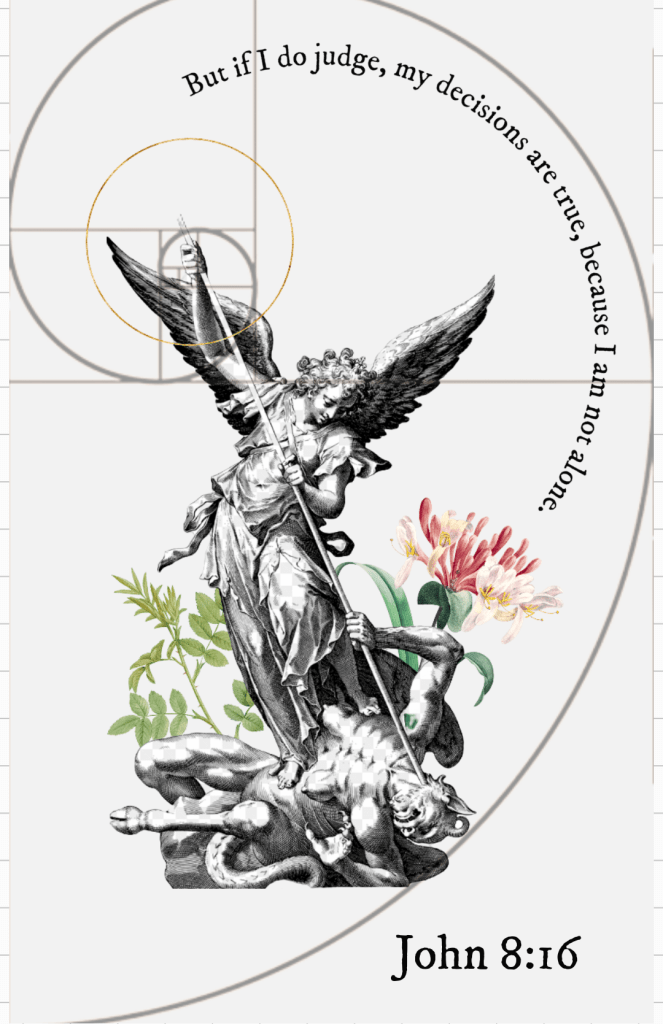

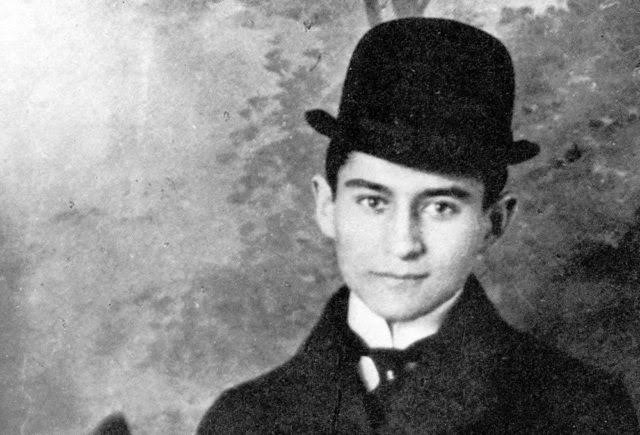

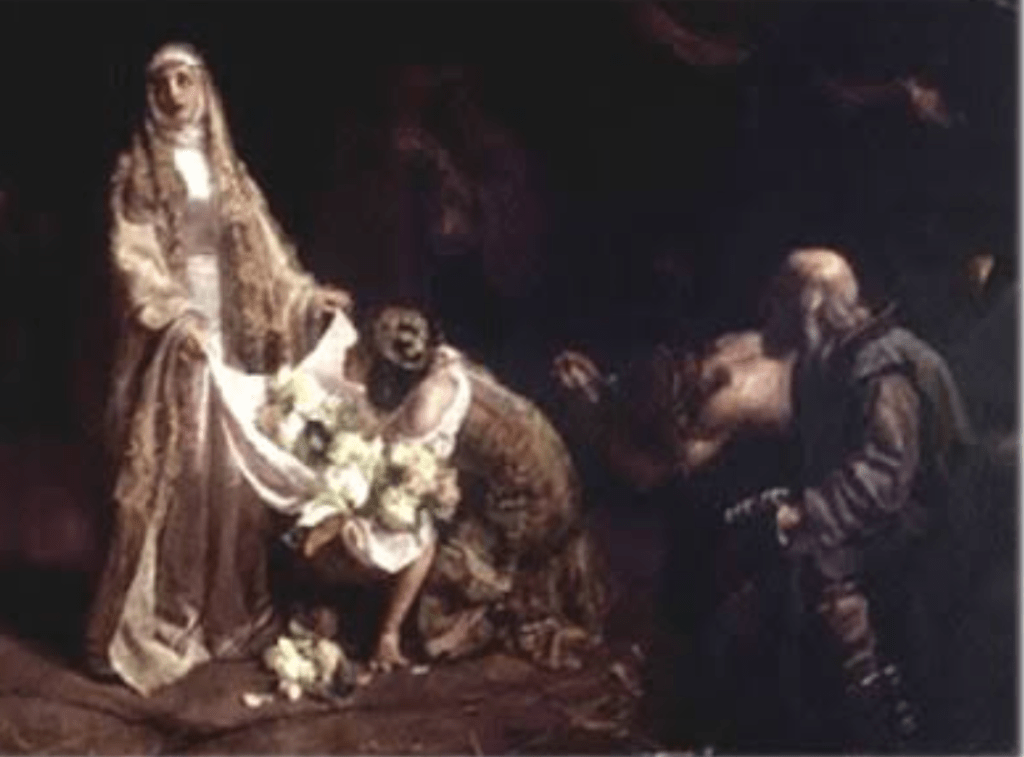



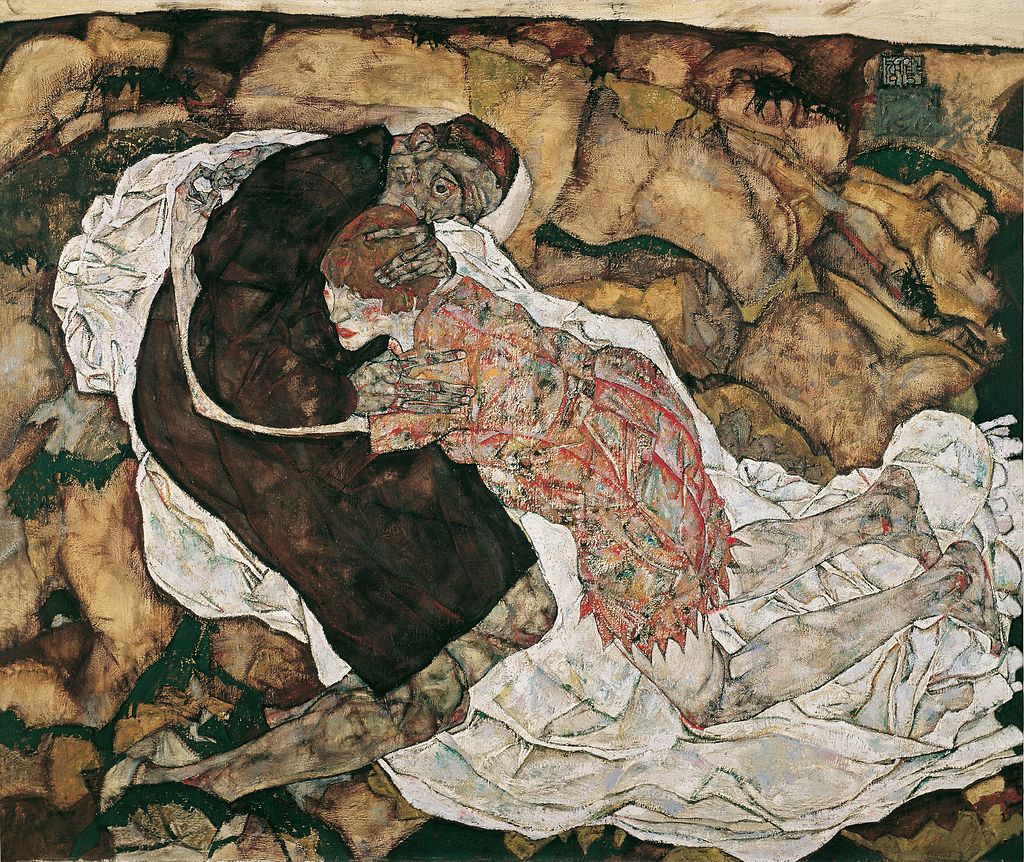
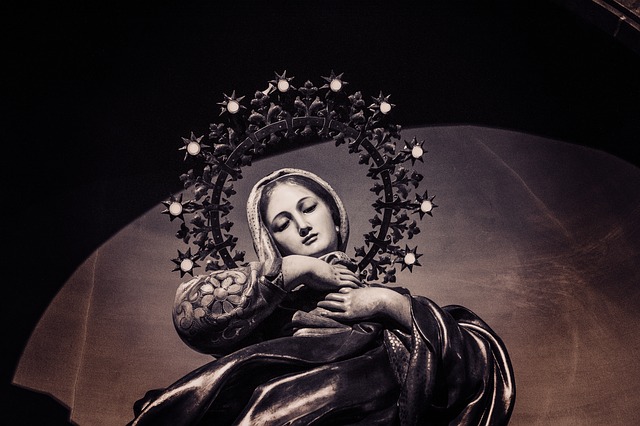
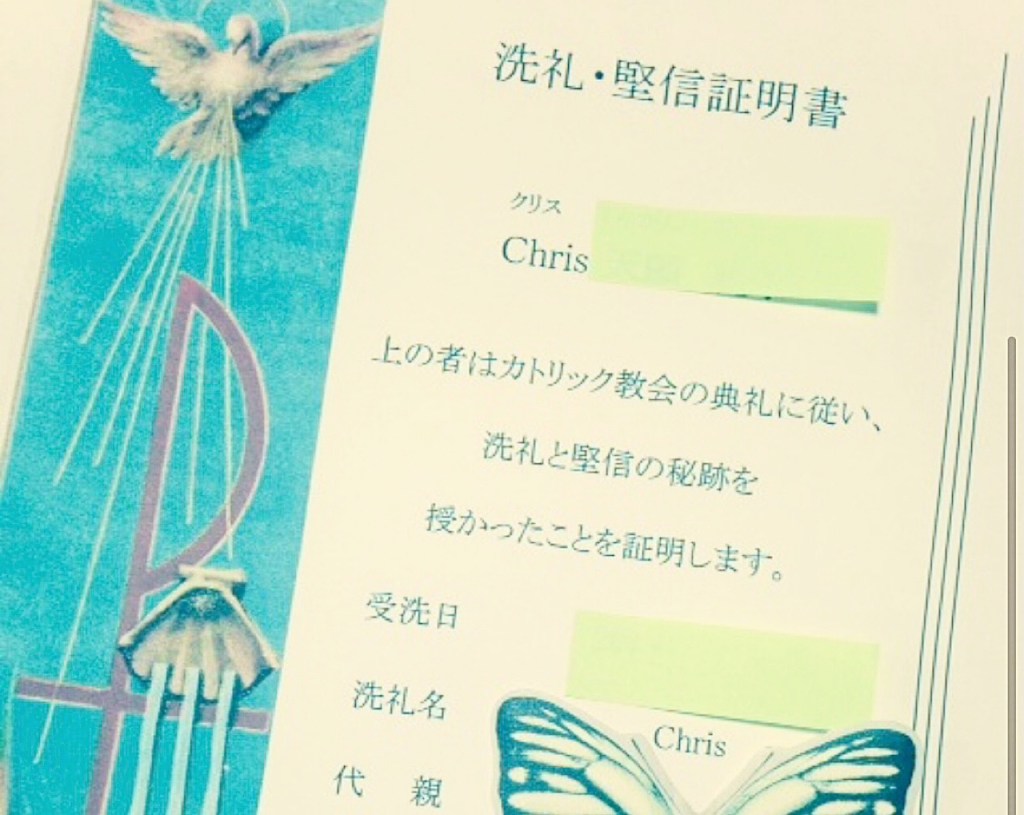
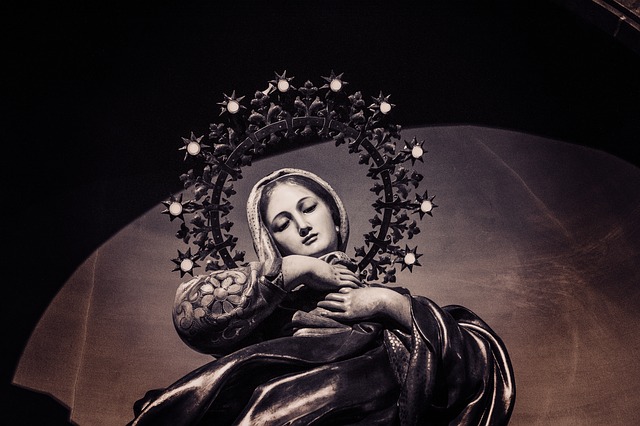
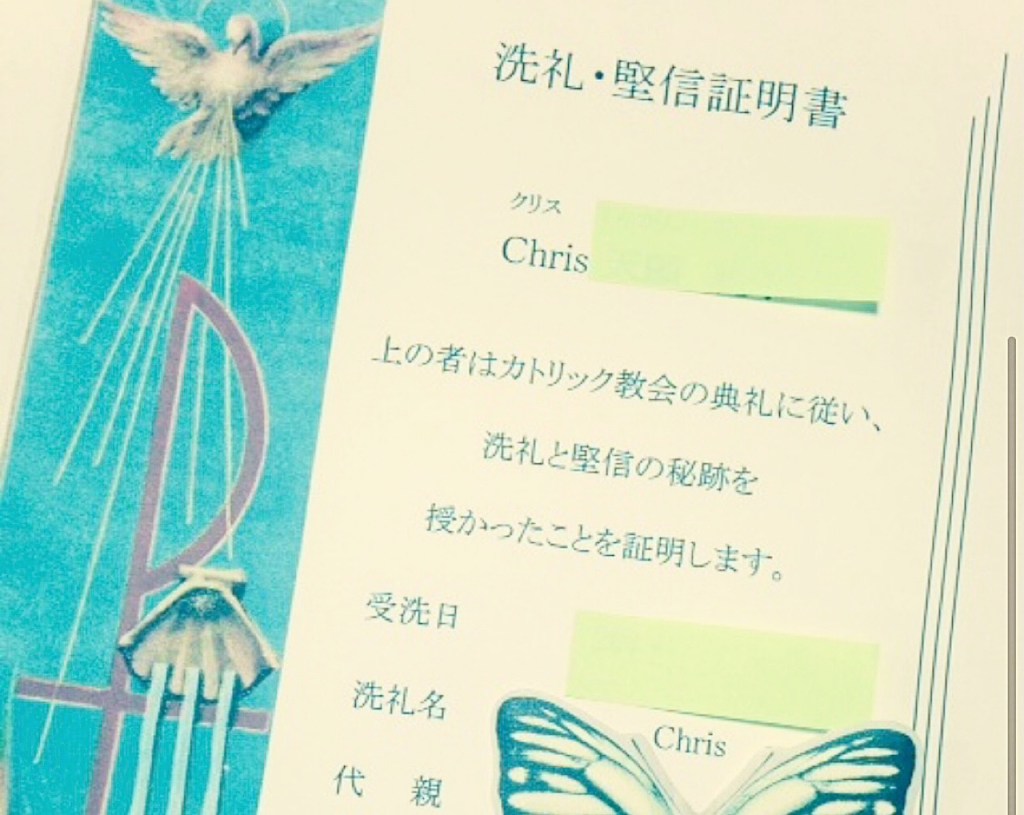
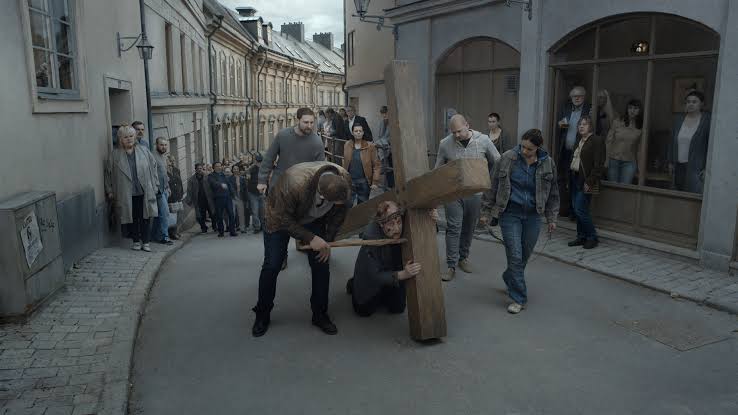

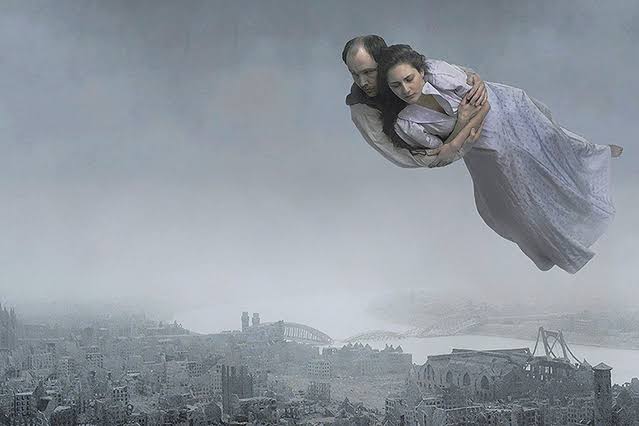


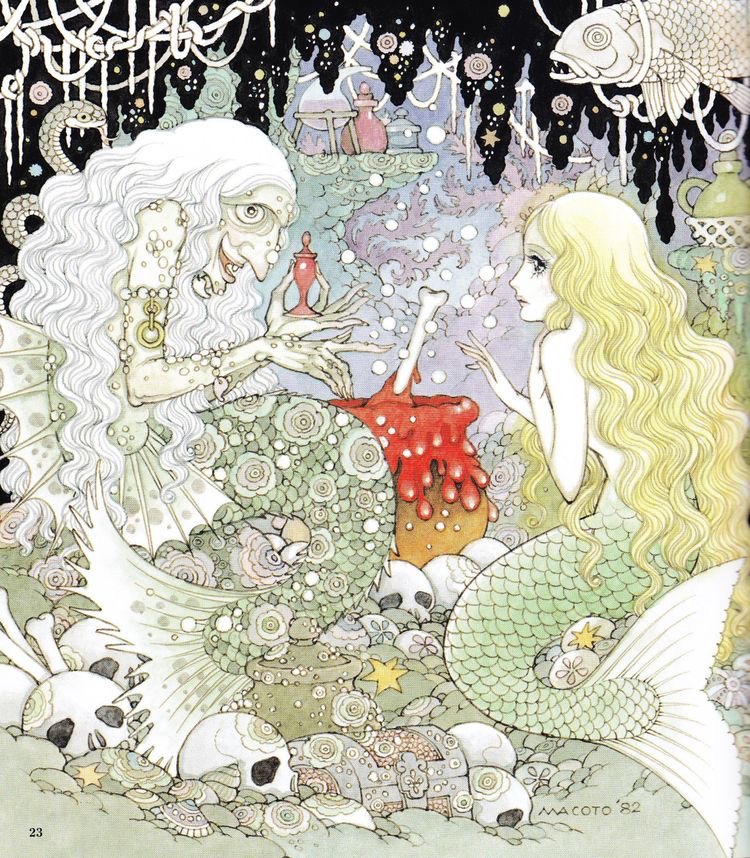




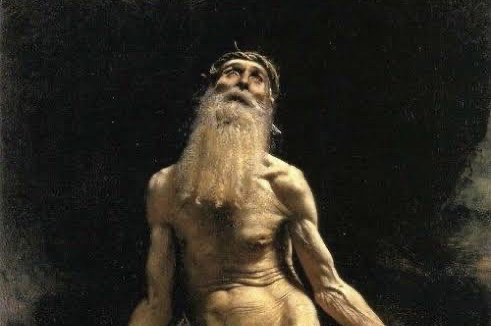

 Chris Kyogetu