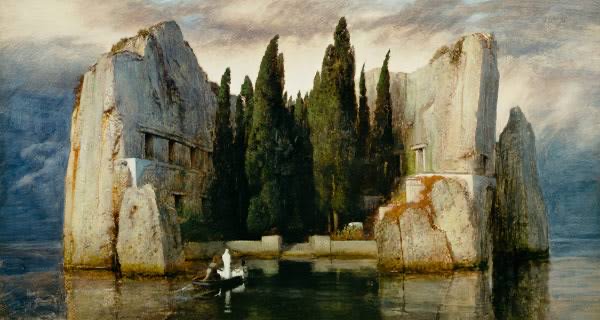
Isle of the Dead English ver

Isle of the Dead Arnold Böcklin

 Death is the end of human life, the “Sein zum Tod”, Heidegger’s way of saying that we are on our way to death. What constitutes death has been debated for centuries, and science has decided that it begins with brain death. In Japan, the first indication of brain death began on 28 February 1999. In Japan, this is limited to cases where a legal determination of brain death has been made for organ donation. A person is not legally brain dead if they are considered clinically brain dead but do not donate their organs. While we are conscious, we can only dream about the reality of death. In “La Mori”, Maeterlinck violates the realm of the occult and leaves us with a reflection on our own near-death experience and death, which cannot be measured by the consciousness of death. The literary world actually deals more with death than with love. The most common combination is probably that of ‘love’ and ‘death’.

The story centres on a love triangle in which the protagonist of Takehiko Fukunaga’s “Isle of the Dead“, an aspiring writer, falls in love with two women, Ayako Aimi and Motoko Moegi, and cannot choose between them.

The story is structured around the atomic bomb, the idea of death and the idealism of the artist. Their story lives fantastically as a literary world, with the fact that life has gone mad. Fukunaga’s world on the ”Isle of the Dead” is like the dissociative symptoms of trauma in our time. Motoko has lived her inner time as a result of the atomic bombing of Hiroshima, Epoché or Abstraction her very existence in a phenomenological way. What she touches is always unfeeling. Ayako has eloped with a lover in the past, but was abandoned and attempted suicide. She lives her inner time trapped by the end of her love. However, in the chapter of the monologue “K”, the man who abandoned her lover, the author really writes about a parallel phenomenon, that is, the fact that he really loved Ayako and left her, and that they could not overlap.

In this story, it is necessary to arrange the structure of the story: the time of Kronos (Saturn), which proceeds linearly with the main character, the chapter of Kronos’ remembrance, the characters told by Kronos, Motoko’s monologue, and a man’s monologue. There, the sorrow of being left behind as people change from post-war to high economic growth is depicted. Kronos is the God of Time, and in Greek mythology, the parent of Zeus. There are two kinds of time, the weight of Kronos and the opportunity of Kairos.

While the living have much to think and say, the dead are silent in the face of the mystery of the soul.

This story is an intersection of objective tense and inner world. And the atomic bomb is represented as “Saturn” (a coterminous setting in the story). Kronos is the Greek word for Saturn. I don’t know if the author intended it, but it also has an astrological meaning (Saturn in transit brings death to many). The narrative, which has told us so much and has been winding down, comes to an end with the suicides of Motoko and Ayako. In the face of death, the living are transformed into thought forms. Despite this, the illusion of the living is still present in the life of the aspiring writer Iiba, who becomes a proxy for the wounds left by the atomic bombing on the Japanese people, and for the two women whose souls are wasting away, no matter how high the economic growth of the Japan. It seems as if the only way for the illusion of the living to have any substance is to write about it. We are living in the face of death. The moment we are alive is constantly disappearing and being renewed. Mortality was previously an illusion, a dream. But to witness the death of a loved one gives such grief that it makes the living illusory. The glory and shadow of death are so strong. Without love, the living – yes, the writer Takehiko Fukunaga’s ‘attempts at love’, Agape and Eros (Christian interpretations of the Greek) – are eclipsed by the cruelty of the world if love is lost.

Well, then,"  "what about me? "What am I then, he mutters to himself. We are alienated from the dead, and he stands there now, futile.  Is it true that life is nothing but a vain effort? Is it all just an empty void? As he reflects on this, the thick emptiness that covers the canopy gradually fades away, just as the clouds that have burned out on the distant horizon fade away (just as in a dream).

Then his consciousness is completely and noiselessly swallowed up by it.

(Takehiko Fukunaga, Isle of the Dead )

He (the protagonist) then ends up discovering through the novel the “actuation of death”, the materialisation of the living through the speaking of the living as thought bodies. Each time this happens, Japan decides to keep alive the “death” that has been left behind. As a sign that even after such misfortunes, people can still live with love knocking against love.

A ray of light shone out of the dark window in which he was standing, like an awakening, drawing a clear glow.

A ray of light shone in.


(Takehiko Fukunaga, Isle of the Dead)

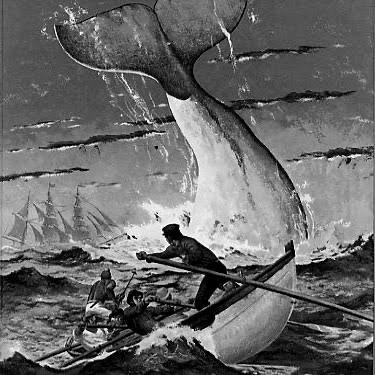
The White Whale and the Old Testament English Ver

“Call me Ishmael”

Herman Melville

“Call me Ishmael”.

The name Ishmael is not common in the Christian world. It seems to be treated as a rather odious name.

It seems to be treated as the name of an Old Testament character, but in Herman Melville’s The White Whale, the narrator, who seems to be the protagonist, says

“Call me Ishmael”, begins with “Let my name be Ishmael”.

 The White Whale seems to be very important for Nobel Prize winners in literature and international writers, many of whom try to analyse this difficult novel. Even if you are not a literary person, the origin of Starbucks is partly based on the name of this white whale character. (XO Starbuck, 1st class)

In the Old Testament, Abraham’s (Abram’s) wife, who was 75 years old and therefore unable to bear children, brought a young slave woman, Hagar, to her husband and impregnated her with a child.

Sarah ran away when Hagar became an obstacle and was treated harshly. However, she met an angel of the Lord at a spring in the wilderness and was told to return to her master. He told her to name her unborn child Ishmael and that he would be her brother’s enemy. (Genesis: Chapter 16)

 An older Sarah, whose moon thing is long gone, is pregnant (Genesis: chapter 18) The child Sarah carried safely through childbirth and was named Isaac (Genesis: chapter 21). Sarah tried again to drive out Hagar and Ishmael, claiming that Ishmael was making fun of her son Isaac. This was told to Abraham and the angel of the Lord told him to do as Sarah said. Abraham gave Hagar a leather water pouch and Hagar and Ishmael were left to wander in the wilderness (desert). When the water runs out, Ishmael cries out before his death and is saved by the angel of the Lord.

As the son of iniquity and the enemy of his brothers, a name that has never made a good impression throughout its long history.

It has spread mainly in the Christian world, with the exception of the Muslim world.

 In White Whale, as in the Old Testament, the protagonist Ishmael (we don’t know if that’s really his name) miraculously survives, and the divine trials and blessings he undergoes are cast in a light that is unimaginable to those who know what the Bible means.

 The white whale (Moby-Dick), called the devil by the sailors, is found off the coast of Japan, a white whale that has been there for a long time but has never shown itself. A terrible battle to the death ensues. Captain Ahab and the entire crew are pulled into the white whale. In an epilogue, we are told that Ishmael miraculously survived, changing from first-person to third-person perspective. In ancient times, whales and fish were thought to be monosexual animals with only one sex. Even Aristotle thought so. According to ancient Babylonian legend, in the first year of the earth’s creation, Oannes, the god of wisdom, appeared on land in the form of a fish and gave knowledge to mankind. The Indian god Vishnu is said to have incarnated as a fish and saved the founders of modern mankind from a flood. A fish sacrament existed in Syrian goddess rituals. This custom derives from the idea that salvation is seen in fish as a symbol of resurrection.

In the Old Testament, in the Book of Jonah, the prophet Jonah is famous for rebelling against God. This is because God tells him to love his enemies.

In the book of Jonah, the prophet is portrayed as a criminal and the pagan sailor as a humble being. Jonah refused to go to Nineveh, which he hated, and fled to the boat of the pagans. The storm was so bad that when the sailors tried to find the cause of it, they thought it was Jonah. Jonah said he could throw himself into the sea under the guise of self-sacrifice. This was because he did not want to go to Nineveh. So the sailors threw Jonah into the sea and apologised to God. There was a big fish waiting for him as a grave that God had made possible. The fish swallowed Jonah and he lived in it, not in the grave. When Jonah apologised to God, God made him spit out of the fish. Jonah went to Nineveh as God had commanded, saying that after 40 days Nineveh would be destroyed. Why did Jonah refuse to go to Nineveh?

Because God loves Nineveh, his enemy. God asked. You are angry, but is this right?” (Jonah 4:4).

God healed Jonah by stretching out a ‘sesame tree’ for shade. Jonah was happy with this for a time, but what did God think the next time he let insects crawl up the tree and kill it? Jonah became angry again. So God said. You have not even bothered to take care of the tree or to work at it, and when it withers you spare it. Why will I not spare this great city of Nineveh? (Jonah 4:4).

The Lord makes man like a fish in the sea (Habakkuk 1:14), and the prophet Habakkuk also laments his dissatisfaction with God, but in the biblical world the fish is deeply connected to God, and the belly of the fish is the abyss, the space between life and death.

The sequence of letters in Ichthys, representing the fish, is.Ichthys by joining the initials Jesus (Iesous) Christos Theou Hyios Soter. The symbolism took on more meaning: ‘Jesus Christ, Son of God, Redeemer.’

The writer Herman Melville was born into a wealthy family, but from the age of 11 his family fell apart and his father died. He was poor and got a job on a whaling ship. This is the model for The White Whale.

The work, which was suppressed by Puritan public opinion and not appreciated at the time because it was named after a child of iniquity, was eventually appreciated.

The story of the white whale itself is simple, but getting into the biology of the whale and the structure of the story is not. This is also reflected in the fact that the whales are only encountered a few times, which is tedious.

Which brings us back to the white whale.

While you take in hand to school others, and to teach them by what name a whale-fish is to be called in our tongue leaving out, through ignorance, the letter H, which almost alone maketh the signification of the word, you deliver that which is not true.” 

-Hackluyt

Melville, Herman. Moby Dick (AmazonClassics Edition) . Amazon Classics. kindle edition.

The importance of the letter ‘H’ is conveyed at the beginning of the book: “While you take it in hand to educate others and try to tell them what the whale (whale-fish) is called, we, in our ignorance, omit the important letter H, and you deliver what is not true”. It is not clear at this point whether this is a map or a code in the life-and-death, or rather divine, destiny of the future. Different races share the vengeance and destiny of a captain. The whale, which becomes a great sea monster, is created by God, as in Genesis 1:21. It may be a novel with everything symbolic, like an order in a bible, but it’s also an everyday life of a working man, challenging himself but engulfed by a stormy sea. There are chapters and chapters of daily life that bore the reader, but the people themselves are always exhausted just trying to survive the day. In the epilogue, the Old Testament’s Job,

“And I only am escaped alone to tell thee.”-Job.

(Melville, Herman. Moby Dick (AmazonClassics Edition) . Amazon Classics. kindle edition)

And I only escaped alone to tell you, quoted. What scene was this?

In the first chapter of the Book of Job, Job’s servant tells him that his territory has suddenly been attacked and he has fled to tell Job. All this in one quotation.

Does it not sum up the state of mind of Ishmael, the hero of Melvilu? Even if we fight to the death in the great sea, what remains is no different from what we fought for on land. What God has given and created strikes you like a demon. That is the daily toil. It is the scholars and drinkers who enjoy the cryptanalysis of the letter “H”, who try to make it more beautiful than it is. No matter how much we try to explain it in biology, in the end it cannot be fully explained.

How vain and foolish, then, thought I, for a timid untravelled man to try to comprehend this wondrous whale, by merely poring over his dead attenuated skeleton, stretched in this peaceful wood.

Melville, Herman. Moby Dick (AmazonClassics Edition).Chapter103

My interpretation is that the meaning of the acronym ‘H’ can be summed up here. We don’t try to understand what seafarers go through.

Of course, we write that it hurts, but unless we have experienced it, we cannot feel the pain. The further away we get from a working environment like a whaling ship, the more the pain becomes a fairy tale. But fiction is not non-fiction, so there is absolutely no need to convey pain. Melville’s experience is now a story.

When a similar situation arises, some scholar or influencer will again tell us to learn from the white whale, as if they know what they’re talking about.

It is still the white whale, swimming without its stupidity and ridiculousness. A fate that is unknowable, it has existed like man since the creation of God, but under the surface, spinning knowledge with words, the whale has sometimes been responsible for its fate. Whales are not like natural disasters.

Man challenges and attacks them. We too as perpetrators, apart from natural disasters, have challenged (or People still challenge them.) such beings with an emotional one, such as revenge.

It would be a symbol of that.

It is true that when we miraculously come back alive from the rough seas of fate, we sometimes rejoice as if we were turning over our palms to God’s grace, but we cannot understand the ‘white whale’ with that emotion. You can’t grasp it, and that’s the point. Grace, coming back alive, it is indeed important to rejoice, but it is also important not to forget the storm.

白鯨と旧約聖書

ハーマン・メルヴィル(白鯨)

“Call me Ishmael”

イシュマエルという名前はキリスト教圏はあまり見かけない。寧ろ忌み嫌われている名前

という扱いのようである。旧約聖書の登場人物の名前ですが、ハーマン・メルヴィルの「白鯨」で主人公らしき語り手が、

“Call me Ishmael”「私の名前をイシュマエルとしよう」と語るところから始まる。

 ノーベル文学賞受賞者や海外の文豪にとって、この白鯨は非常に重要なようで、この難解な小説のアナリーゼに挑む人が多い。文学者でなくても、スターバックスの由来も一部、この白鯨の登場人物の名前を採用している。(副長のスターバック一等)

旧約聖書では、アブラハム(アブラム)の妻が75歳と高齢の事から、子宝に恵まれないだろうと奴隷の若い女性ハガルを夫と引き合わせ、子どもを孕ませた。

サラはハガルが邪魔になり、厳しく当たるので逃げだした。しかし、荒れ野の泉のほとりで主の御使いと出会い、主人のところに戻るように言い渡される。その時にお腹の子の名前をイシュマエルと名づけろと、兄弟の敵となると言い渡される。(創世記:16章)

 月のものがとうに無くなった高齢のサラが身籠った。(創世記18章)サラが身籠った子は出産を無事に終え、イサクと名づけられた(創世記21章)。イシュマエルが自分の子のイサクをからかったとして、サラは再度ハガルとイシュマエルを追い出そうとした。それはアブラハムに伝わり、主の御使いがサラの言う通りしろと命じた。アブラハムはハガルに革の水袋を渡し、ハガルとイシュマエルは荒れ野(砂漠)を彷徨うことになった。水が切れたときに、イシュマエルは死を前にして泣き叫び、主の御使いにより救済される。

不義の子として、そして兄弟の敵として、良い印象の無い名前として長い歴史の中、

イスラム教圏を除いて主にキリスト教圏で広まっていった。

 白鯨では、旧約と同じように主人公イシュマエル(厳密に言えば本当にその名かは分からない)は奇跡的な生還を果たすところから、彼が受けた神の試練と加護は聖書の意味を知る人間にとっては想像出来ない光に包まれている。

 船員達が悪魔と称した白鯨(Moby-Dick)は、ずっと偏在しながらも姿を現さなかった白鯨が日本の沖で見つかる。そこで恐ろしい死闘が行われた。エイハブ船長を始め、乗組員は全員白鯨に引きずり込まれてしまう。そのあとに後書きとして、一人称から三人称視点へと変化しながら、イシュマエルは奇跡的に生還したと伝えられる。鯨、魚の話といえ古代において一つの性しかもたない単性動物だと考えられていた。アリストテレスでさえそうだった。古代バビロニアの伝説によれば知恵の神オアンネスは天地創造後の大地年目に魚の姿で陸地に現れ、人間に知識を授けたとされている。インド神のヴィシュヌは一匹の魚に化身し、今日の人類始祖を洪水から救い出したとされている。シリアの女神の祭祀には魚の聖餐が存在した。この風習は救済は魚が復活の象徴を見る考え方に由来している。

旧約聖書で有名なのは「ヨナ書」では預言者ヨナは神に反抗的だった。神が敵を愛するように言うからだ。

ヨナ書では預言者を犯行者とし、異教徒の水夫は謙虚な存在として登場している。ヨナは嫌いなニネベに行くことを拒み異教徒たちの船に逃げ込んだ。嵐が酷かったのでその原因を探ると、ヨナが原因だと水夫達は思った。ヨナは自己犠牲を装って自分を海に投げ込めばいいと言った。ニベネにそれほど行きたくなかったからである。そこで、水夫たちは神に謝罪しながらも、ヨナを海に投げ込んだ。そこには神が容易した墓場として大きな魚が待っていた。魚に飲み込まれたヨナは墓場ではなく、その中で生きた。ヨナが神に謝罪をすると神は魚から彼を吐き出させた。ヨナは神の命令通りにニネベに渡り、40日後にニネベが滅びると言った。ヨナが何故ニネベ行きを拒んだのか、それは

神が敵であるニネベを愛するからだった。神は尋ねた。「お前は怒るが、それは正しいことか」(ヨナ書4:4)

神は「とうごまの木」を伸ばしてヨナに木陰を作って癒した。ヨナは一時期はそれに満足したが、神が何を思ったのか、次は木に虫を這いあがらせて枯らしてしまった。ヨナはまたそれに怒るようになった。そこで神は言ったのである。「お前は自分で育てたり労苦することもなかったその木でさえ枯れたら惜しんでいる。それならどうして私が、この大いなるニネベを惜しまないだろうか」(ヨナ書4:4)

主は人を海の魚のようにする(ハバクク1:14)とハバククという預言者も神に不満を嘆いているが、聖書世界では魚を神と繋がり深く、魚の腹は深淵とし、生と死の狭間である。魚を表すIchthysの文字の配列は、

Jesus(Iesous)Christos Theou Hyios Soter の頭文字を繋げると Ichthysとなる。「イエス・キリスト、神の子、救済者」と象徴はより一層意味を強めた。

作家、ハーマンメルヴィルは裕福な家に生まれたが、11歳から家族が転落し父親が亡くなってしまう。彼は貧しいが故に捕鯨船の仕事につく。それが白鯨のモデルとなっている。

不義の子を名前にしたと言う事で清教徒的世論に弾圧されて当時は評価されなかった作品は、やがて評価をされる。

白鯨の話自体はシンプルですが、鯨の生体に入ったりストーリーの構成が一筋縄ではいかない。これは鯨に出会える回数は数回でありその退屈さも表してている。

白鯨に話を戻すが、

While you take in hand to school others, and to teach them by what name a whale-fish is to be called in our tongue leaving out, through ignorance, the letter H, which almost alone maketh the signification of the word, you deliver that which is not true.” 

—Hackluyt

Melville, Herman. Moby Dick (AmazonClassics Edition) . Amazon Classics. Kindle 版.

「あなたが他人を教育するために手に取り、鯨( Whale-fish )がどのような名前で呼ばれるかを教えようとしている間、私たちは、無知が故に、重要なHの文字を省いて、あなたは真実でないものを伝えるのです」と冒頭にHの文字の重要性を伝えている。これはこれからの生死を賭けた、というより神に運命を預ける際の地図になるのか、暗号になるのかこの時点では分からない。様々な人種が一人の船長の復讐劇と運命を共にする。鯨、大きな海の怪物となるものは、創世記の1章21節にあるように神が創ったものである。出発はもしかしたら生誕祭のような日照条件下、全てが聖書世界の秩序のように象徴を散りばめた小説ではあるが、あとは自ら挑んだが荒波に飲まれていく労働者の日常である。そこには読者を退屈させるような毎日が何章にも渡って綴られるが、本人たちは常にその日生き残ることだけに力を使い果たしている。エピローグでは、旧約のヨブの

“And I only am escaped alone to tell thee.” —Job

Melville, Herman. Moby Dick (AmazonClassics Edition) . Amazon Classics. Kindle 版.

そして私だけがあなたに伝えるために一人で逃げている、を引用している。これはどんなシーンだったのか、

ヨブ記の1章にでヨブの召使が、領地を急に襲われてヨブに伝えるために逃げてきたと話している。この引用で全て

メルヴィルー主人公イシュマエルの心境が詰まっているのではないのだろうか。大海で死闘を繰り返そうとも、残るものは大地で争ったのと変わらない。神が与えたもの、創ったものは悪魔のように自分を襲う。それが日々の労苦である。これ以上の美化をしようとするのは、Hの文字の暗号解析を楽しむ学者や呑気な読者である。生物学上で幾ら説明しようが、結局は説明しつくせない。

How vain and foolish, then, thought I, for timid untravelled man to try to comprehend aright this wondrous whale, by merely poring over his dead attenuated skeleton, stretched in this peaceful wood.

Melville, Herman. Moby Dick (AmazonClassics Edition) .Chapter103

臆病な人間が、この平和な森の中にある死んだ鯨の骨格を観察することで、この奇妙な鯨を正しく理解しようとするのは、なんと無駄で愚かなことだろうと私は思った

私の解釈は「H」の頭文字の意味はここに尽きると思っている。私達は船員たちの労苦等全く理解しようとしない。

当たり前だが、文章では「痛い」と書いていても経験していない限り痛みは伝わらないのである。私達が捕鯨船に乗るような労働環境から離れれば離れるほど、その痛みは御伽噺になる。しかし小説はノンフィクションではないので、痛みを絶対に伝える必要性はない。メルヴィルの体験が、物語となってしまった今現在、

似ているような状況が訪れれば、また誰か学者やインフルエンサーが分かったように「白鯨から学べ」と言い出す。

その愚鈍で滑稽さと無縁で泳いでいるのはやはり大きな白鯨ではないか。知る由もない運命、神の創世記から人間と同じように存在しているが、言葉で知識を紡いでいる水面下で鯨は運命を時々担っていた。鯨は天災とはまた違う。

人間が挑んで襲い掛かる。私達もまた天災とは別に加害者として、復讐心というような感情的なもので、そのような存在に挑んでしまっているのだ。

その象徴であるだろうと、私は思う。

確かに運命の荒波から奇跡的に生還すると、つい神の恩寵だと掌返すように喜ぶことがあるが、その感情では「白鯨」は分からない。掴めないのだから、それが重要な事なのだ。恵み、生還、それは確かに喜ぶことは大切だが、嵐を忘れてはならない事もある。

Evangelist English ver

We are hard pressed on every side, but not crushed; perplexed, but not in despair; 9 persecuted, but not abandoned; struck down, but not destroyed.

2 Corinthians 4:8,9

In chapter 4 Paul refers to himself as “We have this treasure in earthen vessels… (v.7). I am weak, yet the Lord works mightily in my weakness to reveal his glory to me. It struck me that the Bible Missionary is a man who carries his treasure in an earthen vessel. It is such a simple thing to be a Missionary, to take the gifts and abilities of God and put them in something as simple as a clay vessel. In England we were Anglican, so we had Evangelists. I was in the psychology department at Oxford University, but I was drawn to the theology department. By the time I was there, there were Muslims and many future clergymen. The faith itself seemed to be fading in England, but I found the lectures by the Bible preachers in Christ Church interesting. Most of the Bible expositors were talking about other worlds, but this one had a way of intertwining the unseen with the seen, speaking to dreams and thoughts that we had not yet verbalised or imagined. I was not then as sure as I am now, but this kind of evangelism made me want to be a writer like *George MacDonald.

  I returned home, but the image of the writer I wanted to be in Japan was a difficult one. Then in 2018, for various reasons, I gave up the idea of becoming a preacher. I became more aware of fiction and writing rather than faith, and for a while I did an apprenticeship as a journalist, but I was also dealing with the medical and resentful side of things, and the threats were certainly coming, as they say. Most troubling of all were the death threats to my cat, Adam, and the persistent unauthorised access to my information on twitter and leaking of information through logins.

 I retired from all secular writing in order to be able to live with my cat. In 2020, with the support of my church and Bishop Sakai, I will be able to return as an Missionary. Nowadays, logic is more and more used as a confrontation or an attack, but it can also be used as a reconciliation. What is more vicious is that people who mistake it for logic and send death threats to others can live without any punishment. I wondered if I had to fight this cowardly dustbunny, but then I realised that I didn’t have to. A trash is a trash and not worthy of being a man. Paul had many allies, but he had just as many attackers. Those who are baptized suffer as much as those who are doing the right thing. There is a time, Kairos and Kronos, that surrounds human beings. To struggle in vain for approval is to live in Kronos and waste time. Living in kairos is to improve the self. During this time we are not allowed to throw mud at others. You will find that the only way to use sorrow and misfortune is to turn them into good deeds. Otherwise, you will just grow old in vain and your confidence will be as dust as the perpetrator. It will fade away with the passage of time. It is important, especially if you want to be a preacher, to keep your precious jewels in a humble earthenware vessel and ponder them until the time is right. There will probably be hard days ahead, but as a Baptised person I am strong and will not give in. There is no need to constantly polish or decorate the earthenware vessels in which we store our treasures. That’s how Christians overcome trials, and that’s how we are evangelists.

reference

So we fix our eyes not on what is seen, but on what is unseen, since what is seen is temporary, but what is unseen is eternal.( 2 Corinthians 4:18)

 That is why, for Christ’s sake, I delight in weaknesses, in insults, in hardships, in persecutions, in difficulties. For when I am weak, then I am strong.(2 Corinthians 12:10)

There is no profession of evangelist in Catholicism at the moment, but writers can still take on this role. In today’s Japan, it is difficult, yet perhaps it is precisely because it is difficult that life has meaning.

George MacDonald, Scottish writer and clergyman.

Tolkien, the Bible preacher, Lewis Carroll and others have been influenced by him. His work called Lilith, influenced by the Bible, is very beautiful.

Evangelist

「わたしたちは、四方から苦しめられても行き詰らず、途方に暮れても失望せず、虐げられても見捨てられず、打倒されても滅ぼされない」

(第二コリント4・8~9)

 パウロは4章において自分自身を「わたしたちは、この宝を土の器の中に持っている。」(7節)とした。私は弱い存在だけれども、主が、その弱さの中に力強く働いてくださり、そして私の栄光を現わしてくださる、というものです。宝を土の器の中に持ち歩くとは、聖書伝道師そのものだと私は思いました。持っている神からの賜物、能力を敢えて土器のような地味のものに入れること、それほど伝道師とは地味な事なのです。イギリスは聖公会でしたので、伝道師がいました。私はオックスフォード大学で心理学部に在籍していましたが、神学部に憧れるようになりました。もう私の在籍したころではイスラム教徒や色んな将来の聖職者の卵達が来ていました。信仰自体はイギリスも薄れている様子でしたが、Christ Church内の聖書伝道師の講義は興味深いものがありました。聖書の解説をする人の大半は異世界を語るような話が多いのですが、話術を持っているその者は目に見えないものと、見えるものを絡ませて、私達が言語化、イメージ化していない夢想や思惑に語り掛けてくるのでした。私はこの頃はまだ今ほどの確信はありませんでしたが、このように伝道師をしながら、*ジョージマクドナルドのような作家になりたいと思わせました。

日本には両親を残していたので私は帰国しましたが、日本での私のなりたい作家像は困難なものでした。そして2018年に諸事情で伝道師になることを断念しました。信仰というより、小説や執筆を意識するようになり一時期はジャーナリストの見習いもやりましたが、医療系や恨まれる部分も扱っていたので、脅迫も噂通りに確かに来るようになりました。何よりも困ったのが、飼い猫のアダムへの殺害予告、twitterでの執拗な不正アクセス、ログインによる情報漏洩でした。(twitterは退会、最近、evernoteも不正ログインでデーターを盗まれて削除されました)

 飼い猫との生活を考えて、世俗関連の執筆は全部引退しました。全く光明が見えなかった一年間、アダムが来てから更に一年間、投資家としては戻れても、作家として戻ってくることがありませんでした。2020年に再度、所属教会と酒井司教様の支援により、伝道師としての道が開けることになりました。昨今は論理を対立や攻撃として使うことが増えてしまいましたが、和解という使い方もあります。もっと悪質なのが、論理と勘違いして人に殺害予告等を平気で送ってくる人間が何の罰も受けずに生きていられることです。私はこの卑怯な塵芥と戦わなければならいのだろうか、と我に返ると戦う必要がないと思いました。塵芥は塵、人たるに値しないのです。パウロも味方が沢山いましたが、攻撃する人も同じぐらいいました。洗礼を受けている者は、正しい事をしている人ほど苦しむのです。人間を取り巻くのに、カイロスとクロノスという時間が存在します。承認欲求に負けて無駄な争いをすることは、クロノスに生きて無駄な時間を過ごすことになります。カイロスに生きるということは、自己を磨くことであります。この時間は他人に泥を投げることは許されません。悲しみや不幸は善行に変えるしか、使い道がないことを知るでしょう。そうでなければ、ただ無駄に老いるだけで、自信も加害者と同じく塵芥そのものです。時が過ぎれば一緒に風化します。特に伝道師を目指すのであれば、宝石のような大切なものは、地味な土器に入れて時がくるまで深く考察することが大切なのです。恐らく辛い日は続くでしょう、それでも私は洗礼を受けた者として強いので屈しないことです。宝をしまう土器は常に磨く必要も飾る必要もないのです。それがクリスチャンの試練の乗り越え方であり、伝道師なのだと思います。

(参照・補足)

私たちは、見えるものにではなく、見えないものにこそ目を留めます。見えるものは一時的であり、見えないものはいつまでも続くからです。

(第二コリント4・18)

弱いときこそ強い(第二コリント12章7節~10節

*カトリックは現時点では伝道師という職業はありませんが、やはり作家がその役目を背負うことがあります。現在の日本では困難ですが、困難だからこそ生きる意味があるのかもしれません。

*ジョージマクドナルド スコットランドの作家であり、聖職者。

聖書伝道師のトールキンや、ルイスキャロル等が影響を受けている。聖書から影響を受けたリリスという作品はとても美しい。

WordPress.com でブログを始める.

ページ先頭へ ↑