シモーヌ・ヴェイユ 「労働者への美と詩」
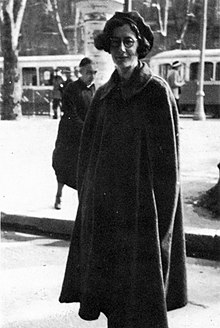
①「見えない存在」とされている人達に必要なものは美と詩である。

②労働者に必要なのはパンよりも美と詩である。

③詩人は実在的なものに注意力をそそいで美を生みだす。愛の行為も同じである。

④進歩だとか、「時代を貫いて声明を馳せる天才」だという説を唱えだすのは、この世に
おいてももっとも貴重なものが偶然に委ねられていると想像するのに堪えられないからである。

⑤どうしようもなく神を欠く、その意味においてはこの世界は神そのものである。

シモーヌ・ヴェイユ
シモーヌ・ヴェイユは工場に入る一年前の1932-1933年にファシズムの基盤を理解するためにドイツへ赴いた。ナチスはプチブルジョワだけではなく、多くの失業者等の弱者を味方につけていると報告している。二か月余りの滞在だったが、彼女はペラン神父に、「ナチスの歌を皆が歌うのなら、私も歌うようになる、それは私の弱点ですが、そのようにして私が存在する」と自身の集団性に過度に影響されることを隠さずに手紙を書いた。彼女は可能な限り、ドイツの亡命者を救い、労働と失業、そして集団性についての自問自答を高めていた。1934年末、教職を辞めたシモーヌ・ヴェイユはプレス工として工場に従事し、「現実世界」に向き合うことを決意する。彼女は工場に入る前に「傑作」「遺作」に拘っていた。けれども、その構想は現実世界では骨が折れることばかりだった。「交換可能な部品は労働者ではないかと思いたくなる。部品のほうが市民権がある」と胸に番号が入った身分証を見せて門を通った等、彼女の記録が残されているが、
シモーヌ・ヴェイユは「労働者への美と詩」という核を書き残している。
肝心なこの核が長らく私は分からないままだった。彼女は「工場日記」(労働と人生の省察)の冒頭でホロメスの詩を引用した。彼女は古典文学の考察も多いが、同時に労働者には詩が無意味なものとも知っていた。過酷な労働者の心が疲弊することを、自分の身をもって体感し、このように聖書を通して哲学的になろうとすること自体、自分のやっていることの無意味さに悩んでいたのである。それは彼女自身が工場生活に嫌気が差してセーヌ河に飛び込みそうになったという記録にも表れている。
彼女の書き残したものは正式に書籍化するように用意されていないことから、断章が多いことが特徴である。それは旧約聖書のコレヘトの言葉のように矛盾を意味する文同士が包括的に相互で意味を成す構造、インクルージオ構造のようだ。例えば、彼女は芸術が労働において何の意味もないことを知っていた。それと同時に、彼女は時計と芸術家について語っている。作られた時計は愛がなくても動くが、創られた芸術は愛がなければ動かない、としていた。そんな彼女は何故、「労働者に必要なのはパンよりも美と詩である」と定義したのか。これを定義として論理学として外延を書きだすにしても、当時の労働まで掘り下げて書き出していくことは困難である。
「労働」について、ある解説では宮崎駿の「千と千尋の神隠し」で説明していたが、それを例えにしてしまうのなら、労働の苦しみと重さが伝わらない。確かにあの世界観で名前を失った主人公や、記憶を失った竜神が存在し、従順に従う異世界の者達が労働の構造を表しているとしても、寓意や構造理解では全く意味がない。実際に労働によって疲弊し、労働によって死を意識しないとヴェイユの哲学には追い付かない。アニメの例え話は、この講義を受ける対象の学生にとっては、労働の苦しみは理解出来ないので論理立てるのにも外延が乏しくなる。その結果、学生は労働について「物の見え方」で終わろうとし、大半が「物の見方」次第で労働者としての幸福は詩と美だと思い込む。こうやって所詮は机上の空論で全く別のものになる。ヴェイユを知るには辛い労働とは詩や美、もしくは信仰までもが全く無意味になること、その現実を心に叩きつけ、自分が無駄なことをしていると苦しんでみなければならない。現代において、まだ「心の浄化」によって、これらは意味を成すと思われている。それが、このアニメの例えの解説だろう。外界と異世界、それらを哲学用語で駆使し、見え方を変えれば労働に意味があると思い込むこと、それで学生は満足する。現代の日本において大学に行けるほどの生活が手に入っているのなら、ヴェイユの語るような労働とは大半が無縁である。
シモーヌ・ヴェイユを理解する壁として、一つが労働の苦しみ、次に限界との苦しみ、三つ目に信仰による苦しみが重要になってくる。確かに、これら三つを知らなくてもヴェイユの詩情で何かを感じ取り、後から論理で追うこともある。私もその一人だったが、これこそ彼女の言う「偶然」の重なりなのかもしれない。だからこそ、ヴェイユの亡くなった年齢を超える頃には、彼女が客死に向かったように、これらの哲学は死へしか向かっていないとすら思えたので私は一時は彼女から離れた。
****
「それは美しい」と判断しても、詩や美というのは感情や心を要するもので、それを外延立てて論理性で訴えることは難しい。それは苦痛、不幸も同じである。不幸は人生において大きな謎である。*この不幸について、世界の中心にいるという想像を放棄し、本当の中心は世界の外にあると認めること、私達は「点」である、という考えを人は受け入れられない。デカルトの「我思う、故に我在り」というのは日常において離れてはならない。(サルトルが反論したが、それでもまだ不完全である)それほど我と意識は切り離してはならない。彼女と交流があったペラン神父のような聖職者は、このような不幸について意味を持たせる。それが彼等の仕事だからであるが、イエスは本当に不幸を感じなかったのか、その問いに留意することは少ない。イエスは神の子であるが、人として旧約聖書を学んだ。神の子は処刑前に「わが神、わが神、なぜわたしをお見捨てになったのですか」と詩編22章を叫んだ。イエスが神であるのなら本来は苦しむことはない。イエスは人間として苦しんだ。イエスの苦しみが美談になるように、人にとって苦しみや不幸は謎めいている。現代においても、不幸を解決できるような策や言葉であふれているが、人々の不幸は日々膨れ上がっている。
ヴェイユを哲学者ではないと思う人は現代でも多いが、神学や信仰を理解している者にとって彼女は哲学的であった。それは何故か、「神は存在しないと考えながら祈ること」信仰を持つ人が必ず消せないもの、停止させないものを彼女は現象学的にエポケーさせているからである。彼女はカイエで宗教家に媚びなかった。宗教家は労働の苦しみをイエスが背負っているように諭すが、ヴェイユはそうではなかった。宗教的理解に哲学的問答を続けることによって、人の心は極限に貧しくなる。宗教の視点では「哲学より漁師になれ」という言葉があるぐらいだ。貧しくなる条件として知恵(箴言28:11)がある。聖人が奇跡を起こすことが条件であるのなら、哲学者は奇跡を期待しながらも、奇跡を自ら排斥する。それこそ知の純化である。その純化こそ、自分の本質に気づけるのかもしれない。ただし、その本質は世の中を渡れるものかどうかわからない。現に彼女は治療を拒んで死んでしまった。現代倫理にそれに関して触れることは出来ないが、ヴェイユが焦点を当てた「労働者」に関しての考察は、隣人愛だと言える。彼女は貧しい労働者を揶揄することは無かった。彼女はイエスのように貧しい人達と同じ立場にいた。1937年、ポール・ヴァレリーにも書評を書いてもらえるほどの詩人にもなったシモーヌ・ヴェイユは芸術に関しても書き残している。イエスを愛していた彼女にとって、イエスが陰府にくだった事を意識しなかったことは無いだろう。「重力と恩寵」にあるように、彼女は下っていった。
シモーヌ・ヴェイユは悲劇こそ創作で表さないと人は受け入れないことをフェードル・アンドロマック(Andromaque)を例に出しているが、彼女は労働に関しては記録として書き残していた。彼女が34歳という若さで死んでいなければ、この事実は創作になったのか分からないが、その「偶然」に残された労働による記録は、現代でも過労死や自殺があるように経験してみないと分からないものになっている。彼女の記録が如何に残酷だったのか、それに気づける学生や教授は少ない。私もその一人だった。漠然とでしか労苦を意識できない。すぐに自分の信仰や、経験に基づいて弾いてしまう。それを「罪」というほどではないが、労苦を知らない間は、それさえも美しい詩のように見える。病人にはナイチンゲールが存在したが、労働者については、あらゆる芸術家が美談にしてしまう。それは、本を読めるような人間を育てているだけであるが、そんな人間に限って人の労苦の代弁者になろうとする。彼女は芸術家の偽善、宗教家の偽善、そこに一石を投じたのだろう。
それでも、彼女は弱者への奇跡を待っていた。求道者として聖書を読み込んでは、哲学的考察や思想家のように神秘を整理しながら書き綴った。それでも私は彼女は何のためにやり続けたのだろうか、と思うことが何度もあった。彼女も晩年に病でまた貧しくなった。絶望もし、彼女は賜物を理解していた。運命を疎んで、常に戦っていた。書き綴って何になるのか、彼女は奇跡を待ったのかもしれない。例えば彼女のプロメテウスや童話への解釈に現れていたが、彼女はデウスエクスマキナ――機械仕掛けの神に手を出さなかった。それはアリストテレスのように否定していたのとは違うのだと思う。彼女は苦悩に手を差し伸べる神や運命を選んでいた。労働者に奇跡が起きるように、そして芸術家が機械仕掛けの神を呼び寄せるように絶望を知らせていた。絶望とは、全ての望みを剥がすことである。絶望は訪れるものではない。自分の不幸と同じものを他人は感じないこともある。絶望とは、自ら絶望に落ちるために期待を剥がすことである。例えば、聖カシルダが当時異端であったキリスト教徒のために、食料を運んでいたが家臣と王に呼び止められて、隠している食料を見せろと言われた。食料が見つかれば処罰が待っていたが、神は食料を薔薇の花に変えた。シモーヌ・ヴェイユの待っていた労働者への奇跡とは、このようなものだと私は思う。彼女は哲学のように神を欠いたが、彼女は世界を神だとした。
カシルダの剥がされたマントのように、全ての望みや期待を剥いだ後の祈りは確かに純粋だった。
イエスは最も父に近い存在だったために不幸が訪れた。神秘に近づくということは最も不幸だと、理解者は知っている。それが、ただの無機質な不幸か、神秘による不幸なのか、私が求道者だった頃に、当時の不幸は神秘によるものだと信じた。希望ではなく、私の信仰は不幸から始まった。魂は本当に平等なのか、信じたい気持ちと疑いが私には在った。誰にも言えないこと、浮上が困難な思惑は私を掻き立てていた。弱い人間が神秘を信じるのだと、世の反論は絶えない。
光は瞬き一つで目に入る。それでも、心に照らさない日が続くことがある。言葉で書き綴る人間は知恵を超えた光を表すために、通じない言葉と闘うことから始まる。音楽家が音から離れないように、言葉で表すものは言葉から離れられない。理解できない音楽があるように、理解されない言葉は心の中で理解されることが必要になる。
心にどのように呼びかけるのか、常にそれは闘いでもある。
そのような絶望から本当の奇跡を書き表すこと、不幸の謎に光が差すように、
私達がそこまで到達できるように彼女は「先生」として残せたのだと思う。
シモーヌ・ヴェイユ。彼女は哲学者なのか、思想家なのか、求道者なのか、定まらない評価によって根無し草のように扱われる。私達は忘れてしまうのだ、彼女は「先生」だったということを。
私は彼女の実在として「先生」であると見つけたのだ。
それは、詩人として。
イエスが歩いた福音書には名もなき貧しい人が大勢いる。彼女が体験した労働は、この名付けられない人達の体現だ。彼女が拘った教会の外の苦しみにはイエスが立っている。
イエスもまた労働者だった。
概要(解説)↓
概要(解説)
「労働者に必要なのはパンよりも美と詩である」とは教職を辞めて工場に入った
彼女にとっての核だった。しかし、現代においてシモーヌ・ヴェイユを知るような人は大体が過酷な労働者になることはあまりない。(大学生やアニメの例え)彼女の神聖や美しい言葉に惹かれはするもの、この労働の箇所だけは私も実感までは無かった。最近、その機会があり、漸くヴェイユの苦悩に近い感想を抱くようになった。彼女は思想家のように思われるが、キリスト教徒視点としては彼女は「哲学者」だった。それは神や期待、希望を停止させたからである。それでも、彼女は人間を愛して火を盗んだ神の子、プロメテウスの解説も書いていた。それは世界が神であるという彼女の期待だと思った。「労働者に必要なのはパンよりも美と詩である」という定義には、労働者を「見えない存在」とした。それと対であるかのように、断章で芸術家に「実存」を見つめることともあり、私はこの二つは一緒になって考えるのだと思った。労働者にとって詩や美が如何に無意味なのか、その不毛な土地を見つめる詩人になること、それが彼女の挑んだ不幸の神秘だと思った。前回書いたマタイの13章は、神の御言葉は土地を選べないという伝道においての核であるが、私はそれと重ねることにした。
(引用1、2)
聖カシルダの例えは私が足したものであるが、マントという身を守るもの(希望)が剥がれたら、彼女には処刑が待っていた。それなのに神が食料を薔薇に変えてくれた。ヴェイユの言葉(引用4)のように哲学的、そして求道者として神を欠きながら、世界は神そのものとはこのようなことだと思った。
(引用5)
最後にヴェイユは詩人は実在するものを見つめることと書いた。(引用3番目)
私は詩人として彼女は「先生」だったと漸く気づいたのである。
________
参照
「哲学者のようにではなく、漁師のように」ニカイア公会議
*点について「神を待ち望む」(世界の秩序への愛)より参照
*重力と恩寵
*カイエ
*暗い時代の三人の女性(シルヴィ・クルティーヌ=ドゥナミ
*ヴェイユの言葉
*前キリスト教的直観
*ヴェイユ詩集(ヴァレリーの書評つき)
Casilda of Toledo – English

Cuando Casilda desplegó el manto, cayeronmuchas rosas.

When Casilda unfolded her cloak, many roses dropped from it.
‘Toledo’, located in central Spain, was a crossroads of Judaism, Islam and Christianity. It was a city at the crossroads of Judaism, Islam and Christianity. Famous as the favorite of the painter El Greco, it became the capital of the Visigoths in the 6th century, and from the 8th to the 11th century, during the reign of Fernando I, Toledo was under the rule of Muslim powers. The Moroccan king, Casilda of Almamun, was polite and kind-hearted, and carried food to the Christians his father had captured as prisoners of war. Casilda means ‘singing’ in Arabic, and she was kind to the captives, making a beautiful white rose bloom from a bad stem and extending the seeds of faith. Her retainers, who did not take it well, informed the king that they were going to execute Casilda.
The king loved his daughter, but he had no choice but to execute her after such an incident. When the retainer and the king pursued inside the cloak of Casilda, by God’s arrangement, the food that Casilda had hidden turned into white roses. She was acquitted of any blame.
Sacrifice, a self-sacrifice, and Deus Ex Machina, a mechanical god who casts a stone in a stifling situation. Casilda’s endgame can be described as deus ex machina. Self-sacrifice to gain an advantage exists in the world of chess, but Aristotle rejects the mechanistic god. I find it interesting that even in the seemingly inorganic world of chess, a world of logic, miracles happen. If you only play on the defensive, you will never make any progress, and pieces will always be taken. The value of the pieces constantly fluctuates, they attack, watch each other and choke. Every time a piece is taken in this context, it is analyzed to see if it is just a blunder or sacrificed. The game is constantly subjected to uncertainty, and sacrifice is established from the results.
The Christian self-sacrifice seems to be a measure, an ‘accident’ that represents to the invisible God. Does it include love? The only way to find out what God wants is to read the Bible in slowly and carefully. And above all, Jesus is only full of parables, and his stories must be replaced by our everyday life for us to consider. The words of Jesus must be lived in everyday life when faced with problems that are universally the same, even though Toledo and society changed in those days.
The Christian love, the kindness of Casilda, can be regarded as religious, but it is also the inherent goodness of human beings. Of course, some people did not show that goodness. She is unable to get prisoners out of prison. They carry food, although without consequence. Does that kindness, which does not leave the hungry behind, give strength to the misfortune of being a prisoner of war? On its own, Casilda was doomed to be executed as a traitor. However, We
knows that miracles do not happen in everyday life.
Still, I want to stay awake to the goodness, to the love of God, because the breakout of miracles is indeed something that is always there.
Always that what we see and what we have in front of us is not everything.
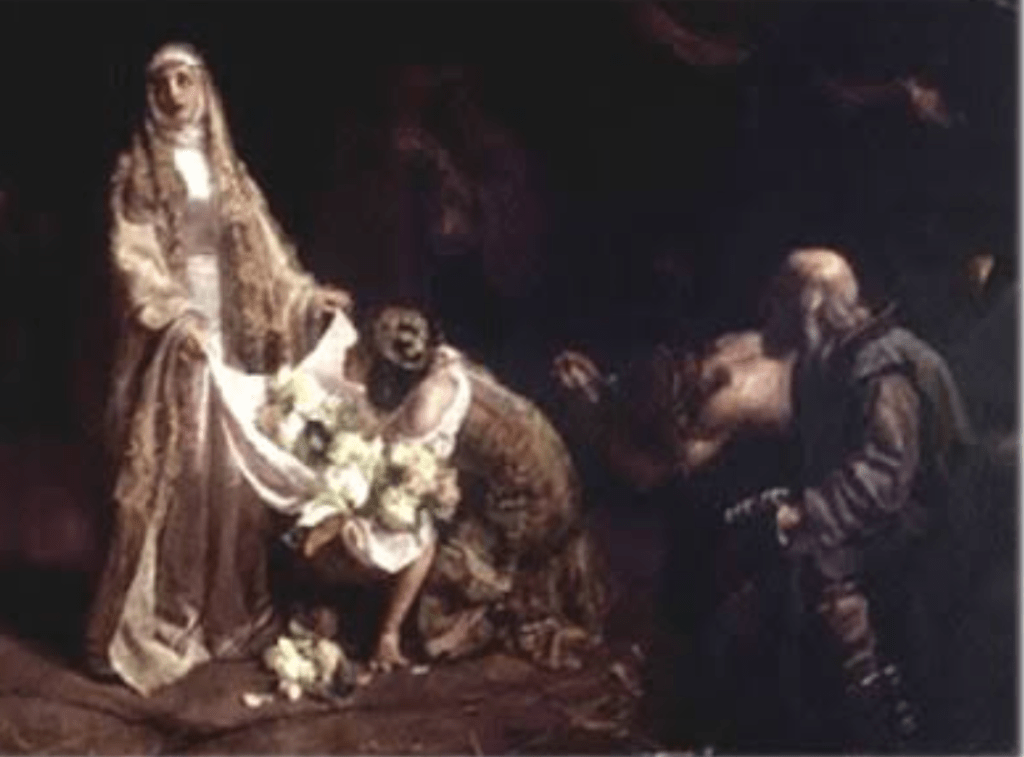

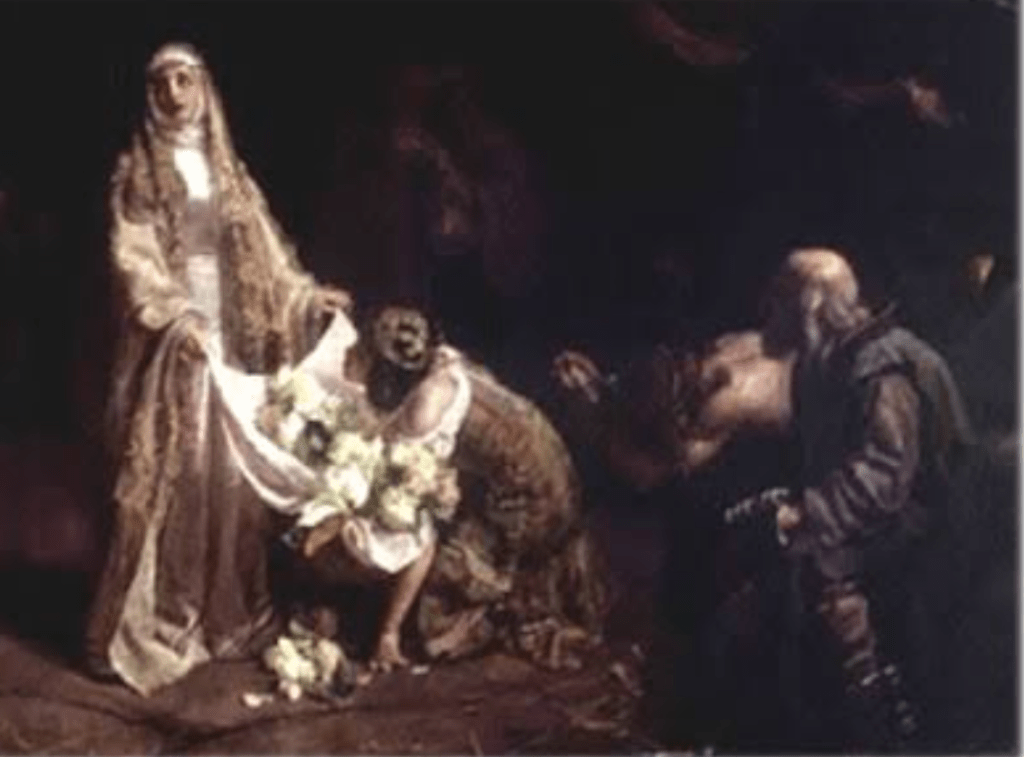
Casilda of Toledo – Japanese
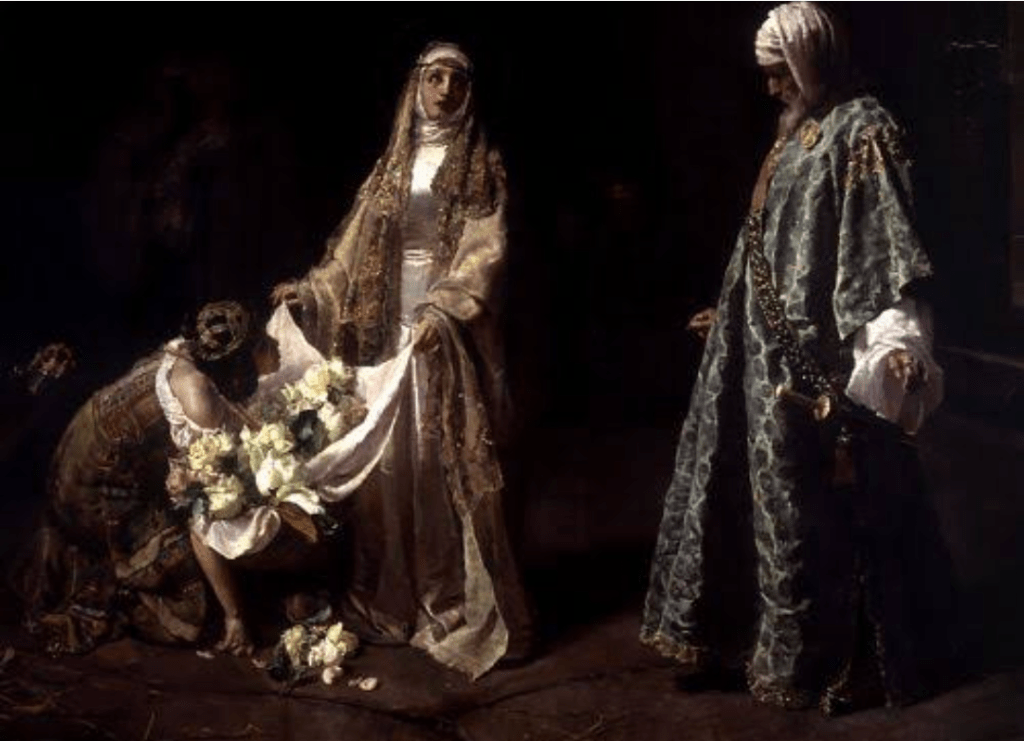
Cuando Casilda desplegó el manto, cayeronmuchas rosas.


(カシルダがマントを広げると、そこから沢山の薔薇の花が落ちた)
スペイン中央部に位置する「トレド」はユダヤ教、イスラム教、キリスト教が交差する
都市だった。画家エル・グレコが愛した土地としても有名である。6世紀に西ゴートの首都となり、8世紀から11世紀、フェルナンド一世の時代、トレドはイスラム勢力の支配下にあった。モーロ人の王、アルマムーンのカシルダは礼儀正しく心優しく、父親が捕虜として捕まえたキリスト教徒に食料を運んでいた。カシルダはアラビア語で「歌う」という意味ですが、彼女は捕虜達へ悪い茎から綺麗な白い薔薇を咲かせるように優しくし、信仰の種を伸ばしていた。それを良く思っていなかった家来はカシルダを処刑しようと王に知らせた。
王は娘を愛していたが、そのような事があっては処刑するしか他なかった。家来と王がカシルダのマントの中を追求すると、神の計らいかカシルダが隠し持っていた食料が白い薔薇へと変わった。彼女はお咎め無しとなった。
自己犠牲であるサクリファイスと息詰まった状況に一石を投じる機械仕掛けの神、デウス・エクス・マキナ。【deus ex machina】カシルダの終盤はデウスエクスマキナである。自分が優位になるための自己犠牲というものは、チェスの世界でも存在しているが、アリストテレスは機械仕掛けの神を否定している。私は無機質に思えるチェスの世界という論理の世界でも、奇跡が起きることが面白いと思っている。守りばかりでは一向に進まず、必ず駒というものは取られる。駒の価値は常に変動し、駒は攻めたり、お互いを監視したり、息詰まる。その中で駒が取られる度に、ただの失策かサクリファイスか分析が入る。常に不確定要素にかけ続け、結果からサクリファイスは確立する。
キリスト教の自己犠牲とは策のようで、見えない神に表す「偶然」である。それは愛を含むものなのか。神が何を望みかは聖書を深く読むしかない。そして何よりもイエスは譬え話が多いだけあって、イエスの話は日常に置き換えて私達は考えなければならない。当時のトレドと社会は変わっても普遍的に変わらない問題に直面したときに、イエスの言葉が日常に生きなければならない。問題、人間の「不幸」とは常に普遍である。
キリスト教の愛、カシルダの優しさは宗教的とも評価されるが、人間が本来持つ善でもある。勿論、その善を見せない人間もいた。彼女は捕虜を牢屋から出すことが出来ない。結果は伴わないが、食料は運ぶ。飢えを放置しない、その優しさというものは、捕虜という「不幸」に力を与えるものなのか。それだけではカシルダは反逆者として処刑される運命だった。しかし、日常を生きている中で奇跡が起きないことも知っている。
それでも、善意、神の愛に目を覚ましていたいと思うのは、奇跡という脱却は確かに常日頃にあるものだからだと思う。
常に目に見えているものだけ、手にしているものがすべてでないということを。
この記事は旧ブログの記事を書き直しました。

Matthew 13 English
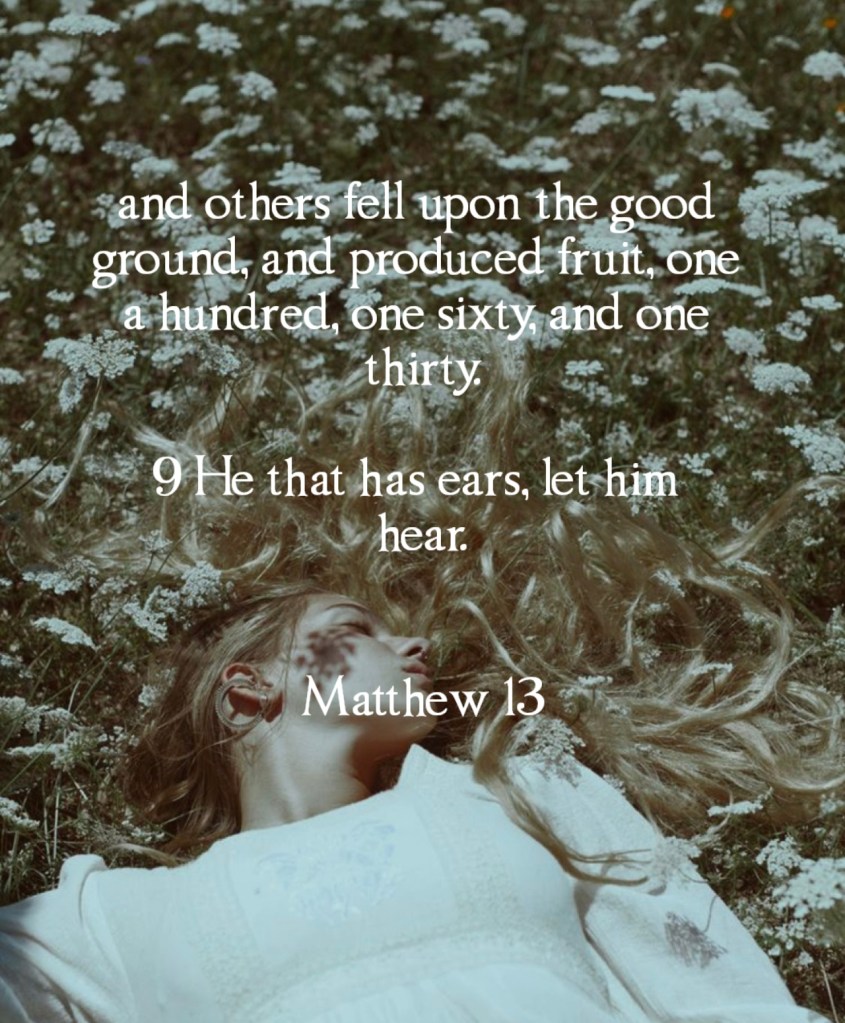
And that [same] day Jesus went out from the house and sat down by the sea.

 And great crowds were gathered together to him, so that going on board ship himself he sat down, and the whole crowd stood on the shore.

 And he spoke to them many things in parables, saying, Behold, the sower went out to sow:

 and as he sowed, some [grains] fell along the way, and the birds came and devoured them;

 and others fell upon the rocky places where they had not much earth, and immediately they sprang up out of [the ground] because of not having [any] depth of earth,

 but when the sun rose they were burned up, and because of not having [any] root were dried up;

and others fell upon the thorns, and the thorns grew up and choked them;

and others fell upon the good ground, and produced fruit, one a hundred, one sixty, and one thirty.

He that has ears, let him hear.

Matthew 13:1~9
1
Western philosophy and Greek mythology had the sea as ‘Mother Sea’, but also the opposite, as something which drowns and is unsuccessful. No land seed can grow on the sea, but I thought it made sense that Jesus was talking about seeds on the boat. Seeds are the possibility of a person’s faith in Jesus, but seeds that are scattered and falling, do not choose the place, the good earth or the bad land: Birds come and eat it, it germinates where the ground is not deep, but withers, or if it falls down a thorny path, it is blocked. We don’t know where the land is where the seed will grow and It must know that it can wither along the way. This passage became the heart of my Christian transmission because it was the lecture when I attended my first church mass.
2
In the Old Testament, there are stories of Joseph, who receives revelations in dreams, and Daniel the interpretation of dreams, and in the Old Testament, dreams were also revelations from God. I visited the church for the first time, with Daniel the dreamer in the book of Daniel being my favorite. Then I came across this New Testament chapter 13. Since the birth of Jesus, God no longer appears in people’s dreams. Instead, Jesus is the Lord, and the ‘parables’ of the Father unfold. Usually there is no commentary in the Mass as to whether the story has been told on the sea, and this time there is no criticism.
I think the reason I can talk about the sea is that I’m an evangelist, not an ecclesiastic. Thus, as a novelist and evangelist, I took from that passage to the sea. In Genesis, the waters existed before God was created, the world was inundated by Noah’s ark, and the sea was still there when Jesus was there. And in the first verse of chapter 21, that represents the New World in the Apocalypse, ‘there will be no sea’. This new world of no sea is beyond human understanding for us. It is an illusion and we don’t know when we will see it, but now we think of it as land, the human heart is like the sea. This is metaphorical and suggestive, but we do not know the conditions under which the seed will grow. It may sprout, but it may wither and die. Unfortunately, that is also the case with my own heart, which speaks of the Bible. Clergy cannot speak of this possibility, but because I am a writer, I can speak of the reality of withering and death. I had thought that the evangelist would go to the secular world, where a clergyman, for example, a priest, cannot go down. That is exactly why evangelists go outside the Church without trying to carefully select the best land. It is like Simone Weil’s policy, which has not been baptized.
3
Matthew’s Gospel is said to have been written by the evangelist Matthew. Historically, in the process of the Gospel being produced, there was persecution and oppression in Rome of those who became Christians. They were carefully selected and produced in the process, but it is certain that Jesus Christ himself existed, and the Western calendar was made to Jesus’ standards. Research has led historians and religious scholars to disagree on whether the various miracles performed by Jesus were true or not. The best part of the Gospels is that there is ‘love’, equality, and forgiveness in what they tried to write down in the face of oppression.
Matthew’s Gospel reflects Jesus as (i) of David’s lineage, (ii) the new Moses, and (iii) God with us (Immanuel). Jesus is like Moses. He comes out of Egypt, is baptized in the Jordan River, spends 40 days in the wilderness and preaches the Law on the mountain. It is also stated in Matthew’s Gospel that Jesus is more than Moses. Jesus invited him to teach that even those who are strict in their religion are not necessarily competent people, the poor and weak are also included, and that rather than just being strict with authority and religion, they will stumble. Sowing seeds is thus a good land, where we cannot choose.
Putting possibilities into the hearts of sinners and various human beings, not just the wise of the world, is like throwing a land seed into the sea. It is such a challenge to uncertainty. We are not certain what the conditions are for a seed to grow. For that matter, there is no mention of the limitation ‘love’. In the Christian world, most plants have a divine symbolism, but the lilies, the clock grass, the roses, the olives, the grapes, and the poisonous wheat and the weeds probably also have a blooming meaning. We ask whether the conditions for seeds to grow are the light of dawn, the pull of the moon to attract them, the sunlight hot enough to dry the land, the cold of winter to rest the plants, the dreams of the night, or how the human heart grows in the ‘four seasons’ of life.
Living is not limited to the time we are conscious. We share time together as long as we live, even when we are unconscious in a dream. Even when a time to tear and a time to mend,
a time to be silent and a time to speak, a time to love and a time to hate,( Ecclesiastes, chapter 3), and even when we know freedom from such suffering, suffering is born again, and even in peace, living is also ‘waiting’. We are waiting for the time to sprout, for the time to wither, for the time to come. With regard to waiting, uncertain events can move the inner world, as in Soseki’s Natsume Ten Nights of Dreams, which has nothing to do with Christian culture. The first night of the Ten Dreaming Nights is illusion and dreaming, speculation does not even attempt to seek order. Dreaming time has no predominance of ‘arising’ or ‘disappearing’, and is perhaps not a Hegelian intuited generation. In the stage, the woman loses her breath and says to the man, ‘I’m going to be dead’. At last, the woman dies, and the man keeps waiting. The man waits, for a long time and begins to wonder if the woman has not deceived him, but a lily blooms and kisses the man. Only a dream story, but the transformation of the breathless woman into a lily is Kairos, which appears even in the randomness of a dream.
We live in the normal quantifiable time of the ‘Chronos’. We find meaning in the unmeasurable ‘Kairos’ that breaks through that Chronos. When Jesus was born, when a miracle happened, when a flower bloomed, the day a child was born, the day we thought it was beautiful – these are the breakthroughs of the Kronos that connect the inner and outer worlds. The seed of the Word germinates and grows out of Man. It is not always in good land, with excellent conditions. And why is it necessary for the Word to grow? Have we ever thought about that? We live in the normal quantifiable time of the ‘Chronos’. We find meaning in the unmeasurable ‘Kairos’ that breaks through that Chronos. When Jesus was born, when a miracle happened, when a flower bloomed, the day a child was born, the day we thought it was beautiful – these are the breakthroughs of the Kronos that connect the inner and outer worlds. The seed of the Word sprouts and grows out of sight of man. It is not always in good land, with excellent conditions. And why is it necessary for the Word to grow? Have we ever thought about that? People sleeping on the streets, people being abused, unforeseen accidents, people involved in incidents, disasters, life and death choices being made, the
The seeds are sown in the internal experience of your inescapable emotional ‘moment‘ or ‘eternity‘.
4
In Buddhism there is a saying: ‘The lotus comes out of the mud and is not stained by the mud’. In the Bible, it might be similar to the first chapter of John’s Gospel: “The darkness would not accept the light”. When it comes to the sacred, I think of this ‘lotus flower’. And like that flower, the more we evangelise without certainty, the more it is like what we are doing in a place where it is not certain whether it is the sea or the land. Sometimes I meet people who want to read the Bible, even just a little. It makes me think that I have not only germinated in their hearts, but that I have not withered away either. That is the limit of just loving a personality. If the other person is a personality that is not so ideal, if you cannot reconcile them, you will be divided. There are many clergy and lay people who would simply say, “Jesus is kind. Historical figures and celebrities also love personalities they do not know. This alone is not enough for the Word to be lived. We know very well that there are limits to loving only personalities. That is why we are divided by a little disappointment in the other person. And yet Jesus Christ liberated many weak people and sinners. While inclusive love is the ideal, love requires personality. This contradiction – so much accumulated metaphysics – disappears and dissolves in ‘everyday life’. I cannot deny the day when I too will live more ‘everyday’ than the Bible. That is why it is important to live the ‘time’ and wait for the time, as in the three chapters of Koreheth. The smell of bitter earth is essential for a beautiful rose. Whether it is the cement garden that blooms unseen or the ivy that wraps around the dwelling, the growth of the seeds is unknown to me. Plants do not grow in the same way, in the order of the number of leaves and petals, while maintaining the golden ratio. The quotations I give to the people I evangelise. It is not certain how they live. Most of the time it is not the understanding of Jesus that troubled Van Gogh and various great men in evangelism. So why does it not grow? It is because ‘holiness’ does not live in poor reality. Van Gogh evangelised in the poor areas of the coal mines, was shunned by the people and had his licence to preach revoked. (Nevertheless, we must keep our ears open to the truth.
Let anyone with ears “Listen”
outline
Matthew 13 was treated in my own iconograph. We don’t know how the seed, the Word of God, will grow. The teaching is that we cannot choose the land where we sow the seed, but people like me, who are not missionaries, focus on what I preached on the boat. The sea was originally considered both a Greek myth and ‘barren’. A critique of his talk about land on top of that.
My reader is a Buddhist, but this month he said he would read the Bible to me. I decided to let him read it, despite the many objections around him. What does it mean for the Word to grow? From a barren sea of human thought to a fruitful land. I do not encourage conversion, and the content touches on the difference between an evangelist and a missionary. However, because of privacy, he is a Buddhist and the details of the clergyman are not mentioned, which makes it easy to mix up the stories this time, but they are connected and can be read.
マタイによる福音書13章

その日、イエスは家を出て、湖のほとりに座っておられた。 すると、大勢の群衆がそばに集まって来たので、イエスは舟に乗って腰を下ろされた。群衆は皆岸辺に立っていた。 イエスはたとえを用いて彼らに多くのことを語られた。「種を蒔く人が種蒔きに出て行った。 蒔いている間に、ある種は道端に落ち、鳥が来て食べてしまった。 ほかの種は、石だらけで土の少ない所に落ち、そこは土が浅いのですぐ芽を出した。 しかし、日が昇ると焼けて、根がないために枯れてしまった。 ほかの種は茨の間に落ち、茨が伸びてそれをふさいでしまった。 ところが、ほかの種は、良い土地に落ち、実を結んで、あるものは百倍、あるものは六十倍、あるものは三十倍にもなった。 耳のある者は聞きなさい。
マタイによる福音書13章1~9節
1
イコノグラフに使った聖書の引用の一つ。
西洋哲学、ギリシャ神話では海とは「母なる海」とするが、反対に溺死するもの、「実りのない」不毛としていた。海で陸の種が育つことがないが、イエスが種の話を舟の上でしたことに私は意味を持っているとした。種とは人のイエスへの信仰の可能性を表しているが、種は落ちる場所、良い土地、悪い土地を選べない。鳥が来て食べ、土が深くないところで芽を出したが枯れてしまったり、いばらの道に落ちればふさいでしまう。
種が育つ土地とは何処かは分からない。途中で枯れることもあると知っておかなければならない。この箇所が私のキリスト教の伝え方の一番の核にしていたのは、私が初めて教会のミサに参加したときに、この朗読だったからだ。
2
旧約聖書を辿れば夢の啓示を受けるのはヨセフ、夢解きのダニエルがいるけれども、夢は旧約聖書では神の啓示でもあった。私はダニエル書の夢解き人ダニエルが一番好きなまま、教会へ足を初めて運んだ。そしてこの新約聖書の13章に触れた。イエス生誕以降、神は人の夢に出てこなくなった。その代わり、イエスは主である父の「たとえ話」が展開される。通常は海の上で語られたのかということがミサでは解説がないもので、今回はそれに対して批判があるわけではない。海の上から語れるのは聖職者ではなく、伝道師だからだろうと思う。だから小説家として、伝道師として、この海の箇所から取り入れた。創世記で、水は神の創造の前に存在していたこともあり、(へブル語で創造とは無からの創造ではない)ノアの方舟によって世を洪水にし、イエスがいる時も海はあった。そして黙示録の新世界を表す21章の1節では「海はなくなる」。海の無いというこの新世界は私達にとっては人智を超えている。それは幻想で私達がいつ目にするのか分からないが、今、私達が陸地と思っている、人の心は海のようなものだ。これは比喩・暗示的であるが、種が育つ条件は分からない。芽吹いたとしても、枯れてしまうのかもしれない。それは、残念ながら聖書を語る自分の心もそうである。聖職者はその可能性を語ることは出来ないし、作家だからこそ、「枯死」という現実を語ることが出来る。聖職者、例えば神父という人が下れない世俗に、伝道師は行くのだろうと思っていた。それこそ、優れた土地、人の心が何処か厳選できないように、教会の外へ行く。それは洗礼を受けなかったシモーヌ・ヴェイユが保った均衡もこのようなものだったのかもしれない。
3
マタイの福音書は福音記者マタイが書いたと言われる。歴史上は福音書が出来上がる過程で、ローマで、キリスト教徒になった者に迫害や弾圧があった。その中で厳選されて作られたものだが、イエスキリスト自体は存在していたのは確かであり、西暦はイエスの基準に作られている。イエスが起こした様々な奇跡が事実かどうかは、研究によって歴史学者と宗教学者によって見解が分かれる。弾圧の中でも書き残そうとしたものがどんなものか、「愛」や平等、許しがあることに福音書の醍醐味がある。
マタイの福音書はイエスを①ダビデの血筋 ②新しいモーセ ③共にいる神(インマニエル)としている。イエスはモーセと似ている。エジプトから出てきて、ヨルダン川で洗礼を受け、荒野に40日間過ごし、律法を山で説教する。イエスはモーセ以上という記載もマタイの福音書に書かれてある。イエスが招きいれたのは、宗教に厳格な人間でも有能な人間とは限らず、貧しい人、弱者も入れられ、むしろ権威や宗教に厳格なだけだとつまずいてしまう、という教えがある。種まきとは、このように良い土地というのは私達が選べないところにある。世の賢い人に限らず、罪人や様々な人間の心に可能性を込めることは、それこそ海に陸の種を投げ込むようなことである。それぐらい不確定への挑戦でもある。
種が育つ条件は何なのか、それは定かではない。それに関しては「愛」という限定の記載はない。キリスト教圏では大体の植物に神の象徴があるが、百合に、時計草、薔薇にオリーブに、葡萄、そして毒麦と、雑草も恐らく咲いた意味がある。種が育つ条件は夜明けの光か、引き寄せる月の引力か、土地を乾かすほど暑い日光か、植物を休ませる冬の寒さか、夜の夢か、人生という「四季」の中で人の心はどう育つのか、問いかける。
生きるとは意識がある時間に限ったことではない。夢の中で意識を失った時も、生きている限り時間を共にする。争う時、和解する時、愛する時、(コレヘトの言葉3章)と言いながらも、そしてそのような苦しみからの解放を知りながらも、また苦しみが生まれ、平穏の中でも、生きるとは「待つこと」でもある。私達は芽吹く時、枯れる時、時を待っている。待つということに関して、キリスト教文化と関係無い夏目漱石の「夢十夜」のように不確かな事象が内面世界を動かしていくこともある。 夢十夜の第一夜は幻想と夢想、思惑は秩序を求めようともしていない。夢の中の時間は「発生」も「消滅」も優位性を持たず、ヘーゲル的直観された生成とも言い切れない。その中で情景の中で女が息絶え絶えとなって、男に「もう死にますから」という。やがて女は死んでしまって男が待ち続ける。男は長らく待って「女に騙されたのではないのだろうか」と、疑い始めるが百合の花が咲いて男に接吻をする。ただの夢物語だが、息絶え絶えになった女が百合の花に変わる、その変容は夢という無作為の中でも現れた時熟である。
私達は通常の「クロノス」という計量可能の時間で生きている。その中でそのクロノスを突き破るような「カイロス」という計量不可能なものに意味を見出している。イエスが生まれた時、奇跡が起きた時、花が咲いた時、子供が生まれた日、美しいと思った日、それらは内面世界と外面世界を繋ぐクロノスの突破である。御言葉の種は人の目に見えないところで芽吹いて、育つ。それは、条件が優れていて、良い土地とは限らない。それに、何故、御言葉が育つことが必要なのか。それを考えたことがあるのだろうか。路上で寝泊まりをしている人達、虐待を受けている人、不慮の事故、事件に巻き込まれた人、災害、生死の選択が迫られる人、脱出できない心の「瞬間」や「永遠」の内部体験に種は撒かれ落ちる。
4
仏教では「蓮は泥より出でて泥に染まらず」というものがある。聖書でいえばヨハネの福音書の1章の「闇は光を受け入れようとしなかった」と似ているのかもしれない。聖なるものといえば私はこの「蓮の花」だと思う。そしてこの花のように、確証がない伝道ほど、海なのか陸が定かでは無いところでやっていることと同じだった。
時々ほんの少しでも聖書を読んでみたいという人に遭遇することがある。それは相手の心に芽吹いただけの話ではなく、私もまた枯れなかったと思わせる。それは人格を愛するだけでは限界がくる。もしも、相手が理想通りでない人格だった場合、和解できなければ分断する。「イエス様は優しい」そう簡単に言ってしまう聖職者や信徒は大勢いる。歴史上の人物や芸能人も、知りもしない人格を愛する。それだけでは、御言葉が生きることは不完全である。人格だけを愛することには限界があることを、私達はよく知っている。だからこそ、少しの相手への失望で分断する。それなのにイエス・キリストは様々な弱者や罪人を解放した。包括的な愛が理想としながら、愛は人格を要する。この矛盾――これほど積み上げた形而上学は姿を消して「日常」の中に溶けていく。私も聖書よりも「日常」を生きる日を否定できない。だからこそコレヘトの三章のように「時」を生き、時を待つことが重要となる。
綺麗な薔薇には、苦みのある土の匂いが欠かせない。人知れず咲くセメントガーデンや、住まいに巻き付く蔦なのか、種の成長は私には分からない。黄金比を保ちながら、植物は葉の枚数や花弁の枚数という秩序を持ちながら、同じ育ち方はしない。私の与えた引用が伝道した人に
どのように生きるのかは定かではない。伝道でゴッホや色んな偉人が困ったのは、イエスへの理解ではないことが殆どだ。では何故、育たないのか。それは、貧しい現実に「聖」が生きないからである。ゴッホは炭鉱の貧しい場所で伝道し、人々から疎まれ、福音宣教から免許剥奪をされた。(仮免許)それでも真理に耳を澄ましていなければならない。
「耳があるものは聞きなさい」
最後に、朗読の彼にも神の祝福を
The Tree of Life (English)
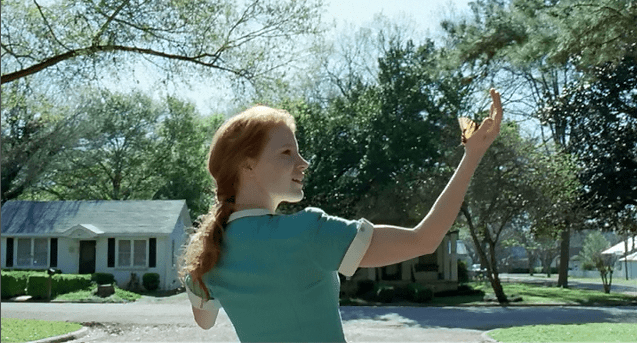

“Where were you when I laid the earth’s foundation?
 Tell me, if you understand/ while the morning stars sang together
    and all the angels[a] shouted for joy?
Job 38:4~7
Introduction.
2011 film The film begins with a quote from the Book of Job, which refers to God-given suffering. The protagonist, Jack, has grown up and had a successful life, but on the anniversary of his brother’s death in the war, he looks back to his own childhood, 1950. A strict father, a kind mother, whether to live a worldly life or leave it to God’s grace.
This article will be updated as a critique during the winter of 2024
1
“When did you first touch my heart? “
I find myself saying the word world. When were we conscious of our ego and when were we conscious of God? The language of the book of the Bible attempts to take root in the nobility on a daily basis. For example, even Christians can choose their words biblically, conscious of the words of love, of the joy of birth and of the day on which they touched the world, or they can speak in modern terms, even without realizing it. Nevertheless, What has become the foundation of our sensitivity becomes Christian although we are not consciously aware of it. It is easy to match the words and values of the Bible over a long period of time, as they are latent in our daily lives. If you study the history of philosophy, including Western literature, you will know that Augustine put his object together in a philosophical way to God.( In Japan, the pursuit of bliss and spiritual freedom, which are also guaranteed in Japan, was at the origin of Christian values) We also have Christian values in our hands in this manner, without being aware of them. But we rarely get a chance to make contact with God’s Word. The film dynamically shows the world and the open air against the background of the evolution of times of a distant American family. Nature is celebrated, as in the Old Testament, but the tiny family world is irreplaceable.
2
In 1950, during the childhood years of the protagonist Jack O’Brien, the family reflected the conservative thinking of the Cold War period. But they were not dictated to by anyone.
but, as we grow up, Jack’s America is a place of skyscrapers, modern architectural homes, to which we feel a feeling of familiarity. This is because it closely resembles the cities we are witnessing. The family image was also, as the film begins, originally chosen by two persons who loved one another and created a family. And yet, if you show a strict father, a kind mother in neat clothes and a neighborhood woman of color, they settle into the structuralism of the ‘1950s’ era. The times are created by man, and if his work is freedom or stagnation, Considering this question, Or in philosophy, is it ‘structuralism’, the idea that what we think is unconsciously selected by our social systems? it is not surprising why the opening quotation was from the Old Testament book by Job. (Jack O’Brien for short: JOB)
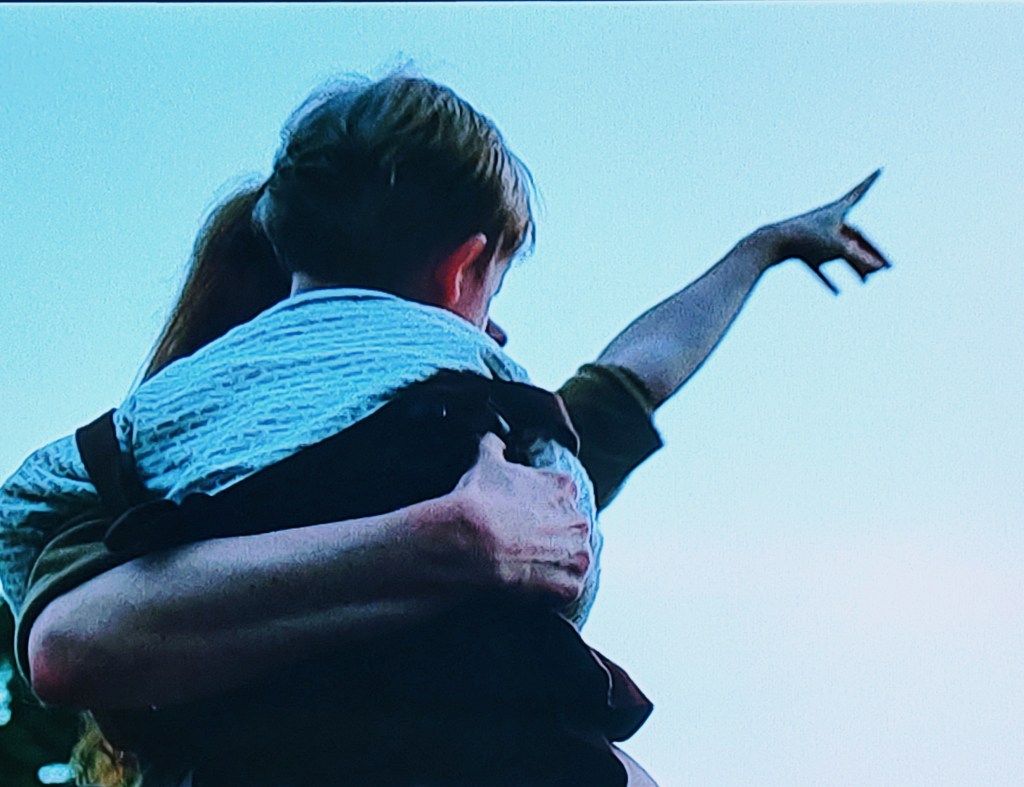
Christianity is also often misunderstood, especially today, but the organization of Christianity does not directly determine one’s life. (Principle) Being a serious man, God gave Job all sorts of hardships. The story is about God answering Job’s questions. The meaning of this quotation from Job, about what controls the mind and makes it free, is to make us aware of the outer limits of those human creations. The exuberant natural beauty always present in the Old Testament stands for the very Father of Jesus in the New Testament: Jesus is also studying the Old Testament. When the mother in the film pointing to the sky and saying “That’s where God live”, it is the beginning of making the child aware of God, but is it the beginning of allegiance or a compass? To whom have we pledged our allegiance? What about our compass?
Some days the abode of God in the sky, where his mother taught him, is beautiful, and some days it is out of sight. God can give and God can take, and the remembrance that is with Job is no longer the time he had with his brother who was alive. It is a remembrance after the death of his brother. Why was the father so strict with his eldest son, the protagonist, it begins with the story of his father’s desire to become a musician. As a devout Christian, he never became a musician, preferring to work in a factory. His father was not proud of him and was rather stern with his eldest son, Jack, not wanting him to resemble him: Jack did what his dad said and was mature. While his father is away on business trip, he finds a brief rest with his sweet mother and a sense of freedom, But the neglect of his father’s absence brings Jack to turn slowly to delinquency. When his father returned from a business trip, Jack was rebellious.
Over time, the children grew up, only to receive news of their brother’s death in the war.
Research into the Vietnam War draft suggests that until 1975, conscription was by lottery. The eldest son, in contrast to his younger brother who passed away as a result of the lottery, became a winning adult, following in his father’s footsteps. With the details of how it happened, the film comes to the sea imagined by a spirit world that seems to be self-healing.
Is the father, who gives and takes away, like the God of the Old Testament? and the kind mother like the Virgin Mary? and yet where is Jesus, the savior Jesus is absent in this film.
3
Christianity is also often misunderstood, especially today, but the organization of Christianity does not directly determine one’s life. (Principle) Being a serious man, God gave Job all sorts of hardships. The story is about God answering Job’s questions. The meaning of this quotation from Job, about what controls the mind and makes it free, is to make us aware of the outer limits of those human creations. The exuberant natural beauty always present in the Old Testament stands for the very Father of Jesus in the New Testament: Jesus is also studying the Old Testament. When the mother in the film pointing to the sky and saying “That’s where God live”, it is the beginning of making the child aware of God, but is it the beginning of allegiance or a compass? To whom have we pledged our allegiance? What about our compass?
Some days the abode of God in the sky, where his mother taught him, is beautiful, and some days it is out of sight. God can give and God can take, and the remembrance that is with Job is no longer the time he had with his brother who was alive. It is a remembrance after the death of his brother. Why was the father so strict with his eldest son, the protagonist, it begins with the story of his father’s desire to become a musician. As a devout Christian, he never became a musician, preferring to work in a factory. His father was not proud of him and was rather stern with his eldest son, Jack, not wanting him to resemble him: Jack did what his dad said and was mature. While his father is away on business trip, he finds a brief rest with his sweet mother and a sense of freedom, But the neglect of his father’s absence brings Jack to turn slowly to delinquency. When his father returned from a business trip, Jack was rebellious.
Over time, the children grew up, only to receive news of their brother’s death in the war.
Research into the Vietnam War draft suggests that until 1975, conscription was by lottery. The eldest son, in contrast to his younger brother who passed away as a result of the lottery, became a winning adult, following in his father’s footsteps. With the details of how it happened, the film comes to the sea imagined by a spirit world that seems to be self-healing.
Is the father, who gives and takes away, like the God of the Old Testament? and the kind mother like the Virgin Mary? and yet where is Jesus, the savior Jesus is absent in this film.
My interpretation as a Christian is that the film portrayed Jesus’ absence. A celebrated absence from Jesus is the three days before his resurrection after the crucifixion, but there is also a story in the Gospel of Mark, for example, of a master who goes on a journey. The film repeatedly turned our attention from the inside to the outside, and the trick was to turn our awareness towards the ‘absence’. Early in the story, Peter Rabbit’s father goes to Mr McGregor’s house, where he is later killed. Next is the father’s absence on a business trip.
Next is the father’s business trip. The final would be his brother’s conscription. The absence by crucifixion is extraordinary, but the absence of Mark’s Gospel fits into everyday life. In Mark 13:32-37, Jesus says that a person who leaves his house to go on a journey should assign the servants He assigned them tasks, gave them responsibilities and told the ‘gatekeepers’ to stay awake. To be able to open the door when the messiah returns.
4
The film is based on the director’s own experience, his brother committed suicide (research 2022) I did not know this at the time of the film’s release in 2011, but when I looked it up recently, I heard the real story was his brother’s suicide, which seemed to make sense. The absence of Jesus (the Messiah) is a sign of this, and for the person concerned, it is an illusion that their faith has disappeared, but they have realized that this is not the case and that the sentiment is always Jesus who has gone on a journey. Nobody thinks that hope is on a trip when they are disappointed: Usually we see it as a loss of hope.
Having changed suicide to war death, the hatred of the father appears to be a transitory adolescent thing. By making these changes it seems like forgiveness to the director’s father.
There is one scene where the father admits and confesses that his educational policy was wrong, but the son, who grew up, forgives his father not to be wrong. Where did his brother’s soul go, did it go to heaven, “Why didn’t you (the Messiah) come?”, these are questions that cannot be answered easily. In the sense of creating something that cannot be settled, it celebrates the nature of the Old Testament, which is the Messiah travelling to the end of the world beyond our visibility. The reason why the Messiah’s presence was not clearly expressed is probably because the Messiah’s return is not certain.
Probably the reason he did not clearly express the presence of the Messiah is because we are not sure if he will return. Even if the noun faith becomes a verb, it cannot reveal its existence as a ‘noun’ to those who do not believe. Unless you find its existence in the other person’s mind, the messiah is in someone else’s thought. However, we are supposed to practice love as we should. That is kindness and forgiveness.
If you had to choose how to live, which one would you choose? Which life would you choose, to call the nature you witness worldly or to call it a blessing of God? Which would fulfil the heart of the real world you witness? Or which affliction would you accept? Suffering will always come no matter which you choose. When did the question definitively come to me?
At a Bible study group meeting, I was asked why I was baptized. One man replied that it was because of the miracles of Jesus. I had nothing to say. I can remember, in the middle of one of my seminars, I saw myself opening the revolving door and walking out. Looking up, all I see are skyscrapers and I lose my sense of direction. There was a scene in the movie where my dad lost his job: My father was also laid off from his company. This major restructuring of a large company was treated in a good way, as a rebirth of the company. My mother ran away from home and I had to rush to work, abandoning my dreams at the time. What did I need to know to be able to accept them, how many times the share price had increased with the sacking of my fathers? If it was by God that I was deprived, I thought I could have it again. If it wasn’t God, I would just be deprived. But what I knew was that now God was absent. For me, too, the Messiah was absent. After a long time, however, this event has ceased to be of any importance. The major foreign companies that tormented employees of the father’s generation back then pulled out of Japan last year. My mother has also come home. Yet, for me, Jesus is always absent. Tree of Life was not a highly regarded film, even for Catholic priests. And that’s just as well, because they can’t say anything other than ‘be present’ to them. For example, “Ask and it will be given to you; seek and you will find; knock and the door will be opened to you.” (Matthew 7:7), the world may also need a presence that gives hope.
I have a lovely cat in my house. He understands whether a kind word or a harsh word is spoken. My mother did not believe in God. I held this child in my arms and taught him about God’s house. I never heard my mother talk about God, but I still loved her voice. I wonder if what a mother being tells her child is about God or the beautiful sky. Even in the moments of time that pass by, I have found that I too receive love and then give it again. It was not an elaborate declaration of faith that was important. It was the words I love you.――It came from the Kingdom of Heaven.
Summary.
Tree of Life, a film released in 2011.
Despite being described as a Christian film, I had never seen this film rated by the Ministry.
By quoting the Book of Job, we are deprived of many things: the death of a classmate, the loss of his father’s job, the death of his brother, but there was no scene worthy of praise from God at the end of the Book of Job. It was thought to be a self-sacrificing, paisicidal film, with love as pain, a Christian peculiarity, but when I watched it again for some reason, I recognize there was no figure similar to Jesus, followed by a father, a mother like Mary, who is a symbol of God. The master of Mark’s Gospel goes on a journey, however, to the place where the master of the Gospel is not. The master of Mark’s Gospel goes on a journey, But while waiting for a person to be the ‘keeper’, so ‘the absence of Jesus’ was noticed.
In the real story, his brother committed suicide. ‘The absence of Jesus’ has been with me for a long time. But recently, hope has been travelling about absence, about whether to live in the secular or in God’s grace.
If nature or God’s grace, then the visual beauty of that nature may be the journey of Jesus, or so it seemed to me. In the real story, his brother committed suicide. ‘The absence of Jesus’ has been with me for a long time. But recently, hope has been travelling about the absence. Whether to live in the world(Nature) or in God’s grace.
If nature – God’s grace, then the visual beauty of that nature may be the journey of Jesus, or so it seemed to me. So, “stay awake.”

「ツリーオブライフ」


わたしが大地を据えたとき、おまえはどこにいたのか。
そのとき、夜明けの星はこぞって喜び歌い 神の子らは皆、喜びの声をあげた。
旧約聖書ヨブ記38章4節,7節
この記事は、2024年冬に評論として更新されます。
ツリーオブライフ
2011年の映画:言葉数少ない記憶の残滓に壮大な自然美。神に与えられた苦難を意味するヨブ記の引用から始まる。主人公ジャックは大人になって成功をしていたが、戦死した弟の何周忌で自らの子供時代である1950年を振り返る。厳しい父親、優しい母親、世俗を生きるのか神の恵みに委ねるのか、旧約聖書の神の御業である自然を「世俗」とするか、「恵み」とするのか、その問いと共に。
1
「神はいつ私の心に触れたのか」私は気が付けば世界という言葉が口癖となった。いつ自我に芽生え、神を意識するようになったのはいつだったのか、聖書という書物の言葉は高尚から日常に根差そうとする。このように神の言葉は日常に根差さなければならない。例えばキリスト教徒でも愛の言葉や生誕の喜び、世界に触れた日等、意識して言葉を聖書的に選ぶ日もあれば、意識せずにも現代の言葉で語ることがある。それでも礎になったものは、意識せずともキリスト教的な感覚となる。それは長い時を経て、聖書の言葉や価値観は私達の日常に潜んでいるので偶然にも一致しやすいのである。西洋文学をはじめ、哲学も哲学史を学べばアウグスティヌスが神への対象を哲学的に纏めたことを知る。日本でも保障されている幸福追求、精神的自由も元はキリスト教の価値観である。私達もそうやってキリスト教的価値観は無自覚に手にしている。ただ、御言葉に触れる機会は殆ど無い。話は映画に戻すが、これは遠いアメリカの一組の家族の半生の時の移ろいを通して、宇宙や大自然がダイナミズムに映し出されていく。旧約聖書のように自然賛美がありながらも、家族という小世界がかけがえの無いものように映し出される。
2
主人公のジャック・オブ・ライエン(Jack O’Brien)の過ごした少年時代の1950年、冷戦時代の保守思考が家庭に反映されていた。しかし彼等も完全に指定された制服を着るように外界から影響を受けてなったとは言い難い。それぞれ信仰を持って、独自の選択で選び取ったものだろう。それでも、大人になったジャックのアメリカは高層ビルに、近代的な建築の家、そこに私たちは親近感を湧く。それは私たちが目の当たりにしている都会に酷似しているからである。家族像も1950年代と、2000年代という構造は、映画の開始にあるように、本来は愛しあった二人が家族を作り選び取ったものだった。それなのに厳しかった父親や、清楚な服の優しい母、近所の色気のある女性、それを映し出せば「1950年」という時代の構造主義に彼等は落ち着いてしまう。時代という器は人間が作り出したもの、そこでの営みが自由なのか閉塞なのか、哲学で言えば、人間が考えることは、人間の社会システムによって無意識に選択しているという「構造主義」なのか? その問いを考えると、何故冒頭の引用が旧約聖書のヨブ記のこの箇所だったのか頷けるだろう。(主人公のJack O’Brienを略するとJOB・ヨブ)
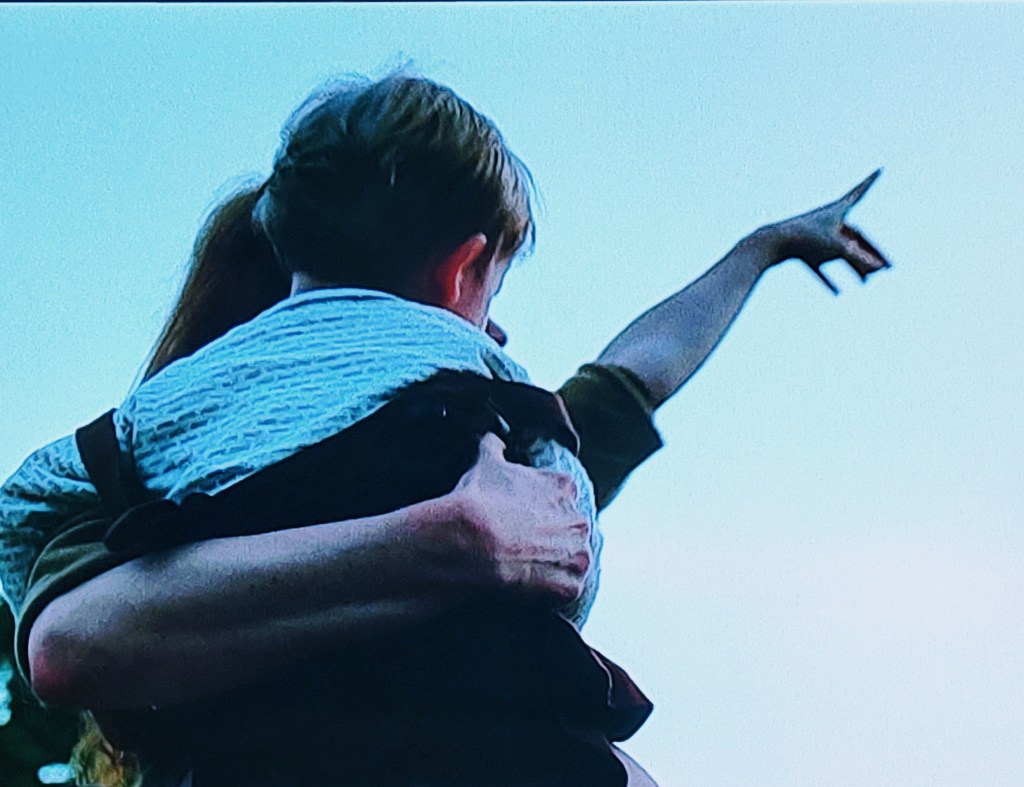
キリスト教も誤解が多いが、特に現代はキリスト教という組織が直接的に一個人の人生を決めることはしない。何によって心が支配されているか、自由になっているのか、真面目に生きているヨブに神は色々な苦難を与えた。ヨブの問いに神が答える話だ。ヨブのこの引用の意味は、神の業が人智で測れないものを意識させるものである。旧約聖書にまだ見られている躍動する自然美は新約のイエスが語る父そのものを意味する。イエスもまた旧約を学んでいる。作中の母親が「あれが神が家よ」と空を差すということは、子供に神を意識させることの始まりだが、私達はだれに忠誠を誓ったのか、何を羅針盤にして生きていくのか、母親の差した神の住処である空は美しい日もあれば、視界に入らない日々がある。神は与えることもあれば、奪うこともあると、ヨブ記と共に繰り広げられる追想は、生きていた弟と共にした時間ではなくなった。弟の死を通した記憶なのである。何故、父親は長男である主人公に厳格だったのか、それは父親が音楽家になりたかった話から始まる。敬虔なクリスチャンの彼は音楽家にならず、工場勤めとなった。そんな父親は自分を誇りに思っていたのではなく、自分のようになってほしくないと長男であるジャックを厳しくする。ジャックは父親に従って大人しくしていた。父親の出張の間に、優しい母親と開放感に溢れた束の間の安息を手に入れるが、父親の不在による油断から、非行に手を少しずつ染めていってしまう。父親が出張から戻ってきたときには、完全に反抗期になっていた。時を経て子供達は成長したが弟の死を知らせる官製葉書が届く。
該当するベトナム戦争の徴兵制について調べると、1975年までは徴兵は抽選だったようだ。抽選によって死んだ弟に対して長男は父親の意思を継いで稼ぐような大人になった。両親を豪邸のような家に住ませている。その経緯の詳細を隠したまま、自己治癒ともいえるような精神世界が思い描く海に辿り着く。与えることもあれば奪うこともある父親は旧約の神のような存在なのか、そして愛に生きようと言葉少ない母親は聖母マリアのような存在なのか、それにしてもイエスは何処にいるのか、この映画には救世主イエス的な存在はいないのである。
3
キリスト教徒としての解釈を言うと、私はこの映画にはイエス、救世主の不在を表していたと思う。イエスの不在で有名なのは磔刑の後の復活までの三日間であるが、マルコによる福音書も旅に出る主人としてイエスの不在を表している。映画では旅に出る者として、内から外へと何度も繰り返し、意識が「不在」に出るように仕掛けがあった。物語序盤のピーターラビットの父親がマクレガーさんの家に行った話、後に彼は殺されてしまう。次に父親の出張である。磔刑による不在は非日常的だが、マルコによる福音書の不在は日常に当てはまる。マルコの福音書第13章32-37節のイエスは、家を後に旅に出る人が、僕(しもべ)達に仕事を割り当てて、責任を持たせ、「門番」には目を覚ましているようにと言いつけた。主人はいつ旅から帰ってくるか分からない。主人が突然帰ってきて、家の人が眠っているのを見つけるかもしれない。あなた方に言えることは目を覚ましていなさい、ということだが、役割を当てられた労働者や社会性の一部が、いつ目を覚ます「門番」という存在に自分で気づくか、目覚めたときにイエスが帰還したという証となる。それはキリスト教徒にとっても実際には容易ではない。人は常にいつでも役割を生きているが「門番」という存在になること、そういった奇跡は滅多に訪れない。一瞬の幸福と安らぎがあっても、役割として生きている間は常にイエスは不在である。有名な「愛」という教えは目覚める「糧」として私達は生きている。与えられた賜物、タラントの枚数に満足する人間は少ない。信仰があっても感謝と、不満が共存する。タラントを増やして「存在価値」を満たすことは人生において一瞬なのかもしれない。それを何度も繰り返すのか、もしくは気づかないままなのか、救世主は役割として生きるのではなく、自分が戻ってきたときに開けられる「門番」としての自覚を持てと言う。
4
この作品は監督の実体験が元になっているようで、弟は自殺だった(2022年調べ)ようだ。私は、2011年の公開当時は知らなかったが、最近調べたところ実話は弟の自殺と聞いて腑に落ちてしまった。イエスの不在がその証で、当人にとっては信仰が消えたと錯覚してしまうが、そうではなく心情は常に旅に出たイエスだったのだろう。誰も失望した時に、「希望」が旅に出ていることは想像しない。通常は希望を失ったと捉える。自死を戦死に変更したことで、父親への憎しみが思春期の一過性のように見せた。このような変更を加えることによって監督の許しがあったように思える。父親は自分の教育方針が間違っていたと認めて告白したが、息子は大人になって父親は間違っていなかったと許すシーンがある。弟の魂は何処へ行ったのか、天国に行ったのか、「何故貴方(救世主)は来なかったのか」それらは安易に答えを出せないものである。決着できない何かをつくる意味で、旧約聖書の自然を賛美し、それは私達の可視を超えて救世主が世界の果てを旅している。救世主の存在を明確に表さなかったのは、救世主の帰還は定かではないからだろう。私達はイエスが説いた愛の教えは実践しようとするが、救世主の存在を明確に出せなかった。信仰という名詞が動詞となったとしても、信じていない人に「名詞」として存在を明らかにすることは出来ない。相手の心で存在を見出してくれない限り、救世主は誰かの思想の中である。但し、私達は愛の実践はやるべきこととされている。そこに優しさや許しがあると信じている。
生き方を選ぶとしたら世俗を選ぶか神に委ねるのかという問いで、目の当たりにする自然、世界を世俗と呼ぶのか、神の恵みと表すのか、どちらの人生を選ぶのだろう。目の当たりにする現実世界の心をどちらが満たしてくれるのか、それともどちらの苦悩なら享受出来るのか、苦悩はどちらを選んでも必ず訪れる。いつ、私にも決定的にその問いが訪れたのか。
聖書勉強会の集まりで、何故洗礼を受けたのかという問いがあった。ある人はイエスの奇跡があったからですと答えた。私は何も話せなかった。思い返すのは、あるセミナーの最中に回転扉を開けて出ていく自分の姿だった。見上げれば高層ビルばかりが立ち並んでいて方向感覚を失う、あの日は何処にも答えはなかった。映画にもあった父親の解雇のシーンのように、私の父親も解雇された。この大企業の大規模なリストラクチャリングは、会社の再構成と良い意味で扱われた。母は出ていき、私は研究を捨てて急いで働くことになった。父親達の解雇で株価が何倍になったのか、毎晩、煙草を眠くなるまで吸っていた後ろ姿、その毎日が何だったのか、それらを受け入れられるようになるために、私は何を知らなければならないのだろう。私の家族を癒すものは何だったのだろう。もしも、奪われたのが神によるものなら、また手に入ると思った。神でなければ、ただ奪われただけになる。痛みが、神の恵みであるのなら意味があると思った。それなら耐えられるような気がしたのだ。循環してまた与えられるのだから、私は待つことが出来ると思った。けれども、知っていることは、今、救い主は不在ということだった。私にとっても、救世主は不在だったのだ。しかしこの出来事は長い時間を経て、重要なことでもなくなった。あの当時、父親世代の社員を苦しめた大手の外資が日本から去年撤退した。あの頃の苦悩は時代とともに風化する。私にとって、イエスはいつでも不在である。映画「ツリーオブライフ」はカトリックの神父にとっても、あまり評価が高い映画ではなかった。それもそうで彼等には「在る」という以外は言えないからだ。例えば、「求めなさい。そうすれば、与えられる。」( マタイによる福音書7:7)というように、希望を持たせる存在も世に必要なのだろう。
私の家には可愛い猫がいる。猫なので言葉が通じないということはない。優しい言葉か、厳しい言葉かこの子は理解している。母は神を信じていなかった。私は、この子に抱きかかえて神の家を教えた。けれども母が子を抱きかかえるのなら、何を話すかは、あまり大差ないことを知った。私は母から神の話を聞くことがなかったが、それでも母の声が好きだった。語ったことが神の話なのか、それが綺麗な空のことなのか、瞬く間に過ぎ去ってしまう時間に私も愛を受け、そしてまた与えるのだと知った。大切なのは凝った信仰宣言ではなかった。貴方を愛しているという言葉だった。
――この来訪者は神の国から
概要
2011年公開の映画「ツリーオブライフ」
キリスト教的映画と評されながらも、この映画を聖職者が評価したのは見たことがなかった。
ヨブ記の引用によって、同級生の死、父親の失業、弟の死と色々奪われていくが、ヨブ記最後の神からの賞賛に値するシーンがなかった。キリスト教特有を愛は痛み、と自己犠牲的でペイシズム的な映画だと思われていたが、あるきっかけで再び見ると、神の象徴である父親、マリアのような母親、に続いてイエス的な存在がいないことに気づいた。マルコの福音書の主人が旅に出るが、
一人に「門番」として待つようにという。それによって「イエスの不在」に気づかされた。
実話では戦死した弟は自死だったそうだ。「イエスの不在」とは私にも長らくそうだった。しかし、最近になって不在について希望(救世主)が旅を出ている、と思えるようになった。世俗(自然)に生きるか、神の恵みに生きるのか、自然ー神の恵みとするのなら、あの自然の映像美はイエスの旅なのかもしれない、そう思えた。
「目を覚ましていなさい」その意味を

ヨブ記解説
関連記事
Redemption and Atonement(English)
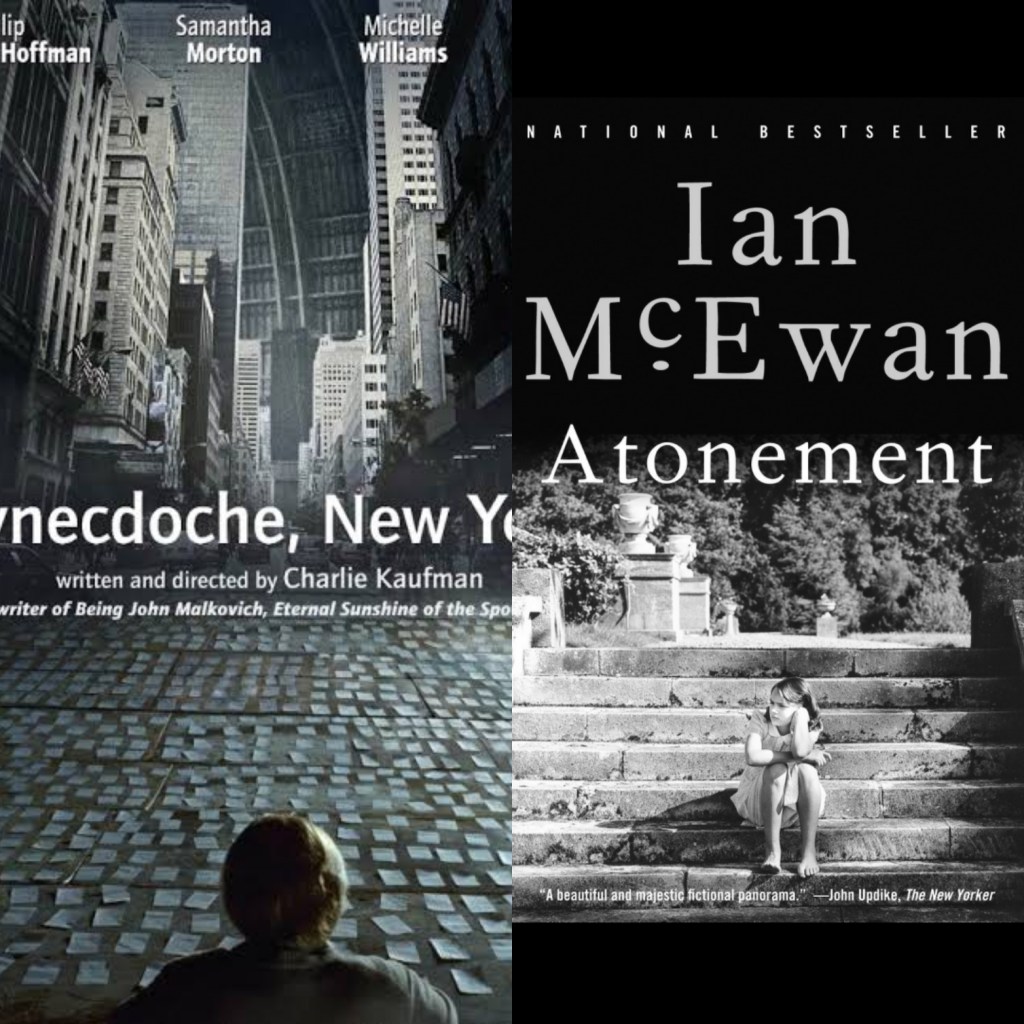
She knew what was required of her. Not simply a letter, but a new draft, an atonement, and she was ready to begin.

McEwan, Ian. Atonement (p.332)
*This article contains information on suicide.
Mallarmé says the psyche is like a melody, hard to reassemble. I have often misinterpreted that as ‘it can be rebuilt’, which is exactly the opposite of what he said. For an unknown reason.
In the film Synecdoche, New York, a man who once won a big award for a stage play tried to create another New York to pour his life into his next film. When the tragedy strikes, he adds a note to the script: As a result, the theatre has not been open to the public for more than 17 years and the world continues to swell. In it, a priest actor says: “You only see a tenth of what is true. There are a million little strings attached to every choice you make. You can destroy your life every time you choose, Bat, maybe you won’t for 20years, and you may never ever trace it to its source” Writers are responsible for themselves, but in contradiction, they can’t make their work in their own shell. The man who played his part jumped to his death and apologized to his dying daughter; he was not forgiven by her. She said his daughter would never forgive him and died. If she had lived a few minutes, would her answer have been different? He tried to write a fictional world in which he could perhaps be forgiven by her. The stage seemed to be a never-ending redemption for him. Redemption is God’s work, atonement is human work, atonement is an attempt to make up for a deficit or loss, and redemption is facing one’s sins, but when the writer confronts sin, he or she sometimes retreats into a shell of redemption. Redemption is God’s work, atonement is human work, atonement is an attempt to make up for a deficit or loss, and redemption is facing one’s sins, but when the writer confronts sin, he/she sometimes retreats into a shell of redemption. Then, while thinking and asking ‘what is Atonement’, he tries to make use of the deficient parts in his stories. For a writer to represent ‘Atonement’ seems like a challenge.
Ian McEwan’s Atonement is a striking example. The main character, Bryony, told an unpardonable lie at a very young age. Although the girl was already of age to understand what was happening, she was still very young. Bryony’s lie tears his sister and lover apart and he’s in jail for a crime he didn’t commit. Eventually, war breaks out and they die, so they never get reunited. Bryony works as a nurse and begins to write single-handedly and starts writing Atonement. Why was it ‘Atonement’ and not ‘Redemption’, because in her novel she wrote her sister and her boyfriend to be reunited. However, why is such a masterpiece so well known, when the public and readers still feel it is unexplainable? Because this leaves the author with the fact that the ‘Redemption’, which is at the heart of the performing of the atonement, never ends.

I was also unable to write for the last time when I published in 2016. The recuperation period was so long that I didn’t feel alive and I found myself dreading the time that had passed in 2022. During that time, I do not deny that I was like the main protagonist of Synecdoche, New York”. Seasons turned when I misread Mallarmé’s poems over and over again. Once published in 2019, ‘Precious and faithful disease.’ was originally a full-length story, which was cut out in the introduction as a short story as my health deteriorated. Later it was supposed to be continued and prefigured, but it became still harder to write. The idea was conceived around 2012, and the suicide of a cleric, a sacred being, is found in the Tale of the Heike, or even further back in the Kojiki. I chose it as a subject that only the Japanese could write about, but I knew that even if the subject matter was misleading, it would need to be retrievable. I could not think properly, the days passed as though I had brain fog. Aside from not knowing how long it would take to heal, I never saw the manuscript finished finally. and As I was avoiding it, I began a recovery period as I worked on other writing projects. This story began in the early stages like this. ‘My sister committed suicide. Father, it is your fault’, however, in the rest of the story, which was not published, it was a phantom vision that the priest had seen.
Selimi was in fact alive and converted. And as a writer, she had been successful in Christian evangelism and was gradually gaining credibility. Over time, one of the readers told the writer’s story at a baptismal ceremony. When a priest heard about it, he had alienated her, and killed himself because he thought his secret had been revealed. However, the novel she had actually written described only the kindness and good stories of the priest, and the subject matter was completely different and the story of her conversion. If I could have published it till the end, I would have approached the title “Faithful Disease” at the end of the book. But I was skeptical about the possibility of a modern novelist working on someone’s religious beliefs, so-called evangelization, and since I had never achieved it, I felt it was too imaginary to publish.
Over the past few years, two miracles have occurred, The first is Spring Snow. I took it from Yukio Mishima, although it is an unpublished part. At the time of writing, however, it was not possible to see snow falling when the cherry blossoms were in full bloom. It seems that snow had always fallen during the cherry blossom season from time to time, but it was not until 2020 that spring snow was featured significantly. In fact, it was not until 2022 that I was actually able to see it. So this piece will be presented as the next one, although there will be significant changes.
Secondly, I thought was that it would be good if it was in the hands of new baptismal candidates so that the rosary could return to the church a step ahead of them. Passion will always come for Christians. For example, like me, you may suffer among the faithful or by the clergy.
In my own self-discipline, I met a young man at the end of a fall due to human friction, myself included. We were the same vulnerable people. The young man told me. ‘I was always willing to go to church if you would take me. ‘You never complimented me on the church, and you never took me. Nonetheless, I love the stories of the Bible, not just your philosophy, and I ended up wanting to be baptized’ Thus the appearance of a new baptismal candidate through me will save not only me but also the sinful clergyman who fell under the category at the time.
Thus the appearance of a new baptismal candidate through me will save not only me but also the sinful clergyman who fell under the category at the time. It was worth hanging on to Corinthians 1 in chapter 13, that love (agape) is circular, after all. If they had not pushed me away, I would never have met the young man. Without that moment of despair I would not have been aware of my presence to the vulnerable. Something about the essence of humanity is visible even in the darkness, and that is what is being questioned. I don’t mind if you don’t apologize to me in the future, but I can only pray that one day those who were sinful at the time will be able to thank God for this new wind and circulation. At least we should be thankful for him who says he enjoys church. That was me once, who was genuine in wanting to learn. We must not allow such a young man to be crushed. So I shall write it down here. As a reminder that your existence continues in someone else’s memory, in their records, even if it is hidden in this way. To borrow from philosophy of Bergson, the past is driven by feelings. I certainly could have criticized Christianity and interfered with the aspirants for baptism.
I did not do that. That was because I was trying to understand Jesus, who said he could stand up to a lame man, not an organization. Without using any special force, Jesus told the lame man that he could ‘stand’.
What I thought my redemption was about was evangelizing through stories, rather than stopping people in their tracks with bad publicity to get back at the other party. The biblical words that grew out of me, a being circulated in love, sinful clergy must welcome the congregation somewhere. There is no other ‘redemption’ for clergy. Even if you go to confession, your redemption is forever dark. There is no time to go back. Redemption is to be someone’s hope. Next time, it will be God’s command to save people, not to save themselves, but to save others, even if they have to vomit blood. I also feel sorry, however, that the clergy have a destiny that will affect them for the rest of their lives, more so than ordinary people. For me, I do not have that predestination. I pray for the day when I will be liberated in consideration of them.
My sins are, for example, that when I was rushed to hospital,
A friend of mine who came to pick me up began to tell me that he was afraid of the Grim Reaper and Reapers possess people. I knew nothing about it, I laughed and said that the Grim Reaper didn’t exist, but I was the one who made them think so. For me, the priests have already become unimportant. But redemption continues for those who have been wounded because of me.
This rosary has been with me for more than ten years. During that time, there have been deaths of friends and various farewells. Once I tried to dispose of the Catholic connection, but I kept the rosary. What I could not throw away at that time, and could not in theory, is that it lived on here. I gave it to a young man to remember to pray at all times. I have recently learned to run a little. My voice has also come back beautifully from the period when I could not speak. So my prayers have also become beautiful.
It was certainly not the misfortune of any one person’s fault. But … Anyway, You should pray.
https://weathernews.jp/s/topics/202003/290165/?fbclid=IwAR0dGpQxcm0K5UIEYk5Av-nZTS-028EGsv5m6sBwo4YTMjvf2OdqjyeMcKE
贖罪と贖い
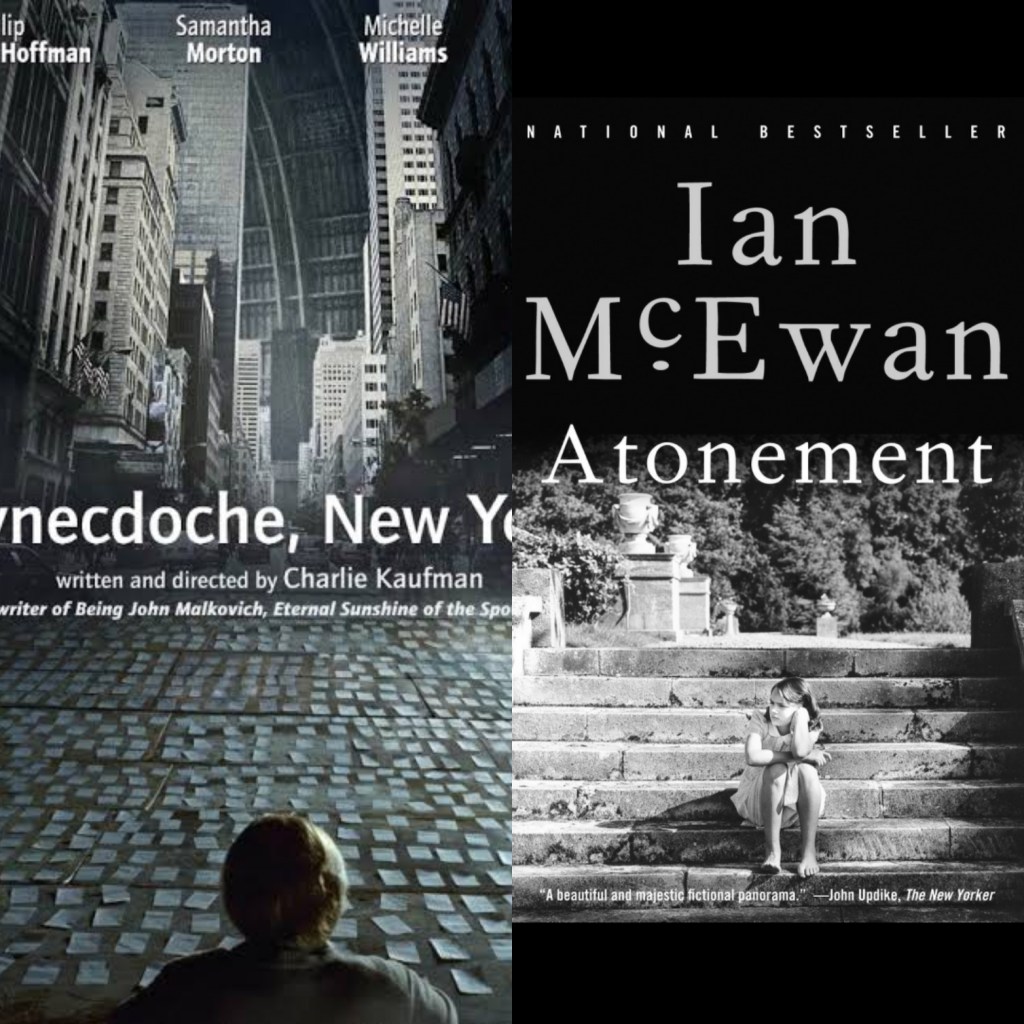
「自分に要求されているものは分かっていた。それは単なる手紙ではなく、新しい原稿、贖罪の原稿であり、書き始める準備はできていた」

贖罪:イアン・マキューアン
※この記事には自殺に関することが記載されています。
マラルメは精神とは旋律のようなもので、組み直すことが難しいと言った。それを私は何度も「組み直すことができる」と、真逆に読み間違えることが多かった。その原因は分からない。映画の「脳内ニューヨーク」では、一度舞台脚本で大きな賞を受賞した男が、次回作で自分の人生を注ぎ込もうと、もう一つのニューヨークを作ろうとした。一つの悲劇が訪れたら彼は脚本に加えようとするものだから、十七年以上劇場は公開されず、世界が膨れ上がってくる。その中で神父役が「真実は10分の一も見えず、人生の選択には100万本の細い糸が連なっている。破滅へと続く選択をしても、その結果が現れるのは20年後、もはや発端は分からない」と言う。作家は自分自身に責任が来るものだが、自分の殻に閉じこもっては作品を出せないという矛盾を抱えている。自分の役を演じた役者が飛び降り自殺をしたこと、死んでいく娘への謝罪、彼は娘から許されなかった。娘は父親を許さないと言った後に息絶えた。もしも数分生きていたら、答えは変わったのだろうか? 彼は、おそらく彼女から許されるような虚構世界を書こうとした。そんな彼にとって舞台は尽きることのない贖罪だったようだ。贖いとは神の業、償いとは人間の業、償いは欠損や損失を補おうとすること、贖いとは自分の罪と向き合うことと言うが、作家が罪と向き合うとき、贖いという殻に閉じこもることがある。そして「贖罪とは」と考えながら、そして問いながら欠損部分を話の中で生かそうと試みる。作家が「贖罪」を表すということは、課題のように思える。イアン・マキューアンの「贖罪」は、それを顕著に表していた。主人公のブライオニーは幼いころに許されない嘘をついてしまった。少女は既に分別がつく年齢といえばそれまでだが、まだ幼かった。ブライオニーの嘘によって、姉と恋人が引き裂かれ、彼は無実の罪で刑務所に入る。やがて戦争がはじまり、二人は再会できないまま死んでしまう。ブライオニーは看護師として働きながら、片手間で執筆をし始めて贖罪を書き始める。なぜ、「贖い」ではなくて「贖罪」だったのか、彼女の小説では姉と恋人が再会するよう書いたからである。しかし、何故、名作でありながら観客や読者が釈然としないという意見が出てくるのか、これが贖罪をする際に根幹となる「贖い」は晴れることが無いということを作家が残してしまうからである。
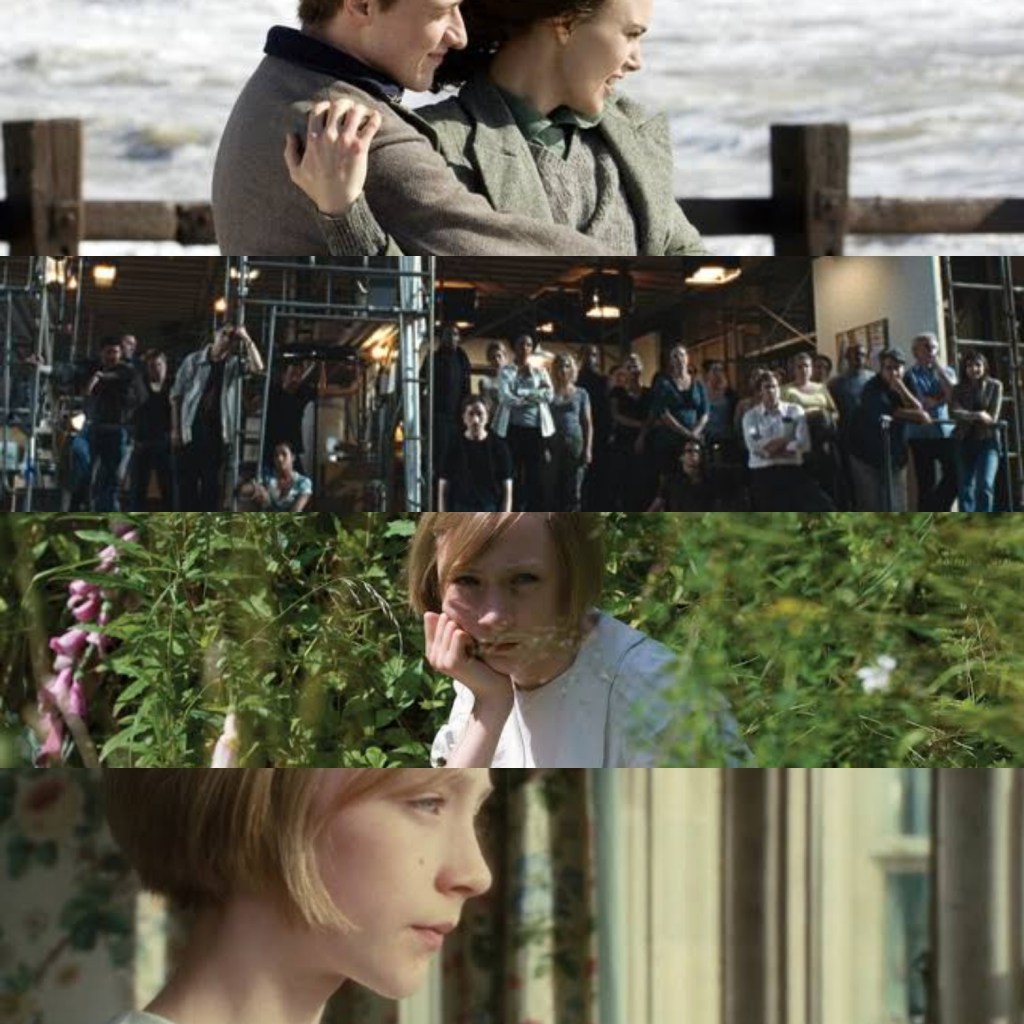
私も2016年の出版を最後に書けない日が続いた。生きた心地がしない療養生活は長く、気が付けば2022年で過ぎ去った時間を恐ろしく感じた。その間に私は脳内ニューヨークであったことは否めない。マラルメの詩を何度も読み間違えては、季節が廻った。2019年に一度出版した「類稀なる誠実な病」は元々長編だったのものを、体調悪化に伴って短編として序章で切り取ったものだった。後に続きを出して伏線回収というときに更に執筆が困難になった。考案は2012年頃からあり、聖職者、神聖な存在の自殺というものは平家物語、もしくはもっと遡って古事記にみられる。日本人しか書けない題材として選んだが、題材として誤解を招いたとしても、回収力が必要だということが分かっていた。しかし、当時の私には力はなく、少しの批判で折れてしまう。頭が回らない、脳に霧があるような日が続いた。治るのにどの程度時間がかかるのかわからなかった上に、結局のところ完成した原稿を見ることはなかった。それから避けるように、他の執筆の仕事をしながら療養生活に入る。「姉が自殺しました。神父、あなたのせいです」とあったが、公開されなかった続きではそれは神父が見た幻覚だった。その姉に該当する芹実は実際は生きていて回心していたのである。そして作家としてキリスト教伝道にも成功していて、少しずつ信頼を集めていた。やがて読者の一人が洗礼式でこの作家の話をした。それを聞いた神父が、その女性を疎んでいたので、秘密を暴露されたと思って自殺した。しかし、実際に彼女の書いてあった小説には、その神父の優しさや良い話しか記載がなく、主題は全く違うもので彼女の回心を込めたものだった。
「誠実な病」というタイトルに終盤まで行けば近づいていた。ただ、現代の小説家が誰かの宗教観に働きかけること、所謂伝道というものがあるのかということが懐疑的であり、一度も実現したことがなかったので、想像が過ぎるような気がして出せなかった。この数年間で二つ奇跡がおきました。一つは春の雪です。未公開部分ではありますが三島由紀夫から取りました。けれども執筆当時は桜の花が満開の時に雪が降るというのは見ることが出来ませんでした。元から時々あったようですが、大きく春の雪が存在すると取り上げられたのが2020年でした。実際に、私が見ることが実際に出来たのは2022年でした。だからこの作品は大幅に変更があったとしても、次回作として出すことにしています。
あともう一つは、ロザリオが一足先に教会に戻れるように、それが新しい受洗志願者の手にわたるのなら良いと思いました。キリスト教徒にとって受難は必ず訪れます。例えば私のように、信徒同士、もしくは聖職者によって苦しむこともあるでしょう。私自身の自戒を込めて、私も含めて人間同士の摩擦で落ちた先に、一人の青年と出会った。私たちは同じ弱者だった。青年は私に言った。「クリスさんが連れていってくれるなら、いつでも教会に行ってもいいと思った。洗脳じゃなくて教会のことはクリスさんは一言も褒めなかったし、連れていく話が一切はなかった。それでも僕は、クリスさんの哲学に限らず聖書の話が好きだし、洗礼を受けたいと思うようになった」このように私の元で新しい受洗希望者が現れることは、私だけでなく当時、該当した罪深い聖職者も救われるはずだ。やはり愛(アガペー)は循環するということ、コリント人への手紙の一、十三章にしがみ付いた甲斐がありました。彼らが私を突き落とさなければ私と青年との出会いはありませんでした。あの時の絶望がなければ私は弱っている人への存在に気づけなかったでしょう。人間の神髄は暗闇の中でも見えるものは何か、それが問われていることだと思います。私に謝罪がなくても構いませんが、いつか、当時、罪深かった人たちが、このような新しい新風や循環に感謝できるように、私は祈るばかりです。少なくとも教会が楽しいと言っている彼には感謝すべきでしょう。それは嘗て学びたいと純粋だった私の姿でした。このような若い人を潰すようなことがあってはならない。
だから私はここに書き記すことにします。己の存在は、このように隠されていても誰かの記憶の中で、記録の中で続いていることを忘れないように。ベルクソン哲学から借りるとすれば、過去は感情で動くものだとのことです。私には確かに、キリスト教への批判や受洗志願者の邪魔することも出来ました。私はそれはしませんでした。それは組織ではなく、足の不自由な男に立てると言ったイエスを理解しようとしていたからです。特別な力を使わず、イエスは足の不自由な男に「立てる」と言った。私の贖罪とは、相手への仕返しは悪評で人の足を止めるのではなく、物語を通しての伝道だと思いました。私から育った聖書の言葉、愛で循環された存在、罪深い聖職者はどこかで歓待しなければならない。過去に誰かを自殺に追い込んだのなら、次は誰かを歓待することです。聖職者にはそれ以外の「贖罪」はありません。たとえ告解しても、貴方の贖いは永遠に闇です。もう時間は戻ってきません。償いは、だれかの希望になることです。今度は保身ではなく、血反吐をはいてでも人を救うことです。
最後に私の罪とは、例えば病院に運ばれたときに、迎えにきてくれた人が、死神は人に憑依するとその人は言い出した。何も知らなかった私は、「死神なんて存在していない」と笑ったが、そう思わせたのは私だった。私にとって、既に神父はどうでも良い存在になっている。けれども、私のせいで傷を負った人に贖罪は続いている。但し、一般人よりも聖職者は一生を左右してしまう定めを持っていることに私も哀れにも思っている。私にはその定めはありません。それらを考慮して解放される日を祈っています。
このロザリオは、十年以上自分と共に歩んできました。その間に友人の死もあり、様々な別れもありました。一度、カトリック関連の処分を試みましたが、ロザリオは残しました。あの時の捨てられない、理屈では捨てられなかった、というものが此処に生きたことを。どんな時でも、祈りを忘れないようにと譲りました。最近、少し走れるようになりました。声が出せない時期から、声も綺麗に戻ってきました。だから祈りの言葉も綺麗になりました。
確かに、誰か一人のせいの不幸ではありませんでした。けれども……とりあえず今日も祈ることです。
東京は桜満開後に積雪
1969年以来51年ぶり
Literature and Mob Justice(SoarⅡ)
For the wages of sin is death, Rome6:23
Introduction
Some people say the Bible is a piece of literature, but I believe the words of the unknown man who said, “The Bible is not literature. When I was a young aspiring writer, I started by accepting that I didn’t exist, like an “unnamed worm”. Fiction is also a way to leave behind what you want to say, but you can’t leave it behind if you write it the way it is. This is why it was necessary to think calmly and reject ideas by revising. Embracing that cruelty, with the Bible at the top, my ego is humbled. Because everything is written in the legacy of the past, with the Bible above:There is no virgin in the imagination, and that was the beginning of my life as a writer. It was about “writing a cruelty story”, especially about “Mob Justice”. The quotation from Romans, “The wages of sin is death”, continued to move across the manuscript as it has been rewritten many times:Sometimes it was the introduction, sometimes characters who never came into the world spoke about this quotation. Actually, the words of the Bible continue. “but the gift of God is eternal life in[a] Christ Jesus our Lord.“and it will be explained that Jesus offers forgiveness to those who cannot break the flow of sin, and that the dead cannot sin.
And Then There Were None and Bergson’s philosophy
I also preferred Agatha Christie’s “And Then There Were None” during my recuperation from 2018 onwards. There are no detectives in this story. From the perspective of the third person, each corpse appears to speak, and the truth is summed up in the letter of Aposiopesis. There are ten people gathered here who have committed crimes that cannot be judged by the law. One of the murdered victims, Emily Brent, was a fanatic who had driven her pregnant servant to suicide. Ten individuals gathered here have committed crimes that cannot be tried by law. One of the victims, Emily Brent, was a fanatic who forced her pregnant maid into suicide.
Maybe she thought she would be killed afterwards, but she tried to stabilize her mind with Psalm 91, which promises God’s salvation;” You will not fear the terror of night, nor the arrow that flies by day, nor the pestilence that stalks in the darkness, nor the plague that destroys at midday. But his prayers failed and he was bitten dead by a bee.
The tragedy of this isolated island is orchestrated by a plot to kill Justice Wargrave. In the relentless passage of time, it is Bergsonian that the time of consciousness and the time of the world do not always coincide, but Emily’s decisions in the inner world of faith distort the outer world. He focused on the sins of the unpunished. Pure and inner awareness does not necessarily mean pure and enduring Christian love, light and goodness: Philosophical purity refers to universality and does not limit itself to ethics.
Killing by sanction is the unwritten law of that which emerges when philosophy and theology are trapped and concealed by ethics. Our sins are condemned by our faith and remitted by God. However, that is not always the case in the society in which we were born. The judge looked at this and came up with this plan. The best part of the story, the apparent killing puppet, was based on a poem from Mother Goose.This poem is also old and was originally written by the poet Mother Goose, and is translated as “Indian doll” or “soldier doll”. This poem is also originally symbolized black people, but was later changed to Indians.
Imitate murder is performed with dolls symbolizing the occupation and persecution. Matter is memory, the dualism of mind and matter is present this murder story. The time on the island is not owned by anyone, the protagonists themselves do not exist, and they are manipulated by a fictional being, U. N. Owen who have invited ten people. Formlessness controls the destiny of this island. Matter, space and memory, the relationship between them, passes unnoticed as a philosophy by most people. Nevertheless, like dolls, they are aware as soon as the material becomes suggestive, and they are in danger of being themselves. They find significance in the poems and dolls of Mother Goose, and live in the plans of the true criminals. Elusive sounds live fluidly as aural sensations, a gramophone playing a mysterious voice that exposes the wrongs of each person. We find ourselves even frightened of the interplay of matter and spirit, a philosophy that makes us dull and sleepy.

Judge Wargrave must have been pleased with the sight. Like table manners, as if it were a rule that passes for manners, he enjoys playing the killing dinnder.【killing game】 With the sound of a gunshot, the killer Wargrave, made it look like he was dead. Rising from it, his Ghost Play accelerates further. Wargrave’s self-absorption is evident in the way he likens himself to the biblical Cain and Abel.
Cain committed the first murder in the Bible and lied about it, but God would not let Cain take his revenge. Therefore, the Judge is a clown with an aesthetic illusion of justice. Because God’s wish is that there should be no Mob Justice. However, Mob Justice and aesthetics are two sides of the same coin. The Thaumatropes, whose cage and bird are painted apart, looks like a bird in a cage.If you turn the picture, you can see the bird in the cage, as if they co-exist and are involved with one another. Literature was attracted to that. Other arts, including painting and music, do not deal with ” Mob Justice” Painting is confined to religious or “Public punishment” when it comes to judgement.

Words have various roles, from God’s word to poetry, proverbs, fiction and journalism. Painting and music are not taken seriously by everyone, while language is mastered by everyone, and everyone takes it seriously, sometimes speaking of love, sometimes speaking of lies. Words means simply disappear and disappear over time. For example, the phrase “I love you” also fades away, because words require perception, memory and experience. Love cannot live by words alone. Love is accompanied by feelings and actions. In addition, the word “love” is often associated with many human beings. Even before an incomprehensible love, we can recognize the direction. When love works, it knows that it is love by its deeds.:On the other hand, private killings and retributions do not allow us to easily understand feelings of cause and effect. The Indian poem of Mother Goose is a cruel poem, and the last Indian hangs himself. These ten people are enough to understand the meaning of the Indian poem. Their lives are threatened so that the pure continuity of consciousness and time ceases to be a theory, and they end up in the past ≒ memory without redemption.
Souls by Mob Justice
Like the ten invited guests, we do not see memory, time and space as separate objects.
According to Plato’s three ideas, (1) is the true, (2) beauty, (3) interest towards the good. Sternberg refers to this aesthetic interest in beauty. In the Bible we find such a composition in the Old Testament story of Hagar. Abraham’s wife Sarah could not have children, so she gave birth to a slave, Hagar. She gave the child the name Ishmael. Hagar’s situation is similar to that of Emily Brent, but in the end, Hagar is saved by God.
In the biblical world, “Thou shalt not kill” (Exodus 20.13) is based on faith, on the absolute God. In the biblical world, “Thou shalt not kill” (Exodus 20.13) is based on faith, on the absolute God. But does literature write about evil, breaking its promises with mischief? “Literature and Evil”, Georges Bataille made us believe that the best of literature is to search for evil in the veins of the world. Writers sometimes sort philosophically if it is necessary to write only imagination or experience.Then imagination is no longer enough, and they seek to make everyday life more than a dramatic statement. So this story is quiet. In And Then There Were None, the characters, with the exception of the murderer, can only see the surface of humanity. There is no investigator in the movie, and evil is not the key to unlocking good. If there is any confirmation of God’s existence, it is when the “fishing boat” accidentally picks up the confession that the judge put in a bottle and was never meant to be picked up. Christianity has a profound connection with fishermen. Peter was a fisherman, and Jesus told him that he would be a fisherman who would catch men. Within the framework of a mystery novel, however, this point of view would be like wash for gold. (Gold dust) But wouldn’t the real world be insipid without such a ‘point of view’ and ‘consciousness’? The paintings are useless when they burn, as the paintings of Carel Fabritius are displayed as survivors of an explosion. How does literature affect people? Literature is of the nature that what words and concepts represent and people’s feelings do not have a fixed Buddhist substance. Therefore “And Then There Were None” shows the cruelty of the writing world.
Painting can be explained in words, but it must exist as a picture. Literature can be placed beside the Bible, but it fails to achieve a visible space and form. In the past, when I painted, they congratulated me on my ability to draw and my sense of color. I was looking for myself in painting, with ideas and concepts. This is probably when my philosophical reflections became more impulsive. What cannot be put into words seeks no form, and then tries to rely on something to paint. It was a passion that emerged in my youth, but I wanted something more mature. I couldn’t stand the self-image that bounced back from my consciousness and my technique. It was a passion I had when I was young, but I wanted something more mature.
I couldn’t stand the picture of myself bouncing off my consciousness and technique.: Like Van Gogh with his sunflowers and his obsession with color, I could not do it, I only saw thoughts of love and existence.
In the 21st century, philosophy and psychology are moving away from the soul. That is because it requires an ethical, moral, or religious viewpoint to describe them. But literature is still allowed to write the soul. Nietzsche described vengeful feelings as Ressentiment. By morality, the weak demonize the strong. This inversion of values is weakened in Agatha Christie’s “And Then There Were None”. Murderers took pleasure in the guise of revenge by proxy. They were not killed with such vengeance or moral slavery. It all comes down to poems and puppets by ten Indians, killed and gone. The artist’s need for approval is said to be greater in the story, which explains this killer. His hidden desires and the realization of his pleasures took place on an isolated island. If he had wanted social honor, he would not have committed such a crime. He threw away his confession in a bottle, not knowing whether it would be picked up or not, which is another way of checking the soul. It is a “Mob Justice”. There is an impulse that can only be asserted in this way. In literature, “Mob Justice” is not an actual sanction. He throws his confession into a bottle, not knowing if we’ll pick it up or not. The only way to be sure of one’s soul is to leave it to chance at last. This is the end of the “Mob Justice”
I did not select to paint flowers, my quest was collected as a bird’s nest and tried to form and It was a beautiful feeling, both as phenomenology and as poetical feeling. The plants and trees collected by the habits and coincidences of the birds are also the Word of God, but some herbs do not bear the image of God. It is the root rot, the weak grass, the dying grass,
I would write such an “evil” in the next piece.
Literature and Mob Justice Overview
It took me six years to work on this theme. Writing about cruelty, like journalism, is not about separating oneself from others. Sometimes you have to reveal your own malice.
I dealt with Agatha Christie’s “And Then There Were None” and Bergson’s philosophy. An unfamiliar subject, matter and spirit, is criticized as abstract when read as philosophy, but in the face of a murderous game everyone understands its meaning.
Understood the meaning. Indian dolls represent their lives and die according to an unintelligible Mother Goose poem.
Philosophical consciousness is not a need to be confined to morality or ethics. It means that there is no necessity for religious goodness, and I have summarized these ideas in this introduction. I have tried to make my unpublished novel the main topic of this
Article. Mob Justice is the desire for recognition of the oppressed and erased soul. I do not consider myself a victim of being driven in this way. I will be back.
Related articles
Literature and Mob Justice-vigilantism(SoarⅡ)
For the wages of sin is death, Rome6:23
Introduction
Some people argue that the Bible is a form of literature, but I am more inclined to agree with the sentiment expressed by an unknown figure who proclaimed, ‘The Bible is not literature.’ When I was a young aspiring writer, I began by embracing the notion that my presence was akin to that of an ‘unnamed insect.’ While fiction serves as a means to articulate one’s innermost thoughts, the challenge lies in presenting these thoughts in a manner that resonates with readers. This necessitates a discerning eye during the process of revision, with a willingness to excise what does not align with the intended message.
Embracing this narrative of brutality, with the Bible serving as the pinnacle, I found my ego humbled. Recognizing that the entirety of past legacies is encapsulated within the Bible’s teachings, I embarked on my journey as a writer, mindful of the absence of virgin territory in the realm of imagination. One lingering challenge that persisted for me was the task of ‘penning tales of cruelty,’ particularly in the context of ‘vigilante justice.’(mob justice)
The passage from the Letter to the Romans, ‘For the wages of sin is death,’ traversed my manuscript in various iterations, at times serving as the prologue, while on other occasions, being voiced by characters who never graced the narrative world. It is pertinent to note that the biblical text extends beyond this aphorism to elucidate, ‘but the gift of God is eternal life in Christ Jesus our Lord,’ underscoring the concept of redemption offered by Jesus to individuals ensnared in the cycle of transgression, where the departed are absolved of the capacity to sin.
And Then There Were None and Bergson’s philosophy
During my recuperation from 2018 onwards, I also came to appreciate Agatha Christie’s “And Then There Were None.” This story does not involve a detective. It is narrated in the third person, where each deceased body seems to speak, and the truth is eventually encapsulated in a letter of Aposiopesis. Gathered here are ten individuals who have committed crimes that evade legal judgment. Among the victims was Emily Brent, a zealot who had driven her pregnant maid to suicide.
Perhaps anticipating her own demise, she sought solace in Psalm 91, which promises divine salvation: “You will not fear the terror of night, nor the arrow that flies by day, nor the pestilence that stalks in the darkness, nor the plague that destroys at midday.” However, despite her prayers, she met her end being fatally stung by a bee.
The unfolding tragedy on this secluded island is masterminded by a scheme to eliminate Justice Wargrave. Amidst the relentless passage of time, a Bergsonian disconnect between the time of consciousness and the time of the world is observed. Emily’s internal worldview of faith influences her outward decisions. She fixates on unpunished sins. Pure and inner awareness does not necessarily equate to enduring Christian love, light, or goodness: Philosophical purity extends to universality and transcends ethics.
The act of sanctioned killing illustrates the unwritten laws that emerge when philosophy and theology are constrained by ethical considerations. While religion offers admonition for human sins and promises divine forgiveness, societal justice does not always mirror these principles. The judge turned his attention to this disconnection and conceived this narrative. The enigmatic centerpiece of the story, the staged murders through figurines, draws inspiration from a Mother Goose poem.
Originally symbolizing black people, the poem was later reimagined to depict Indians. These figurative killings, mirroring oppression and persecution, blur the lines between matter, memory, and the ethereal nature of the mind. Time on the island is elusive, as none lay claim to it; the very existence of the characters becomes transient, manipulated by the enigmatic entity U.N. Owen, who has lured ten individuals to the island. Incorporeal forces dictate the island’s fate.
The relationship among matter, space, and memory, often overlooked as mere philosophical abstractions by most, manifests tangibly, particularly when the material takes on suggestive undertones. Individuals uncover meaning in Mother Goose’s verses and symbolic dolls, as they unwittingly play into the orchestrated plans of the true culprits. A mysterious gramophone voice exposes each individual’s missteps, echoing as haunting aural sensations that unsettle even the most stalwart of characters, eliciting fear in the interplay between matter and spirit—a philosophical quandary that may leave one drowsy and disoriented.
The scene must have been quite favorable for the magistrate who orchestrated it. Just like good table manners(killing game) at a meal, he carried out the murders in a beautifully orchestrated manner. As the sound of a gunshot rang out, the culprit, Wargrave, feigned his death. Then, as he rose, his spectral drama intensified. Wargrave’s self-absorption is evident in his association of himself with biblical figures Cain and Abel. Cain, responsible for the first murder in the Bible, also resorted to lies. Despite this, God prevented Cain from seeking revenge. Consequently, the judge found himself ensnared in an aesthetic illusion of justice. This is because private punishment or vigilantism(mob justice) goes against the will of God. However, private retribution and aesthetic perception are inherently intertwined.
For example, ‘soma rope’ drawn separately.
A ‘soma rope’ depicting a birdcage and a bird separately creates the illusion of a bird within the cage. By turning the ‘soma rope,’ the interplay between the bird and its enclosure suggests a symbiotic coexistence. This Literature is likely to have honed in on this nuanced relationship. Unlike literature, other artistic mediums such as painting and music avoid delving into the realm of ‘mob justice.’ When it comes to rendering judgment, paintings tend to veer towards religious iconography or stop short at depicting ‘public punishment’.
Words serve various roles, from divine scriptures to poetry, proverbs, fiction, and journalism. While painting and music may not be taken seriously by everyone, language is a skill possessed by all, capable of expressing love or falsehood, engaging individuals earnestly. However, words simply come and go with time. Even the declaration ‘I love you’ fades, as words necessitate perception, memory, and lived experiences. Love cannot subsist on words alone; it requires emotions and actions as companions. Nevertheless, the term ‘love’ readily evokes associations for many. Despite the elusive nature of profound love, a sense of direction can often be discerned.
Love prompts actions, enabling one to recognize it through conduct. On the contrary, the emotions of cause and effect behind acts like murder or vigilante justice are not easily comprehended. Mother Goose’s Indian poem, a stark depiction, concludes with the image of the last Indian tragically taking his own life by hanging. These ten individuals grasp the full significance of the poem. The existential threat to their lives transforms the pure continuity of consciousness and time from mere theoretical musings into poignant realities. Furthermore, their narratives do not culminate in penance, but rather conclude within the realm of the past as intertwined with past ≒ memory.
Souls by Mob Justice
“Like the ten invited guests, we do not see memory, time and space as separate objects.
According to Plato’s three ideas, (1) is the true, (2) beauty, (3) interest towards the good. Sternberg refers to this aesthetic interest in beauty. In the Bible we find such a composition in the Old Testament story of Hagar. Abraham’s wife Sarah could not have children, so she gave birth to a slave, Hagar. She gave the child the name Ishmael. Hagar’s situation is similar to that of Emily Brent, but in the end, Hagar is saved by God.
In the biblical world, “Thou shalt not kill” (Exodus 20.13) is based on faith, on the absolute God. But does literature write about evil, breaking its promises with mischief? Georges Bataille made us believe that the essence of literature lies in uncovering evil. Writers sometimes ponder whether to write based solely on imagination or experience. Eventually, they find that imagination alone is insufficient, and they seek to capture the essence of everyday life. That’s why this story is serene, providing only a surface-level view of the characters, as no detectives are present in the narrative.
If there is any confirmation of God’s existence, it’s when a fishing boat accidentally discovers a confession that a judge had placed in a bottle, never meant to be found. Christianity’s association with fishermen is deep-rooted, and such unexpected occurrences can challenge our perceptions. In the grand scheme of mystery novels, these aspects may seem insignificant, yet they add a layer of depth to our understanding of the world.
Paintings, if destroyed, lose their meaning, similar to Carel Fabritius’s artworks after the explosion. Literature, on the other hand, has the power to impact individuals in unique ways, transcending physical space and form. How does literature leave a mark on people? It serves as a vessel for abstract concepts and emotions, portraying the fluid and ever-changing nature of human experience. The phrase ‘And Then There Were None’ encapsulates the brutal reality of the literary realm.
Art faces its true test when it remains as a solely tangible form, bypassing any need for verbal explanation. While painting is tangible, literature remains alongside the Bible but lacks a visual aspect. As I reflect on my past as an artist, it becomes clear that my pursuit was not of painting flowers but of exploring existence and love through art.
In the modern world, we find a disconnect between philosophy, psychology, and the soul, necessitating a return to a more religious perspective in order to address these fundamental aspects. Nevertheless, literature remains a powerful medium for delving into the complexities of the human soul. Nietzsche’s concept of Ressentiment and the inversion of values find echoes in Agatha Christie’s ‘And Then There Were None’.
The murderer in the story indulges in his desires under the guise of proxy revenge and pleasure, embodying hidden motives and selfish pursuits on the isolated island. His actions reveal an inner struggle for acceptance and validation. Ultimately, his act of discarding his confession into the ocean signifies a search for absolution, where chance plays a pivotal role in determining his fate. This narrative unfolds as a cautionary tale of vigilante justice.
My artistic exploration, akin to a gathering of twigs for a bird’s nest, aimed to give form to beauty and emotion. Despite the thorns and perils, every element in this artistic creation is akin to a word from a higher power. The process remains an introspective journey into the essence of existence and beauty, yearning for a deeper understanding of the human psyche.
In my next work, I aspire to delve into the darker aspects of existence, much like the shadows that lurk beneath the surface of our consciousness.”
Literature and Mob Justice Overview
It took me six years to work on this theme. Writing about cruelty, akin to journalism, does not involve separating oneself from others. At times, it necessitates exposing one’s own malice.
I delved into Agatha Christie’s ‘And Then There Were None’ in light of Bergson’s philosophy. While the subject matter of matter and spirit, when explored philosophically, is often criticized for its abstraction, in the context of a deadly game, everyone comprehends its significance.
In this predatory tale, Indian dolls symbolize their lives as they perish according to the cryptic verses of a Mother Goose poem.
Philosophical consciousness does not mandate adherence to morality or ethics. It indicates a lack of necessity for religious notions of goodness, which I have encapsulated in this introductory exposition. My aim is to elevate my unpublished novel to the focal point of this narrative.
‘Mob Justice’ embodies a yearning for acknowledgment of the downtrodden and marginalized soul. Despite being driven to the brink, I do not view myself as a mere casualty. I shall return.
Related articles
文学と私刑 飛翔点(2)
罪からくる報酬は死です ローマ人への手紙6:23
はじめに
聖書を文学の一つだと答える人もいるが、「聖書は文学ではない。聖書は聖書だ」と言い放った無名の言葉が一番的確だと思っている。作家を目指した若い頃の私は、まず自分の存在は「名も無き虫」と受け入れることから始めた。確かに私は存在している、けれども他人からは知らない虫だった。小説とは自分の伝えたいことを残せるものでもあるが、それをそのまま書いても残らない。そのために推敲で切り捨てる冷静な目が必要だった。大切な人の死を書いても容赦なく「面白くなかった」と批判が来る。それを受け入れること、聖書を頂点として私の自我はへりくだる。何故なら全部、聖書を頂点として過去の遺産に書かれてある。想像の処女性は無い、それが私の執筆生活の幕開けだった。それでも私には長年くすぶってしまった課題が残っていた。「残酷な話を書く」こと、特に「私刑」についてだった。ローマ人への手紙の「罪からくる報酬は死です」という引用は何度も原稿の中で移動し続けた。或る時は序章、或る時は世に出ることがなかった登場人物達がこの引用を語った。実際にこの聖書の言葉はこの続きがある。「しかし、神の下さる賜物は、私たちの主イエス・キリストにある永遠のいのち」と、罪の流れを断ち切ることが出来ない人間にイエスが赦しを与え、死人は罪を犯せないと説明を受ける。
「そして誰もいなくなった」とベルクソン哲学
私は2018年以降の療養中にアガサ・クリスティの「そして誰もいなくなった」も好んだ。この話には探偵は登場しない。三人称視点だが、各々の死体が語りだすような感覚に陥り、真実は黙絶法によって手紙に集約される。ここに集められたのは法で裁かれない罪を犯した10人だった。殺された被害者の一人のエミリー・ブレントは狂信者だったが、妊娠した使用人を自殺に追いやった過去があった。彼女は自分が次は殺されると思ったのか、「夜、脅かすものをも、昼、飛んで来る矢をも、恐れることはない」と神の救いを約束する詩編91篇で心の安定を図ったが、祈りも虚しく蜂に刺されて死ぬことになる。この孤島の惨劇は、裁判官のウォーグレイヴの殺害計画によって企てられていた。容赦なく過ぎ去る時間の中で、意識の時間と世界の時間は必ずしも一致しないとはベルクソン的なものだが、エミリーも信仰という内面世界での判断が外界へ歪を生んでいた。犯人も同じである。公刑で裁かれなかった罪、という内包された罪に犯人は目をつけた。純粋に内的な意識が向けられること、純粋持続とはキリスト教的な愛、光や善とは限らない。哲学的な純粋とは、普遍性をさし、倫理に囚われない。制裁による殺意とは、哲学と神学が倫理によって囚われて隠れてしまうものが不文律として浮かび上がる。
人間の罪とは宗教上は戒められ神から赦しを得られる。しかし、私達が生まれてから目にする社会とはそうとは限らない。罪人というものを戒めることをしないこともある。裁判官はそれに目を向け、この計画を思いついた。この話の醍醐味である見立て殺人の人形はマザーグースの詩に準えていた。インディアン人形、もしくは兵隊人形と翻訳される。この詩も古いもので元は黒人を象徴していたが、次にインディアンと変えられた。占領と迫害を象徴した人形で見立て殺人が行われる。物質は記憶、精神と物質の二元論がこの中にはあった。孤島での時間は誰も所有出来ず、主人公そのものが存在していない。10人を招待したオーエン夫妻(UnKowen)という架空の存在に操られることになる。この島の運命を司るのは姿無き存在だった。物質と空間、そして記憶、これらの関係性は大抵の人が哲学として意識しないでやり過ごす。それでも人形のように、物質が暗示的になり、自分の身が危ういとなるとすぐに認識する。彼等はマザーグースの詩や人形に意味を見出して、真犯人の計画の中で生きることになった。一人一人の過ちを暴露する謎の声を流す蓄音機、つかみどころのない音は聴覚として流体的に生きる。気が付いたら、退屈で眠くなる哲学、物質と精神の交わりに怯えるようにさえなる。
その光景は仕掛けた判事にとっても芳しいものだったのだろう。食事のテーブルマナーのように、彼は美しく順序よく殺人を行った。銃声の音と共に、犯人であるウォーグレイヴは死んだフリをした。それから起き上がって、更に彼の亡霊劇は加速する。ウォーグレイヴが自己陶酔に陥っていたのは、自分を聖書のカインとアベルのカインに見立てたところに現れている。カインは聖書の始めの殺人を犯し、嘘もついたが神はカインに復讐をさせないようにした。よって、判事は正義という審美眼を錯覚したことになる。何故なら、神の望みというものに私刑は望まれない。ただし、私刑と審美眼は表裏一体である。例えば、それは別々に描かれてある「ソーマロープ」のように。鳥かごと鳥が別々に描かれたソーマロープは、回せば鳥かごの中にいる鳥に見えてくる。ソーマロープを回せば共存してお互い関わっているかのように鳥かごの中に鳥がいる。それに目をつけたのは文学だろう。絵画や音楽等、その他の芸術は「私刑」を扱わない。絵画は裁きに関しては宗教画、もしくは「公刑」に止まっている。
言葉は神の言から、詩、箴言、虚構、ジャーナリズムと様々な役割を持つ。絵画や音楽は皆が本気で取り組むことは無いが、言葉は皆が習得し、時には愛を語り、時には嘘を語るように、誰しもが本気になる。しかし、言葉は単純に時間と共に生成消滅をしていく。「愛している」と言う言葉も色褪せていくのは、言葉は知覚や記憶、体感を要するからである。愛というものは言葉のみでは生きられない。愛には付随して感情と行動が伴われる。それでも愛と言う言葉は、しばし多くの人間が連想されやすい。理解しがたい愛の前でも、方向性は認識できる。愛は行動をし、行動によって愛だと知る。対して殺人や私刑というものは因果関係の感情を容易に理解出来ない。マザーグースのインディアンの詩は残酷な詩であり、最後の一人のインディアンは首を吊って死んでしまう。この10人はこの詩の意味を充分に理解する。命が脅かされることによって意識や時間の純粋持続が机上の空論でなくなった。そのうえ彼等は贖罪をすることもなく過去≒記憶によって終わるのである。
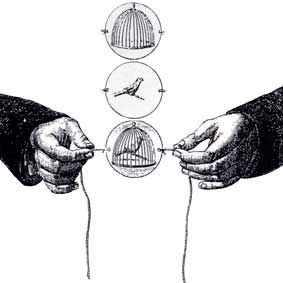
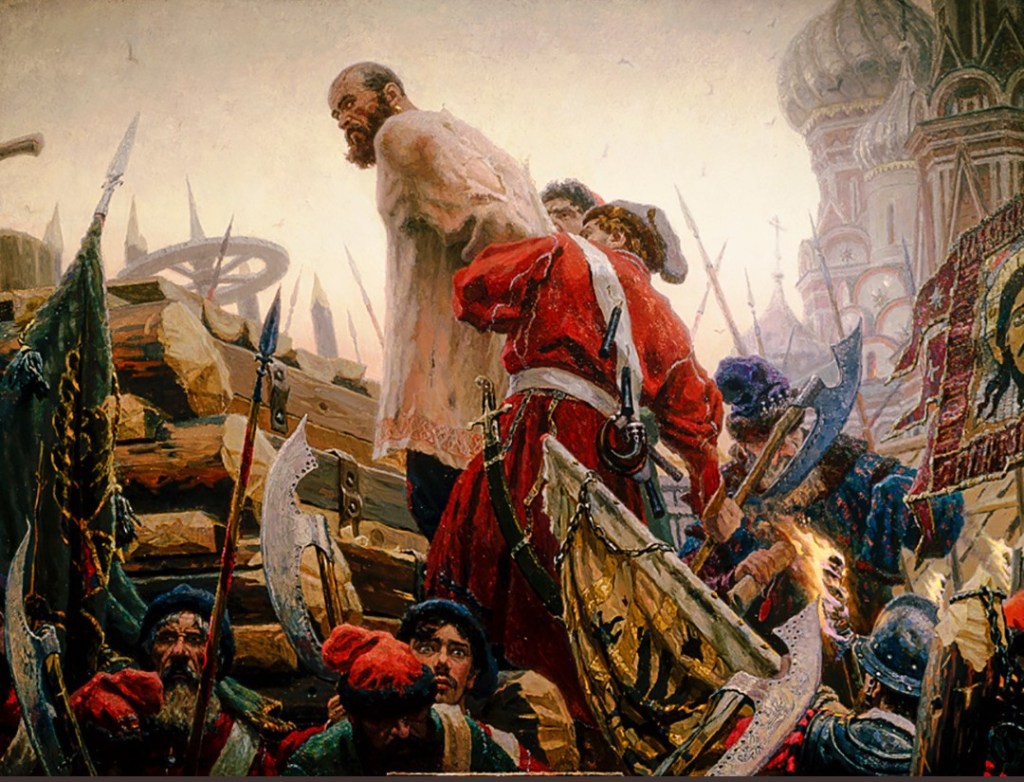
私刑による魂・善悪に囚われない意識
10人の招待客のように強制的に強いられなければ、記憶、時間、空間を切り離しては対象として見ることはない。プラトンの三つのイデアによれば、⑴は真、⑵は美、⑶は善に向かう興味であるという。スターンバーグはこの美の審美的興味とした。聖書にはそのような構図が旧約聖書のハガルの話で見られる。アブラハムの妻サラには子供が出来なかったので奴隷のハガルに産ませた。その子供の名前は「イシュマエル」とした。殺されたエミリー・ブレントと境遇は似ているが、ハガルの最後は神から救われる。
聖書世界の「人を殺してはならない」(出エジプト20・13)とうものは神という絶対者の元で、信仰に基づいている。人間は神との約束を破ってしまうので常に債務を負っているということだが、文学は悪戯に約束を破り続けながら「悪」を書いているのだろうか、数多く存在する作家の目的を絞ることは出来ないが、ジョルジュ・バタイユは「文学と悪」によって、文学の最高は世の水脈から悪を探り当てることだと思わせた。想像だけで書くのか、体験があって書くのか、作家は哲学的に整理することもある。そして想像だけでは事足りなくなり、ドラマティックな発言よりも日常化を求めるようになる。だからこの話は静かだ。この「そして誰もいなくなった」の登場人物達は犯人を除いて表面上の出来事しか知ることが出来ない。探偵が存在しないこの作品は悪が善を紐解く鍵にならない。神の存在が確認出来るとすれば、判事が瓶に入れて拾われるはずのない告白文を「漁船」が偶然に拾ったことだ。キリスト教と漁師の関わりは深い。ペトロは漁師であり、イエスに「人間を獲る漁師となる」と言われた。しかし、ミステリー小説という大枠の中でこの観点は砂金のようなものだろう。しかし、現実世界とはそのように「観点」と「意識」が無ければ無味乾燥なものではないのだろうか。カレル・ファブリティウスの絵画が爆発事故での生き残りであると、絵画は燃えてしまえば意味がない。文章はどのように人に影響を与えるのか。文学は言葉や概念が表すものや、人の感情が仏教的に固定的実体を持たない性質を持つ。だからこそ「誰もいなくなった」というのは、文章世界の残酷な一面を表している。
絵画は言葉で解説をしても、絵画として残っていることを条件とする。文学は聖書と並べられるが、目で見える空間と形には辿り着かない。嘗て絵を描いていた頃にデッサン力や色彩感覚を褒められた。常に思索や概念を抱いては、描くことで自分を探していた。哲学的考察がより一層衝動的になったのはこの時期だろう。若いが故に言葉になれないものは型を求めず、そして何かに頼ろうとして絵を描こうとする。若い間に現れるのは情熱ではあったが、私は円熟したものが欲しかった。意識と自分の技術から跳ね返る自己像に耐えられなかった。抽象絵画のように形からの脱却をしながらも色を用いる限り空間と比率が生まれる。あくる日に私は描きたい空間がなにもないことに気づいた。ゴッホが向日葵を描いたように、そして色を拘ったように出来なかった。私は愛や存在に関する思惑ばかり目に行った。21世紀になった今は哲学も心理学も、宗教は勿論、心や魂から離れながら進んでいる。それらを言い表すのなら宗教的観点が必要となってくるからだ。しかし、文学はまだ魂を書き表せる。ニーチェは復讐感情をルサンチマンとした。道徳的により、弱者が強者を悪とする。この価値の転倒は、アガサ・クリスティの「そして誰もいなくなった」では弱くなっている。
犯人は、代理復讐を装い、快楽に走った。そのような復讐心や道徳的奴隷で殺したのではない。全て10人のインディアンの詩と人形に集約され、人が殺されて消えていく。作中に芸術家は承認欲求が大きくなるとあるが、それはこの犯人のことだろう。隠された欲求と快楽の実現は孤島で行われた。彼が社会的な名誉を欲したのなら、このような事件は起こさなかった。自分の告白文を拾われるかどうか分からないのに瓶に入れて投げ捨てた、魂の確かめ方はこのような事もある。それが「私刑」の末路である。
花を描くことを選ばなかった私の探求は鳥の巣のように集められ、形成を試みていた。それは現象学として、そして詩情として、美しい心情があった。鳥の習性と偶然性で集められた草木は神の御言葉でもあり、棘があるものもある。それは根腐れ、弱い草、枯れた草、
次回作はそのような「悪」を書きたい。
概要
私刑と文学
酷な話を書くということはジャーナリズムのように、自分と他者を切り離せない。小説とは時には自分の悪意も生かしては吐露する必要がある。
アガサクリスティ「そして誰もいなくなった」とベルクソン哲学を扱った。馴染みのない、物質と精神は、哲学として読むと抽象的だと批判されるが、殺人ゲームの前では皆、その意味を理解した。インディアン人形が自分達の命を表し、意味不明なマザーグースの詩の通りに死んでいく。
哲学上の意識とは道徳や倫理に囚われる必要性がない。宗教的な善の必然性がないということ、それらの考えを今回は序章としてまとめた。
「私刑」それは虐げられた、消される魂の承認欲求である。
解説
関連過去ブログ
この記事は飛翔点(Ⅰ)に続きます。
Next Work Ⅰ (English)

The doctor said to me, “Gradually it will become possible to see. The light moved without being able to decide where to stay, and tried to create space, but the shapes were dreaming too much in my heart, and I was afraid of waking up. Outside is a nightmare, or is it possible to wake up?
The emotional conflict inside of the shadows and the light seemed to overwhelm me.
Outline
I am left with the memory that I was blind. When I say, ” touching the world,” it’ s not a metaphor. It is a recurring memory of the day I was blind and could see for the first time. And yet, the emotion of “that day” when I could see has faded, and this memory is like a stranger.
I wonder if I’ve come back to life or am I a stranger.
On a summer’s day the painter contemplated death, and on a winter’s day the writer found the body of a musician. Fleeing footprints were burst shot by the photographer.
By the way, where you were “that day”?
From the Author.
As for my own experience, there was a six-year period when I couldn’t write since my last publication (2016). Then I structured the novel in seven chapters based on the seven days of Creation in Genesis.
Publication schedule: Winter 2022 – Spring 2023
Language: Japanese and English
English version may be requested from a translator.
I adapted this photograph to show the protagonist, who experienced a past of blindness, repeating his/her memories. “The emotional conflict inside of the shadows and the light seemed to overwhelm me“
Photo by
Oscar Wilde, The Happy Prince (English)
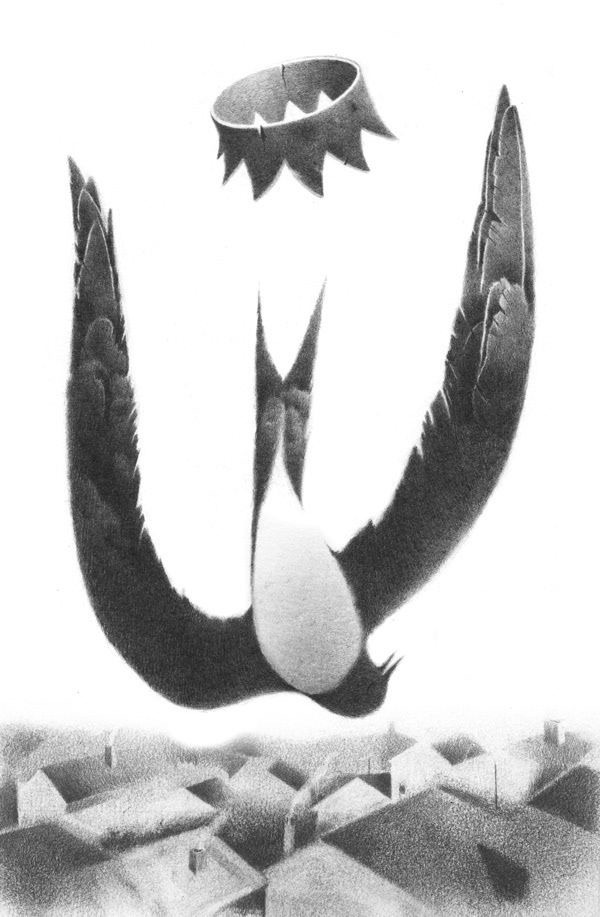
"Bring me the two most precious things in the city,"
The Happy Prince- Oscar Wilde
Prometheus took the fire from the heavens and gave it to humanity. For that, Zeus punished him. Both he and Jesus loved the human. In Greek mythology and in Jesus, the divine beings who gave their love to mankind were punished. The Happy Prince would be Wilde’s most Christian work, with the hope of converting him to Catholicism. Retarded on his way to Egypt, the swallow attempted to rest at the feet of the prince’s statue. Then the statue of the prince wept――.
The reason the swallow was 6 weeks after the others was because he was in love.
He asked her Shall I love you? She nodded yes. “Will you come away with me?” he said finally to her; but the Reed shook her head, she was so attached to her home. She was making out with the wind. The swallows said goodbye and went away.
Before his birth, the prince was beautiful like an angel. He was called the ” Happy Prince ” and became a statue. The prince, who did not know the outside of its walls, passed away happy.
When the prince found himself outside the walls, he despaired of the poverty and lowliness of the world. The prince asked the swallows to take to the poor the jewels and gold which decorated him.
At last, the prince had nothing left to give. The swallows were exhausted. The swallow finally kissed the prince and they both died. The prince’s body was melted, but for some reason his heart was not melted, so that he was discarded with the corpses of the swallows. God said, “Bring me the two most precious things in the city,” An angel picked the two souls and led them to the kingdom of heaven. In the picture books I read in my childhood, the love of swallows in the first half of the story and the Christianity of the last half were omitted.
The scene of poor people on a winter day reminds us of Andersen “the little match girl”, but the happy prince has a match-selling girl. The last person the swallows give the gold foil to is the matchgirl. Swallows are monogamous and raise their youngsters in couples. Swallows transport their food over 100 times, so this story makes ecological sense.
It is believed that the prince, who had never known outside the walls, died and never became an adult because he remained a prince, a title he held. Oscar Wilde also refers to children’s sacredness in his other book, The Selfish Giant. The giant had a lovely garden among its walls. With the giant gone, the children came to play. When the giants found them, they sent the children away. Then Spring stopped coming to the garden. The giants let the children in. This suggests a profound belief that children will go into the kingdom of heaven, as we have read in Matthew 18:3-5.
If you imagine a swallow flying around for the poor, the image recalls a street and a space. Time is a space, the analogy of Bergson appeared to indicate. Time is not linear, nor is it ephemeral. The flight of the swallows is repetitive, linear, planar. The swallows and the prince lived in an interior time different from the “exterior” time of the adults who had the prince who had lost his ornaments. Their kind-hearted deeds are different from the regular time. It is durée pure; They lived in the ambivalence of transmutation and preservation. How difficult and costly it is to love a human being. This is demonstrated by the description of the impoverished town and its inhabitants.
The prince was wealth itself. It was too big to share with the people. That’s why he needed the little swallows to get past a like needle hole. As it is more difficult for the wealthy to enter the kingdom of heaven than to go through the eye of a needle (Matthew 19:24), they begin their preparation for the narrow gate. (Luke 13:23,24) But the prince said to the swallows that misery was not a mystery. They will be carried by angels.
A most beautiful soul.
When the pure presence of the soul appears in the world of writing, a light comes into view.
It was as if, with the association of dawn in the mind, the beautiful sunrise revealed the presence of God. That the self-serving dialogue of the poor streets would fade into the distance;Our immersion rises into the kingdom of heaven.
When I was a little girl, I never wanted to be a stopped swallow;I wanted to be the swallow that ignored the prince and flew to warmer ground. But I realized what it meant to be a swallow that had nowhere else to fly but Sacred love.I thought of the Japanese words of prayer before Communion: Leaving you behind, who will I go to?
Bergson
Oscar Wilde – The Happy Prince
Bible Christianity
備考(Note)
Leaving you behind, who will I go to? Japanese Mass
my soul shall be healed English Mass
参考資料 Reference
『Brief Lives: Oscar Wilde』by Richard Canning Hesperus Press Ltd.
Essai sur les données immédiates de la conscience Henri-Louis Bergson
幸福の王子 オスカーワイルド
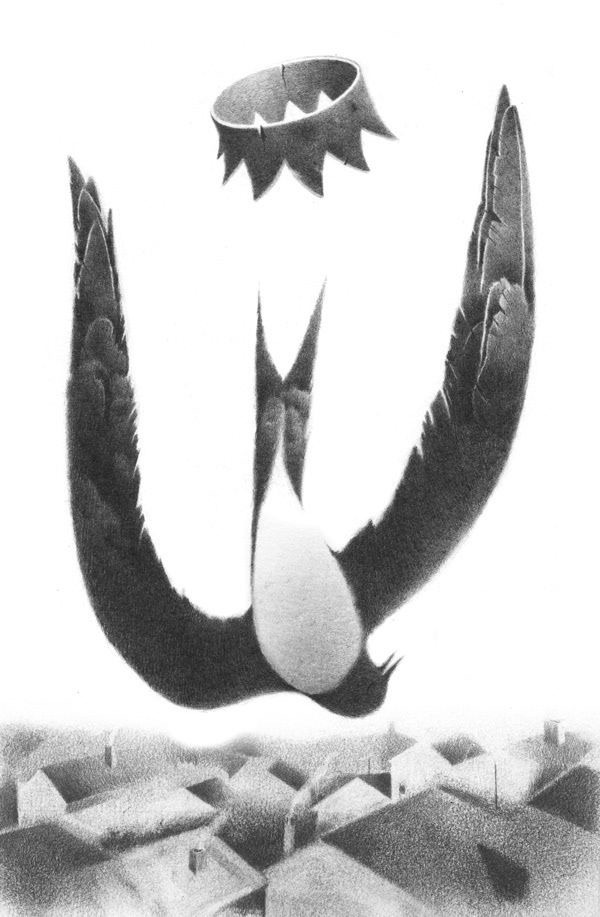
「もっとも美しい魂を持ってきなさい」

オスカーワイルド「幸福の王子」
火を人類に分け与えたプロメテウスはゼウスから罰を受けた。彼もイエスも人間を愛していた。ギリシャ神話もイエスも、人間に愛を与えた神聖な存在は罰を受けた。「幸福の王子」はカトリックへの改宗を希望としたワイルドの最もキリスト教的な作品と言われる。エジプトへと行き遅れたツバメは、王子の像の足元で休もうとしました。すると、像である王子が泣いていました――。
ツバメが他のツバメよりも6週間も遅れたのは、ツバメは恋をしていたからだ。相手はReed(葦)でした。Shall I love you(君のことを好きになってもいいかい?)と始まった恋、彼女はうんと頷きました。一緒に遠くへ行かないか、というと彼女は首を横に振りました。風と浮気性の彼女、ツバメは彼女に別れを告げて旅立ちました。金の銅像の王子は生まれ変わる前は天使のような存在でした。塀の外を知らない王子は、幸福のまま死にました。彼は「幸福の王子」と呼ばれ、銅像になった。塀の外を知った王子は世の貧しさと卑しさに絶望していました。王子は貧しい人達に自分を飾り立てている宝石や金をツバメに運んでもらいました。
王子はやがて与えられるものが無くなりました。ツバメも疲れきっていました。ツバメは王子に最期のキスをして、二人は死にました。王子は溶かされて新しい銅像となりますが、心臓だけは溶けなかったのでツバメの亡骸と一緒に捨てられました。それを、天使が拾って天の国へと連れていきました。
私の幼少期に出回っていたものは、前半のツバメの恋と終盤のキリスト教色が省略されていた。それでも献身的な王子とツバメの姿は日本人にも人気がある童話である。何処となく、冬の日の貧しい人達、という光景がアンデルセンの「マッチ売りの少女」を思い出させるが、幸福の王子にはマッチ売りの少女が存在する。ツバメが最後に金箔を与える相手が、
マッチ売りの少女だった。ツバメは一夫一婦制で、子育てを交互に行う。ツバメは餌を100回以上も運ぶので、この話は生態系としても成り立っている。
塀の外を知らなかった王子は、王子という称号のままなので、大人になれずに亡くなったと考えられる。オスカーワイルドは、他の作品、「わがままな巨人」でも子どもの神聖さに触れている。巨人は塀の中に立派な庭を持っていた。巨人が留守の間に子供たちが遊びに来ました。巨人はそれを見つけると子供たちを追い出しました。すると春が庭に来なくなったのです。巨人は子供たちを受け入れました。それは、マタイによる福音書 18:3-5にあるように、天の国に行けるのは子どものような存在ということを深く信じていたと考察される。
ツバメが貧しい人達へ飛びまわる姿を想像すれば、そのイマージュは街並みを、そして空間を思わせる。ベルクソンでいう、時間という空間の例えになりそうだった。時間は線上でもなく、刹那的なものでもない。ツバメは反復し、直線、平面を描く。飾りを失った王子を処分する大人たちの「外側」とは違った内面時間をツバメと王子は生きていた。
彼等の心優しい行いは、規則的な時間とは違う。純粋持続(durée pure)とでもいうのか、
転変と保存という両義的な中で彼等は生きていた。人間を愛するということが如何に難しくて、代償を必要とするのか。それは貧しい街と人々の描写で表れている。見下ろせるほど高い場所に存在する王子様の愛は、隙間を入れる小さなツバメを必要とした。王子様は富の象徴だったので、分け与える必要があった。裕福な者が天の国に行くことは針の穴を通るよりも難しい(マタイの福音書19章24)とあるように、彼等は狭き門(ルカによる福音書13章23と24節)への準備と始める。けれども王子は、悲惨 miseryは神秘mysteryではないとツバメに言った。彼等は天使によって運ばれる。
最も美しい魂として。
純然なる魂の存在というものが文章世界に現れるとき、光が視界に入り込む。
それは心の中でのことで夜明けの連想と共に、美しい朝日が神の存在を現すかのようだった。貧しい街並みの身勝手な台詞が遠のいていくことは、
私達のイマージュは天の国へと上昇する。
私は子どもの頃は止まるツバメになりたくなかった。王子の話を無視して暖かい国へと飛んでいくツバメになりたかった。けれども、神聖な愛以外に飛んでいく場所なんてないのかもしれない、その意味に気づいた。日本語の祈りの言葉である「あなたを置いて誰の所に行きましょう」のように。
参考資料
『Brief Lives: Oscar Wilde』by Richard Canning Hesperus Press Ltd.
Essai sur les données immédiates de la conscience Henri-Louis Bergson
備考
「あなたをおいて誰のところに行きましょう」は英訳版の祈りの言葉では、
But only say the word and my soul shall be healed.「ただその言葉を言うだけで、
私の魂は癒される」となっている。多国籍ミサのときに同時に聞くと深くなる。
Satoshi Kon

The post Satoshi Kon appeared first on Unclearer. Satos…
Satoshi Kon

 Chris Kyogetu