The Beauty and Poetry of Labour(1) Simone Weil /English

Les travailleurs ont besoin de poésie plus que de pain.
La pesanteur et la grâce Simone Weil

  1. Ⅰ.Introduction
  2. Ⅱ.Premonition
  3. Ⅲ .Turning Points and Contradictions
  4. Ⅳ ouvrière and ouvrier
  5. Ⅴ The labourer and Poetry’ (1) Plato, ed. 
  6. Continued in ‘Labour and Poetry (2): The Christ Edition.

Ⅰ.Introduction

Simone Weil’s life and philosophy were characterised by numerous intricate twists, as reflected in her writings, which offer a breadth of interpretations that often elude certainty as to whether she herself foresaw them. Her notebooks comprise a collection of fragmented reflections, which, after her death, were organised, edited, and published by her friends and fellow believers. Among her works, the celebrated Gravity and Grace (La pesanteur et la grâce) stands as a masterpiece, owing in no small part to the editorial contributions of Gustave Thibon.

The recurrent themes of ‘turning points’ and ‘contradictions’ in her philosophy, I argue, demonstrate a persistent consistency throughout Weil’s thought, especially in relation to her spiritual quest and profound engagement with Jesus Christ. Weil’s exploration of Jesus Christ led her to confront numerous religious and philosophical questions, which, I believe, served as a central axis that imparted coherence to her seemingly disparate transformations. Her efforts to reconcile faith with reason, and to deepen her understanding of life’s inherent suffering, demand thoughtful reflection, no matter how often one revisits them.

For me, engaging with her work remains an enduring source of profound joy.

Ⅱ.Premonition

In 1932–1933, a year before beginning her work in a factory, Simone Weil travelled to Germany to gain deeper insight into the foundations of fascism. In a letter dated 20 August, she observed that the Nazi Party had garnered support not only from the petit bourgeoisie but also from a significant number of unemployed individuals and other vulnerable groups. Although her stay in Berlin lasted just over two months, she retained vivid impressions of the city’s atmosphere. Former engineers struggled to obtain even a cold meal, yet no military personnel were visible on the streets.

At that time, Germany was grappling with widespread unemployment and severe hardship. In 1942, Weil confided in a letter to Father Perrin, with whom she shared a close relationship, expressing an inner conflict: “I know that if twenty German youths were to sing a Nazi song in unison before me at this moment, a part of my soul would instantly resonate with that of the Nazis. This is my profound vulnerability, yet it is how I exist.”

Upon her return from Germany, her analysis of the country encountered criticism from orthodox Marxists. Nevertheless, she endeavoured to support German exiles to the fullest extent possible.

Ⅲ .Turning Points and Contradictions

In his book Strength to Love, Martin Luther King Jr. draws on a quote attributed to a French philosopher, asserting that “a person who lacks a clear and prominent antithesis in their character is not strong.” However, the identity of the philosopher in question remains uncertain. King frequently invoked philosophical concepts in his speeches and writings, often referring to thinkers like Hegel to emphasise the necessity of balancing opposing forces to achieve harmony and progress. Hegel’s notion that truth emerges through the synthesis of thesis and antithesis aligns with King’s message of deriving strength and understanding through the reconciliation of differences and unity. Moreover, King observed that Jesus also preached about the fusion of opposites, as seen in his admonition: “I am sending you out like sheep among wolves,” and the instruction to “be wise as serpents and innocent as doves.” Although this teaching is undoubtedly demanding, it reflects the expectations that Jesus placed on his followers.

That said, Hegel was a German philosopher, which raises the question: which French philosopher might King have been referencing? Given the period, Gaston Bachelard is a plausible candidate. However, I argue that Simone Weil is equally likely. In late 1934, having resigned from her teaching post, Weil began working as a press operator in a factory, driven by a determination to confront the demands of the “real world.” Before embarking on this factory work, she had been preoccupied with the idea of creating “masterpieces” and “posthumous works.” Yet, the ideals she cherished proved difficult to sustain in the face of the harsh realities of factory life. She reflected on these experiences, recording: “I can’t help but think that interchangeable parts are like labourers. The parts seem to have more citizenship than we do,” as she entered the factory gate, displaying her numbered ID.

Simone Weil left behind a pivotal statement that encapsulates her philosophy: “What labourers need is not bread, but poetry.” During her time in Germany, she observed the plight of the unemployed and expressed her feelings of inadequacy to Father Perrin. The contradictions she grappled with in her philosophical and theological inquiries reflect the inherent complexity of human existence. Indeed, the notion that human essence is fundamentally complex has been explored by philosophers long before the advent of psychology. Plato’s tripartite conception of the soul and Aristotle’s examination of human nature in relation to logical virtues laid the foundation for this discourse. The exploration of human reason, emotion, and self-awareness evolved through the works of philosophers such as Descartes, Kant, and Hegel during the Middle Ages and Renaissance, expanding our understanding of the human mind. In the modern era, Freud’s scientific approach marked a critical turning point in this tradition.

Returning to Simone Weil, her assertion that “What labourers need is not bread, but poetry.” might appear paradoxical when juxtaposed with the brutal conditions of factory work. In such an environment, uncovering beauty and poetry presents a profound challenge. This tension echoes Hegel’s dialectic of thesis and antithesis. However, Weil’s philosophy, I contend, offers a distinctive perspective that requires deeper engagement with the complexities of the human spirit and psyche.

Weil also recognised that poetry could seem irrelevant to labourers, given the harshness of their daily struggles. She herself experienced the exhaustion and disillusionment intrinsic to physically demanding labour. Her philosophical explorations, particularly those rooted in biblical engagement, reflected the inner turmoil she faced. She even recorded that her distress in the factory was so overwhelming that she contemplated suicide by throwing herself into the River Seine.

Weil’s intellectual transitions and fragmented thoughts seem to form an inclusio structure, wherein statements that appear contradictory—much like the reflections of Koheleth in the Old Testament—gain coherence when examined in relation to one another. While Weil acknowledged that artistic expression had little relevance in the context of labour, she also explored the interplay between timepieces and artistry. She remarked that a clock, even when crafted with precision, functions without love, whereas a work of art requires love to resonate meaningfully. One may wonder why Weil insisted that “What labourers need is not bread, but poetry.” Even if we were to systematically outline the logical implications of her statement, conveying the mental state induced by labour at that time remains an arduous task.

I intend to unravel this challenge in my own way.

Ⅳ ouvrière and ouvrier

The direct translation of Simone Weil’s La Condition ouvrière is The Condition of the Labourer. The term ouvrière refers to female labourers, and in this work, Weil distinguishes between ouvrière and ouvrier, using the former to denote female labourers, including herself, and the latter to refer to male labourers. This distinction follows standard French grammatical conventions.

I am close to concluding that the salvation of a labourer’s soul depends primarily on their physical constitution.” While this idea is subjective, her use of ouvrier reflects an awareness of the collective and universal role of labourers. This distinction thus signifies both the importance of individual existence and a broader, societal perspective.

“mais jusqu’à quel point tout cela résisterait-il à la longue ? – Je ne suis pas loin de conclure que le salut de l’âme d’un ouvrier dépend d’abord de sa constitution physique. Je ne vois pas comment ceux qui ne sont pas costauds peuvent éviter de tomber dans une forme quelconque de désespoir – soûlerie, ou vagabondage, ou crime, ou débauche, ou simplement, et bien plus souvent, abrutissement – (et la religion ?). La révolte est impossible, sauf par éclairs (je veux dire même à titre de sentiment). D’abord, contre quoi ?” On est seul avec son travail, on ne pourrait se révolter que contre lui –La Condition ouvrière Simone Weil

Next, we turn to:

“But to what extent would all this endure over time? I am close to concluding that the salvation of a worker’s soul depends primarily on their physical constitution. I cannot see how those who are not robust can avoid falling into some form of despair—whether it be drunkenness, vagrancy, crime, debauchery, or simply, and far more often, stupefaction—and what of religion? Revolt is impossible, except in fleeting moments (even as a feeling). First, against what? One is alone with their work; one could only rebel against it.”

Weil’s expressive power is paradoxically revealed through her encounter with the flower of evil, exemplified by her exposure to the Bessarabo Affair (l’affaire Bessarabo) in 1920, when a man was murdered by his wife, and his body transported by train. This incident reflects the human longing for goodness, even in the midst of moral decay. Weil argues that the concept of sainthood—particularly of a female saint—is ultimately flawed. She possessed the strength to maintain opposition to idealised moral righteousness. Furthermore, her factory experience gave her first-hand insight into the lives of individuals lacking the resilience she had cultivated.

By ‘individuals lacking resilience,’ Weil refers to those without the physical and psychological endurance necessary to withstand harsh conditions. In this context, the physiological and psychological composition of the individual becomes critical in resisting social and economic pressures. For those with limited physical capacities, the risk of succumbing to despair in difficult environments increases substantially, often manifesting in addiction, social deviance, delinquency, or emotional paralysis. Moreover, their rebellions are typically reduced to brief emotional outbursts; without a clear target of opposition, the potential for meaningful change remains blocked.
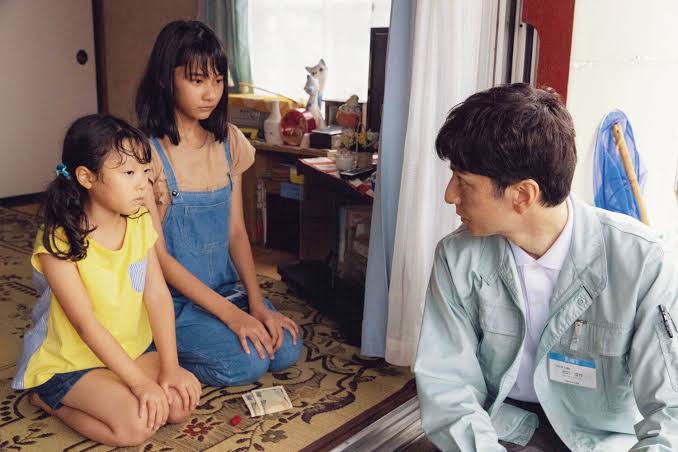
映画:「渇水」

(Drought -渇水)

This tension is also evident in the increasingly complex nature of contemporary poverty. The film Drought (渇水) portrays the struggles of a municipal water department worker tasked with visiting households and businesses in arrears on their water bills. When payment cannot be collected, he must carry out water shut-offs, cutting off access to water. During a summer heatwave, the residents affected by these shut-offs do not always present sympathetic cases. Some have fallen into despair, losing any sense of priority or financial planning. Others appear selfish, failing to pay their bills due to gambling addictions. In some cases, mothers in arrears prioritise their smartphones over their families’ essential needs.

In this context, the term labourers primarily refers to the water department employees. These workers often bear the brunt of public frustration, facing insults such as, “You’re just working for taxpayer money.” This conflict illustrates the tension between institutional policy and individual responsibility. Water shut-offs are implemented based on public policy, which must be applied uniformly to all users to maintain fairness and sustainability. However, these workers, despite being agents of the system, are human and must enforce these policies while facing resentment from those unable to pay. This dynamic extends to vulnerable groups, including single mothers, some of whom depend on men who leave them financially and emotionally stranded. In such cases, financial survival—not mere pleasure—drives their behaviour. Even under these circumstances, the water department employee may assist by helping families store water before shutting off their supply.

(Social Support and Institutional Constraints)

Support systems within institutions and society must continuously evolve to accommodate the needs of the vulnerable. Conversely, decisions to withdraw support on a personal level become necessary to safeguard mental health and the sustainability of shared resources. As individuals do not possess infinite emotional or material resources, boundaries must sometimes be established to preserve long-term relationships. In practice, however, people rarely have the clarity to assess these considerations when overwhelmed by hardship. This may partly explain why society often seems indifferent to individual tragedies.

Weil’s writings highlight how institutional inadequacies and injustices—such as precarious employment and insufficient social security—constrain individuals and perpetuate cycles of poverty. However, her reflections transcend the conflict between institutions and individuals by focusing on human fragility. Her philosophical inquiries explore what individuals can do and what emotions ought to be nurtured between people. Yet, the boundaries of these inquiries remain ambiguous. Weil’s search for meaning unfolds through the ‘hypothetical truths’ she articulated in her factory diaries. It is here that her concepts of ‘turns’ and ‘contradictions’ demand both lived experience and abstract understanding.

Ⅴ The labourer and Poetry’ (1) Plato, ed. 

In the secondary literature surrounding Simone Weil’s renowned work “Poetry for the Labourer,” many interpretations suggest that labourers may find salvation by cultivating sensitivity and mystical richness through engaging with poetry. However, I find that this reading does not align with my understanding of her text.

First and foremost, poetry revolves around ‘intuition,’ a concept that both the author and the reader must grasp. Yet, articulating such a concept within an academic or self-help framework is exceedingly difficult. Intuition resides in a realm that language may only partially express, never fully resolving it. While language is a powerful medium for conveying human experience and emotion, it remains inherently limited.

Spiritual fulfilment and cultural experiences often transcend the boundaries of language, relying on intuitive understanding and sensitivity. This realm encompasses complexities, depth, and contradictory emotions that resist verbal expression, manifesting instead as inner transformations and profound realisations. Weil herself noted that persuading others is challenging when relying solely on impressions without concrete evidence, yet she asserted that human misery could only be expressed through impressions: “Misery is constituted solely of impressions.” Through her writing, she captures the nuanced layers of human experience that extend beyond words.

In early 20th-century France, Taylorism—a system of scientific management developed by Frederick Winslow Taylor in the United States—was widely criticised. Taylorism divided labour into smaller tasks to maximise productivity, clarifying the roles of individual workers. However, the outbreak of World War I forced France to adopt Taylorist principles to facilitate the mass production of munitions. The need for efficiency and large-scale output led to the application of task specialisation and standardisation, improving productivity but rendering the work more monotonous and exhausting. Labourers faced faster-paced tasks with reduced autonomy, and both women and children entered the workforce. After the war, France pursued economic reconstruction and industrialisation, often under difficult conditions. Many factories operated with lax safety standards, subjecting workers to long hours and constant risks of injury. Wages were low, leaving working-class families in crowded, dilapidated housing, barely able to meet their basic needs. In this environment, Weil encountered the dehumanising aspects of factory work and observed the suppression of labourers’ potential.

Despite its limitations, recognising the value of language remains essential for fostering empathy and holistic understanding. Beauty, sensitivity, and intuition play crucial roles in bridging the gaps left by verbal expression. At the age of 16 in 1925, Weil demonstrated an early appreciation for the symbolic nature of wisdom, observing that “Plato’s thought is most beautiful when revealed through myths.” Although she frequently referenced Plato, her interpretations of Books VI and VII of The Republic were uniquely her own.

Weil engages with Plato’s metaphor of the ‘gigantic animal’ (θηρίον μέγα) in Book VI of The Republic, in which the state and society are likened to a vast and ferocious creature. This creature possesses distinct likes and dislikes, controlled by a ‘keeper’ who knows its tendencies well. What the creature favours is deemed “good,” and what it rejects is labelled “evil.” The key insight of this metaphor is that moral judgments are dictated by the preferences of the masses, symbolised by the animal. Plato warned of the dangers posed by societies governed by such relative and arbitrary standards. Weil aligns with this critique, emphasising that social morality is merely the reflection of collective preferences—nothing more than the likes and dislikes of a gigantic animal. She contended that morality, governed by social necessity, is inherently relative and can only be transcended through divine intervention. True goodness, in her view, must be directly revealed by God to the human soul.

Weil extends her engagement with Plato by reinterpreting Book VII of The Republic through the lens of love and ethics. Using the famous allegory of the cave, she argues that “humans must turn towards the good and love beyond themselves,” advocating for ethical growth grounded in a relationship with God rather than in intellectual achievements alone. Her interpretation moves beyond Plato’s educational theories, emphasising the moral and religious dimensions of human development. In Plato’s original text, the allegory of the cave depicts the gradual progression from ignorance to knowledge. While the focus is not on love, Weil reinterprets the allegory as a meditation on the capacity to love and the impossibility of self-love, comparing the eye’s inability to see itself directly with the limits of self-love.

Even in modern times, based on my own experience, when I worked part-time as a newspaper collector in 2013, I had to visit households to collect payments. The area I was assigned to mainly consisted of elderly people living in poverty. As solicitation and collection were handled by different personnel, I often received complaints about discrepancies between what had been promised and what was delivered. When payments could not be collected, I had to visit the same households two or three times. In practice, several elderly individuals were locked into auto-renewed newspaper subscriptions, unable to read what they purchased or withdraw cash due to physical infirmities. In some instances, I found elderly women wearing adult nappies, unable to dress themselves, calling out for help. Despite their circumstances, collectors could only leave notifications of unsuccessful payment attempts. Rooms were often filled with neglect and strong odours, a testament to the overwhelming difficulties these individuals faced.

Collectors lacked the authority to cancel contracts, even when it was clear that the other party could not fulfil their obligations. Without an explicit request to cancel, I had no power to advise them otherwise. These experiences revealed the limitations of personal enlightenment and sensitivity in addressing poverty and incapacity.

Collection work, while straightforward, does not cultivate transferable skills or essential competencies. It is a task that even children could perform, offering those without experience or qualifications an opportunity to earn a modest income. However, it requires patience and a significant degree of inner resolve. In stark contrast, proficiency in my primary occupation, details of which I will withhold, directly correlates with skill development through the completion of tasks. Skills gained from collection work, however, rarely translate into other career opportunities.

It is important to acknowledge that the situations I witnessed in these homes could one day become my own reality. Life viewed through a strictly materialistic lens suggests that a severe brain injury could render me incapable of sustaining my current lifestyle. If existence is reduced to mere materiality, the erosion of human dignity becomes an ever-present risk.

It may be argued that Simone Weil’s exploration of love and God was profoundly influenced by Platonic thought, particularly by reflections on the absurdity of Socrates’ execution, which deeply affected Plato himself. Articulating such abstract concepts is no small feat, requiring the translation of intuitive insights into verbal expression. Yet, for Simone Weil, this task was indispensable.

Following the Platonic tradition, Weil believed that liberation from the tyranny of society’s ‘great beast’ could only be achieved by transcending egocentric perspectives and locating one’s value in a relationship with God. For Weil, the inherent human capacity for love manifests in turning one’s attention beyond the material world, discovering true goodness through divine connection. This pursuit, for her, embodied the Platonic “Idea.” Plato’s exploration of ideal societies and true beauty rested on the notion that material existence is transient, with real value residing in the intangible. This resonates with Weil’s yearning for spiritual depth, symbolised by her emphasis on “poetry.”


Continued in ‘Labour and Poetry (2): The Christ Edition.

Righteousness according to Soseki Natsume’s consideration of ‘Kokoro’.English

・We talked of this and that. I should not have remembered the conversation at all, had it not been for the fact that in the course of it we talked of one matter which was of particular interest to me.

Sensei lived in complete obscurity.
Souseki Natume:Kokoro Translated by Edwin McClellan

  1. Synopsis 
  2. Meiji era and K
  3. Death and Righteousness
  4. What is the contemporary ‘kokoro’?
  5. (Introduction)
  6. Japanese
  7. ****

Synopsis 

Few people today would feel enthusiastic about the victory in the Russo-Japanese War. However, the death of Emperor Meiji and the suicide of General Nogi had an immeasurable impact on the Japanese people and the literature of the time. The “Sensei” in Natsume Soseki’s “Kokoro” was also inspired by these events to take his own life.

Meiji era and K

In Natsume Soseki’s novel “Kokoro,” the character known as “Sensei” also chooses to end his life following the deaths of both Emperor Meiji and General Nogi. The story’s narrator, a young man referred to as “I,” encounters a man accompanied by a Westerner at a seaside tea house in Kamakura. This man comes to be called “Sensei” by the narrator. 

If you, the reader, were a teenager picking up this book without any prior knowledge, General Nogi might not occupy your thoughts much. Initially, readers are likely to be drawn in by the narrative style of “Sensei” and “I,” the youthful student. Soseki skillfully has Sensei declare early on, “I am a lonely man,” which gradually draws the lonely young readers from the shore into the deeper, darker themes of death. This exploration extends beyond the simple end of life to questions of loyalty, righteousness, the enigma of suicide, and different views on life and death. Readers are left grappling with these themes, recalling that mourning is an act of the living, and are eventually brought back to reality, likely feeling profoundly moved by the experience.

At any age, and especially when young, people seek proof of ‘love’. This is why this story is so clever. The ‘Sensei’ tells ‘me’, who doesn’t know much about love, “But  do you know, that there is guilt also in loving?” 

The young man is drawn to the Sensei because he wants to love, and because he is already driven by love.

The Sensei explained that this was but a preparatory step (a staircase to love). In this way, both ‘I’ and the reader come to stand on the same ground.

With this groundwork laid, the stage is set. From here, the reader descends into the section of Sensei’s ‘testament’. This novel, composed of the sections ‘Sensei and I’ and ‘My Parents and I’, features a young calligrapher as the narrator. However, the ‘Sensei’s Testament’ chapter takes us back to Sensei’s younger days. Sensei became distrustful of people after his parents died of illness, and his uncle embezzled his inheritance. Here, Sensei also articulates one truth: money changes people. He then sold his family home, leaving only his parents’ graves intact, and decided never to return to his hometown. He continued his education at Tokyo Imperial University, lodging with a military widow in his youth. He noted that the widow’s daughter, Shizu, exuded a fragrance of the opposite sex. There, both the widow and her daughter took good care of him, providing him with the best room.

Initially, he was suspicious of their kindness, but over time, he grew to trust and develop an affection for Shizu. This affection was less about sexual love and more akin to ‘faith’. While Sensei had his doubts about money, he harbored hopeful and unwavering beliefs about ‘love’. Sensei had a childhood friend named K(initial)K was the son of a temple priest but was adopted by another family on the condition that he would become a doctor by attending medical school. However, K felt that the spiritual demands of ‘devotion’ did not align with medicine, so he went to a different university, lying to his adoptive family. Eventually, the burden of this deception became too heavy for K, and he confessed the truth to his adoptive family. Naturally, K was disowned.

Sympathetic to K’s plight as he ran out of funds for his education and began to suffer a nervous breakdown, Sensei brought K to his own lodgings. K, influenced by his Buddhist upbringing, was a sincere and honest man. Therefore, it wasn’t long before he began to suspect that Sensei was becoming too friendly with Shizu. Ultimately, K confessed to Sensei that he had fallen in love with Shizu.

The Sensei wanted Shizu more than loyalty and friendship for his longtime childhood friend. So he offered to marry the young lady to her mother, without even telling Shizu directly.


The Sensei and Shizu got engaged, but he never told K. However, the young lady’s mother had already informed K about the engagement; K knew about it and talked to the Sensei in a normal way.

Then K committed suicide.

Death and Righteousness

The last part of the Sensei’s farewell letter referred to the fall of Emperor Meiji and the suicide of General Nogi. He tried to count the years during which General Nogi had contemplated suicide. But in the end, the Sensei could not understand General Nogi’s desire to commit suicide. And he left in his will that no one should understand his own death. Regarding this first-person and third-person death, the philosopher Jankélévitch described death as first-person death, second-person death, and third-person death, but this story encompasses all deaths, including suicide. As for second-person death, the Jewish rabbi Grollman says that it can take away the past, present, and future of the ‘I’. The Sensei may also have been deprived by K’s death. For us, the deaths of both Emperor Meiji and General Nogi are in the third person and psychologically distant, but Soseki nevertheless reflected the complexity of the human interior through “Kokoro”. The Sensei’s loneliness, guilt, and desire for love show that human nature remains the same, even if the historical background has changed. The Meiji era itself was a time of great change, and people’s attitudes and values were shaken.

Unlike the Christian concept of Logos—“the Word” that was with God from the beginning (John 1:1)—the Japanese notion of kotoba (言葉) does not carry the sense of a transcendent principle. Its etymology points instead to human utterance, something finite and situated at “the end of speech” rather than its divine origin. However, as Kitaro Nishida also mentioned, ‘There is something hidden in the very root of Japan, something akin to perceiving the form of the formless and hearing the voice of the voiceless,’ there exists a culture that finds beauty in impermanence and change, such as in the Tale of the Heike and Sonezaki Shinju. Therefore, when discussing Natsume Soseki, it might be desirable to view Japanese literature in light of the significance that cannot be intellectually constrained by what presently exists, keeping in mind the formless and voiceless meanings.

While there are indeed similarities between Christianity and Japanese literature in their pursuits to grasp the intangible, the barrier of language often obstructs my efforts to fully convey the concept of the transcendent God when translating Christian-related material. Nevertheless, I believe it is crucial not to equate ‘differences’ with ‘wrongness’ due to this, and I do not hold the belief that other countries are inherently superior. I see the act of incorporating the absent, the seeds sown by God, as essential for reaffirming our essence as Japanese individuals. It could be argued that we, from this side, might already be acquainted with the beauty in darkness if it seems a dark place from the other side. I take pride in understanding the beauty of the tragedy of the eight-year-old Emperor Antoku and the nun in the Tale of the Heike. Their deaths tell of what is to come, signaling the passing of time into oblivion. Despite my numerous visits to the shrine in Sonezaki, Osaka, there remains no trace of what the lovers contemplating suicide must have felt. This serves as a reminder that the vibrancy that once thrived there has not endured in the same way. This, one might say, is aesthetics.

Death is an impartial, inevitable aspect of our lives that disregards our thoughts and desires. Love, on the other hand, is subjective and mutable, adapting to individual emotions and values. Love may sometimes evoke feelings of remorse and inner turmoil. Death can be seen as a static entity, while love is dynamic and intimately personal. In ‘Kokoro,’ each character bears the burden of their own sins, with K carrying the guilt of lying about studying medicine and ultimately choosing suicide akin to Hamletesque. It remains uncertain when the Sensei contemplated confessing his sins.

Lastly, I would like to conclude by recounting the story from Luke 18:9-14. The Pharisees, convinced of their righteousness, prayed internally with self-righteousness. ‘I thank you, God, that I am not like others: swindlers, unjust, adulterers, or even like this tax collector…’ In contrast, the tax collector humbly prayed, ‘God, have mercy on me, a sinner.’ Jesus regarded the repentant tax collector as righteous.

In the midst of this, it seems that the Sensei was unable to live up to any of the former Bushido morals of “righteousness, bravery, humanity, courtesy, sincerity, honor, and loyalty”. Even the young woman he married was not important to him. In terms of modern values, how selfish he was! He didn’t work, he only had assets, and he died just so he could leave his fortune to his wife.

He was like a ‘nobody’ in this world. Prophetically, this ‘floating’ existence does not seem like something from the distant past. This is because many people today are still unclear about the meaning of existence and social responsibility. And the striking phrase “Love is a crime” expresses the state of “Kokoro,” which cannot be righteous even through love, in response to General Nogi, who committed suicide following the death of Emperor Meiji.

It could be said that death is something that does not require our input or opinion. But the soul speaks to us and questions us: was K’s irrevocable, unilateral ‘death’, in the context of Adlerian psychology, an act of ‘revenge and accusation’? Or did he carry out the ‘suicide’ that the proud Hamlet refrained from committing? Or perhaps it was like Melisande in Pelleas et Melisande, dying from wounds that even a little bird might not have succumbed to. K left behind a will and then died. The Sensei attempted to reconcile K’s demise in a manner analogous to Salome holding Jokanaan’s head. The Sensei was unable to demonstrate either righteousness or courtesy from start to finish. The Sensei could not believe that K’s will truly reflected his innermost feelings. Taking solely from the will’s contents, it would seem to convey a simple message: ‘I am a weak-willed person with no prospects for the future, so I choose to end my life.’ However, the Sensei stumbled upon the added words, seemingly inscribed by K with leftover ink, saying “I should have died earlier”, which caused him much consternation.

It seemed as if the will was blaming him, saying, ‘It’s your fault,’ but in reality, it was different. while the deliberate omission of certain truths could have eroded the Sensei’s sense of self-worth. It’s possible that there existed a language only comprehensible to the Sensei, and that there seemed to be a language that only the Sensei could hear, as if the shadow of his death loomed over him.The Sensei knew that comparing himself to General Nogi was presumptuous and, realising their differences, he continued to see his own existence as lacking value. Ananda left Buddha’s teachings for later generations, but the Sensei had no means to leave anyone a reason for K’s death. 

For a long time, he had kept this burden, until he decided to leave his account, the ‘will’, to just one student. Not even Sizu, whom he married, understood why her close friend K had died. Her innocent sense of isolation was transient, yet there remained a single glimmer of hope amidst the uncertainty. That hope could perhaps be the young scribe reading the last testament on the train at the end. In that act, The Sensei may have finally transitioned from being an obscure individual to becoming a ‘master’ with a meaningful purpose.

I do not intend to connect the Sensei’s conscious repentance akin to that of the tax collector. His ‘death’ is not that. It seems he aimed for righteousness towards K and what could be likened to martyrdom towards the end of the Meiji era, fully aware that he was not akin to Emperor Meiji or General Nogi. Unable to discuss K even with his wife, he penned his life story to a youth who seemed lost. To me, this final act felt like a resistance against an aesthetic leaving no trace. This act of resistance could be seen as what’s ultimately beautiful. Despite declaring love as sinful, the Sensei persistently advised the young man on loving others. He seemed to insinuate that the subject of his apology would vanish. It’s a common misinterpretation among many Christians that a mere apology to God suffices, resembling the self-assured Pharisees. Shouldn’t this passage be interpreted as that Jesus does not wish for pursuits that fail to achieve righteousness? The Sensei could have shown more bravery throughout. He appeared cowardly, choosing to focus on himself rather than his wife. However, what he truly depicted is the inevitable truth that all things tangible will eventually fade away.

What is the contemporary ‘kokoro’?

An important part of addressing the challenges facing the modern Catholic Church is to listen to the complaints of victims. Calls for an apology should be seen as the voice of God and should be met with kindness and understanding. Even if the events happened decades ago, we must not trivialize them. If clergy receive criticism from believers, they should accept it as an opportunity for conversion.

In “Kokoro,” the characters are portrayed at the intersection of love and death, shifting from the first person to the second and third persons, making empathy as a third party significant in the relationship between this book and its readers. In the modern internet age, the right thing is not always received correctly.

I once translated ‘私刑’ (shikei) as ‘mob justice,’ which at the time might have been considered a mistranslation. However, recent events and public opinion have made me realize that this was not a mistake. In Japan, due to the lack of interest in Catholicism, there has been no mob punishment. However, when school teachers have committed similar acts, they have already suffered ‘private punishment,’ with their identities and photos being exposed online by mobs.

The proliferation of social networking sites has made the death and pain of others more immediate, yet the violent nature of mobs under the guise of sympathy is a significant issue. People working on the internet view this violence through the lens of “traffic.” In the future, AI may control inappropriate posts, but individual restraint will still be required.

Today, there is a growing need to distinguish oneself from others. Distant deaths should be considered irrelevant to oneself, and information about wars and disasters is often mingled with fake news, making verification difficult. Expressions of sympathy for victims can sometimes cause more harm, requiring prudence and discretion.

When you hear of someone’s death, intended kind words to the bereaved can be misunderstood and perceived as slander. In such an environment, those who can exercise self-control learn to distance themselves from others, while those who cannot may act violently as part of a mob.

Especially in the Catholic Church, it is crucial to acknowledge past sins, review doctrines and canon law, and take the lead in exercising self-control and self-discipline. We must respect the voices of the victims and understand the pain of revisiting past events. At the very least, we must not participate in any cover-up.

It is important to maintain a conscience, much like the shadow of K that haunted his Sensei. Just as Jesus acknowledged that some people are not righteous, ‘Kokoro’ includes characters ignorant of right and wrong, because the depths of the soul encompass a profound ignorance of good and evil

Everyone, always remember to be grateful for your life and the loved ones in it.

(Introduction)

– To be honest, I don’t really see the “Sensei

” as particularly virtuous, kind of like Osamu Dazai in his way of life. Instead, I got the impression that the character “I” who found the “Sensei” shows potential. The way he picks up and collects memories about the Sensei, acting practically as a disciple, suggests he’s quite a personality. Now, obviously, it’s just a story, but real life isn’t that straightforward. If it were real, then the guy’s memory-gathering skills would be impressive. However, when I lean towards more morbid themes, mistakes seem to happen more often. Recently though, I’ve become more objective and I’ve written more naturally, without the same depth of immersion as before.

In terms of content, through Natsume Soseki’s “Kokoro,” I touched on the aesthetics of impermanence and the struggle against it. Given that K was a Buddhist, I chose elements of Buddhism, and for Christianity, I picked “The Pharisee and the Tax Collector.” Ultimately, this piece reflects the confusion of changing values from the Meiji era, pointing out that in modern times, it’s no longer always right to take the perspective of a third person as if it were your own.

I included Hamlet(Suicide in Conflict with Faith)and Pelléas and Mélisande(Deaths Unseen by Others, Where the Individual’s Strength Fades Away),Salome (because the figure gently lifts his head with both hands, as if to hold it, to see his face in death) to temper the portrayal of suicide.

I juxtaposed these two to soften the sensational depiction of suicide. I regret that I can only express this vaguely, but I do wonder if the metaphor still holds.(I’m not sure if the metaphor is still dead.)

Japanese

****

Now, as Catholics, we have become more critical of the mob and our interpretation has evolved somewhat, yet it remains the elusive ‘evil’ that many people seek. In February 2022, it was still before the assassination of former Prime Minister Abe, and we were able to publish this article. However, criminal psychology is one of my research interests.

‘Mob Justice’ embodies a yearning for acknowledgment of the downtrodden and marginalized soul.

Wages or happiness (from Amartya Sen Economics).English

  1. Ⅰ.Introduction.
  2. Ⅱ. Amartya Sen and the Capability Approach
  3. Ⅲ. Keynesian economics and the Japanese economy.
  4. Ⅳ Well-being and economics
  5. last
  6. Japanese

日本語の記事は別リンク「カトリックあい」になります。(記事の最後にリンクがあります)

Ⅰ.Introduction.

On 22 February 2024, the closing price of the Nikkei Stock Average surpassed the record high of 38,915.87 yen set on 29 December 1989 at the peak of Japan’s bubble economy. Additionally, a new variant of the NISA (Nippon Individual Savings Account) was introduced in Japan. Japan’s business outlook index is at a new high after Nvidia’s strong results. There is a possibility of profit-taking selling. However, this is the start of a new era. The implementation of the new NISA policy has led me to believe that stock prices will continue to rise. This is because Japanese stocks are generally more stable than European stocks, and there are currently no concerns related to real estate, unlike during the bursting of the bubble and the collapse of Lehman Brothers. Additionally, although it is difficult to say definitively, the ongoing war may also be contributing to the positive performance of stock prices. This can be observed from the fact that many companies, who had previously commented on events such as the earthquake in eastern Japan, conflicts in the Middle East, and the war in Ukraine and Russia, have not made any statements regarding the situation in Gaza this time. It is important to note that these observations are not conspiracy theories but rather a reasonable analysis of historical stock price patterns during times of war to gain a better understanding of their impact on the market.

I am not an expert on the subject, so I will not go into detail, but if you are thinking about your future life, I think it is inevitable that you should learn to invest and think about increasing your wealth if you are going to make it in “Japan”.

It can be said that the days of building wealth with fixed-term deposits have returned. However, I decided to address this issue in this column because poverty is still a persistent problem and I wanted to reflect on it a little before criticism of those who did not successfully take advantage of this policy starts years later.

Ⅱ. Amartya Sen and the Capability Approach

Amartya Sen, an Indian economist and professor at Harvard University, has no clear connection with literature, but the economics he proposes is full of elements of liberation, freedom and the pursuit of happiness, which are also themes in literature. He is an authority on welfare economics and social choice theory, which use advanced mathematics and logic in economics, and concepts such as adaptive preference, the capability approach and ‘human security’ are sometimes taught in high school courses in Japan today. 

Sen’s interest in poverty and its impact on individuals can be traced back to his childhood experiences in India, particularly observing the devastating effects of the Bengal famine. His research led him to define poverty as the lack of basic capabilities, emphasizing that individuals should have the freedom to live a life they have reason to value.

In 1998, Sen was awarded the Nobel Prize in Economics for his contributions to welfare economics and his analysis of economic policies. Unlike earlier assumptions that focused solely on the macroeconomy, Sen argued that societal progress should be measured by the well-being and freedom of its individual members.

Sen’s emphasis on human happiness and flourishing highlights the importance of individual freedoms and self-determination in economic development. His ideas challenge the notion that a successful economy is solely determined by its sheer size or growth, stressing the significance of ensuring individual rights and capabilities.

In conclusion, while Amartya Sen’s work is primarily within the field of economics, it incorporates a broader perspective that recognizes the importance of human happiness and the freedom of individuals.

That is why various studies have been conducted on poverty. Margaret Thatcher famously stated that ‘poverty is a lack of character.’ Other studies have examined different approaches to addressing poverty, and even today, there are contrasting opinions on whether the solution lies in giving assistance or in changing our way of life.

A century ago, the writer George Orwell experienced poverty firsthand and remarked that it “crushes the future.” In his novels about the struggles of the poor, he also observed that they would often prioritize indulging in luxuries over consuming healthy vegetables.

Amartya Sen’s economics took a further step by focusing on poverty as an inability to exercise choice and initiative. One might question whether studying Sen’s economics is outdated now or if there are aspects of it that need reevaluation from an investment standpoint. However, I have chosen to examine it primarily from an ethical perspective.

Sen’s economics posits that inclusive and sustainable economic growth is achievable by not only improving economic indicators but also by promoting individual freedom and equality of opportunity. A thriving economy alone does not signify true societal success if inequality and poverty persist. Sen’s economics considers not only economic outcomes but also people’s quality of life and well-being as essential indicators of a healthy economy. Assessing the health of an economy requires a broader perspective beyond economic growth rates and rising stock prices.

Ⅲ. Keynesian economics and the Japanese economy.

The benefits of capitalism are described as efficient allocation of resources, innovation and efficiency improvements through competition, and the protection of individual freedom and property rights. It is also claimed that policies based on Keynesian economic theory during the ‘Showa’ period helped to realise the dream. One of the successful policies of this period was the use of fiscal policy. Keynes advocated the use of fiscal policy to promote economic growth and job creation through fiscal stimulus and public investment. Also important is the theory of imperfectly competitive markets. Keynes argued that when markets are not perfectly competitive, prices and wages do not fluctuate flexibly and stimulating demand has a positive effect on employment and output. Stressing the importance of active government fiscal policy and demand management to help the unemployed, Keynes proposed policies to deal with problems such as business cycles and unemployment, taking into account how the economy would function in an imperfect market environment rather than a perfectly competitive market. These included a ‘mainstay industrial policy’, major public works and infrastructure investment, increased economic growth and employment, an independent Bank of Japan and the use of effective monetary policy. In addition, manufacturing industries such as automobiles and electricity gained strength in trade policy and contributed to increased international cooperation.

On the other hand, there were drawbacks, one of which was the risk of inflation. While Keynesian economics stimulates the economy by stimulating demand, it has been criticised that this could lead to inflation in the long run. The second is the ability of the government to implement it. Keynesian economics requires active government intervention, but the government’s implementation capacity is sometimes seen as limited, making it difficult to implement effective policies.

Next, ‘communism’ refers to a political system that emphasises the role of government in solving poverty and focuses on economic and social management by the state. Communism rejects the private property system of capitalism and seeks to share the means of production and distribute resources equally. The first government of communism is the state, whereas the first principle of capitalism and Keynesian economics is the market. Communism differs from Keynesian policies in terms of economic and social structures and the division of roles. In communism, the role of the state is significant, leaving the central coordination of economic activity and the elimination of poverty to the state, whereas in Keynesian policies, while assuming a market economy, economic stability and public welfare are pursued through state intervention.

One of the reasons why capitalism, welfare, and support for the vulnerable have not worked well in Japan is the limited effectiveness of the basic principles of capitalism, such as the pursuit of profit, in addressing social problems and providing adequate welfare. This highlights the limitations of relying solely on the market as a solution. The lack of sufficient welfare and support in recent times presents a challenge that goes beyond the capabilities of the market alone, requiring solutions that extend beyond market mechanisms. Additionally, the issue of political decision-making adds complexity, as welfare and support for the vulnerable are public goods that require government intervention. Furthermore, political decision-making is often complicated by conflicting interests and values.

Ⅳ Well-being and economics

To what extent does economics take happiness into account? First of all, economics is not a discipline that is directly concerned with happiness itself. Economics is difficult to describe in many ways, but it focuses on the allocation of resources and economic activity, and studies the economic factors involved in people’s behavior and choices. Amartya Sen’s economics has brought economics to focus not only on welfare through wages, but also on other factors. Japan has a lower crime rate than other countries, and at the minimum wage level, even without education, you can live above the minimum if you do not choose to work, but this is only one aspect of the guarantee that wages provide.

Although much depends on individual subjective feelings and factors when considering happiness, the suffering caused by poverty should not be dismissed as ‘pampering’ or ‘laziness’. Sen focused on the caste system in India, but what should be done in Japan? One possible solution is to address ‘developmental disabilities’. The increase in the number of reports is said to be due to increased awareness through social media and a lower threshold for identifying the disorder. According to Toshio Kawai, professor emeritus at Kyoto University, “Before the focus on developmental disorders, there were many consultations on self-harm and overeating. This suggests a change in attitude towards mental health issues. In Japan, the need for ‘independence’ has increased compared to the Showa period. In that era, there was a greater division of social roles between men and women, expectations regarding marriage and childbearing, and an emphasis on cooperation rather than individuality. Communities thrived on subjectivity, and lifelong employment and conformity to social norms were the norm. But these dynamics are changing. Developmental disabilities show a wide range of symptoms, but a common feature is considered to be a lack of initiative.

Although the 1995 White Paper on Disability took the positive view that ‘disability is individuality’, we often confuse individuality with subjectivity. Initiative refers to an individual’s ability or tendency to have and act on their own will, beliefs and thoughts. A proactive person is able to pursue goals and express themselves according to their own values.

Individuality, on the other hand, refers to a person’s unique traits and characteristics. It is what distinguishes each person from others and plays a major role in creativity and expression. No matter how talented and brilliant an individual may be, if ‘individuality’ is stifled by social oppression and poverty, it will lead to a lack of self-reliance and even self-determination. The emphasis on subjectivity is therefore linked to Amartya Sen’s concept of capability. This is not just about treating the mind of an individual; it is about tackling the economy and society as a whole.

last

Finally.

The baptised believer is in the “apostolate of the faithful”, it is said. Spreading the Gospel in society has become a ‘vocation’ in the broadest sense, but in doing so the economy cannot be left out, not only to follow Jesus’ example of saving the poor, but also, as the Lord tells Moses, to ” Let the scales be just and the weights equal, let the dry measure be just and the liquid measure be equal. I am the Lord your God, who led you away from the land of Egypt.” (Leviticus 19:36). It is also important to link this to efforts to create a just society and to tackle poverty and inequality, using economic and other perspectives. The example of developmental disabilities is just one example, but the definition of poverty is becoming more complex as poverty is not only financial poverty but also relative poverty. But we must not be so false as to pretend that we have forgotten, as if faith would resolve everything. It is precisely the suffering that cannot be easily separated from the reward or happiness, nor easily measured or compared, that we must recognize.

If we were to end this criticism without removing the ethical aspect of the criticism, we might be rich and we might be poor. The experience would be different depending on which side of the story you think you are on. Am I poor or am I rich? However, the opposite entity may be the ‘mirror’ that we will eventually become ourselves. For example, we may be successful, but our children may be poor or disabled. We talk about our children as if they will be successful if they go to university, but they may suddenly become disabled. Suppose you now live in a beautiful house, you have acquired many skills and you have worked hard and positively. And you may be proud of yourself for having worked hard without complaining. But that doesn’t mean you can’t criticise people who complain. Because maybe the person who carried or printed the book you studied made it while complaining. There is an invisible ‘poverty and labour’ in this. I separate the words about this for the majority from the words for the few. If someone is in trouble, it may be a matter of friendship to give them a pep talk, but to speak of poverty to the majority is not something that should be done.

Unfortunately, the world is full of such ‘experts’. If you have something to pray about tonight, I hope you will pray with this in mind and think about what you should do.

Let us walk in the footsteps of Jesus, finding our own happiness even in times of adversity.

Japanese

外部リンクとなります。元々はこちらに掲載されたものを英訳したものです。

*「ウィガンの波止場への道」:正式には「失業者や貧乏人は、食料を買うとき、オレンジや人参といった身体に良いものを買って食べればよいのに「美味しい味」だけを求めてしょうもないものを購入して食べる」

(Author, original citation to be provided at a later date (after April 2024) due to house moving work.)

*1st Corinthians : 13 : 12: Now we see through a glass darkly. But then we shall see face to face. Now I know in part, but then I shall know, even as I am known.

‘The Caterpillar’, Rampo Edogawa.

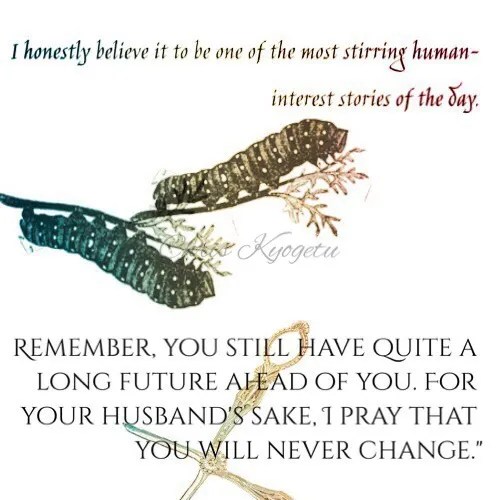
I honestly believe it to be one of the most stirring human-interest stories of the day.
'The Caterpillar', Rampo Edogawa.


  1. Introduction.
  2. Ⅰ Case1 :Devotion and sadism
  3. Ⅱ  Case2 :The Form and the Life
  4. Ⅲ  Case3 : The Eye of the World Egg
  5. Ⅳ  Case4:Illusions, dialogue and heroic story
  6. Dependent Origination

Introduction.

Tokiko’s husband, ‘Lieutenant Sunaga’, was hailed as the pride of the army and regarded as a military god; however, he lost all four limbs in the war. His face was covered with scars, he had lost his hearing and vocal cords and could not speak well, yet his internal organs continued to function, albeit slowly, and he remained capable of living as a man. His appearance could be described as a ‘caterpillar’; however, as the term refers to the larval stage, it is almost impossible to determine his sex. The wife’s mind towards her husband, who could not speak and lacked any semblance of masculinity, transformed into neither husband nor man, but solely her own source of pleasure and despair, a repulsive existence. Even the wife of Edogawa Rampo, who authored this work, criticized it as ‘disgusting’, and it was once banned in 1939 under wartime censorship.

This story flows with the fluidity of a pen stroke and bears no sense of forethought or calculation. It is a strange tale; however, in modern times, such a situation could be interpreted as an example of reduced quality of life. The wife stabs her husband in the eye with an edged tool in an act of lust; however, this seemingly cruel act may today be interpreted as a manifestation of caregiver fatigue, shifting the emphasis towards caregiving from the wife’s perspective. Literature and medical ethics are often said to go hand in hand. The ‘distance’ provided by fiction lends objectivity, and cruelty—while seemingly chaotic at first glance—takes on the form of a kind of law when arranged as a novel. Therefore, a ‘cruel’ story can ultimately challenge and provoke the reader.

This story could indeed be perceived as discriminatory towards people with limbless conditions; however, the third-person perspective preserves ambivalence by focusing on the wife’s introspection, presenting it as a problem arising in the mind of one without physical impairments.

At the beginning of the story, Tokiko’s greatest aversion is to ‘grilled eggplant’, a vegetarian dish that, according to one theory, was invented by monks prohibited from eating meat in order to imitate its texture and taste. Tokiko’s limp bite of aubergine at the outset symbolically foreshadows her desires. When one eats something detested, disgust spreads from the tongue throughout the body. Perhaps only Rampo could be fascinated by the pleasures derived from sensation and touch.

The third-person perspective focuses mainly on the wife’s introspection, yet also highlights the couple’s prolonged frustration, their ensuing conflicts, the transformation of attachment into aggression, and the ambivalence underlying it all. The wife’s actions unfold like passages in a modern psychology textbook, and their home resembles the observation room of a psychologist.

Ⅰ Case1 :Devotion and sadism

The husband, who had lost all four limbs, was forced to crawl or bang his head against the floor in order to express his will. He conveyed his frustration by repeatedly striking himself, and each time his wife responded with polite attentiveness.

“I’m coming now. You must be hungry.”
“I’ve kept you waiting a long time, haven’t I? Be patient for just a moment.”

The wife would hand her husband a piece of paper and a pencil, upon which he would inscribe his frustration in distorted letters.

“Tired of me?”

Her husband, searching for her until his head struck the floor, wrote words as contorted as his body. The wife, however, answered with a faintly teasing calm: “You’re jealous again, aren’t you?” One of her own kisses relieved her anxieties, while her husband’s every movement became another source of excitement and lust for her. To the woman, this “organism” was not merely a spouse, but a perverse and thrilling toy.

“You’re jealous again, aren’t you?”

Tokiko embodied two faces.

“As for you, however, your continued faithfulness has deprived you of all your former pleasures and desires. For three long years you have sacrificed everything for that poor crippled man, without emitting the faintest breath of complaint. You always contend that this is but the natural duty of a soldier’s wife, and so it is. However, I sometimes cannot help feeling that it is a cruel fate for a woman to endure—especially for one so very attractive and charming as you, and so young as well. I am deeply struck with admiration. I honestly believe it to be one of the most stirring human-interest stories of the day. The question which still remains is: how long will it last? Remember, you still have quite a long future ahead of you. For your husband’s sake, I pray that you will never change.”

The world perceived this woman as devoted to her husband, imagining that she had renounced her desires and elevated their union into an ideal of conjugal fidelity. In such a view, the renunciation of ‘greed’ symbolized chastity: the wife caring for her husband with unwavering devotion. However, reality was more ambiguous. The husband remained capable of functioning as a man, and the wife regarded him as a bloated yellow caterpillar, a grotesque lump of flesh through which her sadism was revealed.

Outwardly, Tokiko conformed to the expectations of society, embodying the image of a chaste wife. The world surrounding her was familiar, and this familiarity endured as long as she remained within it. People already possessed a preconceived image of her, and there was no need for Tokiko to disturb that illusion.

One cannot easily destroy the impression of such a familiar world. Desire does not endure eternally; therefore, when one steps outside, it naturally adapts to external norms. In that outside world, Tokiko remained ‘honest’. She would smile, euphemistically embodying chastity as soon as she stepped beyond her front door. There was no falsehood in this performance. However, once she returned home, she was consumed with disgust at her husband’s ugliness, and at her own lust for that ugliness. The recognition that her heart was not governed by pure love, but rather by disordered and unreasonable passions, filled her with fear as much as with pleasure.

Her husband demanded that Tokiko bring him newspaper articles and medals from his military service. At first, he was content to look upon them; however, he soon grew weary of these relics. The only act left to the couple was intercourse, which left them both with an animal-like emptiness, as though imprisoned in a cage. In such circumstances, would his wife realize that beneath the virtues of chastity she was, in truth, a horrible woman hiding behind a mask of devotion? She lived under the weight of condemnation by the world she knew. Moreover, her husband no longer bore the dignity he once possessed; he was now at her mercy. Despite this, he remained immobile, calling out to her whenever she was absent for even a short while, thereby further constraining her. The crescendo of Tokiko’s swelling emotions and introspection halted only when she straddled her husband.

Her control over him, fragile as it was, became uncontrollable. At last, Tokiko placed her hand over his eyes and crushed them with a deadly weapon as he stared at her.

She wrote “Yurushite” (Forgive me) several times across her husband’s chest; however, he offered no response. Unable to bear either the pity of his condition or the burden of her own guilt, she involuntarily abandoned him. Upon her return, she discovered him gone. On the bedpost lay a nearly illegible note, resembling the playful scribbles of a child. She discerned that it read “Yurus” (I forgive you). Yet, her husband had crawled away, bent his neck like a sickle, and cast himself into the well to his death.

The act of bending one’s neck like a sickle is an old Japanese figurative expression, likening the raised head of a snake in fighting stance to the curve of a sickle. Whether his end constituted a soldier’s death or an assertion of will remains unresolved. However, Tokiko imagined the phantom of her husband’s face, interwoven with the certainty that he had forgiven her.

Ⅱ  Case2 :The Form and the Life

If Part I may be regarded as a psychological study centered on Tokiko, Part II provides a broader overview. A work of art is never confined to a single interpretation. Rather, incompatible interpretations coexist, representing the complexity of a civilization. When a work of art becomes a form rather than a sound, it becomes deeply tied to the visual. Consider, for example, the motif of ‘hands’: Albrecht Dürer’s Praying Hands conveyed expression through gesture; Caravaggio’s St. Matthew revealed angelic fingers embodying scholastic philosophy; Rembrandt’s St. Matthew, by contrast, depicted hands resembling those of laborers, emphasizing the sheer force of divine dictation. Life is form, and form is life.

The armless Venus de Milo attains this significance by chance. Even without arms, her presence has captivated countless viewers. The absence of arms has rendered the emotions of “hands” more evocative and imaginative. Novels, however, exist in a world without form. They also lack sound. They are left to the construction of a third world in the mind of the reader, a world even the author cannot fully comprehend. Language, too, represents the human psyche, processed in the depths of consciousness as both the world of imagination and the language of God. If language, like vegetation, possesses an ecosystem, then perhaps nothing disrupts that ecosystem more than language itself. Language attempts, sometimes actively and sometimes passively, to become the form of an invisible entity which, from the perspective of vision, ought to remain in the lower strata. Edogawa Rampo’s The Caterpillar may be described precisely as such a work.

It is not difficult to imagine a darkened room, oppressively devoid of light, in which a limbless husband lies at Tokiko’s feet. In the English translation, certain words such as 肉毒楽 are omitted; these terms—“thing,” “flesh,” “lump of flesh”—all referred to the husband. However, it must be remembered that he is not merely “flesh” animated, but rather life in its universal essence, embodied in a particular form. The human spirit is highly susceptible to the shaping power of circumstances and environment. The husband has lost his hands, the organs of expression, and he has no feet, the symbols of independence.

The reader can easily look into the eyes of the woman, Tokiko. We enter the couple’s bedroom, a place concealed from the outside world. In the darkness, the Caterpillar waits for his wife to illuminate him, and she becomes that light. As we enter this space, the reader is gradually manipulated by the couple. Eventually, we become entangled in the psychological portrayal of Tokiko herself. A number of metaphors emerge concerning the gaze directed at the husband’s form: first Tokiko’s gaze, then that of the neighbors, then society, then past glories, and finally the husband himself. Above all, the husband’s gaze constituted the sole human expression of emotion.

A house is not merely to be looked at; it must be lived in and fashioned. (Francis Bacon, Essays.) This is why the husband grew weary of the past glories represented by his military order. One cannot live each day simply to look upon them. Nocturnal activities are not only biological, but also become habitual. Just as Louis XIV required a finely crafted chair, so too does a man require customs that constitute his role. As husband and wife, they were expected to enact movements that become cultural and customary. However, for the husband who had lost all four limbs, this role as husband was replaced by that of a “caterpillar.”

If her husband’s body were a sculpture, Tokiko might even have found it beautiful to behold. However, like a sculpture, the lifeless had not acquired life; rather, the living had been reduced to lifelessness. Their function as husband and wife, which should have extended into the living space they shared, had dissolved into illusion. It did not even leave room for the “fantasy” of imagining what their household might have been had he retained his limbs. Instead, the narrative draws us ever deeper into the inner life of the husband whose eyes were crushed.

It was not only the wife’s virtue that was tested. The husband’s virtue, too, was placed on trial. This is where the endgame unfolds. Could he maintain his dignity as a husband with a wife who had once been devoted and supportive? He no longer expressed his will by furiously banging his head against the wall—that was his only means of protest. The muffled sound of water ultimately signaled the death of the man who had no limbs and could not swim. There seemed to be nothing left but the presence of a living soul within a fragile form.

Yet the husband acted as if he were still a man with arms, even though he could only write by holding a pen in his mouth. Not merely as a body with limbs,
but as a person endowed with a heart,

he inscribed the word 「ユルス」I forgive you—to his wife.

Ⅲ  Case3 : The Eye of the World Egg

The invisible gaze constructs the illusion and the very space of a “heroic story.” It is not altogether clear to what extent “love” in Japan at that time shared features with what we recognize today. However, why do these two individuals seem to embody a sense of love not so different from our present experience? Perhaps it is because modern “free love” does not guarantee universal happiness or the capacity to cultivate character. Love can be a blessing; however, it can also descend into sin, powerful enough to drive another person to death. At its foundation, love requires, in Erich Fromm’s words, “discipline.” Nevertheless, we cannot deny that love is fleeting, particularly when we turn to classical Japanese literature. For it is also libido, the raw energy of life.

There was never any doubt in my mind that Tokiko had a loving husband. Yet when love and sexual desire coexisted, she assumed the initiative and became violent. Crucially, she was not unconscious of her actions but remained acutely self-aware. Her guilt restrained her from altering her course, and she trembled before the invisible censure of the world. After she blinded her husband, she repeatedly traced the word 「ユルシテ」 (forgive me) across his chest with her finger. Rampo’s narrative traverses darkness, pleasure, fear, and sudden acceleration through his wife’s introspection; however, from the moment she pleads for forgiveness, she appears strangely calm, without surrendering to despair. To some readers, her repeated ユルシテ may appear as genuine reform; to others, it is merely a self-centered cry for absolution.

At the same time, Tokiko began to weep, longing to see the ordinary faces of the outside world, leaving her disfigured husband behind. Unable to endure solitude, she fled. Many people tend to distinguish between husband-and-wife and love itself; however, I do not. For love, hate, and all negative emotions are inescapably entangled in human intimacy. The woman did indeed love her husband; however, she was devoured by her own greed. Yet the absence of virtue does not negate the existence of “love.” The fact that only memories shine, while the present yields no shadows, does not mean that the bond has been severed.

What criteria determine the end of a relationship? Married couples may divorce; even Catholic marriages can be annulled. However, where does the past itself reside while its memories continue to live on?

This is equally true of our relationship with the dead. The crucial difference is that memories with the dead halt at a fixed point, and the dead themselves cease to change beyond that point. Therefore, the living can continue to love a “record” that no longer evolves. Memories shift their perspective under different lights, becoming imaginatively fluid, yielding new interpretations, and thereby allowing affection for the dead to remain alive. In contrast, when both parties remain alive, “change” is often far more difficult. Alienation can emerge, particularly when one can no longer utter words of love. For the unmarried, separation usually follows; however, in marriage the situation is profoundly different. Divorce may exist in law; however, it remains exceedingly difficult to speak of the bond between two people who have reached such an impasse. Even when two individuals have resolved never to meet again, a residue of love persists somewhere within the hidden corners of the heart. Returning to the couple in The Caterpillar, I felt the strength of their bond when the wife continued to inscribe 「ユルシテ」 across her husband’s back.

In childhood, many Japanese may have played the game of tracing letters with a finger on another’s palm or back, challenging the recipient to guess the words. Yet unless the letters are simple hiragana or katakana, recognition becomes difficult. One wonders whether the husband truly understood his wife’s words, especially in his weakened state. Reading also requires confidence. Perhaps the sensation of his skin was dulled by the trauma of his eye injury. Whether his body truly received those words in full remains uncertain. Nevertheless, the husband left behind a final note: 「ユルス」.

It may be that her words were never understood.

It is precisely because of this uncertainty that I cannot help but feel the profound weight of his soul in that final 「ユルス」. The weight of the soul cannot be measured by superficial love.

Indeed, perhaps he did not understand at all. And yet, paradoxically, this seems the truest answer.

Dialogue is not always possible, even under ordinary circumstances. One may, in fact, receive another’s words only in the manner one wishes to hear them. To be told simply “forgive” may itself be a word the victim does not desire to receive, given what has transpired.

Stimulation between man and woman does not always follow order. It is not simple to discern how much derives from affection and how much from sheer stimulation. Between men and women there are times when we may conclude deductively that it is love, and times when we can only infer inductively that it must be so, by virtue of their being man and woman. Every individual is destined to embody both.

The severing of their relationship in “this world” culminated in the husband’s suicide. The impulse that compelled him remains difficult to explain.

Schopenhauer, in his reflections “On Suicide” (The World as Will and Representation), referred to the Latin punctum saliens (the “salient point”) as “the egg of the world.” The phrase is difficult to translate, signifying a minute source or spring, yet Schopenhauer employed it to designate the very focal point of existence. In contrast to phenomena such as human desire and human love, he identified the act of reproduction as the highest expression of will. Whatever the historical context, reproduction stood in stark contrast to the unfolding of phenomena surrounding something as sacred as the Lord God, as a “tiny spring-like source” of human functioning, untouched by fluctuations of love, will, or passion. That much remains undeniable.

Another thinker, Simone Weil, also meditated on the punctum saliens. In her chapter on “de-creation” in La Pesanteur et la grâce, she wrote: “That a fictitious divinity has been given to man.” She further remarked that “there are only two moments in life when we are completely naked and pure: the time of birth and the time of death,” seeking thereby to remove the self through uncompromising inner exploration.

If we strip Schopenhauer’s and Weil’s notions to their common ground, we discover a dark gaze surrounding phenomena that may appear disturbing, loving, or disappointing. In human presence and in human absence alike, we become anonymous observers. Rampo himself confessed: “My character as a dreamer does not feel an itch, no matter how I am treated by the real world” (in reference to political meaning). Indeed, it is true that this story possesses a distinctly subjective perspective, a fantasma of shifting phenomena. In contrast to mere fantasy, a fantasma parallels the relationship between perception and sensation. Is The Caterpillar not perhaps an attempt to define conjugal love beyond the values of its age, rather than a story of simple fantasy? Yet it remains fantasy nonetheless, for Tokiko continued to behold visions of the Caterpillar even after her husband’s death.

The couple’s task was the source of both life and death—the primal force creeping between all phenomena, the “original sin” of humanity. No matter how a relationship ends, no matter how life and death divide, no matter how memories fade or are embellished,

the eye, the egg of the world, remains at the very center of human life.

Ⅳ  Case4:Illusions, dialogue and heroic story

Concerning the difference in dialogue between man and woman, one recalls the story from chapter 5 of the Song of Solomon. The bride’s affection for the groom had cooled, and she refused to open the door when he called. While the groom eagerly devoted himself to her from behind the door, the bride eventually changed her mind and opened it—yet he was already gone. “His words made me faint. I sought him, but he did not answer me” (Song of Solomon 5:6).

Just as the “bridegroom” is replaced by the Lord in biblical teaching, so too do relationships bound by love seek a Lord-like fidelity, intersecting and yet betraying one another. Tokiko and her husband might well be understood through this lens of crossed dialogue. Although the meaning of “love” in modern Japan differs from that of the past, the connection between beautiful stories, the sacred, and the Lord remains relevant. Love is the one reality to which human beings will swear allegiance, the one force that gives coherence to existence. It is loyalty. Even when not religious, even when conceived as a familial contract, eternal bonds and fidelity are demanded. We help one another and live together under the expectation that we are always recognized, even when unseen. Understanding and respecting differences, while cultivating inclusion, becomes indispensable. The pursuit of happiness requires that love precede comprehension, that goodness act before it can be named as love. However, despite its deceits and betrayals, reason persists as the part of the soul that still longs for fidelity.

In The Caterpillar, her husband inscribed 「ユルス」 in katakana, holding the writing pad with his mouth in his limbless state. It was only possible because of the concise form of Japanese katakana. By contrast, the English phrase “I forgive you” would have been exceedingly difficult to form in such conditions. What if he did not truly know what his wife had written, but instead grasped it inwardly? What if, as in the Song of Solomon, despite the crossing of words and gestures, a dialogue nevertheless occurred? If so, then her husband’s act embodies the ideal of dialogue in love. Dialogue does not always reside in words, and yet, ultimately, words are needed to express both will and heart. He understood this with profound clarity.

What remained for Tokiko was the redemption of her husband’s phantom, the recurring “caterpillar” that visited her each spring. Human beings and their emotions are frail, even hopeless; however, there exist treasures that can only be uncovered through contact with this very frailty.

Rampo himself plunges the reader into illusion. He repeatedly unsettles us with the question of where his tale finds its resting place. The uncanny story of the Caterpillar—his wife’s plea, her husband’s forgiveness, his death as a god of war—remains, in my view, the most haunting of Rampo’s works. Each time Tokiko saw a caterpillar, she was reminded of him. Though her personality was once distorted, her form altered, she continued to see only her husband, and he lived on for her. The story may even be perceived as an expression of single-minded devotion.

Earnest? No—mysterious. It is, in truth, a strange and wondrous story.

Dependent Origination

Do you think this story is cruel? To me, it appears as love. To protect and to love that which is fragile is, in truth, profoundly complex. And through doing so, I myself become fragile. I accept the balance of both the sacred and the profane. It is precisely because of human weakness that the sacred can be discerned. This is, I believe, a worldly tale—yet one that is also a metaphor, even a parable.

Notice on Historical Expressions

This work contains expressions that reflect the social and cultural context of its time. These terms may be perceived as discriminatory or outdated today, but they have been preserved in this translation to remain faithful to the original text. Readers are encouraged to approach them as part of the historical and literary background of the work.

The Little Mermaid and Hans Christian Andersen.

the little mermaid Makoto Takahashi
If the soul lives in evil, it dies (abbreviated).
The soul becomes evil when it retreats from God,
It becomes righteous by advancing towards God".

Augustine, Reading from the Gospel of John. 19

Introduction.

Hans Christian Andersen is one of my favourite writers, although there was a period in the 80s and 90s when a lot of interpretative books were published that were too biased towards Freudian psychology, but even Freud was used in a superficial way and analysed in a ‘this is the real Andersen’ way, which was disturbing to me as a young child. He was ahead of Freud and pre-Jungian psychology in terms of the soul’s preference for sanctity, although for him there was a natural hatred of women and a contradiction in the soul’s attempt to approach God as a Christian. As I grew older, I may have gone through the four seasons of life. Spring, summer, autumn, winter and again in the milder seasons when he could see the traces of his soul. I believe that Andersen was blessed by God and left something important for us as Christians. In this article I will focus on The Little Mermaid and critique what I felt certain about, comparing my analysis with Andersen’s autobiography.

Ⅰ My Pilgrim’s Progress is a beautiful story.

How does one perceive God when misfortune strikes? Does it make you angry that you don’t believe in God, or do you seek salvation from God – Hans Christian Andersen was neither. There is a fairy-tale purification or sublimation in Andersen’s work, as if misery were a stage for the soul. His style as such did not drown out the Jesus-like love in the picture books sold in Japan, even when the Christian elements were removed. The characters’ actions and love are often accompanied by self-sacrifice. As a child I wondered why kind feelings were so beautiful. The world he radiated was beautiful, even if it was accompanied by pain and poverty.

Andersen’s life was not privileged. Not only was he poor, but his grandfather was a stereotypical schizophrenic and his grandmother a pathological liar. We don’t know who his father was, and as for his mother, she had a bad attitude and bad masculine habits. He was torn between loving his mother and despising her. Andersen had a fantasy wall about his grandmother. When his classmates mocked him for being poor, he would reply that he was really a child of the nobility and that an angel of God would come down to talk to him. 

Otherwise, the friendship would not have worked. If the stories of unhappiness are true, it is also a terrible way to introduce himself. For a child from such a background, it becomes a story about the family rather than an introduction to oneself. If I am a ‘phenomenon’ made up of nature and the lives of several people, as Kenji Miyazawa sometimes described the ‘phenomenon of the I’ in his AN ASURA IN SPRING, then I am in the middle stage of the experience of the ‘I’, which is an undifferentiated state, leaving the essence itself to the inner world and not to the values of others. It is not that one is positioned by others as a ‘poor person’, but that one must believe that the essence is growing in order to stand. (We want to believe) Believing in the essence leads to believing that God loves you. Deep inside there is enough mystery to bring you closer to God, but when you are young you don’t even know what it is. If it is too early to talk about The Light, once a writer’s talent is there, he or she has to lie in order to remain socially relevant. Every child in such a situation knows whether it will be a flowery embellishment or a lie to get closer to mediocrity. In the first place, it is socially necessary to tell a comfortable story, rather than a background that only makes those around you uncomfortable, or to be thought of as a beggar. Making up stories may be a way for the mind to show its primordial ego. The fate of the ‘light’ story depends on what it protects from the things that hurt it early on.

have‐nots

Andersen seemed to understand best the ‘lies’ he told himself as a child. He knows that the poor cannot live otherwise, and yet he represents punishment without pardon. In The Red Shoes, the girl Karen went to buy Communion shoes, but kept cheating her adoptive mother, who had poor eyesight, by buying her splendid, beautiful red shoes. The girl forgot how much she owed her foster mother for raising her and started going to balls instead of looking after her. An angel put a ‘curse’ on Karen that made her dance all the time. Karen became tired and bitter because she could not stop dancing. She asks the official who beheads condemned prisoners to cut off her legs. Karen really does get her foot cut off. The story is said to reflect Andersen’s decision to live as a bachelor, but it also seems to be a reflection on his life. The girl cherished her red shoes, which were originally made from pieces put together. It was her adoptive mother who threw them away. Things that were cherished in childhood are indeed beautiful. Even if they were beautiful in nature, they must be punished for their mistakes. Even if you choose a beautiful red shoe as compensation for the most precious thing, it still represents the harshness of having cheated.

Although much of Andersen’s work deals with innate ‘destiny’ and self-sacrifice, it should also be noted that he lived and worked before the birth of Freud and Jungian psychology. Perhaps he would have known of Descartes’ ‘innate theory’. What would he have made of the idea that the idea of being born was already given to him by God because he was a ‘poor’ man with dysfunctional parents? Perhaps he was certain in his ‘heart’. Perhaps he was conscious enough to talk to God. However, as for that which cannot be divided by the innate theory, perhaps he had a desire to be changed by the ‘magic’ of a mermaid becoming a human being. Or it could be the belief that there is no way to change one’s identity without magic. Andersen had a beautiful singing voice and wanted to become an opera singer, but was frustrated by a voice change. Knowing this upbringing, many people will probably agree with the fact that the Little Mermaid loses her voice instead of becoming human. The Little Mermaid, a girl who lived an unconscious and given life in the water, trying to become a human adult in exchange for her voice, overlaps with Andersen’s childhood and the experience of being robbed of it in order to become an adult. For him, losing his voice was the same as becoming a “have-not”.

Ⅲ Temporary me and fate

His fairy tales do not use magic just for convenience; for him, his father was always the Lord, God. It is certain that for him, whose parents did not function, the teacher of good and evil was the Bible. All his works, like Augustinian theology, reflect the difference between what the soul gives to the body and what God gives to the soul.

。When will the transient ‘I’ become ‘Who’, and his fairy tales show the stages of this soul. Among them, ‘The Little Mermaid’ is a well-known love story, but it also represents the unworthiness and ‘poverty’ of human beings in relation to mermaids. It is a story like the sequel to Fouquet’s ‘Undine’, where Undine was given the sacrament of marriage by a priest, but the mermaid was not. The priest who administers the sacrament does not appear. Undine was betrothed to a being of status in the human world, and if the man broke the marriage promise, Undine had to kill him. The severity of the punishment for betrayal is also seen as a religious punishment. Similarly, the mermaid princess is under a spell to continue living as a human if she can marry a prince of status. Water nymphs like Undine represent the ‘place of absolute nothingness’ where water pre-existed in God’s creation in Genesis. She was born out of the imagination of an underwater world that was never written about. Undine had to kill her spouse, but the mermaid princess chose to disqualify herself even if she did not marry the prince.

The mermaid can see the human world on her 15th birthday, but each of her sisters has seen a different world. This is similar to how baptised Catholics see a different world as they go through the same stages. Alternatively, in Jungian terms, the water could be interpreted as the unconscious world. The soul of the mermaid princess learned to love like a human, but the price was too high. The mermaid princess was given human legs, but every time she walked she was in great pain. For Andersen, who had a string of broken hearts, it was impossible to write about the fulfilment of adult love, but the dynamic of love is accompanied by pain, and this is reflected in the reality of the transition from girl to adult as a fairy tale and in the Christian teaching of ‘those who enter the kingdom of heaven’. This may have included the desire for women to love themselves, but he sublimates this desire as a fairy tale.

As if the author had forgiven the world, the mermaid princess, a poor creature, is blessed by God at the end. Because the story was written for an innocent child to read, the author’s upbringing was removed. And It was written in a clear style and in a beautiful mermaid world. The prince mistakenly believes that another woman saved him, when in fact it was he who saved the prince. For an ordinary woman, the end of a love affair would have been a passing phase in her life, but as a mermaid’s ‘fate’, the time given to her transient self, who had changed her identity, was short. This meant that when her one-time love ended, her life would end. It was so cruel that the mermaid’s sisters made a deal with the witch that if she killed the prince, she could return to being a mermaid and was given a knife, but the mermaid could not kill him even if she was given the knife. The Little Mermaid could not kill the prince, but she did not end up in a bubble. In the original story there was a sequel: the Little Mermaid became a genie. The mermaid princess, now a genie, finally kisses the prince’s bride on the forehead and leaves. The mermaid princess is told by other spirits that if she does good deeds for 300 years, she will eventually receive a soul that will never die and be entrusted with the never-ending happiness of mankind. If she finds a child who reciprocates her parents’ love, the Mermaid Princess will shorten the time she has a human soul by one year, but for every bad child she encounters and tears to pieces, she will extend it by one year.

****

What did Andersen learn from his young, transient self? In Japan, picture books were stripped of Christian elements, so many stories of The Little Mermaid ended in bubbles. That in itself was nothing but pessimism. But only The Little Mermaid, illustrated by Makoto Takahashi, included the story of how God transformed her into the daughter of the wind. I read it as a child. If we were to replace it with a modern version and compare it to the real world, it could only be a tragedy. This is not a story about a little girl who thinks dying is beautiful. Happiness is also about acquiring material things too. A healthy body, social status, family, friends, lovers, they are a mixture of the material and the sacred and cannot be dualistic. On the contrary, happiness that only enriches the soul creates a cult. Rather, fairy tales exist to nourish the inner life in a fictional world. They are not there to provide something pragmatic for today and tomorrow. Andersen certainly knew the reality that the poor can only achieve happiness through ‘death’. He did not remove this complex of poverty from his autobiography.

He went from a ‘transient’ existence to being loved even abroad as a ‘lucky grace’ through his fairy tales, which, like his creations, had an underlying sacredness. Fairy tales are not meant to be put into practice immediately, even if there is a lesson to be learnt. Even the faintest memory brings us closer to the love of Christ in which the author walked. But that may be just before the entrance to heaven, which will appear when we realise it from the fairy tale. The poor will not be saved tomorrow, some days I want to be saved and some days I want to help others. Even if you reach out to them, some days it doesn’t work. Some days you do something good and it backfires and you are resented. Injustice is not always condemned immediately. The right thing is not fruitful. Sometimes prayers lose their substance because it gets harder and harder to pray for miracles every day. Yet there is a spark in the back of people’s minds that wants to talk to God. Surely everyone has it. How can you hear it, the happiness of acquaintance, gratitude and much joy? trying to find the light on the other side of the needle’s hole. (Matthew 19:16-30)

He lied to himself as a child that he was a noble being who could talk to angels, and he was honest enough to make even that a creation. He made no attempt to hide himself. Psychoanalysis would only be able to analyse the rough outlines of the author’s desires. That is why there are so many analyses of the resentment of a lost love. To return to the story of the Little Mermaid, the book is full of descriptive beauty that I did not recognise in the picture book. He must have travelled and loved the world.

Last  Pilgrimage

He lied to himself as a child that he was a noble being who could talk to angels, and he was honest enough to make even that a creation. He made no attempt to hide himself. Psychoanalysis would only be able to analyse the rough outlines of the author’s desires. That is why there are so many analyses of the resentment of a lost love. To return to the story of the Little Mermaid, the book is full of descriptive beauty that I did not recognise in the picture book. He must have travelled and loved the world.

—-The mermaid lived in a sea as clear as crystal – far out to sea, where the water was as blue as the bluest cornflower. Don’t think it’s just a cold expanse of white sand at the bottom of the sea. There are strange trees and grasses, their stems and leaves swaying. Even the slightest movement of the water makes them sway as if they were alive. The fish, large and small, all swim swiftly between the branches, like just as birds flit about on land. —-From a world more dreamy than earthly, the mermaid princess chose love. Love makes us happy and makes us grow, if only temporarily. Even if love is not fruitful, it shows the value of loving. Why she was able to love the prince so much cannot be told. The story shows that no matter how hard it is on earth, you can love someone no matter what their status is.

Fairy tales take you to a place where no outside voices can reach you, like underwater. When we return to reality, we hope that our formed hearts will not be forgotten. ーfor children’s. Isn’t that why, at the end, he wrote that he wanted the mermaid’s soul to be good so that it could go to the kingdom of heaven?

There is no fairy tale where you can see the subtleties of the soul as well as in this one, where the soul breathes and wonders and wants. It made me think that the soul of a man who had faith was beautiful. In his case, it was not just soul worship. What I learned from him was to write with the belief that everyone has a heart that wants to talk to God. Despite knowing the cruel reality, the soul tries to approach God’s goodness. That is why the human heart knows goodness. He travelled a lot. It was probably a pilgrimage where the ‘I’, which for him was transitory, came to understand God. He was constantly broken in love, but he wrote about loving others in his fairy tales. He wrote about love when it should have been the most incredible thing. Isn’t that power? To bring out this pure feeling, we have to take them to the fairy tales. The love of family, of lovers and of agape, To teach ‘love’, to believe in love, to give love, because only human beings can do that. Jesus also needs people’s understanding and words. I used to want God to believe that I had light in my heart. That someone else had that heart too. It is not yet 300 years since The Little Mermaid was published. The Little Mermaid’s soul has not yet reached heaven. If she is good, her day will come a year earlier; if she is bad, her day will come a year later. This is the soul’s approach to God. ―― Light visible behind the eye of the needle, So If you want to tell many people, it is like sowing many seeds.

-----------

Links to other websites

My column (in Japanese).


… This time, I focused on The Little Mermaid. Andersen has other works that do not fit into this review, such as The Shadow, but I decided to focus on them in this second instalment. The first volume is here.
The Hole of the Needle (Matthew 19:16-30).

Andersen is a Protestant.

Man’s Search for Meaning (English)

All of us in the camps knew and told each other that there was no happiness on earth that could compensate us for our troubles.

…trotzdem Ja zum Leben sagen:Ein Psychologe erlebt das Konzentrationslager
Viktor Emil Frankl

  1. First
  2. Second
  3. Third
  4. Fourth
  5. Fifth
  6. Last

First

Room 18 in the basement of the Auschwitz camp was the prison where Father Kolbe was held. Why is there a small window there? What did the sunshine mean? It was such a space, a mediocre room that a painter could paint rest in a poor hut, if analogy could be made. It smelled like dust and rust on my nose, and I don’t remember what the temperature was that day. Painful seems to rob me of a sense of the four seasons. I continue to listen to the color of my skin floating in the dark space and the description not in my native language, and I only pay attention to the words of my phase. Cruel places where many people have died, in fact, are neither special nor exist in Japan. For example, the station where the sarin gas attack on the underground took place. I passed there many times when I was a student. Sometimes it is hard to describe the weight of the souls that were cruelly taken away from us.

Not only that, but the Auschwitz camp was also a place where God and Jesus Christ did not come to save. Evidence of this can be seen everywhere in the other prisons, where crosses were dug into the ground with nails. They would have begged and pleaded, but salvation never came. It signals the despair of the invisible soul.

Second

In the concentration camps prepared by Nazi-Deutschland, it was not only people who died in gas chambers or from poison. Others died of suicide, starvation and disease. Deaths in the facilities, all of which are lumped together in the death toll of the camps, make concentration camps the root of evil. There were other dictatorships in other countries, but it seems to be a chosen place that has been so clearly narrated and left behind. We cannot easily ask locals about dictatorships in other countries. Comparatively speaking, the camps in Poland, which can be visited like Auschwitz, are an asset.

Why would something that was a democracy produce such a tragedy, I will not go into the details of German history this time. However, the birth of Nazi Germany was also a democracy for its time. In the case of Japan, the first thing that comes to mind is national review. How effective the national review is (Article 79 of the Constitution of Japan) is not clear to most people, although we know how it works, because none of the judges have yet been dismissed from the national review.

Realizations always spring up ‘after the fact’. There is a delusion about ‘democracy’ and democratic politics, but if there is cruelty, it is now hidden in the micro rather than the macro. Emotions from personal experience are not a problem, but the emotions of incidents happening on the other side of the world are just ‘excitement’ when you get right down to it. For example, If a celebrity commits suicide, you have feelings about it as if it were your own family. but Today, that would be a nuisance to the bereaved family.

Even if the bereaved family cries for understanding in a TV broadcast, if viewers sympathies with them and post it on social media, they are sued for defamation. For the victims, they make a fuss about being told by others without their knowledge. Only equivalent celebrities have the right to sympathy for the people on the other side of the television. That has become the modern age. More and more we are being meta and not exposed to the phenomenon.

Thus, in contemporary discourse, the view that it is not the fault of a single building, such as a camp, becomes natural. medical malpractice, or the problems in the schools, about what happened in that one space. It was suicide, so it was self-inflicted – it was starvation, so it had nothing to do with it – the cause of death was illness. ‘They didn’t all die the same way in the same space. So there is no scientific basis for it’ That is the modern world.

The ‘counter-existence’ is formed by what is given by the ‘counter-other’. One, if it is called ‘death without evidence’, its existence is determined. How do we accept the gaze that determines it? Do we take on that gaze honestly, or do we have a subjective self as a ‘counter-self’ in the Sartre sense? The difference between the objective gaze and the subjective self is ‘freedom’. V. E. Frankl in Man’s Search for Meaning also held on to ‘hope’ in Auschwitz, against the positioned decision. This is not a particularly unusual story, as it has been a guiding principle since the time of the Epictetus regarding servitude and freedom.

Third

I was shown the Gulf War on television when I was in primary school. Classes were interrupted and we kept watching the bulletins, which showed people lying under the rubble. Night vision technology was a hot topic at the time, and we were shown how easy it was to hit the target, even in an operation to set fire to an oil field on the Iraqi side to spread smoke. After saying that they would have been killed, the comment was made that it was probably a mother and son. Whether it was a US soldier, my memory is not clear. It was so disheartening that I wondered if people had really died at this moment. The homeroom teacher at the time explained that if there is a war now, it will not be like Grave of the Fireflies, and that weapons have evolved like night vision devices.

Grave of the Fireflies

As well as not doubting that all human beings are equal, we vaguely believed (as a certainty) that we had peace with Article 9 of the Constitution. Nevertheless, having children write about their thoughts on peace was as if to say that they can only write about it when they are children. Why do adults make children write, and why do adults stop saying it? Why do parents and homeroom teachers end up ‘teaching’ children? Why are people who talk about peace guests? Teachers and people close to them do not talk about what they know. People whose personal lives are not affected go home talking about their war experiences.

Eventually, as they grow up, some of their friends wake up and realis that what they have received was a left-wing education. Why is Article 9 supposedly admired around the world, but the world does not emulate it? Other countries have armies as normal. When ‘we’ raise questions about it, the world accuses us of leaning to the right. Yet the world calls that awakening ‘evil’. But that is only a fragment of the world. We don’t know the essence of the world. Article 9 of the Constitution is only a corner of it. The country of Japan is not as ‘known’ as it should be. But this is just another world I have walked through. The world is a wide place. The right answer is probably just as complex and wide.

It is not certain that even the Gulf War images seen at that time were real. The only reliable fact that can be traced back is “Stock price”. Stock price records seem to be the universal language. Analysis is subject to interpretation, but the figures do not lie: after Iraq invaded Kuwait on 2 August 1990, stock prices fell vertically. This is followed by a slump in October and November, but a slight rebound in December.17 January 1991, the Gulf War begins with the bombing of Iraq by Multinational Force Iraq.

Afterwards, it recovers to the same level as before the invasion of Kuwait. What was the tragedy we saw in the classroom then, and did the parents and children really die then? As an adult, I look at stock prices and other prices as if to overcome my childhood fears. When the contingency of war is also a certainty, the market raises expectations. Stocks recover as if the feeling of fear is ignorance.

Fourth

I had a strong sense of existentialism when I went back to my memory. Probably the generation that saw the Gulf War as children tended towards existential philosophy. (Strictly, with the ideal that existentialism could change the frustration that builds up) And those who educated us were inclined towards structuralism. Even John Paul II praised the structuralist Lévi-Strauss as a good philosopher.

Sartre and Husserl phenomenology were overshadowed, but the more they were hidden, the more I followed my ‘uncertain certainties’, because there was no being close at hand to answer the experiences I felt. Is what you see reflected in my mind something that is connected to the world? Yet it exists, even outside of consciousness. Even while we are asleep, the real world is stirring outside our consciousness. News of war is only part of reality. Of course, it is difficult to make a clear distinction between structure or existence as to why I felt the way I did about what is handed to me by the world. In all of them there is something to sympathies with and feel. 

Our generation was educated by those who did not benefit from the bursting of the Economic bubble, so the world was seen as ironic. At the same time, we were given a lot of dreams that never existed, such as ‘people are equal’. And even after a crisis like 911 in 2001, the economy always recovered: a 10% fall followed by a quick rebound. In fact, it was the Enron collapse in December 2001 and the WorldCom accounting fraud in June 2001 that caused the big drop. War would end the world, and it was only natural that this perception would fade.

Fifth

What do you think of Auschwitz? When asked that question, existence itself is a wall away for those of us who don’t think of everyday life in terms of war. What mattered was the world of peacetime. Man’s Search for Meaning were reinterpreted for 911 in a new translation in 2003. While the brutal images from the camps in the old translation have been erased, we have seen only the fireworks of peace slogans in the reality of the Iraq war. We bemoan the youth who don’t know human pain, but when we were children, we compensated for it with our imagination. But it didn’t mean anything when we understood it. The metadata personality of ‘not knowing human pain’ was formed that way even after the war. That would be an undeniable fact. 

Hannah Arendt warned that people imprisoned at Auschwitz would be forgotten over time. She referred to the tortured deaths of those held at Auschwitz, and the deaths forgotten with the passage of time, as a double death. This would be the Auschwitz camp I visited. The records as historical are not imbued with the space. In Room 18, where Father Kolbe was, there was just an empty space inside. He lived his life without thinking in terms of contingencies, and that is a testimony. What would this place look like if you came here with no prior information and an English translation for tourists? Events do not speak beyond information. Existence precedes essence “We mean that man first of all exists” It is an endlessly silent, somehow felt suppression. The meaning of the building’s existence continues to be expressed by human beings. The marks of the cross engraved with nails do not name the scribe. The proof that God did not come is still only despair. They say that it was futile to pray, or that Sartre was an atheist, but Frankl, who was imprisoned in Auschwitz, as a psychologist, left ‘hope’ behind.

In Auschwitz, a place where there is no creative freedom, he remained strong that only his inner life would not be taken away from him. There would naturally be a hidden escape. Those who believed they would be liberated by Christmas committed suicide on Christmas Day with the current of the iron bars. That is why Frankl feared easy hope. In the camps, some people gave alms to others even though they were suffering, while others became mad demons. In the absence of any soul-operating experience, he said that only the value of attitude would not be taken away, even in a place where it was not known whether God would come or not. It includes ‘prayer’.

When Man’s Search for Meaning was published(new translation)in 2003, it was introduced that those of us who had not experienced anything as bad as Auschwitz should naturally have ‘hope’. I thought at the time that was a little different. I thought about the meaning of why Frankl wrote about ‘hope’, which he portrayed in the midst of cruelty, rather than the ‘cruelty’ of Auschwitz.

The historical fact of Auschwitz comes in different forms. That is because human misery is inevitable. I think, even in retrospect, that I was a Sartre ‘condemned to be free’. We have always been forced to feel happy because we are at peace. But in fact, this is not the case. Only those who have known misery can realis this. Even if there is no war, everyone has misfortune, like Hisako Nakamura, who lost both arms. Hisako, who lost both arms due to illness, was brought up strictly by her mother. Like her, everyone falls into a situation where the ‘home’ itself is like a prison camp. Hisako, who was missing both arms, was given a sewing kit by her mother. Without arms, sewing means using the mouth. Naturally, saliva would get on it, but her mother did not allow it. When Hisako learned to sew, she showed the audience how she sewed as the ‘Daruma Maiden’ at a freak show, still holding a grudge against her mother.

Hisako Nakamura

Nevertheless, Hisako forgave her mother and was grateful. While this was based on her Jodo Shinshu teachings, she did not take what she was taught for granted. She realized that it was because of her mother’s strictness that she was able to become independent. But even today in Japan, although this idea is a beautiful story, the mother’s position is that of ‘abuse’. Society must provide ‘comprehensive’ support through welfare and other means to prevent this from happening. Frankl quoted Nietzsche on the most painful human suffering. ‘Suffering itself is not the problem. It is the lack of an answer to the cry ‘what is the cause of suffering’ that is the problem.”

This idea is a ‘freedom’ held by subjectivity, objecting to a given ‘being’. Frankl was also given the ‘fate’ of a dying Jew. But he held out hope. It is freedom but suffering. How freedom is a responsibility, and how heavy it is. Hisako is no different. From her position of being without both arms, she achieved a feat that was almost impossible. It is suffering, and it is ‘freedom’ that tried to overcome her position. All they are integrated into life as untold history. Auschwitz has become a metonymized entity: in Room 18, Father Kolbe took over the dying fate of other Jews. The world does not speak of them. It is ‘man’ who records them to the world. And yet, how many years can one leave behind? Why is it that the faces of anguish in paintings from centuries ago are still recognizable today? For example, Will Shakespeare still be around a hundred years from now? Why is it that what Father Kolbe did is still great today? It is man who makes sure that records are kept, but who creates the destiny that allows them to be kept?

Last

Sartre, who was a genius, missed his prediction before the Second World War when he said that Germany would not go to war. How did a dictatorship arise in Germany, which was supposed to be a democracy? The question can still be asked today. However, there is inevitably no end to speech and violence. This is because there is a ‘will’ in people. The will cannot be unified: the Covid19 epidemic has not subsided, the war between Russia and Ukraine, and in Japan the controversy continues after the assassination of former Prime Minister Shinzo Abe on 8 July 2022. I cannot recall a word from my childhood when I could so easily reject these conflicts. Children today may be cleverer, but a child’s words are not allowed to cross the world. Maybe that is why it is children who can go to the Kingdom of Heaven. (Matthew 19:13-15) 

Our pursuit of human goodness is not always beautiful. We move away from heaven little by little as we defile our souls, as we defile ourselves, as we struggle. We cannot abandon it because we must live with ‘will’. Even if we put an end to today’s challenges, is it something that will dissolve into history and be forgotten, or is it something that will be imprinted on individual souls?

Keeping silent, like the adults of the past, certainly seems like a bad thing. But what if we cannot protect our precious beings if we do not answer the demands of fate? If adults fight, children lose their place in the world. If teachers have made deviant statements, children feel insecure. Maybe that’s why they kept quiet back then. Was it adult self-deception? Or was  ‘consideration’? It is not possible in heaven to know the complexity of human beings. Is that not the will to struggle to live? If the dead sleep-in peace, the living must awaken. It will come, even in silence. 

We must have experienced hardships and cruelty in each of our growing up years. We should not compare our misfortunes with others. Invariably, there is some trivial love left in people. The driving force behind Frankl’s books can be said to be Agape. Faith in human goodness would be to remember that. Even if, in any future situation.

Weeds were beautiful in Auschwitz.

――Like Mary at the feet of Jesus.

Literature and Mob Justice(SoarⅡ)

For the wages of sin is death, Rome6:23

Introduction

Some people say the Bible is a piece of literature, but I believe the words of the unknown man who said, “The Bible is not literature. When I was a young aspiring writer, I started by accepting that I didn’t exist, like an “unnamed worm”. Fiction is also a way to leave behind what you want to say, but you can’t leave it behind if you write it the way it is. This is why it was necessary to think calmly and reject ideas by revising. Embracing that cruelty, with the Bible at the top, my ego is humbled. Because everything is written in the legacy of the past, with the Bible above:There is no virgin in the imagination, and that was the beginning of my life as a writer. It was about “writing a cruelty story”, especially about “Mob Justice”. The quotation from Romans, “The wages of sin is death”, continued to move across the manuscript as it has been rewritten many times:Sometimes it was the introduction, sometimes characters who never came into the world spoke about this quotation. Actually, the words of the Bible continue. “but the gift of God is eternal life in[a] Christ Jesus our Lord.“and it will be explained that Jesus offers forgiveness to those who cannot break the flow of sin, and that the dead cannot sin.

And Then There Were None and Bergson’s philosophy

I also preferred Agatha Christie’s “And Then There Were None” during my recuperation from 2018 onwards. There are no detectives in this story. From the perspective of the third person, each corpse appears to speak, and the truth is summed up in the letter of Aposiopesis. There are ten people gathered here who have committed crimes that cannot be judged by the law. One of the murdered victims, Emily Brent, was a fanatic who had driven her pregnant servant to suicide. Ten individuals gathered here have committed crimes that cannot be tried by law. One of the victims, Emily Brent, was a fanatic who forced her pregnant maid into suicide.

Maybe she thought she would be killed afterwards, but she tried to stabilize her mind with Psalm 91, which promises God’s salvation;” You will not fear the terror of night, nor the arrow that flies by day, nor the pestilence that stalks in the darkness, nor the plague that destroys at midday. But his prayers failed and he was bitten dead by a bee.

The tragedy of this isolated island is orchestrated by a plot to kill Justice Wargrave. In the relentless passage of time, it is Bergsonian that the time of consciousness and the time of the world do not always coincide, but Emily’s decisions in the inner world of faith distort the outer world. He focused on the sins of the unpunished. Pure and inner awareness does not necessarily mean pure and enduring Christian love, light and goodness: Philosophical purity refers to universality and does not limit itself to ethics.

Killing by sanction is the unwritten law of that which emerges when philosophy and theology are trapped and concealed by ethics. Our sins are condemned by our faith and remitted by God. However, that is not always the case in the society in which we were born. The judge looked at this and came up with this plan. The best part of the story, the apparent killing puppet, was based on a poem from Mother Goose.This poem is also old and was originally written by the poet Mother Goose, and is translated as “Indian doll” or “soldier doll”. This poem is also originally symbolized black people, but was later changed to Indians.

Imitate murder is performed with dolls symbolizing the occupation and persecution. Matter is memory, the dualism of mind and matter is present this murder story. The time on the island is not owned by anyone, the protagonists themselves do not exist, and they are manipulated by a fictional being, U. N. Owen who have invited ten people. Formlessness controls the destiny of this island. Matter, space and memory, the relationship between them, passes unnoticed as a philosophy by most people. Nevertheless, like dolls, they are aware as soon as the material becomes suggestive, and they are in danger of being themselves. They find significance in the poems and dolls of Mother Goose, and live in the plans of the true criminals. Elusive sounds live fluidly as aural sensations, a gramophone playing a mysterious voice that exposes the wrongs of each person. We find ourselves even frightened of the interplay of matter and spirit, a philosophy that makes us dull and sleepy.

Judge Wargrave must have been pleased with the sight. Like table manners, as if it were a rule that passes for manners, he enjoys playing the killing dinnder.【killing game】 With the sound of a gunshot, the killer Wargrave, made it look like he was dead. Rising from it, his Ghost Play accelerates further. Wargrave’s self-absorption is evident in the way he likens himself to the biblical Cain and Abel.

Cain committed the first murder in the Bible and lied about it, but God would not let Cain take his revenge. Therefore, the Judge is a clown with an aesthetic illusion of justice. Because God’s wish is that there should be no Mob Justice. However, Mob Justice and aesthetics are two sides of the same coin. The Thaumatropes, whose cage and bird are painted apart, looks like a bird in a cage.If you turn the picture, you can see the bird in the cage, as if they co-exist and are involved with one another. Literature was attracted to that. Other arts, including painting and music, do not deal with ” Mob Justice” Painting is confined to religious or “Public punishment” when it comes to judgement.

Words have various roles, from God’s word to poetry, proverbs, fiction and journalism. Painting and music are not taken seriously by everyone, while language is mastered by everyone, and everyone takes it seriously, sometimes speaking of love, sometimes speaking of lies. Words means simply disappear and disappear over time. For example, the phrase “I love you” also fades away, because words require perception, memory and experience. Love cannot live by words alone. Love is accompanied by feelings and actions. In addition, the word “love” is often associated with many human beings. Even before an incomprehensible love, we can recognize the direction. When love works, it knows that it is love by its deeds.:On the other hand, private killings and retributions do not allow us to easily understand feelings of cause and effect.  The Indian poem of Mother Goose is a cruel poem, and the last Indian hangs himself. These ten people are enough to understand the meaning of the Indian poem. Their lives are threatened so that the pure continuity of consciousness and time ceases to be a theory, and they end up in the past ≒ memory without redemption.

Souls by Mob Justice

Like the ten invited guests, we do not see memory, time and space as separate objects.

According to Plato’s three ideas, (1) is the true, (2) beauty, (3) interest towards the good. Sternberg refers to this aesthetic interest in beauty. In the Bible we find such a composition in the Old Testament story of Hagar. Abraham’s wife Sarah could not have children, so she gave birth to a slave, Hagar. She gave the child the name Ishmael. Hagar’s situation is similar to that of Emily Brent, but in the end, Hagar is saved by God.

In the biblical world, “Thou shalt not kill” (Exodus 20.13) is based on faith, on the absolute God. In the biblical world, “Thou shalt not kill” (Exodus 20.13) is based on faith, on the absolute God. But does literature write about evil, breaking its promises with mischief? “Literature and Evil”, Georges Bataille made us believe that the best of literature is to search for evil in the veins of the world. Writers sometimes sort philosophically if it is necessary to write only imagination or experience.Then imagination is no longer enough, and they seek to make everyday life more than a dramatic statement. So this story is quiet. In And Then There Were None, the characters, with the exception of the murderer, can only see the surface of humanity. There is no investigator in the movie, and evil is not the key to unlocking good. If there is any confirmation of God’s existence, it is when the “fishing boat” accidentally picks up the confession that the judge put in a bottle and was never meant to be picked up. Christianity has a profound connection with fishermen. Peter was a fisherman, and Jesus told him that he would be a fisherman who would catch men. Within the framework of a mystery novel, however, this point of view would be like wash for gold. (Gold dust) But wouldn’t the real world be insipid without such a ‘point of view’ and ‘consciousness’? The paintings are useless when they burn, as the paintings of Carel Fabritius are displayed as survivors of an explosion. How does literature affect people? Literature is of the nature that what words and concepts represent and people’s feelings do not have a fixed Buddhist substance. Therefore “And Then There Were None” shows the cruelty of the writing world.

 Painting can be explained in words, but it must exist as a picture. Literature can be placed beside the Bible, but it fails to achieve a visible space and form. In the past, when I painted, they congratulated me on my ability to draw and my sense of color. I was looking for myself in painting, with ideas and concepts. This is probably when my philosophical reflections became more impulsive. What cannot be put into words seeks no form, and then tries to rely on something to paint. It was a passion that emerged in my youth, but I wanted something more mature. I couldn’t stand the self-image that bounced back from my consciousness and my technique. It was a passion I had when I was young, but I wanted something more mature.

I couldn’t stand the picture of myself bouncing off my consciousness and technique.: Like Van Gogh with his sunflowers and his obsession with color, I could not do it, I only saw thoughts of love and existence.

In the 21st century, philosophy and psychology are moving away from the soul. That is because it requires an ethical, moral, or religious viewpoint to describe them. But literature is still allowed to write the soul. Nietzsche described vengeful feelings as Ressentiment. By morality, the weak demonize the strong. This inversion of values is weakened in Agatha Christie’s “And Then There Were None”. Murderers took pleasure in the guise of revenge by proxy. They were not killed with such vengeance or moral slavery.  It all comes down to poems and puppets by ten Indians, killed and gone. The artist’s need for approval is said to be greater in the story, which explains this killer. His hidden desires and the realization of his pleasures took place on an isolated island.  If he had wanted social honor, he would not have committed such a crime. He threw away his confession in a bottle, not knowing whether it would be picked up or not, which is another way of checking the soul. It is a “Mob Justice”. There is an impulse that can only be asserted in this way. In literature, “Mob Justice” is not an actual sanction. He throws his confession into a bottle, not knowing if we’ll pick it up or not. The only way to be sure of one’s soul is to leave it to chance at last. This is the end of the “Mob Justice”

 I did not select to paint flowers, my quest was collected as a bird’s nest and tried to form and It was a beautiful feeling, both as phenomenology and as poetical feeling. The plants and trees collected by the habits and coincidences of the birds are also the Word of God, but some herbs do not bear the image of God. It is the root rot, the weak grass, the dying grass,

 I would write such an “evil” in the next piece.

Literature and Mob Justice Overview

It took me six years to work on this theme. Writing about cruelty, like journalism, is not about separating oneself from others. Sometimes you have to reveal your own malice.

I dealt with Agatha Christie’s “And Then There Were None” and Bergson’s philosophy. An unfamiliar subject, matter and spirit, is criticized as abstract when read as philosophy, but in the face of a murderous game everyone understands its meaning.

Understood the meaning. Indian dolls represent their lives and die according to an unintelligible Mother Goose poem.

Philosophical consciousness is not a need to be confined to morality or ethics. It means that there is no necessity for religious goodness, and I have summarized these ideas in this introduction. I have tried to make my unpublished novel the main topic of this

Article. Mob Justice is the desire for recognition of the oppressed and erased soul. I do not consider myself a victim of being driven in this way. I will be back.

Related articles

Literature and Mob Justice-vigilantism(SoarⅡ)

For the wages of sin is death, Rome6:23

Introduction

Some people argue that the Bible is a form of literature, but I am more inclined to agree with the sentiment expressed by an unknown figure who proclaimed, ‘The Bible is not literature.’ When I was a young aspiring writer, I began by embracing the notion that my presence was akin to that of an ‘unnamed insect.’ While fiction serves as a means to articulate one’s innermost thoughts, the challenge lies in presenting these thoughts in a manner that resonates with readers. This necessitates a discerning eye during the process of revision, with a willingness to excise what does not align with the intended message.

Embracing this narrative of brutality, with the Bible serving as the pinnacle, I found my ego humbled. Recognizing that the entirety of past legacies is encapsulated within the Bible’s teachings, I embarked on my journey as a writer, mindful of the absence of virgin territory in the realm of imagination. One lingering challenge that persisted for me was the task of ‘penning tales of cruelty,’ particularly in the context of ‘vigilante justice.’(mob justice)

The passage from the Letter to the Romans, ‘For the wages of sin is death,’ traversed my manuscript in various iterations, at times serving as the prologue, while on other occasions, being voiced by characters who never graced the narrative world. It is pertinent to note that the biblical text extends beyond this aphorism to elucidate, ‘but the gift of God is eternal life in Christ Jesus our Lord,’ underscoring the concept of redemption offered by Jesus to individuals ensnared in the cycle of transgression, where the departed are absolved of the capacity to sin.

And Then There Were None and Bergson’s philosophy

During my recuperation from 2018 onwards, I also came to appreciate Agatha Christie’s “And Then There Were None.” This story does not involve a detective. It is narrated in the third person, where each deceased body seems to speak, and the truth is eventually encapsulated in a letter of Aposiopesis. Gathered here are ten individuals who have committed crimes that evade legal judgment. Among the victims was Emily Brent, a zealot who had driven her pregnant maid to suicide.

Perhaps anticipating her own demise, she sought solace in Psalm 91, which promises divine salvation: “You will not fear the terror of night, nor the arrow that flies by day, nor the pestilence that stalks in the darkness, nor the plague that destroys at midday.” However, despite her prayers, she met her end being fatally stung by a bee.

The unfolding tragedy on this secluded island is masterminded by a scheme to eliminate Justice Wargrave. Amidst the relentless passage of time, a Bergsonian disconnect between the time of consciousness and the time of the world is observed. Emily’s internal worldview of faith influences her outward decisions. She fixates on unpunished sins. Pure and inner awareness does not necessarily equate to enduring Christian love, light, or goodness: Philosophical purity extends to universality and transcends ethics.

The act of sanctioned killing illustrates the unwritten laws that emerge when philosophy and theology are constrained by ethical considerations. While religion offers admonition for human sins and promises divine forgiveness, societal justice does not always mirror these principles. The judge turned his attention to this disconnection and conceived this narrative. The enigmatic centerpiece of the story, the staged murders through figurines, draws inspiration from a Mother Goose poem.

Originally symbolizing black people, the poem was later reimagined to depict Indians. These figurative killings, mirroring oppression and persecution, blur the lines between matter, memory, and the ethereal nature of the mind. Time on the island is elusive, as none lay claim to it; the very existence of the characters becomes transient, manipulated by the enigmatic entity U.N. Owen, who has lured ten individuals to the island. Incorporeal forces dictate the island’s fate.

The relationship among matter, space, and memory, often overlooked as mere philosophical abstractions by most, manifests tangibly, particularly when the material takes on suggestive undertones. Individuals uncover meaning in Mother Goose’s verses and symbolic dolls, as they unwittingly play into the orchestrated plans of the true culprits. A mysterious gramophone voice exposes each individual’s missteps, echoing as haunting aural sensations that unsettle even the most stalwart of characters, eliciting fear in the interplay between matter and spirit—a philosophical quandary that may leave one drowsy and disoriented.

The scene must have been quite favorable for the magistrate who orchestrated it. Just like good table manners(killing game) at a meal, he carried out the murders in a beautifully orchestrated manner. As the sound of a gunshot rang out, the culprit, Wargrave, feigned his death. Then, as he rose, his spectral drama intensified. Wargrave’s self-absorption is evident in his association of himself with biblical figures Cain and Abel. Cain, responsible for the first murder in the Bible, also resorted to lies. Despite this, God prevented Cain from seeking revenge. Consequently, the judge found himself ensnared in an aesthetic illusion of justice. This is because private punishment or vigilantism(mob justice) goes against the will of God. However, private retribution and aesthetic perception are inherently intertwined.

For example, ‘soma rope’ drawn separately.

A ‘soma rope’ depicting a birdcage and a bird separately creates the illusion of a bird within the cage. By turning the ‘soma rope,’ the interplay between the bird and its enclosure suggests a symbiotic coexistence. This Literature is likely to have honed in on this nuanced relationship. Unlike literature, other artistic mediums such as painting and music avoid delving into the realm of ‘mob justice.’ When it comes to rendering judgment, paintings tend to veer towards religious iconography or stop short at depicting ‘public punishment’.

Words serve various roles, from divine scriptures to poetry, proverbs, fiction, and journalism. While painting and music may not be taken seriously by everyone, language is a skill possessed by all, capable of expressing love or falsehood, engaging individuals earnestly. However, words simply come and go with time. Even the declaration ‘I love you’ fades, as words necessitate perception, memory, and lived experiences. Love cannot subsist on words alone; it requires emotions and actions as companions. Nevertheless, the term ‘love’ readily evokes associations for many. Despite the elusive nature of profound love, a sense of direction can often be discerned.

Love prompts actions, enabling one to recognize it through conduct. On the contrary, the emotions of cause and effect behind acts like murder or vigilante justice are not easily comprehended. Mother Goose’s Indian poem, a stark depiction, concludes with the image of the last Indian tragically taking his own life by hanging. These ten individuals grasp the full significance of the poem. The existential threat to their lives transforms the pure continuity of consciousness and time from mere theoretical musings into poignant realities. Furthermore, their narratives do not culminate in penance, but rather conclude within the realm of the past as intertwined with past ≒ memory.

Souls by Mob Justice

“Like the ten invited guests, we do not see memory, time and space as separate objects.

According to Plato’s three ideas, (1) is the true, (2) beauty, (3) interest towards the good. Sternberg refers to this aesthetic interest in beauty. In the Bible we find such a composition in the Old Testament story of Hagar. Abraham’s wife Sarah could not have children, so she gave birth to a slave, Hagar. She gave the child the name Ishmael. Hagar’s situation is similar to that of Emily Brent, but in the end, Hagar is saved by God.

In the biblical world, “Thou shalt not kill” (Exodus 20.13) is based on faith, on the absolute God. But does literature write about evil, breaking its promises with mischief? Georges Bataille made us believe that the essence of literature lies in uncovering evil. Writers sometimes ponder whether to write based solely on imagination or experience. Eventually, they find that imagination alone is insufficient, and they seek to capture the essence of everyday life. That’s why this story is serene, providing only a surface-level view of the characters, as no detectives are present in the narrative.

If there is any confirmation of God’s existence, it’s when a fishing boat accidentally discovers a confession that a judge had placed in a bottle, never meant to be found. Christianity’s association with fishermen is deep-rooted, and such unexpected occurrences can challenge our perceptions. In the grand scheme of mystery novels, these aspects may seem insignificant, yet they add a layer of depth to our understanding of the world.

Paintings, if destroyed, lose their meaning, similar to Carel Fabritius’s artworks after the explosion. Literature, on the other hand, has the power to impact individuals in unique ways, transcending physical space and form. How does literature leave a mark on people? It serves as a vessel for abstract concepts and emotions, portraying the fluid and ever-changing nature of human experience. The phrase ‘And Then There Were None’ encapsulates the brutal reality of the literary realm.

Art faces its true test when it remains as a solely tangible form, bypassing any need for verbal explanation. While painting is tangible, literature remains alongside the Bible but lacks a visual aspect. As I reflect on my past as an artist, it becomes clear that my pursuit was not of painting flowers but of exploring existence and love through art.

In the modern world, we find a disconnect between philosophy, psychology, and the soul, necessitating a return to a more religious perspective in order to address these fundamental aspects. Nevertheless, literature remains a powerful medium for delving into the complexities of the human soul. Nietzsche’s concept of Ressentiment and the inversion of values find echoes in Agatha Christie’s ‘And Then There Were None’.

The murderer in the story indulges in his desires under the guise of proxy revenge and pleasure, embodying hidden motives and selfish pursuits on the isolated island. His actions reveal an inner struggle for acceptance and validation. Ultimately, his act of discarding his confession into the ocean signifies a search for absolution, where chance plays a pivotal role in determining his fate. This narrative unfolds as a cautionary tale of vigilante justice.

My artistic exploration, akin to a gathering of twigs for a bird’s nest, aimed to give form to beauty and emotion. Despite the thorns and perils, every element in this artistic creation is akin to a word from a higher power. The process remains an introspective journey into the essence of existence and beauty, yearning for a deeper understanding of the human psyche.

In my next work, I aspire to delve into the darker aspects of existence, much like the shadows that lurk beneath the surface of our consciousness.”

Literature and Mob Justice Overview

It took me six years to work on this theme. Writing about cruelty, akin to journalism, does not involve separating oneself from others. At times, it necessitates exposing one’s own malice.

I delved into Agatha Christie’s ‘And Then There Were None’ in light of Bergson’s philosophy. While the subject matter of matter and spirit, when explored philosophically, is often criticized for its abstraction, in the context of a deadly game, everyone comprehends its significance.

In this predatory tale, Indian dolls symbolize their lives as they perish according to the cryptic verses of a Mother Goose poem.

Philosophical consciousness does not mandate adherence to morality or ethics. It indicates a lack of necessity for religious notions of goodness, which I have encapsulated in this introductory exposition. My aim is to elevate my unpublished novel to the focal point of this narrative.

‘Mob Justice’ embodies a yearning for acknowledgment of the downtrodden and marginalized soul. Despite being driven to the brink, I do not view myself as a mere casualty. I shall return.

Related articles

Next Work Ⅰ (English)

Nagi Tukika

The doctor said to me, “Gradually it will become possible to see. The light moved without being able to decide where to stay, and tried to create space, but the shapes were dreaming too much in my heart, and I was afraid of waking up. Outside is a nightmare, or is it possible to wake up?

 The emotional conflict inside of the shadows and the light seemed to overwhelm me.

Outline

I am left with the memory that I was blind. When I say, ” touching the world,” it’ s not a metaphor. It is a recurring memory of the day I was blind and could see for the first time. And yet, the emotion of “that day” when I could see has faded, and this memory is like a stranger.

I wonder if I’ve come back to life or am I a stranger.

On a summer’s day the painter contemplated death, and on a winter’s day the writer found the body of a musician. Fleeing footprints were burst shot by the photographer.

By the way, where you were “that day”?

From the Author.

As for my own experience, there was a six-year period when I couldn’t write since my last publication (2016). Then I structured the novel in seven chapters based on the seven days of Creation in Genesis.

Publication schedule: Winter 2022 – Spring 2023

Language: Japanese and English

English version may be requested from a translator.

I adapted this photograph to show the protagonist, who experienced a past of blindness, repeating his/her memories. “The emotional conflict inside of the shadows and the light seemed to overwhelm me“

Photo by

Das Nachtpfauenauge(English)

I was tormented not so much because I had stolen, but because I had damaged a beautiful moth. ”So that's who you are” Hermann Hesse "Schmetterlinge"(Das Nachtpfauenauge)

 A specimen of a living thing, as a butterfly, is not a living entity, but remains essential. Specimens are available both as research material and as objects of taste. For Heinrich, it was a favorite hobby. For Heinrich, it was a favorite hobby. The story is so famous that it appears in Japanese textbooks, in a chapter of Hermann Hesse’s short story “Das Nachtpfauenauge” (Schmetterlinge) (1911). The guest in the first person “I” is Heinrich Mohr, and most of the story is about the man’s memories. The book consists of nine pieces of prose on the subject of butterflies and moths by Hermann Hesse, eleven poems and one post-scriptum by writer Volker Micheles.

Heinrich started collecting butterflies and was captivated by them when he was ten years old in his second year of collection. The mere sight of a butterfly was enough to send him into a state of ecstasy and he had no choice but to keep his collection in an old cardboard box. However, his friends put them in nice display cases for specimens, and he gradually ceased to show them to his friends and began to show them only to his sister.

He succeeds in catching the rare ‘Apatura metis’. He spreads the wings and completes the specimen in a ball box. He wants to show it to the neighboring boy, his is Emile. The boy was the son of a school teacher and lived in the neighbourhood. Although its specimens were few themselves, unlike Heinrich, the specimens of Emil were magnificent. And he had a high level of expertise in the production and restoration of specimens. Heinrich was jealous of him, but he was an admirer. Heinrich showed Emil the Apatura Metis and, in the beginning, praised them. However, he noted various shoddy management practices. Then he stopped showing them to Emil. Two years later, Emil was hearsay that he had picked up “Das Nachtpfauenauge”.

Heinrich learned through hearsay that he had collected “Das Nachtpfauenauge. It was the moth that Heinrich had been pining for. He went to the house next door and knocked, but there was no answer from Emil.  He went into the room without permission to see the moth, and saw. Das Nachtpfauenauge”  This moth was so beautiful that he forgot about it and stole it. He soon came to his senses and returned the moth to his room, but it had lost its form.

When Heinrich went back to Emile’s, he found Emile telling him someone had broken his Das Nachtpfauenauge. Wishing to have attempted to restore “Das Nachtpfauenauge” to the best of its ability, but in vain. Heinrich apologized, but Emil, did not forgive him or get angry,

He said ”So that’s who you are” and He despises.

Emil said the botched management of Heinrich’s butterflies seemed like the essence of who he was.

When Heinrich returned home, his mother was kind to him, but he crushed the butterfly and moth specimens he had collected with his fingers.

The specimens of butterflies and moths existed as essences, while they had a form, but in broken them, the essence and the phenomenon became confluents. A specimen is only significant when there is a form. Emile’s argument was essential. A Specimen of butterfly preserved only by feelings and passions was unworthy of existence. ” Must be beautiful,” Heinrich understands the meaning of the word. Because butterflies and moths are dead twice. The first death for the specimen, the second death for Heinrich’s ego, He couldn’t even keep the first death alive, which would have eroded his self-worth as a collector.

When an association of ideas takes up residence in the psyche in the form of a parasite, it becomes detached and isolated in the psyche when it grows up. Heinrich never collected any more butterflies.

If he hadn’t spoken to Emile before he broke Emile’s specimens and before he entered the house without permission? the boy’s heart would have been purely in collecting butterflies.

It is impossible to come back to this passion. He won’t be able to go back.

The passion for butterflies and moths was one of the things which made Heinrich’s personality so beloved. But the personality of the beloved child always became sinful when Emil’s despised came to mind.

Where’s the broken butterflies now?

When reminded of that, he could not avoid the ugliness of his past. But it is something that is not inherently to be feared. That is how boys accumulate to become adults.

Leaving behind the touch of scales, the phenomenon beat wings and became Heinrich’s metaphysical form.

That’s just like a specimen.

ーーーーーーーーー

Philosophy “Essence” and “Phenomena”

Die Liebende‐Rainer Maria Rilke(English)

The image of a man, a thought that I, the other, cannot imagine from its trivial aspect,I think of words that I record time and thought. If I could understand every casual look, the light that comes through the window, the changing emotions, I would feel happy. So I realize what I think is beautiful and what it means to be born. I love everything I love. I hate it, but I love it.

Chris Kyogetu

______________

Rilke’s “My darling”, Das ist mein Fenster, “This is my window”, starts with the inevitable awakening of her inner self and a look at the unconscious exterior. This is Eben bin ich so sanft erwacht… “I just woke up”, a gentle, relaxing moment, like a sprinkling of white powder.

“In the day-to-day life of a person like the window, “Bis wohin reicht mein Leben” (Where will my life reach?), and the eternity of the night and the universe, and the dream.

Ich könnte meinen, alleswäre noch Ich ringsum; (I feel that everything around me is still me), and thus loses the frontier between the interior and the exterior. Is both a bond and an obstacle to the outer world in this poem? She’s falling for him. and across the side world whereas his feelings and awareness of him as “objectivity from outside the window” But this is her reflection. Her existence is “inside” the window. Whether expectant or anxious, the waking ‘now’ is simply her being inside the open window.

I don’t know the details of the “I” relationship with that other person, but the fact that the other person is in my heart means that my beloved is not a quiet presence standing in the depths of my consciousness. My analysis of the poem is that it is a window on the outside world, without any intervention or controller (e.g. God) between ‘me’ and the ‘loved one’.

The original reality is the margin in which the poem ends. The world of empty margins, where nothing is written, exists for the poet independent of his own spirit, and when the poet enters into the spirit of a person, It ​means it changes the reader’s vison. If the window becomes special as of this day, it is a success.

It is beautiful to see the interior growth and the interior finesse.

I believe that a beautiful poem is beautiful, even in its borders. 

__________________________________________

The Lover

That is my window. A moment ago

I woke up so softly.

I thought I would float.

To where does my life extend,

and where does the night begin?

I could think that everything

were still me all around;

translucent as a crystal’s

depths, darkened, dumb.

I could also contain the stars

inside me still; so large

does my heart appear to me; so gladly

it released him away again

whom I began perhaps to love,

perhaps began to hold.

Strange, as something never-described

my fate looks at me.

For what am I laid under this

unendingness,

fragrant as a meadow,

moved here and there,

calling out at the same time and afraid

that someone will hear the call,

and determined to find my downfall

in another.

R. M. Rilke

Die Liebende ( Rainer Maria Rilke ) 訳・Chris

Das ist mein Fenster. Ebenbin ich so sanft erwacht.

Ich dachte, ich würde schweben.

Bis wohin reicht mein Leben,und wo beginnt die Nacht?

Ich könnte meinen, alleswäre noch Ich ringsum;

durchsichtig wie eines Kristalles Tiefe, verdunkelt, stumm.

Ich könnte auch noch die Sterne fassen in mir, so groß

scheint mir mein Herz; so gerne ließ es ihn wieder los

den ich vielleicht zu lieben,vielleicht zu halten begann.

Fremd, wie niebeschrieben sieht mich mein Schicksal an.

Was bin ich unter diese Unendlichkeit gelegt,

duftend wie eine Wiese, hin und her bewegt,

rufend zugleich und bange, daß einer den Ruf vernimmt,

und zum Untergange in einem Andern bestimmt.

full version (Japanese)

Die Liebende‐Rainer Maria Rilke

凡庸で一見、外観から想像できない思惑を、時間と思考を刻むように言葉で浮かべながら、何気ない眼差しが、窓を差し込む光が、移ろう感動が、全て意味を持つことが出来るのなら、私は幸せだと思う。そうやって、私は美しいと思うものも、そして生まれてきた意味も実感していた。私は全てを愛している。憎みながらも、愛している。

ChrisKyogetu「意識について」

_______________________

リルケの「愛する人」、Das ist mein Fenster「これは私の窓」という始まりは、自分の内部の目覚めと共に、意識出来ない外部への視線が必然となる。それはEben bin ich so sanft erwacht.「たった今、目覚めたばかり」と、白粉が舞うような、甘くてゆったりとした時間を感じさせます。「窓」のような人間の生活に関わっている日常を通して「Bis wohin reicht mein Leben」私の人生は何処へと届くのかと、到達しえない眼路の限界と、その限界を補うための夢想、「und wo beginnt die Nacht?」そして夜は何処から始まるのだろうと、更に夜と宇宙の無限、そして夢と誘います。

「私」はIch könnte meinen, alleswäre noch Ich ringsum;(私の周りぐるりと全てが未だ私のような気がする) と、それによって内と外との境界線を失います。

私の窓、「 eben、たった今」この窓とは、この詩の中では外の世界と繋げる存在でもあり、隔たりにもなっている。恋する彼女は外の世界を通して彼への想いや気づきを「窓の外という客観性」として具象化します。けれどもこれは彼女の内省だった。

 彼女の存在は窓の「内」にあります。期待を抱こうが、不安を抱こうが目覚めた「今」とは、ただ自分が開かれた窓の内側にいることです。

―Eindruck―

「私」と、こ の相手との関係の詳細は分かりませんが、想う相手が心の中に居るということは、愛する人とは、自分の意識の下で自分の認識している範囲の記憶を形成するが、

佇立している静かな存在では無い。この詩は 「私」と、「想い人」二人の間に何らか しらの干渉者、管理者(例えば神)を置かずに、外の世界を窓だけで表現しているというのが私の分析です。

本来の現実とはこの詩が終わった余白へと向かうことでしょう。何も書かれていない余白世界、それは詩にとっては自分の心とは関係無く存在していて、詩人が人の心の中に入るということは、読者の視界に変化を与えるということです。その日から窓が特別な存在になれば、成功なのです。内面が育つ、内面が繊細になった視界は美しい。

 美しい詩とは余白まで美しいものだと私は思います。 

2015年の推敲版

________________________________________________________________________________

リルケ:「愛する人」Die Liebende ( Rainer Maria Rilke )

これは私の窓、たった今、おもむろに目覚めたばかり。

私は宙に浮いているようだが、私の人生は何処へ向かい、

夜は何処から始まるのだろうか。

私を取り囲む全てが私のままだと思えた。

それは結晶のように深く、透明で、暗くて、無言で、

私はまだ私の中の星をつかめそうだった。私の心は広くなり、

私の心は、彼を再び手放せそうだった。

私が愛し始めたかもしれない、抱きしめたいと思ったかもしれない人だから。

私の運命は、説明のつかない、謎めいた眼差しで私を見ている。

この途切れなく続く私とは何なのだろう。

草原のように香り高く、行き交いながらゆらめいている。呼び声を聞くと恐れてしまうことは、誰かにとっては、別の場所で別れを意味することだから。

(朗読しやすいように翻訳しました)

(原文)

Die Liebende ( Rainer Maria Rilke ) 訳・Chris

Das ist mein Fenster. Ebenbin ich so sanft erwacht.

Ich dachte, ich würde schweben.

Bis wohin reicht mein Leben,und wo beginnt die Nacht?

Ich könnte meinen, alleswäre noch Ich ringsum;

durchsichtig wie eines Kristalles Tiefe, verdunkelt, stumm.

Ich könnte auch noch die Sterne fassen in mir, so groß

scheint mir mein Herz; so gerne ließ es ihn wieder los

den ich vielleicht zu lieben,vielleicht zu halten begann.

Fremd, wie niebeschrieben sieht mich mein Schicksal an.

Was bin ich unter diese Unendlichkeit gelegt,

duftend wie eine Wiese, hin und her bewegt,

rufend zugleich und bange, daß einer den Ruf vernimmt,

und zum Untergange in einem Andern bestimmt.

フルバージョンはこちら

Hymnen an die Nacht (Novalis)

感覚を持った、心ある生きる者が、身の周りに広がる空間のすべての奇跡的な現象を目の前にして、喜び溢れた光、つまりその色彩、波打つ姿、広がりゆく、その目覚めたような日々を愛さずにいられるのだろうか。

生命の内なる魂のように。

ノヴァーリス 夜の讃歌

(朗読の関係で翻訳は切りました。

朗読しやすいように翻訳しました)

Recently I have been making a video of readings.

Original text

Welcher Lebendige, Sinnbegabte, liebt nicht vor allen Wundererscheinungen des verbreiteten Raums um ihn, das allerfreuliche Licht – mit seinen Farben, seinen Stralen und Wogen; seiner milden Allgegenwart, als weckender Tag.

Wie des Lebens innerste Seele athmet es der rastlosen Gestirne Riesenwelt, und schwimmt tanzend in seiner blauen Flut – athmet es der funkelnde, ewigruhende Stein, die sinnige, saugende Pflanze, und das wilde, brennende, vielgestaltete Thier – vor allen aber der herrliche Fremdling mit den sinnvollen Augen, dem schwebenden Gange, und den zartgeschlossenen, tonreichen Lippen.

朗読:Kouhei Yoshimura

動画編集:Chris Kyogetu

翻訳:ChrisKyogetu

#ChrisKyogetu

#朗読

#ショート動画

#ノヴァーリス

#ドイツ文学

#ドイツ観念論

#novalis

Anniversary of one’s passing English.ver

ChrisKyogetu Acrylic painting(2004)incomplete
Do not grieve, do not mourn, Ananda. We have together taught. I have taught that all that is beloved and dear is a being that is parted and separated. How can we say, "O, don't tear it down," when it is born, exists, is formed, and is broken? It cannot be so. Thou hast done a good deed, O Ananda. You have done a fine deed. You will be pure in no time.

Today, the 17th of August, is the anniversary of the death of a friend. Sometimes I wonder if the soul of a friend misses this world, if he misses the world that we talked about as being boring together.

I sometimes talk to Buddhists, including him. “Do not grieve, do not mourn, Ananda. We have together taught”

We have preached this together.”

At that time, I tell them that I like the words of the Buddha.  Ananda was suffering from separation from love and Buddha was enlightened. This contrast is typical of Buddhism.

He was sitting alone with his macbook in his favorite cafe.

He didn’t tell me anything about his physical weakness.

He didn’t tell me anything about his health.

After his death, the songs he wrote were not accessible by password.

I joined Mixcloud for his songs, but his songs had disappeared.

I still get Mixcloud notifications that I haven’t unsubscribed from.

I get Facebook birthday notifications and his age keeps increasing.

I had been posting on his timeline every year on his birthday.

I had to recreate the old account myself and I couldn’t find him.

When I was told that he had passed away, I tried to find traces of him as if in a panic, and I felt impatient that I couldn’t do it while he was still alive. There was not much to report this year.

In the years since he died, there has been nothing to report.

 And even now I have nothing to tell him.

Because it was not the future he wanted.

We talked about the future of the world, of Japan, and I was pessimistic and he was hopeful.

The world was not what he had said it would be.

I wondered if his soul would still love this world.

I thought so.

 In faith, it is the dead who know the facts about the gods and Buddhas with whom they have talked.

In my letter to him I wrote “In a letter to him I wrote: “You have gone to the answer

More than the words of our prayers, more than the reach of our hearts and hands, the dead are always beyond the imagination of the living.

The dead are always beyond the imagination of the living. I remember him laughing and saying.

“I want a chance.”

I never thought that a few words could leave such a deep impression on me.

The everyday, always ordinary, can become a lifetime of scars and sayings in relation to others.

The cancer that had consumed him as a young man took him away as speedily as it could.

We still have a chance.

Om det oändliga(English.ver)

" life does not seem to be so sure and prosperous.

Arimasa Mori (By the Streams of Babylon)

In a story, there is a protagonist who reveals what seems to be true feelings. This is what makes a story simple to understand, and is often the case in Manga. But when it comes to art, to the pursuit of an idea, it is possible to write about people and leave the audience behind. If there is a time limit to the number of pages in a work, or to the duration of a film, then a life is artificially speeded up within that limit. Perhaps it is Roy Andersson’s “Om det oändliga” that falls short. There is no narrative technique here. It seems to me that human life is a series of inorganic things, and that there is an existence in motion that others cannot see. It is not a horror, it is a comical story.

For me, the scene in which a human imitation of Jesus walks down Golgotha Hill was comical. The modern costumes, cut down to the expense of a modern opera, the farce of a narcissistic director by his side, were truly an expression of the irony of the modern artist. Or perhaps this is a fashion show for a high brand that makes you think meaningfully. It was irony at its best in this day and age, when critics will praise anything to get a sale, even a bad one, because they want a job. The dream is of a pastor who has lost his faith.

And the pastor, who drinks a glass of wine before the service, was very funny.

People’ expectations of a story begin with their perception of it in their conscious world. It requires imagination to find commonalities and differences between one’s own conscious world and the conscious world of the work, and to fill them. Next, we move on to our own ideals. It is at this point that the work is sometimes evaluated as deviating from its essence. Some people are disciplined enough to read the intentions of the work, while others judge it on the basis of whether it conforms to their own desires.

Descartes found consciousness and innate ideas, but he could not find the real mind.

Science has returned to Descartes again and again, but the real mind is still unclear, even in neuroscience. For anyone who has been able to sort out consciousness from Husserl’s establishment of intersubjectivity to Heidegger’s immanence,

If you are able to organize your consciousness from Husserl’s inter-subjectivity to Heidegger’s immanence, you may find that this film is close to what Heidegger calls “Das Man”.

There is no wise man in this world who lives in his true nature. The film portrays a man who is always buried in a world of cloudy skies and non-essentials. We expect the existence of a person who has stepped out of the world like a person who lives his true nature. One of them is the presence of a role model in the character’s ” truthfulness “.

One of them is the presence of a model student.

I think that the truthfulness is more difficult to find than love. True feelings and love are related to each other, but But they work in different ways.

For example, I have a cat, Adam, who sometimes wakes me up suddenly in the morning. I am sleepy and have a hard time, but I don’t mean to, I don’t feel obliged to, and I always get up, even if I am a little late.

I never complain, I feel that I feel that I really love him.

Love is thus unplanned. If the camera had followed the description of Adam’s embrace and the treatment of him, we would have seen love there.  But if the film stops only at my drowsy inability to wake up quickly, my true feelings seem to be exhausted. My true feelings are unreliable and uninteresting to judge in a short time.

“Om det oändliga” lacks that kind of description that we expect.

People probably assume that there is something “truthfulness” in the work, but the truthfulness is cut out.

However, they can see their own expectations in it. If we wanted to see an unbelieving pastor turn. It would be I can forgive him for drinking wine twice before the service.

That’s how much I value the Holy Family, and how little I know about my own consciousness.

It’s the opposite of what the PR people want, but it’s a place where what you want has been cut out. However, I thought it was a kaleidoscope in which I could see what I wanted in what was cut out.

I think I will continue to delve into the real heart, good and evil, and love.

A lighter version of this is on twitter, but the interpretation is subject to change.

I see it as a new kind of realism. It might be an irony for people who, in more recent years, have lost sight of the authority of the individual voice, and who are no longer able to do more than make a fuss on social media about just that. It is now only celebrities and cartoons that pretend to be conscience or good. But is it possible to enjoy a fictional world that is not so different from the real one? This world exists like a painting, a fictional world itself.

And it is realistic. People don’t think about the rest of the story that was not shown. We look at the outside world with a narrow perception, unaware that it represents so much of who we are. We don’t realism that we are living in a world that has forgotten to enrich the inner world. I don’t understand the meaning of this film because I’m not aware of it.

my lovely Adam. My little one

SoarⅠ (English.ver)

Catholicism had yet to be philosophically organized.
Simone weil

There are many genres of fiction today, One of the things I love about literature is that it makes use of what is really only a record. A simple lost love can be embellished by a single word, a forgotten dead can have a meaning. The loneliness that people tell us to forget, the happiness that seems so ordinary, all depend on our own sensibility, and we can decide whether our life is just a record with oblivion or a shining life.

It is left to the sensibility of the writer to verbalize and leave behind the succession of moments that disappear from the world that no one picks up. Perhaps those who have such a point of view are those who are terrified of the moment disappearing as it is. Some people are happier to forget, others to talk about their misfortunes, so that their loneliness becomes cathartic through monologue.

For these people, the ability to speak their own language is important.

As for me, I create in the fictional world the heat that I did not live in the real world. There may be many emotions that I have killed for social reasons, but the emotions that I could not delete and the place where my faith lives is the fictional world. It is an introversion, but an extroversion that challenges the world. I’ve never been pessimistic about it.

Artists are left with only two choices: mere madness or genius. Van Gogh and Caravaggio are good examples. And Emilie Bronte, whose inner world was immeasurably darker than the one she wrote about in “Wuthering Heights”. A true artist does not look for “genius” to win the admiration of others. The poetic sentiment and the way of looking at things that he could not abandon is a God-given gift, and that is what he is in Christianity. The sensibility that almost killed me many times when I was urged to be social was never socially disadvantageous to me in life. What’s next is to find out if this really was a gift from God.

I want to know the answer to the question of whether it really was. Vladimir Nabokov’s “The Gift” is such a story, and it is also the story of Nabokov’s alter ego in exile in Russia.

One term I have coined is “Soar point”. It has taken me many years to get this theory down to an understanding.

I’m going to write about it in an irregular series.

 In the fictional world, there is no standard height of land. It is a world of language.

I try to write about light, temperature, color and space. The writing is plain, sober, rhyming, It is pregnant with poetic sentiment,

The words are like music, even the spaces between the letters are meaningful, and the protagonist walks through the world I have created, manipulating them.

The first work, ‘Pangaea Doll’, is based on a real patient in a laboratory in England. She was a patient who was strange, but who did not know where she had gone in the real world. The intersection of dream and reality was a psychological and scientifically possible delusion. But the name of the disease was something I made up. It was my first fictional world.

In the second work, “Iconograph”, there is no prominent fictional object, but the clock tower of a mechanical clock becomes imaginary. The phenomenology of the “bird’s nest” is based on the 13th chapter of Matthew’s Gospel.

Jesus was at sea, on a boat where no plants could grow. So he compared the Word of God to a seed. Some seeds can be sown in one place, but the birds will come and eat them. Other seeds fell on stony ground, where the soil was not deep enough and they sprouted quickly, but when the sun came up, they were burnt and withered away because they had no roots. It is difficult for the plant, the Word of God, to grow. ”Listen if you have ears.“The boy who hears these words and The protagonist, Kawamura Koune, goes on a journey of thought to hear God’s blessing. In Japan, Christianity is frowned upon if you don’t like it, and the characters cross over from longing for faith to oblivion, to disgust, and back to blessing. If this were the only explanation, people would mistakenly believe that there is no romance in this novel. That’s the trouble. There is love and death in this story too.

But the first reason I don’t say this is because I believe that waiting for the assessment of a mediocre love affair or death is just an emotional assessment. It is a sad fact that the real world is the same way. Death is equal, but there are special graves for special deaths, and classes for the deaths of the unconscious and the body. But the soul is equal, and the literary world can save even the most unlikely of beings. Literature must have the fervor to express what the masses have ceased to say. Love and death cannot be conveyed by begging only for sympathy, even if it is true. The soul may live without emotional sympathy if it is metaphorically told how the world works and how God works in it. The external world is rarely captured. But the enrichment of the inner world can make even an empty life seem like a footnote.

Many times I have been opposed to adding philosophy or religion to literature, but I have never given in. Perhaps it is because I know how cruel it is to assess the feelings of others. It follows that one’s own words do not grow, and that the same is true of God.

If the Word of God is a plant, it is the bird that spins it into a nest that grows beautifully. The bird’s nest is not only a bird’s nest, but also a part of the human world that it picks up and builds.

My fictional world is such a phenomenology. It represents the formation of orientation, the world created by orientation, while waiting for the analysis of existence. My literature is thus an amalgamation of spins, and there is no such thing as a complete lie. The heat that did not live in this world becomes a fiction.

Just as a bird’s nest still does not know exactly how to nest with precision, so I weave my experiences, my fantasies.  From the fictional “land” of the precise nest, uncertain of how it is completed, my story takes Soar. And the seeds dropped by these birds of fancy can grow or disappear. The reader’s understanding constructs a third world as a plant that grows. That image is both sad and hopeful.

The story must always take flight and Soar .

I have called it the ‘Soar point’.

Continued from (2) (Irregular)

Der Vorleser(English.Ver)

Bernhard Schlink

The story takes place in Germany, where Michael, then 15, becomes jaundiced on his way to school and is found and nursed by Hanna, 36, who is a year older than him. They eventually become romantics, but for some reason Hanna invites the protagonist to read some books to her. One of the books, Odysseus, is estimated to have taken place in the 1200s BC, during the time of the Trojan War and the Mycenaean civilization. In the eighth century BCE, Homerosu put together a collection of stories based on the 400 years of Trojan warfare that had been handed down by “oral tradition”. (The Iliad and Odysseas )

The protagonist, born after the Second World War, reads this lore and facts for Hannah.

Hanna has many secrets and suddenly disappears from his sight. The protagonist cannot accept her loss but forgets about it. The year is 1960 and the world is in the throes of a student movement.

He is now a university student. While attending a seminar on the trial of Nazi war criminals, he finds himself standing in front of

Hanna, whom he had once loved.

She was a prison guard in a concentration camp.

As the trial progressed, the hero remembered that Hanna had asked him to read a book. As he watched her trial, the protagonist realised that Hanna was illiterate. She couldn’t read and had moved from one job to another before it became known that she couldn’t read.

Perhaps it had something to do with the fact that she was a Roma from Romania. In front of the print that she could not read, she opened the door to the world only with his voice. She immersed herself in the warmth of his skin and the world that his voice took her to, knowing that one day she would meet her fate. The trial is a life sentence against her, without her realising that she is illiterate.

In the trial of the concentration camp officials, the key question was whether they had intended to kill her or not, but it was recorded that Hannah had read books to the prisoners. At that point, it was false.

Michaela was unable to love another woman, even though she had long since forgotten Hanna.

He has been in contact with his father, a professor of philosophy, about Hannah. Finally, Hanna is pardoned, but thanks to the help of the protagonist, she is able to write, and after.

*****


When “The Reader” became popular, many felt disgusted by the romance between a 15-year-old and a 36-year-old.

Judging them only by their age and their bodies, they called the love of another person, even if it was fiction, freaky.

People are equal in soul if you take off their skin, but they don’t care about that. But they don’t understand what it means to be separated by age. Could they have expressed the intertwining of the protagonist, who had never heard of this war, and the woman whose job was to be judged by the world? At a time when people assumed that people who were like war criminals were evil, there was nothing but love between two people who did not know each other’s position. I don’t dwell too much on the “Nazis”. It is a story of love.

The fictional world, which incorporates reality, allows us to write about love, slipping past the arguments that cannot be conceded in the real world.

Only in stories can the possibility of love be described in the midst of all the hatred.

An American writer once told me that writers can hear the voices of their characters in their heads. The written world is unique, without sound, time or color. It is up to the writer to decide what kind of loneliness and emotion he or she feels within it, but for the writer, publication is just a voice.

In the hands of the reader, he or she constructs a third world out of the world of the novel, and begins to understand his or her own novel. And they wonder. And they wonder. I want a reader. (Perhaps a film adaptation would be the most desirable these days.

I hadn’t looked very carefully, but when I found a reader, the world opened up to me.

Her beloved Michaela had a future to live up to in the famous words of the Odyssey. Hannah is not given such a thing. The author’s choice of this classic has many implications.

Every human being has a monologue. Her life was one in which she was never allowed to have hope again.
The reading from him, temporarily young, was a new world, his own monologue.
He must have been a spokesman for her.

The author’s choice of the classic “The Odyssey” has many implications: it shows that even among those who must be judged, there is love. Only a novel can do this. There is no other reality in which you can write about unforgivable love in a fictional world and say publicly that even war criminals had love.

****

The film title, oddly enough, was Japanese: ” 愛を読む人”.

The love formed by a voice disappears the fastest. The love formed by the voice fades away the fastest. Of the five senses, it is the voice that we lose first in memory. Next comes sight, touch, taste and smell.

Michael sent a tape he had recorded again for Hanna. With “The Odyssey”.

But he didn’t sound the same as he did then. She did not recognise his love.

She didn’t recognize it as his love, but as a voice that was trying to rehabilitate her.


I thought it was Hannah’s impulse to commit suicide.

Perhaps. The voice of the young man she loved had disappeared.

.

Who was the reader of the Holocaust?

The new reader for her was not the man she loved.

If there had been no war, we would have been souls of the same age and background. And yet it was a sad story of division.  But judgement cannot divide us from love. Even if we are torn apart, the past, in which his voice lived, lives on, even if it disappears from our memories.

Love” remained as a residue.

*about Obysseus quote: This is a sentence from Odysseus and is not mentioned in the novel.*

About perfume

  多くの香水を試してきた。シャネルの5番より好きな香りがあったが、劣化が早かったり欠点が見つかった。一番酷いのは色素の変色で見た目が美しくなくなるものだった。シャネルの5番は香料の香りを失ってもシンプルな瓶に黄金色が輝き続けるのも、もしかしたら長く生き続けた魅力の一つなのかもしれない。

香水は時代を象徴する。よって時代が過ぎ去れば古臭い香りになる。例えば、彼の母親がつけていた香水、もっと言えば御婆ちゃんがつけていた香水、そんなものを若い女性は付けたいとは思わない。流行りの服や女性像と共に香水のノートも変化していく。シャネルの5番はそのような中、生き残っていった。

シャネルの5番の調香師はエルネスト・ボーで、ロシア人だ。彼の生まれ育った頃に流行った香水は花の香りそのものだった。シャネルの5番に欠かせないアルデヒドは、香料の調和に欠かせない。アルデヒドの配合についてボーは生涯明かすことがなかった。5番の原型となったものは、帝政ロシア時代に実在したラレ社に販売したラレNo1だという論文が残っている。この時、まだアルデヒドはそんなに多くは含まれていなかったのと、この論文には疑問点が多く存在し、人々の記憶違いや伝聞に惑わされている。

フランスのグラースにある調香師養成学校では、シャネルの5番の再現を課題として出される。シャネルNo5に含まれる香料は80以上存在する。ジャスミン、イランイラン、バニラ、ローズ、ムスク、クマリン等、それを自力で再現するということは強いグランドマスター(チェス)との対戦のようだ。感性と体感、そして知識が重要であるが、一筋の光、運でもある。

恐らく、ヴィトンやディオールで活躍する有名な調香師も幼少期からグラース育ちなので、この課題をパスしているのだろう。特にヴィトンの調香師、ジャック・キャヴァリエはシャネルを超える香りを何本も出している。超えるといえば語弊があるが、21世紀の衰退していく芸術世界の中で凡庸な人達に媚びない香りを生み出している。そんな彼でも劣化後の美しさまでは辿り着いていない。但し昨今の芸術家の中では完璧なので私は評価を下げないが、何世紀も渡るとしたら難しい香水になるとは思っている。今の時代専用という意向だとするのなら、完璧だろう。

香料の種類は天然香料、合成香料、調合香料の三種類である。天然香料は200種類以上存在し、その中に動物のものもある。No5に含まれるムスクは、ワシントン条約により、

合成となっている。80年代のNo5を知っている人は香りの変化に気づいている。そして

確か、数年前にシャネルの5番に有害物質が見つかって、改良されたと聞いたが、

その記事が見当たらなかった。そのことを思い出したのは、再度、5番を購入したからである。一時期ヴィトンやディオールの香水を愛用していたが、ふとしたきっかけで戻ってきた。すると、香りが以前と変わっているような気がした。見た目からは想像できない可愛らしいピンクのバラ、「Rose de mai 」は薔薇の香りにの中で強香であり、全ての薔薇のイメージをかき集めたようにシャネル5番は演出している。しかし、最近の5番の香りはそれがよりパウダー化し、濃度が薄い気がした。記憶違いなのなら申し訳ないのだが、情勢の影響で配合が変化することは仕方がないのかもしれない。

香りは音以上に儚い。香りは長期保存が効かず音のように収録する術がない。記憶と記録次第で、記録を再現したところで、調香師の感性次第で違う香りにもなる。時代によって香料の変化をやむを得ないこともある。香りだけは記録に残せるのは、自身の記憶になる。そして思ったよりも共有できるものでもない。多くの人が愛用していようが、友人が愛用しているとは限らない。

それに、香水は人肌によって香りを変えるので、例え友人がお揃いを愛用していたとしても、記憶の整合が難しいものである。恐らく、季節の香りのほうが何度も想起しやすいものだと思う。ただ、香水の魅力は劣化-死が非常に軽やかなところである。画家で言えば、一枚の高価な絵が消えてしまうようなものなのに、香水は調香師の労力も含めて高価とは言っても一般人が買える値段で、消えてゆく運命を受け入れている。チェーホフが「簡潔は才能の妹」と言ったように、香水とは人間が通る道、執着するものを、小瓶にて簡潔化させている。

ひと吹きした瞬間に、肌に馴染んでいく。この瞬間は二度とは返ってこない。香りは自分の想定以上に孤独で、他者に影響を知らないうちに与えてくる。私が来たら分かると振り返った恋人や、私が帰ったら香りだけ残るといった死んだ友人、クローゼットを開けたら良い香りがして幸せになったら、クリスさんのコートでしたと言った美容師さん、

それぞれ、香りが私達の記憶を濃くさせてくれている。私達もいつかは消えゆく存在なのに、そしてこの些細な瞬間は記録されないものなのに。既に死者も現れていて、記憶の記銘は零れおちていく。

香りは、その儚さに嘘がなくて好きだ。

ヴィトンの香水

調香師 ジャック・キャヴァリエ 

アトラップレーヴが一番お気に入り。ピオニーは香料として取れないので調香師の創作となる。恐らくアトラップレークがくどさが無く、大人びているがピオニーの可愛らしい印象が表れている。

参考書籍

Job(The Old Testament) English ver

Art: Léon Joseph Florentin Bonnat”Job”
Job 38:41

Who provides food for the raven
    when its young cry out to God
    and wander about for lack of food?

The Bible is divided into two parts, the Old and the New Testaments, each of which has a different mission.The Old and New Testaments are divided into the historical books, the wisdom books, the prophetic books and the apocalyptic books, while the New Testament is divided into the gospels and epistles. (etc)Some philosophers who are not familiar with religion mistake wisdom literature for prophecy and gospels for apocalypse, and start to talk about conspiracy theories and prophecy from non-prophecy.

Job is the “wisdom literature” of the Old Testament, and a major theme is that “God gives and takes away”. This is often thought of in conjunction with the “Ecclesiastes “where Job is a chapter about suffering given by God and Ecclesiastes is a chapter about facing emptiness and death because of wealth. Wisdom literature leaves behind various stages of wisdom, from the mundane sufferings of everyday life to the lofty and mysterious feelings of the fear of God. These are for the purpose of helping people to escape from suffering and to improve themselves in a life made up to human sins and mistakes.

It is the aim of the book of Job to instil in us the fear of God as well as the wisdom to ask and answer questions. This story is a relatively “literary” favourite of the Japanese.

Job was a righteous and just man. God ‘loved’ Job so much that he boasted of him to the devil.

The devil had already interfered with Job, but Job never turned to evil. God was proud of that and told the devil that it was no use doing anything to Job. But the devil said that he had only flayed him, that he had only given all his wealth for his life, and that if he got any nearer to bone and flesh, Job would curse God. God let the devil go again, on condition that Job’s life not be taken.

The devil caused Job to lose many, Many things. He lost his children, his livestock, his servants, and even a skin disease. The first one to give up was his wife. But Job was still serious and said, “Since God has given me happiness, why don’t I have some misfortune?

However, three of Job’s friends (philosophers) come to comfort him, and during their conversation, Job gradually begins to express his resentment towards God. The friends say, “You must have done something”, but Job finally says, “I didn’t do anything”. His friend tells him to apologize to God and make peace.

But Job was adamant that he had nothing to apologize for. Then there are more questions in which the three men blame Job. After the last argument between Eliph (the philosopher) and Job, the word finally comes from God:  “Who is this, that, without knowledge, he should darken the empire with word after word?”

God converses with Job alone, and asks him how much of the world he knows.

Job reaffirmed his acceptance of the existence of an omniscient and omnipotent God, saying that he did not know the depths of the world or how it came to be, and he prayed for the three men involved in the debate.

And Job was rewarded more than before with God’s blessing.

The Bible, including the book of Job, has few “internal monologues”. Therefore, there are many places where we cannot see the direct psychology and facts of the characters. Therefore, it is possible for various people to continue to search for empathy and facts throughout the long history. The book of Job, like Genesis, is written using the direct narrative discourse method. The Lord’s (God’s) other narrators show the inner life of Job and the Lord. The book is written in prose and rhyme, with the prose enlightening Job to his faith in God, and the rhyme accusing him of injustice.

 We do not know why God loved Job so much, except that he was a “righteous man”, because there is no “internal monologues” of God. Furthermore, we do not know why God released the devil. We all have a tendency to see suffering as punishment and to be convinced of it. Job is not convinced by the questions and answers of his friends who surround him and continue to pursue the ” Fact of Suffering”.

The reality is that any discussion of God or destiny is only between human beings.

“Who has heard the Voice of the true God? That is the question.

It is true that in reality we can only talk to each other while we are alive. In Osamu Dazai’s “人間失格”, when he is accused by his friend Horiki that “the world will not forgive that”.

It is reminiscent of the famous scene in Osamu Dazai’s “人間失格” where the protagonist pulls back without saying, “Isn’t it you who are the World?

It is reminiscent of the famous scene where the protagonist pulls back without saying, “Isn’t the world about you?”

”The world won’t let that happen”

“Not the world. You won’t let it happen, will you?”

“The world will give you a hard time for doing that.”

“Not the world. It’s you, isn’t it?”

“The world will bury you now.”

“Not the world. It’s you who will be buried, isn’t it?”

This structure is similar to that of the dialogue between Job and his friends.

It is almost impossible to hear the voice of truth directly in the real world. In the real world it is almost impossible to hear the voice of truth directly, but only Job can communicate with God through his stories. The God of the Old Testament spoke directly to Adam, Job and Joseph, or told them dreams, but since the birth of Jesus in the New Testament, God has been silent.

For Christians, this pursuit is done through prayer throughout their lives.

Each with his or her own answers, to die in the end. Will the prayers of life match the prayers of death?  The question is a mystery.

The outcome of the pursuit of suffering is the love of God. There is no mistaking that.

The Old Testament was a dialogue from God to humans, a faith from below to above.

In the New Testament, God sent Jesus down. Jesus walked to the people on his own feet.

That is how the mystery descended, when a being beyond human understanding broke through the thick walls of the lower world.

Read the Bible many times and you will find empathy and inspiration before logic. I was sure of it.God is there, beyond our own indwelling, beyond the common sense of the world. God’s love is there.When will we reach it?

We don’t have to force ourselves to think that we have God’s love in our grasp. It is good to live a life of waiting for God’s love. God’s love is not only about grace, it also saves people. What does not reach us is only “economy” and “politics”.An economy and politics without the love of God means collapse. It does not have to be only the voice of man that accompanies our suffering. Like Job.

WordPress.com でブログを始める.

ページ先頭へ ↑