And lastly, there's still a way to seek God in you. That is, there are ways of doing away with things that are limited. For if artists look for the face of the King in the soul of a tree, they will leave everything behind for the love of that face.
Nicolaus Cusanus-De quaerendo Deum 49
Foreword
When it comes to talking about Osamu Dazai’s ‘character’ in Japan, he does not make a good impression on society. This does not mean that Osamu Dazai is not recognised as a great writer by the public in Japan. However, it is a common topic of conversation among intellectuals to talk about their dislike of Dazai . You should definitely come to Japan to experience this unique feeling. It is a feeling that is beyond words.
In 2021, he is not even sure whether he will have a high or low status alongside the intellectual giants of the Showa period, such as Hideo Kobayashi and Kunio Yanagida . What is certain is that Osamu Dazai’s status is that of ‘famous’. I prefer Osamu Dazai not only because his stories are great. When I talk about writers like Mishima Yukio and Tanizaki Junichiro, the literary maniacs bother me. As soon as I badly recite Junichiro’s Tanizaki’s Kansai dialect, they tell me to fuck off because it is so bad and offensive. Osamu Dazai fans, on the other hand, are rarely criticised, even if they get Dazai a bit wrong, perhaps because of the Dazai heart attack, or perhaps because he was not as virtuous in his lifetime as he was on the left. I think there is no other writer who is so easy to talk about. I hear that Dazai’s library sells well in the summer, and that still seems to be the case. Some people say that his colloquial style lacks the intellectualism of the great writers. The fact that he writes with sensitivity about things that are taken for granted can raise both religious and philosophical questions. And his sensitivity is not a technique embellished with special words that can only be found in a national dictionary, but is also characterised by a large number of words used in everyday life.
Dazai and two women.
Tomie Yamazaki
“Why not risk your life in love?” suggested Osamu Dazai. Dazai had another heart-suicide case when he was a student.
Dazai also had a murder-suicide when he was a student, but it was with a different person. The dead woman in the student heart-suicide incident is mentioned many times in Dazai’s other works, such as ‘Douka no Hana’ (Flower of a Clown) and others, in addition to ‘Ningen Shikkaku’ (Human Disqualification). She continues to care for Dazai like a nightingale, desperately caring for his tuberculosis and desperately trying to keep his affection for herself. Tomiei learns that Dazai is distressed by the changes in post-war Japan, and realises that she has blindly accepted that women can only live wrapped up in the big things. Tomiei was rushed into marriage by her family, and her husband went to the war zone in Manila, Philippines, never to return. She became a widow. In Japan, where the term ‘所帯くずし’ existed, no one could cure her loneliness at that time. After Tomiei and Dazai’s suicide, her father regretted that he should have understood his daughter’s loneliness. She genuinely loved her husband, who had gone to Manila, even though it was an arranged marriage. Unlike the rest of the world, in 1947 Dazai depicted her love for Tomiei and her invocation festival for her husband, centred on the fictional flower phosphorescence, in Phosphorescence, which was created on 3 June. The world did not forgive Tomiei’s depression over what to do with her love for her husband who was killed in the war, but only Dazai forgave her and accepted her love for him. Ningen Shikkaku is Osamu Dazai’s last work and is said to be a semi-autobiography written while Tomiei was nursing Dazai.
The family published the diary to stop rumours about their daughter Tomiei.
Michiko Yusima
As the wife of Osamu Dazai, she endured her husband’s repeated infidelities and selfishness. In contrast to the Dazai described by Yamazaki Tomiei, her husband’s partner in suicide, the novel describes Dazai Osamu as a tyrant and an unqualified husband. The writing is so intelligent that she can write on the blackboard while listening to Dazai read “Heed My Plea ” like a spider spitting threads. If Osamu Dazai’s writing is sentimental, his wife Michiko Tsushima’s is rational. In Dazai’s world of writing, ‘Wife’ is written by a woman whose writing is not beautiful and who has fallen as a woman, but in reality his wife’s writing is soft and beautiful as a woman, and she is calm about her troubled husband, Dazai, and the world at large. The Jogakusei is based on the diary of a real young female lover. This is also the case with Ota Shizuko, the model for Shayo, and it seems that Dazai had many such requests for his wife’s diaries. The student “placed a small white rose on her breast in a collection of poems”, which Dazai described as “red embroidery”. It was his wife who called it ‘white’. I’m Catholic,I am compelled to affirm the efforts of my wife, Michiko Tsushima, who, more than anyone else in this group, has defended the key elements of husband and wife and family, and more than Tomiei. It is only recently that I too have understood this value. That is how long it takes to understand the meaning of family.Personally, I cannot determine what kind of love is great, but there was an emotion that others could not understand beyond the pain and endurance. There was something about it that made even the word ‘love’ a cliché.
“No longer human” and “Osamu Dazai”
Yozo, the protagonist, has been a beautiful boy since childhood, but he has doubts that cannot be attributed to his contemplation of happiness. People judge him as ‘happy’ because of the outer skin that covers his inner self. These words are somewhat superficial and do not resonate with Yozo. And, as if the world around him were a Japanese honour student, he can’t find anyone else with his kind of problems. The protagonist thinks to the world, “Do they all sleep at night without deep thoughts and feel refreshed in the morning?” He is lost in thought. And in an almost overlooked detail, Yozo was ‘mistreated’ (raped) by a servant as a child. He thought about complaining to his parents about the damage, but took pleasure in watching the fall of man and his nature. The content of this human disqualification can be found in many of his other works, such as “Douka no Hana”and it is said that Dazai became a writer to write ‘Ningen Shikkaku’. It is written in the Japanese language, a language of ‘character’, but if you look at the events alone, they are the very essence of ‘human karma’ in the Buddhist sense. The language (meaning) conceals the ‘beast’ that lives in man, and this tension makes this work superior to ‘Douka no Hana’.
Yozo was sensitive and enjoyed looking at human nature. He was intoxicated by showing kindness to dubious people and felt that he had become a good person through their gratitude. Yozo was then sent to school in another hometown. He says his parents’ home is the hardest place to work (and play). As a ‘clown’, he tries to keep in harmony with his surroundings so as not to reveal his mind. When Yozo falls from the bars, Takeichi, who was watching the performance, sees through his ‘waza waza’ (deliberate) act. Yozo wants to kill Takeichi, but then realises that this is not his true intention. In fact, he was shocked to realise that it was he who wanted to be killed. Yozo takes Takeichi with him and goes to his house. Takeichi had a bad ear, so Yozo planned hypocrisy by offering to clean his ear for him. Takeichi then makes the first prophecy to Yozo.
I’ll bet lots of women will fall for you.
It was not that he would be loved, but that he would be ‘made to fall in love’. He already knew the difference, and how being ‘annoyed’ rather than liked was a sweet temptation that could lead to unhappiness. Takeichi’s sisters also seemed to be in love with Yozo. But that was only the beginning. His interaction with Takeichi led Yozo to try his hand at painting, but when he painted, the result was a gruesome picture that was the complete opposite of his clownish self. When he saw it, he knew that the painting was his like true identity. This leads to a second prophecy from Takeichi: “You will be a great painter”. The final part of the second memoir is the ‘emotional death’ incident, which is also a recurring event in Dazai’s past. Yozo jumped into the sea in Kamakura with a woman named Tsuneko. Only the woman died, and Yozo was charged with assisting suicide, but the charges were dropped.
At the beginning of the third memoir, Takeichi says that he seems to have guessed the first prophecy, but not the second. So far, this is similar to Hesse’s Augustus. Augustus was also beautiful, and everyone loved him. This led Augustus to the point where he never learned to love people and did terrible things to them. After his mother died, he begged to give up the magic he had been given, which was to be loved. This led to him being loved by no one and being sent to prison as atonement for his past deeds. Although Hesse left the Christian school, Augustus is rooted in the values of the Christian world. It was ‘witchcraft’ rather than divine grace that made ‘many women fall in love with him’. It was not the witchcraft of religious heresy, but as a fairy tale. But because it was witchcraft, he could let it go. From then on, he loved people while being hated and loved by no one. He embodied Matthew 5: ‘Blessed are the poor in spirit’.
Like Dazai, Hesse attempted suicide. One thing they had in common was that they both loved to read the Bible. In particular, Osamu Dazai carried a Bible with him when he visited his adulterous lover, Shizuko Ota. In his wife’s memoirs, she also mentions that her husband, Osamu Dazai, carried a Bible with him. His lover, Tomiei Yamazaki, also studied Christianity and French at the YWCA. His teacher was Junko Takamizawa, Hideo Kobayashi’s own sister. She discussed the Bible with Dazai. Although their personalities are different, I cannot help but think that this intersection between Hesse and Osamu Dazai carries the saga of the Japanese people. This is because the difference between falling in love and nurturing love, which is expressed by popular Christianity, is a mistake. Many people make a distinction between the two and assume that nurturing love is more wonderful. In truth, it is not.
Falling in love’ or ‘nurturing love’ makes little difference. They are just the process of germinating, blossoming and bearing fruit. What is important for Christians is to ‘redeem’ the love of Jesus by understanding it. That is what we must be dedicated to, like Augustus. This is the difference between true Christians and the irreligious. Yozo in Ningen Shikkaku remained unable to understand his neighbour, but he doubted his neighbour’s happiness. The courtship of a man who has no interest in people becomes ‘clownish’. Unable to fit in even in the presence of his parents, Yozo’s scent of loneliness becomes seductive as he grows up and is sniffed out by women. He becomes a colourful demon who guards the women’s secrets. Yozo marries a seventeen-year-old ‘Yoshi’ whom he meets in a bar. He finally becomes a reasonable man and gets drunk with his friend Horiki, who calls him ‘comedic noun’ and ‘tragic noun’ with his senses. After saying that the opposite of sin(Tumi) is ‘honey’(Mitu), he sees his wife Yoshi being unfaithful to another man downstairs.
Yoshiko is a genius of trust. Even though she is betrayed by the woman she thought she could trust, her friend Horiki, perhaps because he knows Yozo’s upbringing.
Horiki told Yozo.
You should forgive her. You’re not a good person either.
The man she had an affair with was a merchant who had Yozo draw manga.
Yozo read a book about his wife’s sexual affair with another man. The husband did not blame his wife. Rather, he resented Horiki for taking the trouble to tell him about the hidden things. He had lost his way with his wife. ‘God,I ask you,non-resistance asin?” could be a question to Joseph, a man who believed he was as pure as the Virgin Mary (virginity). This is connected to the fact that the biblical narrative in the first epistle, “I fail to see, however, that distrust for human begins should necessarily lead directly to religion. “I am convinced that human life is filled with many pure, happy, serene examples of insincerity, truly splendid of their kind-of people deceiving one another without (strangely enough) any wounds being inflicted, of people who seem unaware even that they are deceiving one another.” The reality in Japan does not show any obstacles in daily life, even if it differs from Christianity.
Despite his love of the Bible, Yozo, as Dazai wrote, was not about ‘loving your neighbour’, but about doubting his neighbour’s happiness. Just when he thought he had finally learned how to love after his marriage, his wife betrayed him the next time. He said in words that he forgave his wife but resented his friend, but his resentment did not last and his thoughts became saturated. He is ‘unable to put his being together’. Yozo looks and ages more defiantly than his age. -I will be 27 this year. I have a lot of grey hair, so most people see me as over forty – I think this is a reference to the fact that Dazai himself was in his forties when he caused the death of only one woman in a double suicide that he actually committed.
I would like to believe that the heart is something that always exists in us naturally, as something with more core.
but it is ‘by chance’ that the mind shows its power as an emotion. There are some readers who cannot understand Yozo’s thought process at all. Yozo’s floating feeling of being separated from his mind is called dissociative disorder, but it is believed that Osamu Dazai had both dissociative disorder and bipolar disorder. If the childhood sexual assaults by adults are true, they may have been the result of PTSD. Fortunately, while dissociative disorder was a disease, it was also mixed in with French and German philosophy and literature, ‘Subjectivity’, ‘objectivity’, ‘phenomena’, ‘existence’, ‘consciousness’ – to begin to question these was also an academic discipline. Ophelia in Shakespeare’s Hamlet was mad, but her prose poems somehow seemed to make sense, as her brother said: ‘It’s as if there’s a lesson in madness’. Ophelia was mad too, but she did not remove the name ‘Jesus Christ’.
Well, God yield you! They say the owl was a baker’s daughter. Lord, we know what we are, but know not what we may be. God be at your table.
–Ophelia
A document in madness, thought and remenbrance fitted.
–Laertes
The tragedy of Hamlet is that he did not ‘atone’ for his murderers. This is clearer than in Japanese literature. But people still get ‘lessons’ other than religious ones from the story. As a mirror for getting to know people, as a stage for the reproduction of the human condition. It is also the temptation of literature: the pure life and modern literature are incompatible, so much so that G. Bataille studied “literature and evil”. This is because it sometimes saves the human spirit by leaving behind its ‘evil’ and ‘weakness’. Man cannot become conscious through his thoughts alone. He becomes conscious through someone’s words. The words of another person, whom he does not know, shape him. To know man better, and literature, which is responsible for this, can even extract him by poisoning itself, like alchemy. Love’, written only from the imagination, is easy to apply to the popular imagination. This is because people’s common perception can understand its story.
But love stories written by writers who have lived unique, sultry lives are less likely to be understood. This is because people’s ordinary imagination cannot understand them. What is the difference between that and the ‘love’ that the whole of humanity allowed in the crucifixion of Jesus, which is what is ‘sacred and secular’? Writers must realise that they are ‘worldly’. Dante’s Divine Comedy is treated as sacred because it is sacred now, but at the time Dante was deported. I know of no innocent writers. So it cannot be separated from the sacred, because its struggle is meaningful.
The tragedy of Hamlet is that he did not ‘atone’ for his murderers. This is clearer than in Japanese literature. But people still get ‘lessons’ other than religious ones from the story. As a mirror for getting to know people, as a stage for the reproduction of the human condition. It is also the temptation of literature: the pure life and modern literature are incompatible, so much so that G. Bataille studied “literature and evil”. This is because it sometimes saves the human spirit by leaving behind its ‘evil’ and ‘weakness’. Man cannot become conscious through his thoughts alone. He becomes conscious through someone’s words. The words of another person, whom he does not know, shape him. To know man better, and literature, which is responsible for this, can even extract him by poisoning itself, like alchemy. Love’, written only from the imagination, is easy to apply to the popular imagination. This is because people’s common perception can understand its story.
But love stories written by writers who have lived unique, sultry lives are less likely to be understood. This is because people’s ordinary imagination cannot understand them. What is the difference between that and the ‘love’ that the whole of humanity allowed in the crucifixion of Jesus, which is what is ‘sacred and secular’? Writers must realise that they are ‘worldly’. Dante’s Divine Comedy is treated as sacred because it is sacred now, but at the time Dante was deported. I know of no innocent writers. So it cannot be separated from the sacred, because its struggle is meaningful.
Artistic sensibility was condemned to a ‘free sentence’, or so I thought. This has been the case since the 20th century. When childish, I didn’t know about Sartre’s punishment of freedom in particular, but as a child I thought it was a torture in which I had to thank the invisible world by saying ‘freedom, freedom’. For me, both God and ‘the world’ were on a par with the invisible. The sense of sound and colour, that it is more sensitive than others, that it is more sensitive than others to chew up consciousness with words, they are said to be free, but in fact they are not. I had no choice but to find him while drowning. If there is an ideal of beauty, Plato’s idea, its counterpart would be the phenomenon. And more phenomena can be a beautiful veneer for philosophical language and artistic sensibility, but they can also unconsciously be the ‘Society won’t stand for it’, as in the famous ‘No longer human’. Dazai seems to have left a word that is perfectly qualified as literature, without resorting to religious or philosophical terminology. For this reason alone, I am impressed by Dazai.
He also grasped the nameless entity that masquerades as the world: “It’s not that the world won’t allow it, it’s you. It is you”, he grasped the cowardly personality hiding in the shadow of the big thing called the world. The ego that was being chipped away by the world may have been similar to the women of that time who had a reason to be. Women, especially if they were young, had to be single, then in a family, or they had no human rights. If widowed, they had to undergo another ritual remarriage through marriage. Although there were many experts, including Kawabata Yasunari, who criticised him harshly, he began to live with the women who affirmed him. Yozo in Ningen Shikkaku (No longer human) would be one such woman.
Is what defines existence only an event in our minds? Or must there also be a ‘world’ or a chain of family registers? If there is one thing that has power beyond all rational philosophy and theology, it is the embrace of Eros and Thanatos. In Egon Schiele’s Death and the Maiden, Schiele’s impulse to live erotically and his cowardly humanity to live stably are manifested in the Grim Reaper. This would be Schiele’s ‘No longer human’. From a distance, they appear to be one and the same. On closer inspection, the woman is holding the Reaper tightly, but the Reaper has his hand on the woman’s shoulder. This forcefulness, unnoticeable from a distance, is inhuman. Schiele’s beauty is not the beauty of a religious painting. God’s light is also invisible to the eye, because man also hides his ugliness. When people find both, they seem to become ecstatic about their presence. That is why the light of God and the human figure have always been the art of man, inseparable from the sacred and the profane.
Egon Schiele, ‘Death and the Maiden’.
Schiele was arrested for using teenagers as nude models and had conflicts with the church; in the 2000s, when I was a teenager, I could model myself and paint whatever I wanted. Self-portraits are not always about faces. I continued to paint my own nudes. The only thing I was inexperienced in at that time was love. I was bored by the medieval painters’ attempts to get to know people by dissecting them, away from God, because they said it was ‘evolution’. Civilisation and evolution, they say, and we are grateful. I thought it was a similar feeling to Yozo’s ‘I don’t understand hunger’. The literature we read when we are young is not enough experience, so we perceive it through imagination, or through the brain’s illusion of similarity. That is how I had to perceive things, even if others said they were completely different.Why do people go out of their way to lament the word hunger when it is so commonplace? It seemed to me that this and the search for ‘humanity’ in the novel ideas of contemporary art are the same thing. At some point my fingertips seemed to learn the naked body, the skeleton, and I drew various imaginary figures. You can always hire adult nudes. If you go to a sex club, prostitutes can easily show you their pubic hair. The reason I started drawing was that as a child I was praised for my sense of colour. Other reasons were that I forgot about time and it was fun to create my own little world, to achieve something with my own fingers. I just woke up and kept writing, dreaming of philosophical things, thinking about God, connecting with the truth of the world somewhere by ‘expressing’ it in a similar daily routine. I was always looking for something to find, like Plato’s idea. Is it something beautiful, because what I wanted to find was also ‘myself’. No, I was trying to create a new self, which is probably the strongest thing, because I couldn’t accept who I am now. But being young is something in the past, or immature in the way it preserves the past. So I expect to be able to create a new self, a self for the future. That was my youth. I used to say, when adults used to make fun of me in the Best Picture criticism, that the work of self-discovery was itself bad work. Perhaps they were tired of the ‘questioning of the ego’ that was evident in much of my work. Such people also strongly disliked and criticised Osamu Dazai. Dazai was not a painter, but he is an example even in such a situation. Moreover, it may be a good thing that he is such an important figure that he comes out as a bad example.
But he praised Egon Schiele. They respect him because his confrontation with the Church seems to the Japanese to be a way of keeping his ego in check. I laughed heartily at the similarity as I listened to him. At the time, my understanding of the purpose of the content of No longer human was still limited, but I could relate my feelings to those of Yozo, who laughed when he mistook the sleeping pill Calmotin for the laxative Henomotin in the work. I was sure that these two people did not know each other well and made the mistake without realising that they would be very embarrassed. I didn’t even know if it was a ‘comedy noun’, because I knew at the time. Comedy is laughing at the comical human condition, essentially human suffering. Even though this story is called my memoirs and some people with different experiences might say “that’s not true”, it is certainly important for creativity to have emotions to pierce through and to write down one’s experiences. Calmotin – Henomotin, I think the main character’s illness got so bad that serious people misread the katakana. If I had to answer a little sensitively, I would say that laxatives only speed up the consequences of what you eat. It is not always a good thing to simply speed up what comes as a consequence. This is related to what I said at the beginning about not knowing what hunger is. laxatives, as a body, are in a state of ‘hunger’. The body has become so, but the protagonist is looking at the impermanence of time. What kind of suffering does he have to go through to hasten a fate that is coming anyway, for example ‘mortality’. The god who controls the stage assumes that even this is a plan. The life that passes becomes a fiction that the author recalls and elaborates on many times. When does this fictional world become one of the necessary pillars that cannot be removed from the composition of the author’s life?
That would be a question for the performing arts, but he has a real name, Shuji Tsushima, but little of his personality remains as his real name. Even his wife referred to him in her memoirs as ‘Dazai’.
For those like me who believe in the Trinity, I believe that a fictional world is always protected. Osamu Dazai’s reality, ‘Shuji Tsushima’, was a betrayal of his family, his wife and Jesus Christ. He loved Jesus but betrayed him, as in the work he wrote, ‘Heed My Plea’. However, it is not clear that their actions can be called betrayal, as they were not baptised, but what they did was close to murder, so they had already broken a commandment. Reform is at odds with the question of whether anything is acceptable for the sake of art. In fact, Dazai’s alter ego Yozo is forever blameless.
An artist is solitary” is a sweet phrase for an amateur artist who seems to have assumed that he is solitary in his unprecedented deeds, solitary in his solitary existence, which brings me here to my aforementioned nude drawings. Drawing nudes is not loneliness. Rather, they are appreciated with increased competence. True solitude is to betray God. The pain is that the impulse to write is still uncertain, whether it is satanic or a revelation.
When ‘forgiveness’ is based on the original Church law, the congregation prevents isolation by ‘confessing sins’. But sins associated with the fictional world cannot be ‘confessed’. This is because they are afraid of what kind of work they will become after being forgiven after confession. Even if I wanted to confess my sins at any moment, if this confusion, this conflict encourages me to write, I can’t talk to the priest. Because literature needs ‘poison’. Even among actors, there are those who can do their job with only dialogue, without getting into the role, and there are also those who can pretend to be emotionally involved in the role and pretend to be the character. Dazai seems to have been the latter, which can be the most confusing to the mind. In the case of this work, which is considered literature, Yozo has opened the door to the life of the author ‘Osamu Dazai’. So while it is possible to separate the work from the author in the works of other writers, it is not possible in his case.
As in the story and throughout her life, Japanese life is so far removed from Christianity that no matter how much we are moved by reading the Bible, we feel that we are living without Jesus Christ. This is because we only think in terms of ‘love’. Love involves pain, and the duty of believers is ‘Atonement’ and ‘Forgiveness’. This is how we connect with Jesus. I appreciate the fact that he is aware of this karma of love, a karma that keeps running away from redemption and forgiveness, and that he was able to leave it so vividly. That is why I have Osamu Dazai’s books on my bookshelf.
As Christians, it is the most delusional thing we can do to present ourselves as clean and innocent.
Language cannot express diversity. Yet it is often not worthwhile to write about feelings that are not certain to be understood. Most of the time, words have to be chosen in accordance with people’s common perceptions. To live like them for a moment, he is the clown of the world, and the darkness from which he does not hide touches the human psyche. The language of his work seems to be simple love language and is seen as having no core, but he writes generously that he says these simple words with passion and that romance is an important force in life.
Disqualified as a human being.
I had now ceased utterly to be a human being.
I read these words over and over again, like a cut and fallen branch. My impressions changed with each age and with my mood, but Jesus is the branch cut off from the ‘world’ and in his sorrow. There is a story that God is the farmer and Jesus is the vine. (John 15) Pruning does not mean cutting off an unwanted entity, but that Jesus, the trunk, is also grieving and represents the ‘life connection’. After pruning the tree produces sap. This is compared to the tears of Jesus.
Like one of the pruned branches, he stands by as time passes. This would be the protagonist of this work, the literary voice of the flesh. This isolation did not seem far-fetched to me. For a long time I thought that Christian literature remained with God, while Japanese literature went with death. So much of Japanese literature in the past was about Thanatos. For a long time I had no doubt that, in addition to the death of the body, there is also the death of the spirit, and for some reason I did not want to throw it away. I even thought that I did not want to be a person from a country that did not understand the aesthetics of this death. Thanatos is an aesthetic different from happiness and misery, and I want to live by it. I want to feel ‘life’, sometimes being taken in, sometimes getting out, sometimes risking a second chance, sometimes despairing.
The pruned branch is to gaze irresistibly at impermanence, No longer man wrote no lies about the world of emptiness. There is no hypocrisy in his words. He went on to write about the woman with whom he had a heart-to-heart relationship, who died in the sea in Kamakura when he was a student, and he seems to have faced his own sins on many occasions. A person’s attempted suicide is different from the suicide of a loved one.
The law cannot atone for sins, and I don’t think most people even know how to recognise their sins. We can feel that Dazai also suffered in this way. It would be terrible to carry the suffering that cannot be atoned for for the rest of one’s life if one is aware of it. Remember that Judas, who betrayed Jesus, committed suicide. You can see how important it was for Jesus Christ to carry the cross.
The same is true of religion and literature without the ability to look at human imperfection. Connecting with Jesus through self-awareness is ‘Atonement’ and ‘forgiveness’, but it is also true that God is always present in places we are not aware of. We must not forget that God also weeps over the choice of suicide in the life given to Dazai and the woman.If God does not weep for this death: Who will?
Osamu Dazai’s ‘No longer human’ makes me look at myself when I read it. Reading a story, even if it is not Dazai’s work, is about looking at oneself. Most readers cannot easily reach Yozo because they see their own view of life, death and love. The work is a short story, but it is misleading because it does not directly mention that he was mistreated by a servant, that his wife had an affair, etc.
As for Yozo’s ‘crippling’ at the end, this may be the end of those who pursue the invisible. The holy self and the sinful self always coexist. Sinfulness leads us into the deep forest and, as in the theology of Cusanus, we look for the tree in which God is reflected. Leaving everything behind for this purpose is not something that can be done with words alone. I do not take the side of novelists who were morally respectable. I choose only those who are like pruned branches from ‘the world’. I place them next to those who have done so, especially recently. The Bible and the weak, with its relativity, is a ‘hand mirror’ for the Christian.
Thoughts of love and death are in an ascending and descending flight. Beyond the unadorned phrases, I fervently hope that the sounds and thoughts will reach somewhere, echo deeper than they did back then.
John15:1~12
I am the true vine, and my Father is the gardener.He cuts off every branch in me that bears no fruit, while every branch that does bear fruit he prunes so that it will be even more fruitful.You are already clean because of the word I have spoken to you.Remain in me, and I will remain in you. No branch can bear fruit by itself; it must remain in the vine. Neither can you bear fruit unless you remain in me.”I am the vine; you are the branches. If a man remains in me and I in him, he will bear much fruit; apart from me you can do nothing.If anyone does not remain in me, he is like a branch that is thrown away and withers; such branches are picked up, thrown into the fire and burned.If you remain in me and my words remain in you, ask whatever you wish, and it will be given you.This is to my Father’s glory, that you bear much fruit, showing yourselves to be my disciples.”As the Father has loved me, so have I loved you. Now remain in my love.If you obey my commands, you will remain in my love, just as I have obeyed my Father’s commands and remain in his love.I have told you this so that my joy may be in you and that your joy may be complete.
My command is this: Love each other as I have loved you.
je suis la préférée de sa vie


I am his favourite part of life

L'histoire de ma vie n'existe pas. Ça n'existe pas. IL n'y a jamais de centre.


My life story doesn't exist, there is no such thing. There is no core to create a story.

(L’amant:Marguerite Duras)
Zoetrope
We became beautiful even the things we fought about when the storm passed. Love erases what was bothersome through the purification of memory. The cruel parts and the painful things evaporate. Perhaps if one could go looking for a ‘shape’ (a pebble) lying on the banks of the river of oblivion, it would be one of the many stones that have been uniformly arranged. In those days, even if you thought of it as a special gem, it would have rolled away without being polished. Because it was too much work to pick him up, it was the end, As long as it was too much work to go looking for him, it was the end.
My boyfriend of a few years asked me what my first love was like, and I spoke in a haze, my semi-questioning narrative tone mixing with my English. I would call out ‘maybe’ as if it were not my own experience. This usage would inherently be a strange sensation in English-speaking countries. Maybe it’s my memory, maybe it’s strange. Nevertheless, it is ‘Maybe’ when it comes to my memory.
This ‘L’ Amant’ by Duras is probably a memory of his first love. The protagonist has not recognised love in the work for a long time. In my experience, men often remember their first love stories.
He remembers his first lover vividly. It was as if that woman would come to the surface and stand just by listening to him. I can even see the two of them kissing in hiding in an unmanaged cinema in a foreign country. The words he spoke were like a simple picture of a zoetrope, an easy to understand scene, but his memories were in constant motion, as if they were untainted.
I reflected back on his clean afterimage on the metro train on the way home. His narrative of ‘she’ seemed to love him all the time. The date they made love, which never came back, but the way he narrated it was love. Perhaps it was not jealousy of the other woman, but jealousy of the way he remembered her and her kindness. Because I could not remember in that way. It was at this point that I thought back to Marguerite Duras’s Mistress – Laman. I felt defeated that she remembered her first love with an overseas Chinese, which must have been her talent as a writer. I was not sure about my first partner, because I didn’t remember mine very well. My undifferentiated adolescent thoughts were deeply rooted, probably because it was a painful experience. The only way for my wretched self to remain rational was through contemplation, including philosophy. When the surprises from him were gone, all I could hope for was my own inspiration. *Pure ego was a difficult thing. Once I lost the way I related and functioned and positioned myself as someone I was not supposed to love, I would not allow myself to have loved. The past always pulled my choices. So I keep forgetting for the sake of the new man. I found that if I mixed alcohol with stabilisers, the memories of yesterday would fly away like in a drama or a film. Even the notes I wrote down because I missed him are forgotten in the morning. I remembered that and I kept forgetting as a break. Yet, the only thing that accompanies me and grows with me is the ego. How I spoke of love, even though I was lonely, was also affected by my growth. The words of love remain, but the feelings of that time are gone from me. I no longer rejoice and love as I did on past anniversaries. I revise those poor words, as if I were reading someone else’s novel, and transcribe them as if I were loving the ‘time’. This has become my style of writing, which is regarded as calm.
Returning to L’ Amant, the characters in the work have no names. The film creates a moment in human history when names cannot be left in history. The family of a girl who has been deceived and impoverished lives in Indochina, a French territory. There, the girl spends an affair with an older overseas Chinese man she meets. The man was contractually married to another woman, but he tells the girl he loves her. However, the girl tells him that it was for money. After the wedding, the girl waits at the ‘usual place’ for him to come back, but he never arrives. The girl, who can return home thanks to his ‘support money’, notices that his car is parked. She puts her elbows on the handrail, just as she did when they met.
The scene on the boat, where the girl realises she loved him, has entered the minds of many readers.
The realisation that ‘I am no longer sure that I did not love him’ and the death of the younger brother, whom the girl loved, overshadowed the realisation. Chopin’s Waltz No. 10 in B minor, OP 69-2, which echoed on the vessel, was the piece that led the girl to give up the piano, but it must have finally completed in her mind. The inability of the fingers to keep up with the score as she faced it signaled the end of her as a performer. Yet in the written world she completed Chopin’s music. She succeeded in making the reader listen. She used the novel to make Chopin heard. Such a player has never existed.
The word image, which appears frequently in the work, Duras described all the glances and memories of her girlhood as images. In French, image can also mean reproduction or replica. The girl in the work is also a likeness of herself. In the film, the scene in which the girl’s feet are placed on the vessel railings is made to look impressive.
Regardless of human sentimentality and the search for love, the Mekong River flows unchanged, passing trade and people. Water has no ego, no desire, and while it lives, it invites death. The Mekong River has always existed, but it carries so many people that the water flow does not remember. Where does the ‘moment’ go, where does it go through the ego? Where does lust go when it stirs so many hearts? Where do touches and expectations go? Memory does not contract eternity, it forgets as it grows old. Recollection, that ship of remembrance, seldom departs. It is easy to write about yesterday’s lost love. But it lacks the ingredient of ‘time’ to say that it was love. Only the story of wanting to believe it was love is made up. It is only when you really try to make it a ‘work of art’ for love that you realise the meaning of that sailing. Who decides on that sailing? I realise that it is divine.
The vessel can be traced back to whether it was true if there was a record of that sailing, but nothing can remember whether the girl was in love or not. The girl puts her elbow (or foot, in the film) on the fence of the vessel. The essence of the imago had no foothold, but the vessel was the only evidence of contact with the entity. Why did Duras write about her memories of her teenage years, month after month? Speculation and the reader’s curiosity became the wind that ruffled the girl’s hair and, safely, she succeeded in preserving her first love. Like the success of a long cruise. The first divine revelation for the girl was on the vessel . The first time after she left the overseas Chinese, until she realised it was a gift from God. It is impossible to see the wake waves she noticed in the darkness. The pattern of the water surface under the vessel is left to the imagination. She can only wait for the next divine revelation to see how difficult it is to try to write that pattern.
Regardless of human sentimentality and the search for love, the Mekong River flows unchanged, passing trade and people. Water has no ego, no desire, and while it lives, it invites death. The Mekong River has always existed, but it carries so many people that the water flow does not remember. Where does the ‘moment’ go, where does it go through the ego? Where does lust go when it stirs so many hearts? Where do touches and expectations go? Memory does not contract eternity, it forgets as it grows old. Recollection, that ship of remembrance, seldom departs. It is easy to write about yesterday’s lost love. But it lacks the ingredient of ‘time’ to say that it was love. Only the story of wanting to believe it was love is made up. It is only when you really try to make it a ‘work of art’ for love that you realise the meaning of that sailing. Just who decides on that sailing? I realise that it is divine.
The vessel can be traced back to whether it was true if there was a record of that sailing, but nothing can remember whether the girl was in love or not. The girl puts her elbow (or foot, in the film) on the fence of the vessel. The essence of the imago had no foothold, but the vessel was the only evidence of contact with the entity. Why did Duras write about her memories of her teenage years, month after month? Speculation and the reader’s curiosity became the wind that ruffled the girl’s hair and, safely, she succeeded in preserving her first love. Like the success of a long cruise. The first divine revelation for the girl was on the boat. The first time after she left the overseas Chinese, until she realised it was a gift from God. There was no way she could see the wake waves she noticed in the darkness. The pattern of the water surface under the vessel is left to the imagination. She can only wait for the next divine revelation to see how difficult it is to try to write that pattern.
I know that a secret relationship, like a shady relationship, is a disconnected world between the two of us. I know too that we don’t introduce it to our friends and we don’t talk about it with our families. The advantage lies in not showing the ugly side. The ones with a time limit, such as an overseas Chinese who has to return to proper upbringing for a girl, who will marry someone else in the future, don’t show the ugly part. Even though it is only destined to be the dinner in which it is convenient, human greed wants to cross the borders it protects. The man decides to live with her, but the girl refuses. The fact that the girl not understand the ending was the place where she would come to the usual meeting after the man’s marriage. She thought he would come to embrace her again. Understanding the significance of that not coming, love is objectified, and the author writes while acting out her girlhood.
The happy memories modulate into a transposed and melancholy narrative when the relationship ends.
As she said, ‘I am eighteen and old.’
But that is not enough to write about love. Cruelly, when you write about love between people, you have to love the past again. Worst of all, you have to love him in the past again. You have to love him in the past again, even if he belongs to someone else and has forgotten you. It can be a cruel thing to love a time that will never return. This seems a cruel task, but the writer may embrace this cruelty. Because it is a divine revelation.
Last
Sad narratives carry more expectations than words. The heart is not confined to the frame of words, but the heart is an image and a dream. The memories of the past seem to dream that the story is only sad now, but that one day it can be told that it was ‘love’.
Even if it is a sad story, the past becomes love in the hands of the writer. Lost love waits with the brightest of loneliness to be picked up as a precarious foothold. Always waiting for the other side to not fail to pick it up, too.
Even the things I didn’t want to talk about at that dinner, and even the very people I was with at that dinner, are waiting on the other side. For example, in my case, even the words of a prayer, but on the way to get there, there is an accumulation of things that I have drunkenly discarded. It is God who sees through that. Memories mean returning to the hiding place again and again, but in that hiding place, I see the light that shines into the bedroom, which has gone from passion to emptiness. If you have seen the light, it is a God-given revelation.
je suis la préférée de sa vie
私は彼の人生のお気に入り
L'histoire de ma vie n'existe pas. Ça n'existe pas. IL n'y a jamais de centre.
私の人生の物語というものは存在しない、そんなものは存在しない。物語を作るための中心なんてないのだ。
(L’amant:Marguerite Duras)

Saは所有形容詞
Do not grieve, do not mourn, Ananda. We have together taught. I have taught that all that is beloved and dear is a being that is parted and separated. How can we say, "O, don't tear it down," when it is born, exists, is formed, and is broken? It cannot be so. Thou hast done a good deed, O Ananda. You have done a fine deed. You will be pure in no time.
Today, the 17th of August, is the anniversary of the death of a friend. Sometimes I wonder if the soul of a friend misses this world, if he misses the world that we talked about as being boring together.
I sometimes talk to Buddhists, including him. “Do not grieve, do not mourn, Ananda. We have together taught”
We have preached this together.”
At that time, I tell them that I like the words of the Buddha. Ananda was suffering from separation from love and Buddha was enlightened. This contrast is typical of Buddhism.
He was sitting alone with his macbook in his favorite cafe.
He didn’t tell me anything about his physical weakness.
He didn’t tell me anything about his health.
After his death, the songs he wrote were not accessible by password.
I joined Mixcloud for his songs, but his songs had disappeared.
I still get Mixcloud notifications that I haven’t unsubscribed from.
I get Facebook birthday notifications and his age keeps increasing.
I had been posting on his timeline every year on his birthday.
I had to recreate the old account myself and I couldn’t find him.
When I was told that he had passed away, I tried to find traces of him as if in a panic, and I felt impatient that I couldn’t do it while he was still alive. There was not much to report this year.
In the years since he died, there has been nothing to report.
And even now I have nothing to tell him.
Because it was not the future he wanted.
We talked about the future of the world, of Japan, and I was pessimistic and he was hopeful.
The world was not what he had said it would be.
I wondered if his soul would still love this world.
I thought so.
In faith, it is the dead who know the facts about the gods and Buddhas with whom they have talked.
In my letter to him I wrote “In a letter to him I wrote: “You have gone to the answer“
More than the words of our prayers, more than the reach of our hearts and hands, the dead are always beyond the imagination of the living.
The dead are always beyond the imagination of the living. I remember him laughing and saying.
“I want a chance.”
I never thought that a few words could leave such a deep impression on me.
The everyday, always ordinary, can become a lifetime of scars and sayings in relation to others.
The cancer that had consumed him as a young man took him away as speedily as it could.
"Was the author of the Book of Revelation really not under the influence, so to speak, of a being who was in conflict with Jesus Christ? of the 'Schatten', as it is called in psychology" C. G. Jung, "The Aion".
A great sign appeared in heaven: a woman clothed with the sun, with the moon under her feet and a crown of twelve stars on her head. She was pregnant and cried out in pain as she was about to give birth. Then another sign appeared in heaven: an enormous red dragon with seven heads and ten horns and seven crowns on its heads. Its tail swept a third of the stars out of the sky and flung them to the earth. The dragon stood in front of the woman who was about to give birth, so that it might devour her child the moment he was born. 5She gave birth to a son, a male child, who “will rule all the nations with an iron scepter.”And her child was snatched up to God and to his throne. The woman fled into the wilderness to a place prepared for her by God, where she might be taken care of for 1,260 days.
Then war broke out in heaven. Michael and his angels fought against the dragon, and the dragon and his angels fought back. But he was not strong enough, and they lost their place in heaven. The great dragon was hurled down—that ancient serpent called the devil, or Satan, who leads the whole world astray. He was hurled to the earth, and his angels with him.
Then I heard a loud voice in heaven say:
“Now have come the salvation and the power
and the kingdom of our God,
and the authority of his Messiah.
For the accuser of our brothers and sisters,
who accuses them before our God day and night,
has been hurled down……
Revelation:12
On August 15, 2014, Assumption of the Blessed Virgin,I was baptized as a Catholic. Most people are baptized in the spring at Easter, but this was the only year that the baptismal service was also held in the summer. I had planned to attend a baptismal course with my fiancé at the time, but I went to the church he had chosen in June, just to see what it was like. While I was taking baptism alone, I had to attend a year-long study group, but the priest in charge at the time said he could fit me into the baptismal service in August. I asked my fiancé to let me in without asking for confirmation. At that time I didn’t know if it was an invitation from God or a betrayal, but I didn’t know that my relationship with him would deteriorate.
He intended to continue to love the Bible without being baptized, But I was convinced that he would come later, and I found myself with a bunch of lilies on August 15.
When the Bible reading began, “The temple of God in heaven was opened, and the …… woman was pregnant, but because of the pain and suffering of giving birth to a child, the …… dragon wanted to give birth to a child,” I turned my head and began to I had the chills when the reading started. is Revelation 12, the maiden, and the dragon. The dragon is said to be a heretical being and the woman is the Virgin Mary. This world of Revelation is the end of humanity and is depicted in cryptic prose and lyricism. In this chapter alone, This prefigures the dream of Joseph in Genesis 37, and the Bible itself writes about the beginning and end of the world.
The reason why I was so moved by the story is that the maiden and the dragon is a Jungian archetype, which I also dealt with in my work “Pagaea Doll”, in which I compared it to the dragon legends of East and West. Like the protagonist “Shoko”, I have been pursuing the “virginity of the imagination” since I was a child. As in the story of Borges, one can imagine and still resemble someone else. Without sympathy and admiration, the imagination is wounded, flattered, thirsty and lonely, aging and dying.
When I was painting in my teenage years, I sometimes thought that when I was free to create, I couldn’t find what I wanted to paint because I couldn’t find what I wanted to paint. The world I wanted to paint depends on my capacity to describe it, and I couldn’t even approach it. What I found out, what I might have known if I had studied philosophy, Hadd was already a pioneer in philosophers. It’s always changing my mind, searching for new discoveries. The time when the eye blinks, or the time to fall asleep, the opportunity is unpredictable and even the notebook is not ready. Without any time to think, drawing assignments arrive, study assignments arrive, and I waste my time on dreams.
When I finally said that I wanted to make a religious painting, the adults did not agree with me, and I set off on a journey to concretize myself, without financial means.
Jung’s “archetypes” are even deeper than Freud’s unconscious: C.G. Jung remarked that Jesus and Mary do not appear directly in dreams as much as church people do. The Sun is Jesus, the Lilies are Mary, and they exist as symbols in the field of collective unconsciousness. Freud did not deny this statement from his own, but said he was having problems with it.I would later learn that Freud was right. Jung’s work is laborious for a man as exhausted as his patient. Myth and faith may have been a fading influence of 19th century science, but even if Jung’s theory was correct, it was probably obvious that neither theology nor religion, or more specifically myth and fable, would become stronger in the 20th and 21st centuries, and that the masses would no longer understand them. That is why the “archetypes” are so isolated from their patients.
I was in primary school when I wrote the story of the dragon. I already had an idea for the story of Shoko’s childhood in “PangaeaDoll”. I knew the book of Revelation chapter 12 from a Bible I found in a Christian friend’s house. I didn’t know what it meant, but it fascinated me as a fantasy story about the dynamism of this wriggling dragon and the obsession with a maiden (the Immaculate Heart of Mary).
What do I want to show? I was looking for a place for the significance of the “something” that was born. Eventually I quit painting because I no longer wanted to be understood, and I lived in my writing. I will live for my existence, even though no one in particular asks me to. In order not to be crushed by others, my thoughts go beyond my language and my imagery and become even more passionate. An inexpressible pain in my chest, my soul dreams of rising. For such a man, the dragon was a symbol of uncontrollable ” Sensation “. It followed the maiden Mary as she fled from the clutches of King Herod. It was such a struggle to have faith or not to have faith. There was doubt and a constant shadow of the Bible. Such is the world of the unconverted. It was always ridged like a serpent and moved with a lot of heat.
The dragon who wanted to eat the maiden (Jesus) seemed to me to be a conflicted baptismal candidate itself. Especially the dragon of chapter 12, which followed Mary, may be so. The Baptist is also a pagan.
Nevertheless, after his baptism in 2014, the maiden and the dragon were not read until today, in 2021. Even the Assumption of the Blessed Virgin Mary festival was not attended after this. Even though they participated in other ordinary Masses and ceremonies. They were not there. For a long time, I never regained the sense of baptism.Part of the reason I wanted to write another track, and also because I had already lost the dragon to my heart. I never thought about grief, a pagan symbol.
Every time I went to mass, I wore a white veil, but after my friend died, I wore a black veil. I began to remove the veil in time, and although I always carried a Bible, I no longer do.
The world I saw after my baptism was a world of grace and solitude waiting for me. The soul of an artist can only live in his work, and with that revelation in my heart, I had been hopeful, only to find myself on the edge of a cliff.
In 2018, I was standing in front of suicide.
Sound is said to be uninformed, and so is the existential nature of language. The tongue is a background of symbols, on which concepts exist. A concept has a meaning as a word, but it is synthesized by a series of words. The linguistic world is a composite one. Languages are not by themselves. Although you need someone to understand it, it is often not understood.
It was Christianity that clarified why words existed, as John’s Gospel says: “In the beginning was the word, and the word was with God”. Just as in Russia, where there was no clear language in the beginning, language was created as Christianity spread.
The language is isolated. But it is to God, it is the mystery of the word. and I didn’t feel so alone.
Many have said to me, “Why won’t you write free?”
I’ve been asked by many people, but I’ve never answered. I don’t feel lonely with this question any more, because I realize that I don’t need to answer it in particular. What started as giving up is already “freedom”.
The beginning was a painful “freedom”. Baptism did indeed give freedom. The surrogate mother who wiped the holy water dripping from my hair, the priest who celebrated, all those who surrounded me, we will never gather in the same place again. They will never come together again. The bouquet of lilies that I carried at that time is still blooming in my memory, although it has vanished already. The people I loved then, the people I left, the people I met, the sight I saw when I looked up, where I smiled towards, the characters of this moment, my emotions, will never represent my “now” again, they will never come into my sight.
For a long time I wondered whether I should accept this disappearance or leave it as a memory of my baptism again.
After seven years of hesitation, I finally looked back on this time.
Indeed, at the time of my baptism, my soul was joyful.
" life does not seem to be so sure and prosperous.

Arimasa Mori (By the Streams of Babylon)
In a story, there is a protagonist who reveals what seems to be true feelings. This is what makes a story simple to understand, and is often the case in Manga. But when it comes to art, to the pursuit of an idea, it is possible to write about people and leave the audience behind. If there is a time limit to the number of pages in a work, or to the duration of a film, then a life is artificially speeded up within that limit. Perhaps it is Roy Andersson’s “Om det oändliga” that falls short. There is no narrative technique here. It seems to me that human life is a series of inorganic things, and that there is an existence in motion that others cannot see. It is not a horror, it is a comical story.
For me, the scene in which a human imitation of Jesus walks down Golgotha Hill was comical. The modern costumes, cut down to the expense of a modern opera, the farce of a narcissistic director by his side, were truly an expression of the irony of the modern artist. Or perhaps this is a fashion show for a high brand that makes you think meaningfully. It was irony at its best in this day and age, when critics will praise anything to get a sale, even a bad one, because they want a job. The dream is of a pastor who has lost his faith.
And the pastor, who drinks a glass of wine before the service, was very funny.
People’ expectations of a story begin with their perception of it in their conscious world. It requires imagination to find commonalities and differences between one’s own conscious world and the conscious world of the work, and to fill them. Next, we move on to our own ideals. It is at this point that the work is sometimes evaluated as deviating from its essence. Some people are disciplined enough to read the intentions of the work, while others judge it on the basis of whether it conforms to their own desires.
Descartes found consciousness and innate ideas, but he could not find the real mind.
Science has returned to Descartes again and again, but the real mind is still unclear, even in neuroscience. For anyone who has been able to sort out consciousness from Husserl’s establishment of intersubjectivity to Heidegger’s immanence,
If you are able to organize your consciousness from Husserl’s inter-subjectivity to Heidegger’s immanence, you may find that this film is close to what Heidegger calls “Das Man”.
There is no wise man in this world who lives in his true nature. The film portrays a man who is always buried in a world of cloudy skies and non-essentials. We expect the existence of a person who has stepped out of the world like a person who lives his true nature. One of them is the presence of a role model in the character’s ” truthfulness “.
One of them is the presence of a model student.
I think that the truthfulness is more difficult to find than love. True feelings and love are related to each other, but But they work in different ways.
For example, I have a cat, Adam, who sometimes wakes me up suddenly in the morning. I am sleepy and have a hard time, but I don’t mean to, I don’t feel obliged to, and I always get up, even if I am a little late.
I never complain, I feel that I feel that I really love him.
Love is thus unplanned. If the camera had followed the description of Adam’s embrace and the treatment of him, we would have seen love there. But if the film stops only at my drowsy inability to wake up quickly, my true feelings seem to be exhausted. My true feelings are unreliable and uninteresting to judge in a short time.
“Om det oändliga” lacks that kind of description that we expect.
People probably assume that there is something “truthfulness” in the work, but the truthfulness is cut out.
However, they can see their own expectations in it. If we wanted to see an unbelieving pastor turn. It would be I can forgive him for drinking wine twice before the service.
That’s how much I value the Holy Family, and how little I know about my own consciousness.
It’s the opposite of what the PR people want, but it’s a place where what you want has been cut out. However, I thought it was a kaleidoscope in which I could see what I wanted in what was cut out.
I think I will continue to delve into the real heart, good and evil, and love.
A lighter version of this is on twitter, but the interpretation is subject to change.
I see it as a new kind of realism. It might be an irony for people who, in more recent years, have lost sight of the authority of the individual voice, and who are no longer able to do more than make a fuss on social media about just that. It is now only celebrities and cartoons that pretend to be conscience or good. But is it possible to enjoy a fictional world that is not so different from the real one? This world exists like a painting, a fictional world itself.
And it is realistic. People don’t think about the rest of the story that was not shown. We look at the outside world with a narrow perception, unaware that it represents so much of who we are. We don’t realism that we are living in a world that has forgotten to enrich the inner world. I don’t understand the meaning of this film because I’m not aware of it.
Catholicism had yet to be philosophically organized.
Simone weil
There are many genres of fiction today, One of the things I love about literature is that it makes use of what is really only a record. A simple lost love can be embellished by a single word, a forgotten dead can have a meaning. The loneliness that people tell us to forget, the happiness that seems so ordinary, all depend on our own sensibility, and we can decide whether our life is just a record with oblivion or a shining life.
It is left to the sensibility of the writer to verbalize and leave behind the succession of moments that disappear from the world that no one picks up. Perhaps those who have such a point of view are those who are terrified of the moment disappearing as it is. Some people are happier to forget, others to talk about their misfortunes, so that their loneliness becomes cathartic through monologue.
For these people, the ability to speak their own language is important.
As for me, I create in the fictional world the heat that I did not live in the real world. There may be many emotions that I have killed for social reasons, but the emotions that I could not delete and the place where my faith lives is the fictional world. It is an introversion, but an extroversion that challenges the world. I’ve never been pessimistic about it.
Artists are left with only two choices: mere madness or genius. Van Gogh and Caravaggio are good examples. And Emilie Bronte, whose inner world was immeasurably darker than the one she wrote about in “Wuthering Heights”. A true artist does not look for “genius” to win the admiration of others. The poetic sentiment and the way of looking at things that he could not abandon is a God-given gift, and that is what he is in Christianity. The sensibility that almost killed me many times when I was urged to be social was never socially disadvantageous to me in life. What’s next is to find out if this really was a gift from God.
I want to know the answer to the question of whether it really was. Vladimir Nabokov’s “The Gift” is such a story, and it is also the story of Nabokov’s alter ego in exile in Russia.
One term I have coined is “Soar point”. It has taken me many years to get this theory down to an understanding.
I’m going to write about it in an irregular series.
In the fictional world, there is no standard height of land. It is a world of language.
I try to write about light, temperature, color and space. The writing is plain, sober, rhyming, It is pregnant with poetic sentiment,
The words are like music, even the spaces between the letters are meaningful, and the protagonist walks through the world I have created, manipulating them.
The first work, ‘Pangaea Doll’, is based on a real patient in a laboratory in England. She was a patient who was strange, but who did not know where she had gone in the real world. The intersection of dream and reality was a psychological and scientifically possible delusion. But the name of the disease was something I made up. It was my first fictional world.
In the second work, “Iconograph”, there is no prominent fictional object, but the clock tower of a mechanical clock becomes imaginary. The phenomenology of the “bird’s nest” is based on the 13th chapter of Matthew’s Gospel.
Jesus was at sea, on a boat where no plants could grow. So he compared the Word of God to a seed. Some seeds can be sown in one place, but the birds will come and eat them. Other seeds fell on stony ground, where the soil was not deep enough and they sprouted quickly, but when the sun came up, they were burnt and withered away because they had no roots. It is difficult for the plant, the Word of God, to grow. ”Listen if you have ears.“The boy who hears these words and The protagonist, Kawamura Koune, goes on a journey of thought to hear God’s blessing. In Japan, Christianity is frowned upon if you don’t like it, and the characters cross over from longing for faith to oblivion, to disgust, and back to blessing. If this were the only explanation, people would mistakenly believe that there is no romance in this novel. That’s the trouble. There is love and death in this story too.
But the first reason I don’t say this is because I believe that waiting for the assessment of a mediocre love affair or death is just an emotional assessment. It is a sad fact that the real world is the same way. Death is equal, but there are special graves for special deaths, and classes for the deaths of the unconscious and the body. But the soul is equal, and the literary world can save even the most unlikely of beings. Literature must have the fervor to express what the masses have ceased to say. Love and death cannot be conveyed by begging only for sympathy, even if it is true. The soul may live without emotional sympathy if it is metaphorically told how the world works and how God works in it. The external world is rarely captured. But the enrichment of the inner world can make even an empty life seem like a footnote.
Many times I have been opposed to adding philosophy or religion to literature, but I have never given in. Perhaps it is because I know how cruel it is to assess the feelings of others. It follows that one’s own words do not grow, and that the same is true of God.
If the Word of God is a plant, it is the bird that spins it into a nest that grows beautifully. The bird’s nest is not only a bird’s nest, but also a part of the human world that it picks up and builds.
My fictional world is such a phenomenology. It represents the formation of orientation, the world created by orientation, while waiting for the analysis of existence. My literature is thus an amalgamation of spins, and there is no such thing as a complete lie. The heat that did not live in this world becomes a fiction.
Just as a bird’s nest still does not know exactly how to nest with precision, so I weave my experiences, my fantasies. From the fictional “land” of the precise nest, uncertain of how it is completed, my story takes Soar. And the seeds dropped by these birds of fancy can grow or disappear. The reader’s understanding constructs a third world as a plant that grows. That image is both sad and hopeful.
Johan Liebert is the titular character in “Monster“but Not drawn by the author. It’s a homage. Author unknown. Additions are required.
At that moment, that monster appeared in front of me.

Was Mom trying to help me?
Was she confusing me with my sister?
Which one?

Mom! don't let go!

Monster Naoki Urasawa
Sometimes I believe that being a victim is like being in a prison camp. Once you have tasted it, you can’t communicate it to others, even in your own language.
Since birth, I have found myself in the camps many times. The first one I remember was when I was seven years old. It was a female teacher. If my ego, my present experience, was broken, it was because of this teacher. Still, no one helped me. In the midst of hatred and sorrow, I found the light. That was the first liberation. I don’t know who was teaching me at that time. But my monologue grew as I acquired a phenomenological vision. The sky in my memory was always blue, but the words were always gloomy. This was affirmed by psychology. It said that man is a coexistence of the definite and the anti-definite.
In phenomenology, the “moment”, the present rather than the future or the past, becomes prominent. In it, the childhood mind imagined the light of the future in the “moment”. That was my sustenance. As he entered the camp again and again, he noticed that the light was becoming weaker and weaker. When the light gets weaker, I notice that I have compatriots. I can see better in the dark, I guess that’s a sign that I’ve grown up.
I’ve seen all kinds of victims, and I’ve seen people who choose to go to jail. The highest penalty for perpetrators is the death penalty and victims also go to jail.
I’ve seen it happen to some people, they think they’re going to die.
I find myself saying to myself.
“Forget it”
Then the signal for release rings and I am let out. My wounds had healed and I had no right to speak. My words became a barrier between us and the rest of the camp.
On love and justice, I have written repeatedly since the opening of this blog that love and justice can be contradictory, but this time I would like to talk about John Paul II. Mehmet Ali Ağca , a Turk, shot John Paul II on May 13, 1981, but saved his life. Mehmet Ali Ağca was sentenced to life in prison, but was pardoned by the Pope who shot him.
John Paul II was later the victim of another assassination attempt, and in his later years he suffered from Parkinson’s disease and the after-effects of the assassination attempt.
Mehmet Ali Ağca was saddened by the Pope’s death and was only allowed to offer flowers; I only know that he hopes to be a Catholic priest in 2016, but I am not certain.
I don’t know what was truly in John Paul II’s heart, but his writings are full of light.
I do not know the true heart of John Paul II, but his writings are full of light, and they are also full of darkness. It is beside the light.
It is not a warning to blind sinners, but a guide to the lost sheep.
In the chapter “The Rejection of the World” of ” Opens the Door to Hope” he says: “When the true teaching is unpopular. When the true teaching is unpopular, it is unacceptable to seek easy popularity”.
The camps in which the victims were held were also filled with rivalries. Invariably, people with revolutionary fantasies would begin to attack others.
They start attacking people. Then there is a thinly-veiled gathering of those who have been “deceived by simple words”.The victims suffer not only temporary damage, but also secondary and tertiary damage, the rejection of the world.
Jesus Christ says in Matthew 7:13,14 that the road to eternal salvation is neither wide nor comfortable, but rather narrow and difficult. The Saviour Christ, whom the masses misunderstand, does not teach a comfortable way.
He does not teach a comfortable path. In fact, many people mistake God for the Saviour and criticise him.
Sometimes the Saviour is really an “idol” created for the world or by popular desire.
Victims are the “idols” to whom we must pay attention. If you know what this means, you know what it was like to be a victim in a prison camp. When they go out, they will not forget what it was like there. Those who don’t know what it means are hypocrites who don’t know that they are the mass media and that they are hurting people. He is a delusional revolutionary who never doubts his own “goodness”.
People who don’t know the threat of the sword are hurting many people with their pens.
They are no longer heading for the camps of the victims.
It is heading for the real prison, where criminals go.
In the book of Revelation, the beast is a number and has no name. Revelation 13 speaks of a beast with ten horns and seven heads, “Who can stand against this beast? Who can fight against this beast? The answer was a demand for wisdom. (Verse 18)
The wise man should consider what the number of the beast means.
The number represents man.
The beast is man. Those who know this are humble.
The hypocrite only wants others to bear arms. The Saviour lets them know that he heals.
The hypocrite is quick to invite sympathy with weakness. The Saviour bears his wounds in silence. For he knows that the hypocrite will come soon.
I couldn’t say “forget it” to one of the victims who was more pitiful than me.
I will never forget the darkness, because it is still on my mind. I wonder where he was taken.
I wonder where he was taken. I wonder if he ever saw the light.
It is the hypocrites of today who have cut off the network of communication.
What is easy to understand tells us about darkness. What is hard to understand is that we all have it.
We all have it. We all have a beast in our hearts.
I could go on for a long time with this parable.
If you are a victim facing the death penalty, all I can say is this.
This death sentence can be retried. Demand it.
There have been many invitations to die, but I hope you live to shame.
Naoki Urasawa’s Monster stirred a young mind in me. It was rare to find a manga that taught me the difference between a saviour and a god when everyone else was so chaotic and “I don’t believe in god”. It was popular in the UK and I read it in the UK. The main character, Tenma, knows Johan’s real name, but it is not revealed until the end. He was a beast, but he was also a man. He was the victim of an East German conspiracy, but he was also a sinner.
That is why they did not give the saint the same name as his real name. He was wonderfully faithful to Revelation 13, which he used as a quote.
Revelation is about a man named John, but the author is unknown.
My best friend’s son, has a heart condition. She is in hospital with a heart condition and we need donations. Please give us a few minutes of your time.
Kika-chan is currently in hospital with a disease of the heart. Her parents take it in turns to stay with her 24 hours a day. Without a heart transplant, Kika-chan will never be able to return home.
A heart transplant is not an easy thing to do from many points of view, but if there is a way to save a life in front of me, I believe in hope against hope.
When there is no other way to live, when we want to have a heart transplant, and when we have to go abroad because we can’t wait here, we need a lot of money. Today’s press conference is the start of a campaign to raise money for a heart transplant for Kika-chan. We hope you will help us in any way you can. We hope that Kika-chan will be present in the future.
About spreading information on SNS We would love it if you could spread the word on social networking sites (Facebook, Twitter, Instagram) 😊. Hashtags are as follows.
Donation campaign on Thinkable, a donation-based crowdfunding website This is a website where you can donate by credit card, starting from 300 yen. https://syncable.biz/campaign/1789
About donations (bank transfer, credit card) Bank account transfers have preferential fees. More details can be found at the bottom of the website below. https://www.think-about-kika.com
Explanation: Eternity involves time, while time is finite, eternity represents immutability. However, we cannot perceive eternity. Time is part of eternity and therefore a substitute for eternity.
Night after night, morning after morning, the little mermaid went to the beach to see if she could find her prince.

Andersen's The Little Mermaid
This article will be updated as a critique during the winter of 2024
Andersen’s The Little Mermaid has made me think many times. I will not comment on Disney’s version of The Little Mermaid, as I do not care for the story, but many commentaries on the original story end with the mermaid ending up in a bubble and dying, but in fact there is a continuation.
The mermaid who did not get a human soul does not go to heaven, but becomes a genie. It is explained to the mermaid that it is not a bad holy spirit and that after 300 years she can go to heaven. If she touches a good child, that day will come a day earlier, but if she meets a bad child, she will be a day later. Andersen’s message to the children is.
The Little Mermaid was to be a good child so that she could go to heaven as soon as possible.
The Little Mermaid is made up of three main elements.
(i) Existentialism
(ii) Love
(iii) Christian ideology.
The Little Mermaid is said to have been influenced by Fouquet’s Undine. For the Christian world, the Holy Spirit of Water lives apart from the Grace of God. Perhaps it is based on the biblical interpretation that water originally existed at the beginning of Genesis. Such confrontational beings try to become human, thereby forcing the reader to imagine what it means to be human. The mermaid-like beings were set up to not have a short life span like humans. And above all, they are afraid of death: mermaids can live for 300 years, but after death they turn into bubbles. In the mermaid world, the old people have no doubt that they are happy to live 300 years longer and drift away in bubbles, and only the youngest mermaid princess yearns for human death and souls. At the same time, she begins to dream of the eternity of love.
For her, it was one ‘love’ that gave her that opportunity. The mermaid world can ascend to the human world at the age of 15. For these girls, it was their one and only chance to see the world created by God. Each of the sisters has seen many different human worlds. From the bottom of the water to the top of the water, what they see there is different. In Jungian psychology, water is the unconscious, through which girls go through the rituals of adulthood. This different landscape that they witness is also the same for human believers. Just as believers read the same Bible but have different personalities, so the landscape is different for each faith. Just as Kierkegaard said that we must quit chasing ‘truth’ and challenge philosophy by separating philosophy from theology (later refuted by Husserl), the immanent world of the mermaid is existentialist, divorced from the external world. These women live in another time, coexisting with the Christian world. Only the youngest of them, the mermaid, has acquired a ‘love’. First of all, love is the feeling of wanting to connect with the other person, but she has acquired the occult mysticism of a witch and has become human.
However, she loses her voice and her legs hurt. To get rid of this, she had to be discovered by the prince.
The Little Mermaid is also a symbol of the ‘poor’ for Andersen (note 1) It seems to have been an irony that people who had almost no human rights were coolly thinking about how they could gain them, and that it was a financial thing. Language is considered important in the biblical world. That is why in the first chapter of John’s Gospel, the Logos hymn, With God was the Word, which is also considered human, but she is deprived of her ‘language’. What was left of her as a human being was her body, and the pain in her feet, her heart. She had a heart that knew love and hurt.
The Little Mermaid was actually cherished by the prince, as a detailed reading of the original story shows. The commentary often overlooks the fact that the mermaid princess is searched for after she falls and disappears, which is also an important part of the story. The prince and princess are grieving the loss of the mermaid princess and gazing at the sea foam. The irony (sadness) is also expressed in the fact that the poorer people are, the less they are able to achieve substantial happiness and are forced to depend on God’s love, the love of adoration for God and the agape, the love that surrounds them. Andersen held until the end that the Little Mermaid had to obtain something substantial in order to exist as a human being. She had to belong to a prince-like existence in order to obtain human rights, and the marriage ceremony is the most mysterious thing in the Christian world, and is a sign of full-fledged existence, so much so that it is especially important for Catholics. Does the fact that it is unobtainable make a person’s existence worthless? Andersen put the important teachings of Jesus Christ, which are not confined to ritual as a fairy tale, into the ascending soul of the Little Mermaid. Christian existentialism, as I have named it, is also a religion that stands between the relativity of organisation and the absolute. Even if we go through the same Bible and rituals, there are personalities that are drowned out by injustice and relativity. In this context, just as the Little Mermaid chooses love over their determined and structured world, and seeks the existence of being loved by God as a person, so too the Christian has an existentialist philosophy, a ‘justice’ and ‘love’ that cannot be seen without the primacy of real existence over essence existence.
‘I fell in love with a prince’, which at first glance seems like an optimistic dream.
Compared to, for example, Charles Perrault’s read-aloud fairy tale of a nobleman’s daughter, Andersen’s cruelty draws a line in the sand. He portrayed God’s love in The Little Mermaid, where marriage and love were not connected.
He wanted the children to genuinely love the poor little mermaid.
And he wanted them to be good children so that they could go to heaven for a day.
This is not a sad story. It is a look at what we do.
(Note 1: I heard this in a psychology class in the UK, so I don’t know the source, so I can’t be certain)


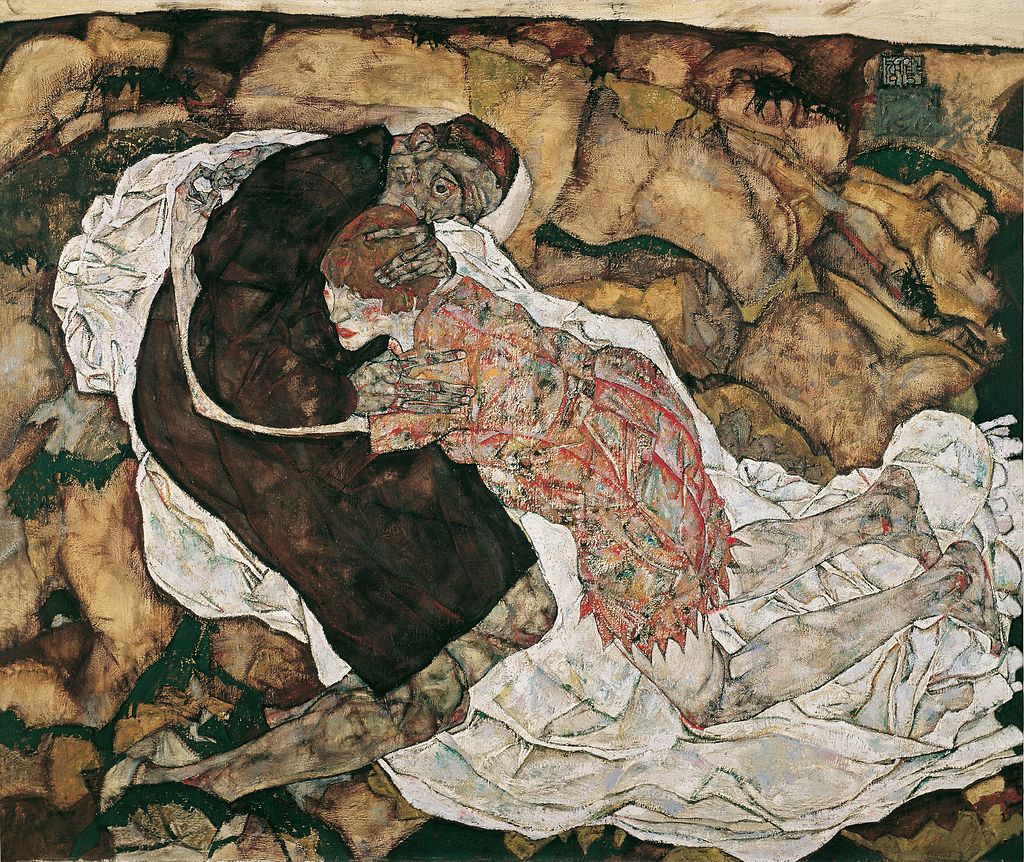








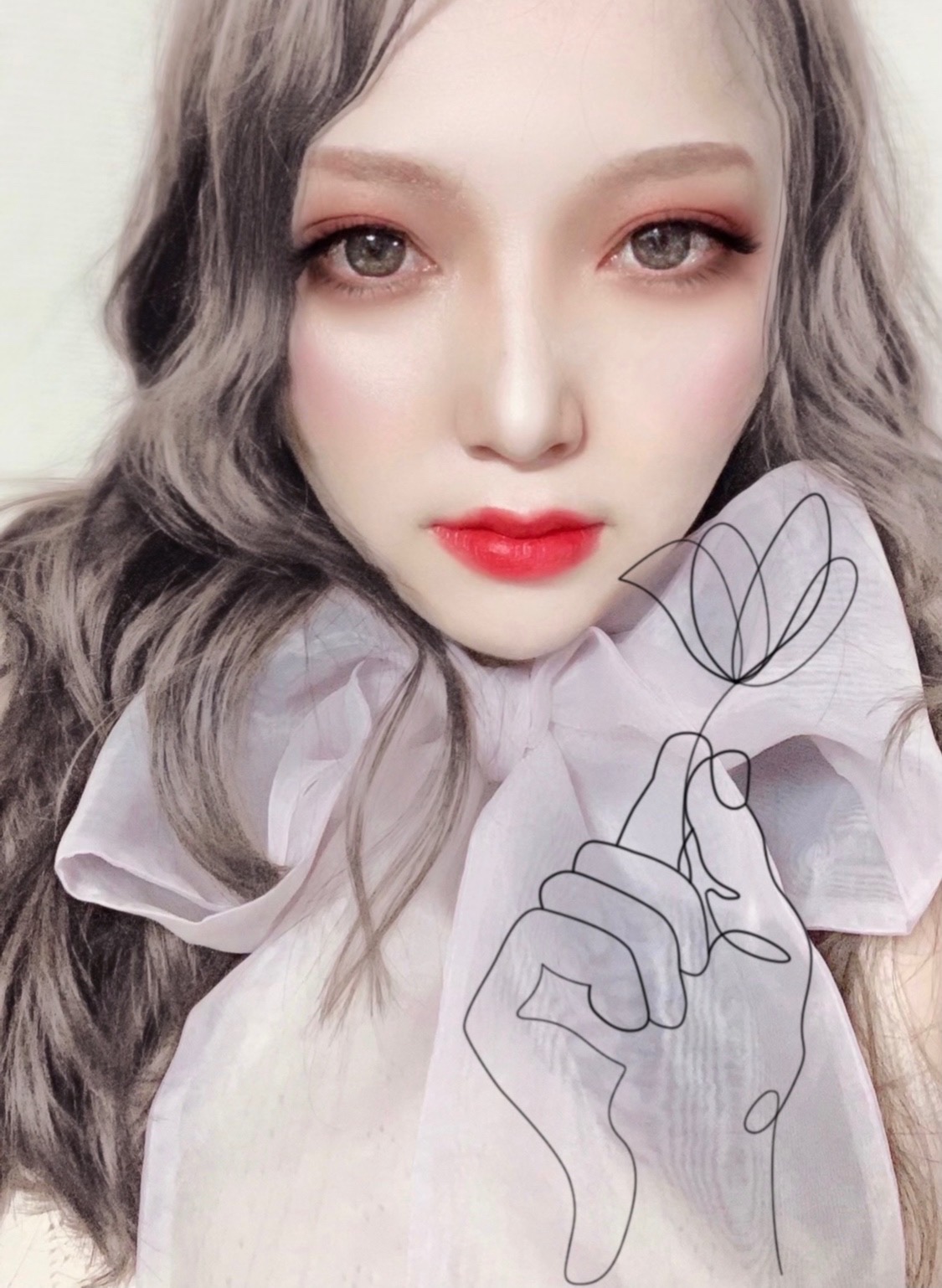








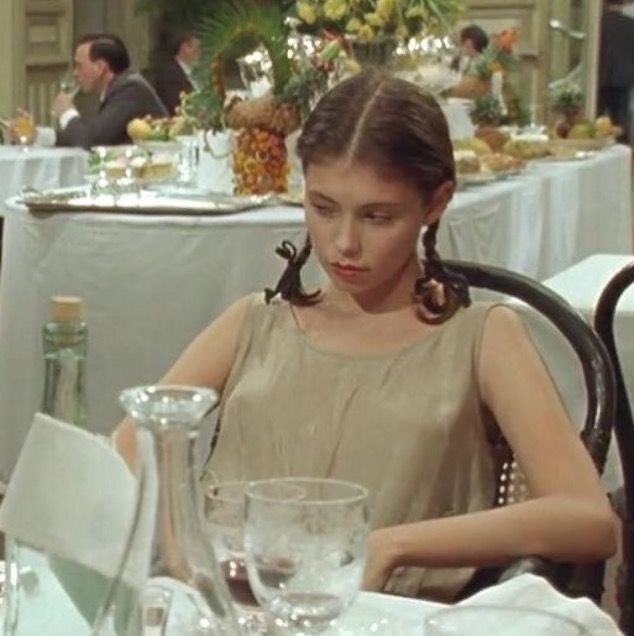
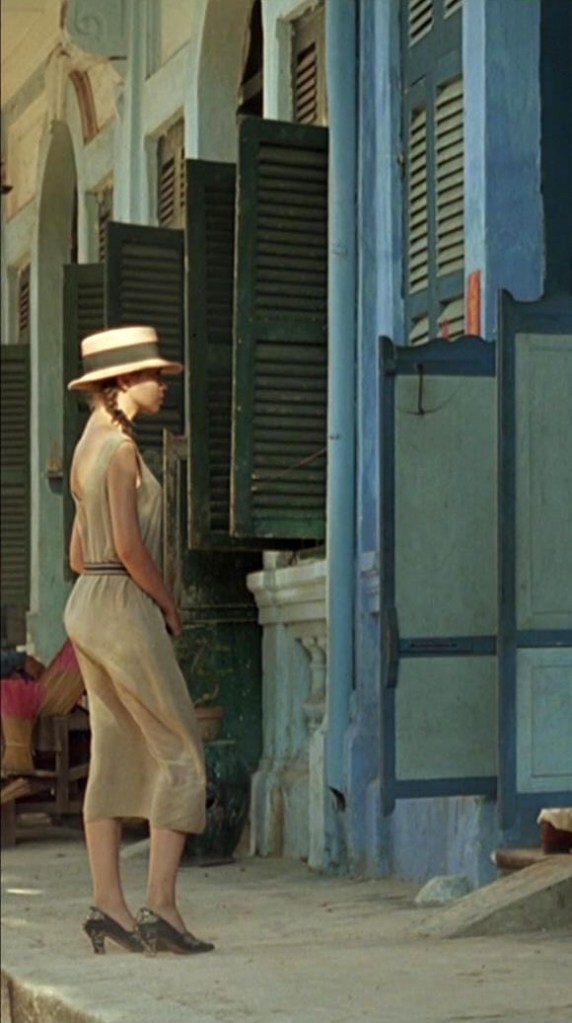
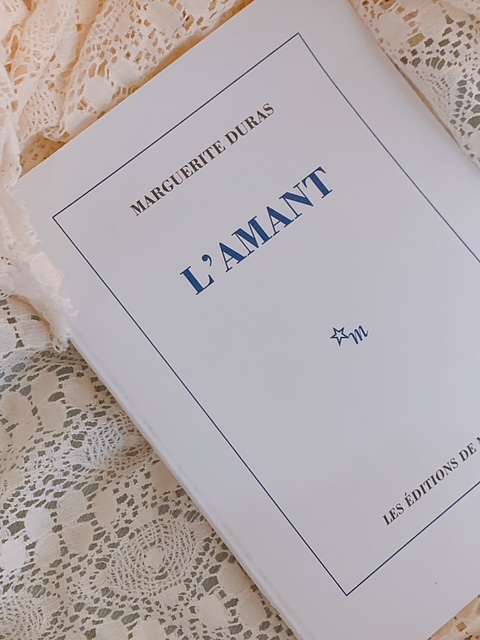

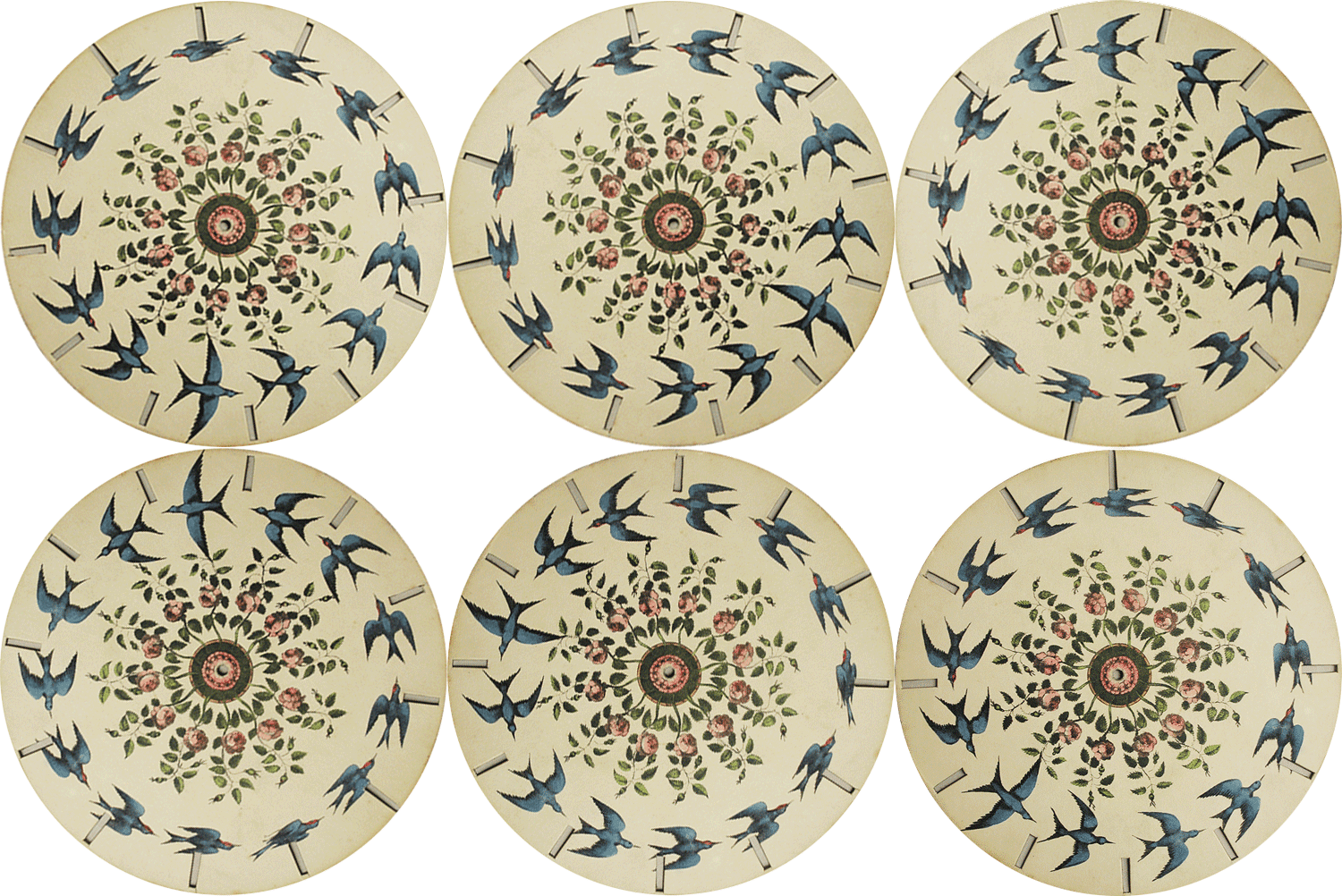
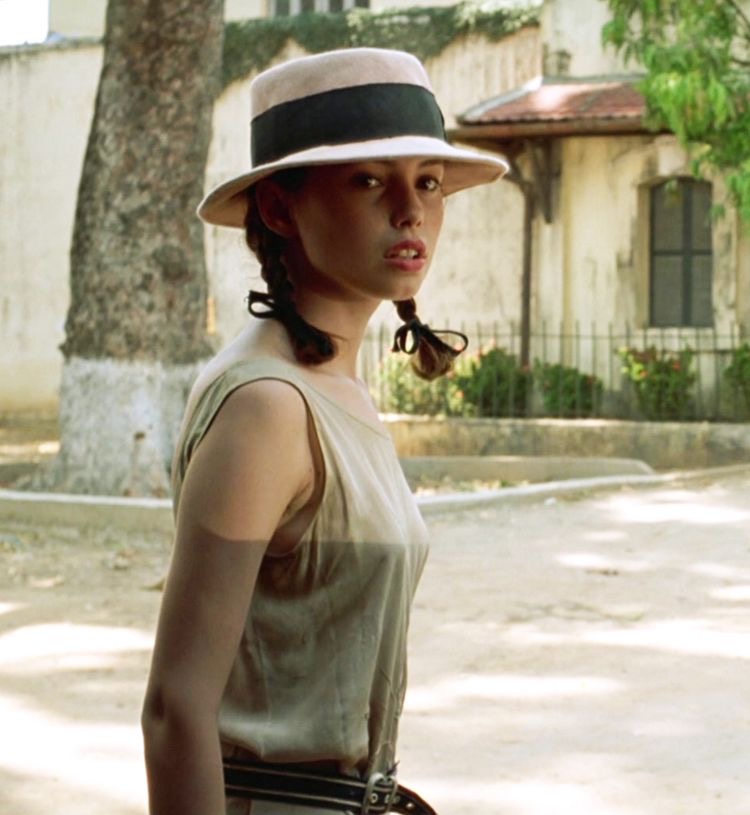
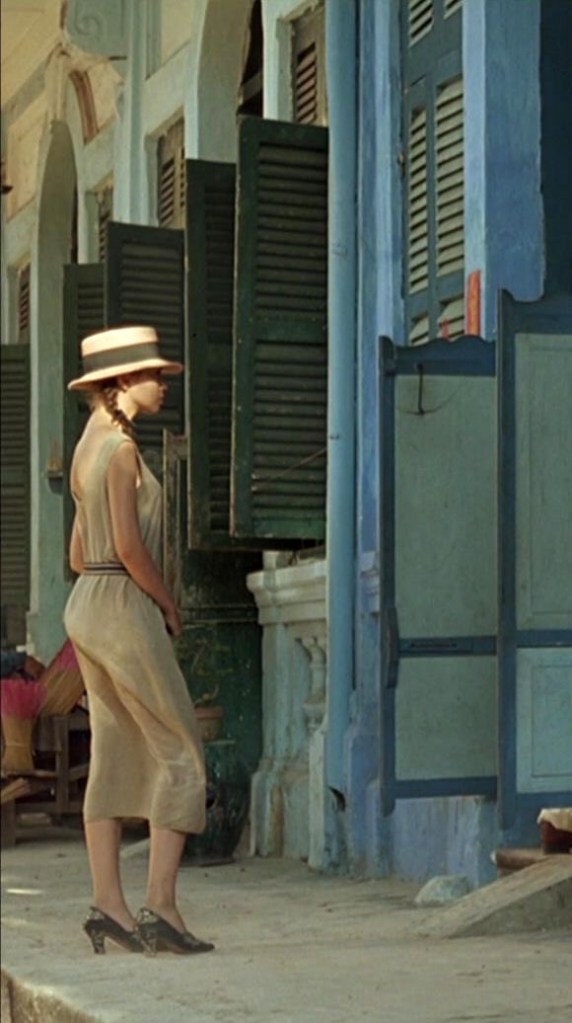
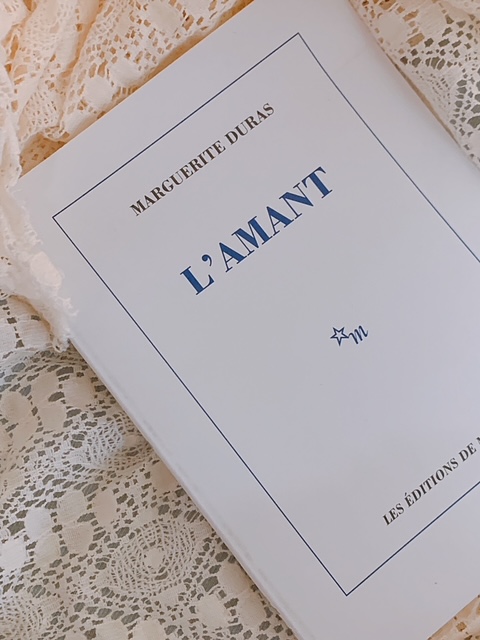

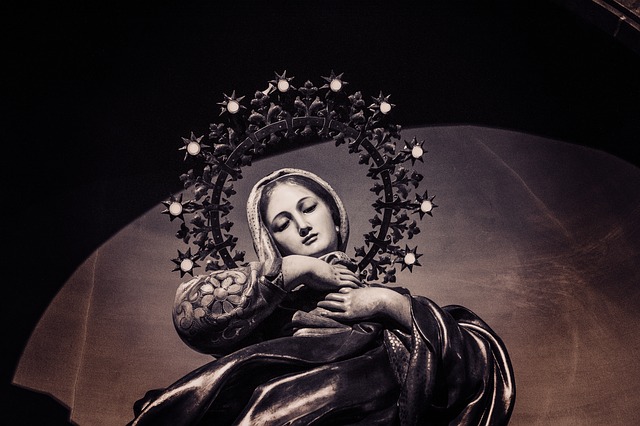
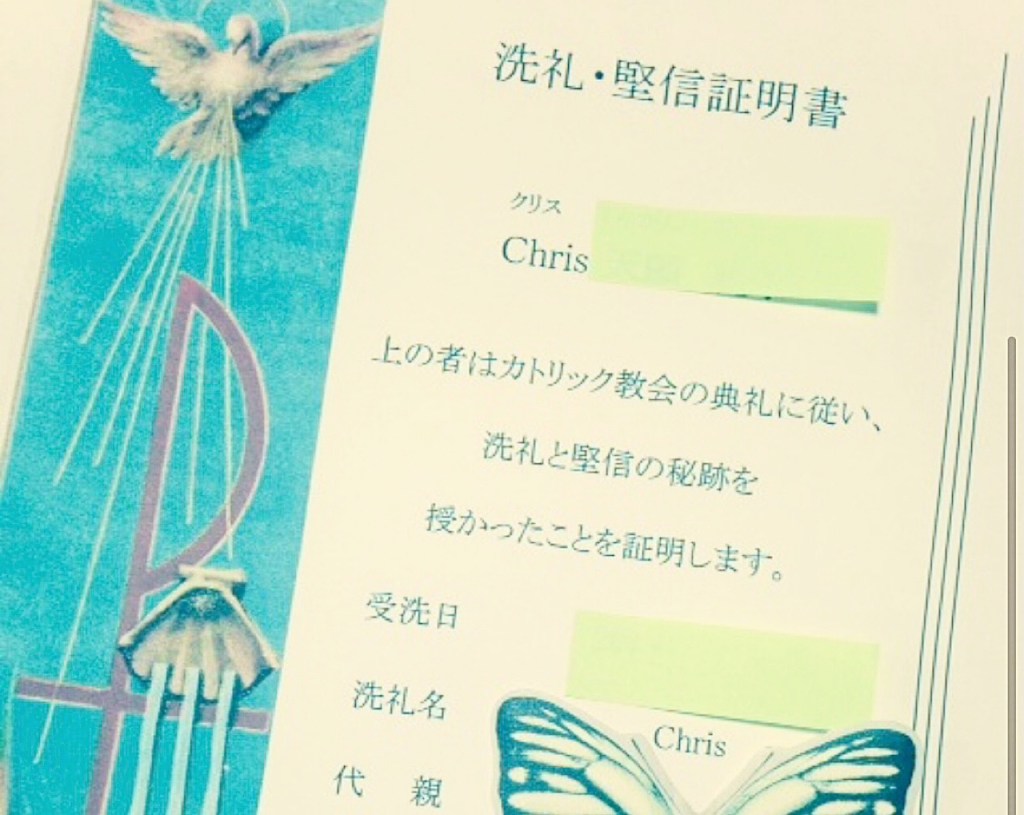
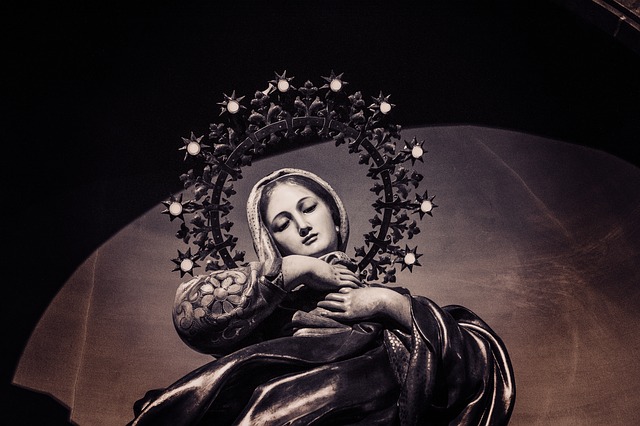
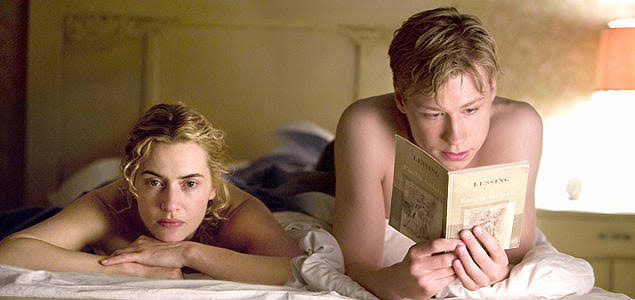
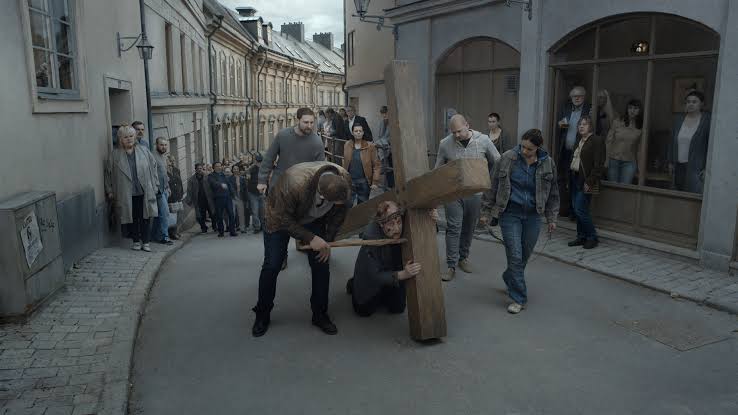

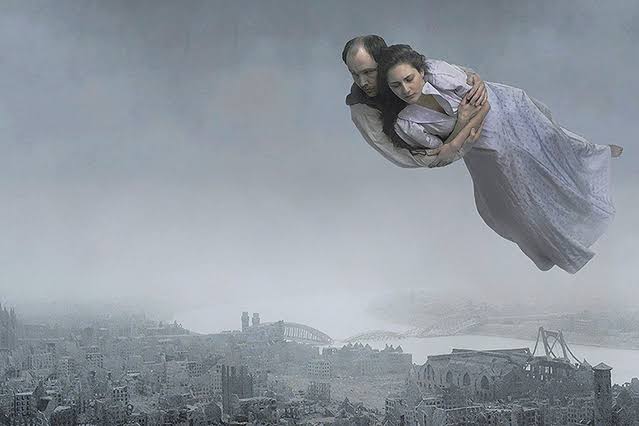


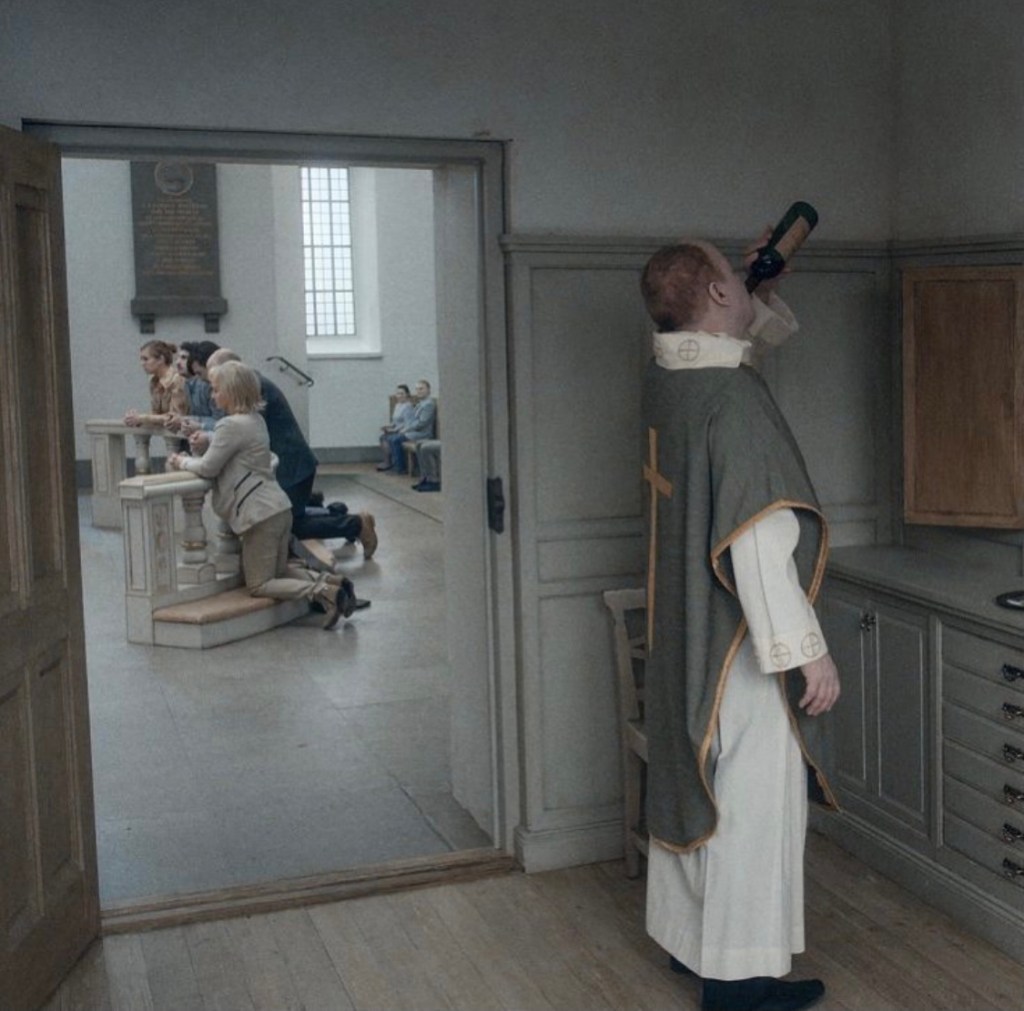


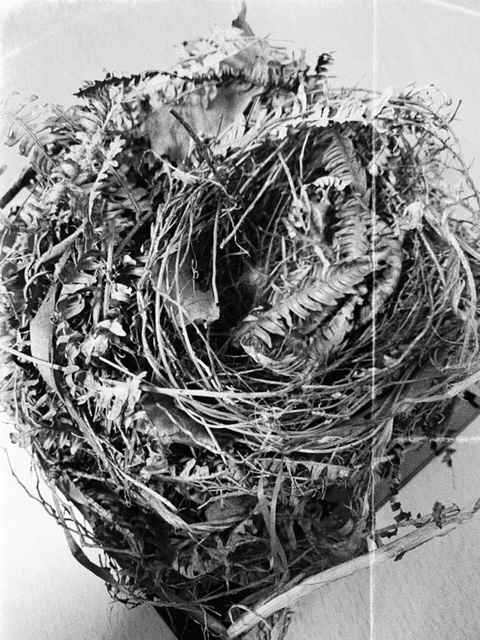
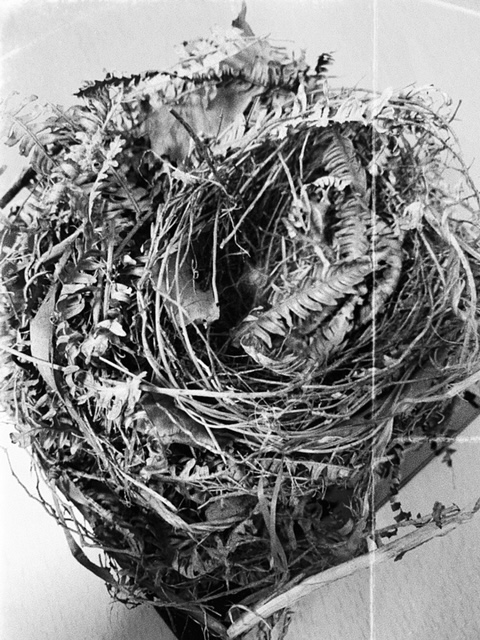
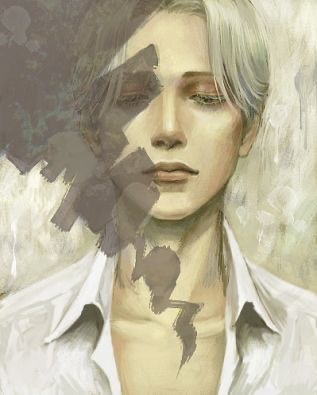





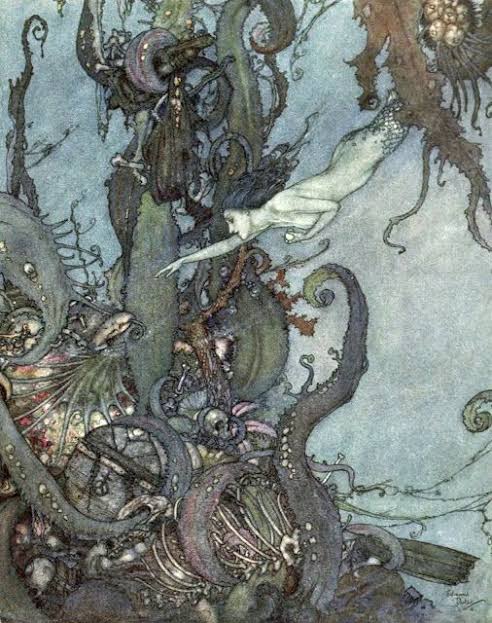
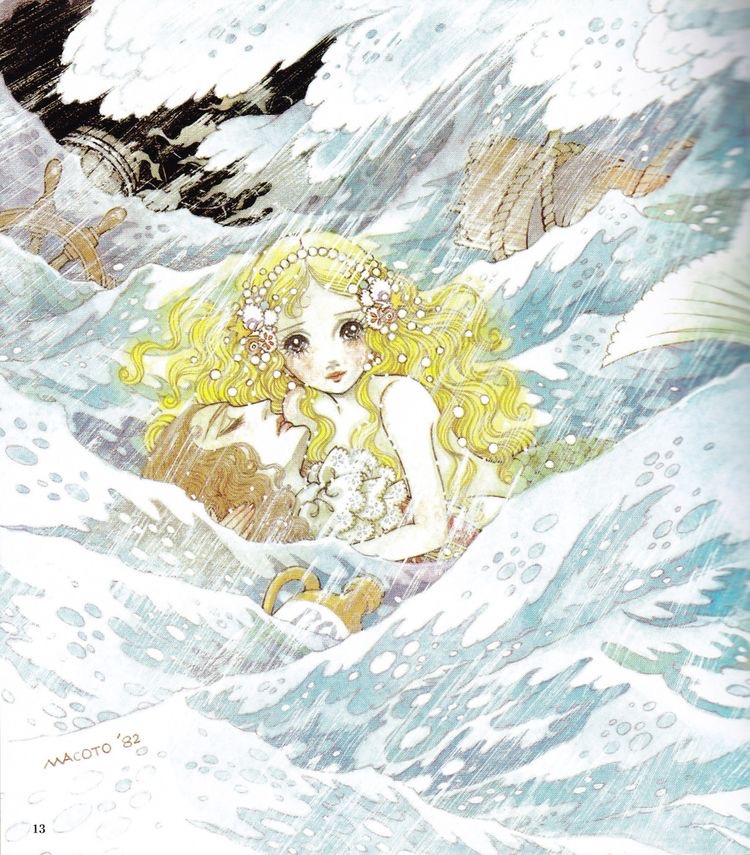
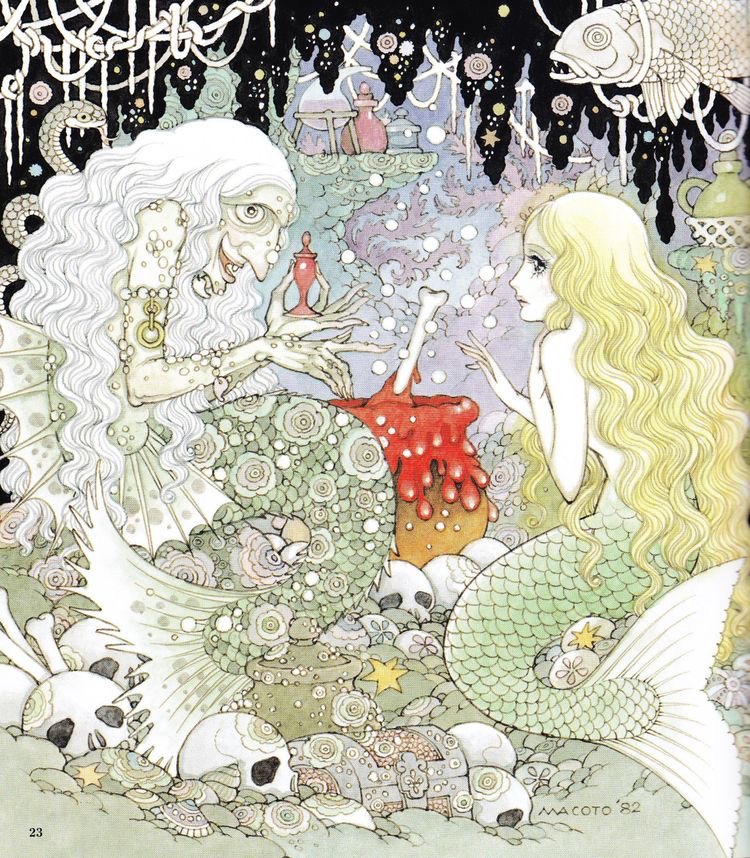

 Chris Kyogetu