The doctor said to me, “Gradually it will become possible to see. The light moved without being able to decide where to stay, and tried to create space, but the shapes were dreaming too much in my heart, and I was afraid of waking up. Outside is a nightmare, or is it possible to wake up?
The emotional conflict inside of the shadows and the light seemed to overwhelm me.
Outline
I am left with the memory that I was blind. When I say, ” touching the world,” it’ s not a metaphor. It is a recurring memory of the day I was blind and could see for the first time. And yet, the emotion of “that day” when I could see has faded, and this memory is like a stranger.
I wonder if I’ve come back to life or am I a stranger.
On a summer’s day the painter contemplated death, and on a winter’s day the writer found the body of a musician. Fleeing footprints were burst shot by the photographer.
By the way, where you were “that day”?
From the Author.
As for my own experience, there was a six-year period when I couldn’t write since my last publication (2016). Then I structured the novel in seven chapters based on the seven days of Creation in Genesis.
Publication schedule: Winter 2022 – Spring 2023
Language: Japanese and English
English version may be requested from a translator.
I adapted this photograph to show the protagonist, who experienced a past of blindness, repeating his/her memories. “The emotional conflict inside of the shadows and the light seemed to overwhelm me“
"Bring me the two most precious things in the city,"
The Happy Prince- Oscar Wilde
Prometheus took the fire from the heavens and gave it to humanity. For that, Zeus punished him. Both he and Jesus loved the human. In Greek mythology and in Jesus, the divine beings who gave their love to mankind were punished. The Happy Prince would be Wilde’s most Christian work, with the hope of converting him to Catholicism. Retarded on his way to Egypt, the swallow attempted to rest at the feet of the prince’s statue. Then the statue of the prince wept――.
The reason the swallow was 6 weeks after the others was because he was in love.
He asked her Shall I love you? She nodded yes. “Will you come away with me?” he said finally to her; but the Reed shook her head, she was so attached to her home. She was making out with the wind. The swallows said goodbye and went away.
Before his birth, the prince was beautiful like an angel. He was called the ” Happy Prince ” and became a statue. The prince, who did not know the outside of its walls, passed away happy.
When the prince found himself outside the walls, he despaired of the poverty and lowliness of the world. The prince asked the swallows to take to the poor the jewels and gold which decorated him.
At last, the prince had nothing left to give. The swallows were exhausted. The swallow finally kissed the prince and they both died. The prince’s body was melted, but for some reason his heart was not melted, so that he was discarded with the corpses of the swallows. God said, “Bring me the two most precious things in the city,” An angel picked the two souls and led them to the kingdom of heaven. In the picture books I read in my childhood, the love of swallows in the first half of the story and the Christianity of the last half were omitted.
The scene of poor people on a winter day reminds us of Andersen “the little match girl”, but the happy prince has a match-selling girl. The last person the swallows give the gold foil to is the matchgirl. Swallows are monogamous and raise their youngsters in couples. Swallows transport their food over 100 times, so this story makes ecological sense.
It is believed that the prince, who had never known outside the walls, died and never became an adult because he remained a prince, a title he held. Oscar Wilde also refers to children’s sacredness in his other book, The Selfish Giant. The giant had a lovely garden among its walls. With the giant gone, the children came to play. When the giants found them, they sent the children away. Then Spring stopped coming to the garden. The giants let the children in. This suggests a profound belief that children will go into the kingdom of heaven, as we have read in Matthew 18:3-5.
If you imagine a swallow flying around for the poor, the image recalls a street and a space. Time is a space, the analogy of Bergson appeared to indicate. Time is not linear, nor is it ephemeral. The flight of the swallows is repetitive, linear, planar. The swallows and the prince lived in an interior time different from the “exterior” time of the adults who had the prince who had lost his ornaments. Their kind-hearted deeds are different from the regular time. It is durée pure; They lived in the ambivalence of transmutation and preservation. How difficult and costly it is to love a human being. This is demonstrated by the description of the impoverished town and its inhabitants.
The prince was wealth itself. It was too big to share with the people. That’s why he needed the little swallows to get past a like needle hole. As it is more difficult for the wealthy to enter the kingdom of heaven than to go through the eye of a needle (Matthew 19:24), they begin their preparation for the narrow gate. (Luke 13:23,24) But the prince said to the swallows that misery was not a mystery. They will be carried by angels.
A most beautiful soul.
When the pure presence of the soul appears in the world of writing, a light comes into view.
It was as if, with the association of dawn in the mind, the beautiful sunrise revealed the presence of God. That the self-serving dialogue of the poor streets would fade into the distance;Our immersion rises into the kingdom of heaven.
When I was a little girl, I never wanted to be a stopped swallow;I wanted to be the swallow that ignored the prince and flew to warmer ground. But I realized what it meant to be a swallow that had nowhere else to fly but Sacred love.I thought of the Japanese words of prayer before Communion: Leaving you behind, who will I go to?
Bergson
Oscar Wilde – The Happy Prince
Bible Christianity
備考(Note)
Leaving you behind, who will I go to? Japanese Mass
my soul shall be healed English Mass
参考資料 Reference
『Brief Lives: Oscar Wilde』by Richard Canning Hesperus Press Ltd.
I was tormented not so much because I had stolen, but because I had damaged a beautiful moth. ”So that's who you are” Hermann Hesse "Schmetterlinge"(Das Nachtpfauenauge)
A specimen of a living thing, as a butterfly, is not a living entity, but remains essential. Specimens are available both as research material and as objects of taste. For Heinrich, it was a favorite hobby. For Heinrich, it was a favorite hobby. The story is so famous that it appears in Japanese textbooks, in a chapter of Hermann Hesse’s short story “Das Nachtpfauenauge” (Schmetterlinge) (1911). The guest in the first person “I” is Heinrich Mohr, and most of the story is about the man’s memories. The book consists of nine pieces of prose on the subject of butterflies and moths by Hermann Hesse, eleven poems and one post-scriptum by writer Volker Micheles.
Heinrich started collecting butterflies and was captivated by them when he was ten years old in his second year of collection. The mere sight of a butterfly was enough to send him into a state of ecstasy and he had no choice but to keep his collection in an old cardboard box. However, his friends put them in nice display cases for specimens, and he gradually ceased to show them to his friends and began to show them only to his sister.
He succeeds in catching the rare ‘Apatura metis’. He spreads the wings and completes the specimen in a ball box. He wants to show it to the neighboring boy, his is Emile. The boy was the son of a school teacher and lived in the neighbourhood. Although its specimens were few themselves, unlike Heinrich, the specimens of Emil were magnificent. And he had a high level of expertise in the production and restoration of specimens. Heinrich was jealous of him, but he was an admirer. Heinrich showed Emil the Apatura Metis and, in the beginning, praised them. However, he noted various shoddy management practices. Then he stopped showing them to Emil. Two years later, Emil was hearsay that he had picked up “Das Nachtpfauenauge”.
Heinrich learned through hearsay that he had collected “Das Nachtpfauenauge. It was the moth that Heinrich had been pining for. He went to the house next door and knocked, but there was no answer from Emil. He went into the room without permission to see the moth, and saw. Das Nachtpfauenauge” This moth was so beautiful that he forgot about it and stole it. He soon came to his senses and returned the moth to his room, but it had lost its form.
When Heinrich went back to Emile’s, he found Emile telling him someone had broken his Das Nachtpfauenauge. Wishing to have attempted to restore “Das Nachtpfauenauge” to the best of its ability, but in vain. Heinrich apologized, but Emil, did not forgive him or get angry,
He said ”So that’s who you are” and He despises.
Emil said the botched management of Heinrich’s butterflies seemed like the essence of who he was.
When Heinrich returned home, his mother was kind to him, but he crushed the butterfly and moth specimens he had collected with his fingers.
The specimens of butterflies and moths existed as essences, while they had a form, but in broken them, the essence and the phenomenon became confluents. A specimen is only significant when there is a form. Emile’s argument was essential. A Specimen of butterfly preserved only by feelings and passions was unworthy of existence. ” Must be beautiful,” Heinrich understands the meaning of the word. Because butterflies and moths are dead twice. The first death for the specimen, the second death for Heinrich’s ego, He couldn’t even keep the first death alive, which would have eroded his self-worth as a collector.
When an association of ideas takes up residence in the psyche in the form of a parasite, it becomes detached and isolated in the psyche when it grows up. Heinrich never collected any more butterflies.
If he hadn’t spoken to Emile before he broke Emile’s specimens and before he entered the house without permission? the boy’s heart would have been purely in collecting butterflies.
It is impossible to come back to this passion. He won’t be able to go back.
The passion for butterflies and moths was one of the things which made Heinrich’s personality so beloved. But the personality of the beloved child always became sinful when Emil’s despised came to mind.
Where’s the broken butterflies now?
When reminded of that, he could not avoid the ugliness of his past. But it is something that is not inherently to be feared. That is how boys accumulate to become adults.
Leaving behind the touch of scales, the phenomenon beat wings and became Heinrich’s metaphysical form.
La vulnérabilité des choses précieuses est belle parce que la vulnérabilité est une marque d’existence.

Something of value is vulnerable and helpless, and it's beautiful. Because their weakness is a sign of their existence.

Simone Weil
La Pesanteur et Grâce(Coincidences)
This article contains information on suicide.
Weil wrote in a letter to Gustave Dupont: ‘The right way to write a text is to write it as if you were translating it …… and not to add anything to it.
It is a pen without hesitation that always seems to have an idea (Plato) and is not swept away by the images that spread from the text. I too try to cut out the useless. I couldn’t write everything, no matter how sad it was and no matter how much hatred there was. Even if what I want to convey is painful, even if it is my own voice, I look at what is useless. What you really want to leave behind, like a ‘poem’, will be left in the trail of the scraped-off pieces. It is one of God’s graces – ‘time’ – that must be obtained for healing. It is a lonely task in the extreme, but the joys and sorrows born of it are a given.
I was told that I could read a book before the death of a nun(仏教). At the time I did not think much of the fact that she had sought salvation from Catholicism before she was ordained. It was in the Church that she first opened her eyes and sought salvation in her predicament. But, contrary to Catholic doctrine, which abandoned my child to adultery, she was rejected. Even after her ordination, she remained popular for her humorous take on human problems. I was encouraged to go to her after the accident in 2018 by an older person who respected her and was also a writer. In fact, when I was accepted, she politely refused because I was a Catholic.
She was my last line of communication and afterwards, in the cold February weather, I kept asking myself. (2019)
At the time, I was disturbed by the left-wing activities and opulence of my own church, but the other faithful liked the priest so much that That priest is a good man. You forget him. So I tried to go back to no religion. It is true that I talk more with my friends when I am not religious. Talking about shopping, it is more ‘normal’ in Japan to buy luxury brands every day. They are even respected for their wealth. Still, my days became empty. I began to hate myself. And although I wanted to ask for help, I had forgotten how to ask for it. It was in the early summer of 2019 that I started thinking about suicide for the second time. My second decision was because I couldn’t go back to being non-religious. Establishing themselves as writers. I decided that I would be treated as ‘crazy’ in this country. If that was confirmed, I could stand as a religious person, but that was no longer the case. I am just a mad, ordinary person. The breakdown of the negotiations with this nun accelerated things. When you are in a tight spot, you gradually stop looking for reconciliation of souls. In fact, as was the case with me, PTSD caused me to lose my memory several times during my first suicide attempt in 2018. It’s as if the floor is oiled and the thoughts can’t get up and slide away. People in distress are in distress and the words that come out of their bodies are sometimes incoherent. I who cannot speak well, I who have reduced intelligence, me who…… That is why my ugliness was the trauma of secondary damage.
During my time in the convalescent home, I was also encouraged by friends not to live as a Christian, but to stay at the level of liking the Bible as a hobby. I knew that this would be better for me in Japan. But I could not find anything affirming in the non-religious world. When I look for arguments for soul and holiness instead of income and work, I find that the non-religious are all a mishmash of other religions. There is nothing original. Still, something was missing for me that most Japanese could live with in a way that made sense to them.
I kept running away from my faith. I was also looking for ‘normalcy as a Japanese’. But last year (2020), the Catholic Church and the bishops helped me when I was in trouble. In retrospect, they accepted this bishop even though they would not have had the advantage of accepting me at that time. That was a step in my conversion on the way to God.
I decided to take a step on the path of repentance.
A series of ‘coincidences’ becomes destiny. People want to eliminate them as much as possible, but coincidences are born.
I think that the ‘theology of liberation’, which originated in South American Catholicism, is necessary. Neither the clergy nor the laity should be the gate that closes the gap between a person in need and Jesus. It is only in times of need that the soul tries to leave. The great reconciliation of the wounded takes time.
I tried to focus on Jesus Christ because, unlike other studies, he was the equal, apart from religious groups.
Other disciplines are constantly exposed to absurdities. And they are subject to the reputation of society, even though they also affirm their own existence. Who can say “I am I”? If you can’t, you check yourself in the ‘mirror’ of others. I has no need of that. He has only loyalty and that is who I am . With this I can be an investment, I can enter into society, even if it is painful, and I can make sense of it. No other study or life can be achieved in the same way. If I am poor, I cannot even open a book. Other religions have barriers because of different races. But the word of the Bible was accessible without money. I think this is unique. Christianity is not absolute, but I was so poor. Not just my heart, but everything was poor. But I could still love the world because of Jesus Christ, who showed me the way to love and live. Jesus said to the man who could not walk. Without any treatment, he said to the man, ‘You can stand. What is faith after baptism?
That’s what it means.
The clergy have hurt us a lot. However. Faith exists in the words of Jesus: ‘Stand up’.
Of course, the ugliness of the religious community does not erase my own loyalty to Jesus.
I thought God gives you time to find out. Vaguely given time is inorganic, but God-given time was certain. Knowing weakness and struggling to reconcile the soul is God-given time. My weakness was ‘proof of existence’.
postscript
I met a priest who teaches ecclesiastical law. So I was saved even more.
The image of a man, a thought that I, the other, cannot imagine from its trivial aspect,I think of words that I record time and thought. If I could understand every casual look, the light that comes through the window, the changing emotions, I would feel happy. So I realize what I think is beautiful and what it means to be born. I love everything I love. I hate it, but I love it.
Chris Kyogetu
______________
Rilke’s “My darling”, Das ist mein Fenster, “This is my window”, starts with the inevitable awakening of her inner self and a look at the unconscious exterior. This is Eben bin ich so sanft erwacht… “I just woke up”, a gentle, relaxing moment, like a sprinkling of white powder.
“In the day-to-day life of a person like the window, “Bis wohin reicht mein Leben” (Where will my life reach?), and the eternity of the night and the universe, and the dream.
Ich könnte meinen, alleswäre noch Ich ringsum; (I feel that everything around me is still me), and thus loses the frontier between the interior and the exterior. Is both a bond and an obstacle to the outer world in this poem? She’s falling for him. and across the side world whereas his feelings and awareness of him as “objectivity from outside the window” But this is her reflection. Her existence is “inside” the window. Whether expectant or anxious, the waking ‘now’ is simply her being inside the open window.
I don’t know the details of the “I” relationship with that other person, but the fact that the other person is in my heart means that my beloved is not a quiet presence standing in the depths of my consciousness. My analysis of the poem is that it is a window on the outside world, without any intervention or controller (e.g. God) between ‘me’ and the ‘loved one’.
The original reality is the margin in which the poem ends. The world of empty margins, where nothing is written, exists for the poet independent of his own spirit, and when the poet enters into the spirit of a person, It means it changes the reader’s vison. If the window becomes special as of this day, it is a success.
It is beautiful to see the interior growth and the interior finesse.
I believe that a beautiful poem is beautiful, even in its borders.
__________________________________________
The Lover
That is my window. A moment ago
I woke up so softly.
I thought I would float.
To where does my life extend,
and where does the night begin?
I could think that everything
were still me all around;
translucent as a crystal’s
depths, darkened, dumb.
I could also contain the stars
inside me still; so large
does my heart appear to me; so gladly
it released him away again
whom I began perhaps to love,
perhaps began to hold.
Strange, as something never-described
my fate looks at me.
For what am I laid under this
unendingness,
fragrant as a meadow,
moved here and there,
calling out at the same time and afraid
that someone will hear the call,
and determined to find my downfall
in another.
R. M. Rilke
Die Liebende ( Rainer Maria Rilke ) 訳・Chris
Das ist mein Fenster. Ebenbin ich so sanft erwacht.
Ich dachte, ich würde schweben.
Bis wohin reicht mein Leben,und wo beginnt die Nacht?
Ich könnte meinen, alleswäre noch Ich ringsum;
durchsichtig wie eines Kristalles Tiefe, verdunkelt, stumm.
Ich könnte auch noch die Sterne fassen in mir, so groß
scheint mir mein Herz; so gerne ließ es ihn wieder los
den ich vielleicht zu lieben,vielleicht zu halten begann.
Fremd, wie niebeschrieben sieht mich mein Schicksal an.
Was bin ich unter diese Unendlichkeit gelegt,
duftend wie eine Wiese, hin und her bewegt,
rufend zugleich und bange, daß einer den Ruf vernimmt,
リルケの「愛する人」、Das ist mein Fenster「これは私の窓」という始まりは、自分の内部の目覚めと共に、意識出来ない外部への視線が必然となる。それはEben bin ich so sanft erwacht.「たった今、目覚めたばかり」と、白粉が舞うような、甘くてゆったりとした時間を感じさせます。「窓」のような人間の生活に関わっている日常を通して「Bis wohin reicht mein Leben」私の人生は何処へと届くのかと、到達しえない眼路の限界と、その限界を補うための夢想、「und wo beginnt die Nacht?」そして夜は何処から始まるのだろうと、更に夜と宇宙の無限、そして夢と誘います。
「私」はIch könnte meinen, alleswäre noch Ich ringsum;(私の周りぐるりと全てが未だ私のような気がする) と、それによって内と外との境界線を失います。
Should be a reflection of something purer.
André Paul Guillaume Gide
On 12 October 1654 an explosion in an explosive’s depot caused a large extent of casualties.
Many Dutch paintings were destroyed in the explosion, and this also damaged the workshop. One of the victims was Rembrandt’s pupil, Carel Fabritius, who was also killed in the accident. This captive bird is still alive today, even though it has lost its owner.
No doubt many people will agree that the “fate” of this painting is the reason for much of its re-evaluation.
Carel Fabritius was an Rembrandt student. His paintings have been influenced by Rembrandt. We can find Rembrandt’s influence in the way he painted light. Rembrandt’s early works show a wide range of colors, but he gradually developed a basis of brown and grey tones, with brighter colors used for the most illuminated objects. He also uses chiaroscuro, a compositional technique that clearly defines light and darkness.
Its influence is also felt by his pupil Fabritius. Overall, the work is completed in opacity, but the color contrast gives the wall a strong light. The walls are darkly shaded by the feeder and the birds as chiaroscuro, Tarnished natural yellows create a psychological effect of light and shade. What distinguishes this painting from that of Rembrandt, in addition to choosing the bird as a motif, This is using hard paint..Like Van Gogh and the impressionists.
The bird’s background is a flat wall, but we can imagine that what the bird is watching is daylight.
By avoiding all human symbols and imagery, the bird sees the purest things. The light is reflected in her eyes and the imagination is always there. This painting, dressed in “Amor Fati” is a bird who never knew the escape.
This bird lives for a long time and is not capable of flying high.
It was the movie “The goldfinch”(2019) that made this painting instantly famous of our time.
In order to explain the film, a boy and his mother visit a museum and find themselves caught in an explosion. While they escape, the boy steals the goldfinch which has survived. Inspired by the destiny of the original painting of real life, I watched this movie in 2021 with no previous information. The film was inspired by the destiny of the original painting of actual life,and I got a sense of déjà vu from the paintings used in the film.
Had a life of his own for a film accessory. Nothing symbolic at the time, but the color palette was classic. The bird understands the light and is free from superfluous insights. It’s too far from being allowed to exist as a painting, and I’ve seen it before. During the movie, I thought so much about this painting that I didn’t remember exactly what it was about. I didn’t remember exactly what they were talking about, However, the characters began to say that it was a Dutch painting. I looked through the catalogue on the shelf in the other room, thinking maybe I saw this painting once.
In 2012, I was still watching the painting.
I placed a sticky note in the catalogue of Mauritshuis’s exhibition.
The page was “The Goldfinch”. Many Dutch paintings were produced during the boom in microscopic observation, So these are essentially specific tables. Rembrandt’s “Canticum Simeonis” was extremely bright. And Vermeer’s “Het meisje met de parel” tour. I passed by smiling faces art, smiling faces art, and found ‘Goldfinch’ in still life.
It seemed like an incomplete picture. After the human smile, the innocence of the animal, the feathers reflecting the pure light, looked even brighter. In the midst of all these still life’s, observed as the curious mind desires, there is a single and foreign imperfection.
The chained bird received the love of someone special instead of freedom. The look in the eyes of the person who loved this bird makes it seem that it is not so bad out there either. Whoever fed this bird, this bird has transcended much time and space and always sees the light. The vitality of the paintings that survived the explosion accident was unintentionally revived in my memory. It was a memory I did not cherish, but it was unexpectedly revived, and it was now inevitable that I would notice this ‘bird’ lurking in the shadows, even for a moment, while I was looking at the guide to the series of Vermeer’s ‘Pearl Earring’. At the time, I certainly thought it was a good painting. But I didn’t realise then that it was so memorable. I thought about leaving without buying the catalogue, but I am glad I did. At the time of the exhibition I didn’t think my life would fall apart from there until 2014, after my Catholic baptism, when I was baptised into the Catholic Church.
I was in hell for a long time, although I also saw heaven. What to do with what I saw on the verge of death, my good will was preserved by this one gentle miracle. For this memory of Hades was an assurance that I had not lived in vain.
This trompe l’oeil (deception), loved by fate, which deceives me, overwhelms me with the power of its vitality. It made me want to be deceived again, to catch the light.
***
The goldfinch, also known as the ‘thorn bird’, is said to have pulled the thorns from Christ’s crown of thorns, causing the blood to splatter on its wings.
And lastly, there's still a way to seek God in you. That is, there are ways of doing away with things that are limited. For if artists look for the face of the King in the soul of a tree, they will leave everything behind for the love of that face.
Nicolaus Cusanus-De quaerendo Deum 49
Foreword
When it comes to talking about Osamu Dazai’s ‘character’ in Japan, he does not make a good impression on society. This does not mean that Osamu Dazai is not recognised as a great writer by the public in Japan. However, it is a common topic of conversation among intellectuals to talk about their dislike of Dazai . You should definitely come to Japan to experience this unique feeling. It is a feeling that is beyond words.
In 2021, he is not even sure whether he will have a high or low status alongside the intellectual giants of the Showa period, such as Hideo Kobayashi and Kunio Yanagida . What is certain is that Osamu Dazai’s status is that of ‘famous’. I prefer Osamu Dazai not only because his stories are great. When I talk about writers like Mishima Yukio and Tanizaki Junichiro, the literary maniacs bother me. As soon as I badly recite Junichiro’s Tanizaki’s Kansai dialect, they tell me to fuck off because it is so bad and offensive. Osamu Dazai fans, on the other hand, are rarely criticised, even if they get Dazai a bit wrong, perhaps because of the Dazai heart attack, or perhaps because he was not as virtuous in his lifetime as he was on the left. I think there is no other writer who is so easy to talk about. I hear that Dazai’s library sells well in the summer, and that still seems to be the case. Some people say that his colloquial style lacks the intellectualism of the great writers. The fact that he writes with sensitivity about things that are taken for granted can raise both religious and philosophical questions. And his sensitivity is not a technique embellished with special words that can only be found in a national dictionary, but is also characterised by a large number of words used in everyday life.
Dazai and two women.
Tomie Yamazaki
“Why not risk your life in love?” suggested Osamu Dazai. Dazai had another heart-suicide case when he was a student.
Dazai also had a murder-suicide when he was a student, but it was with a different person. The dead woman in the student heart-suicide incident is mentioned many times in Dazai’s other works, such as ‘Douka no Hana’ (Flower of a Clown) and others, in addition to ‘Ningen Shikkaku’ (Human Disqualification). She continues to care for Dazai like a nightingale, desperately caring for his tuberculosis and desperately trying to keep his affection for herself. Tomiei learns that Dazai is distressed by the changes in post-war Japan, and realises that she has blindly accepted that women can only live wrapped up in the big things. Tomiei was rushed into marriage by her family, and her husband went to the war zone in Manila, Philippines, never to return. She became a widow. In Japan, where the term ‘所帯くずし’ existed, no one could cure her loneliness at that time. After Tomiei and Dazai’s suicide, her father regretted that he should have understood his daughter’s loneliness. She genuinely loved her husband, who had gone to Manila, even though it was an arranged marriage. Unlike the rest of the world, in 1947 Dazai depicted her love for Tomiei and her invocation festival for her husband, centred on the fictional flower phosphorescence, in Phosphorescence, which was created on 3 June. The world did not forgive Tomiei’s depression over what to do with her love for her husband who was killed in the war, but only Dazai forgave her and accepted her love for him. Ningen Shikkaku is Osamu Dazai’s last work and is said to be a semi-autobiography written while Tomiei was nursing Dazai.
The family published the diary to stop rumours about their daughter Tomiei.
Michiko Yusima
As the wife of Osamu Dazai, she endured her husband’s repeated infidelities and selfishness. In contrast to the Dazai described by Yamazaki Tomiei, her husband’s partner in suicide, the novel describes Dazai Osamu as a tyrant and an unqualified husband. The writing is so intelligent that she can write on the blackboard while listening to Dazai read “Heed My Plea ” like a spider spitting threads. If Osamu Dazai’s writing is sentimental, his wife Michiko Tsushima’s is rational. In Dazai’s world of writing, ‘Wife’ is written by a woman whose writing is not beautiful and who has fallen as a woman, but in reality his wife’s writing is soft and beautiful as a woman, and she is calm about her troubled husband, Dazai, and the world at large. The Jogakusei is based on the diary of a real young female lover. This is also the case with Ota Shizuko, the model for Shayo, and it seems that Dazai had many such requests for his wife’s diaries. The student “placed a small white rose on her breast in a collection of poems”, which Dazai described as “red embroidery”. It was his wife who called it ‘white’. I’m Catholic,I am compelled to affirm the efforts of my wife, Michiko Tsushima, who, more than anyone else in this group, has defended the key elements of husband and wife and family, and more than Tomiei. It is only recently that I too have understood this value. That is how long it takes to understand the meaning of family.Personally, I cannot determine what kind of love is great, but there was an emotion that others could not understand beyond the pain and endurance. There was something about it that made even the word ‘love’ a cliché.
“No longer human” and “Osamu Dazai”
Yozo, the protagonist, has been a beautiful boy since childhood, but he has doubts that cannot be attributed to his contemplation of happiness. People judge him as ‘happy’ because of the outer skin that covers his inner self. These words are somewhat superficial and do not resonate with Yozo. And, as if the world around him were a Japanese honour student, he can’t find anyone else with his kind of problems. The protagonist thinks to the world, “Do they all sleep at night without deep thoughts and feel refreshed in the morning?” He is lost in thought. And in an almost overlooked detail, Yozo was ‘mistreated’ (raped) by a servant as a child. He thought about complaining to his parents about the damage, but took pleasure in watching the fall of man and his nature. The content of this human disqualification can be found in many of his other works, such as “Douka no Hana”and it is said that Dazai became a writer to write ‘Ningen Shikkaku’. It is written in the Japanese language, a language of ‘character’, but if you look at the events alone, they are the very essence of ‘human karma’ in the Buddhist sense. The language (meaning) conceals the ‘beast’ that lives in man, and this tension makes this work superior to ‘Douka no Hana’.
Yozo was sensitive and enjoyed looking at human nature. He was intoxicated by showing kindness to dubious people and felt that he had become a good person through their gratitude. Yozo was then sent to school in another hometown. He says his parents’ home is the hardest place to work (and play). As a ‘clown’, he tries to keep in harmony with his surroundings so as not to reveal his mind. When Yozo falls from the bars, Takeichi, who was watching the performance, sees through his ‘waza waza’ (deliberate) act. Yozo wants to kill Takeichi, but then realises that this is not his true intention. In fact, he was shocked to realise that it was he who wanted to be killed. Yozo takes Takeichi with him and goes to his house. Takeichi had a bad ear, so Yozo planned hypocrisy by offering to clean his ear for him. Takeichi then makes the first prophecy to Yozo.
I’ll bet lots of women will fall for you.
It was not that he would be loved, but that he would be ‘made to fall in love’. He already knew the difference, and how being ‘annoyed’ rather than liked was a sweet temptation that could lead to unhappiness. Takeichi’s sisters also seemed to be in love with Yozo. But that was only the beginning. His interaction with Takeichi led Yozo to try his hand at painting, but when he painted, the result was a gruesome picture that was the complete opposite of his clownish self. When he saw it, he knew that the painting was his like true identity. This leads to a second prophecy from Takeichi: “You will be a great painter”. The final part of the second memoir is the ‘emotional death’ incident, which is also a recurring event in Dazai’s past. Yozo jumped into the sea in Kamakura with a woman named Tsuneko. Only the woman died, and Yozo was charged with assisting suicide, but the charges were dropped.
At the beginning of the third memoir, Takeichi says that he seems to have guessed the first prophecy, but not the second. So far, this is similar to Hesse’s Augustus. Augustus was also beautiful, and everyone loved him. This led Augustus to the point where he never learned to love people and did terrible things to them. After his mother died, he begged to give up the magic he had been given, which was to be loved. This led to him being loved by no one and being sent to prison as atonement for his past deeds. Although Hesse left the Christian school, Augustus is rooted in the values of the Christian world. It was ‘witchcraft’ rather than divine grace that made ‘many women fall in love with him’. It was not the witchcraft of religious heresy, but as a fairy tale. But because it was witchcraft, he could let it go. From then on, he loved people while being hated and loved by no one. He embodied Matthew 5: ‘Blessed are the poor in spirit’.
Like Dazai, Hesse attempted suicide. One thing they had in common was that they both loved to read the Bible. In particular, Osamu Dazai carried a Bible with him when he visited his adulterous lover, Shizuko Ota. In his wife’s memoirs, she also mentions that her husband, Osamu Dazai, carried a Bible with him. His lover, Tomiei Yamazaki, also studied Christianity and French at the YWCA. His teacher was Junko Takamizawa, Hideo Kobayashi’s own sister. She discussed the Bible with Dazai. Although their personalities are different, I cannot help but think that this intersection between Hesse and Osamu Dazai carries the saga of the Japanese people. This is because the difference between falling in love and nurturing love, which is expressed by popular Christianity, is a mistake. Many people make a distinction between the two and assume that nurturing love is more wonderful. In truth, it is not.
Falling in love’ or ‘nurturing love’ makes little difference. They are just the process of germinating, blossoming and bearing fruit. What is important for Christians is to ‘redeem’ the love of Jesus by understanding it. That is what we must be dedicated to, like Augustus. This is the difference between true Christians and the irreligious. Yozo in Ningen Shikkaku remained unable to understand his neighbour, but he doubted his neighbour’s happiness. The courtship of a man who has no interest in people becomes ‘clownish’. Unable to fit in even in the presence of his parents, Yozo’s scent of loneliness becomes seductive as he grows up and is sniffed out by women. He becomes a colourful demon who guards the women’s secrets. Yozo marries a seventeen-year-old ‘Yoshi’ whom he meets in a bar. He finally becomes a reasonable man and gets drunk with his friend Horiki, who calls him ‘comedic noun’ and ‘tragic noun’ with his senses. After saying that the opposite of sin(Tumi) is ‘honey’(Mitu), he sees his wife Yoshi being unfaithful to another man downstairs.
Yoshiko is a genius of trust. Even though she is betrayed by the woman she thought she could trust, her friend Horiki, perhaps because he knows Yozo’s upbringing.
Horiki told Yozo.
You should forgive her. You’re not a good person either.
The man she had an affair with was a merchant who had Yozo draw manga.
Yozo read a book about his wife’s sexual affair with another man. The husband did not blame his wife. Rather, he resented Horiki for taking the trouble to tell him about the hidden things. He had lost his way with his wife. ‘God,I ask you,non-resistance asin?” could be a question to Joseph, a man who believed he was as pure as the Virgin Mary (virginity). This is connected to the fact that the biblical narrative in the first epistle, “I fail to see, however, that distrust for human begins should necessarily lead directly to religion. “I am convinced that human life is filled with many pure, happy, serene examples of insincerity, truly splendid of their kind-of people deceiving one another without (strangely enough) any wounds being inflicted, of people who seem unaware even that they are deceiving one another.” The reality in Japan does not show any obstacles in daily life, even if it differs from Christianity.
Despite his love of the Bible, Yozo, as Dazai wrote, was not about ‘loving your neighbour’, but about doubting his neighbour’s happiness. Just when he thought he had finally learned how to love after his marriage, his wife betrayed him the next time. He said in words that he forgave his wife but resented his friend, but his resentment did not last and his thoughts became saturated. He is ‘unable to put his being together’. Yozo looks and ages more defiantly than his age. -I will be 27 this year. I have a lot of grey hair, so most people see me as over forty – I think this is a reference to the fact that Dazai himself was in his forties when he caused the death of only one woman in a double suicide that he actually committed.
I would like to believe that the heart is something that always exists in us naturally, as something with more core.
but it is ‘by chance’ that the mind shows its power as an emotion. There are some readers who cannot understand Yozo’s thought process at all. Yozo’s floating feeling of being separated from his mind is called dissociative disorder, but it is believed that Osamu Dazai had both dissociative disorder and bipolar disorder. If the childhood sexual assaults by adults are true, they may have been the result of PTSD. Fortunately, while dissociative disorder was a disease, it was also mixed in with French and German philosophy and literature, ‘Subjectivity’, ‘objectivity’, ‘phenomena’, ‘existence’, ‘consciousness’ – to begin to question these was also an academic discipline. Ophelia in Shakespeare’s Hamlet was mad, but her prose poems somehow seemed to make sense, as her brother said: ‘It’s as if there’s a lesson in madness’. Ophelia was mad too, but she did not remove the name ‘Jesus Christ’.
Well, God yield you! They say the owl was a baker’s daughter. Lord, we know what we are, but know not what we may be. God be at your table.
–Ophelia
A document in madness, thought and remenbrance fitted.
–Laertes
The tragedy of Hamlet is that he did not ‘atone’ for his murderers. This is clearer than in Japanese literature. But people still get ‘lessons’ other than religious ones from the story. As a mirror for getting to know people, as a stage for the reproduction of the human condition. It is also the temptation of literature: the pure life and modern literature are incompatible, so much so that G. Bataille studied “literature and evil”. This is because it sometimes saves the human spirit by leaving behind its ‘evil’ and ‘weakness’. Man cannot become conscious through his thoughts alone. He becomes conscious through someone’s words. The words of another person, whom he does not know, shape him. To know man better, and literature, which is responsible for this, can even extract him by poisoning itself, like alchemy. Love’, written only from the imagination, is easy to apply to the popular imagination. This is because people’s common perception can understand its story.
But love stories written by writers who have lived unique, sultry lives are less likely to be understood. This is because people’s ordinary imagination cannot understand them. What is the difference between that and the ‘love’ that the whole of humanity allowed in the crucifixion of Jesus, which is what is ‘sacred and secular’? Writers must realise that they are ‘worldly’. Dante’s Divine Comedy is treated as sacred because it is sacred now, but at the time Dante was deported. I know of no innocent writers. So it cannot be separated from the sacred, because its struggle is meaningful.
The tragedy of Hamlet is that he did not ‘atone’ for his murderers. This is clearer than in Japanese literature. But people still get ‘lessons’ other than religious ones from the story. As a mirror for getting to know people, as a stage for the reproduction of the human condition. It is also the temptation of literature: the pure life and modern literature are incompatible, so much so that G. Bataille studied “literature and evil”. This is because it sometimes saves the human spirit by leaving behind its ‘evil’ and ‘weakness’. Man cannot become conscious through his thoughts alone. He becomes conscious through someone’s words. The words of another person, whom he does not know, shape him. To know man better, and literature, which is responsible for this, can even extract him by poisoning itself, like alchemy. Love’, written only from the imagination, is easy to apply to the popular imagination. This is because people’s common perception can understand its story.
But love stories written by writers who have lived unique, sultry lives are less likely to be understood. This is because people’s ordinary imagination cannot understand them. What is the difference between that and the ‘love’ that the whole of humanity allowed in the crucifixion of Jesus, which is what is ‘sacred and secular’? Writers must realise that they are ‘worldly’. Dante’s Divine Comedy is treated as sacred because it is sacred now, but at the time Dante was deported. I know of no innocent writers. So it cannot be separated from the sacred, because its struggle is meaningful.
Artistic sensibility was condemned to a ‘free sentence’, or so I thought. This has been the case since the 20th century. When childish, I didn’t know about Sartre’s punishment of freedom in particular, but as a child I thought it was a torture in which I had to thank the invisible world by saying ‘freedom, freedom’. For me, both God and ‘the world’ were on a par with the invisible. The sense of sound and colour, that it is more sensitive than others, that it is more sensitive than others to chew up consciousness with words, they are said to be free, but in fact they are not. I had no choice but to find him while drowning. If there is an ideal of beauty, Plato’s idea, its counterpart would be the phenomenon. And more phenomena can be a beautiful veneer for philosophical language and artistic sensibility, but they can also unconsciously be the ‘Society won’t stand for it’, as in the famous ‘No longer human’. Dazai seems to have left a word that is perfectly qualified as literature, without resorting to religious or philosophical terminology. For this reason alone, I am impressed by Dazai.
He also grasped the nameless entity that masquerades as the world: “It’s not that the world won’t allow it, it’s you. It is you”, he grasped the cowardly personality hiding in the shadow of the big thing called the world. The ego that was being chipped away by the world may have been similar to the women of that time who had a reason to be. Women, especially if they were young, had to be single, then in a family, or they had no human rights. If widowed, they had to undergo another ritual remarriage through marriage. Although there were many experts, including Kawabata Yasunari, who criticised him harshly, he began to live with the women who affirmed him. Yozo in Ningen Shikkaku (No longer human) would be one such woman.
Is what defines existence only an event in our minds? Or must there also be a ‘world’ or a chain of family registers? If there is one thing that has power beyond all rational philosophy and theology, it is the embrace of Eros and Thanatos. In Egon Schiele’s Death and the Maiden, Schiele’s impulse to live erotically and his cowardly humanity to live stably are manifested in the Grim Reaper. This would be Schiele’s ‘No longer human’. From a distance, they appear to be one and the same. On closer inspection, the woman is holding the Reaper tightly, but the Reaper has his hand on the woman’s shoulder. This forcefulness, unnoticeable from a distance, is inhuman. Schiele’s beauty is not the beauty of a religious painting. God’s light is also invisible to the eye, because man also hides his ugliness. When people find both, they seem to become ecstatic about their presence. That is why the light of God and the human figure have always been the art of man, inseparable from the sacred and the profane.
Egon Schiele, ‘Death and the Maiden’.
Schiele was arrested for using teenagers as nude models and had conflicts with the church; in the 2000s, when I was a teenager, I could model myself and paint whatever I wanted. Self-portraits are not always about faces. I continued to paint my own nudes. The only thing I was inexperienced in at that time was love. I was bored by the medieval painters’ attempts to get to know people by dissecting them, away from God, because they said it was ‘evolution’. Civilisation and evolution, they say, and we are grateful. I thought it was a similar feeling to Yozo’s ‘I don’t understand hunger’. The literature we read when we are young is not enough experience, so we perceive it through imagination, or through the brain’s illusion of similarity. That is how I had to perceive things, even if others said they were completely different.Why do people go out of their way to lament the word hunger when it is so commonplace? It seemed to me that this and the search for ‘humanity’ in the novel ideas of contemporary art are the same thing. At some point my fingertips seemed to learn the naked body, the skeleton, and I drew various imaginary figures. You can always hire adult nudes. If you go to a sex club, prostitutes can easily show you their pubic hair. The reason I started drawing was that as a child I was praised for my sense of colour. Other reasons were that I forgot about time and it was fun to create my own little world, to achieve something with my own fingers. I just woke up and kept writing, dreaming of philosophical things, thinking about God, connecting with the truth of the world somewhere by ‘expressing’ it in a similar daily routine. I was always looking for something to find, like Plato’s idea. Is it something beautiful, because what I wanted to find was also ‘myself’. No, I was trying to create a new self, which is probably the strongest thing, because I couldn’t accept who I am now. But being young is something in the past, or immature in the way it preserves the past. So I expect to be able to create a new self, a self for the future. That was my youth. I used to say, when adults used to make fun of me in the Best Picture criticism, that the work of self-discovery was itself bad work. Perhaps they were tired of the ‘questioning of the ego’ that was evident in much of my work. Such people also strongly disliked and criticised Osamu Dazai. Dazai was not a painter, but he is an example even in such a situation. Moreover, it may be a good thing that he is such an important figure that he comes out as a bad example.
But he praised Egon Schiele. They respect him because his confrontation with the Church seems to the Japanese to be a way of keeping his ego in check. I laughed heartily at the similarity as I listened to him. At the time, my understanding of the purpose of the content of No longer human was still limited, but I could relate my feelings to those of Yozo, who laughed when he mistook the sleeping pill Calmotin for the laxative Henomotin in the work. I was sure that these two people did not know each other well and made the mistake without realising that they would be very embarrassed. I didn’t even know if it was a ‘comedy noun’, because I knew at the time. Comedy is laughing at the comical human condition, essentially human suffering. Even though this story is called my memoirs and some people with different experiences might say “that’s not true”, it is certainly important for creativity to have emotions to pierce through and to write down one’s experiences. Calmotin – Henomotin, I think the main character’s illness got so bad that serious people misread the katakana. If I had to answer a little sensitively, I would say that laxatives only speed up the consequences of what you eat. It is not always a good thing to simply speed up what comes as a consequence. This is related to what I said at the beginning about not knowing what hunger is. laxatives, as a body, are in a state of ‘hunger’. The body has become so, but the protagonist is looking at the impermanence of time. What kind of suffering does he have to go through to hasten a fate that is coming anyway, for example ‘mortality’. The god who controls the stage assumes that even this is a plan. The life that passes becomes a fiction that the author recalls and elaborates on many times. When does this fictional world become one of the necessary pillars that cannot be removed from the composition of the author’s life?
That would be a question for the performing arts, but he has a real name, Shuji Tsushima, but little of his personality remains as his real name. Even his wife referred to him in her memoirs as ‘Dazai’.
For those like me who believe in the Trinity, I believe that a fictional world is always protected. Osamu Dazai’s reality, ‘Shuji Tsushima’, was a betrayal of his family, his wife and Jesus Christ. He loved Jesus but betrayed him, as in the work he wrote, ‘Heed My Plea’. However, it is not clear that their actions can be called betrayal, as they were not baptised, but what they did was close to murder, so they had already broken a commandment. Reform is at odds with the question of whether anything is acceptable for the sake of art. In fact, Dazai’s alter ego Yozo is forever blameless.
An artist is solitary” is a sweet phrase for an amateur artist who seems to have assumed that he is solitary in his unprecedented deeds, solitary in his solitary existence, which brings me here to my aforementioned nude drawings. Drawing nudes is not loneliness. Rather, they are appreciated with increased competence. True solitude is to betray God. The pain is that the impulse to write is still uncertain, whether it is satanic or a revelation.
When ‘forgiveness’ is based on the original Church law, the congregation prevents isolation by ‘confessing sins’. But sins associated with the fictional world cannot be ‘confessed’. This is because they are afraid of what kind of work they will become after being forgiven after confession. Even if I wanted to confess my sins at any moment, if this confusion, this conflict encourages me to write, I can’t talk to the priest. Because literature needs ‘poison’. Even among actors, there are those who can do their job with only dialogue, without getting into the role, and there are also those who can pretend to be emotionally involved in the role and pretend to be the character. Dazai seems to have been the latter, which can be the most confusing to the mind. In the case of this work, which is considered literature, Yozo has opened the door to the life of the author ‘Osamu Dazai’. So while it is possible to separate the work from the author in the works of other writers, it is not possible in his case.
As in the story and throughout her life, Japanese life is so far removed from Christianity that no matter how much we are moved by reading the Bible, we feel that we are living without Jesus Christ. This is because we only think in terms of ‘love’. Love involves pain, and the duty of believers is ‘Atonement’ and ‘Forgiveness’. This is how we connect with Jesus. I appreciate the fact that he is aware of this karma of love, a karma that keeps running away from redemption and forgiveness, and that he was able to leave it so vividly. That is why I have Osamu Dazai’s books on my bookshelf.
As Christians, it is the most delusional thing we can do to present ourselves as clean and innocent.
Language cannot express diversity. Yet it is often not worthwhile to write about feelings that are not certain to be understood. Most of the time, words have to be chosen in accordance with people’s common perceptions. To live like them for a moment, he is the clown of the world, and the darkness from which he does not hide touches the human psyche. The language of his work seems to be simple love language and is seen as having no core, but he writes generously that he says these simple words with passion and that romance is an important force in life.
Disqualified as a human being.
I had now ceased utterly to be a human being.
I read these words over and over again, like a cut and fallen branch. My impressions changed with each age and with my mood, but Jesus is the branch cut off from the ‘world’ and in his sorrow. There is a story that God is the farmer and Jesus is the vine. (John 15) Pruning does not mean cutting off an unwanted entity, but that Jesus, the trunk, is also grieving and represents the ‘life connection’. After pruning the tree produces sap. This is compared to the tears of Jesus.
Like one of the pruned branches, he stands by as time passes. This would be the protagonist of this work, the literary voice of the flesh. This isolation did not seem far-fetched to me. For a long time I thought that Christian literature remained with God, while Japanese literature went with death. So much of Japanese literature in the past was about Thanatos. For a long time I had no doubt that, in addition to the death of the body, there is also the death of the spirit, and for some reason I did not want to throw it away. I even thought that I did not want to be a person from a country that did not understand the aesthetics of this death. Thanatos is an aesthetic different from happiness and misery, and I want to live by it. I want to feel ‘life’, sometimes being taken in, sometimes getting out, sometimes risking a second chance, sometimes despairing.
The pruned branch is to gaze irresistibly at impermanence, No longer man wrote no lies about the world of emptiness. There is no hypocrisy in his words. He went on to write about the woman with whom he had a heart-to-heart relationship, who died in the sea in Kamakura when he was a student, and he seems to have faced his own sins on many occasions. A person’s attempted suicide is different from the suicide of a loved one.
The law cannot atone for sins, and I don’t think most people even know how to recognise their sins. We can feel that Dazai also suffered in this way. It would be terrible to carry the suffering that cannot be atoned for for the rest of one’s life if one is aware of it. Remember that Judas, who betrayed Jesus, committed suicide. You can see how important it was for Jesus Christ to carry the cross.
The same is true of religion and literature without the ability to look at human imperfection. Connecting with Jesus through self-awareness is ‘Atonement’ and ‘forgiveness’, but it is also true that God is always present in places we are not aware of. We must not forget that God also weeps over the choice of suicide in the life given to Dazai and the woman.If God does not weep for this death: Who will?
Osamu Dazai’s ‘No longer human’ makes me look at myself when I read it. Reading a story, even if it is not Dazai’s work, is about looking at oneself. Most readers cannot easily reach Yozo because they see their own view of life, death and love. The work is a short story, but it is misleading because it does not directly mention that he was mistreated by a servant, that his wife had an affair, etc.
As for Yozo’s ‘crippling’ at the end, this may be the end of those who pursue the invisible. The holy self and the sinful self always coexist. Sinfulness leads us into the deep forest and, as in the theology of Cusanus, we look for the tree in which God is reflected. Leaving everything behind for this purpose is not something that can be done with words alone. I do not take the side of novelists who were morally respectable. I choose only those who are like pruned branches from ‘the world’. I place them next to those who have done so, especially recently. The Bible and the weak, with its relativity, is a ‘hand mirror’ for the Christian.
Thoughts of love and death are in an ascending and descending flight. Beyond the unadorned phrases, I fervently hope that the sounds and thoughts will reach somewhere, echo deeper than they did back then.
John15:1~12
I am the true vine, and my Father is the gardener.He cuts off every branch in me that bears no fruit, while every branch that does bear fruit he prunes so that it will be even more fruitful.You are already clean because of the word I have spoken to you.Remain in me, and I will remain in you. No branch can bear fruit by itself; it must remain in the vine. Neither can you bear fruit unless you remain in me.”I am the vine; you are the branches. If a man remains in me and I in him, he will bear much fruit; apart from me you can do nothing.If anyone does not remain in me, he is like a branch that is thrown away and withers; such branches are picked up, thrown into the fire and burned.If you remain in me and my words remain in you, ask whatever you wish, and it will be given you.This is to my Father’s glory, that you bear much fruit, showing yourselves to be my disciples.”As the Father has loved me, so have I loved you. Now remain in my love.If you obey my commands, you will remain in my love, just as I have obeyed my Father’s commands and remain in his love.I have told you this so that my joy may be in you and that your joy may be complete.
My command is this: Love each other as I have loved you.
je suis la préférée de sa vie


I am his favourite part of life

L'histoire de ma vie n'existe pas. Ça n'existe pas. IL n'y a jamais de centre.


My life story doesn't exist, there is no such thing. There is no core to create a story.

(L’amant:Marguerite Duras)
Zoetrope
We became beautiful even the things we fought about when the storm passed. Love erases what was bothersome through the purification of memory. The cruel parts and the painful things evaporate. Perhaps if one could go looking for a ‘shape’ (a pebble) lying on the banks of the river of oblivion, it would be one of the many stones that have been uniformly arranged. In those days, even if you thought of it as a special gem, it would have rolled away without being polished. Because it was too much work to pick him up, it was the end, As long as it was too much work to go looking for him, it was the end.
My boyfriend of a few years asked me what my first love was like, and I spoke in a haze, my semi-questioning narrative tone mixing with my English. I would call out ‘maybe’ as if it were not my own experience. This usage would inherently be a strange sensation in English-speaking countries. Maybe it’s my memory, maybe it’s strange. Nevertheless, it is ‘Maybe’ when it comes to my memory.
This ‘L’ Amant’ by Duras is probably a memory of his first love. The protagonist has not recognised love in the work for a long time. In my experience, men often remember their first love stories.
He remembers his first lover vividly. It was as if that woman would come to the surface and stand just by listening to him. I can even see the two of them kissing in hiding in an unmanaged cinema in a foreign country. The words he spoke were like a simple picture of a zoetrope, an easy to understand scene, but his memories were in constant motion, as if they were untainted.
I reflected back on his clean afterimage on the metro train on the way home. His narrative of ‘she’ seemed to love him all the time. The date they made love, which never came back, but the way he narrated it was love. Perhaps it was not jealousy of the other woman, but jealousy of the way he remembered her and her kindness. Because I could not remember in that way. It was at this point that I thought back to Marguerite Duras’s Mistress – Laman. I felt defeated that she remembered her first love with an overseas Chinese, which must have been her talent as a writer. I was not sure about my first partner, because I didn’t remember mine very well. My undifferentiated adolescent thoughts were deeply rooted, probably because it was a painful experience. The only way for my wretched self to remain rational was through contemplation, including philosophy. When the surprises from him were gone, all I could hope for was my own inspiration. *Pure ego was a difficult thing. Once I lost the way I related and functioned and positioned myself as someone I was not supposed to love, I would not allow myself to have loved. The past always pulled my choices. So I keep forgetting for the sake of the new man. I found that if I mixed alcohol with stabilisers, the memories of yesterday would fly away like in a drama or a film. Even the notes I wrote down because I missed him are forgotten in the morning. I remembered that and I kept forgetting as a break. Yet, the only thing that accompanies me and grows with me is the ego. How I spoke of love, even though I was lonely, was also affected by my growth. The words of love remain, but the feelings of that time are gone from me. I no longer rejoice and love as I did on past anniversaries. I revise those poor words, as if I were reading someone else’s novel, and transcribe them as if I were loving the ‘time’. This has become my style of writing, which is regarded as calm.
Returning to L’ Amant, the characters in the work have no names. The film creates a moment in human history when names cannot be left in history. The family of a girl who has been deceived and impoverished lives in Indochina, a French territory. There, the girl spends an affair with an older overseas Chinese man she meets. The man was contractually married to another woman, but he tells the girl he loves her. However, the girl tells him that it was for money. After the wedding, the girl waits at the ‘usual place’ for him to come back, but he never arrives. The girl, who can return home thanks to his ‘support money’, notices that his car is parked. She puts her elbows on the handrail, just as she did when they met.
The scene on the boat, where the girl realises she loved him, has entered the minds of many readers.
The realisation that ‘I am no longer sure that I did not love him’ and the death of the younger brother, whom the girl loved, overshadowed the realisation. Chopin’s Waltz No. 10 in B minor, OP 69-2, which echoed on the vessel, was the piece that led the girl to give up the piano, but it must have finally completed in her mind. The inability of the fingers to keep up with the score as she faced it signaled the end of her as a performer. Yet in the written world she completed Chopin’s music. She succeeded in making the reader listen. She used the novel to make Chopin heard. Such a player has never existed.
The word image, which appears frequently in the work, Duras described all the glances and memories of her girlhood as images. In French, image can also mean reproduction or replica. The girl in the work is also a likeness of herself. In the film, the scene in which the girl’s feet are placed on the vessel railings is made to look impressive.
Regardless of human sentimentality and the search for love, the Mekong River flows unchanged, passing trade and people. Water has no ego, no desire, and while it lives, it invites death. The Mekong River has always existed, but it carries so many people that the water flow does not remember. Where does the ‘moment’ go, where does it go through the ego? Where does lust go when it stirs so many hearts? Where do touches and expectations go? Memory does not contract eternity, it forgets as it grows old. Recollection, that ship of remembrance, seldom departs. It is easy to write about yesterday’s lost love. But it lacks the ingredient of ‘time’ to say that it was love. Only the story of wanting to believe it was love is made up. It is only when you really try to make it a ‘work of art’ for love that you realise the meaning of that sailing. Who decides on that sailing? I realise that it is divine.
The vessel can be traced back to whether it was true if there was a record of that sailing, but nothing can remember whether the girl was in love or not. The girl puts her elbow (or foot, in the film) on the fence of the vessel. The essence of the imago had no foothold, but the vessel was the only evidence of contact with the entity. Why did Duras write about her memories of her teenage years, month after month? Speculation and the reader’s curiosity became the wind that ruffled the girl’s hair and, safely, she succeeded in preserving her first love. Like the success of a long cruise. The first divine revelation for the girl was on the vessel . The first time after she left the overseas Chinese, until she realised it was a gift from God. It is impossible to see the wake waves she noticed in the darkness. The pattern of the water surface under the vessel is left to the imagination. She can only wait for the next divine revelation to see how difficult it is to try to write that pattern.
Regardless of human sentimentality and the search for love, the Mekong River flows unchanged, passing trade and people. Water has no ego, no desire, and while it lives, it invites death. The Mekong River has always existed, but it carries so many people that the water flow does not remember. Where does the ‘moment’ go, where does it go through the ego? Where does lust go when it stirs so many hearts? Where do touches and expectations go? Memory does not contract eternity, it forgets as it grows old. Recollection, that ship of remembrance, seldom departs. It is easy to write about yesterday’s lost love. But it lacks the ingredient of ‘time’ to say that it was love. Only the story of wanting to believe it was love is made up. It is only when you really try to make it a ‘work of art’ for love that you realise the meaning of that sailing. Just who decides on that sailing? I realise that it is divine.
The vessel can be traced back to whether it was true if there was a record of that sailing, but nothing can remember whether the girl was in love or not. The girl puts her elbow (or foot, in the film) on the fence of the vessel. The essence of the imago had no foothold, but the vessel was the only evidence of contact with the entity. Why did Duras write about her memories of her teenage years, month after month? Speculation and the reader’s curiosity became the wind that ruffled the girl’s hair and, safely, she succeeded in preserving her first love. Like the success of a long cruise. The first divine revelation for the girl was on the boat. The first time after she left the overseas Chinese, until she realised it was a gift from God. There was no way she could see the wake waves she noticed in the darkness. The pattern of the water surface under the vessel is left to the imagination. She can only wait for the next divine revelation to see how difficult it is to try to write that pattern.
I know that a secret relationship, like a shady relationship, is a disconnected world between the two of us. I know too that we don’t introduce it to our friends and we don’t talk about it with our families. The advantage lies in not showing the ugly side. The ones with a time limit, such as an overseas Chinese who has to return to proper upbringing for a girl, who will marry someone else in the future, don’t show the ugly part. Even though it is only destined to be the dinner in which it is convenient, human greed wants to cross the borders it protects. The man decides to live with her, but the girl refuses. The fact that the girl not understand the ending was the place where she would come to the usual meeting after the man’s marriage. She thought he would come to embrace her again. Understanding the significance of that not coming, love is objectified, and the author writes while acting out her girlhood.
The happy memories modulate into a transposed and melancholy narrative when the relationship ends.
As she said, ‘I am eighteen and old.’
But that is not enough to write about love. Cruelly, when you write about love between people, you have to love the past again. Worst of all, you have to love him in the past again. You have to love him in the past again, even if he belongs to someone else and has forgotten you. It can be a cruel thing to love a time that will never return. This seems a cruel task, but the writer may embrace this cruelty. Because it is a divine revelation.
Last
Sad narratives carry more expectations than words. The heart is not confined to the frame of words, but the heart is an image and a dream. The memories of the past seem to dream that the story is only sad now, but that one day it can be told that it was ‘love’.
Even if it is a sad story, the past becomes love in the hands of the writer. Lost love waits with the brightest of loneliness to be picked up as a precarious foothold. Always waiting for the other side to not fail to pick it up, too.
Even the things I didn’t want to talk about at that dinner, and even the very people I was with at that dinner, are waiting on the other side. For example, in my case, even the words of a prayer, but on the way to get there, there is an accumulation of things that I have drunkenly discarded. It is God who sees through that. Memories mean returning to the hiding place again and again, but in that hiding place, I see the light that shines into the bedroom, which has gone from passion to emptiness. If you have seen the light, it is a God-given revelation.
je suis la préférée de sa vie
私は彼の人生のお気に入り
L'histoire de ma vie n'existe pas. Ça n'existe pas. IL n'y a jamais de centre.
私の人生の物語というものは存在しない、そんなものは存在しない。物語を作るための中心なんてないのだ。
(L’amant:Marguerite Duras)

Saは所有形容詞
Do not grieve, do not mourn, Ananda. We have together taught. I have taught that all that is beloved and dear is a being that is parted and separated. How can we say, "O, don't tear it down," when it is born, exists, is formed, and is broken? It cannot be so. Thou hast done a good deed, O Ananda. You have done a fine deed. You will be pure in no time.
Today, the 17th of August, is the anniversary of the death of a friend. Sometimes I wonder if the soul of a friend misses this world, if he misses the world that we talked about as being boring together.
I sometimes talk to Buddhists, including him. “Do not grieve, do not mourn, Ananda. We have together taught”
We have preached this together.”
At that time, I tell them that I like the words of the Buddha. Ananda was suffering from separation from love and Buddha was enlightened. This contrast is typical of Buddhism.
He was sitting alone with his macbook in his favorite cafe.
He didn’t tell me anything about his physical weakness.
He didn’t tell me anything about his health.
After his death, the songs he wrote were not accessible by password.
I joined Mixcloud for his songs, but his songs had disappeared.
I still get Mixcloud notifications that I haven’t unsubscribed from.
I get Facebook birthday notifications and his age keeps increasing.
I had been posting on his timeline every year on his birthday.
I had to recreate the old account myself and I couldn’t find him.
When I was told that he had passed away, I tried to find traces of him as if in a panic, and I felt impatient that I couldn’t do it while he was still alive. There was not much to report this year.
In the years since he died, there has been nothing to report.
And even now I have nothing to tell him.
Because it was not the future he wanted.
We talked about the future of the world, of Japan, and I was pessimistic and he was hopeful.
The world was not what he had said it would be.
I wondered if his soul would still love this world.
I thought so.
In faith, it is the dead who know the facts about the gods and Buddhas with whom they have talked.
In my letter to him I wrote “In a letter to him I wrote: “You have gone to the answer“
More than the words of our prayers, more than the reach of our hearts and hands, the dead are always beyond the imagination of the living.
The dead are always beyond the imagination of the living. I remember him laughing and saying.
“I want a chance.”
I never thought that a few words could leave such a deep impression on me.
The everyday, always ordinary, can become a lifetime of scars and sayings in relation to others.
The cancer that had consumed him as a young man took him away as speedily as it could.
"Was the author of the Book of Revelation really not under the influence, so to speak, of a being who was in conflict with Jesus Christ? of the 'Schatten', as it is called in psychology" C. G. Jung, "The Aion".
A great sign appeared in heaven: a woman clothed with the sun, with the moon under her feet and a crown of twelve stars on her head. She was pregnant and cried out in pain as she was about to give birth. Then another sign appeared in heaven: an enormous red dragon with seven heads and ten horns and seven crowns on its heads. Its tail swept a third of the stars out of the sky and flung them to the earth. The dragon stood in front of the woman who was about to give birth, so that it might devour her child the moment he was born. 5She gave birth to a son, a male child, who “will rule all the nations with an iron scepter.”And her child was snatched up to God and to his throne. The woman fled into the wilderness to a place prepared for her by God, where she might be taken care of for 1,260 days.
Then war broke out in heaven. Michael and his angels fought against the dragon, and the dragon and his angels fought back. But he was not strong enough, and they lost their place in heaven. The great dragon was hurled down—that ancient serpent called the devil, or Satan, who leads the whole world astray. He was hurled to the earth, and his angels with him.
Then I heard a loud voice in heaven say:
“Now have come the salvation and the power
and the kingdom of our God,
and the authority of his Messiah.
For the accuser of our brothers and sisters,
who accuses them before our God day and night,
has been hurled down……
Revelation:12
On August 15, 2014, Assumption of the Blessed Virgin,I was baptized as a Catholic. Most people are baptized in the spring at Easter, but this was the only year that the baptismal service was also held in the summer. I had planned to attend a baptismal course with my fiancé at the time, but I went to the church he had chosen in June, just to see what it was like. While I was taking baptism alone, I had to attend a year-long study group, but the priest in charge at the time said he could fit me into the baptismal service in August. I asked my fiancé to let me in without asking for confirmation. At that time I didn’t know if it was an invitation from God or a betrayal, but I didn’t know that my relationship with him would deteriorate.
He intended to continue to love the Bible without being baptized, But I was convinced that he would come later, and I found myself with a bunch of lilies on August 15.
When the Bible reading began, “The temple of God in heaven was opened, and the …… woman was pregnant, but because of the pain and suffering of giving birth to a child, the …… dragon wanted to give birth to a child,” I turned my head and began to I had the chills when the reading started. is Revelation 12, the maiden, and the dragon. The dragon is said to be a heretical being and the woman is the Virgin Mary. This world of Revelation is the end of humanity and is depicted in cryptic prose and lyricism. In this chapter alone, This prefigures the dream of Joseph in Genesis 37, and the Bible itself writes about the beginning and end of the world.
The reason why I was so moved by the story is that the maiden and the dragon is a Jungian archetype, which I also dealt with in my work “Pagaea Doll”, in which I compared it to the dragon legends of East and West. Like the protagonist “Shoko”, I have been pursuing the “virginity of the imagination” since I was a child. As in the story of Borges, one can imagine and still resemble someone else. Without sympathy and admiration, the imagination is wounded, flattered, thirsty and lonely, aging and dying.
When I was painting in my teenage years, I sometimes thought that when I was free to create, I couldn’t find what I wanted to paint because I couldn’t find what I wanted to paint. The world I wanted to paint depends on my capacity to describe it, and I couldn’t even approach it. What I found out, what I might have known if I had studied philosophy, Hadd was already a pioneer in philosophers. It’s always changing my mind, searching for new discoveries. The time when the eye blinks, or the time to fall asleep, the opportunity is unpredictable and even the notebook is not ready. Without any time to think, drawing assignments arrive, study assignments arrive, and I waste my time on dreams.
When I finally said that I wanted to make a religious painting, the adults did not agree with me, and I set off on a journey to concretize myself, without financial means.
Jung’s “archetypes” are even deeper than Freud’s unconscious: C.G. Jung remarked that Jesus and Mary do not appear directly in dreams as much as church people do. The Sun is Jesus, the Lilies are Mary, and they exist as symbols in the field of collective unconsciousness. Freud did not deny this statement from his own, but said he was having problems with it.I would later learn that Freud was right. Jung’s work is laborious for a man as exhausted as his patient. Myth and faith may have been a fading influence of 19th century science, but even if Jung’s theory was correct, it was probably obvious that neither theology nor religion, or more specifically myth and fable, would become stronger in the 20th and 21st centuries, and that the masses would no longer understand them. That is why the “archetypes” are so isolated from their patients.
I was in primary school when I wrote the story of the dragon. I already had an idea for the story of Shoko’s childhood in “PangaeaDoll”. I knew the book of Revelation chapter 12 from a Bible I found in a Christian friend’s house. I didn’t know what it meant, but it fascinated me as a fantasy story about the dynamism of this wriggling dragon and the obsession with a maiden (the Immaculate Heart of Mary).
What do I want to show? I was looking for a place for the significance of the “something” that was born. Eventually I quit painting because I no longer wanted to be understood, and I lived in my writing. I will live for my existence, even though no one in particular asks me to. In order not to be crushed by others, my thoughts go beyond my language and my imagery and become even more passionate. An inexpressible pain in my chest, my soul dreams of rising. For such a man, the dragon was a symbol of uncontrollable ” Sensation “. It followed the maiden Mary as she fled from the clutches of King Herod. It was such a struggle to have faith or not to have faith. There was doubt and a constant shadow of the Bible. Such is the world of the unconverted. It was always ridged like a serpent and moved with a lot of heat.
The dragon who wanted to eat the maiden (Jesus) seemed to me to be a conflicted baptismal candidate itself. Especially the dragon of chapter 12, which followed Mary, may be so. The Baptist is also a pagan.
Nevertheless, after his baptism in 2014, the maiden and the dragon were not read until today, in 2021. Even the Assumption of the Blessed Virgin Mary festival was not attended after this. Even though they participated in other ordinary Masses and ceremonies. They were not there. For a long time, I never regained the sense of baptism.Part of the reason I wanted to write another track, and also because I had already lost the dragon to my heart. I never thought about grief, a pagan symbol.
Every time I went to mass, I wore a white veil, but after my friend died, I wore a black veil. I began to remove the veil in time, and although I always carried a Bible, I no longer do.
The world I saw after my baptism was a world of grace and solitude waiting for me. The soul of an artist can only live in his work, and with that revelation in my heart, I had been hopeful, only to find myself on the edge of a cliff.
In 2018, I was standing in front of suicide.
Sound is said to be uninformed, and so is the existential nature of language. The tongue is a background of symbols, on which concepts exist. A concept has a meaning as a word, but it is synthesized by a series of words. The linguistic world is a composite one. Languages are not by themselves. Although you need someone to understand it, it is often not understood.
It was Christianity that clarified why words existed, as John’s Gospel says: “In the beginning was the word, and the word was with God”. Just as in Russia, where there was no clear language in the beginning, language was created as Christianity spread.
The language is isolated. But it is to God, it is the mystery of the word. and I didn’t feel so alone.
Many have said to me, “Why won’t you write free?”
I’ve been asked by many people, but I’ve never answered. I don’t feel lonely with this question any more, because I realize that I don’t need to answer it in particular. What started as giving up is already “freedom”.
The beginning was a painful “freedom”. Baptism did indeed give freedom. The surrogate mother who wiped the holy water dripping from my hair, the priest who celebrated, all those who surrounded me, we will never gather in the same place again. They will never come together again. The bouquet of lilies that I carried at that time is still blooming in my memory, although it has vanished already. The people I loved then, the people I left, the people I met, the sight I saw when I looked up, where I smiled towards, the characters of this moment, my emotions, will never represent my “now” again, they will never come into my sight.
For a long time I wondered whether I should accept this disappearance or leave it as a memory of my baptism again.
After seven years of hesitation, I finally looked back on this time.
Indeed, at the time of my baptism, my soul was joyful.

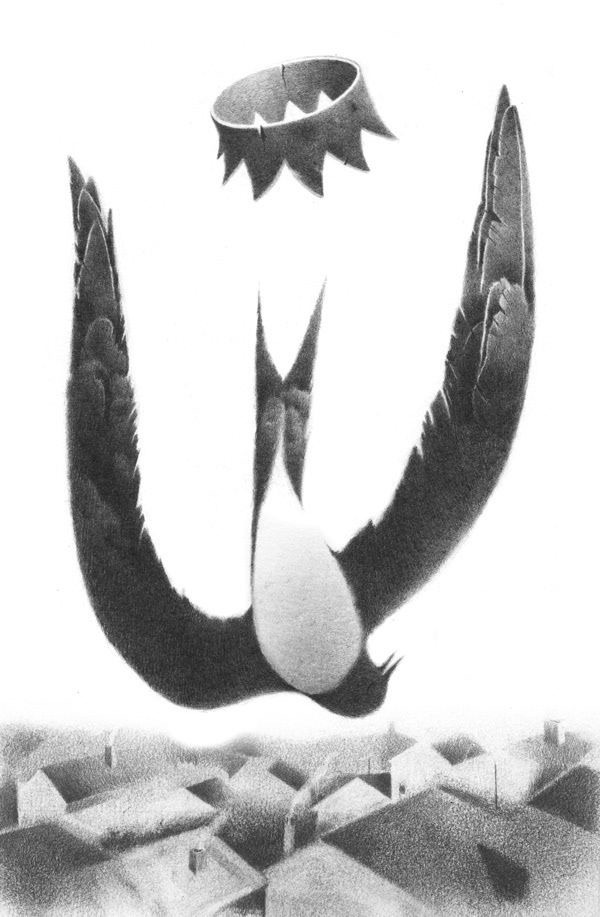


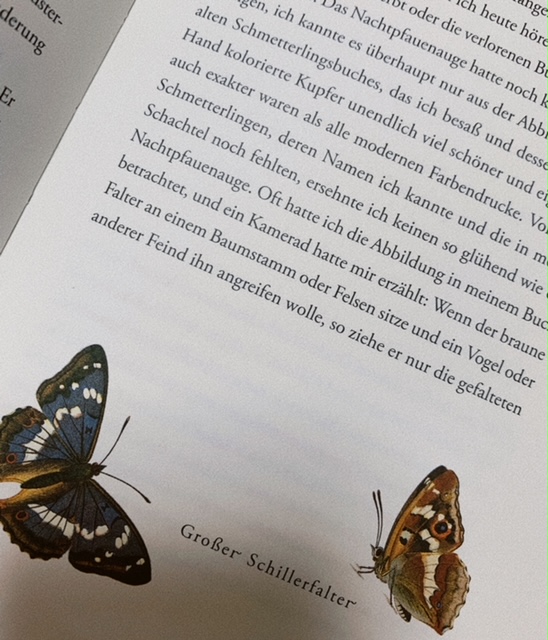
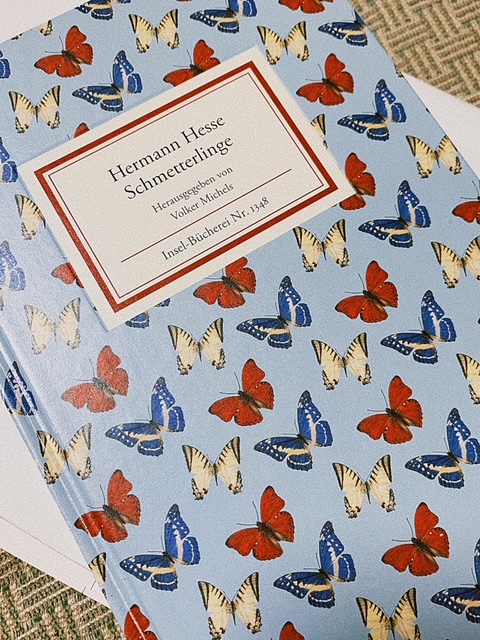




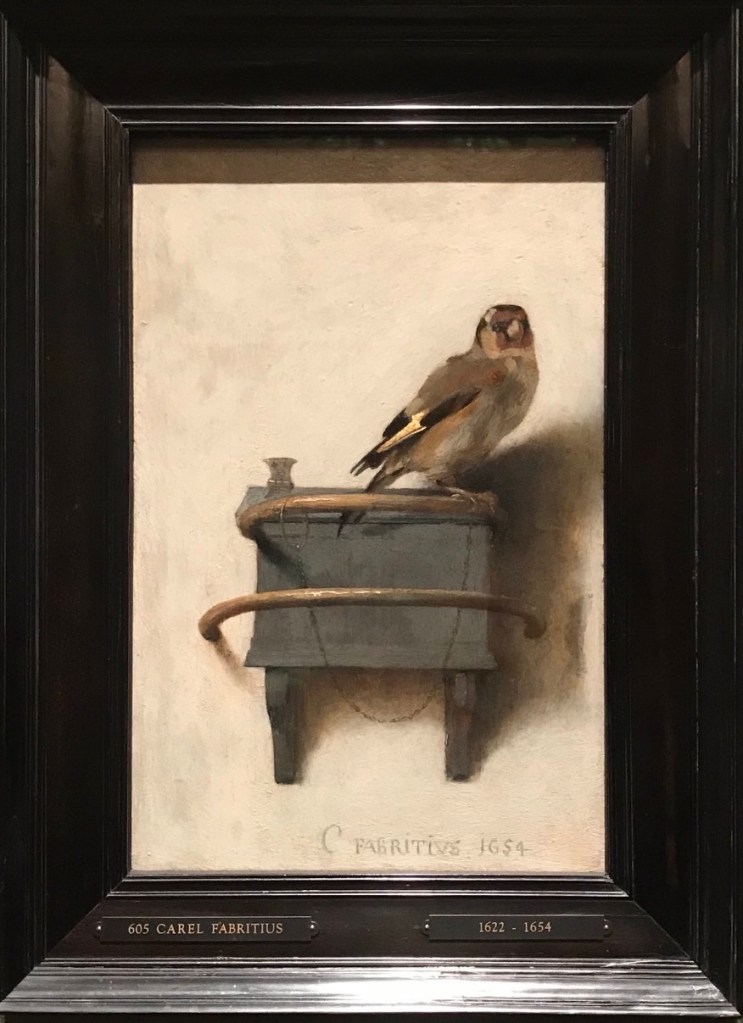

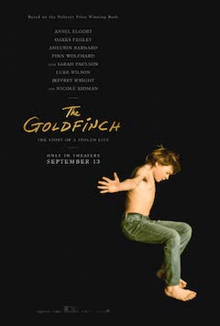
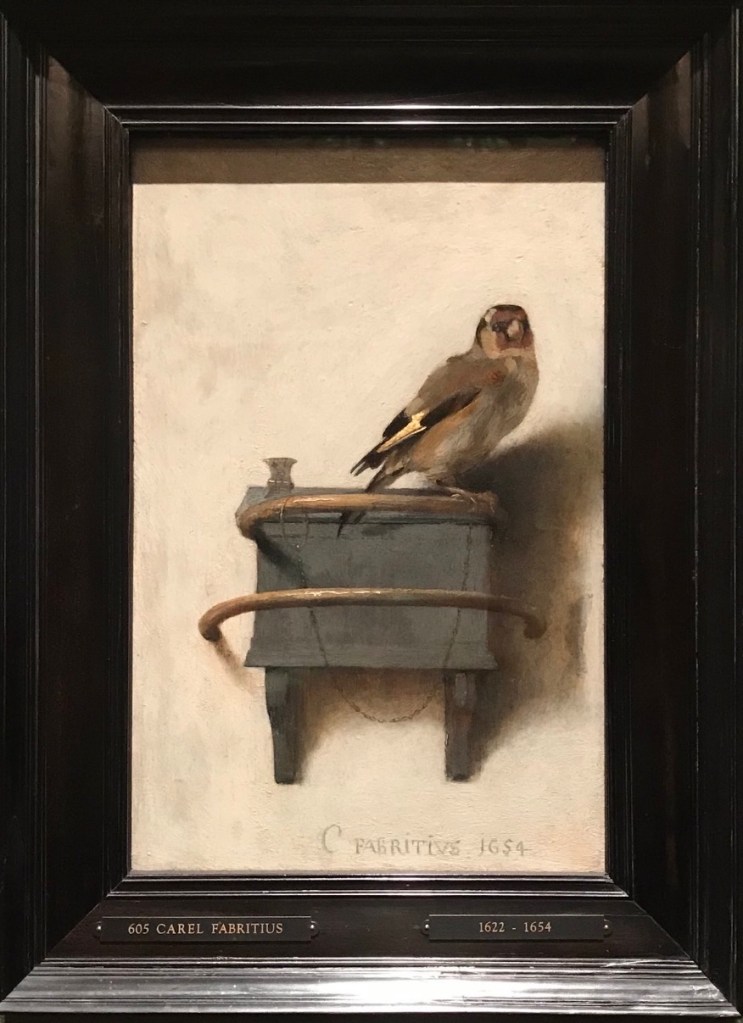
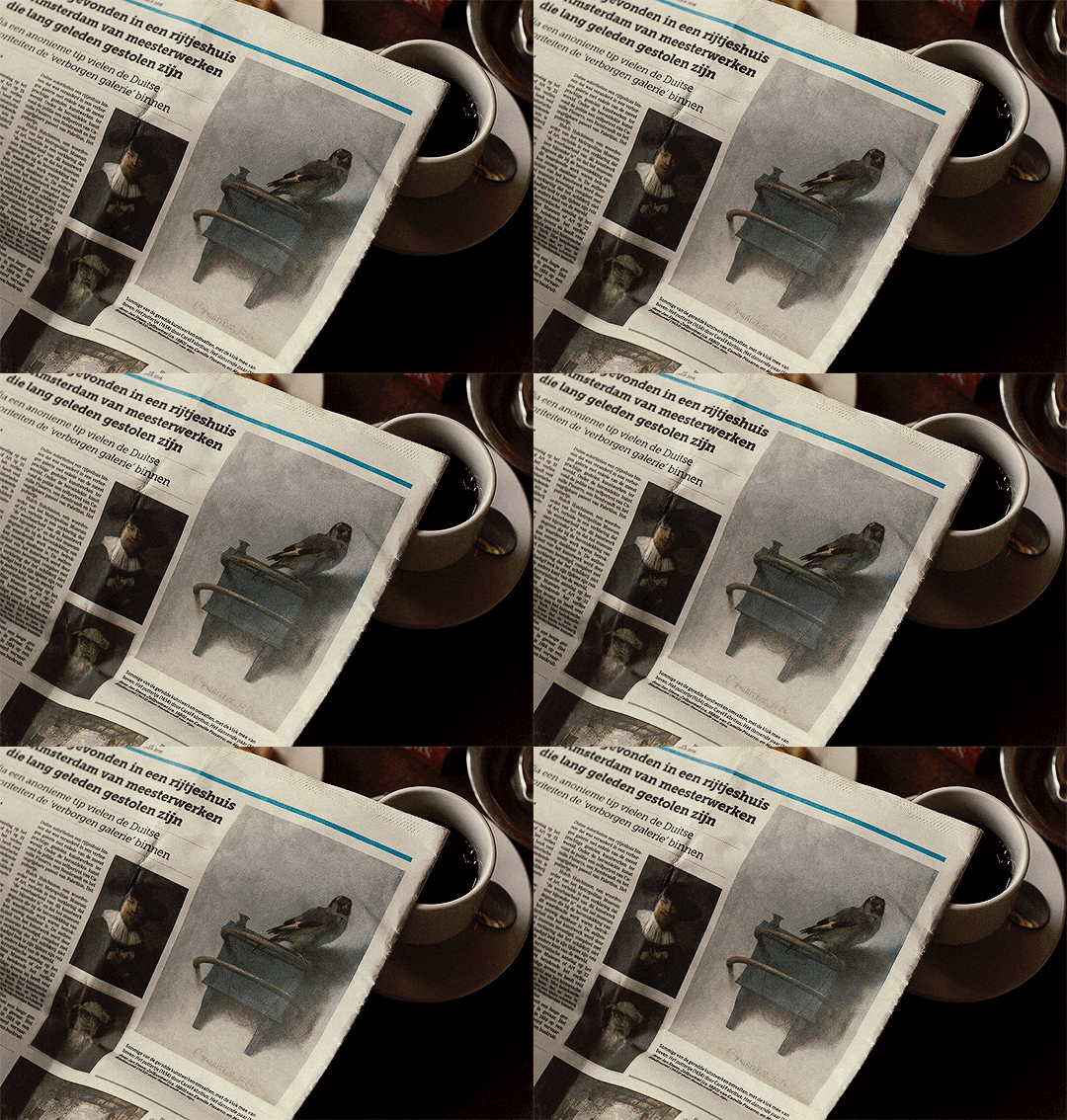
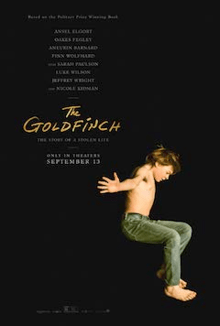

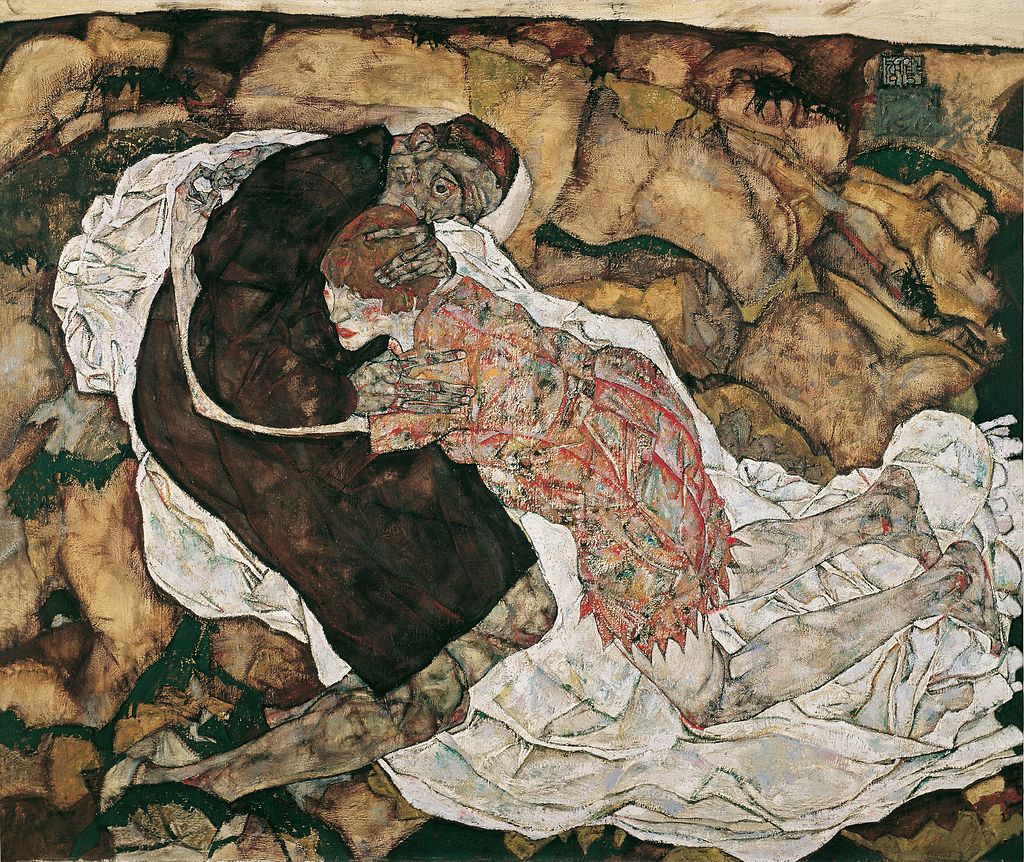

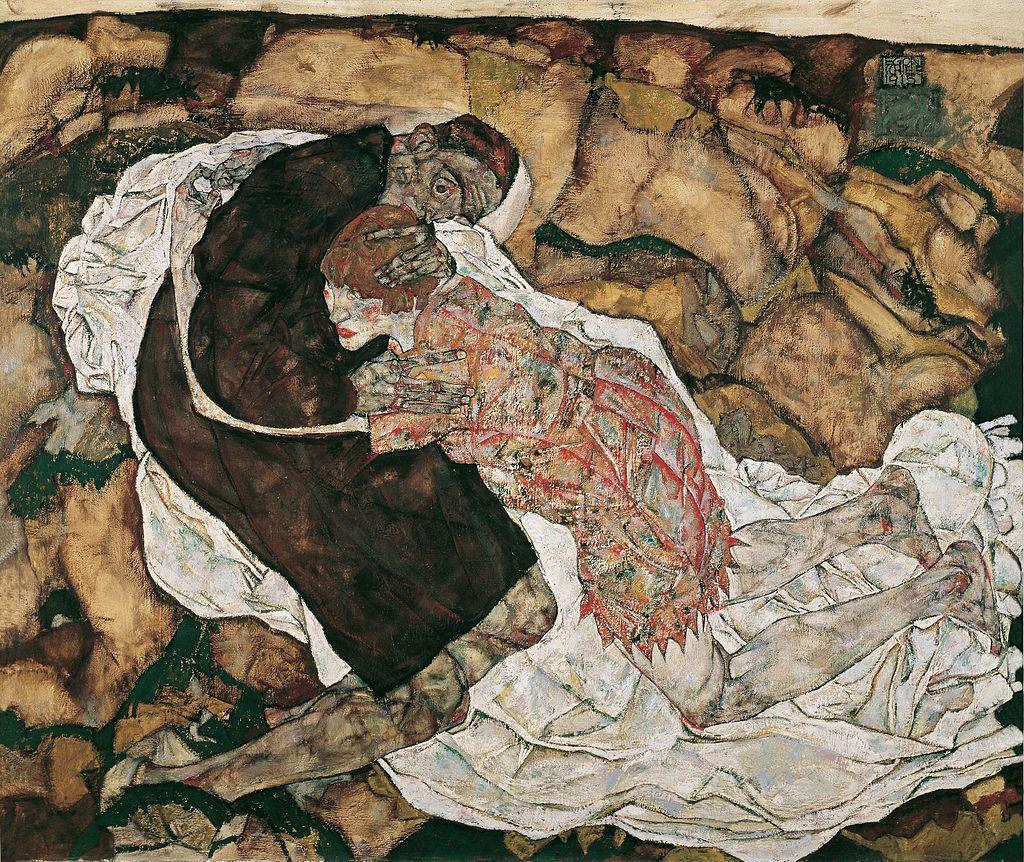



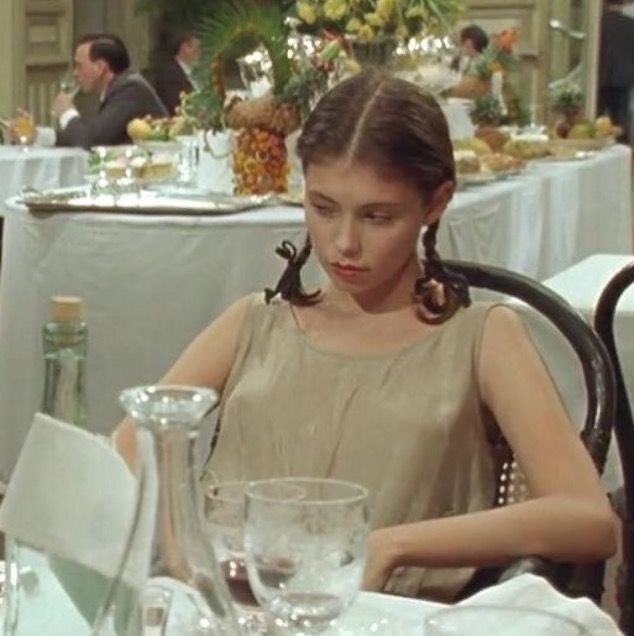
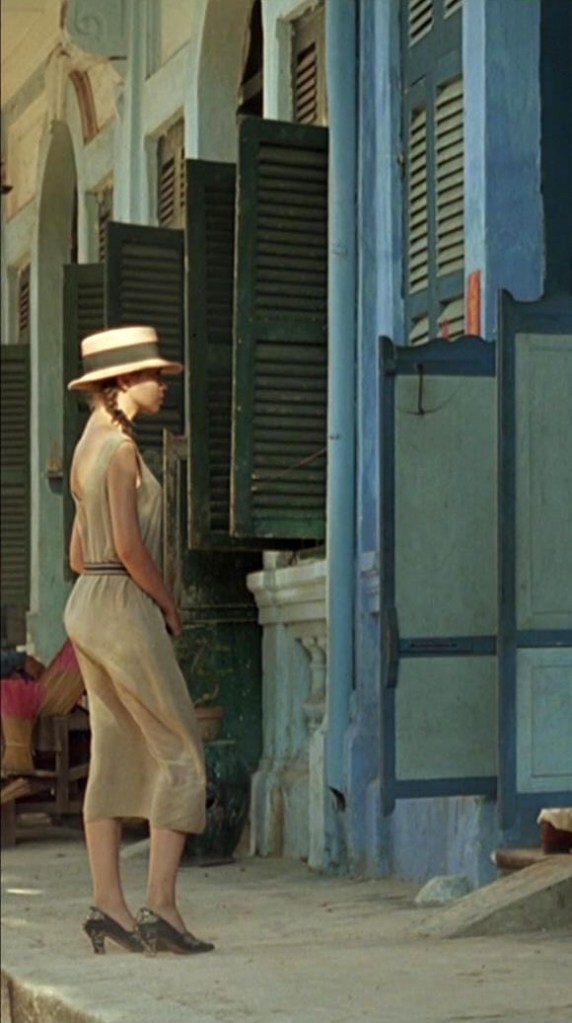
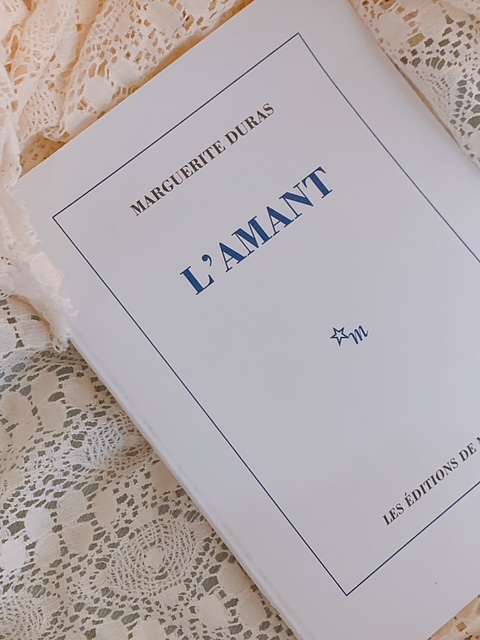

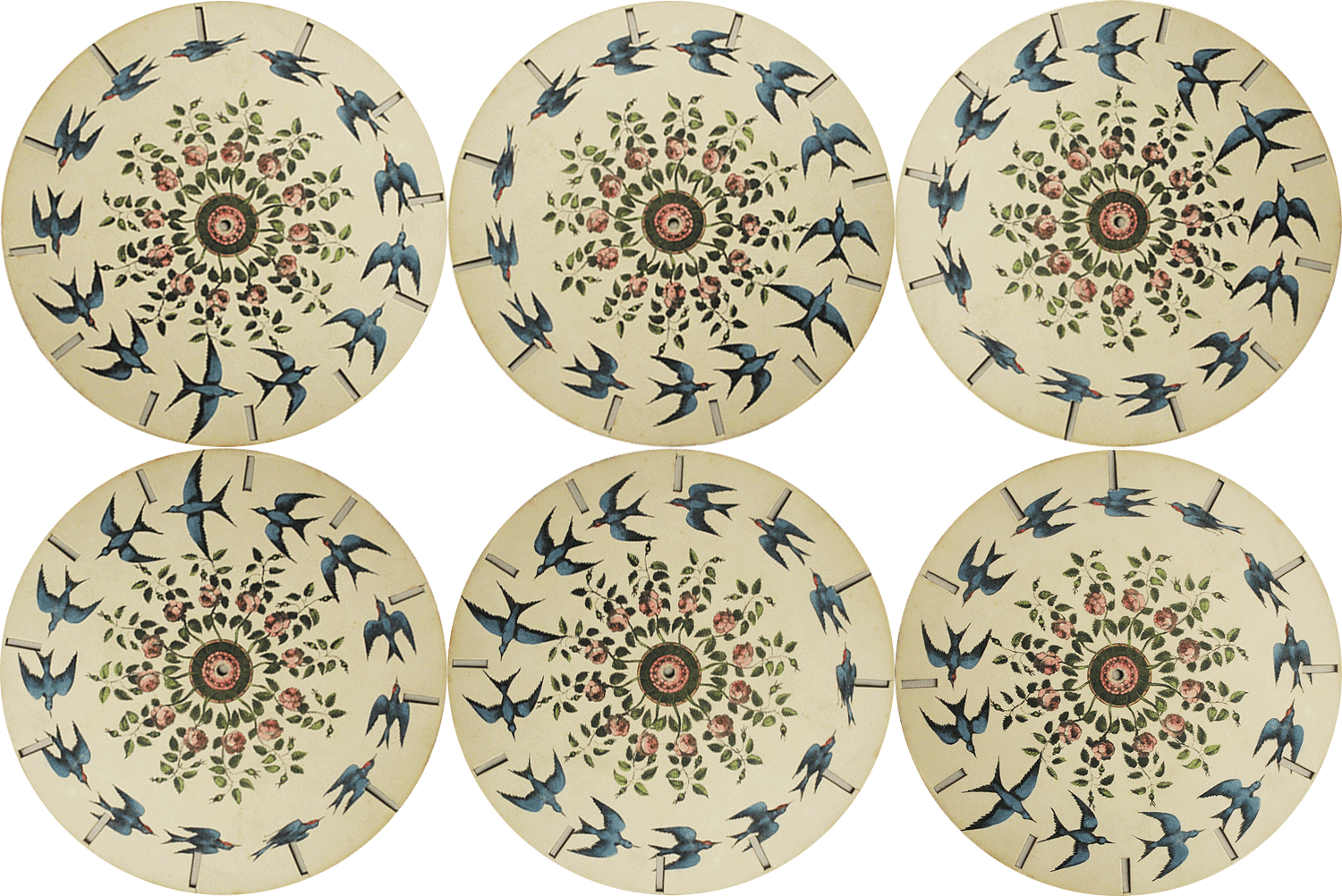
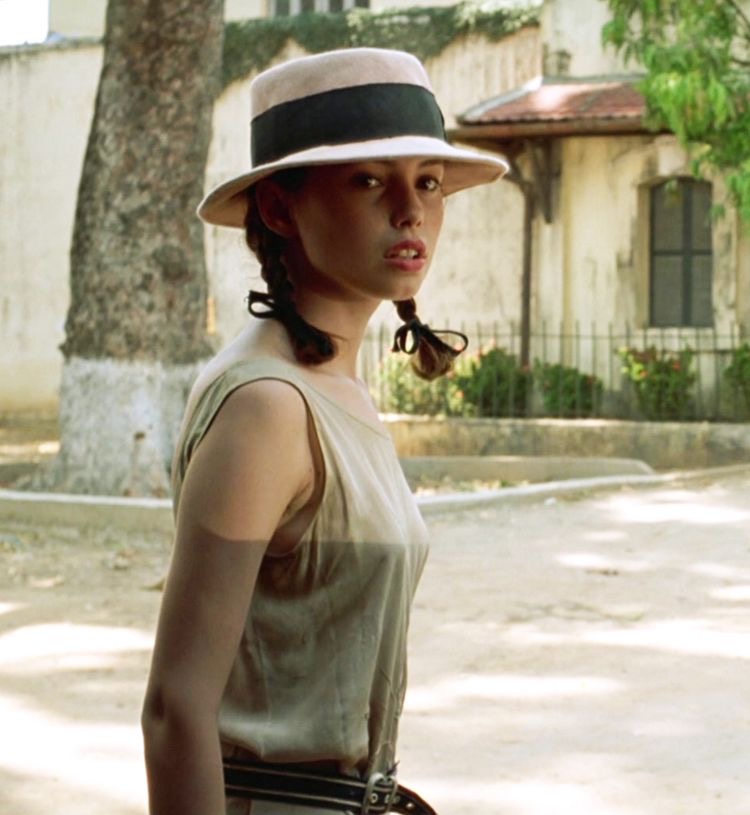
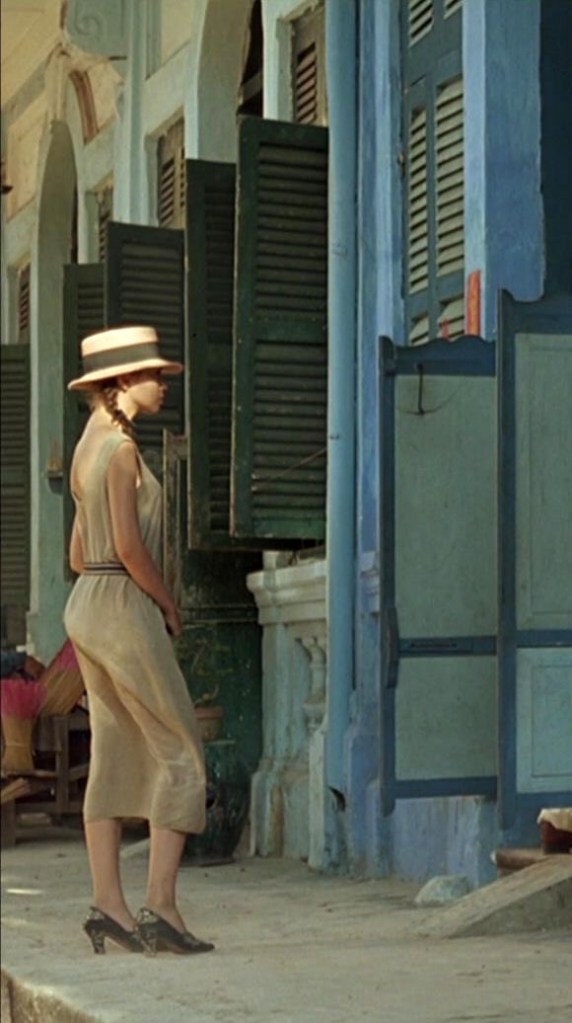
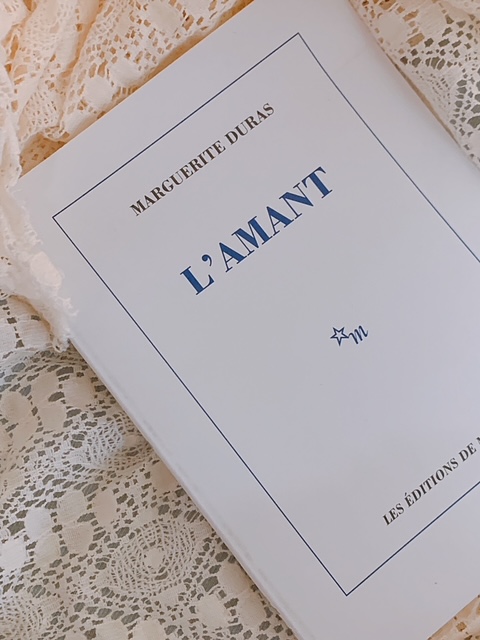

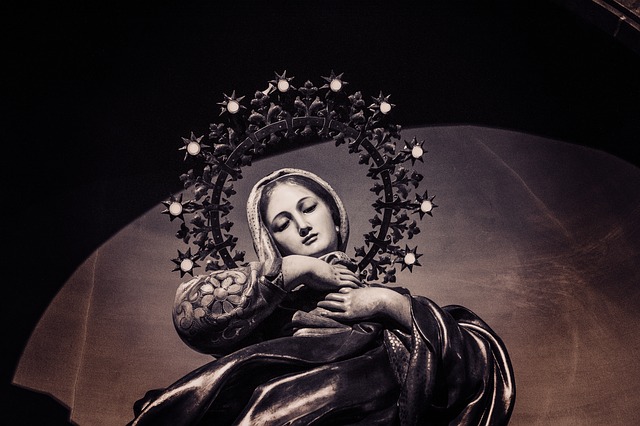
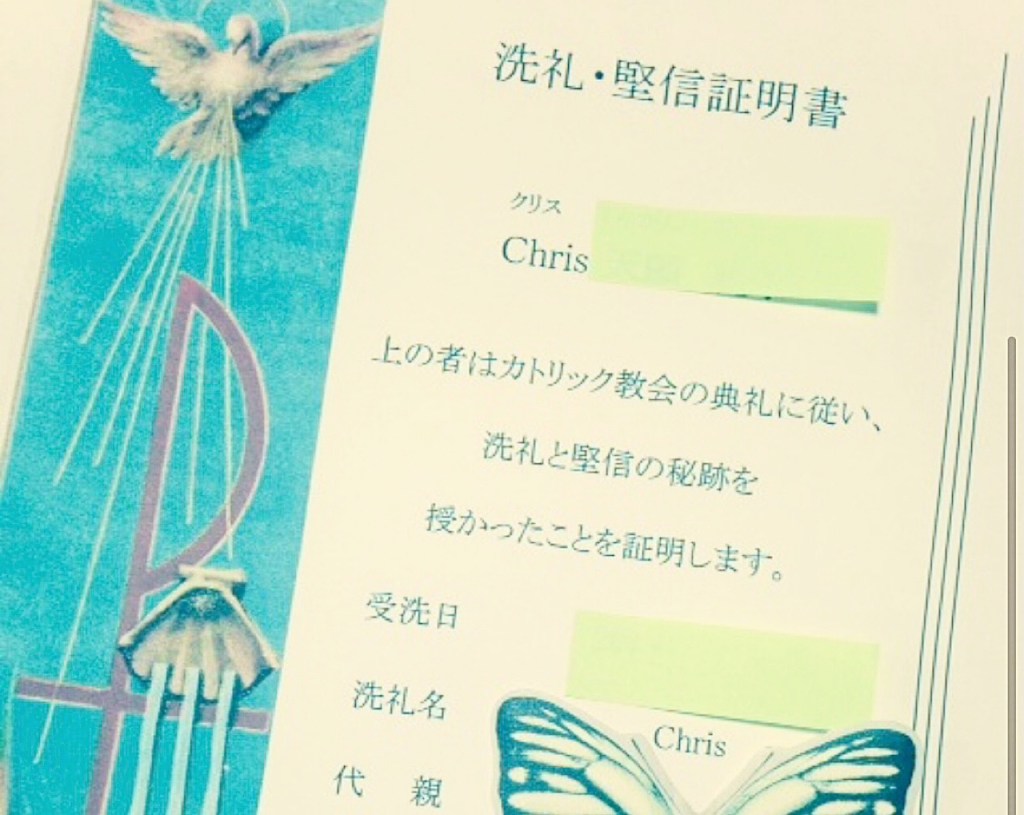

 Chris Kyogetu