SoarⅠ (English.ver)

Catholicism had yet to be philosophically organized.
Simone weil

There are many genres of fiction today, One of the things I love about literature is that it makes use of what is really only a record. A simple lost love can be embellished by a single word, a forgotten dead can have a meaning. The loneliness that people tell us to forget, the happiness that seems so ordinary, all depend on our own sensibility, and we can decide whether our life is just a record with oblivion or a shining life.

It is left to the sensibility of the writer to verbalize and leave behind the succession of moments that disappear from the world that no one picks up. Perhaps those who have such a point of view are those who are terrified of the moment disappearing as it is. Some people are happier to forget, others to talk about their misfortunes, so that their loneliness becomes cathartic through monologue.

For these people, the ability to speak their own language is important.

As for me, I create in the fictional world the heat that I did not live in the real world. There may be many emotions that I have killed for social reasons, but the emotions that I could not delete and the place where my faith lives is the fictional world. It is an introversion, but an extroversion that challenges the world. I’ve never been pessimistic about it.

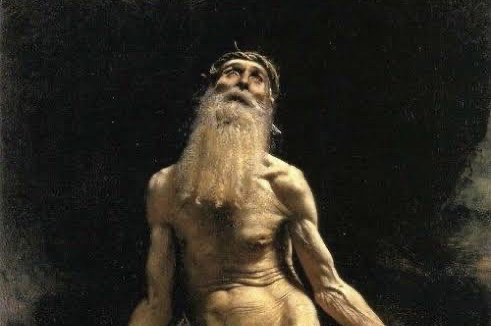
Artists are left with only two choices: mere madness or genius. Van Gogh and Caravaggio are good examples. And Emilie Bronte, whose inner world was immeasurably darker than the one she wrote about in “Wuthering Heights”. A true artist does not look for “genius” to win the admiration of others. The poetic sentiment and the way of looking at things that he could not abandon is a God-given gift, and that is what he is in Christianity. The sensibility that almost killed me many times when I was urged to be social was never socially disadvantageous to me in life. What’s next is to find out if this really was a gift from God.

I want to know the answer to the question of whether it really was. Vladimir Nabokov’s “The Gift” is such a story, and it is also the story of Nabokov’s alter ego in exile in Russia.

One term I have coined is “Soar point”. It has taken me many years to get this theory down to an understanding.

I’m going to write about it in an irregular series.

 In the fictional world, there is no standard height of land. It is a world of language.

I try to write about light, temperature, color and space. The writing is plain, sober, rhyming, It is pregnant with poetic sentiment,

The words are like music, even the spaces between the letters are meaningful, and the protagonist walks through the world I have created, manipulating them.

The first work, ‘Pangaea Doll’, is based on a real patient in a laboratory in England. She was a patient who was strange, but who did not know where she had gone in the real world. The intersection of dream and reality was a psychological and scientifically possible delusion. But the name of the disease was something I made up. It was my first fictional world.

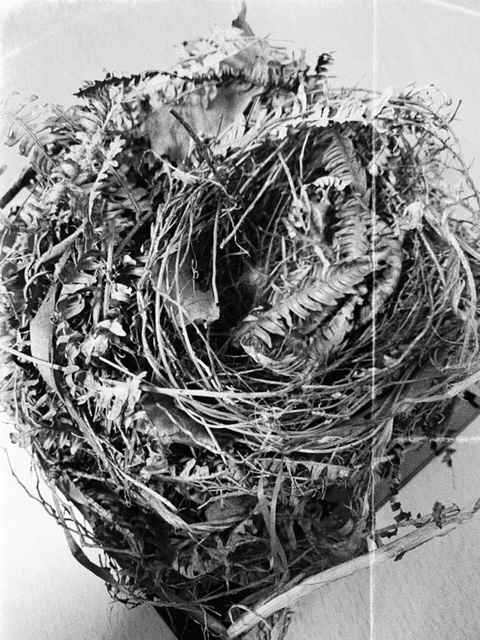
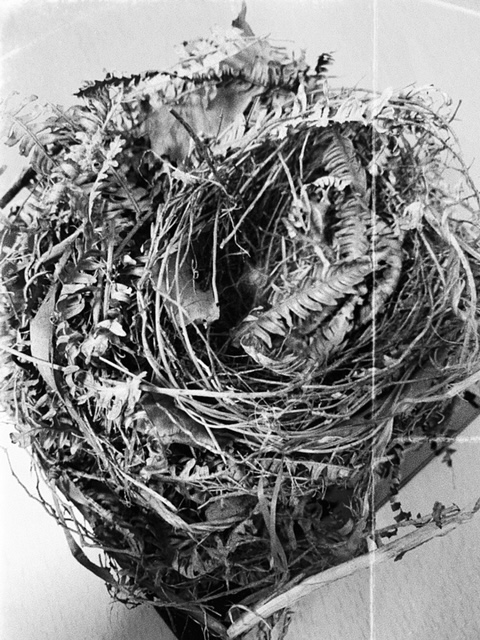
In the second work, “Iconograph”, there is no prominent fictional object, but the clock tower of a mechanical clock becomes imaginary. The phenomenology of the “bird’s nest” is based on the 13th chapter of Matthew’s Gospel.

Jesus was at sea, on a boat where no plants could grow. So he compared the Word of God to a seed. Some seeds can be sown in one place, but the birds will come and eat them. Other seeds fell on stony ground, where the soil was not deep enough and they sprouted quickly, but when the sun came up, they were burnt and withered away because they had no roots. It is difficult for the plant, the Word of God, to grow. ”Listen if you have ears.“The boy who hears these words and The protagonist, Kawamura Koune, goes on a journey of thought to hear God’s blessing. In Japan, Christianity is frowned upon if you don’t like it, and the characters cross over from longing for faith to oblivion, to disgust, and back to blessing. If this were the only explanation, people would mistakenly believe that there is no romance in this novel. That’s the trouble. There is love and death in this story too.

But the first reason I don’t say this is because I believe that waiting for the assessment of a mediocre love affair or death is just an emotional assessment. It is a sad fact that the real world is the same way. Death is equal, but there are special graves for special deaths, and classes for the deaths of the unconscious and the body. But the soul is equal, and the literary world can save even the most unlikely of beings. Literature must have the fervor to express what the masses have ceased to say. Love and death cannot be conveyed by begging only for sympathy, even if it is true. The soul may live without emotional sympathy if it is metaphorically told how the world works and how God works in it. The external world is rarely captured. But the enrichment of the inner world can make even an empty life seem like a footnote.

Many times I have been opposed to adding philosophy or religion to literature, but I have never given in. Perhaps it is because I know how cruel it is to assess the feelings of others. It follows that one’s own words do not grow, and that the same is true of God.

If the Word of God is a plant, it is the bird that spins it into a nest that grows beautifully. The bird’s nest is not only a bird’s nest, but also a part of the human world that it picks up and builds.

My fictional world is such a phenomenology. It represents the formation of orientation, the world created by orientation, while waiting for the analysis of existence. My literature is thus an amalgamation of spins, and there is no such thing as a complete lie. The heat that did not live in this world becomes a fiction.

Just as a bird’s nest still does not know exactly how to nest with precision, so I weave my experiences, my fantasies.  From the fictional “land” of the precise nest, uncertain of how it is completed, my story takes Soar. And the seeds dropped by these birds of fancy can grow or disappear. The reader’s understanding constructs a third world as a plant that grows. That image is both sad and hopeful.

The story must always take flight and Soar .

I have called it the ‘Soar point’.

Continued from (2) (Irregular)
飛翔点(1)


「カトリックをまだ哲学的に整理する人はいなかった」
シモーヌ・ヴェイユ

 小説というものも現代では数多くのジャンルがあるが、私の愛する「文学」というものの一つの魅力は、現実にとっては記録に過ぎないものを活かしてくれることだった。ただの失恋が言葉一つで綺麗になったり、忘れ去られる死が意味を持ったりもする。人から忘れろと言われた孤独も、平凡のように見える幸福も、全てが自分の感性次第で、人生をただの忘却を伴う記録か、輝いた人生だったのかがを受け取ることが出来る。

誰しもが拾わない世界から消え去られる瞬間の連続を、言語化して残せるものは作家の感性に委ねられている。恐らくそういう視点を持った者は、瞬間がそのまま消えてしまうことに恐怖を覚えた人であると思う。忘れるほうが幸せという人もいれば、不幸をどう語るか、それによって自分の孤独が独白によってカタルシス生み出す者もいる。

そういう人にとって、己の言語能力は重要なのである。

私の場合は、現実世界に生きなかった熱量を虚構世界に作る。社会性を重視して殺してしまった感情も多くあるかもしれないが、殺せなかった感情や、信仰が生きる場所は虚構世界だった。それは内向的であるが、世界に挑む外向性だった。 私は一度もそれに悲観的になったことはない。

芸術家はただの狂気か、天才か二択しか残されていない。ゴッホやカラヴァッジョ等良い例だと思う。エミリーブロンテも内面世界は計り知れない闇を持っていて「嵐が丘」に書き出した。真の芸術家は、他者からの称賛を得られる「天才」は求めていない。自分が捨てられなかった詩情や物事の捉え方が、神から与えられた賜物であると、キリスト教の中ではそういうことになる。社会性を促されて何度も殺されそうになった感性は、生きていて社会的に不利になったことはなかった。次は本当にこれが神の賜物だったのかどうか、

本当にそうであったのか、その答えが知りたいのだ。ウラジミール・ナボコフの「賜物」もそのような話であり、ロシアからアメリカへ亡命したナボコフの分身のような話である。

一つの私の造語で「飛翔点」がある。この自分の理論を理解まで詰めるのに何年もかかった。

今回は不定期にシリーズ化してそれについて書いていく。

 虚構世界は陸というものの基準となる高さが存在しないが、言語世界でありながらも、

光や体温、色や空間を書こうとしていく。それは平素な文で冷静にようで、詩情を孕んでいて、韻を踏み、日本語の場合は言語から見える概念、外国語の場合は言語が作り出す空間、

語感は音楽のように、文字と文字の空白すらも意味があるように、それらを操りながら、主人公は私が作った世界を歩いていく。

 第一作品目の「パンゲアドール」はイギリスの研究室にいた実在した患者をモデルに書いている。奇異でありながらも、現実世界では何処へ行ったのかも分からない患者だった。夢と現実の交差点は心理学的であり、科学的には存在しうる妄想だった。しかし、病名は私が作ったものだった。それが私の初めての虚構世界である。

 第二作品目の「イコノグラフ」は目立つ虚構らしきものが存在しないが、機械式時計の時計台が想像のものとなる。要となった「鳥の巣」の現象学がマタイの福音書13章を元に広げられている。

イエスは海にいて、植物が育つはずもない船の上にいた。そこで神の御言葉を種に例えた。ある場所に神の御言葉を蒔いても鳥がきて食べてしまう。ほかの種は土の薄い石地に落ちたが、そこは土が深くなく、すぐ芽を出したが、日が上ると焼けて、根がないために枯れてしまった。神の御言葉という植物が育つことは難しい。耳があるものは聞くが良い。この言葉を聞き取った少年と、主人公、川村光音は神の祝福を聞く思想の旅に出る。日本では、好きではないと疎まれるキリスト教、登場人物達は信仰への憧れから忘却、嫌悪感、そして再び祝福へと渡り歩いていく。これだけを説明すると人々は、この小説には恋愛がないと勘違いする。それが厄介だ。この話にも恋愛と死は存在する。

 しかし第一に言わないのは、凡庸な恋愛や死の評価を待つというのは感情の査定に過ぎないと思っているからだ。現実世界もそうであるのが哀しいところである。死は平等であるが、特別な死は特別な墓、無縁仏と肉体の死は階級がある。けれども魂は平等であり、文学世界は無縁仏のような存在も救い上げることがある。文学は、大衆が言葉にしなくなった事を突出して出す熱量が必要である。愛と死は、例え事実でも同情のみで乞うても伝わらないのである。世界がどのように現象し、神の働きがあるのかを隠喩を込めれば感情の共感が得られなくても、その魂は生きるのかもしれない。外界世界というのは捉えられることは少ない。しかし内面世界を豊にすることは、虚しい人生さえも脚色する。

私は文学に、何度も哲学を添えることも、宗教を添えることも反対されたが、譲らなかった。恐らく、他者の感情の査定がどれほど残酷か知っているからだと思う。己の言葉が育たない、それは神も同じことであり、信徒はそれに続くのである。

神の御言葉が植物だとすれば、見事に育った先にそれを紡ぎだすのが鳥であり、鳥の巣である。鳥の巣というものは、それだけではなく人間世界の一部をつまみとって巣を作っていく。

私の虚構世界とはそのような現象学である。志向性の成立、志向性が作り出した世界を表しながら、存在の分析を待っている。私の文学にはこのように、紡ぎだしたものの集合体であり、完全な嘘は存在しない。この世に生きなかった熱量が虚構になっていく。

鳥の巣が未だに厳密にどのように精密に巣を作るのか分からないように、私もそのように、経験や空想という経験も紡いでいく。どのように完成されたのか不透明なまま、精密な巣という虚構の「陸」から、私の物語は飛翔する。そして、その空想の鳥達が落とした種は育つこともあれば、消えてしまう。読者の理解は育った植物として第三の世界を構築する。そのイマージュは切なくもあり希望でもある。

必ず物語は飛翔しなければならない。

私はそれを「飛翔点」とした。

(2)に続く。(不定期)

Victim’s detention centre(English.ver)

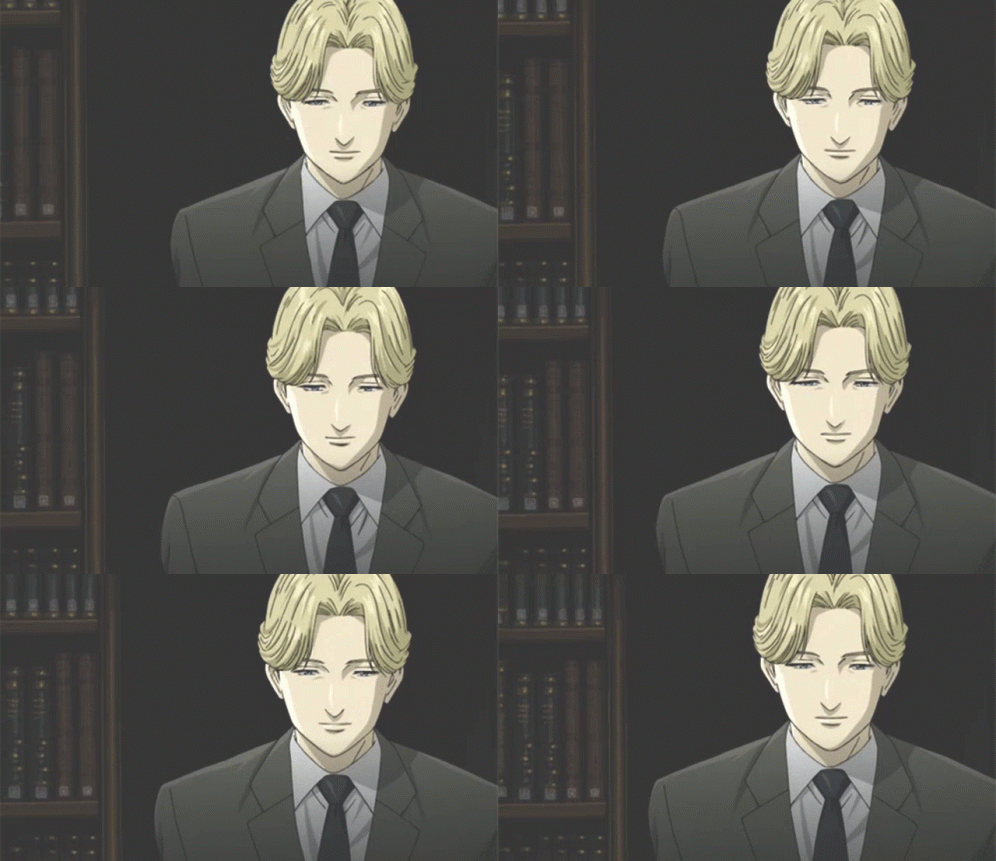
Johan Liebert is the titular character in “Monster“but Not drawn by the author. It’s a homage.
Author unknown. Additions are required.

At that moment, that monster appeared in front of me.

Was Mom trying to help me?
Was she confusing me with my sister?
Which one?

Mom! don't let go!

Monster Naoki Urasawa


Sometimes I believe that being a victim is like being in a prison camp. Once you have tasted it, you can’t communicate it to others, even in your own language.

Since birth, I have found myself in the camps many times. The first one I remember was when I was seven years old. It was a female teacher. If my ego, my present experience, was broken, it was because of this teacher. Still, no one helped me. In the midst of hatred and sorrow, I found the light. That was the first liberation. I don’t know who was teaching me at that time. But my monologue grew as I acquired a phenomenological vision. The sky in my memory was always blue, but the words were always gloomy. This was affirmed by psychology. It said that man is a coexistence of the definite and the anti-definite.

In phenomenology, the “moment”, the present rather than the future or the past, becomes prominent.  In it, the childhood mind imagined the light of the future in the “moment”. That was my sustenance. As he entered the camp again and again, he noticed that the light was becoming weaker and weaker. When the light gets weaker, I notice that I have compatriots. I can see better in the dark, I guess that’s a sign that I’ve grown up.

I’ve seen all kinds of victims, and I’ve seen people who choose to go to jail. The highest penalty for perpetrators is the death penalty and victims also go to jail.

I’ve seen it happen to some people, they think they’re going to die.

I find myself saying to myself.

“Forget it”

Then the signal for release rings and I am let out. My wounds had healed and I had no right to speak. My words became a barrier between us and the rest of the camp.

On love and justice, I have written repeatedly since the opening of this blog that love and justice can be contradictory, but this time I would like to talk about John Paul II. Mehmet Ali Ağca , a Turk, shot John Paul II on May 13, 1981, but saved his life. Mehmet Ali Ağca was sentenced to life in prison, but was pardoned by the Pope who shot him.

 John Paul II was later the victim of another assassination attempt, and in his later years he suffered from Parkinson’s disease and the after-effects of the assassination attempt.

Mehmet Ali Ağca was saddened by the Pope’s death and was only allowed to offer flowers; I only know that he hopes to be a Catholic priest in 2016, but I am not certain.

I don’t know what was truly in John Paul II’s heart, but his writings are full of light.

I do not know the true heart of John Paul II, but his writings are full of light, and they are also full of darkness. It is beside the light.

It is not a warning to blind sinners, but a guide to the lost sheep.

In the chapter “The Rejection of the World” of ” Opens the Door to Hope” he says: “When the true teaching is unpopular. When the true teaching is unpopular, it is unacceptable to seek easy popularity”.

The camps in which the victims were held were also filled with rivalries. Invariably, people with revolutionary fantasies would begin to attack others.

They start attacking people. Then there is a thinly-veiled gathering of those who have been “deceived by simple words”.The victims suffer not only temporary damage, but also secondary and tertiary damage, the rejection of the world.

Jesus Christ says in Matthew 7:13,14 that the road to eternal salvation is neither wide nor comfortable, but rather narrow and difficult. The Saviour Christ, whom the masses misunderstand, does not teach a comfortable way.

He does not teach a comfortable path. In fact, many people mistake God for the Saviour and criticise him.

Sometimes the Saviour is really an “idol” created for the world or by popular desire.

Victims are the “idols” to whom we must pay attention. If you know what this means, you know what it was like to be a victim in a prison camp. When they go out, they will not forget what it was like there. Those who don’t know what it means are hypocrites who don’t know that they are the mass media and that they are hurting people. He is a delusional revolutionary who never doubts his own “goodness”.

People who don’t know the threat of the sword are hurting many people with their pens.

They are no longer heading for the camps of the victims.

It is heading for the real prison, where criminals go.

In the book of Revelation, the beast is a number and has no name. Revelation 13 speaks of a beast with ten horns and seven heads, “Who can stand against this beast?  Who can fight against this beast? The answer was a demand for wisdom. (Verse 18)

The wise man should consider what the number of the beast means.

The number represents man.

The beast is man. Those who know this are humble.

The hypocrite only wants others to bear arms. The Saviour lets them know that he heals.

The hypocrite is quick to invite sympathy with weakness. The Saviour bears his wounds in silence. For he knows that the hypocrite will come soon.

I couldn’t say “forget it” to one of the victims who was more pitiful than me.

I will never forget the darkness, because it is still on my mind. I wonder where he was taken.

I wonder where he was taken. I wonder if he ever saw the light.

It is the hypocrites of today who have cut off the network of communication.

What is easy to understand tells us about darkness. What is hard to understand is that we all have it.

We all have it. We all have a beast in our hearts.

I could go on for a long time with this parable.

If you are a victim facing the death penalty, all I can say is this.

This death sentence can be retried. Demand it.

There have been many invitations to die, but I hope you live to shame.

Naoki Urasawa’s Monster stirred a young mind in me. It was rare to find a manga that taught me the difference between a saviour and a god when everyone else was so chaotic and “I don’t believe in god”. It was popular in the UK and I read it in the UK. The main character, Tenma, knows Johan’s real name, but it is not revealed until the end. He was a beast, but he was also a man. He was the victim of an East German conspiracy, but he was also a sinner.

That is why they did not give the saint the same name as his real name. He was wonderfully faithful to Revelation 13, which he used as a quote.

Revelation is about a man named John, but the author is unknown.

収容所の被害者

Johan Liebert is the titular character in “Monster“but Not drawn by the author. It’s a homage.
Author unknown. Additions are required.

あの時、あの怪物が僕の前に現れた。

母さんは僕を助けようとしたの?
僕と妹を間違えたの?
どっち?

母さん はなさないで

Monster 浦沢直樹

被害者というのも収容所行きと思うことがある。一度味合うと母国語であろうが人に伝わらない。

「忘れなよ」とは一体何処の国の言葉だろうか? 

生まれてから気が付けば何度も収容所に入れられる。記憶しているのは、最初に入れられたのが7歳の頃だった。入れた相手は一人の女教師だった。私の自我、現存の体感が壊れたとしたのなら、この女教師の影響だろう。それでも誰も助けてはくれなかった。憎しみと哀しみの中で、光を見出した。それが最初の解放である。誰が当時の私を教誨したのか、それは分からない。けれども、現象学的な視野を手に入れたことによって私の独白は大きくなった。記憶の中の空は常に青かったが、言葉はいつも憂いていた。それは心理学が肯定した。人間は定立と反定立が共存していると書いてあった。

現象学では未来よりも過去よりも現在という「瞬間」というものが突出していく。その中に幼心は「瞬間」に未来の光を想像した。それが糧だった。何度も収容所に入っていくと、その光が弱くなっていくことに気づいていく。光が弱くなった時に、同胞がいることに気づく。暗闇のほうがよく見える、それが大人になった証なのだろう。

様々な被害者というものを見て来たが、拘置所に行くような選択する人達も見て来た。加害者の最高の刑罰、「死刑」と被害者も拘置所に行く。

私はある人に対して、このまま死に向かっていくのではないかと、

気が付いたら自分が言ってしまいそうになるのだ。

「忘れなよ」

その時、解放の合図が鳴って外に出される。私の傷は癒えていたので声をかける資格がなかった。私の言葉は収容所の壁一枚隔てていくようになる。

愛と正義に関して、愛と正義は相反することもあると、私はこのブログ開設から繰り返して書くようになったが、今回はヨハネパウロ2世の話をしたいと思う。トルコ人のアリ・アジャは1981年5月13日にヨハネパウロ2世を撃ったが、一命を取り留めた。アリ・アジャは終身刑だったが、撃った教皇によって恩赦を受けた。ヨハネパウロ2世はこの後も別件で暗殺未遂の被害者になり、晩年は暗殺未遂による後遺症やパーキンソン病に苦しむことになる。

アリ・アジャは教皇の死を悲しみ、献花のみが許された。2016年、カトリックの司祭として希望しているが、定かではないとまでしか私は知らない。

ヨハネパウロ2世の真の心の内は知らないが、彼の執筆したものは光溢れるものであり、

闇も多く知らせている。それは光の傍にある。

それは盲目の罪人への警告ではなく、迷える羊への道しるべである。

彼は「希望の扉を開く」の「世界の拒絶」という章で「真の教えが不人気なときに、

安易な人気を求めるのは許されない」としている。

被害者が収容される収容所は、仲間割れもあった。必ず革命家の妄想を抱く人間が、

人を攻撃し始める。そして、か細く集まっていくのが「簡単な言葉に騙された」人達である。

被害者は一時被害だけでなく、世界の拒絶といえる二次被害、三次被害に苦しんでいく。

イエスキリストは、マタイ7章13・14で永遠の救いへの道は広くも快適でもなく、かえって狭くて困難であるとしている。大衆が勘違いしているキリストという救世主は、

快適な道を教えていない。もっといえば神と救世主を勘違いして、批判する人が多い。

救世主というものは、本当に世界のためか、大衆の願望によって生まれた「偶像」がある。その騙し合いは古くから続いている。

 被害者は「偶像」こそ注意しなければならない。この意味が分かる人は被害者という収容所を知っている人だと思う。外に出ても其処がどんな収容所だったのかを忘れない。分からない人は、自分がマスメディアとなって人を傷つけていることを知らない、偽善者だろう。妄想で革命者気どりで、一切自分の「善」を疑わない。

剣の脅威を知らない人間がペンで多くの人を傷つけている。

それはもう被害者という収容所に向かっているのではない。

向かうのは犯罪者が向かう本物の刑務所である。

黙示録では獣とは数字であり名前が無い。黙示録13章に十本の角と七つの頭がある獣について「だれが、この獣と肩を並べることができようか。だれが、この獣と戦うことができようか」という問いがある。その答えは「知恵」の要求だった。(18節)

賢い人は、獣の数字にどのような意味があるのかを考えるが良い。

数字は人間を表している。

獣とは人間である。それを知るものは謙虚である。

偽善者は他者に武器を持たせることしかしない。救世主は自分を癒すことを知らせる。

偽善者はすぐ弱音で同情を誘う。救世主は傷ついたことを黙って耐える。すぐ偽善者が来ることを知っているからだ。

私よりも可哀想なある被害者に「忘れなよ」とは言えなかった。

そのことが気がかりのまま、私は闇を忘れることがない。あの人は、

何処へ運ばれたのだろうか。少しでも光が見えたのだろうか。

その連絡網を断ち切ったのが、今の偽善者である。

分かりやすいものは、闇を簡単に教える。分かりにくいものは、闇は皆持っていると

教える。皆、心の中に「獣」がいる。

長々と、たとえ話が長くなったが、

もしも、被害者として死刑に向かっている人がいるのならこれしか言えない。

「この死刑は再審出来る。請求せよ」

後に引けない死の誘いが何度もあったが、生き恥でも晒して生きてほしい。

 浦沢直樹のMonsterは若い私の心を掻き立ててくれた。大衆が混沌として「神なんか信じない」と騒ぐ中、

救世主と神の違いを教えてくれた漫画なんてものは珍しい。イギリスでも人気があって、イギリスで読んでいた。主人公の天馬はヨハンの本当の名前を知っているが、最後まで明かされなかった。彼は獣だったが、人間でもあった。彼は東ドイツの陰謀の被害者であったが、罪人に手を染めていた。

だから、聖人と同じ名前を本当の名前にしなかった。引用に使われた黙示録13章に忠実で素晴らしかった。黙示録はヨハネという男が登場するが、執筆者は不明。ヨハンはヨハネ系列の名である。

繋がりのある記事

L’éternel substitut(jp and english ver)

Le temps est une image de l’éternité, mais c’est aussi un ersatz de l’éternité.

時間は永遠を映すものである。けれども、また永遠の代用品でもある。

Time is a reflection of eternity. But it is also a substitute for eternity.

Simone Weil (Renoncement au temps)

l’éternité

解説: 永遠というのは時間を伴うが、時間が有限であるのに対して永遠は無限を表す。しかし、私達は永遠を知覚することは出来ない。時の区切りは、永遠の一部、だから永遠の代用品。la éternitéの略。

Explanation: Eternity involves time, while time is finite, eternity represents immutability. However, we cannot perceive eternity. Time is part of eternity and therefore a substitute for eternity.

The Little Mermaid and Christian Existentialism(English.ver)

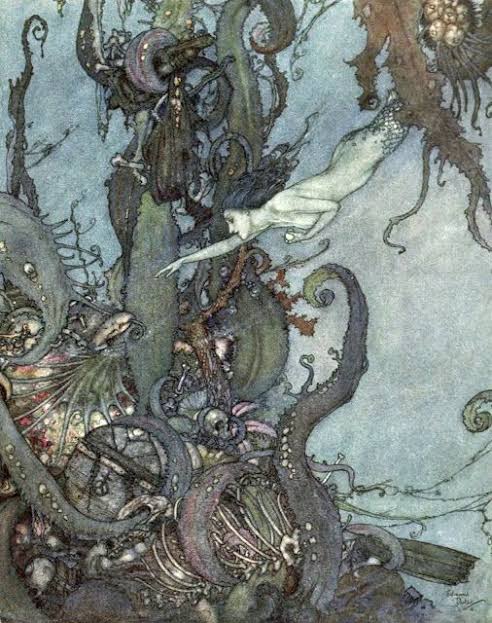
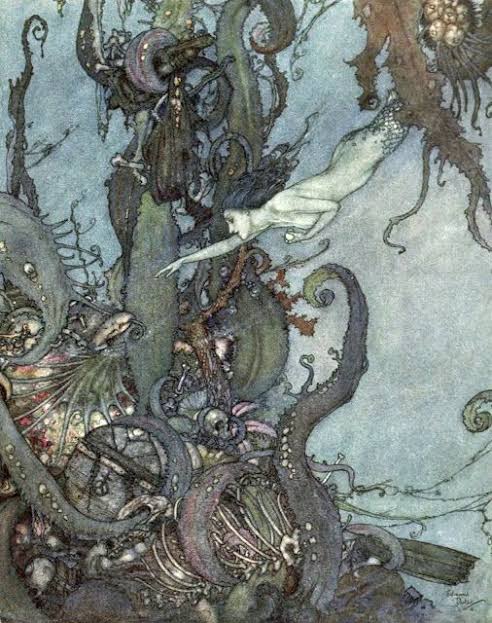
Edmund Dulac
Night after night, morning after morning, the little mermaid went to the beach to see if she could find her prince.

Andersen's The Little Mermaid

This article will be updated as a critique during the winter of 2024

Andersen’s The Little Mermaid has made me think many times. I will not comment on Disney’s version of The Little Mermaid, as I do not care for the story, but many commentaries on the original story end with the mermaid ending up in a bubble and dying, but in fact there is a continuation.

The mermaid who did not get a human soul does not go to heaven, but becomes a genie. It is explained to the mermaid that it is not a bad holy spirit and that after 300 years she can go to heaven. If she touches a good child, that day will come a day earlier, but if she meets a bad child, she will be a day later. Andersen’s message to the children is.

The Little Mermaid was to be a good child so that she could go to heaven as soon as possible.

The Little Mermaid is made up of three main elements.

(i) Existentialism

(ii) Love

(iii) Christian ideology.

 The Little Mermaid is said to have been influenced by Fouquet’s Undine. For the Christian world, the Holy Spirit of Water lives apart from the Grace of God. Perhaps it is based on the biblical interpretation that water originally existed at the beginning of Genesis. Such confrontational beings try to become human, thereby forcing the reader to imagine what it means to be human. The mermaid-like beings were set up to not have a short life span like humans. And above all, they are afraid of death: mermaids can live for 300 years, but after death they turn into bubbles. In the mermaid world, the old people have no doubt that they are happy to live 300 years longer and drift away in bubbles, and only the youngest mermaid princess yearns for human death and souls. At the same time, she begins to dream of the eternity of love.

For her, it was one ‘love’ that gave her that opportunity. The mermaid world can ascend to the human world at the age of 15. For these girls, it was their one and only chance to see the world created by God. Each of the sisters has seen many different human worlds. From the bottom of the water to the top of the water, what they see there is different. In Jungian psychology, water is the unconscious, through which girls go through the rituals of adulthood. This different landscape that they witness is also the same for human believers. Just as believers read the same Bible but have different personalities, so the landscape is different for each faith. Just as Kierkegaard said that we must quit chasing ‘truth’ and challenge philosophy by separating philosophy from theology (later refuted by Husserl), the immanent world of the mermaid is existentialist, divorced from the external world. These women live in another time, coexisting with the Christian world. Only the youngest of them, the mermaid, has acquired a ‘love’. First of all, love is the feeling of wanting to connect with the other person, but she has acquired the occult mysticism of a witch and has become human.

However, she loses her voice and her legs hurt. To get rid of this, she had to be discovered by the prince.

The Little Mermaid is also a symbol of the ‘poor’ for Andersen (note 1) It seems to have been an irony that people who had almost no human rights were coolly thinking about how they could gain them, and that it was a financial thing. Language is considered important in the biblical world. That is why in the first chapter of John’s Gospel, the Logos hymn, With God was the Word, which is also considered human, but she is deprived of her ‘language’. What was left of her as a human being was her body, and the pain in her feet, her heart. She had a heart that knew love and hurt.

The Little Mermaid was actually cherished by the prince, as a detailed reading of the original story shows. The commentary often overlooks the fact that the mermaid princess is searched for after she falls and disappears, which is also an important part of the story. The prince and princess are grieving the loss of the mermaid princess and gazing at the sea foam. The irony (sadness) is also expressed in the fact that the poorer people are, the less they are able to achieve substantial happiness and are forced to depend on God’s love, the love of adoration for God and the agape, the love that surrounds them. Andersen held until the end that the Little Mermaid had to obtain something substantial in order to exist as a human being. She had to belong to a prince-like existence in order to obtain human rights, and the marriage ceremony is the most mysterious thing in the Christian world, and is a sign of full-fledged existence, so much so that it is especially important for Catholics. Does the fact that it is unobtainable make a person’s existence worthless? Andersen put the important teachings of Jesus Christ, which are not confined to ritual as a fairy tale, into the ascending soul of the Little Mermaid. Christian existentialism, as I have named it, is also a religion that stands between the relativity of organisation and the absolute. Even if we go through the same Bible and rituals, there are personalities that are drowned out by injustice and relativity. In this context, just as the Little Mermaid chooses love over their determined and structured world, and seeks the existence of being loved by God as a person, so too the Christian has an existentialist philosophy, a ‘justice’ and ‘love’ that cannot be seen without the primacy of real existence over essence existence.

‘I fell in love with a prince’, which at first glance seems like an optimistic dream.

Compared to, for example, Charles Perrault’s read-aloud fairy tale of a nobleman’s daughter, Andersen’s cruelty draws a line in the sand. He portrayed God’s love in The Little Mermaid, where marriage and love were not connected.

He wanted the children to genuinely love the poor little mermaid.

And he wanted them to be good children so that they could go to heaven for a day.

This is not a sad story. It is a look at what we do.

(Note 1: I heard this in a psychology class in the UK, so I don’t know the source, so I can’t be certain)

Added on 3 January 2023.

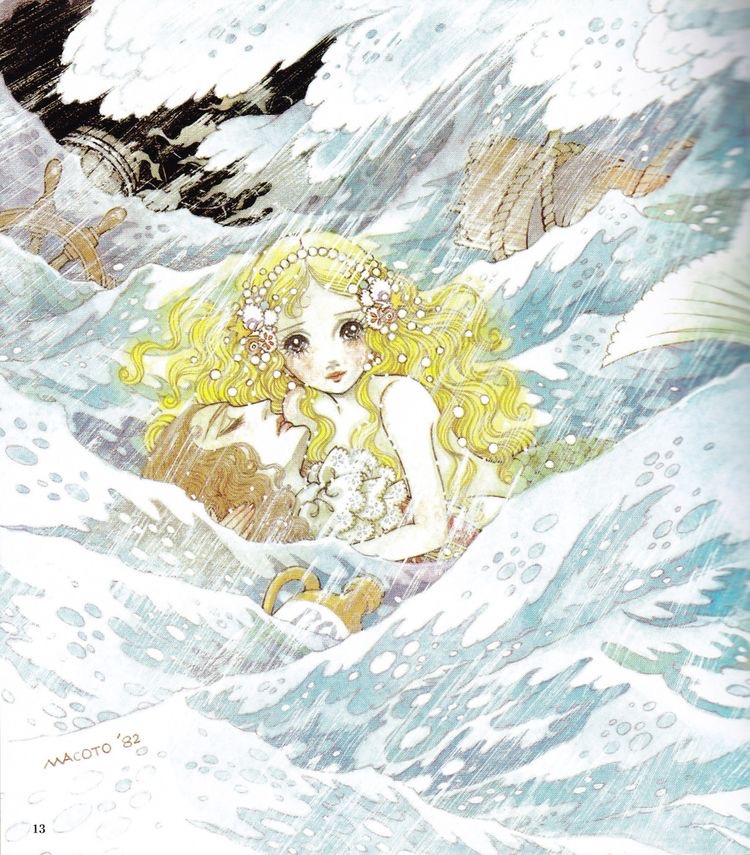
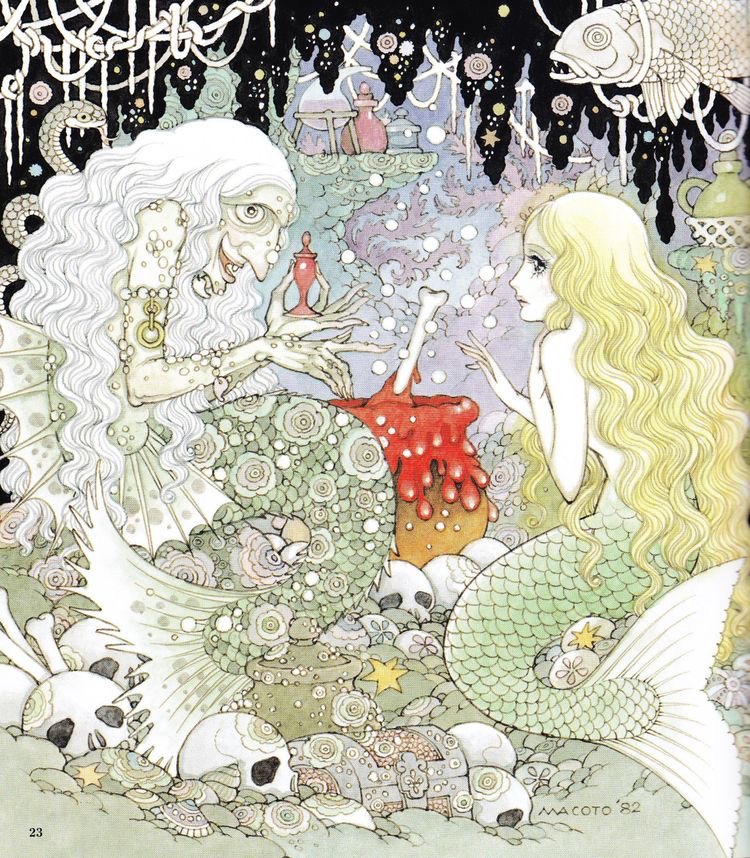
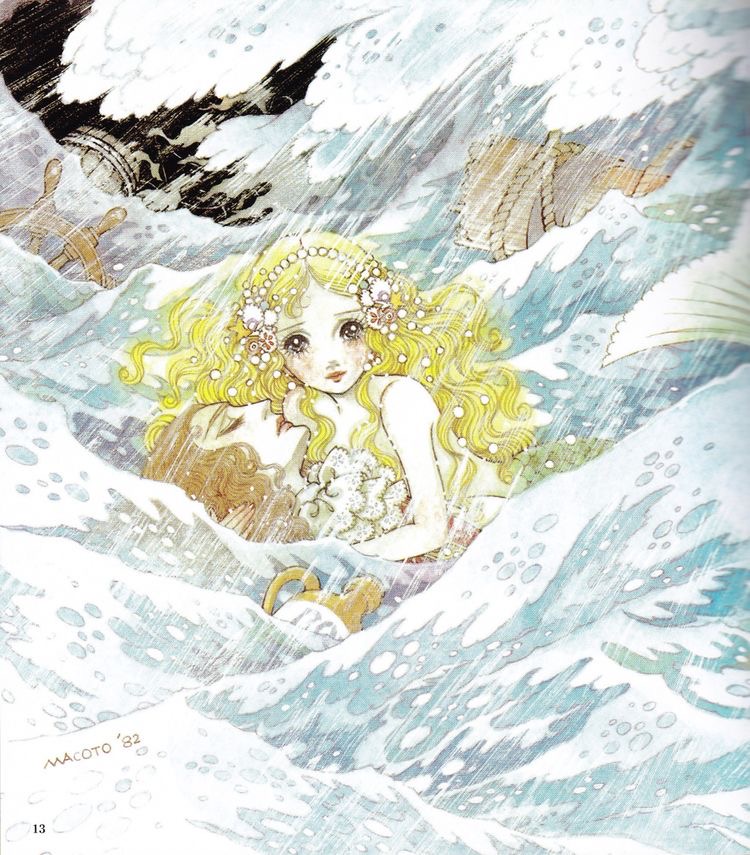
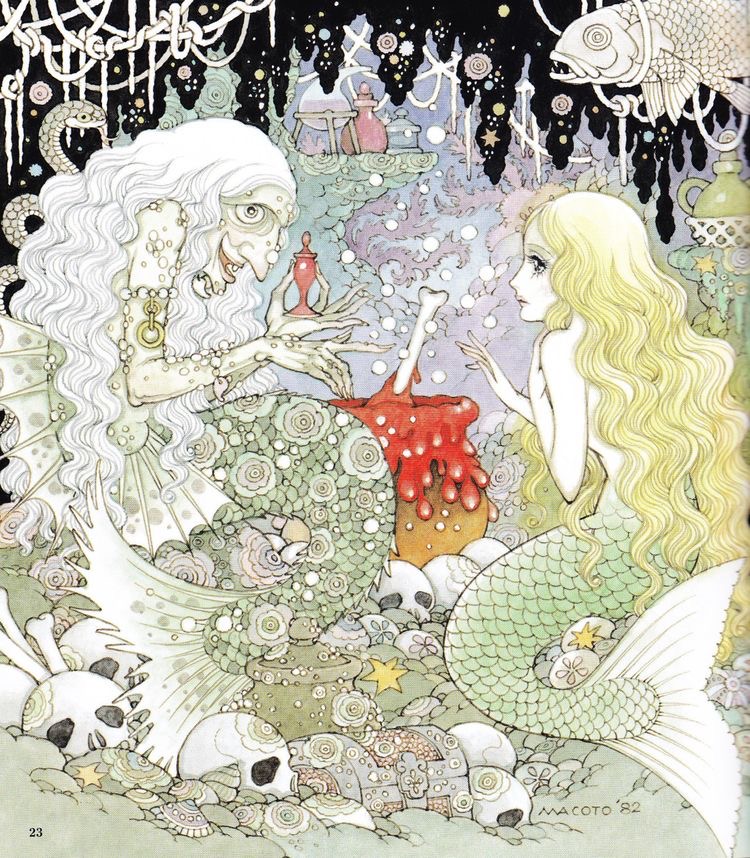
MakotoTakahashi”The little Mermaid”

Part2

人魚姫とキリスト教実存主義

Edmund Dulac
人魚姫は幾晩も幾朝も、王子と別れた波辺に浮かび上がりました。
アンデルセン「人魚姫」

この投稿は2024年の冬に評論として再構成する予定です。

アンデルセンの「人魚姫」は何度も考えさせられる。私はディズニー版の「リトルマーメイド」の話は度外視しているので評しないが、原作の解説で、人魚姫の最後は泡になって死んでしまう、で終了しているのが多く見られるが実際は続きがある。

人間の魂を得られなかった人魚姫は天国には行けずに精霊となる。それは悪い聖霊ではなく、300年経てば天国に行けると人魚姫は説明を受ける。良い子と触れ合えばその日は1日早くなるが、悪い子に会えば1日遅れていく。アンデルセンの子供たちへのメッセージは、

人魚姫が一日でも早く天国に行けるように、良い子でいましょうとしたのである。

人魚姫は大きく三つの要素によって構成されている。

➀実存主義

②愛

③キリスト教思想

 人魚姫はフーケのウンディーネの影響を受けているとされている。キリスト教圏にとって、水の聖霊は神の恩寵とは別に生きている。恐らくそれは創世記のはじめ、水は元から存在していたという聖書解釈に基づかれたものだろう。(ヘブル語で創造とは無から作られたものではない)そういった対峙的な存在が人間になろうとすることによって、人間である意味を読者に想像させる。人魚姫のような存在は人間のように短命ではないという設定だった。そして何よりも死を恐れていて、人魚は300年生きられるが、死後は泡になってしまうという。人魚の世界では年寄りは、300年長く生きて、泡になって漂うことが幸せだと疑わず、末っ子の人魚姫だけ人間の死と魂に憧れを持つ。それと同時に愛の永遠を夢見るようになる。

彼女にとって、その機会を与えたのは一つの「恋」だった。人魚の世界は15歳になったら人間の世界へと昇れる。彼女達にとっては、それが神の創られた世界を見る1度きりのチャンスだった。それぞれの姉たちは色んな人間世界を見ている。水底から水上、そこで目の当たりにするのはそれぞれ違っていた。ユング心理学いえば水は無意識であり、それを通過して少女達は大人への儀式を行う。このように、目の当たりする景観が違うのは、人間の信者にとっても同じことでもある。同じ聖書を読みながら、信者に個性があるように、それぞれの信仰による景観は違うのである。キルケゴールが「真理」を追うことを辞めて、哲学と神学を切り離して哲学を挑まなければならないと言ったように、(後にフッサールに反論される)人魚の内在世界は、外界との関係を割り切った実存主義的なのである。彼女たちはキリスト教圏の世界と共存しながら別の時間を生きている。その中で末っ子の人魚姫だけ「恋」というものを手に入れた。まず恋とは相手と結びつきたいという感情だが、彼女は魔女というオカルト的な神秘主義を手に入れ、人間になった。

但し、声を失い、足も痛む。それを解消するには王子から見染められなければならなかった。

人魚姫はアンデルセンにとって「貧しい人」の象徴でもある(注1)人権がほぼ無いに等しかった人間が、どうやったら権利を得られるか、それは金銭的なものだと冷静に考えた皮肉だったように思う。聖書の世界では言語は重要な存在とされる。それはヨハネの福音書の1章の、ロゴス賛歌、神と一緒に言があったと、これも人間のものとされているが、彼女はその「言語」を奪われている。彼女が人間として残されていたものは、肉体、そして足の痛み、心である。彼女は愛と傷を知っている心を持っていた。

人魚姫は原作を細かく読んでいくと、実際は王子様に大事にされていた。解説ではよく人魚姫が落ちて消えてしまった後に探し回っていることも見落とされているが、これも重要な箇所だと思う。王子様とお姫様は、人魚姫の喪失を悲しんで、海の泡を見つめている。貧しい人ほど実質的な幸福が得られず神様の愛、神を慕う愛、それらを取り巻く愛であるアガペーに依存せざるを得ない事への皮肉(哀しみ)も込められている。アンデルセンは最後まで人魚姫が人間として存在するために、実質的なものを手に入れないといけないとした。人権を手に入れるために王子のような存在に属しなければならなかったこと、婚礼の儀式とはキリスト教圏ではもっとも神秘的なことであり、特にカトリックにとっては重視している程、一人前の証でもある。それが手に入らないということ、それだけで人は存在価値がないのだろうか? アンデルセンは御伽噺として儀式に囚われない重要なイエス・キリストの教えを人魚姫の昇天する魂に込めた。キリスト教実存主義とは私が勝手に名付けたが、この宗教も組織という相対性と、絶対の狭間に立たされる。同じ聖書や儀式を通過しても、不正や相対性によってかき消される個性がある。その中で人魚姫が自分たちの決められ構造化された世界よりも、恋を選び、人として神に愛される実存を求めるように、キリスト者も本質存在(不正を蓋したうわ言)よりも現実存在を優位にしなければ見えない「正義」や「愛」があるのだ。

「王子様に恋をした」それは一見は楽観的な夢物語に思える。

例えば、シャルルペローの貴族の娘の読み聞かせ童話と比べると、アンデルセンの残酷性は一線を引いている。婚姻と愛が繋がらなかった人魚姫にも彼は神の愛を描いた。

子ども達には人魚姫を純粋に可哀想だと愛して欲しかった。

そして、天国へ一日でも行けるように良い子でいてほしいと思ったのだろう。

これは悲しい話や残酷な話ではない。私達は人魚姫が天の国へ行けるようにと

私達の行いを見つめる作品である。

(注1:イギリスの心理学の授業で聞いたので出典が分からないので定かではない)

2023年1月3日に加筆

高橋真琴「人魚姫」

第二弾

Aufheben(English.ver)

Nothing in the world is central, just outside the world. 
Simone Weil

The question is to what extent we can speak of God and still say that we have perceived him to be trustworthy.

The language of this perception is the Aufheben of theology and philosophy. In the history of philosophy, philosophy has coexisted with God. There was a time when it coexisted with the Greek God and then with the Christian God. When did these two disciplines separate? Was it Nietzsche, Marx and Freud, the triumvirate of thought? Was it Nietzsche, Marx and Freud, or Hobbes’s “state of nature”? I would put it around the first century of the Council of Nicaea. The Fathers of that time said, “Not like philosophers, but like fishermen”, that to reach the depths of humanity was not a human word, like philosophy, which never gets old. But they were then, Benedict XVI argued, stuck in Aristotle’s “homoousis”. He still wished to believe ” more like the fisherman than the philosopher”.

Thomas Aquinas, in his Scholastic philosophy, held that “philosophy is the offspring of theology”. Ockham, in his “Ockham’s Razor”, argued that philosophy should be separated from theology. Nevertheless, Descartes’s proof of the existence of God has been challenged by many philosophers, but even in this century it has not been defeated.

Spinoza advocated “pantheism”, which was considered heretical. Leibniz’s concept of the monad as the atomic equivalent of spiritual existence. Neither the smallest nor the largest of worlds can be grandfathered to us. However, the world was not created by chance, and these monads were “scheduled harmony” in that the world was designed to be the best it could be. Barkley, who was a clergyman, believed that while no one was looking, God was. He called it existence. Kant, a devout Protestant, wrote to Swedenborg, then a mystic, protesting against him, and held that true faith was reason. Hegel, also an empirical believer, objected to Kant’s objectivity as unrecognizable. This is the cessation (Aufheben) of the dialectic. Since the Industrial Revolution, when industrialization led people to work harder, to worry more about the environment, and to question their own well-being, Kant’s dialectic has been the basis for the development of a new way of thinking. began to question their happiness. Faith in Christianity at the time was also waning.

The need for man to have a core conscience and beliefs was symbolized by Nietzsche with the words “God is dead”. Nietzsche identified two kinds of nihilism: active nihilism, in which people create new values for themselves, and passive nihilism, in which people lose hope in life because of the existence of existing values.

Husserl’s phenomenology led to the study of human consciousness, orientation and human perception and existence. With Heidegger, who was a Catholic theologian, he attempted to de-Catholicism the human being as a born-again “Dasein”.

Nevertheless, the “face” of Levinas also led to a return to the Old Testament. Levinas succeeded in refuting Husserl’s ‘interpersonal inertia’. This is Levinas’s ‘l’Autre’.This is Levinas’s ‘theory of the Other’.  As you can see in French, it is “”beings who cannot enter my world”.  “. He held that recognizing the ‘face’ of the other could resolve this chasm.

Levinas miraculously survived the concentration camps, but the world existed. This formless, subject-less thing that exists even when it is lost is what he calls ‘Ilya’. To him, the person who existed may have looked like the beast of the Apocalypse, which has no name, but only a number.

Quoting from the Old Testament, “Thou shalt not kill”, he said that the way out of the Iliad is to get to know “the face of the other”, to engage with the other from indifference. This philosophy was regarded by John Paul II as a philosopher who should not be forgotten.

It has been said that theology is on the wane. Nevertheless, Balthasar, with his beautiful writing and logic, speaks to us academically and to our emotions about the mystery of the love of the Trinity. Theology, too, has never existed without the philosopher.(Neoplatonism)

Philosophy has probably progressed to the denial of God since the end of Paul Ricoeur coexistence of religion and philosophy. Theology has moved on from a skeleton world to the existence of God as the answer.

In the history of theology there has never been a time when the masses were pure and innocent. It does not seem so far removed from other non-religious histories. It does not seem to be so far removed from other non-religious histories. It is not without its perplexities to take them both, but it is Aufheben. While waiting for the results of science, man follows his perceptions when even science remains imperfect.

Philosophy and theology are probably on the same track.

They are both on the verge of death, and they are both working themselves to death.

As we cut ourselves down, the soul is revealed.

It is our wisdom, our weakness, our strength, our gift.

It is a gift.

 The world outside is beautiful. But to be able to be aware of it, we need to love the depths of our inner world. Even if you lose your memory due to illness, your mind and the world are still connected. Even if I forget myself because of illness, God and I are connected. We love many things while we are alive. In time, the outer world may be whittled away by the decline of the body. Still, it is the soul that sees the light. The soul’s sight of the external world is the core of the world.

Aufheben


世界の中に中心はない、ただ世界の外側にある 
シモーヌ・ヴェイユ

神を幾ら語っても知覚したと言えるのかどうかという問答は信仰に値する。

その知覚を言語化すると神学と哲学のアウフヘーベンとなる。哲学は哲学史を

見ていても、神と共存していた。ギリシャ神からキリスト教の神と共存していた時代もあった。この二つの学問がいつ分かれたのか、思想の三統領のニーチェ、マルクス、フロイトだろうか。それともホッブスの「自然状態」ともいえるのか、私はニカイア公会議の1世紀頃としている。当時の教父たちは「哲学者のようにではなく、漁師のように」と人間の深みに達することを哲学のように人間の言葉ではなく、古びることのないとしていた。しかし彼等は当時、アリストテレスの「ホモウシオス」から抜け出せなかったとベネディクト16世が論じている。彼はそれでも「哲学者より漁師のように」信仰することを望んでいる。

トマス・アクイナスはスコラ哲学で「哲学は神学のはしため」とした。それをオッカムは「オッカムの剃刀」によって、哲学は神学と切り離すべきだとした。それでも、後のデカルトの神の存在証明の反論は沢山の哲学者が挑んでいるが、今世紀でも論破出来ていない。

スピノザが「汎神論」を唱え、異端とされた。ライプニッツは精神的存在の原子に相当する概念をモナドとした。世界の最小も最大も我々は祖父名することが出来ない。しかし、世界は偶然作られたわけではなく、これらのモナドが世界は最善へと設計されていくことを「予定調和」とした。バークリは、聖職者だったために誰もが見ていない間は神が見ているので、

実存とした。カントは敬虔なプロテスタント信者で、当時は神秘主義者のスウェーデンボルグに抗議の手紙を出し、真の信仰を理性とした。ヘーゲルも同じく経験な信者だったが、カントの客観は認識できないというものに異議を唱える。それが弁証法の一つの止揚(アウフヘーベン)だった。

産業革命以降、工業化により人々は過酷な労働や環境問題に悩まされ、幸福を疑問視するようになった。当時のキリスト教への信仰も薄れていく。人間に核たる良心や信念を持つ必要があると、ニーチェは「神は死んだ」と象徴的な言葉を残しました。自分自身で新しい価値観を作り出す「能動的ニヒリズム」と既存の価値の存在によって生きる希望を失う「受動的ニヒリズム」とした。

フッサールの現象学によって、人間の意識、志向性と人間の知覚と実存の研究となりました。

カトリック神学部だったハイデガーによって、脱カトリックを試みた彼は人間の存在は

生まれ落ちた「現存在」とする。

それでも、レヴィナスの「顔」はまた旧約聖書回帰へと繋がりました。レヴィナスはフッサールの「間主慣性」の反論を成功しました。これがレヴィナスの「他者論」である。

レヴィナスは奇跡的に強制収容所から生還しました。彼は多くの家族を失ったが、世界は存在していた。こういった形骸化、主語を失ったものを彼は「イリヤ」と呼んだ。

彼を取り巻く存在は黙示録の獣の数字だったに違いない。何故なら獣には名前は存在していないからである。旧約聖書の「汝、殺すなかれ」を引用し、イリヤから抜け出すのは「他者の顔」を知ることによって、無関心から他者と関わるとした。レヴィナスの「他者」とは、フランス語で見ると分かるが、「私の世界に踏み込めない存在」である。彼は他者の「顔」を認識することで、この亀裂を解消できるとした。

この哲学をヨハネパウロ2世は、忘れてはならない哲学者と評価した。

神学は、もう衰退の一途を辿っていると言われている。それでもバルタザールは美しい文章と論理性によって、三位一体の愛の不思議について学問的に、そして私達の感情に語り掛けている。神学も哲学者を無視したものは存在していない。(ネオプラトニズム)

哲学は恐らく、ポールリクールの宗教と哲学の共存を最後に神の否定に進んでいる。

神学は形骸化した世界から神の存在を答えとして、進んでいる。

神学史の中では大衆が清廉潔白の時代は存在しない。それは他の無宗教の歴史とそれほど

懸け離れていると思えない。これらを両方取ることに錯乱が無い事はないが、アウフヘーベンである。科学の結果を待ちながら、科学でも不完全さが残るときに人間は知覚を追う。

哲学と神学は恐らく同一の軌道を進むのである。人間のそれは智慧であり、弱さでもあり、

賜物である。

外の世界も美しい。けれどもそれを意識出来るために内面世界の奥行を愛さなければならない。例え、病で記憶を失っても、心と世界は繋がっている。病で自分のことを忘れてしまっても、神と私は繋がっている。生きている間は沢山のものを愛する。そのうち、肉体の衰えによって、外界世界は削ぎ落されていくのかもしれない。それでも光が見えるのは魂である。

魂が見る外界世界が世界のコアである。

The Joker and Biblical interpretation(English.ver)

If anyone causes one of these little ones—those who believe in me—to stumble, it would be better for them to have a large millstone hung around their neck and to be drowned in the depths of the sea. Woe to the world because of the things that cause people to stumble. Such things must come, but woe to the person through whom they come.
Matthew 18:6~7

Sin can be ” Pardoned ” by love, but evil continues to be amplified. When one evil intention disappears, a new one is born. That is human nature, and those who deny it are the equivalent of a false wall. Goodness requires education and environment, but malice is born naturally. I am a denier of the theory of good nature. This is the basis for the theory of the state, and also for Jesus, who refers to evil as a “Skandalon” that cannot be removed by human power.  There is no such thing as goodness, and I believe this to be true.

There is atonement for sins, but evil does not disappear. Yet the concept of what evil really is continues to be debated today. According to the Old Testament view, a person can be either good or evil, and therefore has to make a choice. God does not intervene in the choice, but sends dream signs, apostles and prophets to make man aware. It is the history of Christianity, since the New Testament, that has made Adam and Eve the original sin. For many years the question of why we let evil people go unchecked was repeated by “apologetics” so that God would be good, and psychology tried to treat academically the evil, the darkness of human nature, which apologetics could not compensate for. As a result, it may be G. Freud who succeeded in separating the therapy from God. Jung did not separate the cure from the person who had been brought up in the image of their own religion or oral tradition. To Freud’s “unconscious” Jung delved into the “collective unconscious”. Freud did not deny this theory, but considered it dangerous. Both theories remain inconclusive to this day.

Evil continues to be amplified, but there are some things that are severely punished by time. One such thing is “theatre”.

St .Augustine likened theatre to Plato’s theory, distancing it from the teachings of Jesus and making it an “evil” to dull the pain. In modern times, restrictions have been loosened, but there are still objections to adultery, age restrictions and the illusion of a fictional world. The “self-proclaimed good guys” are afraid of influencing crime and pleasure, and are threatened by all but the most peaceful works.

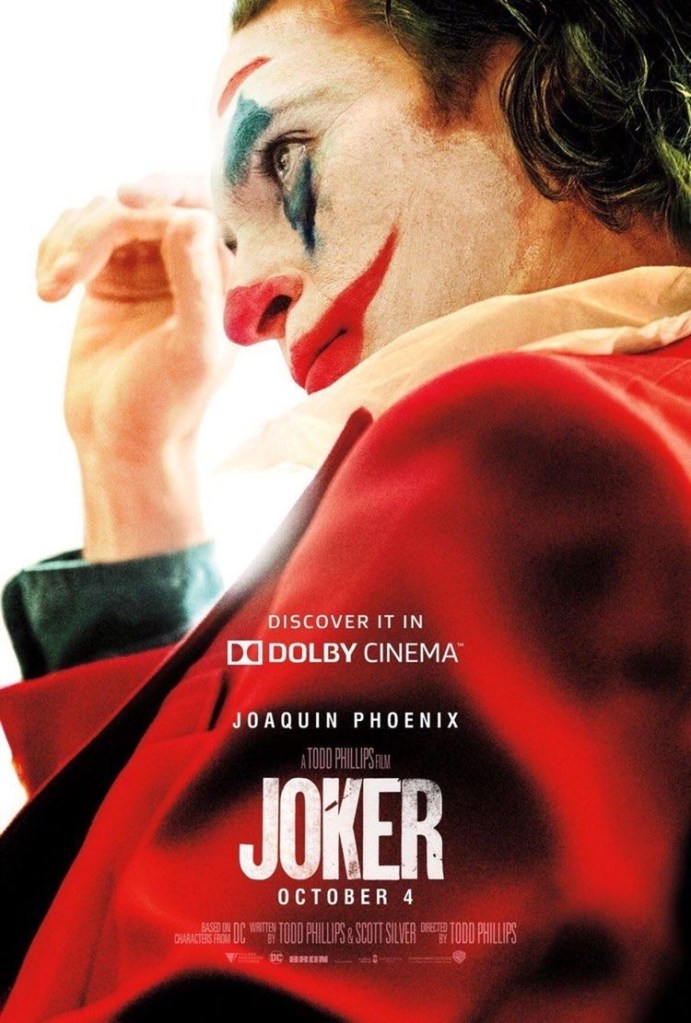
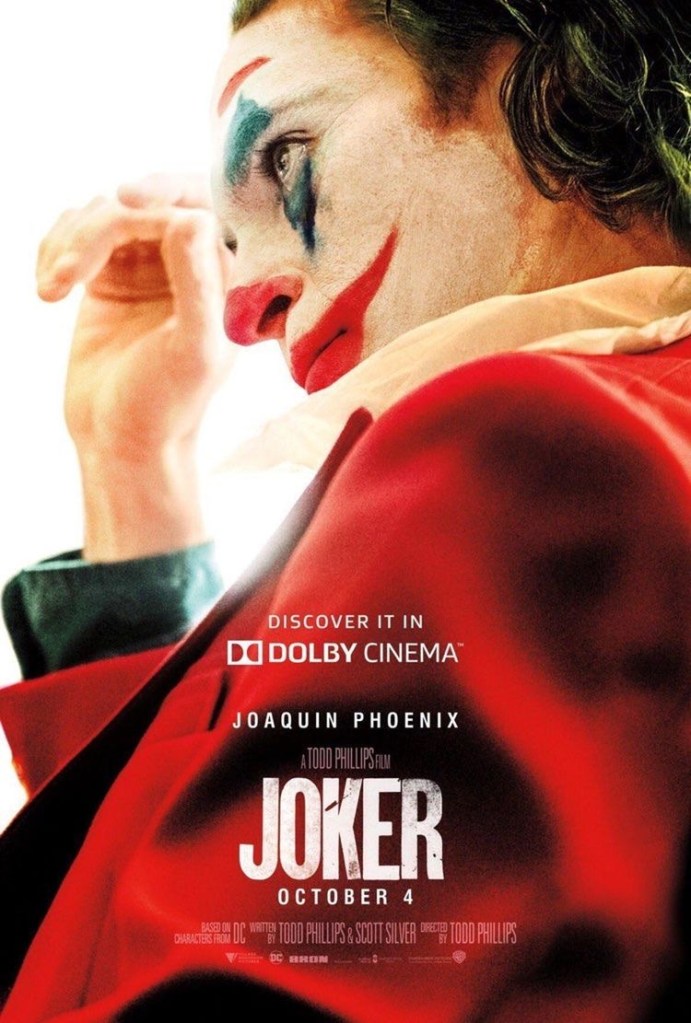
  It seemed to me that the Joker in the film “The Joker” (2019) stood out in a world of mediocrity. Once I saw it, as a script, I thought it was just an imitation of real-life serial killers Henry Lee Lucas and Edmund Kemper, but as Shakespeare created Hamlet and King Macbeth, there has never been a more established “evil” in the fictional world these days.

It’s hard to say whether he was the best “pure evil”, but his greatest appeal was that he created so many copycats. What Jesus defined as the most severe sin was the sin of leading the masses: “to be drowned in the sea with a great millstone round your neck”. The Joker was originally Arthur Flex, an ordinary man who lived with his mother. This man had a dream. He dreamed of becoming a comedian. He was poor, and people and the world were hard on a man who had a dream of becoming a comedian.

He fantasises about getting ahead, but in reality he works as a street performer. He is violently attacked by a juvenile delinquent, and his boss treats him “badly”. Further undermining the impotent man was a disease that made him laugh. It is essential to pay for this treatment. Presumably because this is a form of PTSD, there is no obvious drug treatment. Psychiatric drugs are more expensive when there is no clear cure. Doctors’ guesswork, inadequate counselling and inappropriate medication means that more of his meagre wages are spent on drugs. He was always at the mercy of the malice that existed behind the goodness of the world. The only thing that kept him alive, no matter how crushing the malice, was his mother’s words, “to smile and put on a happy face”. He loved his mother. He loved his mother because she believed in her words that your smile makes people happy.

He is forced by a colleague to give him a gun for protection, but he drops it while dressed as a clown in a children’s ward. The colleague who gave him the gun also lied to him, so he is forced to dismiss him, and then, as fate or bad luck would have it, he develops a condition in which he “to smile and put on a happy face” at a woman who is in trouble with a man, even though he has no strength to do so under the circumstances. Like the protagonist of Albert Camus “L’Étranger” Arthur has pulled the trigger.

It’s 1981 in Gotham City, a city in the middle of an unsafe neighborhood, where shootings are not unheard of. But because the murderer was an elite member of the stockbroking world, the poor begin to admire the clown killer. Arthur’s stage success as a comedian and his memories of the woman he had a crush on were his fantasies. The fact that his loving mother had taken advantage of his “smile at all times” disease, a kind of “faith” that she believed your smile could make people happy, was broken.

It became impossible to keep track of who had wronged him, who had hurt him. He succeeds in killing his mother, the one who gave birth to him, in what is known as the serial killer’s ritual. It is a rite of passage for a serial killer.

Wanting the success of his stage in the fictional world, he succeeds in attracting an audience in reality.  His performance, with its chants of love and happiness, influenced the audience to descend into reality with happiness, but his performance ironically succeeded in a sense as a realization of reality. As a popular desire, he became a “villain”. The streets are filled with his imitators, but they do not love him. It’s just a shallow perception, the public’s desire for self-realisation, the sense of unity and happiness that comes from supporting him.

It was interesting that the film ended with the idea that there is more than one Joker.

Even in the setting, the Joker was set up as a cruel serial killer, but in a time when the public wanted a “bad man”, there was no clear setting for a humor character or even helping the bad man (to finish him off himself). This 2019 version of the “Joker” is a possibility for further transformation if we are to consider a sequel, but evil also coexists with this lack of concreteness. Jesus punishes those who lead the masses the most, because the “false prophet” is a loss of love. This is in line with Moses’ prohibition against idolatry. (The word “Skandalon” is also the origin of the word “scandal”, which Jesus said could not be removed by human power.)

Although it is the “dictator” who defines evil in our time, it is the evil that seems to have disappeared that is most threatening today. While we don’t know the Joker’s true identity, his copycats set him on fire.It is also interesting to see the masks worn by the copycats. There is a sense of cowardice, as if they could escape at any moment. Wearing a mask, the mother does not know where she will go after her mother has disappeared. That is the evil of the collective, the violence that we as human beings are familiar with. If this feels like déjà vu, we already know the evil of the ordinary. 

This dipping of the roots of evil beneath the surface seems to be the evil of the 21st century.

****

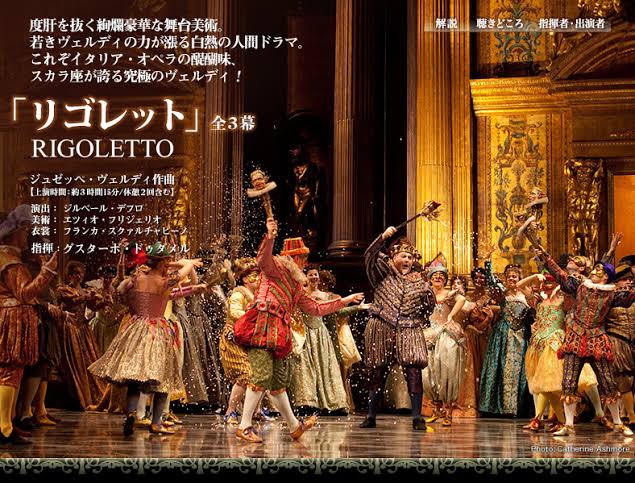
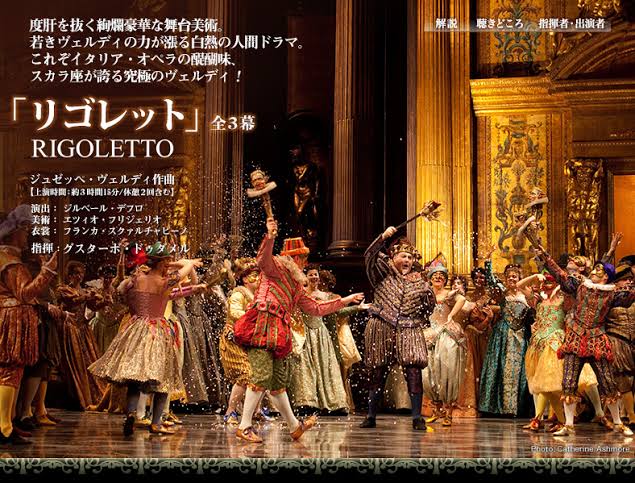
The tragedy of the clown reminds me of Verdi’s “Rigoletto” (based on Victor Hugo’s novel). Like the Joker, he was a laughing stock for princes and nobles .Like the Joker, he works as a laughing stock for princes and noblemen, but when he  discovers that the only girl he has ever loved has been played by a nobleman, he seeks revenge, but without success, and is forced to hold her corpse. Tragedy and comedy go hand in hand, and the stage is no fun without darkness. But a clown is always doomed to disappointment in the dark.

The clown is a confirmation of the structure that prevents happiness.

In Plato’s “Apology of Socrates” he said that “he who really wants to fight for what is right should work as a private person and not as a public person, even if he wants to live his life for a short time”, but I don’t think there is anything that returns to this origin. If we study history seriously, we often despair of humanity. It is when the economy is good that we can rejoice in progress, and when it is bad that we fall back on structuralism. However, although human beings are foolish, they can bear coincidence and inevitability, and can produce love. Can human beings love if they do not know malice? From birth, it is human beings who influence us, for better or worse. If we lose our love for these inseparable beings, we will become “the living dead”. Evil intentions exist in me too. But I respect love in the face of evil.

I believe that love is the power of the soul.

I have chosen Corinthians 13 as my favorite Bible quote because I believe that human malice cannot be wiped out, but love defines the direction of the soul.

I don’t know who influences my good intentions or my bad intentions, my potential or my manipulation, I manipulate who I am and I don’t know who I am. For example, on noblesse oblige. Is the responsibility of those with social status really ‘private punishment’? The highest punishment for being unrewarded is ‘private punishment’. Or can it be done peacefully? Maybe one day the world will wake up to this cruelty.

 Nevertheless, I want to keep only the concept of soul.

The body may get sick and the mind may get hurt, but the soul will not be hurt.

I believe in that.

This song and the Joker’s song seem to be unrelated, but they fit very well and I saw them many times. It seemed to me that human beings suffer from a malice that is tainted by the love (agape) they are raised with and the evil that comes towards them. This is only a Christian’s opinion. What I got from this song was “not to laugh”. I don’t force myself to laugh.

What is Gotham City?
Why are we drawn to it?
The protagonist, the Joker, and Gotham City are both fictional worlds.
But we call it “reality”.

As an aside, I have sympathy for Arthur himself, but criminals are evil, and perhaps they will be judged by God, or perhaps they will receive God’s love, it’s not entirely clear. As Camus says in “L’Étranger”, it is not impossible that he has chosen to be a villain. The rejection of God’s grace is also a free human choice. There are some psychological studies that try to change this absolutely as a treatment of circumstances or mental illness, but I am not so sure. When I was a student, I thought about rehabilitating criminals, but now I still want them to be destroyed when they become victims. But I honestly wish there had been help for Arthur. Most victims bear the negative side of the perpetrators, the oppression, but for those who have been deprived of their right to live, it is nothing but cruelty. In my view it was a good film. After all, there are few people who can reach out to Arthur.

It may be similar to the Zodiac case.
The name of the leading suspect was Arthur.

The Joker and Biblical interpretation

しかし、わたしを信じるこれらの小さな者の一人をつまずかせる者は、大きな石臼を首に懸けられて、深い海に沈められる方がましである。世は人をつまずかせるから不幸だ。つまずきは避けられない。だが、つまずきをもたらす者は不幸である。マタイによる福音書18章6節~7節


罪は愛によって「赦される」ことがあるが、悪は増産し続けている。一つの悪意が消えても、新しい悪意が生まれる。それが人間であり、否定する人間は虚言壁に相当する。

善良な心は教育や環境を要するが、悪意は自然と生まれる。私は性善説否定派ではあるが、国家論を考えるときにはこれが根幹であるし、イエスも悪を躓きの石として、それは人間の力では取り除くことが出来ないとしている。性善説は存在しない、私はこれに間違いはないと思っている。

罪を償うことはあっても、悪が消えゆくことは無い。それでも悪とは一体何なのか、その概念は現代でも議論し続けている。旧約聖書の見解では、人は善と悪とどちらにもなりうるので、選択を迫られる。神はその選択に介入しないが、人間が気づけるように夢のお告げや、使徒や預言者を送り込んでいる。アダムとイブを原罪としたのは、新約聖書以降、キリスト教の歴史である。何故、悪人を野放しにするのかという問いは長年、「弁神論」によって神は善となるように繰り返され、心理学では弁神論では補いきれなかった人間の悪、闇を学問的に治療しようとした。結果、治療をする際に神と切り離すことに成功したのはG・フロイトなのかもしれない。ユングは各々の宗教や口承伝承のイメージで育った人間と治療を切り離さなかった。フロイトの「無意識」にユングは「集合的無意識」と掘り下げた。フロイトはこの研究を否定はしなかったが危険視した。両者とも未だに現在でも結論は出てはいない。

悪は増幅し続けるが、時流によって厳罰化されるものがある。その一つが「演劇」である。

聖アウグスティヌスは演劇をプラトン論に準えてキリストの教えから遠ざけ、痛みを紛らわすための「悪」とした。現代では規制は緩くなったが、映倫や年齢制限、虚構世界のイリュージョンに未だに異議の声は止まらない。「自称善人」は犯罪と快楽に対して、影響する事に畏れ、平和的な作品以外は脅威を抱くからだ。

 それでさえも空気のような慣れを感じていた最中に、映画「ジョーカー」(2019)のジョーカーは立ち現れたと私には思えた。一度見たときは、脚本としては、実在したシリアルキラーのヘンリー・リー・ルーカスやエドモンド・ケンパーの模倣としか思っていなかったが、シェークスピアがハムレットやマクベス王を作り上げるように、最近は虚構世界の「悪人」がこれほど確立された存在はいなかった。

「純粋悪」として最高かどうか、判断しにくいところがあるが、彼の最大の魅力は模倣犯を沢山作り上げたところである。「大きな石臼を首にかけられて海に沈められる」とイエスが最も厳しく罪と定義したものは大衆を導く罪だった。ジョーカーは、元々はアーサー・フレックスという母親と二人暮らしの平凡な男だった。この男には夢があった。コメディアンになるという夢だった。貧しいうえに一発逆転型の夢を抱くものに人々も世間も厳しい。

彼は出世を妄想しつつも、現実では大道芸人の仕事をしていた。不良少年の憂さ晴らしに暴力を振るわれ、上司からも「ぞんざい」に扱われる。非力な男を更に貶めていたのは、笑ってしまう病気だった。この治療のために治療費が欠かせない。恐らく、この病気はPTSDの一種なので、薬物療法が明確ではないと考えらえる。精神薬というものは、治療法が明確でないものほど、大量に要する。医者の当てずっぽう、出来損ないのカウンセリング、当てはまらない薬のために、貧しい賃金から更に薬代に流れる。常に彼は世間の善意の裏に存在する悪意に手をかけられている状態だった。彼が悪意にどんなに押しつぶされそうになっても、生きていられたのは、母親の「どんな時でも笑顔で」という言葉であった。彼は母親を愛していた。

彼は同僚から護身用の拳銃を無理やり渡されてしまうが、ピエロ姿で小児病棟での最中に拳銃を落としてしまう。拳銃を渡した同僚も嘘をついたので解雇を与儀なくされたアーサーは、更に天命か不運か、彼はこんな状況下で余力もないのに、男性に絡まれて困っている女性を「どんな時でも笑顔で」という症状が発症し、女性は逃げることが出来て、男性3人に暴行される。カミュの異邦人の主人公のように、アーサーは引き金を引いたのである。

ここは1981年のゴッサムシティ、治安が悪い最中で銃殺事件なんて珍しくなかったはずだ。しかし、殺されたのが証券会社のエリートだったために、貧困層がピエロの殺人鬼に称賛し始める。アーサーはコメディアンとしての舞台の成功も、片思いの女性との思い出も彼の妄想だった。愛した母親が自分の「どんな時でも笑顔で」という病気を利用していたという事、母親が貴方の笑顔が人を幸せにするという一種の「信仰」が崩された。

誰が彼を貶めたのか、傷付けたのか追いきれないほどになった。彼はシリアルキラーの儀式とも言われる、生んだ存在、母親を殺害する事に成功する。これは殺人鬼にとって通過儀礼のようなものである。

虚構世界の舞台の成功を望んだ男は、現実で聴衆を集めることに成功した。愛や幸せを謡った舞台は聴衆に影響を及ぼして、幸福と共に現実へ降りていくが、彼の舞台はある意味、現実への実現性として皮肉にも成功してしまう。大衆の願望として、彼は「ヴィラン」となった。街中が彼の模倣犯だらけになったが、彼を愛している訳ではない。浅い認識と、大衆の自己実現欲、彼を支持しているという一体感、その幸福に大衆が酔っているだけである。

ジョーカーは複数存在しているところで終わったのが興味深かった。

(私はこのジョーカーが自分の仮装の中に埋もれるシーンが一番好きだ)

設定でもジョーカーは残酷なシリアルキラーとして設定されていたが、「バッドマン」を大衆が望んでいた時代では、ユーモアキャラクターや、バッドマンを助ける(自分が仕留めるために)こともあったりと、明確な設定がない。この2019年度版の「ジョーカー」は続編を考えるのなら更なる変容を可能性としているが、悪というものは、この具体性の無さも共存している。イエスが最も罰するのは大衆を先導するもの、としたのは「偽預言者」というものは愛が喪失するからだろう。それはモーセの偶像崇拝禁止とも一致する。(イエスが、人間の力では取り除くことが出来ないと言った「Skandalon」はスキャンダルの語源でもある。)現代の悪を明確化しているのは「独裁者」であるが、現代は実体を消したような悪の存在が最も脅威を持つ。ジョーカーの正体を知らない間は、彼の模倣犯が火をつける。それが集団による悪であり、人間としては見慣れた暴力なのである。これが既視感を覚えるのなら、私達は既に凡庸の悪を知っているのだ。模倣犯達がお面の被るのも興味深い。いつでも逃げられるかのような卑怯さがある。お面を被って、母体は何処へ行くのか分からない。この、水面下へ悪の根幹が潜っていく様子が21世紀の悪のように思えた。

道化師の悲劇といえばヴェルディの「リゴレット」を思い返す。(ヴィクトル・ユゴー原作)彼もまたジョーカーと同じく、

侯爵や貴族の笑いものとして仕事をしていたが、醜い彼が唯一愛した娘が、貴族にもてあそばれてしまったことを知って復讐するが、成功せず、娘の亡骸を抱く羽目になる。悲劇と喜劇は隣り合わせで、暗転しなければ舞台は楽しくない。しかし、道化師というものは常に闇の中で失意のどん底まで落とされる。

道化師は、この幸福になれない構造の確認出来る原典かと思う。

****

 プラトンの「ソクラテスの弁明」で「正しいことのために本当に戦おうとする者は、僅かな間でも命を全うしようとする場合でも、私人として働くべきで公人として働くべきでない」としたが、この原点に返るものは存在しないように思う。歴史を真面目に勉強すると、人類に絶望する事が多い。進歩を喜べるのは、景気が良いときで、景気が悪いときは構造主義に嵌っていく。ただ、人間という存在は愚かだが、偶然性と必然性を背負って、愛を生むことがある。悪意を知らなければ人間は愛を持てるのだろうか。生まれから自分に影響を与えてくれるのは良きも悪くも人間である。切っても切り離せない存在に対して、愛を失ったら「生ける屍」だろう。私にも悪意は存在する。例えばノブレス・オブリージュ、それは聖書の教えから来ているが、社会的地位がある者の責任とは「私刑」だろうか? 報われない事に関して最高の刑は「私刑」である。それとも平和的に済むのだろうか。この残酷性に世界が目覚める日がくるのかもしれない。

それでも私は悪意の中でも愛を尊重する。

愛は魂の力量だと思っているからだ。私の一番好きな聖書の引用にコリントを選んでいるのは人間の悪意は拭えないが、愛は魂の方向性を定めると信じているからだ。

私の善意や悪意は誰の影響なのか、私の潜在的なものか、操られているのか、私は私という存在を操作して、私は私を知らない。それでも、魂という概念だけは持ち続けたい。

身体は病気になって心は傷ついても、魂は傷つかない。

私はそれを信じることにしている。

この曲「happy face」Jagwer Twinとジョーカーは無関係のようだが、非常に合っていた。何度もこのバージョンを繰り返して見て気づいたことは、無理して笑うことはないということだった。私達クリスチャンは、神の愛による善意と、悪意と自分の不甲斐なさに苦しむ。

無理して笑うことなんかない、道化になることはないと私は思った。寧ろ、無理して笑ったら、負けなのだ。


ゴッサムシティとは何なのだろうか。
此処に何故人は惹かれるのだろうか?
主人公、ジョーカーもゴッサムシティも虚構世界である。
けれども私達は「現実」と言ってしまう。

余談ですが、アーサー自身には同情がありますが、犯罪者っていうのは悪で、恐らく神の裁きを受けるか、もしくは神の愛を受けるか、それは完全には分かりません。カミュの「異邦人」でもあるように、自分がヴィランを選んだ、という可能性は0ではないのですよね。神の恩寵を拒否をした、それも人間の自由選択です。それを境遇や精神病の治療として絶対に変えようとする心理学研究もありますが、私は冷ややかではあります。学生時代は、犯罪者の更生も考えてましたが、今はやはり被害者になったら相手が潰れてほしいと思います。でも、アーサーの時に救いがあったらなとは素直に思いました。大半の被害者は、そういった加害者の負の面、抑圧を背負っていますが、生きる権利を奪われた者にとっては残酷以外何者でもないでしょう。でも、良い映画だったと思います。結局のところ、目の前にいるアーサーに手を伸ばせる人間は少ない。

ゾディアック事件に似ているのかもしれない。
有力容疑者の名前がアーサーだった。

Favorite Bible quote

Love is patient,love is kind. It does not envy, it does not boast, it is not proud. It does not dishonor others, it is not self-seeking,it is not easily angered,it keeps no record of wrongs.Love does not delight in evil. but rejoices with the truth. It always protects, always trusts, always hopes, always perseveres.Love never fails.

1 Corinthians 13:4〜8

愛は寛容であり、愛は親切です。また人をねたみません。愛は自慢せず、高慢になりません。礼儀に反することをせず、自分の利益を求めず、怒らず、人のした悪を思わず、不正を喜ばずに真理を喜びます。すべてをがまんし、すべてを信じ、すべてを期待し、すべてを耐え忍びます。愛は決して絶えることがありません。(コリント人への手紙I 13:4〜8)

Make Japanese sense into English.

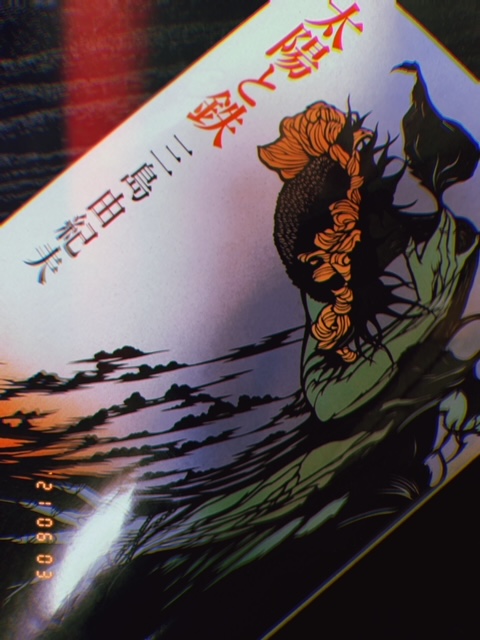
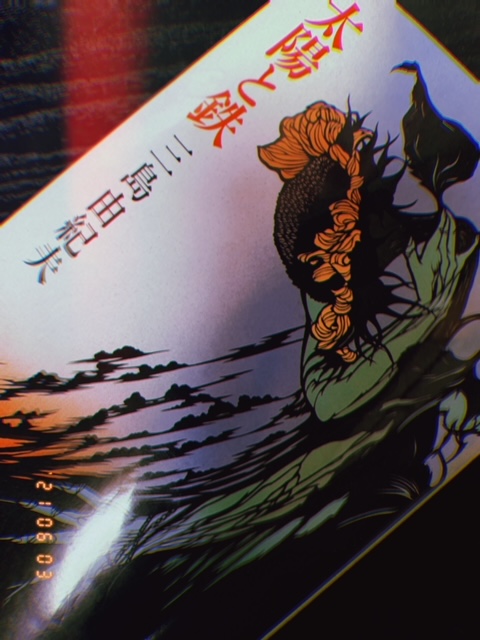
Sun and Steel (English.ver)

Outline of this post.


In 2018, during my recuperation period after a suicide attempt, I read Yukio Mishima" The Sun and Steel." In it, he wrote about feelings that were neither fiction nor criticism.
He wrote about "confession" at night, "criticism" by day, and a time when he was neither.

I will taste this neither time until 2021.

The book, which was also the subject of a controversial debate at the University of Tokyo (1969), seems not to have been appreciated in Japan at the time. I have been on the road from leaving Catholicism to conversion.
I was struggling to talk about this mortal disease in my story. Would it be non-fiction, or should I force it to be fiction? Whether I choose the sun or the night.

There was also the question of Catholicism and the political uncertainty of the future in Japan. For many years, I had forgotten the poetry of Mishima response to the sun.
In 2021, I have decided to move on to the night (literature).
This involves a lot of interpretation on my part. In Sartre's terms, it is "the other with the subject".

Apologies that this is not a thorough explanation of the sun and Steel.


The” Sun and Steel” was one of Yukio Mishima lesser-known works at the time. After a long time.I read this in 2018 and found much to sympathies with. I read this in 2018 and found much to sympathies with. In the process of writing, some things are difficult to express even as a novel. I too fell into that groove around 2017. Probably every artist. I feel like it comes to every artist. Sometimes we can’t establish ourselves because we are confused by current trends or common perceptions.  Mishima described it as an intermediate form between confession and criticism, “a kind of hidden criticism”.

Mishima is perhaps the only person who has focused on the area of twilight that exists between night as confession and day as criticism.

Sartre’s raison d’etre about existence and essence is that existence precedes essence, but this kind of wayward speculation, a combination of fiction and criticism, is a wandering interior that does not know the outer skin of existence, and is itself an embryo that does not know the outer world (essence).

It is the equivalent of inference, prediction and prophecy. When the result is not yet known, even if we think we have grasped the essence, we cannot be sure. A novel does not have enough material to be written, and a criticism is only an assumption made a few years in the future. But there are times when the feeling is strong.

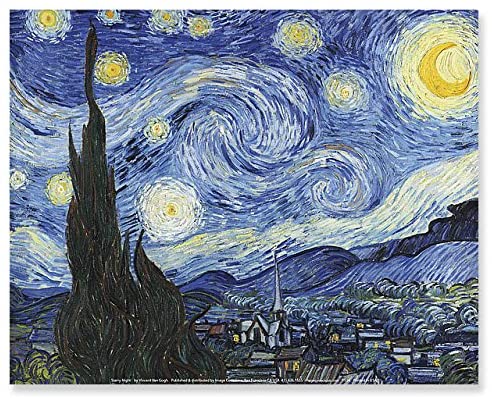
At such times, I think back to Van Gogh’s Madness paintings.

His paintings were first of all existentially unsuccessful. Later, his brother Theo’s wife succeeded in selling Van Gogh’s paintings and made him into the genius that he is today. Over time, they created the essence of Van Gogh’s paintings. Over time, they created the essence of Van Gogh’s paintings, or the world discovered them.

The Starry Night
This is one of my favorite Van Gogh paintings. I don’t know of any other painting that depicts the stirring darkness so clearly.

I think Mishima is right when he declares in this book that he is not a poet. Poets, like Van Gogh’s paintings, are not afraid of consequences, and they do not fall between confession and criticism. Hermann Hesse is a genius as a poet and Rubaiyat dances without fear of criticism from Christians.

It seems to me that Iran is famous for its poets. Perhaps they are not afraid of death (or the oppression of others). That free enthusiasm, which neither the cooperation of the Japanese nor the argumentative nature of the West can match, is something to be admired and, as a result of more social experience, I think we will never have it again. We all dream of it and run with it, but the tragedy and happiness that we have created with our speculations, from pacifisms, through physical pain, gradually becomes a reality.

When I was young, I would have run without fear. In the midst of it all, joy and despair, like differential and integral calculus, were repeated, and expectation and despair may have exceeded real reality. In the midst of this repetition of the mundane routine, where sleep brings morning and daily life again, I had my moments of real despair.

In turn, disappointment and disillusionment increased, becoming part of the larger reality of the real world.

Gradually, disappointment and disillusionment increase, and the artist becomes part of the larger existential context of the real world.

That’s the end of the artist. It is only natural that he should lose his individuality.

I’m trying to be unique because of my long established taste, but my body is screaming. The days when I used to write poetry in the evening, even if it was bad, seem like a lie.

It was a mistake in the first place to see it as a defeat. The thought of being abandoned by night and day

It will always go somewhere. It is like a long, inflexible Steel. That is how I see it.

In my analysis, Mishima Steel element probably became the sun and led to his suicide.

I have decided, after a long time, to return to the Night once more. That’s when I retired as a journalist. It is proof that I am no longer outspoken about current affairs. The man who lives by night lives for the invisible presence of human sensibility. The man who lives by day lives for the market and the human condition.

There is no right or wrong, because both are necessary.

But when speech and knowledge are wasted, it is tempting to talk about real problems.

Isn’t it the starting point of a literary person to keep that ” babble ” silent until night?

I will not write directly about why I attempted suicide, or the process of my conversion. Instead, I will start to confess, as if in the night, my memories and records were a wild reflection.

In this fictional world, the person who speaks for me is a man and other women, and the story goes on. There is, in effect, a fictional character (a lie). But the essence is not a lie. Within the non-existent outer skin, there is an interior that I have experienced and gone through.

I have read a lot of Mishima during my illness. But I chose a different path from him.

In his writings he wrote

“Now I no longer believe with all my heart in the idea of classicism, about which I was so passionate at the age of twenty-six. I no longer believe in it with all my heart”

I might not have the awe-inspiring ardor of my youth, either. I sympathies with him in this confession under the sun.

But, like the protagonist of the piano tuner I am writing about, I intend to expand the literature to say that sound does not die. In the despair of the protagonist, my inner light is incorporated.

It is with God.

太陽と鉄 三島由紀夫について

概要


2018年、自殺未遂後の療養期間に三島由紀夫の「太陽と鉄」を読んだ。そこには彼の小説にも批評にもならない感情が書かれてあった。
夜は「告白」、昼は「批評」そして、どちらでもない時間について彼は書いた。

私は、このどちらでもない時間を2021年まで味わうことになる。

問題の東大生討議(1969)にも取り上げられた著書は、日本では当時は評価を得なかったようだ。私はカトリック離れから、回心までの道のりを
語る上でこの死に至る病を語ることに悩んでいた。ノンフィクションになるのか、無理にでもフィクションにすべきなのか。太陽を選ぶのか夜を選ぶのか。

その中にはカトリックの問題や、日本の今後の政治不安も付随していた。長年、詩情を忘れていたが三島が太陽に向かったことに対して、
2021年、カトリック回心と共に、私は夜(文学)に進むことを決意した。

これは私の解釈が多く含まれている。太陽と鉄の徹底解説出来ないことをお詫びする。
今回は、サルトルでいえば、「主体を持つ他者」である。

「太陽と鉄」は三島由紀夫の執筆の中でも当時は評価が低かったと聞く。長い時を経て、

2018年にこれを読んだが、共感することが多かった。執筆している途中で、小説としても表現しにくいものがある。私もその溝に2017年頃に陥った。恐らくどの芸術家でも

訪れるような気がする。時流や、共通認識に惑わされて自己を確立できないことがある。三島はそれを、告白と批評との中間形態、「いわば秘められた批評」と表した。

夜を告白とし、昼を批評とし、その堺に存在する黄昏の領域に焦点を当てた人は彼しか居ないのかもしれない。

実存と本質について、サルトルはレゾンデートル(存在理由)とし、実存は本質に先立つとしたが、こういった小説と批評の合いの子のような行き場がない思惑は、実存という外皮が分からない、言わば彷徨う内部であり、外界(本質)を知らない胎児そのものである。

それが推論、予想、予言に相当する。結果が表れていない段階で、本質をつかんだつもりでも心元無い。小説といっても振り切れる程の資料が揃わない、批評というのにも、数年後先の想定に過ぎなかったりする。けれども、確かに感じるというのが強くなることがある。

そういった時に、気が狂ったゴッホの絵画を思い返すのである。

彼の絵画は売れないという実存が先にあった。後から、弟のテオの妻がゴッホの絵画の売り込みに成功し、現代に至るまで天才と仕立てあげた。時を経てゴッホの絵画の本質を作り上げていったのである。もしくは世の人が本質に気づいていったのである。

星月夜 / The Starry Night
ゴッホの絵画の中で一番好きな絵である。闇が蠢いているのを、これほど如実に描きだした絵画は知らない。

****

 三島が自身を詩人ではないとこの本で断言しているのは、正解だと思う。詩人はゴッホの絵画のように結果を恐れることがなく、告白と批評の狭間に陥ることがない。ヘルマンヘッセは詩人として天才であり、ルバイヤートもキリスト教徒の批判を恐れることなく舞っている。

イランは詩人が有名なのはその流れがあるように思える。恐らく死(他者の弾圧)を恐れないのだろう。日本人の協調性も、西洋の議論好きにも当てはまらない自由なその熱量は、憧れでもあり、社会経験が増えた結果、もう二度と手に入らないと思うのである。誰もがそれを夢見て走り出すが、ペイシズムから、肉体の苦痛を経て、思惑で作り上げた悲劇や幸福が、次第に現実化していく。

私も若い頃は、畏れ知らずに走り出したはずだった。その中でも微分積分のような喜びや絶望は繰り返され、期待と絶望は実質の現実を超えていたのかもしれない。眠れば朝が来て、日常がまた訪れるという平凡の日常を繰り返していたが、私は本当の絶望が訪れたことがあった。

次第に、失望や幻滅が増えていき、現実世界の大きな実存の中の一部になる。

そうなれば、芸術家は終わりである。個性を失うのだから当たり前である。

元々長らく築き上げていた趣味嗜好が相まって個性的に見せているが、身体が悲鳴を上げている。下手でも良いので夜に詩を書いていた頃が嘘のように思えてくる。

それを敗因と捉えたのがそもそも過ちだった。夜にも昼にも見捨てられた思惑は、

必ず何処かへ向かう。それまでが長く柔軟性の無い鉄のようである。私はそう捉えている。

三島は恐らく、この鉄の要素が太陽となり自決に至ったと私は分析した。

私は、長い時を経て、もう一度夜に返ることを決意した。それがジャーナリスト引退と、

時事に関して表に出さなくなったことが証拠である。夜に生きる人間は人間の感受性という目に見えない存在のために生きる。昼に生きる人間は市場や人間の生きる糧となる。

どちらも必要であるので、どちらが正しいという事はない。

しかし、言論や知識が無駄にある場合はどうも現実の問題を言いたくなる。

その「おしゃべり」を夜まで沈黙することが、文学者の原点ではないのだろうかと思う。

何故自殺未遂をしたのか、回心の過程、それらを直接書くことは無い。その代わりに

夜に記憶や記録が乱反射したように、告白しだすのだろう。

虚構世界―フィクションとして、私の代弁者は男となり、別の女となり、私の心を背負って話が進む。

そこには登場人物という嘘は存在する。しかし、本質は嘘ではない。そこに私の体験が息づいている。

存在しない外皮の中に、経験や体験した内部が存在する。

病んでいる間に三島を愛読した。しかし、長い時を経て私は彼と別の道を選んだ。

この著作の中で彼はこう述べている。

「今の私は、二十六歳の私があれほど熱情を持った古典主義などという理念を、もう心の底から信じていない」

私も、若き日の畏れ知らずのような熱情は無いのかもしれない。彼のこの太陽に向かった自決までの告白を私は共感する。

けれども、今回私が執筆しているピアノ調律師の主人公のように、音は死なないと新しく文学を広げるつもりだ。主人公に絶望を与えた中で、私の内部の光が組み込まれている。

それは神と共に。

Why would the victims lie? (English.ver)

"To Analyse It means to critique the social conditions which are responsible for the absence of love. Belief in the possibility of love, not only as an exceptional and individual phenomenon, but also as a social one, is a reasonable belief based on an insight into human nature itself.

Erich Fromm, "the art of loving

Love is both a certainty and a blind spot, an illusion. But for religions, and especially for Christians, love is something close to existence, an ideal. The distinction between true love and false love is also central to this religion. Absence of love is used to describe a state of being in which love does exist. There is a fluidity to the word “absence”, and its meaning changes depending on whether the warmth of its presence remains or whether it has disappeared without a trace.

Love’s existence is denied by the word ‘none’. But false love does not mean nothing. Love is love. It is an ideal or it is not, that is all.

Most people are confused about the meaning.

I said last time that justice and love can be in conflict, but if I had to choose between justice and love, I would probably take love. That doesn’t mean forgiving everything, but it also means being silent. These days I don’t feel that there is anything that can be redeemed by justice. Justice is weeded out by the absence of love. For example, when you are the victim of a death, and society does not understand you. Let’s say there is one person who has wronged you. Christians give love to such a person, but for the evil that leads the people, Jesus implies the extreme punishment. (Luke 17:2)From this point of view, the Christian interpretation is that forgiveness of anything is not a good thing.

In the second season of the Netflix drama “13 Reasons Why”, the victim’s family filed a lawsuit against the school after the girl committed suicide due to bullying. In the end, the school was not held responsible and the case was lost. In the end the school was not held responsible and the case was lost. This is because the mind is both fixed and counter-fixed at the same time. It would have been negligent of the mother not to notice that her daughter was planning to commit suicide. I know it sounds harsh, but this drama is about a boy who had a crush on a girl who committed suicide.

He rebukes her ghost for committing suicide.

This drama also focuses on the “victim’s lie”.

Nowadays, in Japan, there is a lot of victim business. Using the fact that they are victims as a shield, they pose as minorities and become mass media. Markus Gabriel also denied the addictive nature of social networking and the suicides at the mercy of it, but Japanese people don’t read and understand even that simple article. It’s because they don’t understand the nature of the problem. They can’t question the nature of the companies that they agree to terms and conditions with and that don’t enforce them. They don’t understand what it means to be dependent on that world.

The only thing they care about is their existence.

The world these users are trying to protect is a world that doesn’t exist with one search.

If you agree to the terms of use, the fault of the slanderer or tormentor is not 10:0. That is the world of the internet. It is important to change the law to make the ratio 7:3. The illusion that you are 0 and they are 10 does not exist.

The more victims the aim is to ” Never Again “, the wider the scope of the attack. This is because it leads to an unconscious attack on the “same victim”. They assume a perpetrator who doesn’t exist yet, and continue to attack the perpetrator who doesn’t exist by analysing the person who slanders them with popular psychology.

I won’t give you any examples, but you may be able to think of a person who does this.

There is no one person in this category.

But why prepare a quotation from Erich Fromm? It begins with the absence of love, the loss of family and dignity even for the victims.Anything that has its roots only in the criticism of the various conditions of society can only return to the absence of love. Those who do not know what justice is, who do not know the violence of words, deny the violence of words, but begin to do it to others themselves. They welcome only the “friends” they have chosen, and make enemies of all those they do not understand. Isn’t that the misplace one’s priorities ?

As Markus Gabriel says, they create new victims by unilaterally shielding them from long and time-consuming problems in places unsuitable for discussion.

They don’t care that their victim business is hurting the same victims. So they do not know that they are attracting criticism from victims who agree with me. I don’t sign up for forums or social networking sites that allow injustice to go unchecked. Because in the end it is the dependence on the mass media that was at the root of the problem.

And those who saw this “13 Reasons Why”, who only felt a sense of justice, go to write to the families of the victims.  Those who chose love will stop at only guiding their own lives and will not do such a cruel thing.

So the question of what to do about victims is deeply rooted. The only thing I can say is: don’t lie.

Just don’t lie and say you can save what you can’t save.

It is selfishness to think that our actions can save many.

The “other victims” who are deceived by this lie will encounter secondary damage.

―――――――――――――――――――――

For example, if I had a child and was killed.

If I were a rational person, I would focus on the absence of love. I might think about the loss of my child, who was God’s love, and whether violence is necessary to pursue that absence.

Then I would not depend on the mass media. But if I lose my love,

I might kill the murderer.

But I am a Christian.

I don’t know how God will judge me at the last moment.

This is a cruel thing to imagine. I hope I will not have that fate.

In closing, I would like to thank all those who supported me when I was a victim.

Markus Gabriel

https://president.jp/articles/-/45596?page=1

https://www.3sat.de/gesellschaft/sternstunde-philosophie/markus-gabriel–fuer-einen-neuen-existenzialismus-100.html

Why would the victims lie?

「愛の性質を分析するということは、今日、愛が全般的に欠けていることを発見し、
愛の不在の原因となっている社会的な諸条件を批判することである。例外的・個人的な現象としてだけでなく、社会的な現象としても、愛の可能性を信じることは、人間の本性そのものへの洞察に基づいた、理にかなった信念である」

エーリッヒ・フロム「愛するということ」

 愛というものは、確かな存在でもあり、死角でもあり、幻想でもある。けれども宗教上、特にキリスト教徒にとって「愛」は実存に近いものであり、理想がある。本当の愛、偽りの愛の区別に拘るのもこの宗教が中心である。愛の不在(absence)という言葉は、愛が存在はしていたという状態で使われる。不在と言う言葉には流動性があり、存在の温もりが残っているのか、跡形もなく消えてしまったのか、それによって意味も変わっていく。

愛の存在を否定する言葉は「皆無」(None)である。偽りの愛というのは皆無という意味ではない。愛は愛なのだ。理想であったか、そうでなかったか、それだけの事であるが、

大半の人が意味を混乱して使っている。

 前回も正義と愛は相反することがあると言ったが、私は正義と愛のどちらを取るかといえば、愛を取るのかもしれない。それは全部を許すことではなく無言を貫くこともある。正義で取り返せるものが昨今は感じない。正義は愛の皆無によって淘汰される。例えば、自分が死に直面するような被害者になった時に、社会から理解を得られなかった場合だ。自分を貶めた人間が一人いたとする。キリスト教徒はそういう人間にも愛を与えるというのが究極だが、民衆を導く悪にはイエスは極刑を仄めかしている。(ルカによる福音書17章:2節)その点からキリスト教が何でも許すことを善とはしていないと解釈される。

 Netflixの「13の理由」というドラマで、虐めによる自殺した少女の遺族が第2シーズンで学校を相手に裁判を起こしたが、家庭の問題も追及され、虐めというものが如何に実体が存在しないか、自殺した側、その他の人間の嘘や利己心に翻弄されて、最終的に学校側の責任とならずに裁判に負けた話があった。自殺の因果関係は本当に虐めだったのかという真の追及は難しい。何故なら心は定立と反定立を同時に進行しているからだ。娘が計画的に自殺しようとしていることを気づけなかったことは母親としての過失であるだろう。厳しい意見だが、このドラマは自殺した少女に片思いをしていた少年が、彼女の亡霊に自殺したことを怒鳴って叱るシーンがある。これは企画として勇気が必要だったとは思う。このドラマは「被害者の嘘」というものにも焦点を当てている。

 昨今、日本でも多いのは被害者ビジネスである。被害者ということを盾に、マイノリティを装ってマスメディアになっている。マルクス・ガブリエルもSNSの依存性とそれに翻弄されて自殺することを否定していたが、日本人はあの簡単な記事ですら読み捉えていない。問題の本質を理解出来ないからだろう。自分達が利用規約に同意し、利用規約違反を取り締まらない企業体質に疑問を抱けない。その世界に依存し続ける意味も分からないまま、

生存だけを考えている。このユーザー達が守ろうとしている世界は検索一つで存在していない世界だ。

利用規約に同意したのなら、誹謗中傷者や虐めの過失は10:0にならない。それがインターネットの世界だ。それを裁判によって如何に潤滑に7:3にするのかが、法改正として重要である。あたかも自分が0で相手が10である幻想がそもそも「存在しない」のである。

「二度と同じ被害者を生み出さない」という目的という被害者ほど、攻撃範囲が広がっている。何故なら、その「同じ被害者」を無自覚に攻撃していくことに繋がるのである。まだ存在していない加害者を想定し、通俗心理学等で誹謗中傷する人間とはこんな人間だと、分析に勤しんで、存在していない加害者を攻撃し続ける。

具体例は出さないが、これが誰か思い当たる人物は浮かぶだろう。

該当者は一人ではない。

しかし、何故エーリッヒ・フロムの引用を用意したのか、愛の不在、被害者にとっても家族や尊厳を失ったことに始まる。その根幹を社会の諸条件の批判だけに充てたものは、愛のないものしか返ってこない。正義が何なのか、言葉の暴力を知らない者は、言葉の暴力を否定しながらも、自分達も他者にやり始める。自分が選び取った「仲間」だけ歓待し、自分が理解出来なかったものを全部敵とする。それでは、本末転倒ではないか。マルクス・ガブリエルのいうように、議論に適さない場所で、長く時間がかかる問題を一方的に被害者を盾にして、新しい被害者を生み出している。

彼女達の被害者ビジネスは、同じ被害者まで傷つけていることに気にしない。だから、私と同意見の被害者の批判が集まっていることを彼女達は知らない。私は掲示板や、不正を野放しにするSNSに契約してまで、書き込みはしない。結局それは、問題の根幹にあったマスメディアに依存することだからだ。

そして、この13の理由を見た人間で正義感だけしか湧かなかった人は、被害者遺族に書き込みに行く。愛を選んだ人は自分の人生の指針だけに止めて、そんな残酷なことはしない。

参考:「13の理由」Netflix


 被害者の暴君というものを何度も見た。そして嘘つきも沢山いた。心が傷ついた人は何をやっても良いのか、

その問題は常につき纏う。私が言えることは同じ被害者だからといって「仲間」ではないということだ。

もしかしたら、自分の急所を刺してくるのかもしれない。10:0を掲げている人間には留意すべきだ。

但し、取り立てて本人に言いにいくこともない。この問題は長く時間を要する。私も嘗ては被害者であった。

しかし、この憎悪の先に未来が無いので捨てた。私は悪質な人間から何も侵害されていない、そう思うしかなかった。

余談になるが、例えば我が子が殺されたらどうするのかという問いがある。

自殺でなく、殺された場合だ。

私に理性が残っているのなら、愛の不在を考えるだろう。愛した子の喪失を考えるのなら、

暴力的にはならないのかもしれない。しかし、その自信はない。

私は恐らく犯人を殺すだろう。残念なことに。

しかし、神が直前で止めるとすれば、どうなのか分からない。

そのような想像は残酷で、訪れない運命であってほしい。

Markus Gabriel

https://president.jp/articles/-/45596?page=1

https://www.3sat.de/gesellschaft/sternstunde-philosophie/markus-gabriel–fuer-einen-neuen-existenzialismus-100.html

最後に、私が被害者であったときに支えになってくれた多くの人達に感謝を述べたい。

Monologue and Pangea Doll English Ver

My dissertation at university ( UK ) was on personality forms and child psychology. It depends on the case that personality is a mind. The foundation of the human personality is the view of life and death, religion, thought, family, lover, friend, companion, work, but life events, accidents, drugs and alcohol can give momentum to suicide.

According to a paper published in the US in 2006

In 2006, the United States published a landmark paper which argued that life events begin at the core of personality development and lead to death when safeguards fail, but what safeguards? What safeguards work? Is it society, family, companionship, or is there a kind of immunity to the stages of personality development when these fail?

The first story, “Pangaea doll”, was a novel that followed these studies. What I did not try to prove in my thesis, my youth and my impulse made me think that this could be a suitable fantasy world.

I was young and impulsive, and I started to write.

However, as this work was written ten years ago, I knew that the memories and experiences of my childhood and school days were fading away, and although I could not establish a causal relationship between feelings and experiences, I had the feeling that my current experiences would disappear as I grew up, for better or worse. I decided to write it down as a specimen of memory.

In the midst of a series of monologue points of view that seemed to be real experiences, I was enthusiastic about writing something based on experiences, an adaptation, a “reality” that was not of this world. Not non-fiction, but fiction that resembles the real world, and I don’t remember what my impulse was. The records of those days seem to have disappeared. ( unauthorized login )

But the literary world has always been a cross between capitalism and communism. Education is so focused on ” cannot read ” that it loses sight of the meaning of the story. If they complain even a little, they are attacked by the basic average of capitalism, and if it’s like communism, their sensibility will never grow in the lukewarm atmosphere. Nevertheless, the reason why he entered the world of writing as an artist, changing his means many times from music to painting, is probably because art was the thing that touched the world from the loneliness he had conceived in the stage of his personality formation. As for music, my hands were not big enough to play the piano. It hurt me a lot as a young child to know that I would eventually reach the end of my life, even if I ran up the grade test. It wasn’t that anyone could hurt me, it was fate. I came to understand the impressionist sense of Colour at a time when my developed sense of absolute pitch was sparse. The fusion of the science of the colours of the sun with the world of introspection was my final impetus. I don’t remember the pure feelings I had at that time, but I do remember writing the Pangaea doll. A phrase that kept repeating itself to me: ” Thinking time begins to revolve faster than old age, it never stands still. It turns left, it turns right, it does not let my consciousness stay irregularly” (p.13) This line is my record.

I had to be silent because I had no way of expressing myself, and it was I who got the language to express myself.

 In this work, too, there is such an undifferentiated protagonist who is unsteady on her feet. After all, I was silent on how to market myself. Regardless of how my career was received by the public, I was still young at the time, and this work on suicide gave me a lot to think about. I didn’t know why I wrote it, it didn’t fit in with the change of heart for the next one, and I didn’t introduce the first one to anyone for ten years. I have been waiting for a kind of ” prescription ” to talk about what I saw in the university research team, but the experience of that time is becoming forgettable. One of my patients at that time was the model for the ” Doll-like girl ” of this film, but I used only one element because her background was very similar to my own.

Already my conception was the first to connect the word “prescription” with the word “prescription”, which means a legal prescription.

Once I had given hope to a few readers, I found it harder to write about despair. I got the recognition I wanted, but it strangled me even more.

It became my task to see what kind of “Chris Kyogetu” I could become in this situation.

Literature, like self-improvement, does not offer immediate answers. Like the Bible, it has to be read many times and deeply formed in the inner world. It has been the same in my life. There is no immediate answer to what someone says to us. It goes on and on about how an experience becomes one’ s memory and leads to one’ s personality. I found myself not asking myself the same questions anymore. That’s when it dawned on me. I was ” Old “.

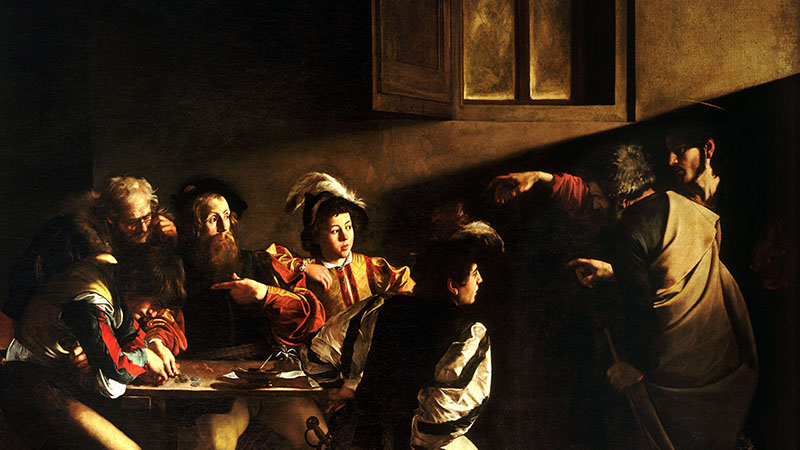
Although my reasons for quitting painting were complex, I got into trouble with adults when I said I wanted to paint Christian paintings. This was the golden age of Manga and anime, but realistic painting was still superior. Nowadays, the themes, the framework and the perspective are so advanced that they cannot be considered as illustrations, but at that time they still had their faults. Yet, the aftershocks of my youth made me realize that the question of whether or not it would “pay off” had already become a manga. I was also convinced that this would be the case in the future. Drawing seemed to confront me with real motifs, and I felt that it was a reversal of the escape from reality of a couple of days or a week. Painting is a form of self-expression. Painting is self-expression, it is meaningless if it does not represent your world. I was aware that I was losing what I wanted to express. So he found Christian painting. While I was reproduction Caravaggio’s St. Thomas & St Matthew series, I decided that I wanted to paint Jesus and the saints, even in abstract. He was insistent Caravaggio compared himself to the vocation of St Matthew. He was convinced that God would one day shine a light on his inner world to which no one else could respond.

But at that time I needed reconciliation with others, so I left the painting behind. I left Japan wondering when I would be able to convince people, but I quit trying to convince people.

From the two-dimensional world, I have been creating small worlds again and again. From music scores, to canvases.to a canvas.  And now I live in the two-dimensional world of writing. No matter how ambitious I was, no matter how many times I overlooked something, made a small mistake, thought I had done the right thing, the abyss no longer responded. It didn’t have to be literature, did it? I quietly went back to my career to find suitable employment and to start writing my dissertation, but I still clung to the idea of writing one more piece of “literature”. My conversion to Catholicism is part of this.

My reasons for wanting to write literature are long. I reckon I will listen a little more to what my long soliloquy wants.

The first one, Pangaea doll, which I kept hidden and didn’t even love to be ashamed of.

On the last page, I leave these words.

I promise you that we will be together forever. To a future that will never be seen.

In the warmth of everything we feel, which runs faster than words.

To the illusion of eternity, long and far away. And we’ll cross this line together”

The sprint of the young me, when I was the spokesman for the young me.

The past spoke to me. The role of this novel was to be a safeguard for me.

The light that penetrated the many sarcastic words and the great shadows was inside me.” Give us proof”, “Give us proof”, “Give us proof that you can do it”, it was undoubtedly my own voice that was screaming more strongly than the voices of others. Hope and despair were all in my possession. My voice was the pinnacle and death was always at my side.  The desire to die was always there. Pity, envy, cursing…

The reality was always chaos, and all I could see was silence.

And yet, back then, I had the strength to avoid the darkness. I’m not sure if I still have it, but I’d like to bet again.

To enjoy life is to bet. If you don’t gamble anymore, life may as well be death. The taunts and the criticisms are the living dead who have stopped betting. In Dante’s Inferno, the poor soul who cannot even enter hell

Poor souls. Do we need to ask? No, you don’t.

Heaven doesn’t want that kind of power.

Chris Kyogetu

Caravaggio: The Invocation of St Matthew

Pangaea doll

The heroine, Shoko Sato, suffers from an unexplained illness. She was wandering in illusion and fiction, but her boyfriend found the name of the disease. It was “Pangaea Syndrome”. It was a disease that caused her to have similar illusions and thoughts, and in the end to commit suicide.

Her past begins with a monologue. The ideas that emerged were always unvirgin and had already been written by someone else. Like Borges’s “Library of Babel”, there was always someone who had shown her the idea.
Gradually the protagonist sees the light as well as the despair. Her finds the light of death, but the fantasy world he has cultivated speaks to him. The fantasy world invites either death or life to unfold in the world of writing.

Thoughts 10 years after publication

I waited for the prescription with silence.

The laboratory was visited by patients for whom science could not explain.
Patients for whom there was no evidence, and this was my connection to my inner world.
A story that was said to be difficult to understand.

The presence of this doll-like girl grew in me and pointed me to an endless fantasy world, as if she were the guide of my life.

I focused more on sensitivity than on dialogue with people. In the midst of being hated, loved and loving, in the midst of being unable to resist oblivion, while remembering, the overflowing imagination and remembrance diminished. Quitting running, I found myself asleep. It was a long time before I felt like writing again.

Suicide process Diagram: H et al ,The American Journal of Psychiatry 2006

Pangaea Doll

大学(英)で私が書いた論文が人格形式と児童心理学だった。人格を心とした場合による。大体人間は土台が死生観,

宗教・思想、家族・恋人・友人等で人格が形成されるが、ライフイベントやアクシデント、もしくは薬物やアルコールによって自殺までの勢いがついてしまう。2006年のアメリカが出した論文によると、

人格形成の核にライフイベントが始まり、安全装置が働かなかった場合に死に至ると画期的なものを出したが、どんな安全装置が働くか?社会なのか、家族なのか、伴侶なのか、それらが機能しなくても人格形成の段階に免疫のようなものはあるのか、というようなテーマだった。

第一作「Pangaea  doll」はこれらの研究の後の小説だった。論文ではエビデンスを取ろうとしなかったものは、これこそ空想世界として適しているのではないかと若さと衝動が執筆へと向かわせた。

但し、10年前の作品で、幼少期、学生時代の記憶、体感が薄れていくのが分かっていて、感情と体感の因果関係は取れなかったが、恐らく今の体感は良くも悪くも成長して消えていくような気がしていた。記憶の標本として書きとどめることにした。

 実体験と思わせるような独白視点が続いていく最中で、経験を元にしたものと、脚色、この世の世界ではない「現実」というものを書くことに私は熱中した。ノンフィクションでなく、現実世界に似たフィクション私の作りとは、何の衝動だったのかは忘れてしまった。当時の記録は消えてしまったようだ。(不正ログイン)

 ただ文学世界は常に資本主義と共産主義の合いの子を生きている。教育は「文章が読めない」ばかりに注視しすぎて、物語の意味を見失っている。少しでも不満を漏らそうものなら、資本主義基本の平均値から攻撃を受けるし、共産主義のようなものだと生ぬるい中でいつまでも感性は伸びない。それでも最後、芸術家として音楽から絵画へと何度も手段を変えて求め続けて文章世界に入ったのは、やはり人格形成の段階で孕んでいった孤独から世界へと手を触れたものが、芸術だったのだろう。音楽はピアノを弾くのには手の大きさが圧倒的に足りなかった。グレード試験を駆けあがっていっても、いずれ寿命が訪れることが分かることは幼い私を大きく傷つけた。誰かに傷つけられるのではなく、運命である。培った絶対音感が疎ましい頃に、印象派の色彩感覚を理解出来るようになった。太陽の光が見せる色彩という科学と内観世界の融合は私の最終発を促した。この頃の純粋な気持ちはもう覚えていないが、pangaea doll執筆時は覚えていた。ずっと繰り返して私の中にあった言葉、「思考の時間は老いるよりも早く、静止することなく周り始める。それは左回り、右回り、不規則に私の意識を留まらせない」(P13)この一行は私の記録である。言い表しようがなくて黙るしかなかった私の代弁者は、言語を得た私だった。

 本作でもそのような足元がおぼつかない未分化された主人公が存在する。どう売り出すかで結局、私は沈黙してしまった。経歴がどのように世間で評価されようとも、経験としてはまだあの頃は若く、「自殺」を取り扱ったこの作品は頭を抱えさせた。 何故書いたのか、次の作品のための心の切り替えと上手くかみ合わずに、私は一作品目を人に紹介しないまま10年が過ぎた。大学の研究チームの中で何を見たのか、それを語ることも「時効」のようなものを待っていたのもあったが、あの時の体感が忘却しつつある。この時の患者に本作の「人形のような女の子」のモデルがいたが、生い立ちが自分と酷似していたので、一要素だけ使った。既に私の構想は法廷な時効を意味するprescriptionと「処方」を意味することと、繋げ始めていた。

一度、少数ながらにも読者に希望を抱かせた私は絶望を書きにくくなった。欲しかった評価を貰ったが、それが更に自分の首を絞めていく。

その中でどんな「Chris Kyogetu」になるか、私の課題となった。

文学は、自己啓発のように答えがすぐにあるわけではない。聖書のように何度も読んで深く内面世界で形成しなければならない。それは私の人生もそうだった。誰かに言われた言葉にすぐ答えがあるわけではない。経験がどのように自分の記憶となり、人格へと繋がっていくのか、延々と続いていく。気が付けば、自分自身に自問自答もしなくなっていた。その時に、気が付いたのだ。もう「老いた」のだと。

 絵画を辞めた理由も複合的な理由だったが、キリスト教絵画を描きたいと言い出したところから大人と揉めることになった。この頃は漫画やアニメが黄金期ではあったが、写実の絵画がまだ上をいっていた時代ではあった。現代は、イラストとバカに出来ないほど、テーマも骨組みも、パースの取り方もレベルが高くなっているが、当時はまだ落ち度があった。しかし、若さが故に感じる余震は、「金になるか」どうかというのは、もう漫画になっているのは気づいていた。今後、そうなるだろうとも確信があった。デッサンは現実のモチーフと向き合っているようで、2、3日、一週間の現実逃避と逆転していくことを感じていた。絵画は自己表現である。自分の世界を表さなければ意味がない。表したいものを失っていく事に気づいていた。それで見つけたのがキリスト教絵画だった。カラヴァッジョの聖トマスと聖マタイを模写する間に、私は抽象絵画でもいいので、イエス、聖人達を描きたいと言い出した。聖書世界は奥深く、殺人犯として逃亡しながら聖書を読み続けたカラヴァッジョのように、恐らくここには尽きることがない課題があるのだと譲らなかった。カラヴァッジョは聖マタイの召命と自分を重ねていた。このようにいつか自分の誰もが応えようがない内面世界に神は光を差すと信じて止まなかった。

しかし、当時は大人との和解が必要とされていたので、私はそのまま絵を捨てた。いつ、人を説得できるのか、ずっとそればかりを追っていて日本を出たが人を説得することを辞めた。

二次元の世界から、私は幾度となく小世界を創り続けていた。それは楽譜というものから、

カンヴァスまで。そして次は文章世界という二次元で生きている。幾ら志が高くても、何かを見落とし、小さな選択を誤って、正しいことをしたと思っても、深淵が応えてくれることは無くなっていた。別に文学でなくて良いのではないか? と私は静かに経歴を戻して適している就職と論文を書き始めるところに戻ったが、やはり、あと「文学」をもう一作書きたいと最後にしがみついている。カトリックへの回心もそこに含まれている。

私が文学を書きたい理由は長い。長い独り言が何を望んでいるのかもう少し耳を傾けようかと思う。

隠し続けて、恥ずかしいとさえ愛せなかった一作品目、pangaea doll

最後のページにはこの言葉を残している。

「約束をしよう、ずっと一緒にいようと。ずっと見えない未来まで。

言葉よりも早く駆け巡る、感じるもの全てを温もりの中で。

それは永遠、永く遠くという幻想へ。そして一緒にこの線を越えよう」

若い私の疾走、私が幼い私の代弁者だったのに、

過去が語り掛けた。この小説の役割は私への安全装置だった。

沢山の嫌味な言葉や大きな影を突き抜ける光は、私の中にあった。「証明を」「証明を」「お前が出来る人間だという証明を」紛れもなく、他人の声よりも強く喚いているのも己の声だった。希望も絶望も全部自分が所有していた。私の声が頂点で、常に死が傍にあった。常に死にたいという願望が傍にあった。同情と羨望と、罵りと、

いつも現実は混沌としていて、視界に入るものは静寂だった。

それでもあの頃は闇を避ける強さがあった。今でもあるのだろうか、自信はないがもう一度賭けたい。

人生楽しむのは「賭け」である。賭けなくなったら、生きていても死と同じなのかもしれない。愚弄や、批判は賭けなくなった生ける屍。ダンテの地獄篇で地獄にも入れない

哀れな魂。聞く必要があるのだろうか? 無いだろう。

天国はそのような力は求めていない。

Chris Kyogetu

カラヴァッジョ:聖マタイの召命

出版から10年経った感想

私は沈黙と共に時効を待っていた。

イギリスの研究室には、科学では説明できない患者が訪れていた。エビデンスが無い患者、それが私の内観世界と繋がった。その人形のような少女の存在は私の中で大きくなっていく、彼女は私の人生の道しるべとして果てしない幻想世界へ指さした。

 人との対話よりも、感性を重視した。憎まれながら、愛されながら、愛しながら、逆らえない忘却、記憶しながら、若い頃に溢れていた想像や想起が減っていく。走ることをやめて、気が付いたら私は眠っていた。また書きたいと思うまで長らくかかった。

あらすじは英語版のみ。本のリンクに割愛。

自殺プロセスの論文:Hendin H et al ,The American Journal of Psychiatry 2006

イメージ図:https://style.nikkei.com/article/DGXMZO27917660Z00C18A3000000?page=2

WHO

https://www.who.int/bulletin/volumes/86/9/07-046995/en/

このページは医学的根拠に基づくものではありません。お悩みの方はWHO等を参照にしてください。

Job(The Old Testament) English ver

Art: Léon Joseph Florentin Bonnat”Job”
Job 38:41

Who provides food for the raven
    when its young cry out to God
    and wander about for lack of food?

The Bible is divided into two parts, the Old and the New Testaments, each of which has a different mission.The Old and New Testaments are divided into the historical books, the wisdom books, the prophetic books and the apocalyptic books, while the New Testament is divided into the gospels and epistles. (etc)Some philosophers who are not familiar with religion mistake wisdom literature for prophecy and gospels for apocalypse, and start to talk about conspiracy theories and prophecy from non-prophecy.

Job is the “wisdom literature” of the Old Testament, and a major theme is that “God gives and takes away”. This is often thought of in conjunction with the “Ecclesiastes “where Job is a chapter about suffering given by God and Ecclesiastes is a chapter about facing emptiness and death because of wealth. Wisdom literature leaves behind various stages of wisdom, from the mundane sufferings of everyday life to the lofty and mysterious feelings of the fear of God. These are for the purpose of helping people to escape from suffering and to improve themselves in a life made up to human sins and mistakes.

It is the aim of the book of Job to instil in us the fear of God as well as the wisdom to ask and answer questions. This story is a relatively “literary” favourite of the Japanese.

Job was a righteous and just man. God ‘loved’ Job so much that he boasted of him to the devil.

The devil had already interfered with Job, but Job never turned to evil. God was proud of that and told the devil that it was no use doing anything to Job. But the devil said that he had only flayed him, that he had only given all his wealth for his life, and that if he got any nearer to bone and flesh, Job would curse God. God let the devil go again, on condition that Job’s life not be taken.

The devil caused Job to lose many, Many things. He lost his children, his livestock, his servants, and even a skin disease. The first one to give up was his wife. But Job was still serious and said, “Since God has given me happiness, why don’t I have some misfortune?

However, three of Job’s friends (philosophers) come to comfort him, and during their conversation, Job gradually begins to express his resentment towards God. The friends say, “You must have done something”, but Job finally says, “I didn’t do anything”. His friend tells him to apologize to God and make peace.

But Job was adamant that he had nothing to apologize for. Then there are more questions in which the three men blame Job. After the last argument between Eliph (the philosopher) and Job, the word finally comes from God:  “Who is this, that, without knowledge, he should darken the empire with word after word?”

God converses with Job alone, and asks him how much of the world he knows.

Job reaffirmed his acceptance of the existence of an omniscient and omnipotent God, saying that he did not know the depths of the world or how it came to be, and he prayed for the three men involved in the debate.

And Job was rewarded more than before with God’s blessing.

The Bible, including the book of Job, has few “internal monologues”. Therefore, there are many places where we cannot see the direct psychology and facts of the characters. Therefore, it is possible for various people to continue to search for empathy and facts throughout the long history. The book of Job, like Genesis, is written using the direct narrative discourse method. The Lord’s (God’s) other narrators show the inner life of Job and the Lord. The book is written in prose and rhyme, with the prose enlightening Job to his faith in God, and the rhyme accusing him of injustice.

 We do not know why God loved Job so much, except that he was a “righteous man”, because there is no “internal monologues” of God. Furthermore, we do not know why God released the devil. We all have a tendency to see suffering as punishment and to be convinced of it. Job is not convinced by the questions and answers of his friends who surround him and continue to pursue the ” Fact of Suffering”.

The reality is that any discussion of God or destiny is only between human beings.

“Who has heard the Voice of the true God? That is the question.

It is true that in reality we can only talk to each other while we are alive. In Osamu Dazai’s “人間失格”, when he is accused by his friend Horiki that “the world will not forgive that”.

It is reminiscent of the famous scene in Osamu Dazai’s “人間失格” where the protagonist pulls back without saying, “Isn’t it you who are the World?

It is reminiscent of the famous scene where the protagonist pulls back without saying, “Isn’t the world about you?”

”The world won’t let that happen”

“Not the world. You won’t let it happen, will you?”

“The world will give you a hard time for doing that.”

“Not the world. It’s you, isn’t it?”

“The world will bury you now.”

“Not the world. It’s you who will be buried, isn’t it?”

This structure is similar to that of the dialogue between Job and his friends.

It is almost impossible to hear the voice of truth directly in the real world. In the real world it is almost impossible to hear the voice of truth directly, but only Job can communicate with God through his stories. The God of the Old Testament spoke directly to Adam, Job and Joseph, or told them dreams, but since the birth of Jesus in the New Testament, God has been silent.

For Christians, this pursuit is done through prayer throughout their lives.

Each with his or her own answers, to die in the end. Will the prayers of life match the prayers of death?  The question is a mystery.

The outcome of the pursuit of suffering is the love of God. There is no mistaking that.

The Old Testament was a dialogue from God to humans, a faith from below to above.

In the New Testament, God sent Jesus down. Jesus walked to the people on his own feet.

That is how the mystery descended, when a being beyond human understanding broke through the thick walls of the lower world.

Read the Bible many times and you will find empathy and inspiration before logic. I was sure of it.God is there, beyond our own indwelling, beyond the common sense of the world. God’s love is there.When will we reach it?

We don’t have to force ourselves to think that we have God’s love in our grasp. It is good to live a life of waiting for God’s love. God’s love is not only about grace, it also saves people. What does not reach us is only “economy” and “politics”.An economy and politics without the love of God means collapse. It does not have to be only the voice of man that accompanies our suffering. Like Job.

ヨブ記

Léon Joseph Florentin Bonnat”Job”
ヨブ記38章41節
誰がカラスのために餌を置いてやるのか
その雛が神に向かって鳴き、
食べ物を求めて迷い出るとき

聖書は旧約と新約と分かれているが、それぞれ各章によって役割が違う。

歴史書、知恵文学と預言書、黙示文学、新約は福音書、伝道書(等)と様々分かれているが、

宗教に疎い哲学者等が、知恵文学を預言と勘違いしたり、福音書を黙示録と勘違いしたりしていて、預言でない話から陰謀説を語りだすので、それは割と厄介だなと思う。

ヨブは旧約聖書の「知恵文学」であり、「神は与えることもするが奪うこともある」というのが大テーマとして展開される。これは「コレヘトの言葉」とセットで考えることが多く、ヨブ記は神から与えられる苦しみ、コレヘトは裕福が故に虚無感と死に向き合う章になっている。知恵文学とは、日常生活の平凡な苦しみから、神を畏れ敬うという高尚で神秘的な感情まで、さまざまな段階の知恵を残している。これらは人間の罪や過ちまで作られた生活の中で、人々が苦悩から逃れ、自らを高めるためにある。

神への畏怖を問答と共に知恵として身に着けようとするのがヨブ記の狙いである。

この話は比較的に日本人にも「文学的」に好まれている章である。

ヨブは義人として正しい人間だった。神も悪魔に自慢するほどヨブを『愛していた』。

悪魔は既にヨブに干渉をしていたが、ヨブは決して悪に染まらなかった。神はそれを誇りだと思っていて、悪魔にヨブに何をやったって無駄だと言った。それでも悪魔は、「まだ、皮を剥いだに過ぎず、命のために全財産を差し出したに過ぎない、もっと骨と肉に近づけば、ヨブは神を呪うだろうと」言い出した。神は、ヨブの命を奪わない条件で、再び悪魔を放した。

 悪魔によって、ヨブは多くのものを沢山失うことになる。子どもや家畜、使用人、そして皮膚病までかからせた。最初に根をあげたのは妻だった。「どこまでも無垢でいるのですか、神を呪って、死ぬほうがましでしょう」と、しかしヨブはまだ真面目で「神から幸福を頂いたのだから、不幸も頂こうではないか」と悪魔の誘惑に勝った。

しかし、ヨブの友人3人(哲学者)が慰めにくるが彼等との問答でヨブが次第に神への恨みを語るようになる。友人が「きっとお前は何かしたんだ」と言うがヨブは「自分は何もしていない」と漸く弱音を吐いた。友人は「神に謝罪をして和解しろ」と言い出すが、

ヨブは頑なに謝罪をすることはないと言った。それから三人がヨブを責める問いかけが増えていくのである。最後のエリフ(哲学者)とヨブの論争の後に神がついに言葉が降りてくるのである。

「これは何者か。知識もないのに、言葉を重ねて神に経綸を暗くするとは」

神はヨブだけに対話をし、世界の何処までを知っているのかを問いかける。

ヨブは深淵や世の中の成り立ち、全てを知らないと、全知全能の

神の存在を再度受け入れ、議論になった3人のために祈った。

そしてヨブは神の祝福を受けて以前よりも報酬を得たのである。

ヨブ記を含めて聖書は「内的独白」が少ない。よって、登場人物の直接的な心理や事実が見えないところが多い。だからこそ長い歴史の中で様々な人が共感性や事実を探り続けられる。ヨブ記も創世記同様に、直接物語言説手法によって書かれている。主(神)の他の語り手が、ヨブや主の内面を見せる。(inside view) 散文と韻文によって書かれてあり、散文によってヨブは神への信仰に悟りを開いているが、韻文によって神への不当を訴えている。

 ヨブは何故そこまで神に愛されていたのか、それは神の「内的独白」が存在していないので「義人」だったという以外の事実は分からない。更に、何故神は悪魔を放ったのかも分からない。人間は誰しもが苦悩を罰と捉えて納得してしまうことがある。ヨブを取り囲んだ友人達の問答にヨブは納得することなく、「苦悩の事実」を追及し続けている。

現実問題、神や運命と議論になるのは、所詮は人間同士のもので

「誰が本当の神の声を聞いたのか?」となる。

確かに生きている間は、現実的に人は人間同士でしか会話出来ない。太宰治の「人間失格」の、「それは世間が、ゆるさない」と友人の堀木から責められるときに

主人公が「世間というのは、君じゃないか」というのを言えずに引っ込める有名なシーンを

彷彿させる。

(それは世間が、ゆるさない)

(世間じゃない。あなたが、ゆるさないのでしょう?)

(そんな事をすると、世間からひどいめに逢うぞ)

(世間じゃない。あなたでしょう?)

(いまに世間から葬られる)

(世間じゃない。葬むるのは、あなたでしょう?)

この構図はヨブと友人らの対話の構図と似ている。

現実世界は真理の声を直接的に聞くことは殆ど不可能である。その中で、ヨブのみが話の中で神との対話を可能にさせた。旧約聖書の神はアダムやヨブやヨセフのように直接的に対話するか、夢のお告げがあるが、新約聖書のイエスの誕生以降は神は沈黙されている。

その追及はクリスチャンにとっては、生きている間ずっと祈りによって行われている。

各々の答えを持ったまま、最後は死ぬために。死後は生前の祈りと一致するのだろうか、

その思惟は神秘である。苦悩の追及の果ては神の愛である。それは間違えはない。

旧約聖書は神から人間に対話をする、それは下界から上空への信仰であった。

新約聖書はイエスを神が降ろされた。イエスは自分の足で人々の元へと歩いて行った。

それこそ、人智超えた存在が、下界の厚い壁を突き破って神秘が降りたのである。

聖書は何度も読めば理屈よりも先に共感や閃きがある。それは確かだった。

己の内在を超えて、世間の常識を超えて、神はそこに在られる。そこに神の愛があると、

到達できる日はいつであろう。神の愛を手にしていると無理に思うこともない。

神の愛は恩寵のみでなく、人も救うことが出来る。行き届かないものはただの「経済」「政治」である。

神の愛が伴わない経済や政治は崩壊を意味する。

神の愛を待ち望むのも良いのではないか。苦悩と共にするのは人の声だけである必要はないだろう。

ヨブのように。

WordPress.com でブログを始める.

ページ先頭へ ↑