Love is patient,love is kind. It does not envy, it does not boast, it is not proud. It does not dishonor others, it is not self-seeking,it is not easily angered,it keeps no record of wrongs.Love does not delight in evil. but rejoices with the truth. It always protects, always trusts, always hopes, always perseveres.Love never fails.
Outline of this post.


In 2018, during my recuperation period after a suicide attempt, I read Yukio Mishima" The Sun and Steel." In it, he wrote about feelings that were neither fiction nor criticism.
He wrote about "confession" at night, "criticism" by day, and a time when he was neither.

I will taste this neither time until 2021.

The book, which was also the subject of a controversial debate at the University of Tokyo (1969), seems not to have been appreciated in Japan at the time. I have been on the road from leaving Catholicism to conversion.
I was struggling to talk about this mortal disease in my story. Would it be non-fiction, or should I force it to be fiction? Whether I choose the sun or the night.

There was also the question of Catholicism and the political uncertainty of the future in Japan. For many years, I had forgotten the poetry of Mishima response to the sun.
In 2021, I have decided to move on to the night (literature).
This involves a lot of interpretation on my part. In Sartre's terms, it is "the other with the subject".

Apologies that this is not a thorough explanation of the sun and Steel.
The” Sun and Steel” was one of Yukio Mishima lesser-known works at the time. After a long time.I read this in 2018 and found much to sympathies with. I read this in 2018 and found much to sympathies with. In the process of writing, some things are difficult to express even as a novel. I too fell into that groove around 2017. Probably every artist. I feel like it comes to every artist. Sometimes we can’t establish ourselves because we are confused by current trends or common perceptions. Mishima described it as an intermediate form between confession and criticism, “a kind of hidden criticism”.
Mishima is perhaps the only person who has focused on the area of twilight that exists between night as confession and day as criticism.
Sartre’s raison d’etre about existence and essence is that existence precedes essence, but this kind of wayward speculation, a combination of fiction and criticism, is a wandering interior that does not know the outer skin of existence, and is itself an embryo that does not know the outer world (essence).
It is the equivalent of inference, prediction and prophecy. When the result is not yet known, even if we think we have grasped the essence, we cannot be sure. A novel does not have enough material to be written, and a criticism is only an assumption made a few years in the future. But there are times when the feeling is strong.
At such times, I think back to Van Gogh’s Madness paintings.
His paintings were first of all existentially unsuccessful. Later, his brother Theo’s wife succeeded in selling Van Gogh’s paintings and made him into the genius that he is today. Over time, they created the essence of Van Gogh’s paintings. Over time, they created the essence of Van Gogh’s paintings, or the world discovered them.
The Starry Night This is one of my favorite Van Gogh paintings. I don’t know of any other painting that depicts the stirring darkness so clearly.
I think Mishima is right when he declares in this book that he is not a poet. Poets, like Van Gogh’s paintings, are not afraid of consequences, and they do not fall between confession and criticism. Hermann Hesse is a genius as a poet and Rubaiyat dances without fear of criticism from Christians.
It seems to me that Iran is famous for its poets. Perhaps they are not afraid of death (or the oppression of others). That free enthusiasm, which neither the cooperation of the Japanese nor the argumentative nature of the West can match, is something to be admired and, as a result of more social experience, I think we will never have it again. We all dream of it and run with it, but the tragedy and happiness that we have created with our speculations, from pacifisms, through physical pain, gradually becomes a reality.
When I was young, I would have run without fear. In the midst of it all, joy and despair, like differential and integral calculus, were repeated, and expectation and despair may have exceeded real reality. In the midst of this repetition of the mundane routine, where sleep brings morning and daily life again, I had my moments of real despair.
In turn, disappointment and disillusionment increased, becoming part of the larger reality of the real world.
Gradually, disappointment and disillusionment increase, and the artist becomes part of the larger existential context of the real world.
That’s the end of the artist. It is only natural that he should lose his individuality.
I’m trying to be unique because of my long established taste, but my body is screaming. The days when I used to write poetry in the evening, even if it was bad, seem like a lie.
It was a mistake in the first place to see it as a defeat. The thought of being abandoned by night and day
It will always go somewhere. It is like a long, inflexible Steel. That is how I see it.
In my analysis, Mishima Steel element probably became the sun and led to his suicide.
I have decided, after a long time, to return to the Night once more. That’s when I retired as a journalist. It is proof that I am no longer outspoken about current affairs. The man who lives by night lives for the invisible presence of human sensibility. The man who lives by day lives for the market and the human condition.
There is no right or wrong, because both are necessary.
But when speech and knowledge are wasted, it is tempting to talk about real problems.
Isn’t it the starting point of a literary person to keep that ” babble ” silent until night?
I will not write directly about why I attempted suicide, or the process of my conversion. Instead, I will start to confess, as if in the night, my memories and records were a wild reflection.
In this fictional world, the person who speaks for me is a man and other women, and the story goes on. There is, in effect, a fictional character (a lie). But the essence is not a lie. Within the non-existent outer skin, there is an interior that I have experienced and gone through.
I have read a lot of Mishima during my illness. But I chose a different path from him.
In his writings he wrote
“Now I no longer believe with all my heart in the idea of classicism, about which I was so passionate at the age of twenty-six. I no longer believe in it with all my heart”
I might not have the awe-inspiring ardor of my youth, either. I sympathies with him in this confession under the sun.
But, like the protagonist of the piano tuner I am writing about, I intend to expand the literature to say that sound does not die. In the despair of the protagonist, my inner light is incorporated.
Love is like a flower – you’ve got to let it grow.
John Lennon
愛とは、育てなくてはいけない花のようなもの。
ジョン・レノン
Demonstrations against discrimination against Asians started in Time Square, USA. I think it’s stupid and pathetic to discriminate. I think people should be able to enjoy themselves in any way they like.
The public forgets that there are more important things than demonstrations and fighting.
Pictures would be good to display. They silently tell a narrative.
Job 38:41

Who provides food for the raven
    when its young cry out to God
    and wander about for lack of food?
The Bible is divided into two parts, the Old and the New Testaments, each of which has a different mission.The Old and New Testaments are divided into the historical books, the wisdom books, the prophetic books and the apocalyptic books, while the New Testament is divided into the gospels and epistles. (etc)Some philosophers who are not familiar with religion mistake wisdom literature for prophecy and gospels for apocalypse, and start to talk about conspiracy theories and prophecy from non-prophecy.
Job is the “wisdom literature” of the Old Testament, and a major theme is that “God gives and takes away”. This is often thought of in conjunction with the “Ecclesiastes “where Job is a chapter about suffering given by God and Ecclesiastes is a chapter about facing emptiness and death because of wealth. Wisdom literature leaves behind various stages of wisdom, from the mundane sufferings of everyday life to the lofty and mysterious feelings of the fear of God. These are for the purpose of helping people to escape from suffering and to improve themselves in a life made up to human sins and mistakes.
It is the aim of the book of Job to instil in us the fear of God as well as the wisdom to ask and answer questions. This story is a relatively “literary” favourite of the Japanese.
Job was a righteous and just man. God ‘loved’ Job so much that he boasted of him to the devil.
The devil had already interfered with Job, but Job never turned to evil. God was proud of that and told the devil that it was no use doing anything to Job. But the devil said that he had only flayed him, that he had only given all his wealth for his life, and that if he got any nearer to bone and flesh, Job would curse God. God let the devil go again, on condition that Job’s life not be taken.
The devil caused Job to lose many, Many things. He lost his children, his livestock, his servants, and even a skin disease. The first one to give up was his wife. But Job was still serious and said, “Since God has given me happiness, why don’t I have some misfortune?
However, three of Job’s friends (philosophers) come to comfort him, and during their conversation, Job gradually begins to express his resentment towards God. The friends say, “You must have done something”, but Job finally says, “I didn’t do anything”. His friend tells him to apologize to God and make peace.
But Job was adamant that he had nothing to apologize for. Then there are more questions in which the three men blame Job. After the last argument between Eliph (the philosopher) and Job, the word finally comes from God: “Who is this, that, without knowledge, he should darken the empire with word after word?”
God converses with Job alone, and asks him how much of the world he knows.
Job reaffirmed his acceptance of the existence of an omniscient and omnipotent God, saying that he did not know the depths of the world or how it came to be, and he prayed for the three men involved in the debate.
And Job was rewarded more than before with God’s blessing.
The Bible, including the book of Job, has few “internal monologues”. Therefore, there are many places where we cannot see the direct psychology and facts of the characters. Therefore, it is possible for various people to continue to search for empathy and facts throughout the long history. The book of Job, like Genesis, is written using the direct narrative discourse method. The Lord’s (God’s) other narrators show the inner life of Job and the Lord. The book is written in prose and rhyme, with the prose enlightening Job to his faith in God, and the rhyme accusing him of injustice.
We do not know why God loved Job so much, except that he was a “righteous man”, because there is no “internal monologues” of God. Furthermore, we do not know why God released the devil. We all have a tendency to see suffering as punishment and to be convinced of it. Job is not convinced by the questions and answers of his friends who surround him and continue to pursue the ” Fact of Suffering”.
The reality is that any discussion of God or destiny is only between human beings.
“Who has heard the Voice of the true God? That is the question.
It is true that in reality we can only talk to each other while we are alive. In Osamu Dazai’s “人間失格”, when he is accused by his friend Horiki that “the world will not forgive that”.
It is reminiscent of the famous scene in Osamu Dazai’s “人間失格” where the protagonist pulls back without saying, “Isn’t it you who are the World?
It is reminiscent of the famous scene where the protagonist pulls back without saying, “Isn’t the world about you?”
”The world won’t let that happen”
“Not the world. You won’t let it happen, will you?”
“The world will give you a hard time for doing that.”
“Not the world. It’s you, isn’t it?”
“The world will bury you now.”
“Not the world. It’s you who will be buried, isn’t it?”
This structure is similar to that of the dialogue between Job and his friends.
It is almost impossible to hear the voice of truth directly in the real world. In the real world it is almost impossible to hear the voice of truth directly, but only Job can communicate with God through his stories. The God of the Old Testament spoke directly to Adam, Job and Joseph, or told them dreams, but since the birth of Jesus in the New Testament, God has been silent.
For Christians, this pursuit is done through prayer throughout their lives.
Each with his or her own answers, to die in the end. Will the prayers of life match the prayers of death? The question is a mystery.
The outcome of the pursuit of suffering is the love of God. There is no mistaking that.
The Old Testament was a dialogue from God to humans, a faith from below to above.
In the New Testament, God sent Jesus down. Jesus walked to the people on his own feet.
That is how the mystery descended, when a being beyond human understanding broke through the thick walls of the lower world.
Read the Bible many times and you will find empathy and inspiration before logic. I was sure of it.God is there, beyond our own indwelling, beyond the common sense of the world. God’s love is there.When will we reach it?
We don’t have to force ourselves to think that we have God’s love in our grasp. It is good to live a life of waiting for God’s love. God’s love is not only about grace, it also saves people. What does not reach us is only “economy” and “politics”.An economy and politics without the love of God means collapse. It does not have to be only the voice of man that accompanies our suffering. Like Job.
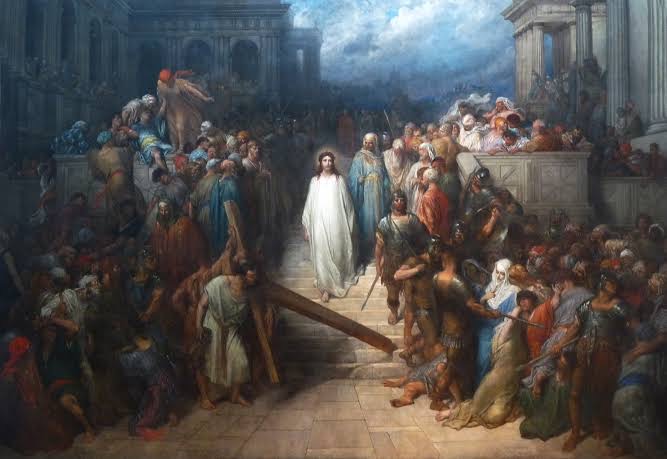
Jesus leaving the court, I just love this picture by Doré. White clothes, untainted by the public gaze, Barabbas, the felon, is released and Jesus’ sentence is set. Determined to die, he gazes at the phenomenon before him faster than he can think or ponder.
Blessed is the coming kingdom of our father David!”

“Hosanna in the highest heaven!” Mark 11:10
As a child, I wanted to wipe the dirt from Jesus’ face as he walked down the hill of Golgotha. That may have been my first contact with Jesus in my mind’s eye. I was incapable of understanding the human heart. I was afraid I wouldn’t understand the human heart, and maybe I still don’t. But when people love me, I answer them, and when I love them, I can’t stop myself. Feelings of emotional brokenness were very real. I could only love others ( love of one’s neighbors.), people misunderstood my defects as kindness.
So I was building reason.I went to England for psychology, I do not understand people’s minds, I do not see people subjectively. Because I have no preconceptions, through analysis I can see what others want. I thought I could use this advantage to analyse calmly.
Love, indeed this word had cultivated my life. I don’t know if people love me or not because I don’t know anything about them. Without feeling that I wanted to be loved by others, I focused on loving. If the object to be loved does not exist, the love is lost. Love with a destination, that’s what I wanted. I have it now. From friendship, to abandonment, to love, to devotion, to family love, I was rational while I was in love, but when the instinct of desire entered the picture, I went mad. This has been my weakness and will continue to be so.
People are always in a labyrinth of love. The annual resurrection of Jesus is a pause in the labyrinth. Even if we celebrate Easter this year, we will have to suffer again in our lifetime. Let’s celebrate it again this year.
Why are the words of Jesus so haunting to me? The soul is seeking, rising, there is Jesus.For a moment, in my dreams, I run to wipe the dirt from his face. Always I am a child.
Then I fall asleep again and summer comes. And one day the real death will come.
Until then, enjoy life, spring, summer, autumn, winter.
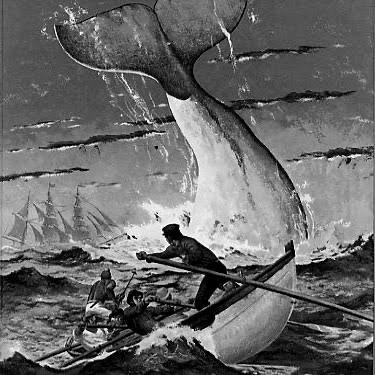
While you take in hand to school others, and to teach them by what name a whale-fish is to be called in our tongue leaving out, through ignorance, the letter H, which almost alone maketh the signification of the word, you deliver that which is not true.”
How vain and foolish, then, thought I, for timid untravelled man to try to comprehend aright this wondrous whale, by merely poring over his dead attenuated skeleton, stretched in this peaceful wood.
Melville, Herman. Moby Dick (AmazonClassics Edition) .Chapter103
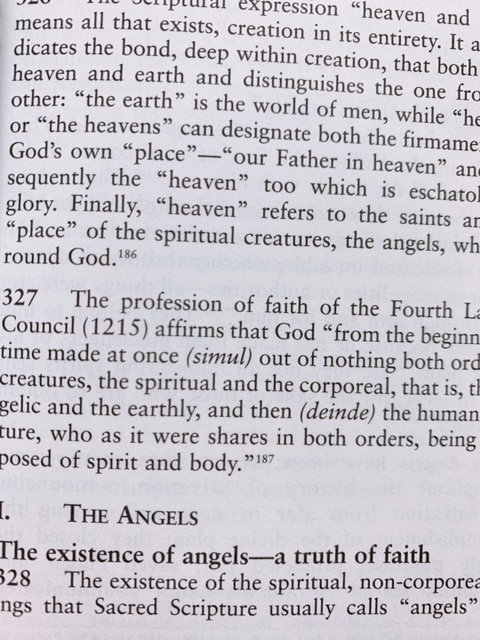
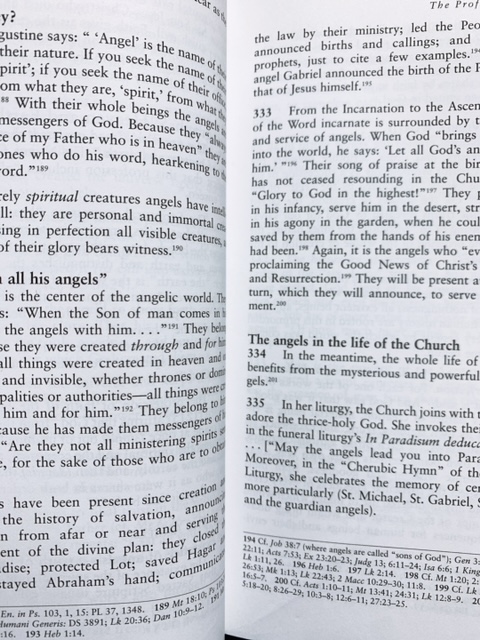
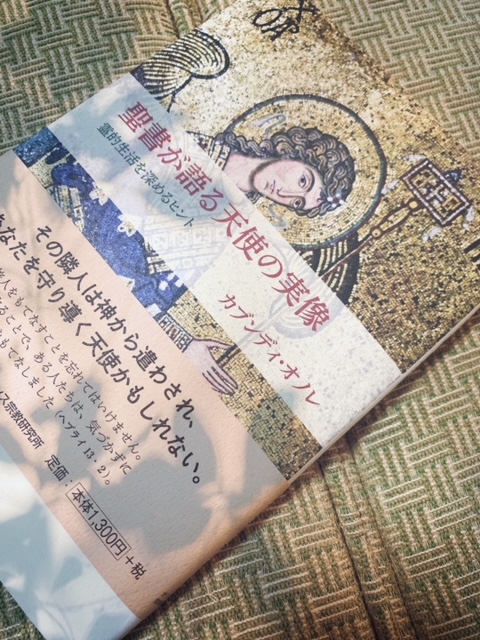
Fr. Kabundi Honoré’ ” Biblical Real image of Angels”
The meaning of my love for the Bible
①Reading the Bible makes us aware of various psychological functions. Whether this is a figment of our imagination or an archaeological fact, we experience rational (thoughts and feelings) and irrational (sensations and intuition) functions before the factual conclusion. The proposal of psychological functions is based on C. G. Jung, but those of us for whom Christianity is not the state religion will first judge whether we like the story or not (feelings). Next, we will reach to capture the system of the Bible (feeling). Then we analyses the content (thoughts), and intuitively we may temporarily try to explain the nature of Adam and Eve in Genesis, for example, and talk passionately about why women suffer. There are many choices: to repeat it again and again with changing thoughts, or to stop reading it because you don’t like it; but the person who does not let go of the Bible connects the experience of the outer world to the growth of the inner world. Following Jesus is when we reach out from our built-up inner world to the outer world.
It is service. It is love. It is evangelization.
At the same time, reading the biblical world requires a dynamic of imagination. Whether imaginary, dreamy or pictorial, what is clear is that there are no glib metaphors in the Bible. Many obstacles lie in the way of faith. This is because people’s psychological functions are processed differently from person to person, whether they become occultists and cults or exemplary Christians like Edith Stein.
The theologian Balthasar declared Angels as Mirrors of the Human. It is the way of theology. I leave behind those who dismiss this as pictorial. The Catholic Catechism states that angels are Messengers. As I wrote above, angels do not appear to people whose inner world is clouded. Angels play an important role in proving that one’s inner world is not clouded. Throughout history, poets and writers have attempted to return to nature through various poetic inspirations, which have also preceded philosophy and psychology. If not for German mysticism, philosophy would not have been derived until the present day. The Bible is a necessary part of the history of human wisdom, and we must not forget that there are still unknowns. It is important to read it again and again, to repeat its psychological functions and to grasp how it moves towards the existence of the world.
② I love angels first of all because as a feeling I find them beautiful, and because intuitively they do not seem to be the product of a pictorial imagination. Although I have been thinking about how to express and prove this sense and intuition for a long time, angels have not been dealt with much even in Catholicism; in 2018 the Pope talked about angels, but for a while they did not seem to be a topic of conversation in Japan. So I gradually gave up the pursuit of angels.
Recently, I came across a good book.
③Fr. Kabundi Honoré’sbook ” Biblical Real image of Angels” was published by the Orient Institute of Religion. I had given up the pursuit of angels. The fog that had been clouding the mirror seemed to have lifted. The mirror shone with light.
I found it fortunate and opportune that Father was living in Japan, so I contacted him. He was very kind and told me why he had written this book. He told me that he had been travelling around Japan with his silent retreats, communing with the faithful and felt the need to draw their attention to the presence and work of the angels in order to help them develop their spirituality.
Father Honoré’s book was both scholarly and beautifully written, as if the Holy Spirit were present in the words.
Book index
Ⅰ:Angels created by God
Ⅱ:The Angelic Ranks
Ⅲ:Exceptional angels mentioned in the Bible
Ⅳ:The appearance of angels
Ⅴ:Angels’ sins and destiny
Ⅵ:Demonic means of control over man
Ⅶ:Following the angels in the spiritual life
This work is wonderful because it includes the angels of the Old Testament book of Daniel, which is not often explained by Catholics. It is important to note that angels do not float, but fly. The popular non-biblical view of angels equates angels with God and does not understand angels as floating messengers. By biblical, I mean that angels have a purpose. Flight is having a purpose. This book is a very clear explanation of the whole of biblical angels and the purpose for which they appear.
The book not only deepens our spirituality, but the stories of angels in the Bible, which are mystical in their own right, can be used to interpret the images of angels left behind by many great writers. For example, even the works of Balzac, Rilke and Shelley, who professed to be non-Catholic, often drew on the Bible for their angelic attributes. The unity and difference between the love we seek and the love angels give, the fact that angels are not gendered, the dynamism of people’s imagination and creation.
Only when people contemplate can the mystery live on. How does it happen that the dreaming of man coincides with the works of God? It is to trace what the flight of angels is like.
It might be to realize “the reflection of the purest thing” (André Paul Guillaume Gide)
It is only through faith that forgetfulness can become a mystery to accumulated memories, experiences and paradoxes.
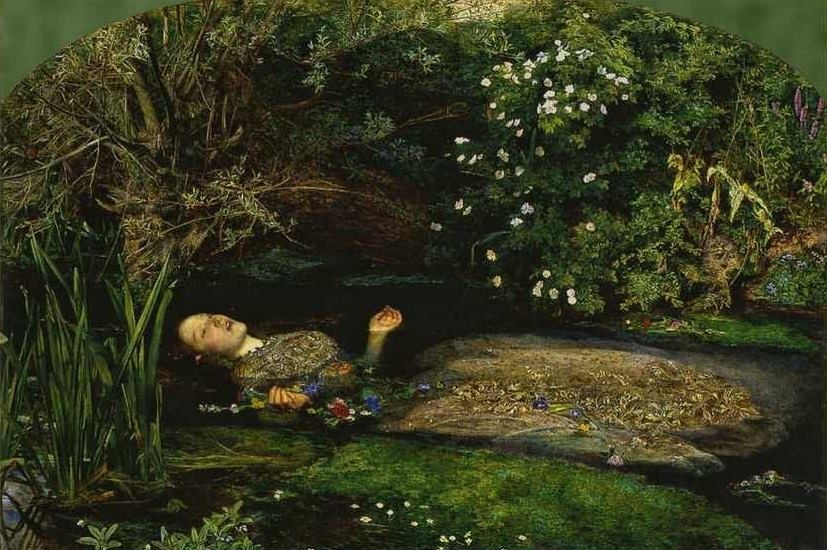
Shakespeare said: “All the world’s a stage,And all the men and women merely players.”The stage is full of tragedy, comedy, folly, despair and cruelty. Nothing in his work has ever been made happy by breaking a biblical commandment. Hamlet completely loses his reason and even loses his beloved Ophelia to madness. Shakespeare could not have created such a tragedy without the foundation of the Bible and faith. He was well aware of the retribution brought about by the god of the script. A life that does not go mad like Hamlet’s is an angel’s inner mirror (Balthazar).
Tragedy repeats itself, but the life God has given us in this world can be made meaningful through agape and gratitude. That is certain. Simply writing about human hatred does not capture the essence of the story. In order to find the divine retribution and miracles, we need to feel our own heat through faith.
To do this, we need to know the angels better. Angels are complicated when it comes to explaining their relationship to the Trinity, but this labyrinth is the purest space of existence. Because it is pure, there are fallen angels. Even the angels let us know that we are losing the light.
It is rare to find a book so dedicated to the angels of the Bible.
Quotes
Angels are mentioned at least one hundred and eight times in the Old Testament and one hundred and sixty-five times in the New Testament.
Chapter Ⅰ – God’s Creation of Angels
Thus, the angels, before the Fall, were revealed to be very noble, sublime angels, full of wisdom and crystal.
Chapter V‐The sins and destiny of the Angels
The angels are not omniscient.
Chapter Ⅶ – Spiritual life in imitation of Angels
God does not allow us to worship angels. The Apostle Paul clearly warns against it.
それを説明するかのように神学者のバルタザールはAngels as Mirrors of the Humanと言った。ここからが、神学の道となる。これを絵空事として切り捨ててしまうのか、私はここで切り捨てた人を置いていく。人間の鏡とする天使、とはカトリックのカテキズムにあるように天使はMessengerである事を表している。先程の説明にあったように内面世界が曇った人間には、天使は映らない。天使は自分の内面世界が曇っていないかどうかを証明する重要な役割なのである。長い歴史の中で詩人や文学者は様々な詩的霊感によって自然に戻ろうとし、哲学や心理学の先行ともなっている。ドイツ神秘主義がなければ現代まで哲学は派生していない。聖書は人間の知恵の歴史として必要な存在であり、まだ未知のものがあることを忘れてはならない。何度も読んで心理的機能を繰り返し、世界の存在に向かってどう進んでいくのかを捉えていくことが重要である。
(Paul Ricoeur, Love and Justice, a book I would recommend to young philosophers and theologians)
If justice is possible because of love, can we call it love when a person is punished for doing justice, for example, the ” Capital Punishment “? Thus, love and justice are always dichotomous. Paul Ricœur’s book is a dialectical meditation on this dichotomy, trying to bridge the gap.
The point to be kept in mind is that “love” refers to Jesus Christ and “justice” to Moses.
Justice is concerned with social practice, while love is at best a motive. Justice, on the contrary, is more likely to have a narrow effect and less likely to be widely applied. We can see this in the history of Moses, when we consider the number of deaths. Even though the love of Jesus is slow in spreading, it spreads to many people. That movement is also called the grace of God. Justice is the spear, love is the shield. What non-Christians misunderstand is that they do not distinguish between God’s love and justice. (I don’t mean that as an evil thing.)
Particularly the Catholic emphasis on “God is love” has led to a number of misunderstandings.
And these misunderstandings are not limited to misunderstandings, they are also flaws in social practice due to the distorted interpretation of love. At the point where crimes committed by the clergy are covered up, for example, when clergy talk about God’s forgiveness for crimes, they are criticized in social practice as “they are distorting love”. However, through my experience as a journalist, I have also witnessed victim fraud. This experience has made me realize that the distortion of “love” is not enough. The testimony of victims, between lies and illness, takes advantage of people’s conscience and justice. It causes us to lose sight of the direction of justice.
To contemplate the dichotomy between love and justice is labour intensive and unrewarding. Many Hebrews would not have been saved if the revolution had not taken place in the time of Moses. This was the proper love and justice of the time. At the time of Jesus’ birth, it was hoped that he would be a revolutionary like Moses, but he did not make any great revolution. At first people were disappointed, but Jesus went to the poor on his own feet and saved them through love. Love is thus slow to progress and is attacked and persecuted by those who fail to understand it. Jesus’ quintessence of ‘love’ is that his justice was not in escaping justice, but in accepting the death penalty.
His justice was not in escaping justice, it was in accepting the death penalty, which is the essence of “sacrifice”, of love, of covering up all the sins of others. For those who follow Jesus, the practice of this supreme justice is no different from suicide, and whether or not Jesus himself would want people to do this has yet to be archaeologically proven. The same is true of martyrdom itself, which is not yet clear whether Jesus would have wanted it or not. But nowadays martyrdom is considered a virtue and worthy of praise, provided that the conditions are fulfilled. (Song of Solomon: Love is as strong as death)
Reading the Bible is like looking into the mirror of one’s self, a chapter which was originally in the book but was left out in the Japanese version because it was incomplete as a philosophy. This imperfection must be challenged by us, the next generation. We must return to the question of what the Bible exists for. We should read it honestly before we listen to the answers of the clergy. I urge young people to do this especially. The question that arises in the Bible is the self itself. It is a mistake to look for answers in a story, but the questions raised by the story are a guide on the journey to reality. As Paul Ricoeur says of love, it can be spoken of in both shallow and deep ways. The same is true of stories. They are made both shallow and deep. The Bible is considered a deep book, but it is less and less necessary for modern people. It was known that the world was falling according to gravity, though it was also the fall of the world. Probably the reason for the lack of attention is that there is something about Christians and the clergy that is not respected.
The bible has been around for a long time and has been interpreted by many different people. It was important that there were great men in it that we would still want to study. But we don’t have them today. They may exist, but they are not easy to find. When we lose our bearings, we need to go back to the basics of self-image as seen in the Bible. That is why the inscription on the temple of Apollo at Delphi, which existed before the Bible, says: “Know thyself”.
When you ask a Catholic priest a question, you will get a dozen different answers. The views of the Pope and theologians continue to change. However, we will come to realise this. People touched by the love of Jesus do good works voluntarily. It is not that Jesus is the only one, but that people are voluntarily awakening their conscience. I want people to know this glimmer in this age of information overload.
Paul Ricoeur’s philosophy, although it is an application of earlier phenomenology, is a “narrative theology”, the origin of the idea of the existence of Jesus. We recommend his book to many believers and students of theology who, in the future, will encounter incredible absurdities and disappointments. Paul Ricœur is a philosophy of problematic regression.
Remark.
The thought which seeks to understand God is always brought back to the story. God’s thought can only be conceived as a narrated version of a story in which the concept is carefully checked. Thus, if a thought is to think of God, it must hear the story being told.
And again, ” God seeks to be told”
Paul Ricœur (from Love and Justice, original notes)
We are hard pressed on every side, but not crushed; perplexed, but not in despair; 9 persecuted, but not abandoned; struck down, but not destroyed.
2 Corinthians 4:8,9
In chapter 4 Paul refers to himself as “We have this treasure in earthen vessels… (v.7). I am weak, yet the Lord works mightily in my weakness to reveal his glory to me. It struck me that the Bible Missionary is a man who carries his treasure in an earthen vessel. It is such a simple thing to be a Missionary, to take the gifts and abilities of God and put them in something as simple as a clay vessel. In England we were Anglican, so we had Evangelists. I was in the psychology department at Oxford University, but I was drawn to the theology department. By the time I was there, there were Muslims and many future clergymen. The faith itself seemed to be fading in England, but I found the lectures by the Bible preachers in Christ Church interesting. Most of the Bible expositors were talking about other worlds, but this one had a way of intertwining the unseen with the seen, speaking to dreams and thoughts that we had not yet verbalised or imagined. I was not then as sure as I am now, but this kind of evangelism made me want to be a writer like *George MacDonald.
I returned home, but the image of the writer I wanted to be in Japan was a difficult one. Then in 2018, for various reasons, I gave up the idea of becoming a preacher. I became more aware of fiction and writing rather than faith, and for a while I did an apprenticeship as a journalist, but I was also dealing with the medical and resentful side of things, and the threats were certainly coming, as they say. Most troubling of all were the death threats to my cat, Adam, and the persistent unauthorised access to my information on twitter and leaking of information through logins.
I retired from all secular writing in order to be able to live with my cat. In 2020, with the support of my church and Bishop Sakai, I will be able to return as an Missionary. Nowadays, logic is more and more used as a confrontation or an attack, but it can also be used as a reconciliation. What is more vicious is that people who mistake it for logic and send death threats to others can live without any punishment. I wondered if I had to fight this cowardly dustbunny, but then I realised that I didn’t have to. A trash is a trash and not worthy of being a man. Paul had many allies, but he had just as many attackers. Those who are baptized suffer as much as those who are doing the right thing. There is a time, Kairos and Kronos, that surrounds human beings. To struggle in vain for approval is to live in Kronos and waste time. Living in kairos is to improve the self. During this time we are not allowed to throw mud at others. You will find that the only way to use sorrow and misfortune is to turn them into good deeds. Otherwise, you will just grow old in vain and your confidence will be as dust as the perpetrator. It will fade away with the passage of time. It is important, especially if you want to be a preacher, to keep your precious jewels in a humble earthenware vessel and ponder them until the time is right. There will probably be hard days ahead, but as a Baptised person I am strong and will not give in. There is no need to constantly polish or decorate the earthenware vessels in which we store our treasures. That’s how Christians overcome trials, and that’s how we are evangelists.
reference
So we fix our eyes not on what is seen, but on what is unseen, since what is seen is temporary, but what is unseen is eternal.( 2 Corinthians 4:18)
That is why, for Christ’s sake, I delight in weaknesses, in insults, in hardships, in persecutions, in difficulties. For when I am weak, then I am strong.(2 Corinthians 12:10)
There is no profession of evangelist in Catholicism at the moment, but writers can still take on this role. In today’s Japan, it is difficult, yet perhaps it is precisely because it is difficult that life has meaning.
George MacDonald, Scottish writer and clergyman.
Tolkien, the Bible preacher, Lewis Carroll and others have been influenced by him. His work called Lilith, influenced by the Bible, is very beautiful.
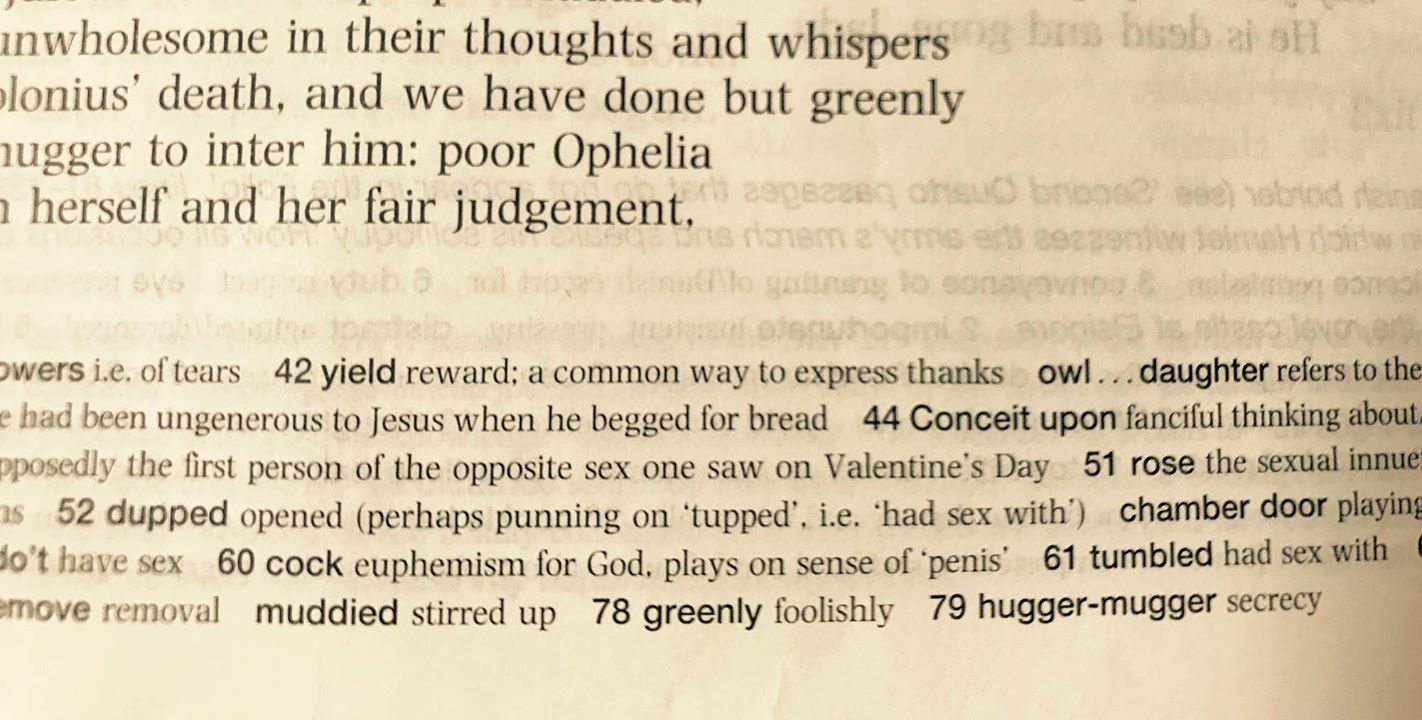
Well, God yield you! They say the owl was a baker’s daughter. Lord, we know what we are, but know not what we may be. God be at your table. ――ありがとう、God yield you! フクロウは元々はパン屋の娘、イエスから罰で姿を変えられたの。でもわたくしは違うのよ、こんな姿になってしまったのは。ねぇ、王様。私達は先のことは分かることは出来ないのよ、God be at your table. –Ophelia A document in madness, thought and remenbrance fitted. ――侠気にも教訓があるというものか、物を思っても忘れるなとでも言うようだな―― –Laertes Hamlet Act4 Scene4
God yield you! やGod be at your tableは翻訳をせずにそのままにした。
特に“God be at your table”について。私はやはり最期の晩餐をイマージュするが、それがどう聖書の意味が繋がるとかは考えてはいない。理由はオフィーリアは病んでいるからだ。 それでも和訳になると意味が限定されてしまって、侠気に詩情が消失し、ただ現実味が増して虚構にした意味が無くなる気がしてならない。God yield you!は、挨拶言葉では あるだろうが、直訳すると「神が貴方にもたらした」となる。