Nothing in the world is central, just outside the world.
Simone Weil
The question is to what extent we can speak of God and still say that we have perceived him to be trustworthy.
The language of this perception is the Aufheben of theology and philosophy. In the history of philosophy, philosophy has coexisted with God. There was a time when it coexisted with the Greek God and then with the Christian God. When did these two disciplines separate? Was it Nietzsche, Marx and Freud, the triumvirate of thought? Was it Nietzsche, Marx and Freud, or Hobbes’s “state of nature”? I would put it around the first century of the Council of Nicaea. The Fathers of that time said, “Not like philosophers, but like fishermen”, that to reach the depths of humanity was not a human word, like philosophy, which never gets old. But they were then, Benedict XVI argued, stuck in Aristotle’s “homoousis”. He still wished to believe ” more like the fisherman than the philosopher”.
Thomas Aquinas, in his Scholastic philosophy, held that “philosophy is the offspring of theology”. Ockham, in his “Ockham’s Razor”, argued that philosophy should be separated from theology. Nevertheless, Descartes’s proof of the existence of God has been challenged by many philosophers, but even in this century it has not been defeated.
Spinoza advocated “pantheism”, which was considered heretical. Leibniz’s concept of the monad as the atomic equivalent of spiritual existence. Neither the smallest nor the largest of worlds can be grandfathered to us. However, the world was not created by chance, and these monads were “scheduled harmony” in that the world was designed to be the best it could be. Barkley, who was a clergyman, believed that while no one was looking, God was. He called it existence. Kant, a devout Protestant, wrote to Swedenborg, then a mystic, protesting against him, and held that true faith was reason. Hegel, also an empirical believer, objected to Kant’s objectivity as unrecognizable. This is the cessation (Aufheben) of the dialectic. Since the Industrial Revolution, when industrialization led people to work harder, to worry more about the environment, and to question their own well-being, Kant’s dialectic has been the basis for the development of a new way of thinking. began to question their happiness. Faith in Christianity at the time was also waning.
The need for man to have a core conscience and beliefs was symbolized by Nietzsche with the words “God is dead”. Nietzsche identified two kinds of nihilism: active nihilism, in which people create new values for themselves, and passive nihilism, in which people lose hope in life because of the existence of existing values.
Husserl’s phenomenology led to the study of human consciousness, orientation and human perception and existence. With Heidegger, who was a Catholic theologian, he attempted to de-Catholicism the human being as a born-again “Dasein”.
Nevertheless, the “face” of Levinas also led to a return to the Old Testament. Levinas succeeded in refuting Husserl’s ‘interpersonal inertia’. This is Levinas’s ‘l’Autre’.This is Levinas’s ‘theory of the Other’. As you can see in French, it is “”beings who cannot enter my world”. “. He held that recognizing the ‘face’ of the other could resolve this chasm.
Levinas miraculously survived the concentration camps, but the world existed. This formless, subject-less thing that exists even when it is lost is what he calls ‘Ilya’. To him, the person who existed may have looked like the beast of the Apocalypse, which has no name, but only a number.
Quoting from the Old Testament, “Thou shalt not kill”, he said that the way out of the Iliad is to get to know “the face of the other”, to engage with the other from indifference. This philosophy was regarded by John Paul II as a philosopher who should not be forgotten.
It has been said that theology is on the wane. Nevertheless, Balthasar, with his beautiful writing and logic, speaks to us academically and to our emotions about the mystery of the love of the Trinity. Theology, too, has never existed without the philosopher.(Neoplatonism)
Philosophy has probably progressed to the denial of God since the end of Paul Ricoeur coexistence of religion and philosophy. Theology has moved on from a skeleton world to the existence of God as the answer.
In the history of theology there has never been a time when the masses were pure and innocent. It does not seem so far removed from other non-religious histories. It does not seem to be so far removed from other non-religious histories. It is not without its perplexities to take them both, but it is Aufheben. While waiting for the results of science, man follows his perceptions when even science remains imperfect.
Philosophy and theology are probably on the same track.
They are both on the verge of death, and they are both working themselves to death.
As we cut ourselves down, the soul is revealed.
It is our wisdom, our weakness, our strength, our gift.
It is a gift.
The world outside is beautiful. But to be able to be aware of it, we need to love the depths of our inner world. Even if you lose your memory due to illness, your mind and the world are still connected. Even if I forget myself because of illness, God and I are connected. We love many things while we are alive. In time, the outer world may be whittled away by the decline of the body. Still, it is the soul that sees the light. The soul’s sight of the external world is the core of the world.
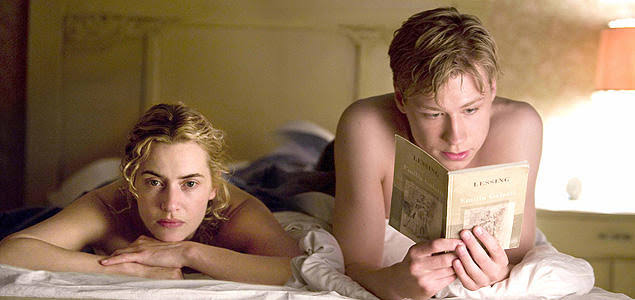
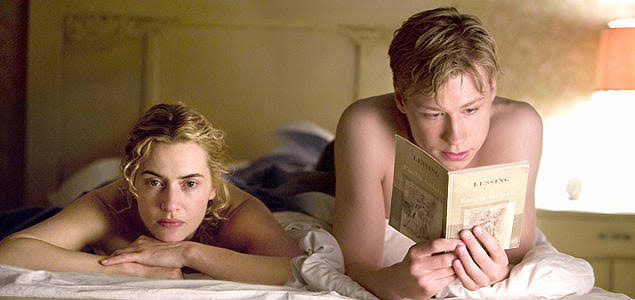
The story takes place in Germany, where Michael, then 15, becomes jaundiced on his way to school and is found and nursed by Hanna, 36, who is a year older than him. They eventually become romantics, but for some reason Hanna invites the protagonist to read some books to her. One of the books, Odysseus, is estimated to have taken place in the 1200s BC, during the time of the Trojan War and the Mycenaean civilization. In the eighth century BCE, Homerosu put together a collection of stories based on the 400 years of Trojan warfare that had been handed down by “oral tradition”. (The Iliad and Odysseas )
The protagonist, born after the Second World War, reads this lore and facts for Hannah.
Hanna has many secrets and suddenly disappears from his sight. The protagonist cannot accept her loss but forgets about it. The year is 1960 and the world is in the throes of a student movement.
He is now a university student. While attending a seminar on the trial of Nazi war criminals, he finds himself standing in front of
Hanna, whom he had once loved.
She was a prison guard in a concentration camp.
As the trial progressed, the hero remembered that Hanna had asked him to read a book. As he watched her trial, the protagonist realised that Hanna was illiterate. She couldn’t read and had moved from one job to another before it became known that she couldn’t read.
Perhaps it had something to do with the fact that she was a Roma from Romania. In front of the print that she could not read, she opened the door to the world only with his voice. She immersed herself in the warmth of his skin and the world that his voice took her to, knowing that one day she would meet her fate. The trial is a life sentence against her, without her realising that she is illiterate.
In the trial of the concentration camp officials, the key question was whether they had intended to kill her or not, but it was recorded that Hannah had read books to the prisoners. At that point, it was false.
Michaela was unable to love another woman, even though she had long since forgotten Hanna.
He has been in contact with his father, a professor of philosophy, about Hannah. Finally, Hanna is pardoned, but thanks to the help of the protagonist, she is able to write, and after.
*****
When “The Reader” became popular, many felt disgusted by the romance between a 15-year-old and a 36-year-old.
Judging them only by their age and their bodies, they called the love of another person, even if it was fiction, freaky.
People are equal in soul if you take off their skin, but they don’t care about that. But they don’t understand what it means to be separated by age. Could they have expressed the intertwining of the protagonist, who had never heard of this war, and the woman whose job was to be judged by the world? At a time when people assumed that people who were like war criminals were evil, there was nothing but love between two people who did not know each other’s position. I don’t dwell too much on the “Nazis”. It is a story of love.
The fictional world, which incorporates reality, allows us to write about love, slipping past the arguments that cannot be conceded in the real world.
Only in stories can the possibility of love be described in the midst of all the hatred.
An American writer once told me that writers can hear the voices of their characters in their heads. The written world is unique, without sound, time or color. It is up to the writer to decide what kind of loneliness and emotion he or she feels within it, but for the writer, publication is just a voice.
In the hands of the reader, he or she constructs a third world out of the world of the novel, and begins to understand his or her own novel. And they wonder. And they wonder. I want a reader. (Perhaps a film adaptation would be the most desirable these days.
I hadn’t looked very carefully, but when I found a reader, the world opened up to me.
Her beloved Michaela had a future to live up to in the famous words of the Odyssey. Hannah is not given such a thing. The author’s choice of this classic has many implications.
Every human being has a monologue. Her life was one in which she was never allowed to have hope again. The reading from him, temporarily young, was a new world, his own monologue. He must have been a spokesman for her.
The author’s choice of the classic “The Odyssey” has many implications: it shows that even among those who must be judged, there is love. Only a novel can do this. There is no other reality in which you can write about unforgivable love in a fictional world and say publicly that even war criminals had love.
****
The film title, oddly enough, was Japanese: ” 愛を読む人”.
The love formed by a voice disappears the fastest. The love formed by the voice fades away the fastest. Of the five senses, it is the voice that we lose first in memory. Next comes sight, touch, taste and smell.
Michael sent a tape he had recorded again for Hanna. With “The Odyssey”.
But he didn’t sound the same as he did then. She did not recognise his love.
She didn’t recognize it as his love, but as a voice that was trying to rehabilitate her.
I thought it was Hannah’s impulse to commit suicide.
Perhaps. The voice of the young man she loved had disappeared.
.
Who was the reader of the Holocaust?
The new reader for her was not the man she loved.
If there had been no war, we would have been souls of the same age and background. And yet it was a sad story of division. But judgement cannot divide us from love. Even if we are torn apart, the past, in which his voice lived, lives on, even if it disappears from our memories.
Love” remained as a residue.
*about Obysseus quote: This is a sentence from Odysseus and is not mentioned in the novel.*
If anyone causes one of these little ones—those who believe in me—to stumble, it would be better for them to have a large millstone hung around their neck and to be drowned in the depths of the sea. Woe to the world because of the things that cause people to stumble. Such things must come, but woe to the person through whom they come.
Matthew 18:6~7
Sin can be ” Pardoned ” by love, but evil continues to be amplified. When one evil intention disappears, a new one is born. That is human nature, and those who deny it are the equivalent of a false wall. Goodness requires education and environment, but malice is born naturally. I am a denier of the theory of good nature. This is the basis for the theory of the state, and also for Jesus, who refers to evil as a “Skandalon” that cannot be removed by human power. There is no such thing as goodness, and I believe this to be true.
There is atonement for sins, but evil does not disappear. Yet the concept of what evil really is continues to be debated today. According to the Old Testament view, a person can be either good or evil, and therefore has to make a choice. God does not intervene in the choice, but sends dream signs, apostles and prophets to make man aware. It is the history of Christianity, since the New Testament, that has made Adam and Eve the original sin. For many years the question of why we let evil people go unchecked was repeated by “apologetics” so that God would be good, and psychology tried to treat academically the evil, the darkness of human nature, which apologetics could not compensate for. As a result, it may be G. Freud who succeeded in separating the therapy from God. Jung did not separate the cure from the person who had been brought up in the image of their own religion or oral tradition. To Freud’s “unconscious” Jung delved into the “collective unconscious”. Freud did not deny this theory, but considered it dangerous. Both theories remain inconclusive to this day.
Evil continues to be amplified, but there are some things that are severely punished by time. One such thing is “theatre”.
St .Augustine likened theatre to Plato’s theory, distancing it from the teachings of Jesus and making it an “evil” to dull the pain. In modern times, restrictions have been loosened, but there are still objections to adultery, age restrictions and the illusion of a fictional world. The “self-proclaimed good guys” are afraid of influencing crime and pleasure, and are threatened by all but the most peaceful works.
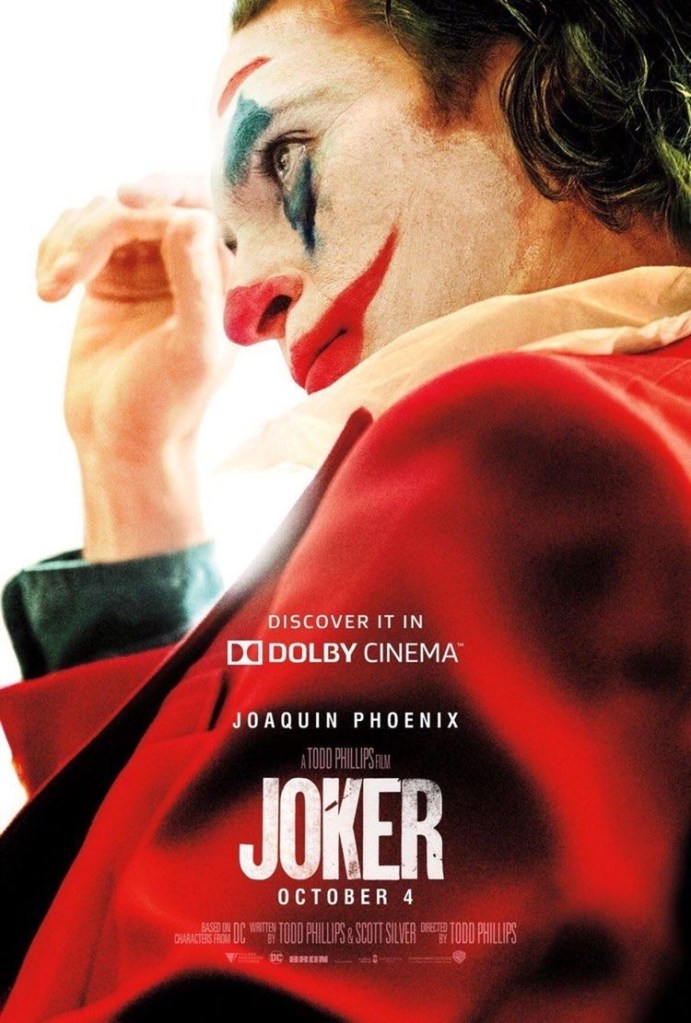
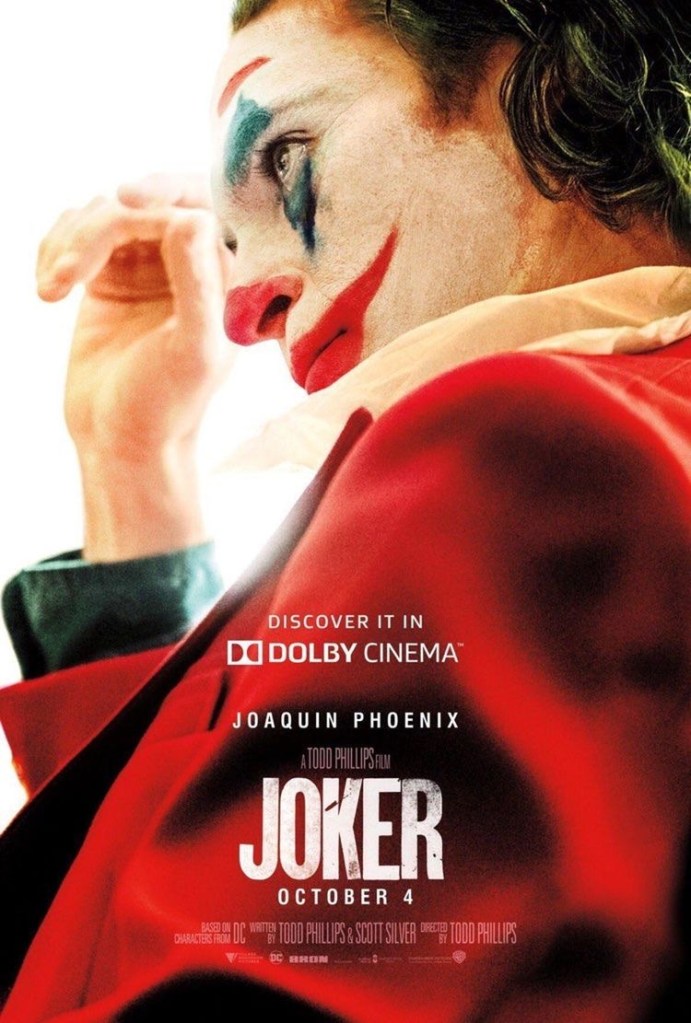
It seemed to me that the Joker in the film “The Joker” (2019) stood out in a world of mediocrity. Once I saw it, as a script, I thought it was just an imitation of real-life serial killers Henry Lee Lucas and Edmund Kemper, but as Shakespeare created Hamlet and King Macbeth, there has never been a more established “evil” in the fictional world these days.
It’s hard to say whether he was the best “pure evil”, but his greatest appeal was that he created so many copycats. What Jesus defined as the most severe sin was the sin of leading the masses: “to be drowned in the sea with a great millstone round your neck”. The Joker was originally Arthur Flex, an ordinary man who lived with his mother. This man had a dream. He dreamed of becoming a comedian. He was poor, and people and the world were hard on a man who had a dream of becoming a comedian.
He fantasises about getting ahead, but in reality he works as a street performer. He is violently attacked by a juvenile delinquent, and his boss treats him “badly”. Further undermining the impotent man was a disease that made him laugh. It is essential to pay for this treatment. Presumably because this is a form of PTSD, there is no obvious drug treatment. Psychiatric drugs are more expensive when there is no clear cure. Doctors’ guesswork, inadequate counselling and inappropriate medication means that more of his meagre wages are spent on drugs. He was always at the mercy of the malice that existed behind the goodness of the world. The only thing that kept him alive, no matter how crushing the malice, was his mother’s words, “to smile and put on a happy face”. He loved his mother. He loved his mother because she believed in her words that your smile makes people happy.
He is forced by a colleague to give him a gun for protection, but he drops it while dressed as a clown in a children’s ward. The colleague who gave him the gun also lied to him, so he is forced to dismiss him, and then, as fate or bad luck would have it, he develops a condition in which he “to smile and put on a happy face” at a woman who is in trouble with a man, even though he has no strength to do so under the circumstances. Like the protagonist of Albert Camus “L’Étranger” Arthur has pulled the trigger.
It’s 1981 in Gotham City, a city in the middle of an unsafe neighborhood, where shootings are not unheard of. But because the murderer was an elite member of the stockbroking world, the poor begin to admire the clown killer. Arthur’s stage success as a comedian and his memories of the woman he had a crush on were his fantasies. The fact that his loving mother had taken advantage of his “smile at all times” disease, a kind of “faith” that she believed your smile could make people happy, was broken.
It became impossible to keep track of who had wronged him, who had hurt him. He succeeds in killing his mother, the one who gave birth to him, in what is known as the serial killer’s ritual. It is a rite of passage for a serial killer.
Wanting the success of his stage in the fictional world, he succeeds in attracting an audience in reality. His performance, with its chants of love and happiness, influenced the audience to descend into reality with happiness, but his performance ironically succeeded in a sense as a realization of reality. As a popular desire, he became a “villain”. The streets are filled with his imitators, but they do not love him. It’s just a shallow perception, the public’s desire for self-realisation, the sense of unity and happiness that comes from supporting him.
It was interesting that the film ended with the idea that there is more than one Joker.
Even in the setting, the Joker was set up as a cruel serial killer, but in a time when the public wanted a “bad man”, there was no clear setting for a humor character or even helping the bad man (to finish him off himself). This 2019 version of the “Joker” is a possibility for further transformation if we are to consider a sequel, but evil also coexists with this lack of concreteness. Jesus punishes those who lead the masses the most, because the “false prophet” is a loss of love. This is in line with Moses’ prohibition against idolatry. (The word “Skandalon” is also the origin of the word “scandal”, which Jesus said could not be removed by human power.)
Although it is the “dictator” who defines evil in our time, it is the evil that seems to have disappeared that is most threatening today. While we don’t know the Joker’s true identity, his copycats set him on fire.It is also interesting to see the masks worn by the copycats. There is a sense of cowardice, as if they could escape at any moment. Wearing a mask, the mother does not know where she will go after her mother has disappeared. That is the evil of the collective, the violence that we as human beings are familiar with. If this feels like déjà vu, we already know the evil of the ordinary.
This dipping of the roots of evil beneath the surface seems to be the evil of the 21st century.
****
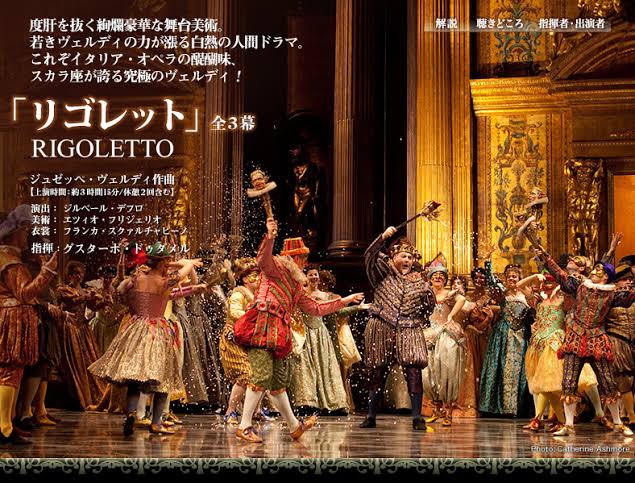
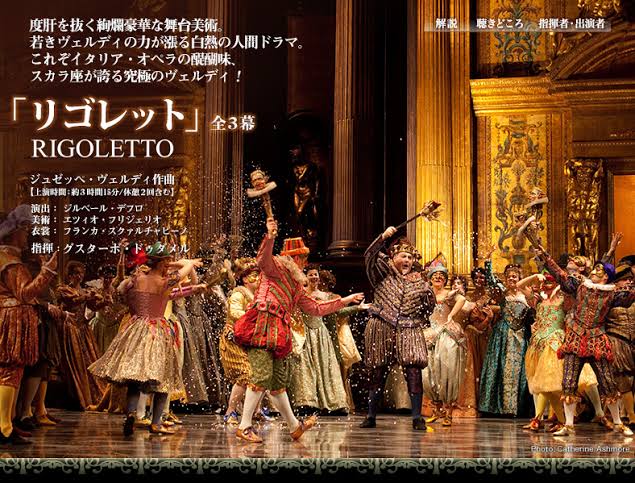
The tragedy of the clown reminds me of Verdi’s “Rigoletto” (based on Victor Hugo’s novel). Like the Joker, he was a laughing stock for princes and nobles .Like the Joker, he works as a laughing stock for princes and noblemen, but when he discovers that the only girl he has ever loved has been played by a nobleman, he seeks revenge, but without success, and is forced to hold her corpse. Tragedy and comedy go hand in hand, and the stage is no fun without darkness. But a clown is always doomed to disappointment in the dark.
The clown is a confirmation of the structure that prevents happiness.
In Plato’s “Apology of Socrates” he said that “he who really wants to fight for what is right should work as a private person and not as a public person, even if he wants to live his life for a short time”, but I don’t think there is anything that returns to this origin. If we study history seriously, we often despair of humanity. It is when the economy is good that we can rejoice in progress, and when it is bad that we fall back on structuralism. However, although human beings are foolish, they can bear coincidence and inevitability, and can produce love. Can human beings love if they do not know malice? From birth, it is human beings who influence us, for better or worse. If we lose our love for these inseparable beings, we will become “the living dead”. Evil intentions exist in me too. But I respect love in the face of evil.
I believe that love is the power of the soul.
I have chosen Corinthians 13 as my favorite Bible quote because I believe that human malice cannot be wiped out, but love defines the direction of the soul.
I don’t know who influences my good intentions or my bad intentions, my potential or my manipulation, I manipulate who I am and I don’t know who I am. For example, on noblesse oblige. Is the responsibility of those with social status really ‘private punishment’? The highest punishment for being unrewarded is ‘private punishment’. Or can it be done peacefully? Maybe one day the world will wake up to this cruelty.
Nevertheless, I want to keep only the concept of soul.
The body may get sick and the mind may get hurt, but the soul will not be hurt.
I believe in that.
This song and the Joker’s song seem to be unrelated, but they fit very well and I saw them many times. It seemed to me that human beings suffer from a malice that is tainted by the love (agape) they are raised with and the evil that comes towards them. This is only a Christian’s opinion. What I got from this song was “not to laugh”. I don’t force myself to laugh.
What is Gotham City? Why are we drawn to it? The protagonist, the Joker, and Gotham City are both fictional worlds. But we call it “reality”.
As an aside, I have sympathy for Arthur himself, but criminals are evil, and perhaps they will be judged by God, or perhaps they will receive God’s love, it’s not entirely clear. As Camus says in “L’Étranger”, it is not impossible that he has chosen to be a villain. The rejection of God’s grace is also a free human choice. There are some psychological studies that try to change this absolutely as a treatment of circumstances or mental illness, but I am not so sure. When I was a student, I thought about rehabilitating criminals, but now I still want them to be destroyed when they become victims. But I honestly wish there had been help for Arthur. Most victims bear the negative side of the perpetrators, the oppression, but for those who have been deprived of their right to live, it is nothing but cruelty. In my view it was a good film. After all, there are few people who can reach out to Arthur.
*
It may be similar to the Zodiac case. The name of the leading suspect was Arthur.
Love is patient,love is kind. It does not envy, it does not boast, it is not proud. It does not dishonor others, it is not self-seeking,it is not easily angered,it keeps no record of wrongs.Love does not delight in evil. but rejoices with the truth. It always protects, always trusts, always hopes, always perseveres.Love never fails.
Outline of this post.


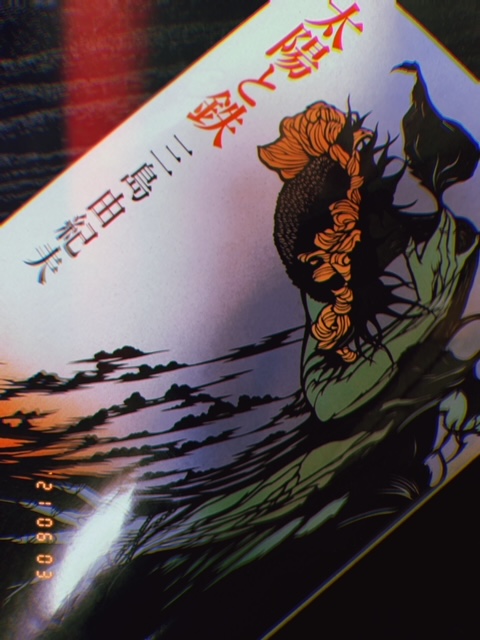
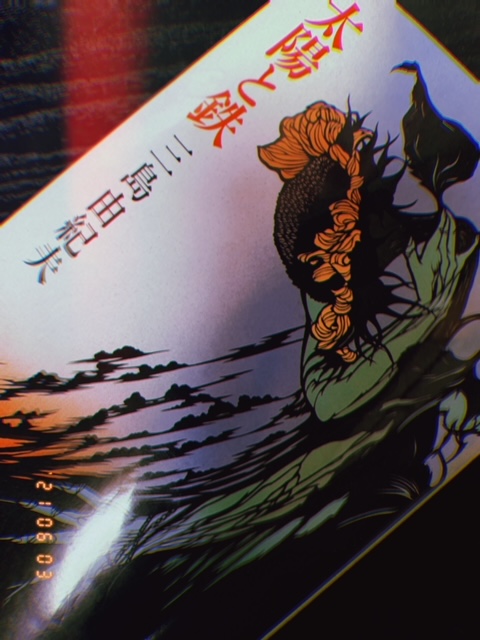
In 2018, during my recuperation period after a suicide attempt, I read Yukio Mishima" The Sun and Steel." In it, he wrote about feelings that were neither fiction nor criticism.
He wrote about "confession" at night, "criticism" by day, and a time when he was neither.

I will taste this neither time until 2021.

The book, which was also the subject of a controversial debate at the University of Tokyo (1969), seems not to have been appreciated in Japan at the time. I have been on the road from leaving Catholicism to conversion.
I was struggling to talk about this mortal disease in my story. Would it be non-fiction, or should I force it to be fiction? Whether I choose the sun or the night.

There was also the question of Catholicism and the political uncertainty of the future in Japan. For many years, I had forgotten the poetry of Mishima response to the sun.
In 2021, I have decided to move on to the night (literature).
This involves a lot of interpretation on my part. In Sartre's terms, it is "the other with the subject".

Apologies that this is not a thorough explanation of the sun and Steel.
The” Sun and Steel” was one of Yukio Mishima lesser-known works at the time. After a long time.I read this in 2018 and found much to sympathies with. I read this in 2018 and found much to sympathies with. In the process of writing, some things are difficult to express even as a novel. I too fell into that groove around 2017. Probably every artist. I feel like it comes to every artist. Sometimes we can’t establish ourselves because we are confused by current trends or common perceptions. Mishima described it as an intermediate form between confession and criticism, “a kind of hidden criticism”.
Mishima is perhaps the only person who has focused on the area of twilight that exists between night as confession and day as criticism.
Sartre’s raison d’etre about existence and essence is that existence precedes essence, but this kind of wayward speculation, a combination of fiction and criticism, is a wandering interior that does not know the outer skin of existence, and is itself an embryo that does not know the outer world (essence).
It is the equivalent of inference, prediction and prophecy. When the result is not yet known, even if we think we have grasped the essence, we cannot be sure. A novel does not have enough material to be written, and a criticism is only an assumption made a few years in the future. But there are times when the feeling is strong.
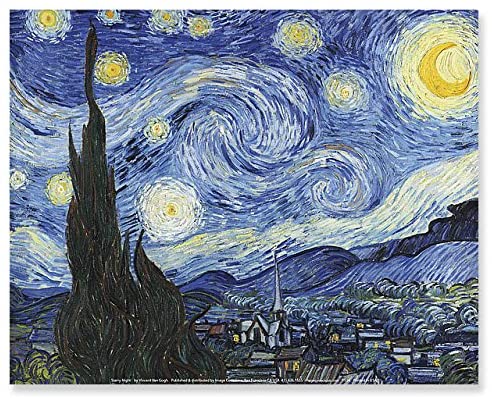
At such times, I think back to Van Gogh’s Madness paintings.
His paintings were first of all existentially unsuccessful. Later, his brother Theo’s wife succeeded in selling Van Gogh’s paintings and made him into the genius that he is today. Over time, they created the essence of Van Gogh’s paintings. Over time, they created the essence of Van Gogh’s paintings, or the world discovered them.
The Starry Night This is one of my favorite Van Gogh paintings. I don’t know of any other painting that depicts the stirring darkness so clearly.
I think Mishima is right when he declares in this book that he is not a poet. Poets, like Van Gogh’s paintings, are not afraid of consequences, and they do not fall between confession and criticism. Hermann Hesse is a genius as a poet and Rubaiyat dances without fear of criticism from Christians.
It seems to me that Iran is famous for its poets. Perhaps they are not afraid of death (or the oppression of others). That free enthusiasm, which neither the cooperation of the Japanese nor the argumentative nature of the West can match, is something to be admired and, as a result of more social experience, I think we will never have it again. We all dream of it and run with it, but the tragedy and happiness that we have created with our speculations, from pacifisms, through physical pain, gradually becomes a reality.
When I was young, I would have run without fear. In the midst of it all, joy and despair, like differential and integral calculus, were repeated, and expectation and despair may have exceeded real reality. In the midst of this repetition of the mundane routine, where sleep brings morning and daily life again, I had my moments of real despair.
In turn, disappointment and disillusionment increased, becoming part of the larger reality of the real world.
Gradually, disappointment and disillusionment increase, and the artist becomes part of the larger existential context of the real world.
That’s the end of the artist. It is only natural that he should lose his individuality.
I’m trying to be unique because of my long established taste, but my body is screaming. The days when I used to write poetry in the evening, even if it was bad, seem like a lie.
It was a mistake in the first place to see it as a defeat. The thought of being abandoned by night and day
It will always go somewhere. It is like a long, inflexible Steel. That is how I see it.
In my analysis, Mishima Steel element probably became the sun and led to his suicide.
I have decided, after a long time, to return to the Night once more. That’s when I retired as a journalist. It is proof that I am no longer outspoken about current affairs. The man who lives by night lives for the invisible presence of human sensibility. The man who lives by day lives for the market and the human condition.
There is no right or wrong, because both are necessary.
But when speech and knowledge are wasted, it is tempting to talk about real problems.
Isn’t it the starting point of a literary person to keep that ” babble ” silent until night?
I will not write directly about why I attempted suicide, or the process of my conversion. Instead, I will start to confess, as if in the night, my memories and records were a wild reflection.
In this fictional world, the person who speaks for me is a man and other women, and the story goes on. There is, in effect, a fictional character (a lie). But the essence is not a lie. Within the non-existent outer skin, there is an interior that I have experienced and gone through.
I have read a lot of Mishima during my illness. But I chose a different path from him.
In his writings he wrote
“Now I no longer believe with all my heart in the idea of classicism, about which I was so passionate at the age of twenty-six. I no longer believe in it with all my heart”
I might not have the awe-inspiring ardor of my youth, either. I sympathies with him in this confession under the sun.
But, like the protagonist of the piano tuner I am writing about, I intend to expand the literature to say that sound does not die. In the despair of the protagonist, my inner light is incorporated.
I have tried many perfumes. I have tried many fragrances, some I liked better than Chanel No. 5.The worst of them were the ones that deteriorated too quickly. The worst was the discoloration of the pigment, which made it look unattractive. Perhaps one of the charms of Chanel No. 5 is that it has survived for so long because its golden color continues to shine in its simple bottle even after it has lost its perfumed scent.
A perfume is a symbol of its time. Therefore, when the time has passed, the fragrance becomes old-fashioned. For example, a young woman would not want to wear the perfume that his mother wore, or more specifically, that his grandmother wore. The notes of the perfume change with the fashion of the clothes and the image of the woman. Chanel’s No. 5 remains a survivor in this context.
The perfumer of Chanel No. 5 was Ernest Beaux, a Russian. The perfume that was popular when he was born and grew up was a floral fragrance itself. The aldehydes, essential to Chanel No. 5, are essential to the harmony of the fragrance. Beaux never revealed the formula of the aldehyde in his life, and there is a paper claiming that the prototype of No. 5 was Rallet No. 1, which he sold to the real Rallet company in Imperial Russia. There are many doubts about this article and people’s misremembering and hearsay mislead them.
At the perfumer’s school in Grasse, France, students are given the task of reproducing Chanel No 5. There are more than 80 fragrances included in Chanel No 5. Jasmine, ylang-ylang, vanilla, rose, musk, coumarin, etc. Recreating them on your own is like playing chess with a strong grandmaster. Sensibility, experience and knowledge are the key, but so is light and luck.
Perhaps the famous perfumers who work for Vuitton and Dior have also passed this challenge because they grew up in Grasse from an early age. Jacques Cavallier , the perfumer of Vuitton, in particular, has created several fragrances that surpass those of Chanel. It may be a misnomer to say that he has surpassed Chanel, but he has created fragrances that do not flatter the ordinary people in the declining art world of the 21st century. Even he has not yet reached the beauty of post-degradation. However, I will not lower my opinion of it, because it is perfect among the artists of today, but In my opinion that it will be a difficult perfume to last for centuries. If the intention was to make it exclusively for today, it would be perfect.
There are three types of perfumes: natural, synthetic and concoctions. There are more than 200 natural fragrances, some of which are animal, and the musk in No5 is synthetic according to the Washington Convention.
Those who knew No5 in the 1980s will have noticed a change in the fragrance. And
I’m pretty sure I heard that Chanel No. 5 was reformulated a few years ago after a toxic substance was found in it.
I couldn’t find an article about it. I remembered this because I bought No. 5 again. For a while I used to love the perfumes of Vuitton and Dior, but then I came back to them. Then I felt that the scent was different from before. Can’t imagine the pretty pink roses from the outside,” Rose de Mai “is the strongest scent of roses, and Chanel No. 5 is like a collection of all the images of roses. However, the recent scent of No. 5 is more powdery and less concentrated. I am sorry if I remember wrongly, but it may be inevitable that the formula changes due to circumstances.
Fragrance is even more fragile than sound. They cannot be stored for long periods of time and, like music, there is no way to record them. It depends on the memory and the record, and even if the record is reproduced, the fragrance can be different depending on the sensibility of the perfumer. It is inevitable that fragrances change with the times. The only thing that can be recorded is the scent, which is our own memory. And it’s not something you can share as much as you might think. Many people may love it, but that doesn’t mean that their friends do.
And since perfumes change their scent depending on the human skin, it’s difficult to reconcile memories, even if your friends love to wear matching ones. Perhaps the scents of the seasons are easier to recall again and again. The charm of perfumes, however, is that they deteriorate and die very easily. In the case of a painter, it would be like the disappearance of an expensive painting, but with perfumes, the price of which, including the perfumer’s labour, is high enough for the average person to afford, we accept the fate of fading away. As Chekhov said, “Simplicity is the sister of genius”, and perfume is a way of simplifying, in a small bottle, what we all follow and what we are attached to.
A whiff of the perfume and I am instantly comfortable in my skin. It is a moment that will never return. Scent is more solitary than we think, it affects others without us knowing it. The boyfriend who looked back at me and said “I thought that was your perfume” when I arrived, the friend who said that only the scent remained when I left, the hairdresser who said that when he opened his wardrobe and was happy to note that it smelled good, it was your coat. Each of these fragrances makes our memories richer. We are all going to disappear one day, and these little moments are not recorded. We are all going to disappear one day, and these little moments are not recorded. Some of my friends who have spoken of my scent have already died, and the memory of my memory is slipping away.
It is almost a loss.
I love the fragrance because it does not lie in its transience.
Louis Vuitton
Perfumer: Jacques Cavallier
Attraplave is my favourite. Peony is not available as a perfume, so it is a creation of the perfumer. Probably Attraplave is the closest. It’s not dull, it’s mature, but it shows the lovely impression of Peony.
その記事が見当たらなかった。そのことを思い出したのは、再度、5番を購入したからである。一時期ヴィトンやディオールの香水を愛用していたが、ふとしたきっかけで戻ってきた。すると、香りが以前と変わっているような気がした。見た目からは想像できない可愛らしいピンクのバラ、「Rose de mai 」は薔薇の香りにの中で強香であり、全ての薔薇のイメージをかき集めたようにシャネル5番は演出している。しかし、最近の5番の香りはそれがよりパウダー化し、濃度が薄い気がした。記憶違いなのなら申し訳ないのだが、情勢の影響で配合が変化することは仕方がないのかもしれない。
"To Analyse It means to critique the social conditions which are responsible for the absence of love. Belief in the possibility of love, not only as an exceptional and individual phenomenon, but also as a social one, is a reasonable belief based on an insight into human nature itself.

Erich Fromm, "the art of loving
Love is both a certainty and a blind spot, an illusion. But for religions, and especially for Christians, love is something close to existence, an ideal. The distinction between true love and false love is also central to this religion. Absence of love is used to describe a state of being in which love does exist. There is a fluidity to the word “absence”, and its meaning changes depending on whether the warmth of its presence remains or whether it has disappeared without a trace.
Love’s existence is denied by the word ‘none’. But false love does not mean nothing. Love is love. It is an ideal or it is not, that is all.
Most people are confused about the meaning.
I said last time that justice and love can be in conflict, but if I had to choose between justice and love, I would probably take love. That doesn’t mean forgiving everything, but it also means being silent. These days I don’t feel that there is anything that can be redeemed by justice. Justice is weeded out by the absence of love. For example, when you are the victim of a death, and society does not understand you. Let’s say there is one person who has wronged you. Christians give love to such a person, but for the evil that leads the people, Jesus implies the extreme punishment. (Luke 17:2)From this point of view, the Christian interpretation is that forgiveness of anything is not a good thing.
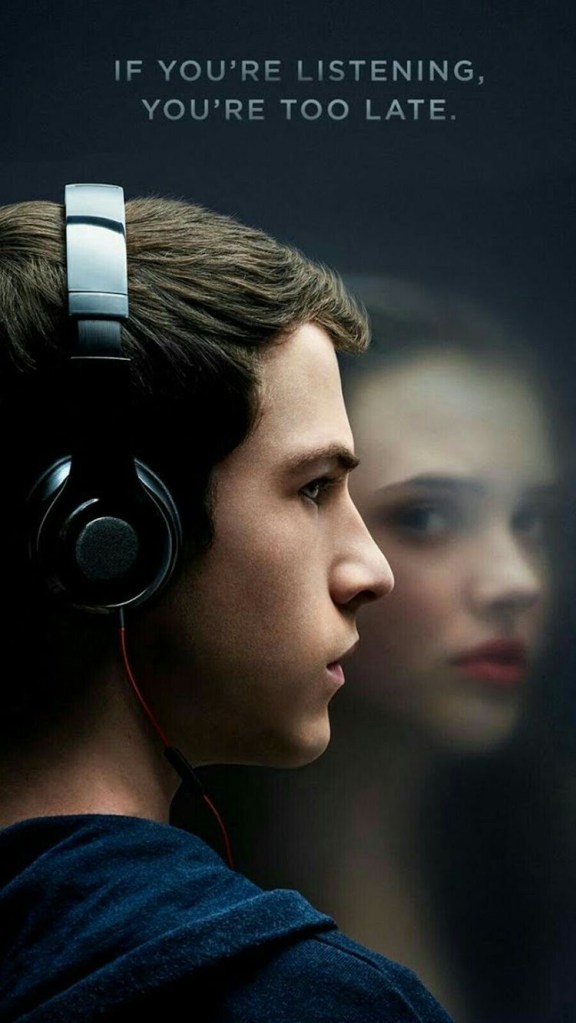
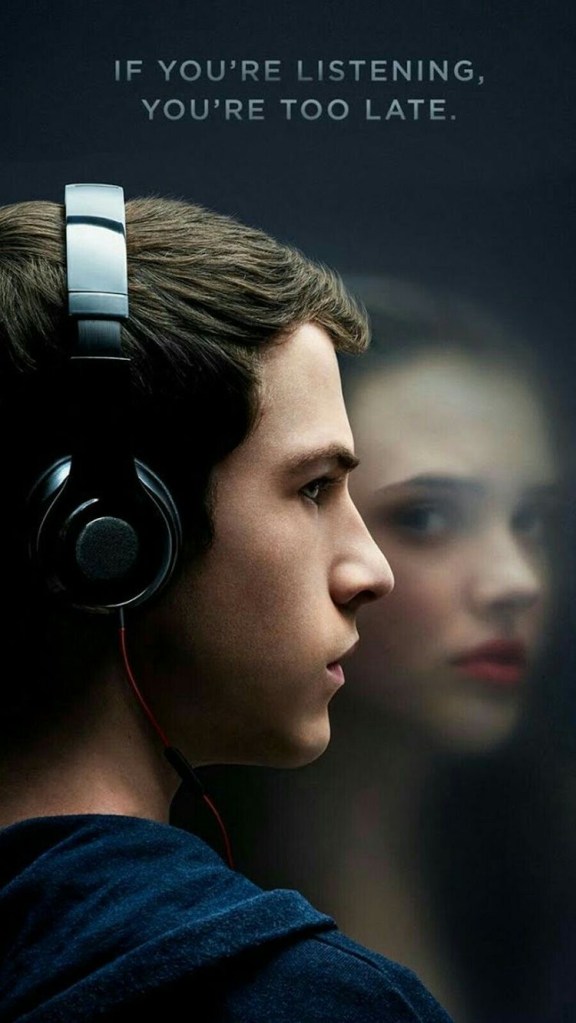
In the second season of the Netflix drama “13 Reasons Why”, the victim’s family filed a lawsuit against the school after the girl committed suicide due to bullying. In the end, the school was not held responsible and the case was lost. In the end the school was not held responsible and the case was lost. This is because the mind is both fixed and counter-fixed at the same time. It would have been negligent of the mother not to notice that her daughter was planning to commit suicide. I know it sounds harsh, but this drama is about a boy who had a crush on a girl who committed suicide.
He rebukes her ghost for committing suicide.
This drama also focuses on the “victim’s lie”.
Nowadays, in Japan, there is a lot of victim business. Using the fact that they are victims as a shield, they pose as minorities and become mass media. Markus Gabriel also denied the addictive nature of social networking and the suicides at the mercy of it, but Japanese people don’t read and understand even that simple article. It’s because they don’t understand the nature of the problem. They can’t question the nature of the companies that they agree to terms and conditions with and that don’t enforce them. They don’t understand what it means to be dependent on that world.
The only thing they care about is their existence.
The world these users are trying to protect is a world that doesn’t exist with one search.
If you agree to the terms of use, the fault of the slanderer or tormentor is not 10:0. That is the world of the internet. It is important to change the law to make the ratio 7:3. The illusion that you are 0 and they are 10 does not exist.
The more victims the aim is to ” Never Again “, the wider the scope of the attack. This is because it leads to an unconscious attack on the “same victim”. They assume a perpetrator who doesn’t exist yet, and continue to attack the perpetrator who doesn’t exist by analysing the person who slanders them with popular psychology.
I won’t give you any examples, but you may be able to think of a person who does this.
There is no one person in this category.
But why prepare a quotation from Erich Fromm? It begins with the absence of love, the loss of family and dignity even for the victims.Anything that has its roots only in the criticism of the various conditions of society can only return to the absence of love. Those who do not know what justice is, who do not know the violence of words, deny the violence of words, but begin to do it to others themselves. They welcome only the “friends” they have chosen, and make enemies of all those they do not understand. Isn’t that the misplace one’s priorities?
As Markus Gabriel says, they create new victims by unilaterally shielding them from long and time-consuming problems in places unsuitable for discussion.
They don’t care that their victim business is hurting the same victims. So they do not know that they are attracting criticism from victims who agree with me. I don’t sign up for forums or social networking sites that allow injustice to go unchecked. Because in the end it is the dependence on the mass media that was at the root of the problem.
And those who saw this “13 Reasons Why”, who only felt a sense of justice, go to write to the families of the victims. Those who chose love will stop at only guiding their own lives and will not do such a cruel thing.
So the question of what to do about victims is deeply rooted. The only thing I can say is: don’t lie.
Just don’t lie and say you can save what you can’t save.
It is selfishness to think that our actions can save many.
The “other victims” who are deceived by this lie will encounter secondary damage.
―――――――――――――――――――――
For example, if I had a child and was killed.
If I were a rational person, I would focus on the absence of love. I might think about the loss of my child, who was God’s love, and whether violence is necessary to pursue that absence.
Then I would not depend on the mass media. But if I lose my love,
I might kill the murderer.
But I am a Christian.
I don’t know how God will judge me at the last moment.
This is a cruel thing to imagine. I hope I will not have that fate.
In closing, I would like to thank all those who supported me when I was a victim.
Hugo Grotius: War is a state of affairs between struggling groups.
Thomas Hobbes, :A state of emergency, meaning that it remains in existence even while the operation is not ongoing.
When I was a child, as far as I could tell from the stories of the World War II, I thought people were stupid. But nowadays I think that the essence has not changed at all. No one is passionately angry about the First World War. Maybe it’s because the memory has faded.
But the Second World War is still remembered. As long as there are still emotional people in the world, it is impossible to understand history calmly.
Thus, violence and struggle will be repeated, but when we die, will it be a moving story like the “Merry Christmas on the battlefield” of the World War I.
Perhaps the people of the 22nd century will say that we are just stupid.
And so it will be with this virus story. After all, we are always in conflict.
In the past, the government and the newspapers manipulated information. This time, amateur influencers use the internet to write lies for the sake of numbers. They have no initiative, and they write falsehoods to sway public opinion while worrying about the numbers. It’s ridiculous. The twitter people who raise the slogan “don’t be swayed by the media” are incompetent and only express their opinions from free newspaper articles in the media. The Japanese media uses this rubbish as a basis for public opinion and programming. It’s ridiculous.
Wise people know that once a stupid struggle is ignited, it cannot be stopped.
We should look at the situation from a bird’s eye view and think about reconciliation.
My grandmother used to say. That war begins slowly. First, women will not be able to dress up, and fools will attack people in the struggle. Before you know it, the military police will be formed and they will control us.
What will be different now? Every day the celebrities of deceit speak as they please, worrying about their own reward.
That’ s how it is every day.
This video is about the German and British armies in the First World War, which only had a Christmas truce.
Will demonstrating against the war end the war? If we demonstrate, will it end the struggle? What starts when people who do not know reconciliation take up arms? These things are missing.
Love is like a flower – you’ve got to let it grow.
John Lennon
愛とは、育てなくてはいけない花のようなもの。
ジョン・レノン
Demonstrations against discrimination against Asians started in Time Square, USA. I think it’s stupid and pathetic to discriminate. I think people should be able to enjoy themselves in any way they like.
The public forgets that there are more important things than demonstrations and fighting.
Pictures would be good to display. They silently tell a narrative.
My dissertation at university ( UK ) was on personality forms and child psychology. It depends on the case that personality is a mind. The foundation of the human personality is the view of life and death, religion, thought, family, lover, friend, companion, work, but life events, accidents, drugs and alcohol can give momentum to suicide.
According to a paper published in the US in 2006
In 2006, the United States published a landmark paper which argued that life events begin at the core of personality development and lead to death when safeguards fail, but what safeguards? What safeguards work? Is it society, family, companionship, or is there a kind of immunity to the stages of personality development when these fail?
The first story, “Pangaea doll”, was a novel that followed these studies. What I did not try to prove in my thesis, my youth and my impulse made me think that this could be a suitable fantasy world.
I was young and impulsive, and I started to write.
However, as this work was written ten years ago, I knew that the memories and experiences of my childhood and school days were fading away, and although I could not establish a causal relationship between feelings and experiences, I had the feeling that my current experiences would disappear as I grew up, for better or worse. I decided to write it down as a specimen of memory.
In the midst of a series of monologue points of view that seemed to be real experiences, I was enthusiastic about writing something based on experiences, an adaptation, a “reality” that was not of this world. Not non-fiction, but fiction that resembles the real world, and I don’t remember what my impulse was. The records of those days seem to have disappeared. ( unauthorized login )
But the literary world has always been a cross between capitalism and communism. Education is so focused on ” cannot read ” that it loses sight of the meaning of the story. If they complain even a little, they are attacked by the basic average of capitalism, and if it’s like communism, their sensibility will never grow in the lukewarm atmosphere. Nevertheless, the reason why he entered the world of writing as an artist, changing his means many times from music to painting, is probably because art was the thing that touched the world from the loneliness he had conceived in the stage of his personality formation. As for music, my hands were not big enough to play the piano. It hurt me a lot as a young child to know that I would eventually reach the end of my life, even if I ran up the grade test. It wasn’t that anyone could hurt me, it was fate. I came to understand the impressionist sense of Colour at a time when my developed sense of absolute pitch was sparse. The fusion of the science of the colours of the sun with the world of introspection was my final impetus. I don’t remember the pure feelings I had at that time, but I do remember writing the Pangaea doll. A phrase that kept repeating itself to me: ” Thinking time begins to revolve faster than old age, it never stands still. It turns left, it turns right, it does not let my consciousness stay irregularly” (p.13) This line is my record.
I had to be silent because I had no way of expressing myself, and it was I who got the language to express myself.
In this work, too, there is such an undifferentiated protagonist who is unsteady on her feet. After all, I was silent on how to market myself. Regardless of how my career was received by the public, I was still young at the time, and this work on suicide gave me a lot to think about. I didn’t know why I wrote it, it didn’t fit in with the change of heart for the next one, and I didn’t introduce the first one to anyone for ten years. I have been waiting for a kind of ” prescription ” to talk about what I saw in the university research team, but the experience of that time is becoming forgettable. One of my patients at that time was the model for the ” Doll-like girl ” of this film, but I used only one element because her background was very similar to my own.
Already my conception was the first to connect the word “prescription” with the word “prescription”, which means a legal prescription.
Once I had given hope to a few readers, I found it harder to write about despair. I got the recognition I wanted, but it strangled me even more.
It became my task to see what kind of “Chris Kyogetu” I could become in this situation.
Literature, like self-improvement, does not offer immediate answers. Like the Bible, it has to be read many times and deeply formed in the inner world. It has been the same in my life. There is no immediate answer to what someone says to us. It goes on and on about how an experience becomes one’ s memory and leads to one’ s personality. I found myself not asking myself the same questions anymore. That’s when it dawned on me. I was ” Old “.
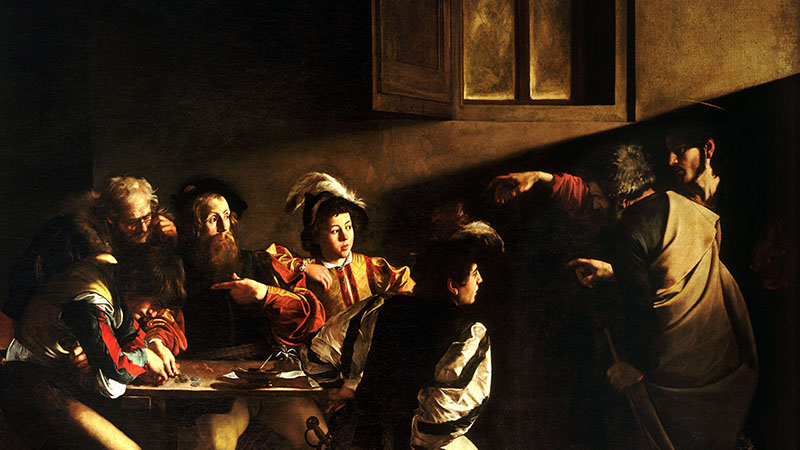
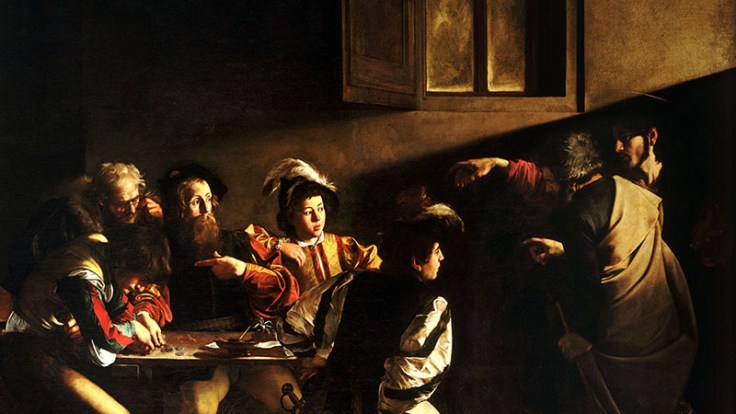
Although my reasons for quitting painting were complex, I got into trouble with adults when I said I wanted to paint Christian paintings. This was the golden age of Manga and anime, but realistic painting was still superior. Nowadays, the themes, the framework and the perspective are so advanced that they cannot be considered as illustrations, but at that time they still had their faults. Yet, the aftershocks of my youth made me realize that the question of whether or not it would “pay off” had already become a manga. I was also convinced that this would be the case in the future. Drawing seemed to confront me with real motifs, and I felt that it was a reversal of the escape from reality of a couple of days or a week. Painting is a form of self-expression. Painting is self-expression, it is meaningless if it does not represent your world. I was aware that I was losing what I wanted to express. So he found Christian painting. While I was reproduction Caravaggio’s St. Thomas & St Matthew series, I decided that I wanted to paint Jesus and the saints, even in abstract. He was insistent Caravaggio compared himself to the vocation of St Matthew. He was convinced that God would one day shine a light on his inner world to which no one else could respond.
But at that time I needed reconciliation with others, so I left the painting behind. I left Japan wondering when I would be able to convince people, but I quit trying to convince people.
From the two-dimensional world, I have been creating small worlds again and again. From music scores, to canvases.to a canvas. And now I live in the two-dimensional world of writing. No matter how ambitious I was, no matter how many times I overlooked something, made a small mistake, thought I had done the right thing, the abyss no longer responded. It didn’t have to be literature, did it? I quietly went back to my career to find suitable employment and to start writing my dissertation, but I still clung to the idea of writing one more piece of “literature”. My conversion to Catholicism is part of this.
My reasons for wanting to write literature are long. I reckon I will listen a little more to what my long soliloquy wants.
The first one, Pangaea doll, which I kept hidden and didn’t even love to be ashamed of.
On the last page, I leave these words.
I promise you that we will be together forever. To a future that will never be seen.
In the warmth of everything we feel, which runs faster than words.
To the illusion of eternity, long and far away. And we’ll cross this line together”
The sprint of the young me, when I was the spokesman for the young me.
The past spoke to me. The role of this novel was to be a safeguard for me.
The light that penetrated the many sarcastic words and the great shadows was inside me.” Give us proof”, “Give us proof”, “Give us proof that you can do it”, it was undoubtedly my own voice that was screaming more strongly than the voices of others. Hope and despair were all in my possession. My voice was the pinnacle and death was always at my side. The desire to die was always there. Pity, envy, cursing…
The reality was always chaos, and all I could see was silence.
And yet, back then, I had the strength to avoid the darkness. I’m not sure if I still have it, but I’d like to bet again.
To enjoy life is to bet. If you don’t gamble anymore, life may as well be death. The taunts and the criticisms are the living dead who have stopped betting. In Dante’s Inferno, the poor soul who cannot even enter hell
Poor souls. Do we need to ask? No, you don’t.
Heaven doesn’t want that kind of power.
Chris Kyogetu
Caravaggio: The Invocation of St Matthew
Pangaea doll
The heroine, Shoko Sato, suffers from an unexplained illness. She was wandering in illusion and fiction, but her boyfriend found the name of the disease. It was “Pangaea Syndrome”. It was a disease that caused her to have similar illusions and thoughts, and in the end to commit suicide.
Her past begins with a monologue. The ideas that emerged were always unvirgin and had already been written by someone else. Like Borges’s “Library of Babel”, there was always someone who had shown her the idea. Gradually the protagonist sees the light as well as the despair. Her finds the light of death, but the fantasy world he has cultivated speaks to him. The fantasy world invites either death or life to unfold in the world of writing.
Thoughts 10 years after publication
I waited for the prescription with silence.
The laboratory was visited by patients for whom science could not explain. Patients for whom there was no evidence, and this was my connection to my inner world. A story that was said to be difficult to understand.
The presence of this doll-like girl grew in me and pointed me to an endless fantasy world, as if she were the guide of my life.
I focused more on sensitivity than on dialogue with people. In the midst of being hated, loved and loving, in the midst of being unable to resist oblivion, while remembering, the overflowing imagination and remembrance diminished. Quitting running, I found myself asleep. It was a long time before I felt like writing again.
Suicide process Diagram: H et al ,The American Journal of Psychiatry 2006
Job 38:41

Who provides food for the raven
    when its young cry out to God
    and wander about for lack of food?
The Bible is divided into two parts, the Old and the New Testaments, each of which has a different mission.The Old and New Testaments are divided into the historical books, the wisdom books, the prophetic books and the apocalyptic books, while the New Testament is divided into the gospels and epistles. (etc)Some philosophers who are not familiar with religion mistake wisdom literature for prophecy and gospels for apocalypse, and start to talk about conspiracy theories and prophecy from non-prophecy.
Job is the “wisdom literature” of the Old Testament, and a major theme is that “God gives and takes away”. This is often thought of in conjunction with the “Ecclesiastes “where Job is a chapter about suffering given by God and Ecclesiastes is a chapter about facing emptiness and death because of wealth. Wisdom literature leaves behind various stages of wisdom, from the mundane sufferings of everyday life to the lofty and mysterious feelings of the fear of God. These are for the purpose of helping people to escape from suffering and to improve themselves in a life made up to human sins and mistakes.
It is the aim of the book of Job to instil in us the fear of God as well as the wisdom to ask and answer questions. This story is a relatively “literary” favourite of the Japanese.
Job was a righteous and just man. God ‘loved’ Job so much that he boasted of him to the devil.
The devil had already interfered with Job, but Job never turned to evil. God was proud of that and told the devil that it was no use doing anything to Job. But the devil said that he had only flayed him, that he had only given all his wealth for his life, and that if he got any nearer to bone and flesh, Job would curse God. God let the devil go again, on condition that Job’s life not be taken.
The devil caused Job to lose many, Many things. He lost his children, his livestock, his servants, and even a skin disease. The first one to give up was his wife. But Job was still serious and said, “Since God has given me happiness, why don’t I have some misfortune?
However, three of Job’s friends (philosophers) come to comfort him, and during their conversation, Job gradually begins to express his resentment towards God. The friends say, “You must have done something”, but Job finally says, “I didn’t do anything”. His friend tells him to apologize to God and make peace.
But Job was adamant that he had nothing to apologize for. Then there are more questions in which the three men blame Job. After the last argument between Eliph (the philosopher) and Job, the word finally comes from God: “Who is this, that, without knowledge, he should darken the empire with word after word?”
God converses with Job alone, and asks him how much of the world he knows.
Job reaffirmed his acceptance of the existence of an omniscient and omnipotent God, saying that he did not know the depths of the world or how it came to be, and he prayed for the three men involved in the debate.
And Job was rewarded more than before with God’s blessing.
The Bible, including the book of Job, has few “internal monologues”. Therefore, there are many places where we cannot see the direct psychology and facts of the characters. Therefore, it is possible for various people to continue to search for empathy and facts throughout the long history. The book of Job, like Genesis, is written using the direct narrative discourse method. The Lord’s (God’s) other narrators show the inner life of Job and the Lord. The book is written in prose and rhyme, with the prose enlightening Job to his faith in God, and the rhyme accusing him of injustice.
We do not know why God loved Job so much, except that he was a “righteous man”, because there is no “internal monologues” of God. Furthermore, we do not know why God released the devil. We all have a tendency to see suffering as punishment and to be convinced of it. Job is not convinced by the questions and answers of his friends who surround him and continue to pursue the ” Fact of Suffering”.
The reality is that any discussion of God or destiny is only between human beings.
“Who has heard the Voice of the true God? That is the question.
It is true that in reality we can only talk to each other while we are alive. In Osamu Dazai’s “人間失格”, when he is accused by his friend Horiki that “the world will not forgive that”.
It is reminiscent of the famous scene in Osamu Dazai’s “人間失格” where the protagonist pulls back without saying, “Isn’t it you who are the World?
It is reminiscent of the famous scene where the protagonist pulls back without saying, “Isn’t the world about you?”
”The world won’t let that happen”
“Not the world. You won’t let it happen, will you?”
“The world will give you a hard time for doing that.”
“Not the world. It’s you, isn’t it?”
“The world will bury you now.”
“Not the world. It’s you who will be buried, isn’t it?”
This structure is similar to that of the dialogue between Job and his friends.
It is almost impossible to hear the voice of truth directly in the real world. In the real world it is almost impossible to hear the voice of truth directly, but only Job can communicate with God through his stories. The God of the Old Testament spoke directly to Adam, Job and Joseph, or told them dreams, but since the birth of Jesus in the New Testament, God has been silent.
For Christians, this pursuit is done through prayer throughout their lives.
Each with his or her own answers, to die in the end. Will the prayers of life match the prayers of death? The question is a mystery.
The outcome of the pursuit of suffering is the love of God. There is no mistaking that.
The Old Testament was a dialogue from God to humans, a faith from below to above.
In the New Testament, God sent Jesus down. Jesus walked to the people on his own feet.
That is how the mystery descended, when a being beyond human understanding broke through the thick walls of the lower world.
Read the Bible many times and you will find empathy and inspiration before logic. I was sure of it.God is there, beyond our own indwelling, beyond the common sense of the world. God’s love is there.When will we reach it?
We don’t have to force ourselves to think that we have God’s love in our grasp. It is good to live a life of waiting for God’s love. God’s love is not only about grace, it also saves people. What does not reach us is only “economy” and “politics”.An economy and politics without the love of God means collapse. It does not have to be only the voice of man that accompanies our suffering. Like Job.



















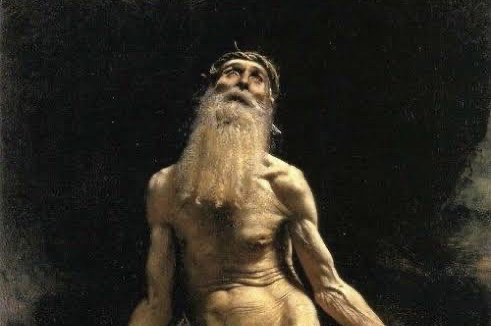

 Chris Kyogetu