You know, wouldn't it be better if only your sincere father, who is out of sight, understood your loneliness, even if you didn't want others to understand? Don't you think so?
Loneliness is for everyone.
Heed My Plea, Osamu Dazai
Heed My Plea by Osamu Dazai is an adaptation of Judas Iscariot’s betrayal of Jesus Christ, as told in the New Testament. In this retelling, Judas struggles with the act of selling out his beloved teacher, Jesus. Dazai weaves this story with an ease akin to a spider spinning its thread, drawing from his personal experience, just as Michiko transcribed it for him. Judas’s hesitation and inner turmoil are portrayed as though he were Dazai’s alter ego, reflecting the author’s own instability and ambivalence.
Judas, as a symbol of treachery, serves as the centrepiece of this narrative. Yet Dazai repeatedly reinterpreted his own experiences through the lens of betrayal, altering and refining his works over time, much as one would revisit a painting.
Once, many years ago, when I was engaged in painting, my teacher asked me a simple yet profound question: “When do you consider your work finished?”
This question touches the heart of what it means to complete something—a fundamental dilemma for all art.
What constitutes completion? Is it only for the artist to decide? Or does it require the recognition of others? If the work is created solely for oneself, does it even matter if it is imperfect? What do we ultimately seek—an audience, applause, friends? Or perhaps validation from God? Completion is not easily defined in a single word, but over time I began to understand that it resembles the final moments of Goethe’s Faust.
In the closing of Faust, good and evil both strive to move forward, yet time remains indifferent to their struggle. There is a moment when we awaken from darkness to a sudden glimmer of light. The one who can capture life in all its beauty, through both joy and sorrow, achieves something rare and precious.
“Time, you are beautiful.” These words embody the essence of true perfection.
Goethe: Faust. Mephistopheles.「Eduard von Grutzner 1895年」
Leonardo da Vinci, The Last Supper.
Ⅰ.The Restoration of Leonardo da Vinci’s Last Supper
The restoration of Leonardo da Vinci’s Last Supper took place between 1977 and 1999. In earlier depictions of the Last Supper, painted by artists before da Vinci, Judas Iscariot was traditionally seated opposite Jesus. However, da Vinci chose to place Judas at the far end of the table. Why did he make this choice?
In the restored version, it becomes evident that only Judas is shrouded in shadow. Yet, the positioning of the other figures is such that any small movement would cast them into shadow as well. This suggests that da Vinci did not adhere to a simplistic good-versus-evil dualism. Instead, his composition hints at a non-duality reminiscent of Buddhist philosophy, where good and evil are intertwined rather than opposed.
Da Vinci’s worldview aligns, in some respects, with the values of Machiavelli and Bacon, whose works emerged during the waning of Renaissance philosophy in the 16th century. A similar nuance can be found in the teachings of St Bernardino of Siena, a 15th-century Franciscan preacher. Bernardino condemned usury as morally wrong, yet acknowledged the essential role of bankers in economic development. This kind of moral ambiguity, where necessity coexists with sin, permeates much of the intellectual thought of the period.
Goethe’s Faust—inspired by the Book of Job—shares a similar complexity. Completed in the 16th century, the character of Satan in Faust diverges from the biblical depiction in Job. Rather than inflicting immediate suffering, Satan in Faust tempts Dr Faust subtly, offering him youth and pleasure instead of misery. This reflects the philosophical shift of the time, moving away from mystical German traditions towards a more rational, human-centred approach to philosophy.
Art, too, reflected this duality. Commissioning artworks served both spiritual and worldly purposes. On the one hand, patronage promised eternal salvation; on the other, it satisfied the vanity of the wealthy, who used their collections to display their status and refined taste.
Ⅱ.Osamu Dazai’s Heed My Plea and Its Resonance with Other Works
Osamu Dazai’s Heed My Plea reimagines the biblical story of Judas betraying Jesus for thirty pieces of silver. However, within Dazai’s own body of work, there is a strikingly similar story in terms of structure: A Tale of Honourable Poverty. This work, an adaptation of a Qing dynasty ghost story, explores the tension between “worldliness” and “anti-worldliness.” Through it, Dazai reflects on the struggle of being both an artist and a human being, wrestling with the desire to create while also living in the material world.
The story is set in the Edo period (1603–1868), where Sainosuke Mayama, a passionate chrysanthemum grower, takes in Saburo Tohmoto along with his siblings, Kie and her brother. Saburo is a master cultivator of chrysanthemums. He proposes that they sell the flowers to buy essential supplies like rice and salt, but Sainosuke, a man who takes pride in his poverty, protests. For him, selling the flowers for profit would be a disgrace to their beauty and meaning.
Despite Sainosuke’s objections, Kie and her brother go ahead and sell the chrysanthemums. In time, Sainosuke marries Kie, attempting to maintain a life of purity and poverty. However, he soon realises that his poverty is more of a compromise than a virtue. As time passes, his villas become larger and more extravagant. Beneath his disdain for selling the flowers lies jealousy—jealousy that Saburo is far more skilled at growing chrysanthemums than he could ever be.
In the story’s climax, Saburo vanishes like smoke, revealing his true nature as a chrysanthemum spirit. It is only then that Sainosuke realises his deep love for Kie, who, unlike the spirit, has not disappeared.
Heed My Plea and A Tale of Honourable Poverty were both published in 1940, the same year as The Grapes of Wrath. Steinbeck’s novel depicted the monstrous nature of capitalism, though the film adaptation of the story shifted its message to one of resilience: “The people will live on.”
In that same year, Disney released Pinocchio and Fantasia, both of which initially failed to find success in the American market. In Disney’s adaptation of Pinocchio, the fairies grant Pinocchio the gift of “good and evil” before sending him out into the world. Little Jiminy Cricket symbolises good, yet evil is not explicitly mentioned—perhaps because evil is implicit in the world Pinocchio must navigate. Jiminy’s guidance is insufficient to shield Pinocchio from temptation and neglect. In fact, it is evil that reaches out to Pinocchio—not as malicious intent, but as a silent invitation to follow along, unthinking and unchallenged.
In a curious parallel, Dazai’s works resonate with the themes found in these films. Pinocchio’s salvation lies not merely in Jiminy Cricket’s advice but in his spontaneous, unpremeditated actions. It is through this spontaneity that he rescues Geppetto from the belly of the whale. This form of goodness—one rooted in instinctive action rather than calculation—represents an eternal ideal. However, because Pinocchio lacked the glamour of Disney’s previous success, Snow White, it failed to generate enough revenue to keep the company out of financial trouble, even during wartime.
This sequence of events reflects an enduring challenge for humanity: the tension between the ideals of goodness and the harsh realities of survival.
Ⅲ.Judas in Heed My Plea
In Heed My Plea, Judas is cast as a symbol of betrayal in the Western tradition. Although the story draws directly from the Gospels’ account of Judas, it carries a unique tone, as if Judas has somehow possessed Dazai himself. The prose is familiar and unembellished—free from unnecessary words—yet every phrase is charged with tension. The focus of Judas’s obsession is “that man,” Jesus Christ, lending weight to every word he speaks.
A similarly Gospel-inspired work is Oscar Wilde’s Salome. Although Wilde’s Salome is a play, it also portrays the sacred through the lens of human depravity. Wilde reminds us that until we understand the full scope of the sacred, it remains elusive, swallowed by the terse expressions of human desire. As long as we remain blind to its meaning, the sacred can appear merely as self-indulgence or egoism. Yet, indulgence itself is not inherently wrong. Sanctity, as Bataille might argue, can manifest even within moments of sinful abandon. From one perspective, Satan may be dismissed as a mere monster, but what makes him human is the interplay of light and shadow—just as seen in Leonardo da Vinci’s Last Supper.
In painting, shadow sometimes mimics light, and similarly, Salome breaks a Catholic taboo by seeking the kiss of a divine figure. Her love is not boundless or pure; it is sharp and cutting, like a sword. After demanding and receiving the head of John the Baptist, Salome is executed, punished for transgressing sacred law.
Dazai’s Judas, however, is not presented as grand theatre like Salome, but instead takes the form of something akin to rakugo. Unlike plays that delve deeply into the human psyche, many rakugo tales—such as the well-known Manjuu Scary—tend to be light and humorous, focusing less on inner emotional turmoil. While Wilde added Salome’s execution after the death of Jokanaan, Dazai’s Heed My Plea notably avoids including a suicide scene for Judas. This omission is significant, considering Dazai’s own reputation for grappling with suicidal ideation. The fact that Dazai chose not to make Judas take his own life in pursuit of a sacred ideal suggests a deeper psychological insight. Instead, Dazai allows Judas to navigate several unspoken biblical codes, engaging with religious themes in a way that reveals the complexity of his inner struggle.
Dazai’s personal life was no less turbulent. A drug addict, he once sent desperate postcards begging to borrow old issues of Bible Knowledge, a publication that had become scarce. Dazai’s fascination with Christianity surpassed his interest in any other faith. Though he was never baptised, he believed himself to be seen by the Lord, aware that his sins were recorded by the Father. From a young age, he had attempted suicide using sleeping pills such as calmotine, not out of a desire for salvation, but as an act of confronting the defilement within his own heart—measuring himself against the commandments and always falling short.
Often regarded as one of the “three worst writers” in Japan, Dazai showed little awareness of the need to support his family with his earnings, as his wife, Michiko Tsushima, recounts in her memoirs. He was unfaithful to her and neglected responsibilities, even when taking in stray dogs. Yet, it was precisely this dissonance between his actions and emotions that fuelled his writing. At times, he wrote with sincerity; at other times, it seemed as if he were speaking on behalf of someone else entirely.
Psychologists might interpret these fluctuations as symptoms of mental illness, but it is this very instability that made Dazai an artist. Sensitivity—particularly at the level of the so-called “gifted”—cannot afford to wait for life to provide justification or meaning; if it waits, it perishes. Even today, we live in a world where possessing such heightened sensitivity is far from comfortable.
Critics who dislike Dazai’s work dismiss Heed My Plea as shallow. They argue that its contradictions lack depth and that its engagement with religion is superficial at best. Members of the clergy, too, might criticise Dazai’s portrayal of Judas as simplistic. Yet, this simplicity is precisely the point. Judas betrayed Jesus not out of elaborate malice, but through ordinary human weakness. There was no grand plan—just the kind of petty malice that festers quietly within us all.
Ⅳ
In the Gospels, Judas is portrayed in the most negative light in John 6:70: “Have I not chosen you, the Twelve? Yet one of you is a devil.” Although it is primarily in the Gospels of John and Luke that Judas is associated with Satan, each of the four Gospels offers a distinct perspective. Their narratives, while multifaceted, invite readers to seek a deeper understanding by integrating these differing viewpoints.
Dazai’s portrayal of Judas does not depict him as a particularly malevolent or cunning figure, nor as an elevated Satan capable of bargaining with God, as seen in the accounts of Job or Faust. Instead, Dazai’s Judas recognises that Jesus was fully aware of his impending betrayal, and that this betrayal was inevitable. The form of “Satanic” influence captured by Dazai is not a force of grand destruction but one that subtly, gradually sets destiny into motion—reflecting the very contradictions inherent in human nature. Through Judas, Dazai explores the inner duality that resides in every individual.
Dazai often revisited his personal experiences in various forms: through adaptations in his stories, in his wife’s memoirs, in the diary of a lover who suffered a heart attack, and in the writings of his mentor, Masuji Ibushi. Yet, just as Judas defies any singular interpretation, so too do the darker aspects of Dazai’s life resist easy categorisation. His flaws are complex, their meaning shifting depending on who recounts them.
The message conveyed by Dazai’s depiction of Judas is not one of criminal cunning or calculated malice, but rather a warning: that even ordinary human emotions, when left unchecked, can grow into something far greater than intended. This fragility—this awareness that human weakness can spiral—is essential for any religion. It reminds us that spiritual guidance must address not only grand transgressions but also the quiet, everyday contradictions that dwell within us all.
Ⅴ
Heed My Plea” is a quote from Matthew 23:25: “You are clean outside the cup and the plate, but inside you are satisfied with greed and riches.There are many crimes in this world that cannot be punished. In response to this, Dazai’s Judas seemed confused.
He wanted the reward, but he also wanted Jesus’ love. Judas expected great powers from the Messiah. But no.What Jesus does is only good for the poor. Thirty pieces of silver are worth the same as a slave in the Old Testament. A more competent and clever betrayer could have gained even greater riches. But Judas could not. That his little folly remains as a warning at the end of the Gospel is not far from the essence of Dazai’s adaptation. What was Judas’s punishment at the time? Judas had committed no crime according to the law of the time. And yet, He committed suicide. That alone should be enough to know what Jesus was like.
In A Tale of Honourable Poverty, the author’s own resistance to labor is expressed. At the same time, there is a search for a sacredness that cannot be converted into wages. Do people really want to labour? Have you ever thought about that? It is also true that people want to seek the sacred, not just to turn everything into recognition or money. But the Bible is also a book about labour. It is labour that has not progressed far enough to be called history. People have been working since Cain and Abel. That is why people had expectations of the labour of Jesus. Self-empowerment is not easy to achieve. It is man who cannot defy gravity, but what is the possibility of rising above it? This should be the original love. Dazai’s Judas wanted his soul to rise, but he lost that love for a measly sum because he could not defy gravity.
Last
“I just believe in its beauty. There is no one in the world as beautiful as he is. I truly love his beauty. That’s all. I don’t think of any reward.”— Heed My Plea, Osamu Dazai
Every human being is, at heart, well-intentioned. Within each of us lies a soul that weeps for what is truly sacred. I still believe that this is not a fairy tale—that it is the confusion born of our choices and judgments that clouds our vision. Jesus Christ recognised the potential within humanity, yet he also acknowledged the harsh reality: “It would have been better for him if he had not been born” (Matthew 26:24).
I do not need to justify how I interpret these words or why literature takes the shape it does. Writing need not involve seeking the approval of an audience. In the beginning, there was light—as it is written in Genesis, as well as in the opening of John’s Gospel. Yet, Satan has a way of reducing everything to meaninglessness, dragging even the brightest light into the dull weight of reality. It is necessary to reflect on this, but to see ourselves as worthless is to deny the very act of creation. How, then, do we turn towards love—towards a love that encompasses both ourselves and God? How do we find communion with the divine, beyond mere self-love?
The movement of the soul is like gravity: it is always falling. And at times, gravity severs the fragile thread of salvation. For the Christian, repentance and forgiveness are essential, but it is not always easy to see ourselves as we truly are. To grasp our own contradictions without slipping through them is no simple task. For writers, writing becomes an act of confession. Whether or not the events described are factual is irrelevant—the ritual begins the moment the story is told. Once words are set down, the speaker is judged for every utterance, even if the accusations are false or exaggerated.
When the manuscript becomes a confessional, there are no priests to offer absolution. Fate alone stands as witness. Even when we long for someone to understand us, we do not easily find such a partner. Dazai’s life was marked by relationships that ended in tragedy—multiple women chose to die alongside him. The destinies that draw us in cannot always be managed or planned. Confessors are urged to make amends to the world, but for the literary artist, there are two possible paths: Satanism or conversion. Both, however, can become art.
For Dr Faust, who sought knowledge with earnest intensity, his path led to the demonic. Goethe would have understood. Similarly, François Villon—whose name Dazai borrowed for Villon’s Wife—was a scoundrel and a thief, driven by reckless desire. There is something inherently flawed in the pursuit of perfection—when words that ought to be pure are forced into shape, they become tainted. In A Tale of Honourable Poverty, the man who refused to sell chrysanthemums doubted the purity of his own heart.
Having loved Jesus, Judas lost sight of his love and ended up laughing at himself like a clown. If Dazai had written a more coherent portrayal—whether psychologically, philosophically, or through poetic beauty—he might not have become Judas at all. What we do know is that Dazai continued to write, even when his life was steeped in discomfort and turmoil. Had he fully understood himself within his literary confessional, perhaps he would have openly criticised his own failings. In fact, that is exactly what I would do—just as one throws stones.
The reading to Heed My Plea has reached 10,000 views.(three days) The reader is male.
Restrictions in faith should not be suppressed by clerical injustice. This time, the comparison and criticism of contemporary canon law and the reality of the Catholic Church with Franz Kafka’s The Judgement and Michael Haneke’s The White Ribbon is a step towards promoting the values and moral principles common to Japanese society in this country, which is not a state religion, and that the teachings of Jesus Christ are not misunderstood in a distorted way, as a step towards not being afraid to fight for peace rather than superficial peace.
The goal of rights-law is peace and the means to achieve it is struggle.
The life of Right=Law is struggle.
With one hand she holds the scales to weigh the rights = law. In the other hand the Goddess of Justice holds the sword to pierce rights=law.
Jhering ‘The Struggle for Rights’.
Ⅰ Natural law and Positive law
Josef K. was arrested. It must have been someone who slandered him’ If I were to be judged by a law I could not remember – Kafka’s ‘The Judgement’ was such a story. The story begins with a stranger who comes in after ringing the breakfast bell and tells K that the identity card he offers is meaningless and that he is a lowly worker who doesn’t care about such things, he just watches K and gets paid for it. The story is unfinished, but it is important to note that K says early on that he does not know of such a law. This is because K is not immediately sent to prison, but is on his way to die, looking for a woman or someone to help him.
One of the clergymen tells K that ‘the sentence is not pronounced immediately, but the trial gradually turns into a sentence’, but the story ends with Kafka’s death, without K knowing what ‘something’ he is bound by, as he said ‘the law I don’t know’. The story ends with K being treated cruelly, ‘like a dog’, and ends with a death that leaves him in shame.
Kafka’s The Judgement does not deal specifically with natural or positive legal norms. The novel focuses on the impact of social and political systems on the individual, particularly the legal system. It brings a unique perspective to the narrative by highlighting the powerlessness, absurdity and arbitrariness of human judgement in the face of the legal system.
Although much misunderstood, Catholicism is not just natural law, nor are social norms dictated by the values of a single individual. In fact, Catholicism has both natural law and positive law. Positive law refers to the codified law enacted by the Diet in Japan. In other words, laws, ordinances, cabinet orders and imperial decrees. Substantive law is enacted on the basis of the Constitution and has a hierarchy of laws. Substantive laws are enacted according to a specific procedure and come into effect after they have been passed and enacted by the issue so that the general public can be aware of them. For this reason, substantive law is expected to be widely known and respected by a large number of citizens. Catholic substantive law includes the decrees, teachings and canon law issued by the Pope. As natural law, it is based on ethical and moral principles and principles derived from the Bible and tradition. The teachings and laws of the Catholic Church are strictly respected in substantive law, but they are supposed to be based on natural law. Secondly, what is the position of ecclesiastical law today?
Ⅱ Ecclesiastical law for Japan – The social consequences of non-compliance.
First, as we learn in secondary school world history, between the establishment of the Roman Empire by Caesar and its decline due to the invasion of the Parthians and Germans from the east, after the death of Jesus, the doctrine of faith in him as Christ (Greek for Messiah) spread through the missionary work of his disciple Peter and Paul from Asia Minor in 313. Emperor Constantine authorised this by issuing the Edict of Milan. He also began to settle doctrinal disputes, and at the Council of Nicaea in 325 he declared the Athanasian view to be orthodox. The Athanasian view was later established as the Trinity. Later, at the end of the 4th century, Emperor Theodosius banned all religions except Christianity. This laid the ‘foundation’ for Christianity as the unifying religion of the European world. What has been the relationship between church and state since then? Countries and religions went through schisms and revolutions until, for example, there are seven countries where there is a ‘church tax’ – Iceland, Austria, Switzerland, Sweden, Denmark, Germany and Finland – and some countries where church taxes are not compulsory. Ecclesiastical law spread with the birth of Christianity, and although the early Christian churches met among fellow believers, there had to be some kind of resolution in case of conflict. It developed under the influence of Roman law, which led to the adoption of canon law in 395. Once Christianity became the state religion, however, disputes over status and rights arose. Gregory I played the first important role in the development of canon law.
Ecclesiastical law developed in the Middle Ages, but when the Reformation took place in the 16th century, the authority of ecclesiastical law fell away as religion was separated from the state. Ecclesiastical law lost its role as the law of the state, with the law of the state taking precedence in judicial and administrative matters. In the 19th century, the Catholic Church attempted to make a comeback, and in 1917 the ‘Church Code’ was enacted. However, after the Second Vatican Council in 1962, the ‘Church Code’ was revised to ensure that the Catholic Church had the flexibility to respond to changes in society. Vatican City is the only country where the Code of Canon Law is equivalent to the law of nations. For other countries, it has limited validity, for example for legal proceedings within Catholicism.
Japan is a state of separation of church and state, a mixed night watchman and welfare state, and as a night watchman state it focuses on maintaining security and has a strong security dimension, including a police force and self-defence forces. On the other hand, as a welfare state, it has a well-developed social security, welfare and health care system, but its role as a welfare state is being challenged by a low birth rate, an ageing population and economic inequality. The integration of religion is mainly left to individual choice and lies in social norms such as morality and ethics.
For Japanese Catholics, Canon Law is a type of religious law, a set of rules and regulations governing beliefs and practices within the Catholic Church. It is structured on the basis of the biblical faith, the traditional faith and the continuing faith of the Catholic Church. For believers who belong to the Catholic Church, adherence to canon law means both the protection of the community and the expectation that they will live a life of faith. Since ‘canon law’ does not have the legal force inherent in the Japanese legal system, if we were to replace it with the situation in Kafka’s ‘The Judgement’, K’s invisible ‘judge’ and ‘supreme court’ have something in common with Christians in Japan. This is not just a psychological state, but also the fact that church law is not even legally enforceable, and the only way to claim damages is through civil lawsuits. Second, What is the problem with simply taking a case to court through civil litigation or national social norms?
It is that there are too many clergymen who do not show any sign of offence, as if trials and the voices of victims were mosquito nets. The negative effects on society of this failure to live canon law can be discussed in several ways. In the case of problems such as sexual abuse or injustice within society,: the damage to society as a whole is magnified. Believers are also members of society, and it is impossible for an organisation whose ethics have been neglected not to cause harm to society. the absence of functioning canon law means that victims do not receive just compensation or a fair trial. The lack of functioning church law also increases the harm to society as a whole, as internal church misconduct may go unchecked and criminal acts may be covered up. Although it may seem to have little impact in Japan, the lack of a living Church law leads to the possibility of a decline in the general ethical standards of society. Awareness of this crisis is particularly low among Japanese Catholics. The fact that the Church violates the law is not just a matter of faith. It raises the possibility of undermining the rule of law and the fair trial system. The Church’s failure to regulate itself means that it does not accept legal responsibility. Failure to protect victims means causing enormous emotional distress. Organisations and individuals that break the law are perceived as organisations that are not subject to the rule of law.
Therefore, even though it is not an important law in Japan, Catholics must make full use of ecclesiastical law as a discipline for society as a whole.
Ⅲ The Law of the Gates (Kafka’s Judgment insert)
There is an interpolated story in Kafka’s The Judgement. It is told by a clergyman as “The Law of the Gates”. (This also exists as a separate short story.) The story is that a man tries to enter the Gate of the Code, but the gatekeeper refuses to let him in. He told him that even if he went through his gate, there would be a stronger gatekeeper next to him. The man gave the gatekeeper gifts and other things, but he refused to open the gate. Gradually the man became aware that he was being rejected because of the gatekeeper’s decision. Finally, when the man’s life was about to end, he asked the gatekeeper. Why doesn’t anyone but me try to pass through here? The gatekeeper replied, “This gate was only for you. Why is it absurd to say that the gatekeeper has done his duty as a gatekeeper? The code of the gate represents the unjust nature of rules enacted for the purpose of judging individuals who withhold. If a legal code gives rise to the possibility of inequality, it must be flexible and include provisions for dealing with it. Gatekeeping rules are opaque powers and the law must be clear and fair to protect individual rights and interests. If this does not work, the position of the individual is suppressed and the law becomes meaningless. The gate was a pretended law, and people had no right to pass through it, only to be held back. This is the irony.
Ⅳ How to solve the Catholic Community’s problems.
Certainly, Catholicism has more tradition and less radical methods of baptism and propaganda than other emerging religions, and there is nothing in the criminal psychology that can be directly linked to ‘cult murders’, but child sexual abuse, embezzlement, etc. have often been committed against priests in the past. These incidents have caused problems not only in terms of lack of faith, but also in terms of abuse of power by those in authority and the hierarchical nature of the organisation. From a criminal psychology perspective, the reasons for such incidents in Catholicism range from a loss of trust in ethical and moral leaders, cover-ups of criminal acts by those in power, taboos about sexual treatment, and the concentration of power within hierarchical social structures.
The solutions to the problems of the Catholic Church are many and varied, but in this issue we will try to summarise them in four points:
1 Improving transparency: Transparency – setting up an auditing body run by the Church situation, clarifying where misconduct can be reported, and transparency in the disclosure of information.
2Improving victim support systems: considering the position of victims, not running away to defend themselves, but going back to what Jesus taught and improving systems to provide psychological and legal support.
3Expand education and awareness-raising activities: Education is an essential part of the way society is constituted. We call for the expansion of education and awareness-raising activities for believers and clergy.
4 Review the management and training of clergy: This means reviewing the way clergy are selected and trained, and working to prevent problematic behaviour. In recent years there has been a spate of sexual abuse of minors in the entertainment industry and in school education, but there has been no improvement in organisation. There is a need for Catholics to take the lead and set an example in tackling this problem. Otherwise, religion will lose more and more of its meaning. No matter how much faith you have, you cannot cover up Catholic injustice and clerical negligence, and I hope you will feel a sense of crisis that you are exposed to this situation.
In order to move towards a solution to these four problems, it is essential to change the mindset within the Church. For this reason, all those who work within the Church must be aware of this problem.
Ⅴ Michael Haneke, The White Ribbon: The Silent Majority.
Let’s take a story where 1-4 did not work well as an example.
In Michael Haneke’s film The White Ribbon, the 19th century is a closed village where a repressive pastor and a doctor who sexually exploits his own children hold sway. The First World War begins, but the adults pursue their immediate interests as if they had no egos and show no fear of war. With their backs turned, the children grow up, but they grow up to become members of the Nazi Party. There was no footage of actual Nazi Party members, but what did the story show? The film is in black and white, with little dialogue, and shows the evil ‘silence’ of the people. It can be described in social psychology as a ‘silent majority’.They demonstrate a change in their own values and behaviour to conform to social norms and expectations, but in closed village societies where power and conformity are seen as important and injustice and despicable behaviour are seen as normal. This silent majority as a psychological
This silent majority as their psychological state is greatly exaggerated, making it difficult to see the opinions and attitudes of the majority. It is therefore assumed that they became members of the Nazi Party in order to participate in society and try to improve their situation.
A similar trend can be observed in contemporary Catholic affairs. Sexual harassment, embezzlement by clergy, etc. continued to be covered up in the Catholic Church. This is due to the existence of a silent majority of clergy, laity and others, but it is so small that the seriousness of the problem is played down and there is a regression in the sense of ethics.
Ⅵ Evidence
Is there really a silent majority? There is a rare article by an active priest on this situation from a pastoral perspective. In “Lack of Faith and Nullity of Marriage in the Texts of the Pontifical International Theological Commission in 2020” by Father Noboru Tanaka, the laziness of the clergy is described even today. As for the Sacrament of the Eucharist, which is the life of the Church, the keystone of unity, the source and summit of the life of faith (art. 897 of the Code of Canon Law, Catechism nos. 1324-1327), the faithful do not pray quietly during Communion, nor do the priests put so much heart into the words of the formula when they say them. Some celebrate Mass in a spectacular and inorganic way. In the worst cases, some priests do not even say a word of Scripture in their homilies, but end up making small talk. The sacrament of ordination from deacon to priest (article 1008 of the Catechism of the Catholic Church, catechism nos. 1534-1536) says that priests are to be Christ’s representatives, carrying out the duties of teaching, sanctifying and pastoring as those of Christ.
Nevertheless, various problematic practices of the clergy in recent years, ranging from power, sexual and moral harassment to sexual violence, privatisation and misappropriation of church property, continue without improvement. The role of the priest is to communicate God’s grace and mercy in a practical way, to surround people with the love of Christ and to heal them.
Until I found Father Noboru Tanaka’s papers and books, the voice of a single believer was silenced by the verbal abuse of arrogant priests. It was these priests who did the injustice. But this time I was able to write this criticism as evidence in my university registered thesis. And I am confident that it is a good argument. The importance of the silent majority was illustrated by the term used by US President Richard Nixon in his 1969 speech on the Vietnam War, when he spoke of the ‘silent majority’. At the time, there was a strong belief in social change in US society, including the anti-war movement and the counter-culture, and Nixon sought to win over Americans with pro-war and conservative values, known as the silent majority, to suppress these movements. Nixon believed that the Silent Majority was the real healthy force in America, and that under their leadership the war in Vietnam would be won. In business, recognising the silent majority also helps to identify needs and improve poverty and services as much as possible, he said. It is important for companies to use this information to improve their products and services in order to increase their competitiveness, he said.
In the New Testament, Jesus Christ himself was more in conflict with the majority of the lawyers and clergy and refused to follow orthodox doctrine. (Mark 2:13-17) The early Christians were also persecuted for not following the political and religious system of the majority Roman Empire. History repeats itself, and although the historical background on which Kafka’s “The Judgement” and the film “The White Ribbon” were based has already been written about by human reflection, there is not a single development in the present day. This is the cruelty of our mediocrity, which is above all the result of our lack of progress. Kafka’s “The Judgement” was a story that exemplified reality, as if it represented what cannot be divided by civil lawsuits and what will surely come to pass. In the love and justice of Jesus Christ, love can be interpreted in any number of convenient ways, but we who are awakened to justice are the silent majority. We are likened to believers and clergy who remain silent and do nothing to make the teachings of Jesus Christ a gate of ‘pretence’.They maintain stability by flirting with those around them. Even to the point of ignoring their personal obligations and conscience. And we extinguish our egos for the sake of friendship and trust. What does this mean for faith? From the point of view of the non-religious, doesn’t it look like a cult if you don’t confront our injustices and cover-ups and talk about the love of Jesus in a matter-of-fact way? In social psychology, this is due to the ‘bystander effect’. Also, the majority of Catholics in Japan lack the interpretation that an organisation with disordered ethics commits crimes against society by indulging in what the world does not expect.
Last
Kafka’s ‘The Judgement’, he compared the oppression of the individual by an opaque authority to things inside Catholicism, where the law does not live. In the episode ‘The Gates of Justice’, he compared the pitiful waiting at the gates of hypocrisy with the situation of Catholics. Next, Michael Haneke’s ‘The White Ribbon’ drew out the silent majority from a psychological point of view stronger than that of the judge, and how buried voices can have power if they are not kept alive. The two films were chosen for their similarities to Kafka’s The Judgement, in which invisible authority and oppression prevented them from freely choosing their own actions and beliefs.Why are we ‘sick’ as Christians? It is that we are silent when we violate laws and ethics only within our organisation, without considering the structure of society as a whole and without knowing the implications for society. If it were from God, people would only misunderstand religion.And if you bring up the Bible and preach as if you understand it, everyone gets scared. Not being understood is certainly painful, but we mistakenly believe that the target of criticism is ‘irreligion’ or ‘atheism’.‐For now we see only a reflection as in a mirror; then we shall see face to face. Now I know in part; then I shall know fully, even as I am fully known.1 Corinthians 13:12‐We should always remember the humility that no matter how much wisdom we have, we only know part of it. We should also consider what it takes to see clearly.
These are metaphors in which a fairy tale is not isolated from reality, and an organisation whose ethics are not alive will be an untrustworthy organisation in the eyes of society.
Have you ever considered that if there is a group that inhibits an individual’s ability to reason? that it does not stay within the church, but affects the outside world.
Why do you think that you are in such a group and that crime does not seem to does not seem to happen?
If you pray with self-deception, you will always have falsehoods. Will we continue to live without knowing what we are? The words of the Our Father, its meaning. To deceive them would be like Kafka’s “Judgement”, like a death that would leave only a final “shame”.
These stories do not sound like fairy tales, even if they are far away. How much better it would have been if abstract, cruel stories were fairy tales without reality. Unfortunately, those who ignore justice are praying for a world of bad dreams. When will the liars who are drunk on agape – it’s so fake agape – day after day wake up?
This is reality.
Peace of the Lord
Reference.
Franz Kafka celebrates the 140th anniversary of his birth this year, on 3 July 2023.
・Franz Kafka, ‘The Judgement’, Aozora Bunko.
・“Lack of Faith and Nullity of Marriage in the Texts of the Pontifical International Theological Commission in 2020”, Nanzan University 45 (March 2022), pp. 87-169: Fr. Noboru Tanaka, pp. 87-96 -For some time now, the mission of the Church has not been going well, the vocations of clergy and laity have also been declining. For some time now the mission of the Church has not been going well, and the vocations of clergy and laity have been declining. The Church is not doing well in its mission, and the number of vocations to the priesthood and religious life is declining.
「家庭の友」: 2023 Apr, by Noboru Tanaka.
P.6 The Church is a place where people encounter “holiness” and are allowed to grow by grace, without finding an identity, without understanding the Word of God, without prayer, without teaching about the Church and without a sense of morality. The Church is nothing more than a private entity with a sense of achievement and mission in social movements and organisational management. P7,The Catholic Church has always been questioned as to whether or not it is a legitimate religion.
・Fundamentals of Law, 2nd edn, Shigemitsu Danto, p35 – If the law becomes totally divorced from social morality, it means that it can no longer function as law.
Those of us who live in this world
There is no need to mourn, for I am with you.
Come, let my robe
Give me a cup of wine and change it.
First
Does the poet merely dream, or does he seize the essence of truth? Is poetry a gift that fuses intuition with essence? To this day, the question remains unanswered. The biblical Psalms serve as both praise and prayer to God. Yet, in modern times, poetry has come to be regarded primarily as an expression of romance. There is a prevailing view that poetry exists to convey love, affirm existence, reflect impermanence, and give voice to the heart’s deepest emotions.
Before proceeding further, I should clarify that my understanding of Islam is limited. I will conclude this piece with my personal reflections on the film.
Second
The Old Testament cautions, “Do not take the name of the Lord in vain,” but in the Muslim world, the phrase khodā hāfez (May God bless and protect you) permeates farewells. God’s presence manifests not only in prayers but in the everyday language of greetings. This notion evokes the story of mirrors introduced to the Muslim world—mirrors that arrived shattered. These shards of glass are said to have inspired the architecture of mosques and granted poets a kind of divine intuition.
In the opening scenes of this tale, truth is likened to a mirror. This mirror, falling from heaven to earth, shatters into countless fragments. Humanity gathers the broken pieces and believes: We possess the truth. Yet the parable warns that one who gazes upon his own reflection is led astray by sin. In contrast, the one who sees a friend reflected in the shards learns the meaning of love. This philosophical image serves as the foundation for the poetic narrative that unfolds.
The film takes its name from Hafez, the revered 14th-century Persian poet, whose title means “guardian” or “memoriser” of the Quran. In the Muslim tradition, the recitation of sacred texts is both an art and a calling. Yet throughout history, the voice—whether poetic or divine—has possessed the power to inspire, mislead, or captivate. Just as the ancient Greek muse Calliope presided over lyric poetry, and sirens beguiled sailors, the poet’s voice carries both enlightenment and danger.
Shamseddin, the film’s protagonist, aspires to become a Hafez—a reciter of the Quran. From the age of six, he immerses himself in the study of both the Quran and astrology, straddling the lawful and the mystical. His natural gift for poetry draws admiration, but his satirical verses aimed at religious authorities provoke the ire of his teacher. Despite this, his talent earns him the title of Hafez. His duties include tutoring Nabat, the daughter of a prominent cleric (played by Kumiko Aso). Yet Hafez fears the power of Nabat’s voice, suspecting it may awaken dangerous desires within his heart. This plot mirrors a real-life anecdote of the poet Hafez, who was said to have fallen in love with a woman named Nabat.
When Nabat questions him about poetry, Hafez references the work of Sa’di, a celebrated Persian poet, instead of quoting from the Quran. Though separated by a single wall, their eyes meet, sparking a connection that does not go unnoticed. The household staff report their interaction, resulting in Hafez’s disgrace. He is stripped of his title, sentenced to fifty lashes, and cast out of the community.
Nabat is forced into marriage with another man, but she falls ill, as if her spirit has been drained. A boy with prophetic abilities claims to see fire within her, a sign that compels her husband to seek out the exiled Hafez. The husband, though constrained by societal norms, believes that only Hafez’s words can restore his wife’s health. Hafez’s reputation now tainted, he works at a job considered even less respectable than prostitution, but the husband persistently visits him, seeking a remedy. Eventually, Hafez’s words revive Nabat, and her father, moved by the miracle, agrees to forgive him—but not without a trial.
The cleric hands Hafez a mirror and imposes a daunting task: he must find seven virgins from seven villages to polish it. Failure will result in his death. However, the woman Hafez once loved is now married, making their reunion forbidden under Islamic law. The mirror symbolises love, yet the journey it demands serves as a test of forgetting it.
It is unclear whether the cleric’s challenge is a test of faith or an act of malice, but Hafez’s reputation precedes him. The villagers, forewarned, refuse to cooperate—until one maiden chooses to polish the mirror and prays for rain. Though she breaks her vow, the rain falls, and the villagers are compelled to attribute the event to divine intervention.
As word of the miracle spreads, Hafez gains a reputation as a prophet. But Nabat’s husband, obsessed with retrieving the mirror, pursues him relentlessly. Eventually, Hafez loses the mirror in one of the villages, but a guard convinces the husband to place his trust in the poet’s power. The husband, however, is accused of fabricating the prophecy and is imprisoned. Undeterred, he gives the mirror back to Hafez, who resumes his journey with it. By chance, Hafez comes across the mirror once again and is offered its return—for the price of his hair. Desperate, he shaves his head to reclaim the mirror.
In his search for the final virgin, Hafez encounters an elderly woman who, to his surprise, is a virgin. They agree to marry, but the woman dies before their vows can be exchanged. Disheartened, Hafez fears that his task is doomed. Yet unbeknownst to him, the woman he once loved remains a virgin—a fact hidden from both him and her husband.
The narrative takes a poignant turn, as the husband—perhaps driven by a misguided act of charity—sacrifices himself to aid his wife. His love, though genuine, is tainted by its incompatibility with religious law. In the end, the husband descends into madness and flees, while Nabat, still a virgin, wipes the mirror for the final time. The act is accompanied by the words Hafez once spoke to her, completing the circle of the story.
Last
When it comes to the idea of ‘sanctification,’ I chose not to contribute to the Japanese Wikipedia page on Islam. I was warned that it would likely end up as an incomplete and unhelpful entry, but it felt like the only option. I was also hesitant to offer even a partial translation. Sacred language isn’t something that can be easily expressed—and perhaps that difficulty reflects what it means to truly understand the sacred.
In Sufi tradition, the phrase ‘qaddasa Llahou Sirruhu’ (God sanctifies His secrets) suggests that saints exist in a space between life and death. However, within Islam’s strict structure, the concept of sainthood is not straightforward. While poets and reciters may speak of ‘love,’ discussions about love—whether human or divine—are not as freely explored. Films rooted in this context can’t openly depict love or rely heavily on metaphor to convey it. Even so, I found the film beautifully made, despite the many constraints it had to navigate.
Was the husband’s difficult journey rewarded in the end? The idea of ‘sanctification’ feels like something that resists simple explanation. As people of faith, we understand—like Job in the Bible or the Buddha in Eastern tradition—that suffering itself can become a form of canonisation. For us as Japanese, who are deeply familiar with the idea of life’s impermanence, the story resonates as a symbolic reflection of that truth.
What stood out most, however, was the way the characters struggled to uphold their principles. If this narrative were to take on a life of its own, it would circle back to the line at the beginning: ‘He who has seen his friend in the mirror has known love.’ In this context, the man’s suffering becomes sanctified—a divine secret. It was a love that could not be named as love, yet it was love nonetheless, recognised and carried silently. And perhaps that unspoken desire is one we all share, in some way.
Joseph Ratzinger, who served as Pope Benedict XVI, passed away on December 31, 2022. Before his death, he published “Jesus of Nazareth,” another significant work. One of the three volumes was released during his papacy, and his commentary will be used to explore the meanings of prayers and how they relate to Leibniz’s concepts of harmonies and monads.
Common denominator.
Leibniz sought harmony amid the conflict between Catholicism and Protestantism.
Benedict XVI aimed to achieve harmony amidst the ongoing conflicts of religion and the ever-evolving nature of society.
Monadology: by Leibniz.
The Monadology, written by Leibniz, consists of 90 chapters but is considered a fragment. The term “monad” is derived from the Greek word “monas” meaning single or one. Living in a time of conflicts between Catholics and Protestants, Leibniz sought to find ultimate harmony in the concept of the unique and singular “One.” A mathematical-geometric point is distinct in its own right, representing an abstract conceptual position rather than an existential one. However, an existential position must encompass the ‘many’ within the ‘one.’ Just like a flock of sheep, individual monads are central to the whole. The center of a circle may be a singular point, yet it contains an infinite number of diameters. The spirit itself exists as a singular entity, yet it embodies an infinity of past, present, and future manifestations. While the spirit may not existentially manifest, it serves to represent and express the multiplicity of existence. The key concepts in Leibniz’s Monadology are “representation” and “expression.”
If the Lord’s Prayer, which I recite daily, allows for both Obedience and Desire, when will my words become sacred? No one can decide that. Prayer has the skyline of the human heart. That is the analogue of human beings, and that is why Descartes’ cogito ergosum is not enough, and there is always me who is not aware of it. The words I chant are more complete than my awareness. That is the language of prayer. The unaware I, the ” small I”, is Leibnizian in its monadic nature. A typical Catholic language of prayer is described as.
Our Father, who art in heaven hallowed be thy name; thy kingdom come; thy will be done on earth as it is in heaven. Give us this day our daily bread and forgive us our trespasses as we forgive those who trespass against us; and lead us not into temptation, but deliver us from evil. Amen.
Prayer is not only directed to God, but also questions the depths of the self. Naturally, we find ourselves constantly questioning who it is that we are praying to, the ‘I’. Many commentaries on prayer say, “Do not pray so that you can be seen in public” (Matthew 6), but for the Japanese, who have a strong sense of syncretism, it is more important to look at the self. Even though there are many desires and selfishness, it is difficult to look at one’s own identity. What the prayer confirms is ‘we’, the community. The Japanese are awakening to what they are as part of that, and to the fact that I, as part of the community, am the only one in the world.
Prayer that is merely sympathetic to a poorly thought-out community is more common today. Leibniz’s famous ‘Monad’ was difficult to serve as an example because it was less familiar than Descartes and modern philosophy. Nevertheless, I decided to write a commentary on the Lord’s Prayer, which he wrote before Benedict XVI (Joseph Ratzinger) returned from serious illness, because it was moving and reminded me of the Monad. Leibniz lived at a time when Catholics and Protestants were in conflict, but Leibniz was a man who thought of a philosophy that would bring harmony, as if preserving an unsolvable mystery.
For a person of belief, God is absolute, and self-consciousness is easily a Cartesian starting point for self-consciousness, whereas for a non-believer, it begins with convictions. Faith is spiritual and does not require a basis. However, it does not mean living a meaningless life. Beliefs and the faith of others do not have a window and do not intersect. But it is flexible, like the soul.
Leibniz discovered microorganisms under the microscope that were invisible to the naked eye, revealing the presence of life in animals and plants, as well as a universe yet unknown. Descartes emphasized the significance of ‘thinking’ as a fundamental aspect of consciousness, whereas in Leibniz’s philosophy, ‘expression’ and ‘representation’ are considered essential actions. Catholic prayer, by nature, focuses on conscious, human-centered prayer. However, the concept that phenomena are not merely ‘appearances’ (Schein) and that the action of the spirit is not an entity, but rather a ‘subject’, serves as a foundational principle in German idealism. Prayer’s essence lies not in mere appearance but in expression, encapsulating a singular point representing the infinity of myriad dimensions that lead back to God at the center. (This perspective contrasts with the conventional image of God and man as perpendicular to heaven and earth; rather, it is likened to a circle with God at the core.)
ⅠOur Father,who art in heaven
――This discretion, which is of the very essence of prayer, does not exclude prayer in common. The Our Father is itself a prayer uttered in the first person plural, and it is only by becoming part of the “we” of God’s children that we can reach up to him beyond the limits of this world in the first place. And yet this “we” awakens the inmost core of the person; in the act of prayer the totally personal and the communal must always pervade each other, as we will see more closely in our exposition of the Our Father. Benedict XVI, Pope . Jesus of Nazareth (p.129). The Crown Publishing Group. Kindle 版.――
How strongly can we be aware of the word Father, we cannot basically see him with the naked eye. In theology, the Lord Father is the root of all good things and the measure of a righteous (perfect) man. ‘But I tell you, love your enemies and pray for those who persecute you, that you may be children of your Father in heaven. He causes his sun to rise on the evil and the good, and sends rain on the righteous and the unrighteous. ” (Matthew 5.44 and following)
This love that loves “to the extreme” (John 13) is fulfilled in the Lord’s prayer for his enemies on the cross, and shows the essence of the Father. The Father is this love. Jesus fulfilled this love, making him fully ‘the Son’. The original of this prayer is part of the Sermon on the Mount in Matthew 6. (Luke: 6)
It is a comprehensive statement of the right human way of being. Nevertheless, John Paul II wrote something interesting on this question of why God is not manifested before us.
From one point of view it is right to say that God revealed too much of Himself to man, too much of that which is most divine, that which is His intimate life; He revealed Himself in His Mystery. He was not mindful of the fact that such an unveiling would in a certain way obscure Him in the eyes of man, because man is not capable of withstanding an excess of the Mystery. Paul II, Pope John. Crossing the Threshold of Hope (p.37). Knopf Doubleday Publishing Group. Kindle 版.
‟Reasons certainly do exist to believe in Him; but—as many have maintained and still maintain—there are also reasons to doubt, or even deny, His existence” So, John Paul II is also quoted here in Descartes’ ‘I think, therefore I am’.‟ It states that this sprouted from the philosophy of rationalism on a different soil from Thomas Aquinas and St Thomas.” No different from St Thomas who said “for whom it is not thought which determines existence, but existence, “esse” which determines thought”.Jesus was executed because he publicly declared that he was the Son of God. That was fair in terms of the legislation at the time. John Paul II did not hide the fact that getting too close to the mystery brings tragedy to human beings, one aspect of which he did not hide.
There is deduction and induction, but Leibniz tried to develop from simple truths by deduction. In principle, ‘Our Father’ is absolute, so there is no hypothesis. Therefore, the basis of theology is deduction. Leibniz’s rationalism developed by deduction was opposed, among other things, to empiricism. If it were derived from experience, religious rituals would not proceed, since it is a philosophy about God, from which it was not removed. He took the further position that certain perceptions were innate and derived from evidential principles.
The novel Sophie’s World tells an interesting story. A non-religious astronaut bragged that he had seen space many times but there was no God. A Christian doctor said. I have had many brain operations but no ‘thoughts’. Sophie replies. ‘But the soul cannot even be divided into two.
Thoughts are quite different from things that can be chopped up into smaller pieces, and delusions cannot be surgically removed. Leibniz said that the difference between what is made of matter and everything that emanates from the spirit is that material things can be divided into smaller parts to any extent. The soul, however, cannot be cut into there are two sides of God’s Fatherhood. The Gospels confirm that God being Father has two aspects. God is our Creator and our Father. Since he created us, we belong to God. As existence itself, it is the essence of the biblical picture of man that God created each and every human being. But what does it mean to accept this? If we try to convince ourselves of this only through ontology and empiricism, we can only create a polarisation of believing and not believing. Naturally, many people today will not believe.
>Thinking as a monad.
Humans are made up of a heart and a brain, but simply piecing them together does not create an ‘I’. So too is God, and God is not made by combining only the languages described by the various Bibles. It is fair to say that this is where the difficulty of proselytising lies. It is that causality alone is difficult for them to understand and even to exist. The empiricist Hume did not believe in the existence of angels, so he told them to burn their theology books. Leibniz was adamant about that one point, ‘God’, which cannot be spoken of by experience alone.
Monads always exist separately, independently and without windows. No matter how often a prayer is explained, there is no fixed point where the goal is. This is because it inevitably requires experience. Explanations are merely to help with feelings, but the language of prayer always exists apart from experience. Its culmination is ‘Our Father’.
While it is possible to consider prayer only in its literal meaning, some people try to understand the details of the word by tracing it back to its etymology. They assume that all the time spent praying is worthwhile, even though their understanding is incomplete. The language of prayer emphasises what kind of people we should be and that we should be irreverent with ‘us’ rather than a heightened ‘ego’.
There is a part of us that is me. The I is inherent in us.
(I do not subscribe to any teaching that causes the loss of the ‘I’. I dislike and strongly reject such religious people)
Monadology is predicate-dominant, with the subject containing the predicate. It is the predicate that is important to God, for example, ‘God is love’. God is not prominently illuminated only by being God. We should not follow for that reason alone. We must focus on the predicate of what God is. The words of the prayer do not relegate God the Father to a star somewhere far away, but that He comes from the One Father, who is the measure and source of the Father. That God is the Father has a greater reality than all earthly fathers have.
we are testifying to the fact that, while we have different earthly fathers, we all come from one single Father,……
God’s fatherhood is more real than human fatherhood, because he is the ultimate source of our being; because he has thought and willed us from all eternity; because he gives us our true paternal home, which is eternal. And if earthly fatherhood divides, heavenly fatherhood unites. Heaven, then, means that other divine summit from which we all come and to which we are all meant to return.
Benedict XVI, Pope . Jesus of Nazareth (pp.141-142). The Crown Publishing Group. Kindle 版.
-In order to distinguish between the action of God and the action of the creature, it is necessary to clarify what the concept of an individual entity (1) is (Metaphysical Narrative, 8) Description of predicate superiority
The changeable state which grasps and represents a multiplicity in one or the other is nothing other than what is called sensation or perception, which is to be distinguished from apperception or consciousness, as will be seen in what follows.(Monadologie v14)
And the action or activity of the inner principle that causes the change or progress from one perception to another can be called desire.(Monadologie v15)
And one creature is more perfect than another / in so far as one perceives in it / something from which one can deduce a priori the reason for what occurs in another thing; and by this one says / that it grows into another creature.(Monadologie v51)
Ⅱ hallowed be thy name
God named his existence in Exodus 3:14, “I am the one who says, ‘I am'”. There were many gods in the time of Moses in the Ten Commandments, “Thou shalt not defile the name of God”. Therefore, Moses asked God for his name in order to demonstrate God’s special authority over those gods. In the world’s view of ‘polytheism’, God has a name. God must answer as long as he is asked. The god who spoke to Moses also had to have a name.
God could not enter the world of the gods with a name as one of them. God’s answer, “I am the one who says, ‘I am’,” expresses both agreement and rejection of Moses’ question. It is therefore correct that the name of God as presented in JHWH should not be pronounced in Israel. God’s name must not be downgraded to polytheism. That leaves the question of what God’s judgement is the Name. Names enable us to call out, but do not indicate our true nature. Adam in Genesis gave the animals names in order to call them. God also made it possible for humans to be called, and then accepted to be hurt. This makes it clear what is meant by the words of the prayer, “HALLOWED BE THY NAME”
We can cling to God in our daily lives some days and forget others. Including such lowered routines, we pray that God will be raised up with ‘HALLOWED BE THY NAME’. God’s answer to the name deserves, in monadology, to be ‘revealed’. The hidden presence of God has been revealed. It must not be a temporary representation. The name of God is not decomposed, (Monadology, v. 4) and the one who prays is doomed to neither generation nor end by God, but to perish by extinction. (ibid., v. 6) The praying side exists with a nature. Each nature must be different. (Ibid., v. 6) Each nature must be different from the other, for what happens in the composite always comes from a single element. But the praying side cannot distinguish between souls. In the single ‘God’. (ibid., v. 8) the principle of sufficient reason, why A is A and not other than A, is sufficiently fulfilled. It also follows that no proposition is just. (ibid., v. 32) While it is done only by the principle of memory, it is the same as the beast (ibid., v. 28) Today, even if it is a day of unenlightenment, experiencing and remembering are not the only means. When we pray on this day, we are praying to “God”, “the Father, the Lord”, whose presence demands the elevation of human holiness.
his plea, of course, is always an occasion for us to examine our consciences seriously. How do I treat God’s holy name?……Do I stand in reverence before the mystery of the burning bush, before his incomprehensible closeness, even to the point of his presence in the Eucharist, where he truly gives himself entirely into our hands? Do I take care that God’s holy companionship with us will draw us up into his purity and sanctity, instead of dragging him down into the filth? Benedict XVI, Pope . Jesus of Nazareth (pp.144-145). The Crown Publishing Group. Kindle 版.
Ⅲ Thy kingdom come
This passage is often misunderstood even by clergy, but even Benedict XVI did not say here that wishing for God’s kingdom will promise a paradise. If anyone, even believers, speaks of religion making them happy, they are not studying hard enough. The life of faith is not a simple matter of abandoning something and automatically moving up in status. The Kingdom of God is the rule of God, which means that God’s will is the standard for everything.
This divine will makes justice, and divine justice should be the measure of human justice. ‘But seek first his kingdom and his righteousness, and all these things will be given to you as well.” (Matthew 6:33) These words give order of priority to all human conduct, to our behaviour in everyday life. Then everything else will be given to you” (Matthew 6:33) These words give order of priority to all human conduct, to our behaviour in everyday life. In the Old Testament, there is this story. The Lord appeared to the young king in a dream and told him to wish for whatever he liked, because he would listen to any wish. Solomon told the people to be able to judge between good and evil. God commended Solomon because he did not choose ego, but asked for what was essential. ‘May the kingdom come’ is ruled by the Lord, but to have a listening and discerning heart, that is the essential desire. He prays for the dispersed and separated humanity to judge good and evil, so that in time it will become one.
The soul is given the function by memory to seek connections between memories. This function is similar to, but distinct from, reason. It can be compared to an animal: a dog that has been hit with a stick will run away the next time (Monadology, xxvi), but humans contain contradictions and do not choose solely on the basis of causality. Humans take even God’s treatment as a trial. Like Job and Jeremiah. Even if the scene in front of them is peaceful, there is war and misery in the land of the invisible. Or perhaps he is unhappy himself. It is important to be fulfilled like the kingdom of heaven and to vow to pass justice for it. Do not pray while you sleep that when you wake up the world will have been a heavenly kingdom. To choose righteousness every day. That is what we chant. This conformity with the only one, the hope for conformity because it cannot be fulfilled, the impulse behind the rational language, the power to seek the mystery is contained in its contradiction, but I think it is pure (cf. Ibid., pp. 49-62).
The encounter with Christ makes this petition even deeper and more concrete……
By the same token, the request for a listening heart becomes a request for communion with Jesus Christ, the petition that we increasingly become “one” with him (Gal 3:28). What is requested in this petition is the true following of Christ, which becomes communion with him and makes us one body with him.
Benedict XVI, Pope . Jesus of Nazareth (pp.146-147). The Crown Publishing Group. Kindle 版.
Ⅵ The will be done on earth as it is in Heaven
Two things are immediately clear from the words of this petition: God has a will with and for us and it must become the measure of our willing and being; and the essence of “heaven” is that it is where God’s will is unswervingly done.
Benedict XVI, Pope . Jesus of Nazareth (p.147). The Crown Publishing Group. Kindle 版.
Numerous holy books assume that man knows the will of God in his heart, that the knowledge of God, called conscience, is deeply rooted in the heart. In Matthew 26:36-46, Jesus came to Gethsemane with his disciples and said, ‘Sit here while I go over there and pray’. He was accompanied by Peter’s and the two sons of Zebedee, who were sorrowful at that time. Jesus prayed thus, saying. ‘Father, if it is possible, let this cup pass from me. But not according to my wish, but according to your will” In this case, the cup is the cross, and Jesus was grieved that he would be killed by this wrong judgement. Therefore, he asked God’s will, not my wish. But God did not answer as Solomon did. This ‘not according to my wish but according to His will’ is taken up by Thomas Aquinas. Jesus then turns to a story about a traitor trying to kill him, and that is how we learn the will of God with Jesus. And it is hoped that this means that even our self-love is defeated.
Aristotle held that the perfect reality is entelecheia. Leibniz states that entelecheia always has an order. (Monadology, v. 63) In simple terms, it is a plant. The plant repeats itself according to the same laws and with the same number of petals. Leibniz’s monadology deals mainly with God’s creation in verses 62 to 66. And with regard to the subsequent verses 67 to 80, it refers to what cannot be explained by order as preestablished harmony. Although this is objectionable, a preestablished harmony is a law that can’t be unravelled. No matter how abstractly and infinitely one speaks of philosophy and theology, even if prime factors are given and finer numbers are given, as in prime factorisation, they do not exceed the original natural number. For example, if we do a prime factorisation of the natural number 60, we get 2 x 2 x 3 x 5 = 60. (Only 13 is a prime factor, so the prime factorisation is 13.) However, God can be likened to the prime number ‘1’ and the natural numbers that are bracketed as prime factors are us, but as long as God is the solution, it is a mystery until we experience the solution. Prime factors are only one expression. And even if the vague view is a scheduled harmony, it is not causal or easy to understand. What God has prepared will never exceed the size of creation, no matter how much it is dismantled and divided by man. Yet the magnitude is unimaginable. To live in this world is The only clues to the mystery left by Jesus were ‘love’ and ‘justice’. It must bring the wounded closer to the ability to notice them, to reach out to them and to help them. Otherwise the kingdom of God will not come.
The gravitational pull of our own will constantly draws us away from God’s will and turns us into mere “earth.” But he accepts us, he draws us up to himself, into himself, and in communion with him we too learn God’s will.
Benedict XVI, Pope . Jesus of Nazareth (p.150). The Crown Publishing Group. Kindle 版.
Ⅴ Give us this day our daily bread and forgive us
This passage is the most ‘human’ petition in the Lord’s Prayer. To the disciples, the Lord says, “Before I tell you, do not worry about your life, what you will eat or drink; or about your body, what you will wear” (Matt. 6:25), and the mission of the people is to food The mission of the people was to pray about their worries about food. Bread is the bounty of the earth, the fruit of labour. This is opposed to the arrogance of the people, who say that they realise the fertility by their own strength alone. Give us daily bread”, the Greek word for ‘daily’ is EPIOUSIOS, which can be translated in two ways. One is ‘the bread we barely need to live’ and the other is ‘the bread of the future’.
It also signifies the bread of the eschatological end. Bread is purely edible. It is difficult to realise for rice staples, but the staple food is necessary for the survival of life, and it is important in daily life that this is available. That bread, that thing, is to be the Logos. From there it becomes religious.
‘Jesus answered, “It is written: ‘Man shall not live on bread alone, but on every word that comes from the mouth of God” (Matthew 4:4) The bread increased by miracles reminds us of the miracle and shows that the original food of man is the Logos, the eternal Word of God. The eternal Logos becomes the bread of reality for man. It corresponds to the food presented to the Israelites by Moses as a gift of God. What would happen if we were to speak of it as a philosophy? The bread that the poor wish for is a mystery that wishes for the necessities of the day, so resolution is not require.
If we dare to speak of the lack of the rule of reason, bearing in mind that this is the first condition, we begin with an account of ‘Buridan’s donkey’ (Buridan’s ass). Buridan the donkey has found a bundle of straw, his favourite food. However, Buridan also noticed another bundle of straw that he could see looking back. The donkey was clever enough to wonder which one he was going to eat. So Buridan couldn’t decide and starved to death. This is similar to the foolish consequence of starving to death because one is wise and rational, and to the fact that one should not look for a philosophical basis, doxa, in the bread of communion. This Buridan is said to be a French philosopher, but the actual source is unknown. Leibniz, however, gives it in a parable in his theodicy.
The donkey that starved to death is foolish, but because of its foolishness, a principle emerges. When food and sacredness coincide, it means that everything loses its meaning if it is not simply accepted as daily sustenance.
Every time we pray daily, “GIVE US THIS DAY OUR DAILY BREAD”, both the “I” who understands the meaning and the “I” who does not try to understand are uniqueness, but the relationship with God to the spirit is not simply that of inventor and machine, but like that of father and son. (Monadology, v. 84) Communion is contradicted as superstition for those without faith and absoluteness for those with faith. Tabula rasa (blank slate) exists in contradiction to eternal truth. However, feeding the poor would be in agreement with both. It is important to pray that the sustenance for the poor and our own sustenance will continue into the future, to our children and to the poor, so that holiness and life will not cease without separation.
He says: We who are privileged to receive the Eucharist as our bread must nevertheless always pray that none of us be permanently cut off and severed from the body of Christ.
Benedict XVI, Pope . Jesus of Nazareth (pp.156-157). The Crown Publishing Group. Kindle 版.
Ⅵ our trespasses as we forgive those who trespass against us
Leibniz’s ‘theodicy’ addressed the differences between Protestants and Catholics. For example, he wrote not only about the conflict between Protestants and Catholics, but also about the conflict between Protestants with regard to the above-mentioned ‘bread’. In Japan, Luther is the most famous Protestant, but Friedrich Zwingli (Zwingli), who also opposed Luther, did not accept sacramentalism. He regarded the participation of Jesus Christ in the Lord’s Supper as a mere figurative expression, and in doing so made use of the philosophical principle that the body can only exist in one place at all times. Luther, on the other hand, is more faithful to the literal sense of the Bible, making it real, including supernatural mysteries. In their opinion, they rejected the doctrine of Transsubstantiation (Total Transubstantiation – the transformation of the bread and wine of the sacrament (Seisan) into the flesh and blood of Christ) rather than that arising from the biblical expression and rejected Konsubstantiatio ( consubstantiatio – Christ coexists with the bread and wine) dogma and the bread, and held these things ignorant.
Although it did not require a union of the two, they were not merely logical, but also important in fulfilling Christ’s final wish. Through faith justification, they chose to maintain the everlasting presence of the Messiah’s body. In modern times, the conflict between Catholics and Protestants goes without saying, but even in Catholicism, the desire to hear the Lord’s petition remains the same. The fifth petition of the Lord’s Prayer presupposes a world of indebtedness, i.e. sin. The theme of forgiveness runs through all the Gospels, with the story of the ‘retainer who would not forgive his fellow man’ in Matthew 18. The man, a high-ranking deputy, had begged the king to forgive him a high debt, but shortly afterwards he blackmailed his fellow strangers into forgiving him a small differential debt. His swearing came to the ears of the king, who forgave him from other retainers, and he had his remission revoked. The king is a parable of the divine father, but the story does not end there.
――In chapter 23 of Luke’s Gospel, two other sinners were to be executed besides Jesus at his crucifixion.
One of the sinners cursed Jesus right up to his death, saying, “If you are the Messiah, prove it by saving yourself”. The other sinner, on the other hand, defended Jesus. Despite being in the same situation, he humbly said to Jesus, “Jesus, remember me when you come into your kingdom”. Jesus said to such a sinner. ‘“Truly I tell you, today you will be with me in paradise’.
The sinner was loved by Jesus just before his execution. Regarding Leibniz’s principle of indistinguishable = identical, Jesus and the sinner are separate entities, even though they are at the same place of execution. Separate and uncrossing clocks of destiny exist for each, but they are bonded by ‘forgiveness’. Christians say that Jesus came down to earth, the cross, whereas crucifixion is raised high for the sinner to be exposed. We know that two people with different vectors can be bonded ‘on the spot’. Unlike the cursed sinner, it is through ‘forgiveness’ that the bond is achieved. ‘Forgiveness’ is, I believe, the beautiful point of contact between Leibnizian philosophy and Catholic theology. The sinner’s turn towards good is an invisible generative change. The prayer, ‘Forgiving Evil’, is the constant wish for a change to goodness over today’s evil intentions. It contains the ‘we’, the I.
Self-awareness does not come from collectivity. The collective enjoyed executions in a state of spectatorship. Community is not a dysfunctional situation where love and justice are in sync. The ‘justice’ awakened by the sinner just before death is love for Jesus. I hope for a world in which it is pervasive, and I use it as a prayer to inspire me.
If we want to understand the petition fully and make it our own, we must go one step further and ask: What is forgiveness, really? What happens when forgiveness takes place? Guilt is a reality,……For this reason, forgiveness must be more than a matter of ignoring, of merely trying to forget. Guilt must be worked through, healed, and thus overcome. Forgiveness exacts a price—first of all from the person who forgives. Benedict XVI, Pope . Jesus of Nazareth (p.158). The Crown Publishing Group. Kindle 版.
Ⅶ and lead us not into temptation
If we are to use the language of Leibniz’s ‘theodicy’, philosophy has ensured that the meaning of words needs to be developed so that mysteries do not become empty words. Throughout the long history of the world, as long as there are words, they are disproved by inference. Once we are tempted by the theory of probability to pray correctly and find that phenomena are connected to each other, we are driven by the assumption that they are always connected. ‘Temptation’ is a stumbling block for people, including human immorality, but who is the one who tempts and leads? Temptation is certainly the devil, but there is also an interesting passage in Jeremiah 20:7.
Jeremiah20:7 Du hast mich verführt, Herr, und ich habe mich verführen lassen; du hast mich gepackt und mir Gewalt angetan. Nun spotten sie immerzu über mich, alle lachen mich aus. Denn sooft ich in deinem Auftrag rede, muss ich Unrecht anprangern. »Verbrechen!«, muss ich rufen, »Unterdrückung!« Und das bringt mir nichts als Spott und Hohn ein, Tag für Tag.
‘Lord, you have enticed me’, which was repeatedly called out in the film Die grosse Stille (The Great Silence), giving rise to questions. In Japanese it is translated in different words, but in the German version of the country of production it is verführt (enticed) The young Jeremiah was made a prophet by the Lord. But because he was righteous, he was estranged from the people. This is more evident in the German version, Tag für Tag and it is repeated ‘day in and day out’, but the constant cries of injustice, ridicule and scorn disgusted him.
It is easier to live when you do what the masses tell you to do. That is why he lamented what God gave him as ‘temptation’. Benedict XVI used the analogy with Job, but this time I have brought out Jeremiah. It is Christian to say that temptation is the devil, but in reality the devil is more incomprehensible than God.
There is scripture in the deeds of God. Even from a philosophical perspective, despite the contradiction between eternal truth and the psychology of chance, God has a fixed point, but existence with regard to Satan does not exist as eternal truth, only as chance. Simone Weil’s ‘Creation. Good is shattered and scattered to evil” would be exactly that. It means that God’s deeds had an original form and were shattered, but the Satan’s are not. The Bible reading allows people to recognise God as common, but as for Satan, it is a coincidence of each. Light does not solve everything. Because, as in John 1, darkness avoids light without understanding it. Jeremiah was chosen by God, but he shouted because he could no longer bear the malice of the people.
In the New Testament, 1 Corinthians chapter 10 says that God doesn’t give us trials we can’t endure. This is a well-known passage even in the non-religious world, but there is a continuation to this, but we are rarely told the rest of the story. Therefore, it is misunderstood as a ‘never-give-up spirit’.
It is a continuation of this: ‘It provides a way out in times of temptation and enables us to withstand temptation’.
Regarding this item, although Benedict XVI was an excellent commentary on the story of Benedict XVI, I judge that it does not extend to practice if I am honest, including the Catholic clergy issue. Therefore, I will end by adding Simone Weil, which I have adopted in my own way. ‘To love the truth means to hold on to the vacuum and consequently to accept death. It is not difficult to imagine such idealism, although it is unclear whether there is such a thing as immunity to temptation. How can we avoid being misguided by collectivity, like a school of fish, including the mistakes of one individual?
Temptation – from what do we protect ourselves, this is a ‘mystery’ but not a ‘mystery’ to leave behind. Loving the truth, by which the soul is likely to turn to good, but still one sins. Truth is not to be kept alive simply by explaining it. If the path leading to truth is cut off, it is tantamount to death. Philosophical rationality that does not leave mysteries unexplained, that looks to mysteries that cannot be solved, this section is not particularly altruistic, rather it is self-reliant. It is an exhortation to the mind of the self, not to the outside world. ‘Awareness’ is a prayer that must not be turned away from, as in the Leibnizian philosophy, which has made it a ‘reflection’ on oneself.
we pray, “And lead us not into temptation,” we are expressing our awareness “that the enemy can do nothing against us unless God has allowed it beforehand, so that our fear, our devotion and our worship may be directed to God—(p163)
When we pray the sixth petition of the Our Father, we must therefore, on one hand, be ready to take upon ourselves the burden of trials that is meted out to us. On the other hand, the object of the petition is to ask God not to mete out more than we can bear, not to let us slip from his hands. We make this prayer in the trustful certainty that Saint Paul has articulated for us: “God is faithful, and he will not let you be tempted beyond your strength, but with the temptation will also provide the way of escape, that you may be able to endure it” (1 Cor 10:13).
Benedict XVI, Pope . Jesus of Nazareth (p.163.164). The Crown Publishing Group. Kindle 版.
Ⅷ but deliver us from evil.
The last petition of the Our Father takes up the previous one again and gives it a positive twist.
Benedict XVI, Pope . Jesus of Nazareth (p.164). The Crown Publishing Group. Kindle 版.
Many people may not even understand Leibniz’s monadology in terms of the soul having no windows. The explanation of monadology itself is straightforward but difficult to understand. It is much like the language of prayer. If you read theodicy, you will be exposed to Leibniz’s view of religion and the meaning of the monad will be more profound, but the monadology is disconnected. ‘theodicy’ and other books are only what he calls experience, accidental truths, but he wanted monadology to be an adjunct to eternal truths. I think it was to adapt it to any age, as it applies to today.
The words of the Lord’s Prayer are simple and can be taken verbatim. It contains the basis of modern morality. As for theology, it seems to be decided what evil is meant here. It seems to mean political evil, scepticism and save us from the evil that ensnares Christians. However, it makes sense to me that the words of the prayer itself do not specify the ‘forces of evil’ or the ‘evil one’. In Greek philosophy, faith was equated with doxa (speculation), which was lower than knowledge. Ancient Greek sexual life was unique, and love between men was considered to be the real thing. Women were only child bearers, and even if a woman had both knowledge and beauty, her status was not superior to that of a man. My writing in this way was, in ancient times, ‘evil’. Evil is subject to current trends.
In reality evil is not always as symbolic as the dragon of the Apocalypse. It is important to rationalise for once that Jesus Christ was not falsely executed. That was the law back then, not false accusations. Plants are determined to repeat themselves with regularity in the number of petals and leaves, but no two flowers are the same. The law also has existed since ancient times that one must not commit murder, but it is not exactly the same as it was in ancient times. The words of the prayer also return to the third time with these words: ‘THY KINGDOM COME’. But this is not a simple repetition. We cannot know the words in the Bible or the truths we have learned, even if we scrape them together. But as we learn more and more, we come to know Jeremiah and many other sufferings and absurdities. We must pray that our desire is not more superficial.
Last: Division does not keep simple love alive.
This time, during Benedict XVI’s critical condition, he bought the remaining copy of a three-volume book called Jesus of Nazareth, which contained a commentary on the Lord’s Prayer. While I was reading it, he died on 31 December 2022. My only impression was this. ‘The Bible says that God calls each of us by a name that no one else knows’ (Revelation 2:17), he was quoted as saying, and just as I was reading that passage I came across the news of his death. I started out only wanting to write down my one word impression, “Did God call him a name that a man as wise as he was did not know? :This is the monad that is impossible to know by memory. I only knew him in books, but I liked books. Maybe that is only part of what makes him up, but I am grateful that he left us books. I loved his books. He wrote seven petitions from the Gospel of Matthew. Three are prayers that call out to ‘you’, four are wishes for ‘us’ and the remaining four are wishes about hope, desire and need.
Having used monadology for simple romance was a consideration due to the unresolved Catholic scandals. Therefore, I could not write the mystery as simply wonderful. There is no fear of criticism from those around me now. Indeed, holiness is truth. However, experience inhibits words of truth when they are ‘hypocritical’. Words distorted by it stink. Just as Benedict XVI himself built a new theology for the harmony of the world’s divisions, so did Leibniz, who saw the corruption and strife in the clergy. What he should have simply looked at God alone, he tried to look at man. What to do with ugly human beings, what to do with precious human beings, what to do with the enigmatic ‘monad’ that neither enhances nor diminishes their value. That act and my current state of mind overlap.
Love simply cannot live in a divided world. It is as easy as possible to say that even injustice is love. Love must live in contradiction with justice. Contradictions, when tamed, are a cradle of stability. Don’t be the kind of person who can sleep peacefully, turning away from those who are suffering in front of you, Leibniz said. ‘We are left with micronised considerations, all the way down to ‘desires’ that we are not even consciously conscious about. ‘Deliver us from evil, that we may always be aware, and that someone in need may be saved.’ Rest to those who are suffering, and may the day when we are released from our burdens, the day when we are called by a name that only God knows, not be a day of sorrow. On that day, may we keep awake to the fact that it is a joyous day.
Amen.
Reference
G.W Leibniz
Monadologie Racle, -German.
Discours de métaphysique.
Versuche in der Theodicée über die Güte Gottes, die Freiheit des Menschen und den Ursprung des Übels: Philosophische Werke Band 4 (Philosophische Bibliothek 499) (German Edition)
Was das Begreifen anlangt, so pflichte ich ihm hierin bei, habe aber schon gezeigt, daß die Mysterien eine Entwicklung des Wortsinnes erheischen, um nicht sine mente soni, leere Worte zu sein: und ich habe auch gezeigt, wie notwendig es ist, auf Einwürfe antworten zu können, da andernfalls die These verworfen werden müßte. Er zitiert theologische
. Er zitiert theologische Autoritäten, welche die Unauflöslichkeit der gegen die Mysterien gerichteten Einwände anzuerkennen scheinen. Einer der ersten ist Luther. Ich habe schon im S 12
sowenig wie die Träume. Wir täuschen uns selbst durch den Gebrauch, den wir davon machen, d. h. durch unsere Folgerungen. Wir lassen uns eben durch Wahrscheinlichkeitsargumente verführen und dadurch werden wir zu der Annahme getrieben, so wie wir die Phänomene oft miteinander verbunden gefunden haben, so müßten sie immer verbunden sein. Da nun alles, was keine Ecken zu haben scheint, für gewöhnlich auch wirklich keine hat, glauben wir leicht, es müßte sich immer so verhalten. Ein solcher Irrtum ist verzeihlich und zuweilen unvermeidlich, wenn wir rasch handeln und das Wahrscheinlichste wählen müssen; haben wir aber Muße und Zeit zur Sammlung, so begehen wir einen Fehler, wenn wir das als sicher hinstellen, was dies gar nicht ist. Die sinnliche Erscheinung befindet sich also oft mit der Wahrheit im Widerspruch, aber unser Urteilsvermögen niemals, wenn es genau den Denkgesetzen gemäß gebraucht wird. Versteht man unter Vernunft ganz allgemein die Fähigkeit, schlecht und recht zu räsonieren, dann gebe ich zu, sie vermag uns zu täuschen und täuscht uns auch wirklich, und zwar sind die Erscheinungen unseres Verstandes ebenso oft täuschend wie die der Sinne: aber es handelt sich hier um die Verkettung der Wahrheiten und um Einwürfe in schulgerechter Form, und in diesem Sinne kann uns die Vernunft unmöglich täuschen.
Dort spendet Gott Gnade und Erbarmen den Unwürdigen; hier spendet er Zorn und Strenge denen, die sie nicht verdient haben; an beiden Stellen zu heftig und unbillig mit Bezug auf die Menschen, aber gerecht und wahrhaft mit Bezug auf sich selbst.
Denn wie das gerecht sein soll, daß er Unwürdige krönt, ist jetzt zwar unbegreiflich, aber wir werden es erkennen, wenn wir dorthin kommen, wo man nicht mehr glauben, sondern das Offenbarte mit eignen Augen schauen wird. Wie es daher gerecht sein soll, daß er die verdammt, welche es nicht verdienen, muß solange geglaubt werden, bis es der Menschensohn uns offenbaren wird.
エレミヤ書20:7(ドイツ語)Du hast mich verführt, Herr, und ich habe mich verführen lassen; du hast mich gepackt und mir Gewalt angetan. Nun spotten sie immerzu über mich, alle lachen mich aus. Denn sooft ich in deinem Auftrag rede, muss ich Unrecht anprangern. »Verbrechen!«, muss ich rufen, »Unterdrückung!« Und das bringt mir nichts als Spott und Hohn ein, Tag für Tag.
「主よ、あなたが私を誘惑した」というところだが、これは映画「大いなる沈黙」(Die grosse Stille)で何度も連呼され疑問を招いた箇所である。日本語では別の言葉で翻訳されているが、制作国のドイツ語版ではverführtと誘惑となっている。若きエレミアは主から預言者とされた。しかし、彼は正しいがゆえに人々から疎まれた。ドイツ語版ではそれがより顕著に表れている。Tag für Tagと、それは「毎日毎日」と繰り返しているが、不正と叫び続け嘲笑と軽蔑され続け、彼はうんざりした。
Versuche in der Theodicée über die Güte Gottes, die Freiheit des Menschen und den Ursprung des Übels: Philosophische Werke Band 4 (Philosophische Bibliothek 499) (German Edition)
Was das Begreifen anlangt, so pflichte ich ihm hierin bei, habe aber schon gezeigt, daß die Mysterien eine Entwicklung des Wortsinnes erheischen, um nicht sine mente soni, leere Worte zu sein: und ich habe auch gezeigt, wie notwendig es ist, auf Einwürfe antworten zu können, da andernfalls die These verworfen werden müßte. Er zitiert theologische
. Er zitiert theologische Autoritäten, welche die Unauflöslichkeit der gegen die Mysterien gerichteten Einwände anzuerkennen scheinen. Einer der ersten ist Luther. Ich habe schon im S 12
sowenig wie die Träume. Wir täuschen uns selbst durch den Gebrauch, den wir davon machen, d. h. durch unsere Folgerungen. Wir lassen uns eben durch Wahrscheinlichkeitsargumente verführen und dadurch werden wir zu der Annahme getrieben, so wie wir die Phänomene oft miteinander verbunden gefunden haben, so müßten sie immer verbunden sein. Da nun alles, was keine Ecken zu haben scheint, für gewöhnlich auch wirklich keine hat, glauben wir leicht, es müßte sich immer so verhalten. Ein solcher Irrtum ist verzeihlich und zuweilen unvermeidlich, wenn wir rasch handeln und das Wahrscheinlichste wählen müssen; haben wir aber Muße und Zeit zur Sammlung, so begehen wir einen Fehler, wenn wir das als sicher hinstellen, was dies gar nicht ist. Die sinnliche Erscheinung befindet sich also oft mit der Wahrheit im Widerspruch, aber unser Urteilsvermögen niemals, wenn es genau den Denkgesetzen gemäß gebraucht wird. Versteht man unter Vernunft ganz allgemein die Fähigkeit, schlecht und recht zu räsonieren, dann gebe ich zu, sie vermag uns zu täuschen und täuscht uns auch wirklich, und zwar sind die Erscheinungen unseres Verstandes ebenso oft täuschend wie die der Sinne: aber es handelt sich hier um die Verkettung der Wahrheiten und um Einwürfe in schulgerechter Form, und in diesem Sinne kann uns die Vernunft unmöglich täuschen.
Dort spendet Gott Gnade und Erbarmen den Unwürdigen; hier spendet er Zorn und Strenge denen, die sie nicht verdient haben; an beiden Stellen zu heftig und unbillig mit Bezug auf die Menschen, aber gerecht und wahrhaft mit Bezug auf sich selbst.
Denn wie das gerecht sein soll, daß er Unwürdige krönt, ist jetzt zwar unbegreiflich, aber wir werden es erkennen, wenn wir dorthin kommen, wo man nicht mehr glauben, sondern das Offenbarte mit eignen Augen schauen wird. Wie es daher gerecht sein soll, daß er die verdammt, welche es nicht verdienen, muß solange geglaubt werden, bis es der Menschensohn uns offenbaren wird.
Have you ever thought about sketching a building on a street you pass every day, just once? It is a building you should see every day. You may be able to describe the features of the building, but you cannot spontaneously say how many windows it has. If you were to draw it, you would start by counting them.
It is difficult to find a place for sensitivity to live. Sensitivity cannot be used as a simple form of communication: living in the 20th-21st century, we are exposed to works of ‘expressionism’ and ‘artistic supremacy’, we are taught that we have ‘freedom’ (freedom by breaking away from religion) in our hands. We will see famous works of art as if they had been chosen by the freedom and good will of man.
But on the contrary, many questions will arise in front of the painting as to why a single painting is so expensive. Few people can explain why this one painting is worth so much, and its magical survival strategy as a business strategy. Apart from the fact that the Church commissioned the painting, there are many lies about how the demand for it was created. We accept the world vaguely, without subdividing it, like a building that does not know how many windows it has, but always exists.
A building has a role to play. But when I, as an outsider, try to sketch it, when I try to mix the external time of the building with the mental image of the building, when I start to count the windows, I have an inner world of my own.
When religions chose paintings, the criteria were simple. All that had to be painted was a saint, even if there was no understanding on the part of the church. Once people were painted, the subjects became endless. It is not known how many people have synaesthesia, so why are they chosen? How can one person’s ‘dream’ cost hundreds of millions of dollars? Some people can choose one or the other: manifestation through recognition by others, or manifestation of a value that only they know. Some people cannot choose. I am one who could not choose. The reason is that it is not as simple as the dichotomy between the sacred and the secular.
That is why we can no longer distinguish between them and the ‘sacred’. That is why the first thing to be baptised, as a sublimation from sensitivity to sensibility, is to learn ‘interdit’ in the body.
A misunderstanding of Bataille’s ‘transgression’ by many irreligious people is that they assume that transgression into prohibition is the abolition or removal of the ‘sacred’, thereby confusing it with evolution – freedom. (Erotisme coll 10/18, p. 68,69)
The eroticism of Bataille and Baudelaire, the fetishism of Roland Barthes, are not new discoveries. They were philosophies of the original state of nature that broke taboos. They understood Catholic sanctity and were oppressed by it, but did not seek to abolish it. We must not think of them only and by the authority of religion.
*Interdit is the French word for Catholic prohibition…Because Bataille is French.
2The Death of the Author
Hans Bellmer (Surrealist) His dolls represent ‘love and death’ and death has a gender. As a German, death (Tod) is a masculine noun, but death and women are linked, as in his use of the French feminine noun. He also illustrated Georges Bataille.
There are differences between the production processes of spherical-joint dolls and statues of the Virgin Mary. The statue of the Virgin Mary is dug out of a regular rectangle and does not show her nakedness (the skeleton and the flesh are conscious at the sculpting stage), but the spherically articulated doll is made out of material and is conscious of its nakedness.By associating the exposed genitals with the naked body and the mutilated corpse, it is even more related to the sexuality and death of the Battle philosophy.What is the entity confronting the spherically articulated doll? The answer is saints. Remember that St Bernadette is beautifully preserved as a mummy. She became not only a corpse, but a transcendent being, but does the doll qualify?
At the intersection of the sacred and the profane in an A∩ B relationship lies the sacred part of art-humanity. Art in the Christian world is often like this. In literature, even in ‘Undine’, a Catholic priest creates the necessary conditions for the water nymph to become human.
But she dies because of human folly. What was the most beautiful thing in this story? It was the ‘love’ of the water nymph, who tried to approach the ‘human image’ defined by priests and Christian values. The tragedy of Undine having to kill the man who broke the contract is more love. Again, we can speak of a Bataillean transgression and interdit.
St Bernadette
Friedrich de la Motte Fouqué:Undine by Arthur Rackham
Hans Bellmeer’s doll is said to have left traces of secrets. It has a spherical belly, an artificial daughter, and it does not tell the story of its life. Dolls were toys, but this doll plays with the human psyche. Abstract works are often not judged by visual information alone and require a thesis from the painter, as in the case of Malevich. Nevertheless, what is always required is a work of sensitivity towards the reader or viewer. Whatever the author’s background, he or she emerges as a signifier. This is exactly what can be said of Roland Barthes’s ‘The Death of the Author’: the work and the author are two different ‘Ones’, and the work is not a manifestation of the author. However, an intuitive (synaesthetic) viewer may find fragments of the author. It is impossible to say when the effect of the symbols will be felt after a long period of time, but the role of symbolisation is to give form to ‘pain’ which is often overlooked in the world of war, racial oppression, ideas and writing.
One of the things that has left a painful legacy is the cross-holes left in the Auschwitz camps, but it is impossible for us to experience the same pain. So is a place like Auschwitz enough to document the ‘tragedy’? War cannot be documented in many other ways. In times of catastrophe, we revisit the catastrophic past. But puppets can be applied to war and other contemporary tragedies. Artworks are prepared to be applied to many different positions.
In a sketch, the external value of existence is like counting the number of windows. You don’t need to know the number to have everyday problems. But when you start counting, it shows your humanity.
…… For example, you are a teacher. When you ask your students to draw, they all draw different pictures.
Is this pure work the same as an unjust or immoral mind? Unfortunately, as human functions, they are the same. If we were to assign superiority or inferiority to them, it would depend on the moral ethics of the time. As proof of this, we remember that Gauguin’s paintings were treated as pornography in modern times.
3Sacred and Secular Phenomenology
What should be Epoché (phenomenological suspension) regarding the sacred and the profane is ‘happiness’. Today, happiness is divided into happiness that can be communicated to others and happiness as the value of one’s own existence. People always live in search of happiness and do not want their happiness to be violated. If they are uncomfortable with religious talk, it is because their own sense of the value of happiness is shaken. Therefore, you must suspend the urge to be happy. Phenomena are not driven solely by happiness. We must recognise that reality. Are you under the impression that works of art make you happy? Well, that is a mistake to begin with. One’s own sense of happiness interferes with the perception of the sacred. This is also true for religious people, whose awareness of true happiness can become a word unto itself and lead to unaccountable injustice.
It is not to denigrate faith that phenomenology is concerned with phenomena. Religion has also become an obstacle for those who associate philosophy with happiness, but that is exactly what must be done to Epoché. It is tantamount to not even understanding actual existence. For they have stopped thinking about where in the world they have been dropped by the values of happiness: ‘I could be happy with philosophy without religion.’ Today, just as the poet Baudelaire defined God and the secular not as a dualism but as a vertically equal position from the human point of view, I see the relationship between the sacred and the secular not as a dualism but as a set theory, like A∩B. As a world event, the sacred does not ‘attachment’ but ‘includes’.
Oscar Wilde’s Salome example will be the last. John the Baptist, who was executed, was located at A-B. Oscar Wilde was an adaptation of the Bible but understood it well. Had he not attempted to convert to Catholicism, he would not have turned his attention to this ‘Interdit’.(prohibition)
Oscar Wilde’s Salome is not a simple indulgence. If he had chosen to tell an unregulated story, using only his imagination, he could have come up with an ending in which Jokanaan was not executed and Salome was not killed. He was well versed in freedom and law (Interdit) as to why Salome had to be killed. The evidence for this is that Oscar Wilde converted to Catholicism in his later years.
Jesus Christ crossed over to the people with his own feet, but Joan the Baptist (Jokanaan) obstinately refused to forgive King Herod’s unfaithfulness. In the Bible, Salome’s original book, John appeared to testify to the light (Gospel according to John, chapter 1) and to say that Jesus was the Son of God. John the Baptist was so righteous that he even advised against religious leaders. (Matthew 3:7-12)
I don’t know why Wilde understood this, however, it was biblically correct for him not to answer Salome’s love. Jesus can move from justice to love. It also makes sense to explain the Holy Spirit’s involvement in the events of this world that the Trinity has its own persona and that the Holy Spirit comes and goes.
Oscar Wilde: ‘Salome’. Painting by Aubrey Beardsley.
The creator of a work of art dies, but we make a mistake if we see this death as just ‘death’. We must not forget that this ‘death’ is typical of Jesus. John the Baptist did not come back to life, Lazarus was a reanimation. Nor did Jesus’ resurrection give him another life, as in reincarnation. Even Mary, weeping at the tomb, did not recognise Jesus after the resurrection. Hans Bellmeer and other writers have also not been analysed and resurrected. They have only assumed their Creator, whom we have analysed from their writings and works.
It is banal for the transformation of the artist to be an observation only in the museum (and books). If it is to be a phenomenological reduction, it is to try to make the transformation everyday. Phenomenology is the philosophy of the everyday.
Last ständig vorangent
Jesus Christ, the number corresponding to the Hebrew letters, adds up to (Jesus 888 + Christ 1480 = 2368) These three together are a golden ratio of 3:5:8, but the Hans Bellmer doll is not St Bernadette, but the woman who modelled it lived while hiding the fact that she was a Jew There was a woman.
The golden section is already calculated and present before we recognise it. What you do for others, you will do for yourself, is the golden ratio in modern biblical interpretation (Matthew: 7, Luke: 6). What you do for others will come back to you, so much so that it’s even been written about in business books, and we don’t need the noun Christian to hold this idea in our hands. It is an undeniable fact that events are not driven by happiness alone, but if you are looking for happiness yourself, it is a wonder that you are attracted to ‘work’, even if you do not know the Golden Rule. People pray to the miracle of the saint, to the presence of Bernadette, but not to this doll that represents pain. What it imitates is the love of the artist. Because of love, there was anger in the world. And it represented the liberation of the soul. That is the meaning of free creation.
If you begin to look at the mystery of being, why you ‘exist’, rather than the glory of being recognised in life, you will experience communion with the sacred and the profane. Jesus Christ found the pain and sickness of the people. For this age, these were things that the world had rejected. Is there a difference between this act and the reflections and mere observations of philosophy?
Like Jesus, who was aware of his poor existence. It’s banal that a life ends just before someone’s authority is spread throughout the world. During the war, when it was common to see corpses lying around, there were artists who made dolls of the women they loved. Waiting for the war to end is the time of the mundane. The passage of time makes cities without the scars of war. It is a sacred time to look at the reality that hides the pain so that there is no pain, and to look at what is hidden.
In the original title of this article, ‘Sacred and Secular’, M. Eliade says that sacred time is time that can be repeated many times. The two types of time experienced by religious people and the phenomenological time scale are very similar. Chronos (outer time) or Kairos (inner time). Inner time has its own time axis. When the sacred and the religious (sacramental) come close together, it is a different story because it requires ‘faith’. Consciousness is at the door of faith. When we are in front of it this time, we are happy. Belief and faith are two different things, I will not go any further.
Faith and susceptibility are closely connected. It has euphoria and tragedy, as if it were a soul. To be a creator and to want to ‘manifest’, whether this is a mere performance of the brain or a gift from God, becomes from here an inseparable belief in philosophy, but I wish to be given new ‘eyes’ on the ‘happiness’ that I have kept hidden until now.
This article is a series of articles. It and a recounting of Salome and Undine, which I dealt with in my book Iconograph. The Phenomenology of the Bird’s Nest, which is also my theme. I drew inspiration from Simone Weil’s philosophy lectures, On Between Instinct and Function.
Birds form nests out of parts of their lives. Is it the Word of God, as in Matthew 13, or inorganic parts?
In fact, when one considers the nature of these offences, apart from the penalty imposed as a result of objective unfitness for the performance of his pastoral duties has arisen." --Article 1335 of the Church Code The conditions for finding 'good cause' are extinguished.
Hannah Arendt was famous for saying the following. The greatest evil in the world is the evil done by the most ordinary people. And it is the masses who have stopped thinking about it.
She was speaking about the ‘banality of evil’ when she made this remark on the radio shortly before her death about ‘justice and faith’. On faith, she told a rabbi who had looked after her as a child that she had “lost faith”. Hannah Arendt’s parents were not religious. Nevertheless, Hannah had a childhood in which she attended synagogue and Christian Sunday school. Her interest in religion was complex. When the rabbi heard her confession, he was reasonable and did not accuse Hannah. Instead, he asked. “But who asks you to believe? The rest of the story is unfortunately not recorded.
Twentieth-century philosophy held that justice and faith could not be reconciled. The philosopher Lévinas, celebrated by Pope John Paul II, also argued that ‘deeds are more important than faith’ and was more wary of the ‘pursuit of happiness’ than of seeking justice for all. In practice, philosophy has failed to develop from an abstract concept of ‘justice’, which is necessary material for considering the nature of law as a philosophy of law. It is undeniable that ‘religion’ has become an outdated burden in the eyes of philosophy in the present day.
But if philosophy and literature are to survive, religion is inevitable. As long as there is history in science, such as world history, it is up to the individual to decide how much to know and whether to believe in it.
Also, modern psychology has made analytical psychology, such as the ‘unconscious’, obsolete, and has emphasised cognitive psychology. This has led to a neglect of the ‘soul’, which is a challenge; religion and the soul are also items to be considered in other countries when considering quality of life, but there is still a gap between the two.
Why is it that when we are in a difficult situation, the only recourse we have is self-serving violence, such as ‘mob justice’? As I said last time, Mob Justice is the desire for recognition of the oppressed and erased soul.(link) Such a choice is left to the past, where history has remained in the pursuit of happiness, the ‘greatest happiness of the greatest number’. I am suggesting that utilitarianism has become too dominant. As can be seen when we list the shortcomings of utilitarianism, “sometimes an answer that goes against human intuition and common sense is the right one”. I believe this is the case, for example, with the inequality suffered by the victims of religion.
Here’s the main part: Few Japanese know Canon Law. (The same goes for me.) In Japan, it is considered best to join a religion and leave if dissatisfied. Medical institutions also have few psychologists who are familiar with religion, and religion is not considered very important in the formation of the mind. The difficulties faced by Japanese religious believers are immense. We do not know what to do when we encounter absurdities. This is noticed when the Protective Presence does not work.
2Clergy Misconduct and Loss of Status
And ordination is not a privileged or honorary position, but a service to the people, and if you cannot adapt and live as a clergyman, you should get out of this position and at least try to live a decent life as a believer, which is good for the Church and sufficient for the salvation of the individual.
Fr.Noboru Tanaka ” Clergy Misconduct and Loss of Status.”
This article is written by Father Noboru Tanaka.
Commentary on Church Law. It is titled ” Clergy Misconduct and Loss of Status.”
(amissio status clericalis)(Japanese)
Non-functional entitiesーーThe reality that one of them is a ‘priest’ and a ‘clergyman’ is a book that anyone who wants to know should pick up. Fr Noboru Tanaka was ordained in 2010, received his bachelor’s degree in theology from the Pontifical Urban University in 2011, and currently teaches Canon law as a deputy attorney general at the Tokyo District Church Court. I decided to include this book in my pages because it is not as well known as it might be on the left and because I was told by Father himself that the book was not welcomed by the Church Constitution.
The Church deals with criminal and civil cases under Church law. There is a different route for the Church to take, with priests as lay people and the congregation going to the police or lawyers for advice, and the Church also has canon law and church courts. And the information that needs to be given to the public perception is that Catholic clergy are inherently subject to separation from office for breaking their ordination vows. Father Tanaka’s book didn’t contain any defence of his fellow clergy.
First of all, we need to recognise ‘justice’, which is overlooked by the fact that the first law is ‘love’. (John13) In particular, what I didn’t know until I read this book was Clergy Misconduct and Loss of Status, starting with the fact that when I translated that title into English, I wasn’t sure how to translate it into English, but my previous perception was that I was looking for a word that corresponded to ‘clergy dismissal’ to see if I could make it a little more conciliatory. I found on page 134 a reference to the loss of clerical status. (Articles 290-293 of the Canons) Originally called ‘reduction to lay status’ in the old Canons, it is rephrased in the new Canons as ‘loss of status’.
Sacred ranks are manifestations of a sacramental state of an ontological nature. The clergy, who are given the capacity to work in the rank of Christ (art. 1008 of the Code of Canon Law), imprint on the soul an ineradicable sign in the same way as baptism and the profession of faith. Once validly conferred, the sacrament of Holy Orders cannot be extinguished or revoked, but it can be forfeited. The defrocking of a cleric who has committed a serious offence or an unlawful act is a penalty of life imprisonment, as provided for in article 1336 of the Code of Canon Law. There are other laws for the defrocking of clerics who are subject to separation in this way.
3 Love and Justice
In Grace of God, a film about a French Catholic sex abuse trial, the accused priests also asked for ‘tolerance’ and ‘forgiveness’. For the group, over a long period of time, the many “prejudices of normality” have blunted their judgement and corrupted them into an “emotional country”. 〈⇔constitutional country〉
Indeed, Catholicism is a large institution, and for the faithful, who often know more about the priest’s humanity than the victims, the damage is hard to believe because ‘that priest was a good man’. Even more so if he was charismatic, as the accused priest in this film was. Only those who have fallen into the ditch of the world know the silent cry. It is a blind spot that makes people unhappy.
Father Tanaka gave me a new turning point. Originally, love and justice were abstract concepts, but some of their qualities are opposite. Love does not seek arguments, but justice seeks arguments to judge the authorities.
Jesus is ‘love’, but did he really have nothing to say about justice? It may be necessary to re-read the Bible with fresh eyes. Why is ‘justice’ difficult because it is a ‘social practice’? One person cannot do anything alone, that is ‘justice’. The true motivation is ‘love’. What distorts love as a conclusion is self-deception.
According to canon law, it is possible to punish and even defrock priests who break their ordination vows, by decree of the Pope. However, the reality of the current situation is that the abuse and concealment of ‘forgiveness’ is rampant. Forgiveness of the sins of the soul for things like sexual offences is not the same as absolution for crimes.
When people weigh ‘justice’ and ‘love’, they take total happiness as ‘good’, reject arguments for justice and flee to love. Without apology, consolation is itself a lie, and it is a deception even in the language of daily prayer. This is true not only in the Church, but also in contemporary thought. Whether it is the responsibility of the individual or the functioning of society, the answer to this question is that it has not been put into social practice. This has led to consequentialism and has had to promote violence. We need to rethink the social practice of justice today (after the assassination of former Prime Minister Abe), which has become a dichotomy between love (empathy) and violence, rather than love and justice. The clergy must also remember that the world will not be convinced by the cleanliness that has escaped the particular judgement.
Fr. Tanaka says this at the end of the book, quoting from the Gospel of John 8:32 (only the truth will set you free). It is a gift of the Holy Spirit, given to us by the Lord so that we can always walk towards Him. Therefore, let us not despise these gifts by not listening to the voice of the Lord and acting according to our own will, but let us be awake to hear God speak to us, even to the great apostles and saints of old. Let us try to learn from the turns
The gift is the parable of the talents, which begins in Matthew 25:14. A talant is a currency, and it is said that one talant lasts a lifetime. Many Japanese are offended by this story when they think of it as a mere coin. They get angry that the only condition for a person to go to the Kingdom of Heaven is to earn money. For example, in Takehiko Fukunaga’s Flower of Grass, there is a story in which the church is said to be a money-maker. In addition, Jesus uses violent language to take away the cowards who fail to multiply in the end. This story requires God-given spontaneity, not external value. Just as in Nabokov’s novel, The Gift, he considers his poetic talent to be a gift, so the Christian means to increase the same given talent as ‘riches in heaven’.
I like to use this story, but for a long time there was one thing I could not understand. Why did Jesus say “gnashing of teeth” to a man who was only a coward, and who could see through the nature of his opponent? The same could be said of a clergyman who is in breach and yet has temporary stability. Outwardly humble, but inwardly very ugly.
For whoever has will be given more, and they will have an abundance. Whoever does not have, even what they have will be taken from them.
And throw that worthless servant outside, into the darkness, where there will be weeping and gnashing of teeth.
Matthew 25:29‐30
Those who are registered in the ministry by self-deception, without admitting their sins and voluntarily retiring, cannot go to the Kingdom of Heaven.
Charity thus demands that the Church’s pastors resort to the penal system whenever it is required, keeping in mind the three aims that make it necessary in the ecclesial community: the restoration of the demands of justice, the correction of the guilty party and the repair of scandals.
PASCITE GREGEM DEI OF THE HOLY FATHER FRANCIS
4Last
“Tend the flock of God that is your charge, not by constraint but willingly, as God would have you” (cf. 1 Pet 5:2).
A baptised person is considered to have an ‘apostolate of the faithful’. Spreading the Gospel in society is a ‘vocation’ in the broadest sense, but in the case of modern Catholicism the laity are less active missionaries. Therefore, we too live the Gospel and our souls are in it. That is why we must not be suppressed.
There are many people who say that although Catholics are not classified as a cult under the Japanese penal code, in non-religious countries Catholics are the same as ‘cults’ because they do not dismiss criminal priests. In their opinion, the faithful cannot say otherwise. Because justice is not lived. A clergyman who can only live by exploiting the goodwill of others and deceiving the love of God is sick. For the sake of self-preservation, the priest sometimes becomes Satan. And he attacks the weakest congregations the hardest.
For example, I was told.
You bitch who cannot forgive others.
Why are they attacking my vital points?
These words robbed me of my faith and my self-esteem. My weakness was my ‘faith’.
It is the believers who are criticised for being crazy about faith, where faith becomes a weakness. To exchange a good argument for a bad one is sophistry.
We do not want to see any more of this kind of damage. We are grateful for the meeting and dialogue with Father Tanaka, who does not turn away from the present situation and who seeks justice.
Le vierge, le vivace et le bel aujourd’hui
Va-t-il nous déchirer avec un coup d’aile ivre
Ce lac dur oublié que hante sous le givre
Le transparent glacier des vols qui n’ont pas fui !

Un cygne d’autrefois se souvient que c’est lui
Magnifique mais qui sans espoir se délivre
Pour n’avoir pas chanté la région où vivre
Quand du stérile hiver a resplendi l’ennui.

Tout son col secouera cette blanche agonie
Par l’espace infligée à l’oiseau qui le nie,
Mais non l’horreur du sol où le plumage est pris.

Fantôme qu’à ce lieu son pur éclat assigne,
Il s’immobilise au songe froid de mépris
Que vêt parmi l’exil inutile le Cygne.

Stéphane Mallarmé Le cygne
First
Requiem
My grandfather told me that he had seen Osamu Dazai at a literary gathering before his death. My grandfather and Dazai were at the same university. However, my grandfather was poor, so his method of admission was different from that of Dazai and his friends. My grandfather was a brilliant man at the time, so much so that the state paid for him. Such was my grandfather’s desire to become a poet.
He seemed particularly fond of Mallarmé and was confident that he was Mallarmé’s successor because he was glittery. In this context, he seems to have once attended a meeting where Osamu Dazai was present. From his point of view, Dazai at that time looked like an idiot. Nevertheless, those around Dazai listened to him happily. When such Dazai discussed Mallarmé, my grandfather’s heart could not contain his anger. The writer he likes is told in a distorted way by someone he dislikes, but that person is better able to publish a book. My grandfather told me about this reality.If anything, feelings have left more of an impression on me than my grandfather’s words. This is because he, who spoke calmly about everything, was unusually excited and spoke of the scene as if it were right in front of him. I thought I could see a little of the scene of those days, the elated gathering of unknown writers and revolutionaries in a small, cramped room. My grandfather disgraced the gathering as a wayward affair, but he told me. ‘He talks about the boring things in the world in a funny way. People find it fun to be together with that. That sounds like you. Why don’t you become a writer? Because I never had that talent.”
At the time, I was in primary school and didn’t know much about Mallarmé or Dazai. In his study, Mallarmé and Valéry were on a bookshelf with a glass door like a sanctuary, and it was forbidden to open it. “If you want them, I’ll give you money for them,” he used to say. But I had a hunch about what kind of literature he liked.When I then went straight into law and psychology, which I did not do immediately, my grandfather said. ‘Don’t forget. Poetry is the greatest. But I didn’t listen. Inwardly, I instinctively wanted to surpass my grandfather’s bright glittering.
Second
When I was a student, psychology’s ‘unconscious’ was already oriented towards denial. The unconscious does not exist’ and the epistemology of the unconscious in phenomenology, in the midst of Jaspers’ scathing critique of Freud, worked to expand own horizons as much as possible.
I also wrote a dissertation on the collective unconscious as a student, it was like looking verge of death ‘fact’. After finishing one novel that drew on this experience, I moved my thoughts to the phenomenology of philosophy. Jung’s psychotherapy was confession, clarification, education and transformation, but it is probably self-evident how psychotherapy was formulated, since today we are mostly not told about such things. I won’t say much on this point, which touches on medical practice too much, But I don’t know whether the domain of the subconscious can be totally denied. In this article, I will talk a little about the chaos that is the influence behind the human phenomenon.
This time, A friend asked me to chat with him about the death of a family member. It was just that, but it made me remember my grandfather. It did not always have my grandfather in my consciousness. Neither Dazai nor Mallarmé had been touched by anything in the vicinity before or after that. Yet I remembered. I looked again at what my grandfather had told me, that Dazai had talked about Mallarmé, and I found a mention of Mallarmé in a story entitled Das gemeine.
Das Gemeine (The Commonplace) was German, so I was late to realise that it was related to Mallarmé, a French writer. Besides, Osamu Dazai is more prominent in other novels. Nevertheless, Dazai was certainly unusual in Das Gemeine in appearing himself as ‘Osamu Dazai’. It is uncertain whether his grandfather heard about the draft at the time. My recollections were consistent, although there was no evidence. I had a good time while searching for Mallarmé and Dazai Osamu. Tracing the attachments of the deceased, whose generations and values were far apart, was like following the traces of their souls.
Remembering the deceased may not be all that can be immediately recalled. Takehiko Fukunaga’s chapter on love in his book ‘An Attempt at Love’ was an illustration regarding ‘blind spots’. Blind spots in life are not something that can be explained in academic terms. Thus, they are always in places where we are not conscious of them due to human subtleties.
As a child, my grandfather was from a family so poor that they did not even have electricity. In this situation, he went almost exclusively on scholarship to places where he was invited to attend meetings of Dazai and revolutionaries. The gatherings there was a silly affair for the rich and trivial for busy students like my grandfather. He said that those gatherings were all dreaming, fruitless, and a joke. But did my grandfather really think it was trivial, or was there something else besides consciousness? Otherwise, would he have said to me, “Why don’t you become a writer?”
Third
Jung and Freud emphasized ‘confession’ in psychotherapy. This is because people who are highly conscious speak reasonably well in their ‘explanations’ but do not ‘confess’. Confession is very difficult. There are not many such occasions. Too much unconscious bias can also lead to assumptions.
But questioning the unconscious, like metaphor, is going out of date. My grandfather’s statement did not show any purpose, it was simply a coincidence. I am sure of it, but I was a little girl when I said I would ‘take it back’ from Das gemeine – the commonplace – and if you look at me now, it is as if I had just lived for it. This story is a ‘confession’ that consciousness did not suppress.
For why, I was never able to ask my grandfather the truth about whether he liked Mallarmé and poetry or not. No one in the family knew. Surely they would not have understood it even if it had been told to them. And yet, the story of Mallarmé and my grandfather’s upbringing, and why Dazai didn’t like him just by talking about Mallarmé, is the only story that comes to light. Mallarmé tried to live by poetry, even without God.
Mallarmé was discouraged from committing suicide thanks to his poetry, but his views and beliefs on life and death were the exact opposite of Dazai’s. First, Mallarmé is difficult to understand and is considered difficult to visualize unless one has a good understanding of French. The Japanese translation of Mallarmé’s poems is difficult to imagine. The French book of Mallarmé seemed to have been given to my grandfather by the church. He also seemed to have read the Bible that was given to him with it, but my grandfather was not a Christian.
He then said – what I find myself thinking there is no God does not coincide with the world. On the contrary, thinking that there is a God is also not in agreement with the world. He said that it is ” fault ” only to talk about the world in terms of what you absolutely think. He taught that one should always be aware of contradictions, even if they are religious or non-religious. Only poetry and literature can speak of ‘the world’.
We live in constant contradiction.
There is no way of knowing exactly what my grandfather was thinking, but Mallarmé’s ‘swan sonnets’ reflected his soul: that the human world is empty, an existence that returns to nothing, and that even if it is godless and empty, there is ‘a beauty that exists without fail’. Whether it was hope or certainty, my grandfather seemed to believe in an existence that emerged from the concepts of absence and nothingness. It is not confined to images or language, but makes our hearts beat faster.
Given the historical background of my grandfather’s time, I think it was a mystery that he saw while living in poverty and wartime: The reality, which could not easily believe in God or miracles.
When the once shining swan fades away, being sadly aware why in the poem it was perceived as if it had broken the ice powerfully, the strength to be kept alive by the emotional image of the swan.
How does it make sense for an absent object to flap its wings.
Last
Recently I was considering the Tale of the Heike. The world in sound, narrated by the biwa priest, does not make the meaning of language clear. In the world conveyed by sound, the characters forget that the dead are dead and the world of ‘sight’ expands. The Tale of the Heike is also a requiem to heal the souls of the dead, and one’s own soul, by listening to others’ stories. In today’s age of only directness, there are very few people who can get this story. People who do not know that their perceptions are limited are weak. Those who may believe in the possibility that even if they do not understand now, they will be capable of understanding later are strong. Mallarmé’s poem ‘The Swan sonnet’ would collapse as a poem if translated directly into Japanese, so I have drawn on my own interpretation.
I am not familiar with Mallarmé due to the circumstances, but I took the opportunity to translate the poems in a hurry. I think I was able to do it this time because of the poets surrounding Mallarmé, the literary and philosophical paths, and the various experiences. The people I wanted to show the translation to will never see it, but it will be a requiem for the dead, left to those who are still alive. With an icy confession, that even in a place that is only an end, like a place of exile, life becomes a strong wish and a requiem, as the Cygnus shines. And in our hearts.
ーーーーーーー
Overview.
My friend’s father died. So I was asked to chat about it, but it didn’t immediately spring to mind. But then I remembered my dead grandfather, if this is what you call unconsciousness. It was about my grandfather meeting the writer Osamu Dazai. In Japan, there is a story called The Tale of the Heike. That story is a great long story, a mixture of actual history and fantasy. The story is told by a blind monk. By doing so, he requiems the souls that are dead and the souls that are listening. Looking at oneself from a completely unrelated story is like Mallarmé’s poem ‘The Swan’.
All of us in the camps knew and told each other that there was no happiness on earth that could compensate us for our troubles.

…trotzdem Ja zum Leben sagen:Ein Psychologe erlebt das Konzentrationslager
Viktor Emil Frankl
Room 18 in the basement of the Auschwitz camp was the prison where Father Kolbe was held. Why is there a small window there? What did the sunshine mean? It was such a space, a mediocre room that a painter could paint rest in a poor hut, if analogy could be made. It smelled like dust and rust on my nose, and I don’t remember what the temperature was that day. Painful seems to rob me of a sense of the four seasons. I continue to listen to the color of my skin floating in the dark space and the description not in my native language, and I only pay attention to the words of my phase. Cruel places where many people have died, in fact, are neither special nor exist in Japan. For example, the station where the sarin gas attack on the underground took place. I passed there many times when I was a student. Sometimes it is hard to describe the weight of the souls that were cruelly taken away from us.
Not only that, but the Auschwitz camp was also a place where God and Jesus Christ did not come to save. Evidence of this can be seen everywhere in the other prisons, where crosses were dug into the ground with nails. They would have begged and pleaded, but salvation never came. It signals the despair of the invisible soul.
Second
In the concentration camps prepared by Nazi-Deutschland, it was not only people who died in gas chambers or from poison. Others died of suicide, starvation and disease. Deaths in the facilities, all of which are lumped together in the death toll of the camps, make concentration camps the root of evil. There were other dictatorships in other countries, but it seems to be a chosen place that has been so clearly narrated and left behind. We cannot easily ask locals about dictatorships in other countries. Comparatively speaking, the camps in Poland, which can be visited like Auschwitz, are an asset.
Why would something that was a democracy produce such a tragedy, I will not go into the details of German history this time. However, the birth of Nazi Germany was also a democracy for its time. In the case of Japan, the first thing that comes to mind is national review. How effective the national review is (Article 79 of the Constitution of Japan) is not clear to most people, although we know how it works, because none of the judges have yet been dismissed from the national review.
Realizations always spring up ‘after the fact’. There is a delusion about ‘democracy’ and democratic politics, but if there is cruelty, it is now hidden in the micro rather than the macro. Emotions from personal experience are not a problem, but the emotions of incidents happening on the other side of the world are just ‘excitement’ when you get right down to it. For example, If a celebrity commits suicide, you have feelings about it as if it were your own family. but Today, that would be a nuisance to the bereaved family.
Even if the bereaved family cries for understanding in a TV broadcast, if viewers sympathies with them and post it on social media, they are sued for defamation. For the victims, they make a fuss about being told by others without their knowledge. Only equivalent celebrities have the right to sympathy for the people on the other side of the television. That has become the modern age. More and more we are being meta and not exposed to the phenomenon.
Thus, in contemporary discourse, the view that it is not the fault of a single building, such as a camp, becomes natural. medical malpractice, or the problems in the schools, about what happened in that one space. It was suicide, so it was self-inflicted – it was starvation, so it had nothing to do with it – the cause of death was illness. ‘They didn’t all die the same way in the same space. So there is no scientific basis for it’ That is the modern world.
The ‘counter-existence’ is formed by what is given by the ‘counter-other’. One, if it is called ‘death without evidence’, its existence is determined. How do we accept the gaze that determines it? Do we take on that gaze honestly, or do we have a subjective self as a ‘counter-self’ in the Sartre sense? The difference between the objective gaze and the subjective self is ‘freedom’. V. E. Frankl in Man’s Search for Meaning also held on to ‘hope’ in Auschwitz, against the positioned decision. This is not a particularly unusual story, as it has been a guiding principle since the time of the Epictetus regarding servitude and freedom.
Third
I was shown the Gulf War on television when I was in primary school. Classes were interrupted and we kept watching the bulletins, which showed people lying under the rubble. Night vision technology was a hot topic at the time, and we were shown how easy it was to hit the target, even in an operation to set fire to an oil field on the Iraqi side to spread smoke. After saying that they would have been killed, the comment was made that it was probably a mother and son. Whether it was a US soldier, my memory is not clear. It was so disheartening that I wondered if people had really died at this moment. The homeroom teacher at the time explained that if there is a war now, it will not be like Grave of the Fireflies, and that weapons have evolved like night vision devices.
Grave of the Fireflies
As well as not doubting that all human beings are equal, we vaguely believed (as a certainty) that we had peace with Article 9 of the Constitution. Nevertheless, having children write about their thoughts on peace was as if to say that they can only write about it when they are children. Why do adults make children write, and why do adults stop saying it? Why do parents and homeroom teachers end up ‘teaching’ children? Why are people who talk about peace guests? Teachers and people close to them do not talk about what they know. People whose personal lives are not affected go home talking about their war experiences.
Eventually, as they grow up, some of their friends wake up and realis that what they have received was a left-wing education. Why is Article 9 supposedly admired around the world, but the world does not emulate it? Other countries have armies as normal. When ‘we’ raise questions about it, the world accuses us of leaning to the right. Yet the world calls that awakening ‘evil’. But that is only a fragment of the world. We don’t know the essence of the world. Article 9 of the Constitution is only a corner of it. The country of Japan is not as ‘known’ as it should be. But this is just another world I have walked through. The world is a wide place. The right answer is probably just as complex and wide.
It is not certain that even the Gulf War images seen at that time were real. The only reliable fact that can be traced back is “Stock price”. Stock price records seem to be the universal language. Analysis is subject to interpretation, but the figures do not lie: after Iraq invaded Kuwait on 2 August 1990, stock prices fell vertically. This is followed by a slump in October and November, but a slight rebound in December.17 January 1991, the Gulf War begins with the bombing of Iraq by Multinational Force Iraq.
Afterwards, it recovers to the same level as before the invasion of Kuwait. What was the tragedy we saw in the classroom then, and did the parents and children really die then? As an adult, I look at stock prices and other prices as if to overcome my childhood fears. When the contingency of war is also a certainty, the market raises expectations. Stocks recover as if the feeling of fear is ignorance.
Fourth
I had a strong sense of existentialism when I went back to my memory. Probably the generation that saw the Gulf War as children tended towards existential philosophy. (Strictly, with the ideal that existentialism could change the frustration that builds up) And those who educated us were inclined towards structuralism. Even John Paul II praised the structuralist Lévi-Strauss as a good philosopher.
Sartre and Husserl phenomenology were overshadowed, but the more they were hidden, the more I followed my ‘uncertain certainties’, because there was no being close at hand to answer the experiences I felt. Is what you see reflected in my mind something that is connected to the world? Yet it exists, even outside of consciousness. Even while we are asleep, the real world is stirring outside our consciousness. News of war is only part of reality. Of course, it is difficult to make a clear distinction between structure or existence as to why I felt the way I did about what is handed to me by the world. In all of them there is something to sympathies with and feel.
Our generation was educated by those who did not benefit from the bursting of the Economic bubble, so the world was seen as ironic. At the same time, we were given a lot of dreams that never existed, such as ‘people are equal’. And even after a crisis like 911 in 2001, the economy always recovered: a 10% fall followed by a quick rebound. In fact, it was the Enron collapse in December 2001 and the WorldCom accounting fraud in June 2001 that caused the big drop. War would end the world, and it was only natural that this perception would fade.
Fifth
What do you think of Auschwitz? When asked that question, existence itself is a wall away for those of us who don’t think of everyday life in terms of war. What mattered was the world of peacetime. Man’s Search for Meaning were reinterpreted for 911 in a new translation in 2003. While the brutal images from the camps in the old translation have been erased, we have seen only the fireworks of peace slogans in the reality of the Iraq war. We bemoan the youth who don’t know human pain, but when we were children, we compensated for it with our imagination. But it didn’t mean anything when we understood it. The metadata personality of ‘not knowing human pain’ was formed that way even after the war. That would be an undeniable fact.
Hannah Arendt warned that people imprisoned at Auschwitz would be forgotten over time. She referred to the tortured deaths of those held at Auschwitz, and the deaths forgotten with the passage of time, as a double death. This would be the Auschwitz camp I visited. The records as historical are not imbued with the space. In Room 18, where Father Kolbe was, there was just an empty space inside. He lived his life without thinking in terms of contingencies, and that is a testimony. What would this place look like if you came here with no prior information and an English translation for tourists? Events do not speak beyond information. Existence precedes essence “We mean that man first of all exists” It is an endlessly silent, somehow felt suppression. The meaning of the building’s existence continues to be expressed by human beings. The marks of the cross engraved with nails do not name the scribe. The proof that God did not come is still only despair. They say that it was futile to pray, or that Sartre was an atheist, but Frankl, who was imprisoned in Auschwitz, as a psychologist, left ‘hope’ behind.
In Auschwitz, a place where there is no creative freedom, he remained strong that only his inner life would not be taken away from him. There would naturally be a hidden escape. Those who believed they would be liberated by Christmas committed suicide on Christmas Day with the current of the iron bars. That is why Frankl feared easy hope. In the camps, some people gave alms to others even though they were suffering, while others became mad demons. In the absence of any soul-operating experience, he said that only the value of attitude would not be taken away, even in a place where it was not known whether God would come or not. It includes ‘prayer’.
When Man’s Search for Meaning was published(new translation)in 2003, it was introduced that those of us who had not experienced anything as bad as Auschwitz should naturally have ‘hope’. I thought at the time that was a little different. I thought about the meaning of why Frankl wrote about ‘hope’, which he portrayed in the midst of cruelty, rather than the ‘cruelty’ of Auschwitz.
The historical fact of Auschwitz comes in different forms. That is because human misery is inevitable. I think, even in retrospect, that I was a Sartre ‘condemned to be free’. We have always been forced to feel happy because we are at peace. But in fact, this is not the case. Only those who have known misery can realis this. Even if there is no war, everyone has misfortune, like Hisako Nakamura, who lost both arms. Hisako, who lost both arms due to illness, was brought up strictly by her mother. Like her, everyone falls into a situation where the ‘home’ itself is like a prison camp. Hisako, who was missing both arms, was given a sewing kit by her mother. Without arms, sewing means using the mouth. Naturally, saliva would get on it, but her mother did not allow it. When Hisako learned to sew, she showed the audience how she sewed as the ‘Daruma Maiden’ at a freak show, still holding a grudge against her mother.
Hisako Nakamura
Nevertheless, Hisako forgave her mother and was grateful. While this was based on her Jodo Shinshu teachings, she did not take what she was taught for granted. She realized that it was because of her mother’s strictness that she was able to become independent. But even today in Japan, although this idea is a beautiful story, the mother’s position is that of ‘abuse’. Society must provide ‘comprehensive’ support through welfare and other means to prevent this from happening. Frankl quoted Nietzsche on the most painful human suffering. ‘Suffering itself is not the problem. It is the lack of an answer to the cry ‘what is the cause of suffering’ that is the problem.”
This idea is a ‘freedom’ held by subjectivity, objecting to a given ‘being’. Frankl was also given the ‘fate’ of a dying Jew. But he held out hope. It is freedom but suffering. How freedom is a responsibility, and how heavy it is. Hisako is no different. From her position of being without both arms, she achieved a feat that was almost impossible. It is suffering, and it is ‘freedom’ that tried to overcome her position. All they are integrated into life as untold history. Auschwitz has become a metonymized entity: in Room 18, Father Kolbe took over the dying fate of other Jews. The world does not speak of them. It is ‘man’ who records them to the world. And yet, how many years can one leave behind? Why is it that the faces of anguish in paintings from centuries ago are still recognizable today? For example, Will Shakespeare still be around a hundred years from now? Why is it that what Father Kolbe did is still great today? It is man who makes sure that records are kept, but who creates the destiny that allows them to be kept?
Last
Sartre, who was a genius, missed his prediction before the Second World War when he said that Germany would not go to war. How did a dictatorship arise in Germany, which was supposed to be a democracy? The question can still be asked today. However, there is inevitably no end to speech and violence. This is because there is a ‘will’ in people. The will cannot be unified: the Covid19 epidemic has not subsided, the war between Russia and Ukraine, and in Japan the controversy continues after the assassination of former Prime Minister Shinzo Abe on 8 July 2022. I cannot recall a word from my childhood when I could so easily reject these conflicts. Children today may be cleverer, but a child’s words are not allowed to cross the world. Maybe that is why it is children who can go to the Kingdom of Heaven. (Matthew 19:13-15)
Our pursuit of human goodness is not always beautiful. We move away from heaven little by little as we defile our souls, as we defile ourselves, as we struggle. We cannot abandon it because we must live with ‘will’. Even if we put an end to today’s challenges, is it something that will dissolve into history and be forgotten, or is it something that will be imprinted on individual souls?
Keeping silent, like the adults of the past, certainly seems like a bad thing. But what if we cannot protect our precious beings if we do not answer the demands of fate? If adults fight, children lose their place in the world. If teachers have made deviant statements, children feel insecure. Maybe that’s why they kept quiet back then. Was it adult self-deception? Or was ‘consideration’? It is not possible in heaven to know the complexity of human beings. Is that not the will to struggle to live? If the dead sleep-in peace, the living must awaken. It will come, even in silence.
We must have experienced hardships and cruelty in each of our growing up years. We should not compare our misfortunes with others. Invariably, there is some trivial love left in people. The driving force behind Frankl’s books can be said to be Agape. Faith in human goodness would be to remember that. Even if, in any future situation.
Mein Söhnlein, ich wünsche dir – ich wünsche dir –Ich wünsche dir, daß alle Menschen dich liebhaben müssen.“

I wish for you — I wish for you —“  “I wish for you that everyone will love you.”

Hermann Hesse. Augustus .
First
Mysterious neighbors lived in a house with beautiful music. When the little music box was playing, the mother prayed for her pre-baptized baby to be loved by everyone. It was the arrangement of that elderly neighbor. As soon as the music box stopped playing, the mother feared that she had made a mistake in her wish.
Why did the mother become so anxious and unable to stand after reciting her wish? Was it that she regretted the mistake of ‘witchcraft’, which is heresy, or that her mother knew the nature of social evil? Or is the mother under the spell too? Consequently, the mother told her son, that anyone who loves you, I love you the most. Soon, the mother’s fears were spot on and her son became a beloved and ruthless person.
Second
The author Hermann Hesse’s work sometimes seems to have his own ‘record’ deep within the words. Here is a brief account of Hesse’s upbringing: first, he retires from the rigors of his pastor’s seminary and escapes. Then his parents ask for an exorcism, which is unsuccessful, He was followed by a suicide attempt. After a stay in a psychiatric ward, he enters the Gymnasium but is frustrated and escapes. His apprenticeship as a watchmaker is also a setback, and perhaps as a reflection of the introspection and self-discipline of the time, he once retired the booksellers,but is satisfied with his job as a clerk at the Heckenhauer bookshop. His ‘Unterm Rad‘ is a striking reflection of his upbringing in seminary, but ‘Demian‘, ‘Das Nachtpfauenauge‘ and others also seem to reveal a record of Hesse’s mind.
I sometimes think of the text as Hesse’s own voice speaking in transference to the characters. This may be due to his characteristic Buddhist look at destruction and creation, the broken, the passing of time and death. At the time, he himself was often asked by people whether he was a Buddhist, although he had travelled to India but had not studied Buddhism professionally. Augustus was written in 1913, before the First World War, and it remains as applicable to any period or life, not destroyed by war.
Third
Augustus is one of the works in ‘Märchen’, which I had read a little of as a child, and the story that made an impression on me was ‘Merkwurdige nachricht von einem andern stern‘, in which all the flowers to mourn were lost in a disaster. With only ten years of experience and imagination since birth, Augustus had difficulties. It was difficult because I had no special experience of being loved by anyone. At the time, I did not even really understand what love was, and I cannot remember ever having received love from anyone other than my parents.
I was taught that in the Christen nation, love is something that relates to you and nurtures you, but I never understood it. Sometimes I didn’t know whether even the word ‘gratitude’ was something I really felt, or whether it was something I felt for social reasons. In Buddhist school, I concentrated on listening to a talk about ‘death’, which began with the idea that from the moment we are born, we are on our way to death.
I did not dislike religious events, and I was an attendant, a kind of a Acolyte in Christianity. My classmates from schools without religious education told me they felt sorry for me having religious events. Even then, I probably didn’t think about who loved me. I was always looking for a place where I could love and be loved. Sometimes the question of being alive made me hope for a successful me, and sometimes I wondered if there was any point in living as I would never become anything anyway. Nevertheless, I thought we all had a little bit of that, so I didn’t pay attention to it. I went to university, which had nothing to do with religion. There I translated Hesse in German.
Fourth
At the time, Augustus was not yet able to make an analysis. I probably learnt about this story, which embodies Matthew 5: ‘Blessed are the poor in spirit’, at university or in a commentary. For those young days when life was like walking on a balance beam, financial poverty was one thing, but poverty of heart was hard to accept. No matter how careful I was, I would fall, and for me, who kept myself alive in that way, poverty seemed to throw me off balance. Why did Augustus’ mother use witchcraft to raise her child, her fault was alien to me. She lost her husband, her father, soon after, and it seems to me that she was so poor that in the future her children would have to become university professors or kings to survive.
The neighbor, Binswanger and her friend Madam could each give her mother one silver coin, two in all, but he said he couldn’t do any more. He took pity on her and offered to grant her a wish. His mother’s wish that he should be loved by everyone was granted and Augustus manipulated people at will. Everyone loved him, no one doubted him, and everyone gave alms to him. This turned into a convenient position for his mother. Whether the mother’s love was due to witchcraft or essential motherhood, only the mother spoiled her son, but she was outraged by his excessive rudeness and coldness towards others. The mother subsequently dies of illness.
Leaving behind, Augustus fell in love with a widow, but soon grew tired of her. Next, he fell in love with a lady who had a husband and tried to take her away from him, although the lady said strangely, ‘ I can’t stop loving you, but I prefer to stay with my husband.’. It was as if she really cared for her husband but her love for him had been distorted by magic. Eventually he asked his neighbor to extinguish his power to be loved. After that, the public’s view of Augustus changed. All the resentments he had never felt and all the sins he had committed fell on him and he was put in jail. and When he came out of prison, he roamed the world through his illness, seeking a place where his love could live. Yet this time people loved him no one. They bullied him and shook his hand away. In the midst of it all, he loved and served people.
He died in the end with a richness of heart from all kinds of poverty. That story was not something I wanted to think about when I was young. If one was poor, one could not live, that is what I had to think. Poverty is not always financial, and there was something I did not want to acknowledge, even poverty about the heart. Certainly, as a fairy tale, poorness is a beautiful thing. But in Grimm’s fairy tales and others, such as “Die Sterntaler” alms were given to the poor, and hope for the common people was grace. However, religions sometimes teach that it is happiness to have nothing in return for grace.
It is not only Christianity, but Buddhism has similar teachings. However, I thought that idea would defeat the spirit and I don’t think it was a mistake. I was aware of how important it was, but it didn’t make an impression on me. Many years later, I never picked up the story or remembered it. In my professional life, I may talk about Hesse, but I pick up stories other than this one. Originally, I did not even pick up Matthew 5, even though I understood its meaning. This story was a so-called ‘blind spot’.
Fifth
In the Buddhist chapter on the Eight Verses, it is said that saints do not undergo sorting and are not caught up in delusional sorting. Delusional discernment – to be caught up in what one understands, which is Avidyā. (ignorance)This was in line with the ‘Blessed are the poor’ of Matthew*. In this passage, the saint is the Buddha, who taught his disciples the precept of peacefulness, not to separate oneself from the superior or the inferior. In another section, it is mentioned as one of the preparations before death not to be conceited in keeping the precepts.
Blessed be the Lord in the book of Matthew is one of Jesus’ Sermon on the Mount. The Ten Commandments of Moses in the Old Testament were sacred precepts. However, many people mistakenly believed that as long as they kept the law, they would be happy. So they oppressed and persecuted those who could not keep it. The poor people heard of Jesus’ ministry and followed him to the mountaintop. Luke’s Gospel, written from a different perspective, says ‘Blessed are the poor’ and refers only to financial poverty in Greek, whereas Matthew’s Gospel clearly means ‘the poor in spirit’ and internal, spiritual things as well. Jesus has continued to liberate the world’s marginalized people, the oppressed and sinners with love.
It was not the absolute power that people expected, and some were not sober. Jesus spoke of the ‘poor in heart’, the ‘sorrowful’, the ‘meek’, those who ‘hunger and thirst for righteousness’, as those for whom the kingdom of heaven is yours, blessed are you. When Jesus was asked by his disciples what was most important in the Law, he quoted from the Old Testament books such as Deuteronomy, saying that ‘love’ was the most important part of the Law. Love was not something that could be clearly defined as good or evil. That is why Jesus’ parables, and his light also generated a lot of emotion and misunderstanding. Nonetheless, this ‘Blessed are the poor in spirit’ has been handed down as the core of a long history. Even if you abhor this verse, you will eventually understand it if we continue in the life of faith.
Sixth
Was Augustus’ gift regarding ‘love’ a gift or a curse? This may be an indication of Hermann Hesse’s value of the gift. Hesse said, “I want to be a poet, otherwise I want to be nothing”, but as a man who attempted suicide, he would have known that a gift was also a handicap. A gift is a talent given by God, but we don’t know how to increase it. I am a recipient of grace, and we understand that, but we can’ t get any comfort from it. The human heart does not move according to the physical laws. Whether it’s physical hopelessness or blindness, it’s always hard to figure out how to live and where to find yourself.
This Märchen likened the two-sidedness that society possesses to ‘love’. If we say that the Providence of God us, hardship and grace are mundanely mixed and not easily identifiable. Augustus continued to receive love for the world. Others loved him and kept giving him things that were of no value to him. His growing ruthlessness signaled an allegory for a man who no longer felt God’s love. It seemed to be a projection of Hesse himself, who chose to commit suicide. He may have thought that way when he looked back on what it was like to choose death. Happiness does not come immediately after coming back to life, as manifested in his escapist habits and style. Nevertheless, Augustus knew that the world was wonderful and lovable. He thought he should travel the world in order to help people one way or the other and find places where he could show his love.
During this journey, Augustus fulfils his oppressed and distorted heart with happiness. Christianity teaches that those who had hoped for earthly things find their hope in God. But what does it mean for God, a higher being, to give us happiness? Sometimes it is difficult to understand this even when it is explained to us in words. God is far away, one wall away, if not everyday. The philosopher Simone Weil tries to put God in brackets for once (Epoché), but even Augustus fulfilled his heart on a journey where there is no such thing as happiness in the eyes of others, where he was marginalized and unloved. Buddhist ‘senselessness’ is close to this.
Er wunderte sich täglich, wieviel Elend es auf der Welt gäbe und wie vergnügt doch die Menschen sein können,
He was amazed each day at how much misery there was in the world and how content people could be nevertheless,
Das Menschenleben schien ihm vorzüglich eingerichtet.
To him, human life seemed marvelously well arranged.
so daß ihm schien, er habe die Welt niemals anders gesehen als heute; aber er war zufrieden und fand die Welt durchaus herrlich und liebenswert.
Gradually his memory too grew clouded so that it seemed to him as though he had never seen the world other than it was on that day. But he was content with it and found it altogether splendid and deserving of love.
He learned to love the world, although he was not loved or given expensive gifts as before. Besides, he dared to willingly choose hunger and suffering. So far, it ends up being Buddhist, but if I were to explain the difference, it would be that the Mächen has arrived at the point where ‘for theirs is the kingdom of heaven’. Augustus had reached his Godfather, the only kind man who had given him gifts and disabilities. The house was a house where music often played, and in his last days he felt as if he could hear his late mother’s voice, and he ascended to heaven.
Is this defeat and pessimism in life? I remember once thinking so. But it is different. Märchen’s death is different from death in the real world. He actually died, but it becomes an allegory and enters people’s hearts. What it means to be happy even if you are poor-hearted, as Jesus said in his parable, is something that cannot be explained by the laws of physics.
Yet everyone realizes that if you put yourself in a world of mystery and compare yourself with the allegory, you will find that the story is not particularly exotic either. We cannot explain how it can move our hearts. But when we connect God and Jesus, we call it the Holy Spirit. This may be the most difficult Holy Spirit to explain.
Last
We sometimes close our hearts only to what we can see and feel. Who will let us know that next to the death knell, there is life coming into being, the joy of the unseen? Thus hope must transcend what separates. Just as the ego awakens again and again in childhood, just as the familiar work of art seems to be buried in a dead corner and then reappears. People are always waiting for something to resonate in their souls, whether it is a day of joy or a day when they want to disappear in sorrow. As if one learns the name of the being in front of one’s eyes, one is moved by a familiar sight.
Augustus was poor himself but could see the poverty of others. He had become unloved and knew that his kindness and love could not be conveyed to others. By ‘poor-hearted ones’ he was addressing not only himself, but the world. He knew that the poverty he most wanted to convey could not deliver hope, that even though it was impossible to manipulate the Holy Spirit at will, who could move people’s hearts, he still knew what it meant to love, something that the world could still say was beautiful.
Beautiful music was the voice of a loved one. For him, it was his mother. The most beautiful music that has been flowing since before his death becomes the voice of his loved one. Overlapping the heavenly messenger with the voice of a loved one is both a desire and a happiness. I think I finally know why this passage is described as embodying the Gospel of Matthew, the poverty of heart that is universal no matter how much times change, and why this passage is taught as the core of being a Christian.
The mind dwells on the allegories given and the unknowable, and the places where we should be self-disciplined emerge and the poverty of our hearts. When the soul’s gaze by love looks out over the world, probably it raises the joy of being born into this world.
Rejoice and be glad.
Matthew 5:12
Postscript.
Hermann Hesse’s Augustus is famous for embodying the ‘Blessed are the poor in spirit’ of Matthew 5.
This story is famous as the embodiment of the story. When I was a student, I was so desperate to be somebody that this story seemed like a defeat in life. I did not want to understand this poverty. Even now, I can’t say that understanding this poverty is right. But I do know that the words and love of Jesus, like the Holy Spirit of the Trinity, if this is something that needs to be understood with the heart, then the poverty of this story should be looked at with the gaze of the soul. If this is to be communicated to others, it is to know the suffering that cannot be communicated by force. Hesse’s suicide attempt and My experience overlapped with him. I had sympathy for Augustus. Even though the world loved me, I did not see it as love, I had become ruthless. I found myself becoming like Augustus. The fairy tales I couldn’t read as a child because I didn’t understand love, then the stories I ignored because poverty was so alien to me, became the stories I came closest to. Hesse.
wrote this in his work. “so familiar to him from childhood that it awoke echoes of the past in his soul.” About the love that Jesus wanted to convey not only to those who were wise or in authority.
Rest for the modern age that constantly tells us that this is the way it should be. Perhaps that is the hope.
My Buddhist boyfriend reads scripture in a familiar voice, and ‘Rejoice and be glad‘ he recited from the Bible. It was so beautiful that it reminded me of Augustus by happenstance.
・People who are considered 'invisible' need beauty and poetry.

・Laborers need beauty and poetry more than bread.

・Poets create beauty by giving attention to the real. Love acts the same way.

・It is only by chance that the most precious things in the world start to be called progress, or 'the genius that makes a statement through the ages'. It is unbearable to imagine that even the most precious things in this world are left to chance.

・Unbearably absent God. In this sense the world is God itself.

Simone Weil.
First
Simone Weil went to Germany in 1932-1933, a year before she entered the factory, to understand the foundations of fascism. She reported that the Nazis were not only taking advantage of the petty bourgeoisie, but also many unemployed and other vulnerable groups.
Weil wrote a letter to Father Perrin during her stay of a little more than two months. The contents of the letter were: She wrote to Father Perrin without hiding her own over-influence on collectivity, “If everyone sings Nazis songs, then I’ll sing them too, which is my weakness, but this is the way I exist.” and it did not hide the fact that it could be influenced by the negative impacts of negative influence. She was saving German exiles and raising her own questions about labor, unemployment and collectivity. At the end of 1934, Simone Weil left her teaching job to work in a factory as a pressman and decided to face the ‘monde réel’(Real)Before she joined the factory, she was obsessed with writing to ‘masterpieces’ and ‘posthumous works’. However, the idea was feel some delicacy about the real world. ‘I began to think that the interchangeable parts were laborer. Parts have more civil rights than people’, she said as she walked through the gate, showing her ID card with the number on her chest,
Simone Weil wrote a core called ‘Beauty and Poetry for laborer’.
I have long remained unsure of this vital nucleus. She quoted a poem by Homerosu at the beginning of her ‘Factory Diary’ (Reflections on Labor and Life). She had many reflections on classical literature, but at the same time she knew that poetry was meaningless to the laborer. She had experienced first-hand the mental and physical exhaustion of hard laborer and was thus troubled by the pointlessness of trying to be philosophical through the Bible. This is reflected in her own record of almost jumping into the Seine in disgust with factory life.
Her writings are characterized by a large number of disconnected chapters, as they were not formally prepared for publication in book form. It seems to be an inclusion structure, a structure in which statements implying contradictions make sense inclusively and mutually, as in the words of Qohelet(Ecclesiastes) in the Old Testament. For example, she knew that art meant nothing in labor. At the same time, she talks about clocks and artists. She held that a made clock can work without love, but created art cannot work without love. Why did she define such a thing as ‘what the laborer needs more than bread is beauty and poetry’? Even if we were to write out an outgrowth of this as a logic as a definition, it would be difficult to delve into the labor of the time and write it out. One commentary on ‘labor’ explained it in Hayao Miyazaki’s ‘Spirited Away’, but if that is to be used as an analogy, it fails to convey the suffering and weight of labor. Indeed, even if the protagonist who lost his name in that worldview, the dragon god having lost his memory, and the otherworldly beings who follow him obediently represent the structure of labor, nevertheless, labor is completely meaningless in allegory and structural understanding. You cannot catch up with Weil’s philosophy unless you are actually exhausted by labor and conscious of death by labor. The cartoon analogy is a poor outgrowth for the students who are the target of this lecture because they cannot understand the suffering of labor, so they have little outgrowth to formulate logic. As a result, students try to end up with a ‘mind set‘ about labor. Most believe that happiness as a laborer is poetry and beauty, depending on how you ‘mind set’. As a result, It is just an empty theory on the table and something else entirely. To know Weil is to know that hard labor means that poetry, beauty or even faith becomes utterly meaningless. One must strike this reality into one’s heart and suffer that one is wasting one’s time. In modern times, these still seem to make sense through ‘peace of mind’. That would be the explanation of this animation. The students are satisfied with the idea that labor makes sense if they change the way they look at the outside world and the other world and use philosophical terms to describe them. If you can live well enough to go to university in modern Japan, it is unlikely that you will experience the labor Weil describes. As barriers to understanding Simone Weil, one is the suffering of labor, the second is suffering with limitations, and the third is suffering through faith, is important. Without knowing these three things, one may perceive something in Weil’s poetic sentiment and follow it later with logic. I was one of them, and that may be what she calls an overlap of coincidences. That is why, by the time I was over the age of Weil’s death, I left for a time because it even seemed to me that these philosophies were only heading towards death, just as she was heading towards guest death.
Second
Even if one decides that “it is beautiful”, poetry and beauty ask for emotion and heart, and it is difficult to express them and to appeal to them with logic. The same applies to pain and unhappiness. Unhappiness is a great mystery in life. One cannot accept the idea of this misfortune, of abandoning the imagination that you are at the center of the world, of acknowledging that the real center is outside the world, that we are a ‘point’. Descartes’ ‘I think, therefore I am’ should not be left behind in everyday life. Sartre refuted it, but it is still incomplete. So much so that the I and consciousness must not be separated. Clerics such as Father Perrin, with whom she interacted, make sense of such misfortunes. Because that is their job, They seldom look back on whether or not Jesus really felt unhappy. Jesus was the Son of God, but as a man he studied the Old Testament. Before his execution, the Son of God cried out “My God, my God, why have you forsaken me?”, Psalm 22. If Jesus was God, he would not have originally suffered. Jesus suffered as a human being. Suffering and misery are enigmatic for people, just as Jesus’ suffering is a beautiful story. Even today, people’s unhappiness is swelling day by day, although the world is full of measures and words that could solve their misery.
Many people still think today that Weil is not a philosopher, but for those who understand theology and faith, it was philosophical. Why is that, because she phenomenologically Epoché what people of faith cannot always erase or stop, ‘pray thinking there is no God‘ She did not flirt with religious people in the Caillet.
Religious people admonish Jesus to bear the suffering of labor, but Weil did not. Keeping philosophical questions and answers to religious understandings impoverishes the human mind to the extreme. From a religious perspective, there is even a saying, “Be a fisherman rather than a philosopher”. Wisdom is a condition for becoming poor. 【Proverbs28:11】If the saint’s condition is to perform miracles, the philosopher expects miracles but excludes them himself. That is the purification of knowledge. That purification may be the only way to realize one’s true nature. However, we do not know if that essence is something that can cross over into the world. In fact, she died because she refused treatment. Although contemporary ethics cannot touch on it, Weil’s focus on the ‘labor’ can be said to be neighborly love. She was in the same position as the poor, as was Jesus. She did not ridicule the poor laborer.
In 1937, Simone Weil, who had also become a poet enough to have Paul Valéry write a review of her books, also wrote about art. She loved Jesus so much that she was never unaware that he had descended into Hades. She descended as in ‘Gravity and Grace’.
Simone Weil used the example of Andromaque to show that tragedy is what people will not listen to unless it is represented by a creation, but she did leave a written record of her labor. If she had not died at the young age of 34, I don’t know if this fact would have been created, but that ‘Coincidence’ record of her labor is something that has to be experienced to be understood, just as there are deaths from overwork and suicides even today. Few students or professors are aware of the cruelty of her record. I was one of them. We can only be vaguely aware of the toil. I immediately play it on the basis of my own faith and experience. Not so much that it is a ‘sin’, but while I am unaware of labor, even that seems like beautiful poetry. For the sick, there were nightingales, but for the laborer, every artist makes a beautiful story. That is just raising people who can read books, but only such people try to be the voice of people’s labor.
Yet, she was still waiting for a miracle for the weak. As a seeker, she would read the Bible into her mind.She wrote like a philosophical thinker, organizing the mysteries in philosophical reflections and thinkers. about it I often asked myself what she kept doing it for. She also became ill and poor again in her later years. Despairing too, she understood her gifts. She was estranged from her destiny and was constantly fighting against it. Maybe she waited for a miracle to figure out what she could write. For example, as manifested in her interpretation of Prometheus and Grimm’s fairy tales, she did not touch the deus ex machina – the mechanical god. That is not the same as Aristotle, who was in denial. She was choosing a god or destiny to reach out to suffering. She was informing despair so that miracles would happen to the laborer and so that the artist would invoke the god of mechanical contraptions. Despair is the stripping away of all hope. Despair is not something that comes. Sometimes others feel differently from you. Hopelessness is the stripping away of expectations in order to fall into despair yourself. St Cassilda was carrying food for the Christians, who were heretics at the time, when she was stopped by her vassals and the king and told to show them the food she had hidden. If the food was found, the death penalty awaited her, but God turned the food into roses. Simone Weil’s miracle for the laborer in waiting, in my opinion, is this. She epokayed(epokhế) God as a philosophy, but she assumed the world was God.
Like Casilda’s stripped cloak, after all hopes and expectations were stripped away, the prayer was indeed pure.
Last
Jesus was the closest to the Father, and misfortune came to him. Those who understand know that to be close to the Mystery is most unfortunate. Whether it is just inorganic unhappiness or unhappiness due to the Mystery. When I was a seeker, I believed that the unhappiness at the time was due to the mystery. Not by hope. My faith began with misfortune. I had a desire to believe and a doubt whether souls are really equal. Unspeakable and difficult-to-surface thoughts were stirring me. The objections of the world were constant: the feeble believe in mysteries.
Light enters the eye with a single blink of an eye. Nevertheless, there are days when it does not illuminate the heart. Those who write with words begin by struggling with words they cannot communicate to express the light that transcends wisdom. Just as a musician cannot separate himself from sound, what he expresses in words cannot separate himself from words. Just as music is said to be incomprehensible, words cannot be understood, they need to be understood in the heart. How to call upon the heart is always a struggle as well. From such despair we must write down real miracles, so that light may shine on the mysteries of misery.
I think she has managed to turn it into a teaching guide so that we can get there.
Will she be a philosopher, a thinker or a seeker? She is treated as rootless by an undefined reputation. So, We have forgotten. That she was a teacher.
She was the ‘teacher’.
I could find her as a real person, a ‘teacher’. As an‟poètes”
Jesus’ Gospel walk is full of unnamed poor people. The labor she experienced is the embodiment of these unnamed people. Jesus stands in suffering outside the church.

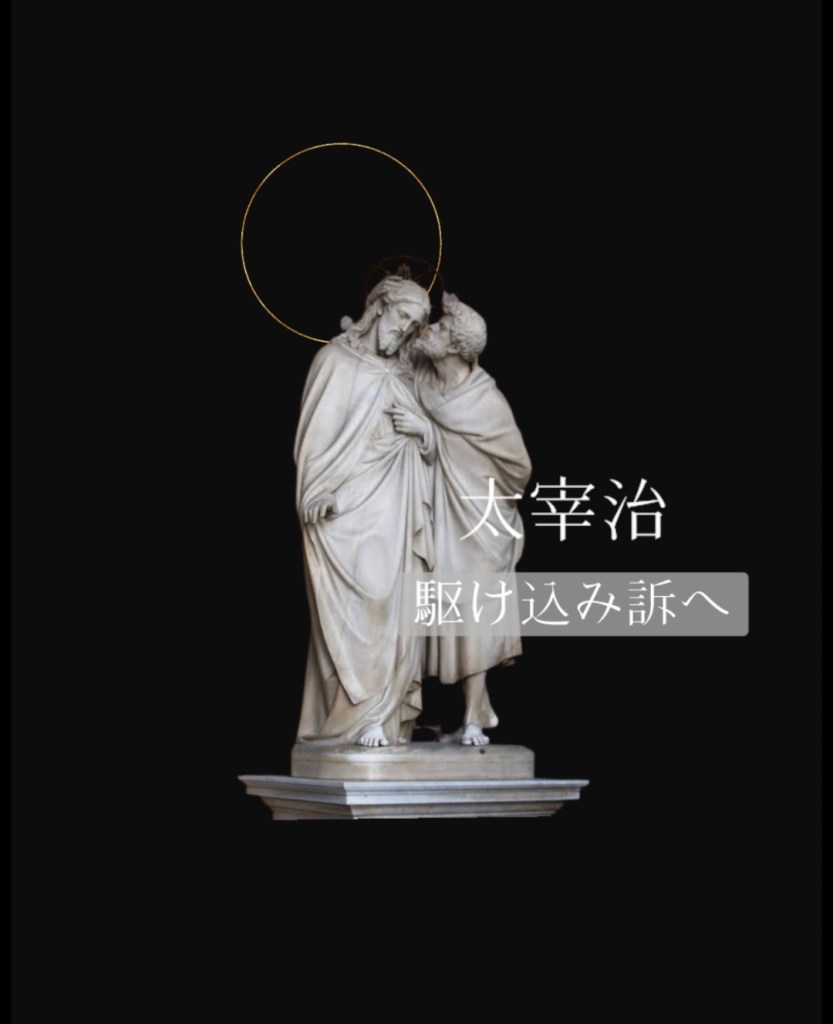
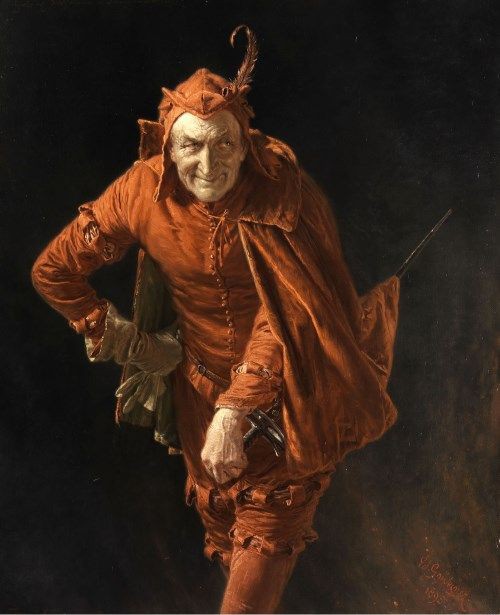


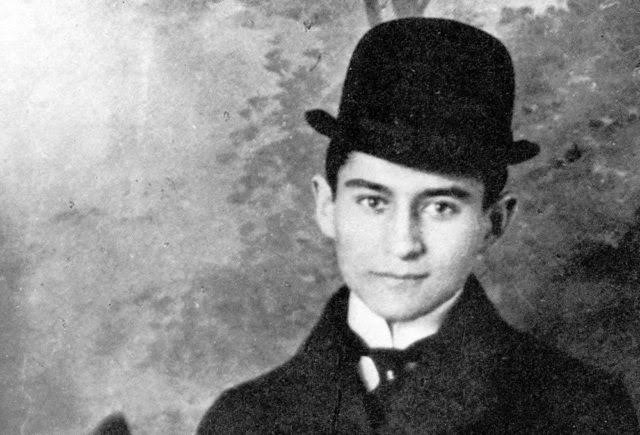
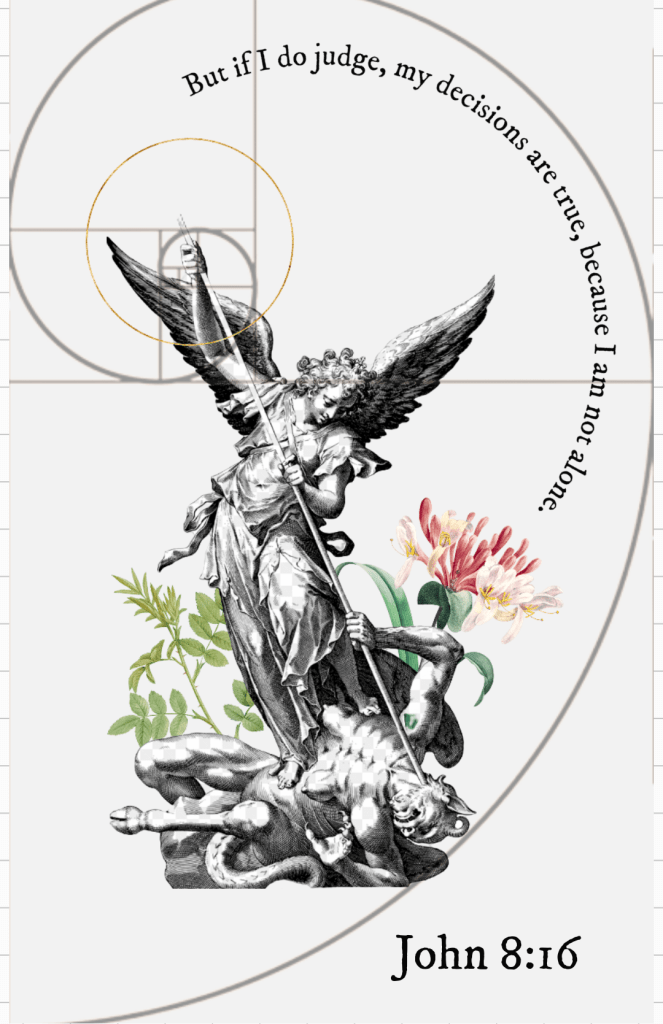

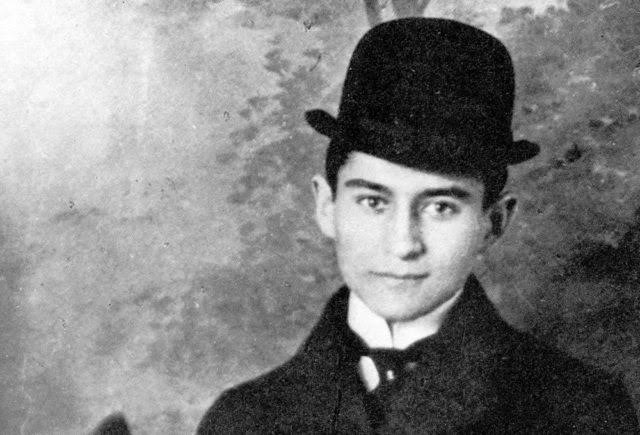

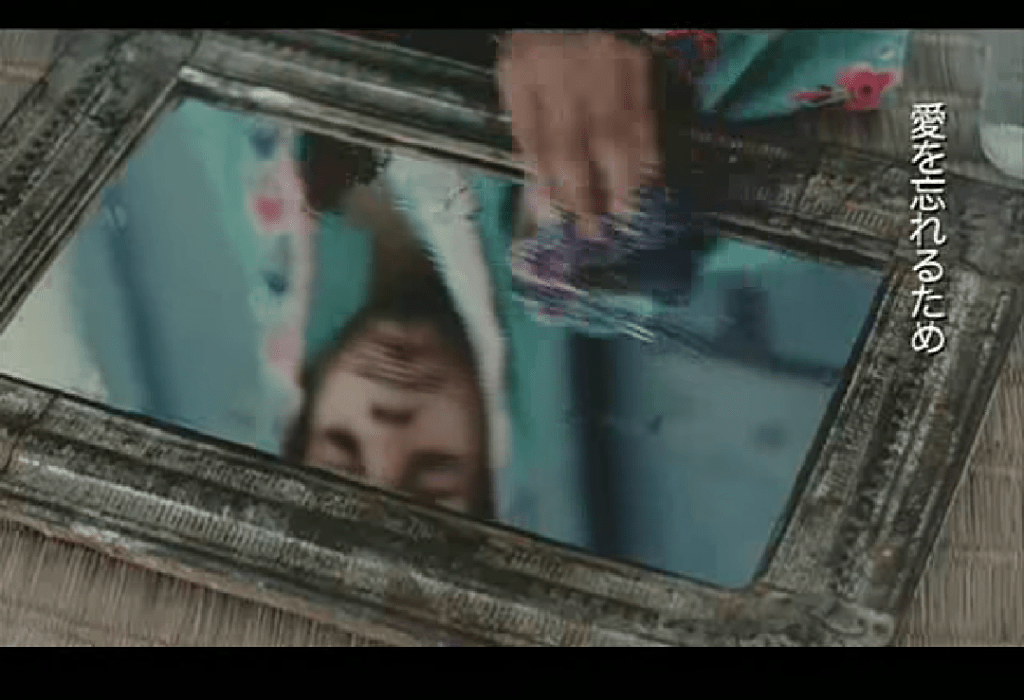
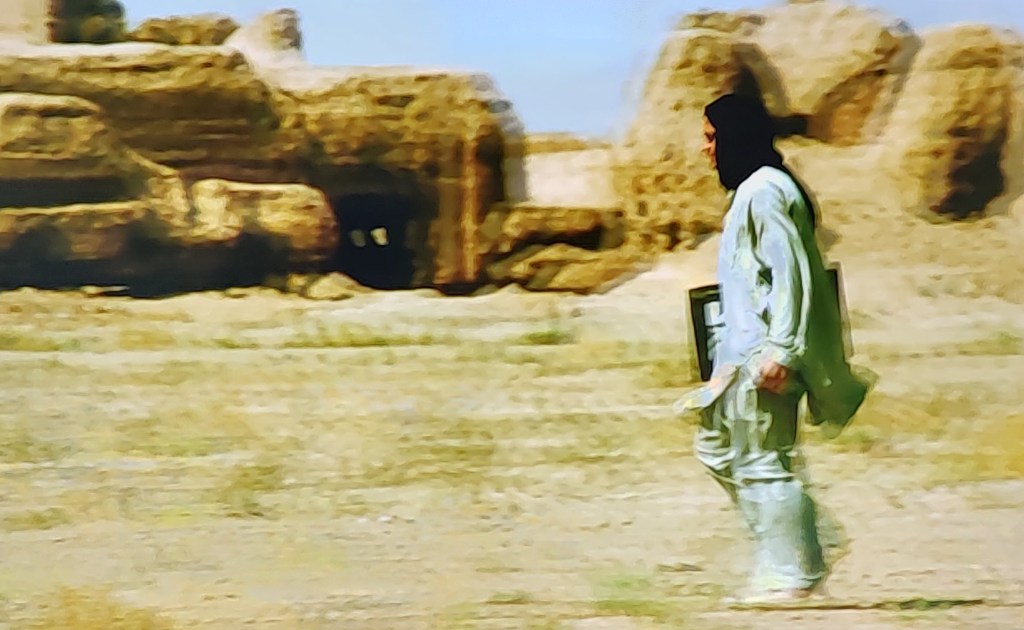


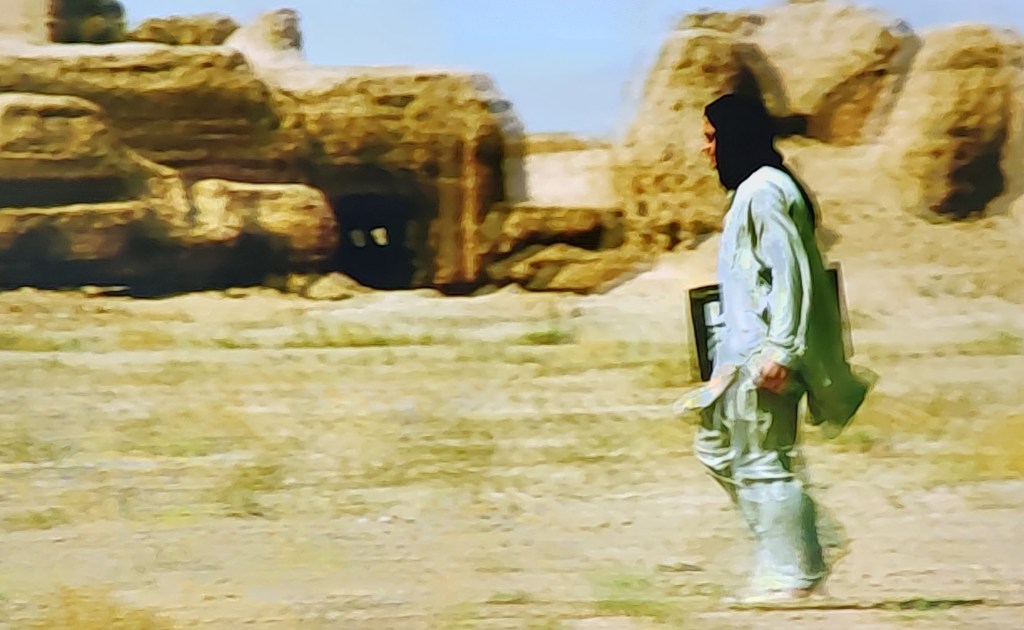
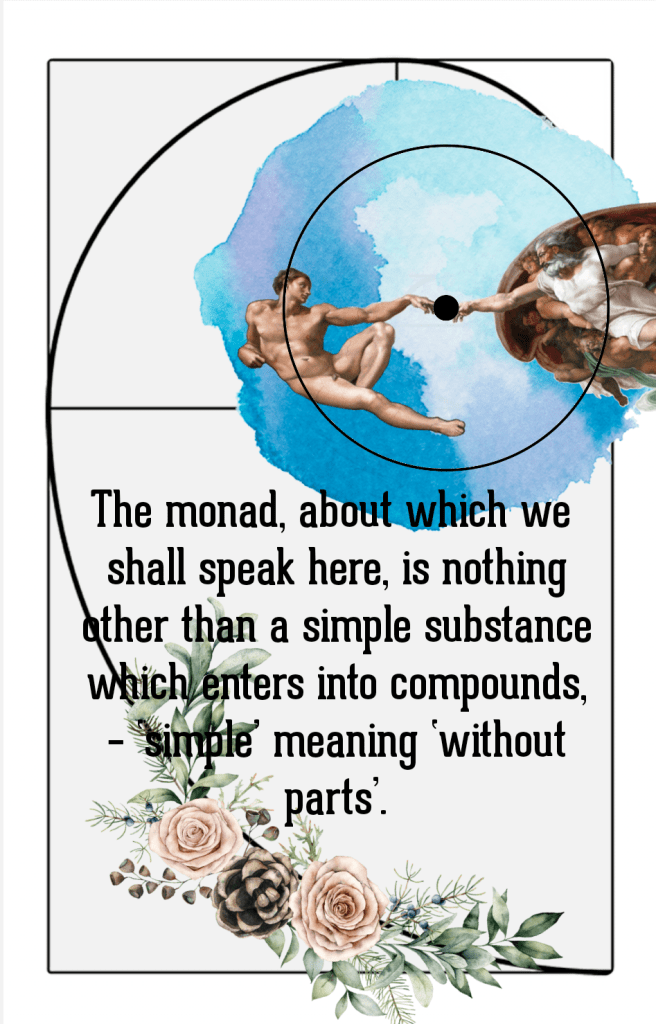
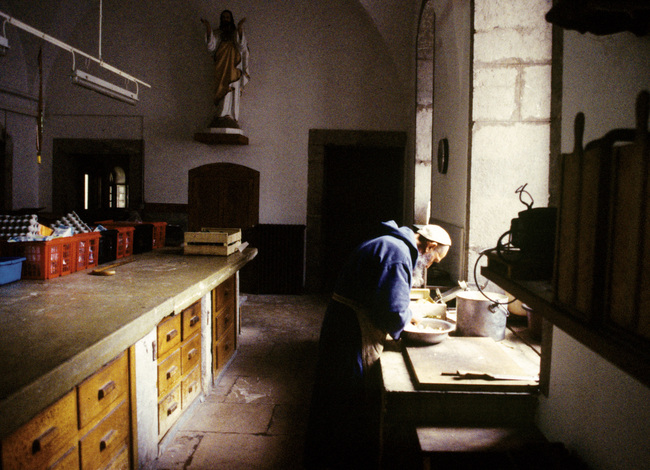
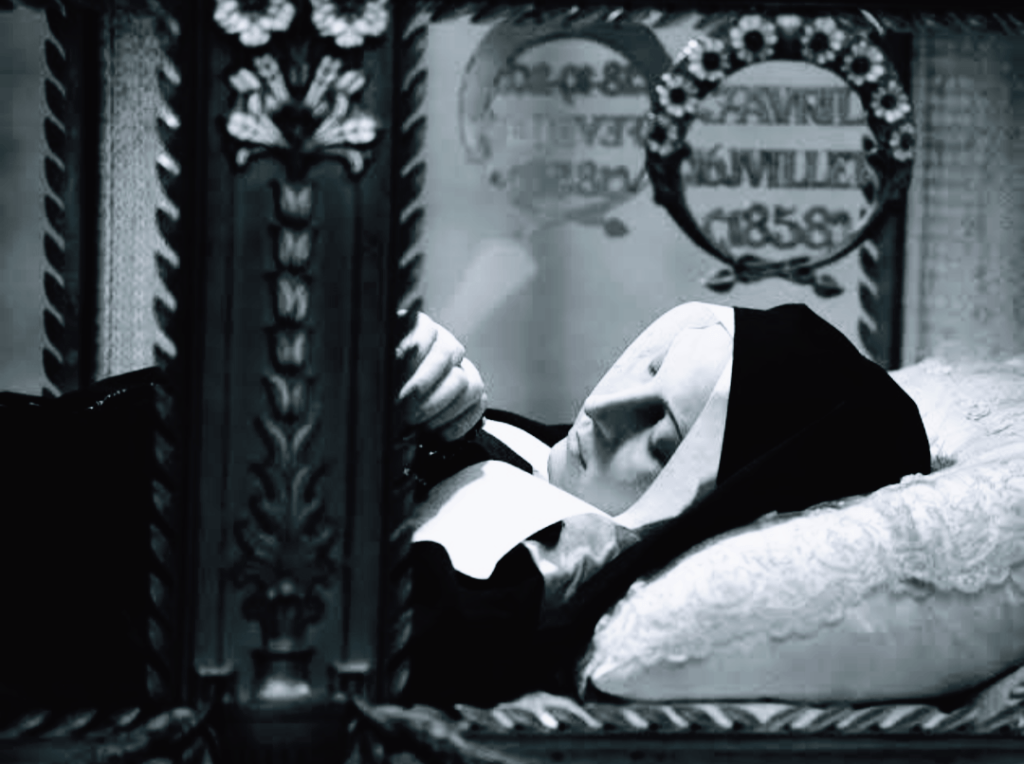

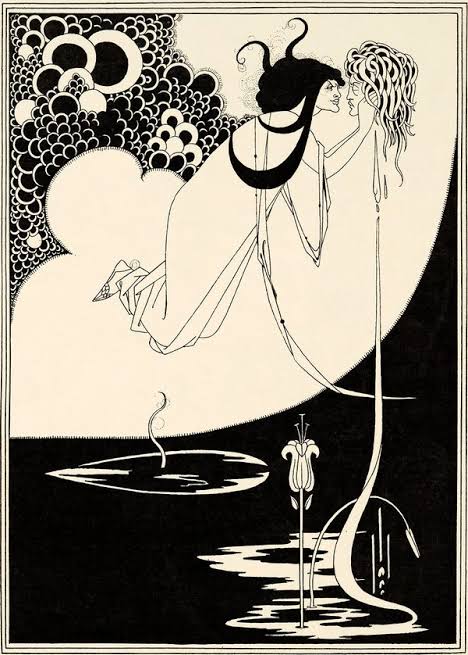
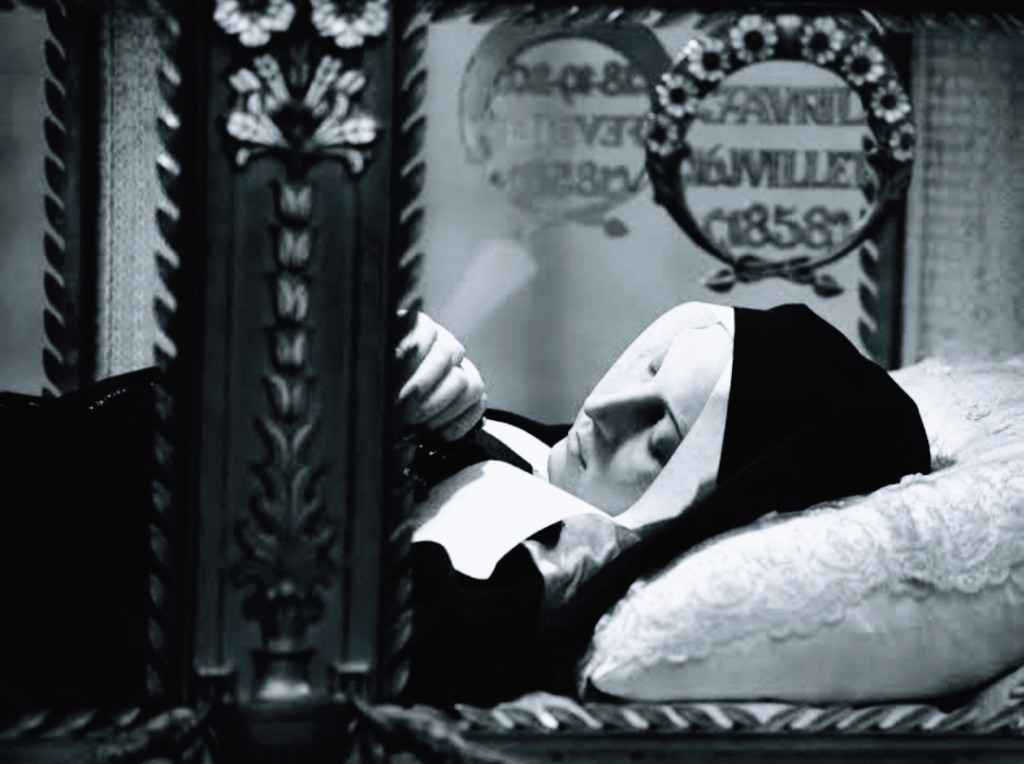

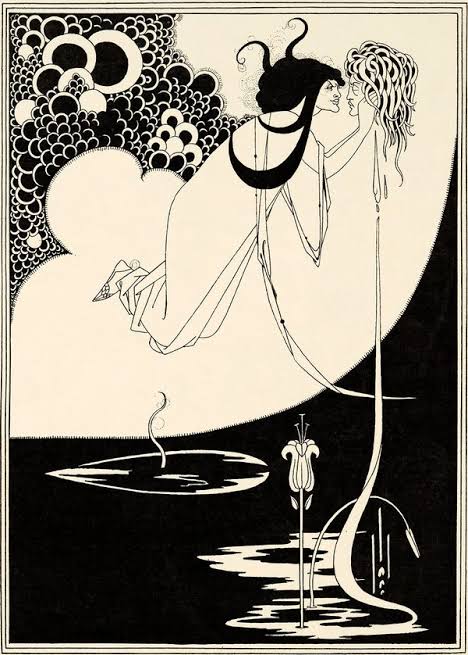
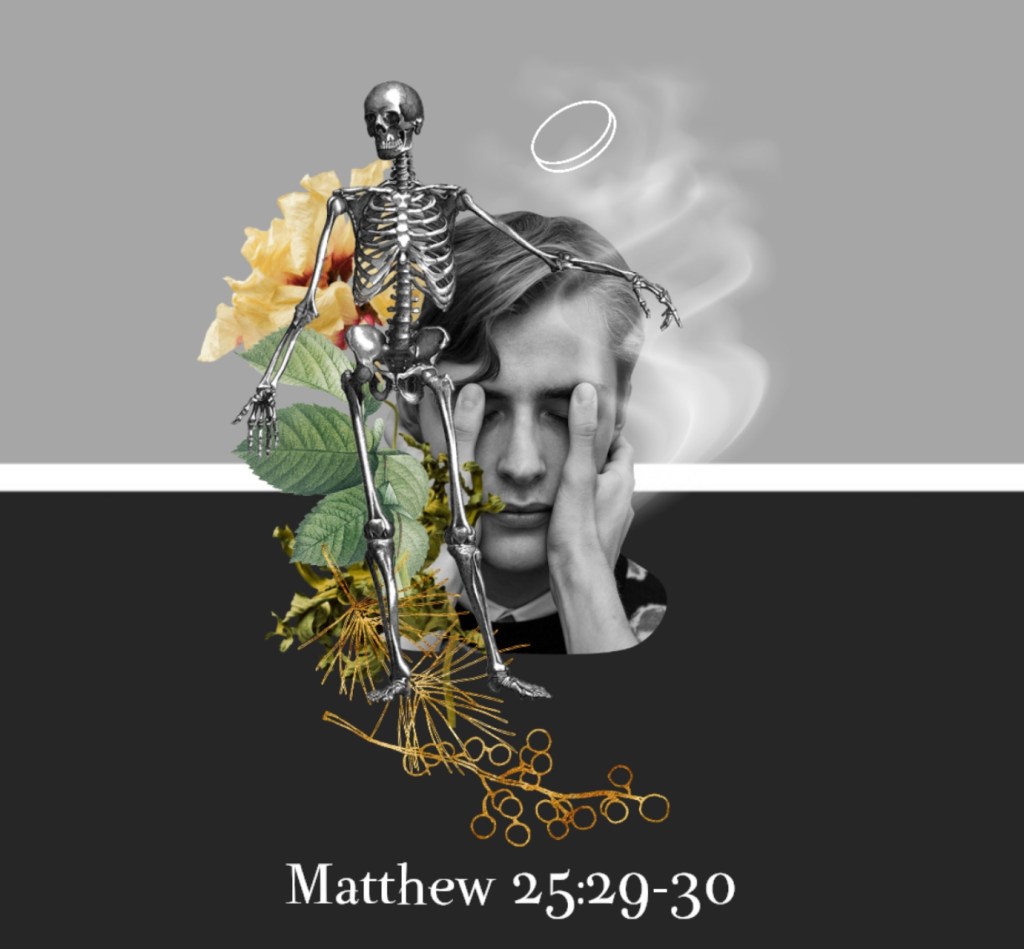
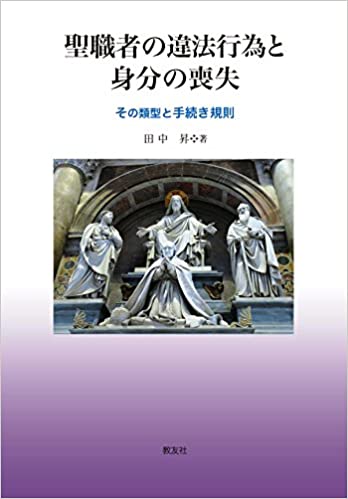
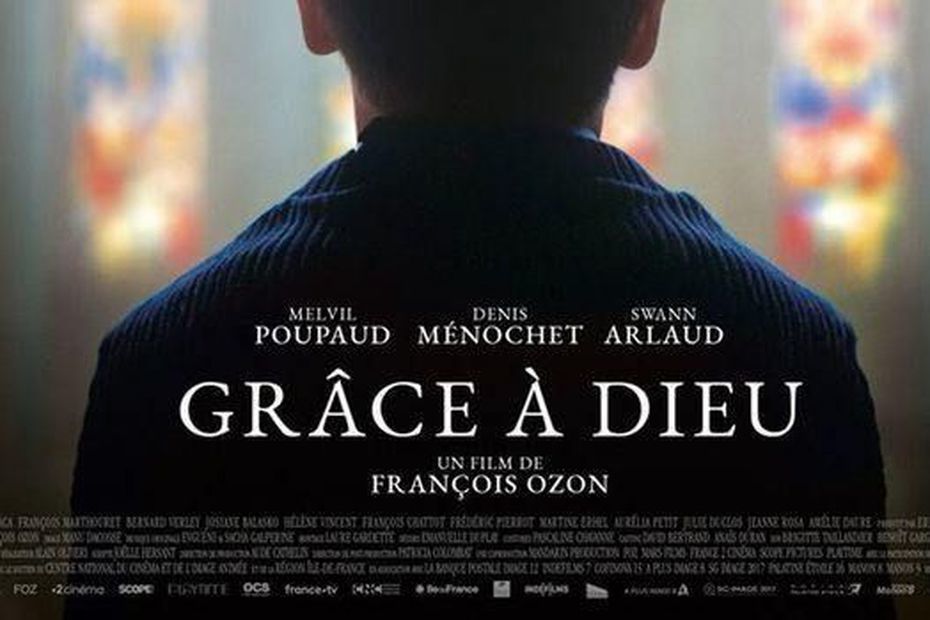




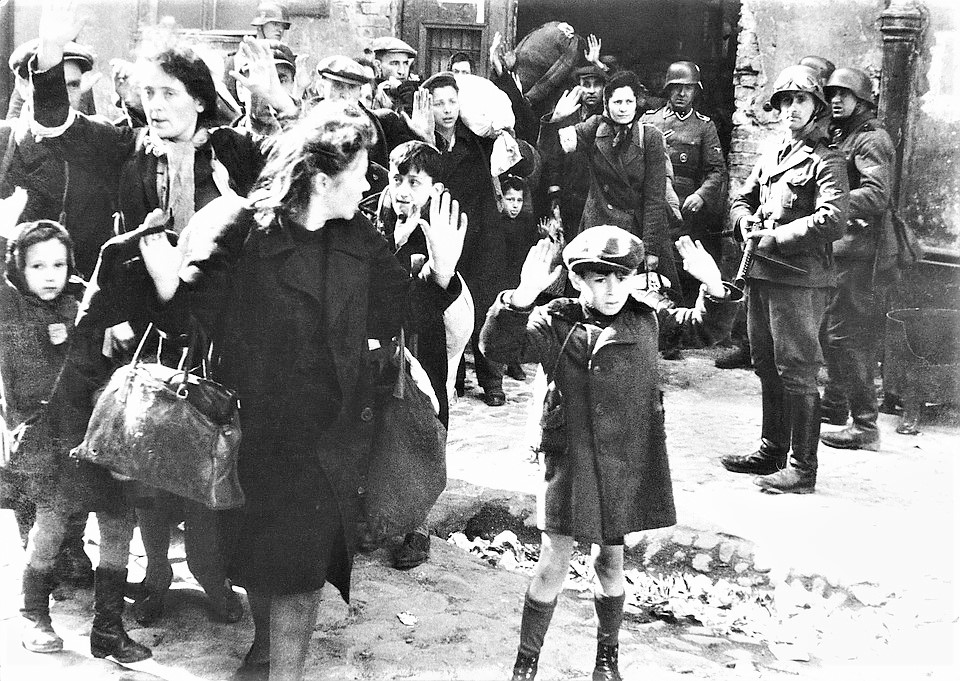


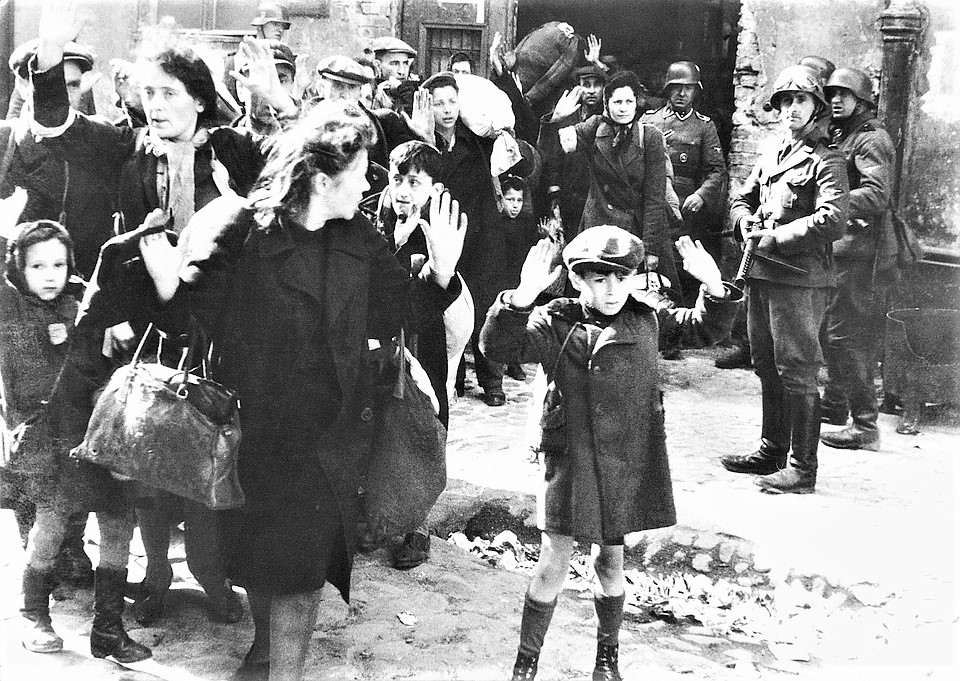



 Chris Kyogetu