その記事が見当たらなかった。そのことを思い出したのは、再度、5番を購入したからである。一時期ヴィトンやディオールの香水を愛用していたが、ふとしたきっかけで戻ってきた。すると、香りが以前と変わっているような気がした。見た目からは想像できない可愛らしいピンクのバラ、「Rose de mai 」は薔薇の香りにの中で強香であり、全ての薔薇のイメージをかき集めたようにシャネル5番は演出している。しかし、最近の5番の香りはそれがよりパウダー化し、濃度が薄い気がした。記憶違いなのなら申し訳ないのだが、情勢の影響で配合が変化することは仕方がないのかもしれない。
"To Analyse It means to critique the social conditions which are responsible for the absence of love. Belief in the possibility of love, not only as an exceptional and individual phenomenon, but also as a social one, is a reasonable belief based on an insight into human nature itself.

Erich Fromm, "the art of loving
Love is both a certainty and a blind spot, an illusion. But for religions, and especially for Christians, love is something close to existence, an ideal. The distinction between true love and false love is also central to this religion. Absence of love is used to describe a state of being in which love does exist. There is a fluidity to the word “absence”, and its meaning changes depending on whether the warmth of its presence remains or whether it has disappeared without a trace.
Love’s existence is denied by the word ‘none’. But false love does not mean nothing. Love is love. It is an ideal or it is not, that is all.
Most people are confused about the meaning.
I said last time that justice and love can be in conflict, but if I had to choose between justice and love, I would probably take love. That doesn’t mean forgiving everything, but it also means being silent. These days I don’t feel that there is anything that can be redeemed by justice. Justice is weeded out by the absence of love. For example, when you are the victim of a death, and society does not understand you. Let’s say there is one person who has wronged you. Christians give love to such a person, but for the evil that leads the people, Jesus implies the extreme punishment. (Luke 17:2)From this point of view, the Christian interpretation is that forgiveness of anything is not a good thing.
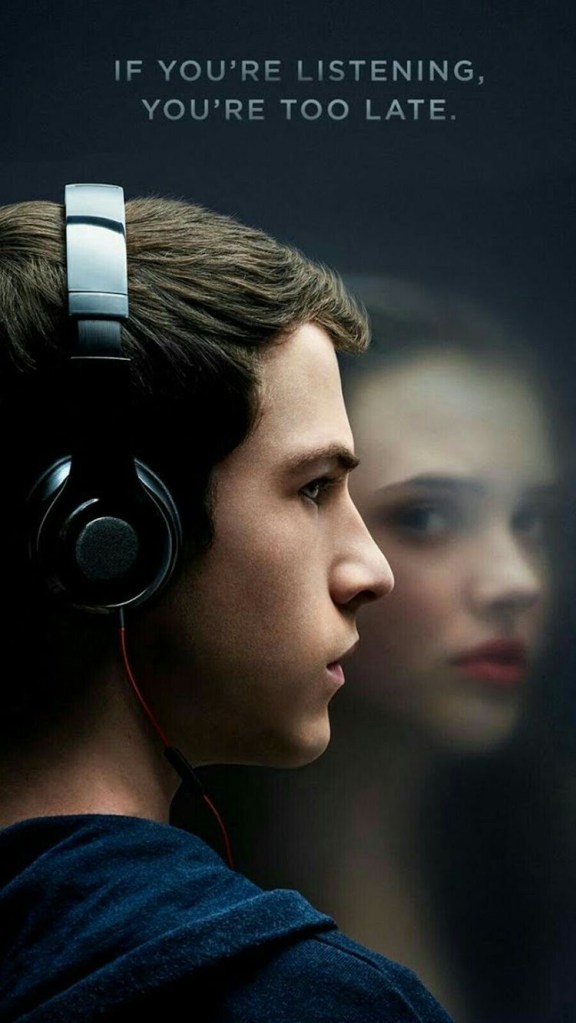
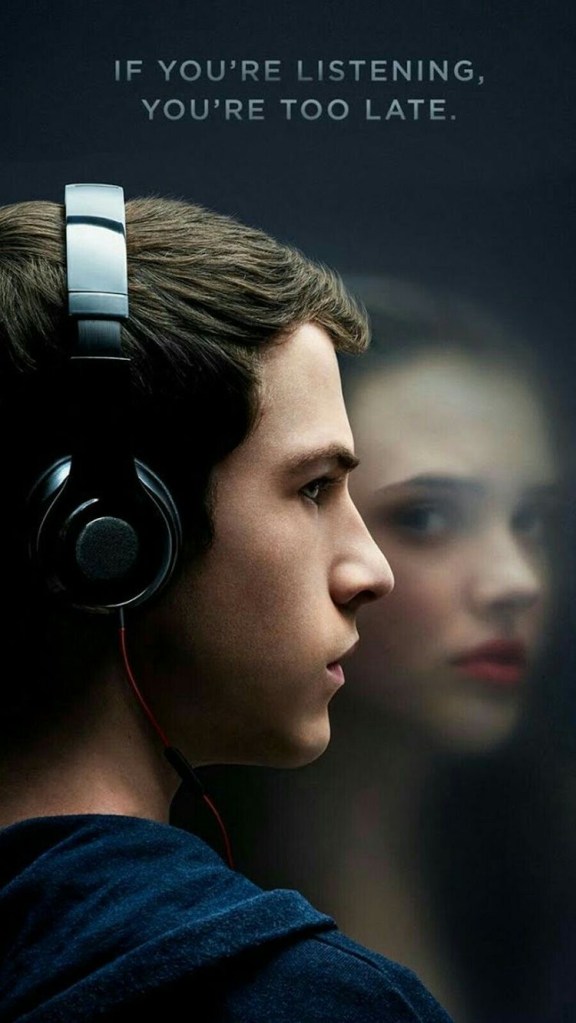
In the second season of the Netflix drama “13 Reasons Why”, the victim’s family filed a lawsuit against the school after the girl committed suicide due to bullying. In the end, the school was not held responsible and the case was lost. In the end the school was not held responsible and the case was lost. This is because the mind is both fixed and counter-fixed at the same time. It would have been negligent of the mother not to notice that her daughter was planning to commit suicide. I know it sounds harsh, but this drama is about a boy who had a crush on a girl who committed suicide.
He rebukes her ghost for committing suicide.
This drama also focuses on the “victim’s lie”.
Nowadays, in Japan, there is a lot of victim business. Using the fact that they are victims as a shield, they pose as minorities and become mass media. Markus Gabriel also denied the addictive nature of social networking and the suicides at the mercy of it, but Japanese people don’t read and understand even that simple article. It’s because they don’t understand the nature of the problem. They can’t question the nature of the companies that they agree to terms and conditions with and that don’t enforce them. They don’t understand what it means to be dependent on that world.
The only thing they care about is their existence.
The world these users are trying to protect is a world that doesn’t exist with one search.
If you agree to the terms of use, the fault of the slanderer or tormentor is not 10:0. That is the world of the internet. It is important to change the law to make the ratio 7:3. The illusion that you are 0 and they are 10 does not exist.
The more victims the aim is to ” Never Again “, the wider the scope of the attack. This is because it leads to an unconscious attack on the “same victim”. They assume a perpetrator who doesn’t exist yet, and continue to attack the perpetrator who doesn’t exist by analysing the person who slanders them with popular psychology.
I won’t give you any examples, but you may be able to think of a person who does this.
There is no one person in this category.
But why prepare a quotation from Erich Fromm? It begins with the absence of love, the loss of family and dignity even for the victims.Anything that has its roots only in the criticism of the various conditions of society can only return to the absence of love. Those who do not know what justice is, who do not know the violence of words, deny the violence of words, but begin to do it to others themselves. They welcome only the “friends” they have chosen, and make enemies of all those they do not understand. Isn’t that the misplace one’s priorities?
As Markus Gabriel says, they create new victims by unilaterally shielding them from long and time-consuming problems in places unsuitable for discussion.
They don’t care that their victim business is hurting the same victims. So they do not know that they are attracting criticism from victims who agree with me. I don’t sign up for forums or social networking sites that allow injustice to go unchecked. Because in the end it is the dependence on the mass media that was at the root of the problem.
And those who saw this “13 Reasons Why”, who only felt a sense of justice, go to write to the families of the victims. Those who chose love will stop at only guiding their own lives and will not do such a cruel thing.
So the question of what to do about victims is deeply rooted. The only thing I can say is: don’t lie.
Just don’t lie and say you can save what you can’t save.
It is selfishness to think that our actions can save many.
The “other victims” who are deceived by this lie will encounter secondary damage.
―――――――――――――――――――――
For example, if I had a child and was killed.
If I were a rational person, I would focus on the absence of love. I might think about the loss of my child, who was God’s love, and whether violence is necessary to pursue that absence.
Then I would not depend on the mass media. But if I lose my love,
I might kill the murderer.
But I am a Christian.
I don’t know how God will judge me at the last moment.
This is a cruel thing to imagine. I hope I will not have that fate.
In closing, I would like to thank all those who supported me when I was a victim.
Hugo Grotius: War is a state of affairs between struggling groups.
Thomas Hobbes, :A state of emergency, meaning that it remains in existence even while the operation is not ongoing.
When I was a child, as far as I could tell from the stories of the World War II, I thought people were stupid. But nowadays I think that the essence has not changed at all. No one is passionately angry about the First World War. Maybe it’s because the memory has faded.
But the Second World War is still remembered. As long as there are still emotional people in the world, it is impossible to understand history calmly.
Thus, violence and struggle will be repeated, but when we die, will it be a moving story like the “Merry Christmas on the battlefield” of the World War I.
Perhaps the people of the 22nd century will say that we are just stupid.
And so it will be with this virus story. After all, we are always in conflict.
In the past, the government and the newspapers manipulated information. This time, amateur influencers use the internet to write lies for the sake of numbers. They have no initiative, and they write falsehoods to sway public opinion while worrying about the numbers. It’s ridiculous. The twitter people who raise the slogan “don’t be swayed by the media” are incompetent and only express their opinions from free newspaper articles in the media. The Japanese media uses this rubbish as a basis for public opinion and programming. It’s ridiculous.
Wise people know that once a stupid struggle is ignited, it cannot be stopped.
We should look at the situation from a bird’s eye view and think about reconciliation.
My grandmother used to say. That war begins slowly. First, women will not be able to dress up, and fools will attack people in the struggle. Before you know it, the military police will be formed and they will control us.
What will be different now? Every day the celebrities of deceit speak as they please, worrying about their own reward.
That’ s how it is every day.
This video is about the German and British armies in the First World War, which only had a Christmas truce.
Will demonstrating against the war end the war? If we demonstrate, will it end the struggle? What starts when people who do not know reconciliation take up arms? These things are missing.
My dissertation at university ( UK ) was on personality forms and child psychology. It depends on the case that personality is a mind. The foundation of the human personality is the view of life and death, religion, thought, family, lover, friend, companion, work, but life events, accidents, drugs and alcohol can give momentum to suicide.
According to a paper published in the US in 2006
In 2006, the United States published a landmark paper which argued that life events begin at the core of personality development and lead to death when safeguards fail, but what safeguards? What safeguards work? Is it society, family, companionship, or is there a kind of immunity to the stages of personality development when these fail?
The first story, “Pangaea doll”, was a novel that followed these studies. What I did not try to prove in my thesis, my youth and my impulse made me think that this could be a suitable fantasy world.
I was young and impulsive, and I started to write.
However, as this work was written ten years ago, I knew that the memories and experiences of my childhood and school days were fading away, and although I could not establish a causal relationship between feelings and experiences, I had the feeling that my current experiences would disappear as I grew up, for better or worse. I decided to write it down as a specimen of memory.
In the midst of a series of monologue points of view that seemed to be real experiences, I was enthusiastic about writing something based on experiences, an adaptation, a “reality” that was not of this world. Not non-fiction, but fiction that resembles the real world, and I don’t remember what my impulse was. The records of those days seem to have disappeared. ( unauthorized login )
But the literary world has always been a cross between capitalism and communism. Education is so focused on ” cannot read ” that it loses sight of the meaning of the story. If they complain even a little, they are attacked by the basic average of capitalism, and if it’s like communism, their sensibility will never grow in the lukewarm atmosphere. Nevertheless, the reason why he entered the world of writing as an artist, changing his means many times from music to painting, is probably because art was the thing that touched the world from the loneliness he had conceived in the stage of his personality formation. As for music, my hands were not big enough to play the piano. It hurt me a lot as a young child to know that I would eventually reach the end of my life, even if I ran up the grade test. It wasn’t that anyone could hurt me, it was fate. I came to understand the impressionist sense of Colour at a time when my developed sense of absolute pitch was sparse. The fusion of the science of the colours of the sun with the world of introspection was my final impetus. I don’t remember the pure feelings I had at that time, but I do remember writing the Pangaea doll. A phrase that kept repeating itself to me: ” Thinking time begins to revolve faster than old age, it never stands still. It turns left, it turns right, it does not let my consciousness stay irregularly” (p.13) This line is my record.
I had to be silent because I had no way of expressing myself, and it was I who got the language to express myself.
In this work, too, there is such an undifferentiated protagonist who is unsteady on her feet. After all, I was silent on how to market myself. Regardless of how my career was received by the public, I was still young at the time, and this work on suicide gave me a lot to think about. I didn’t know why I wrote it, it didn’t fit in with the change of heart for the next one, and I didn’t introduce the first one to anyone for ten years. I have been waiting for a kind of ” prescription ” to talk about what I saw in the university research team, but the experience of that time is becoming forgettable. One of my patients at that time was the model for the ” Doll-like girl ” of this film, but I used only one element because her background was very similar to my own.
Already my conception was the first to connect the word “prescription” with the word “prescription”, which means a legal prescription.
Once I had given hope to a few readers, I found it harder to write about despair. I got the recognition I wanted, but it strangled me even more.
It became my task to see what kind of “Chris Kyogetu” I could become in this situation.
Literature, like self-improvement, does not offer immediate answers. Like the Bible, it has to be read many times and deeply formed in the inner world. It has been the same in my life. There is no immediate answer to what someone says to us. It goes on and on about how an experience becomes one’ s memory and leads to one’ s personality. I found myself not asking myself the same questions anymore. That’s when it dawned on me. I was ” Old “.
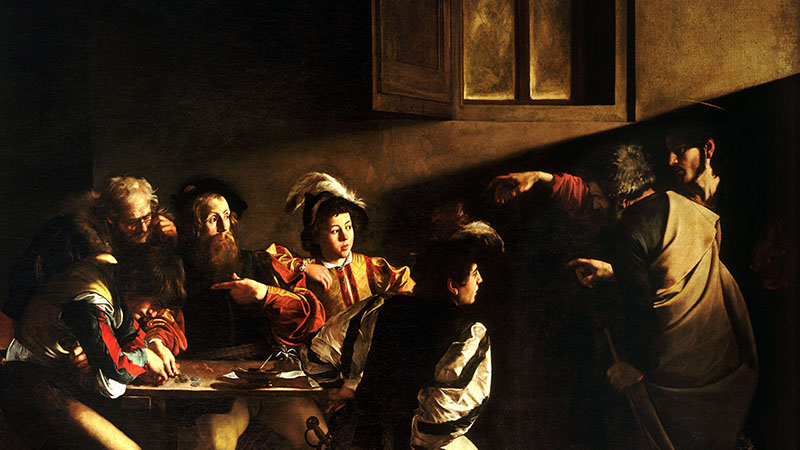
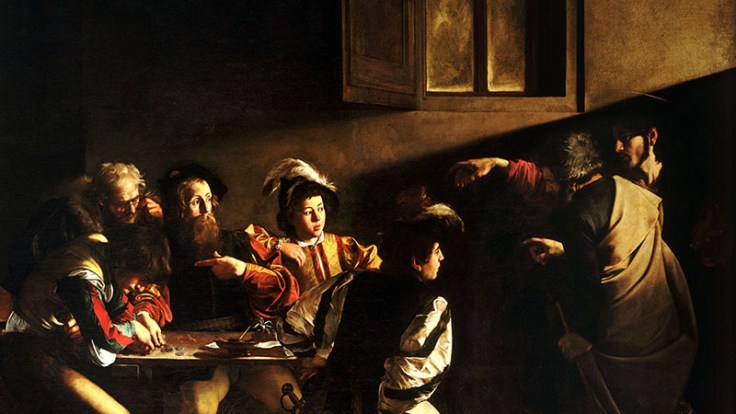
Although my reasons for quitting painting were complex, I got into trouble with adults when I said I wanted to paint Christian paintings. This was the golden age of Manga and anime, but realistic painting was still superior. Nowadays, the themes, the framework and the perspective are so advanced that they cannot be considered as illustrations, but at that time they still had their faults. Yet, the aftershocks of my youth made me realize that the question of whether or not it would “pay off” had already become a manga. I was also convinced that this would be the case in the future. Drawing seemed to confront me with real motifs, and I felt that it was a reversal of the escape from reality of a couple of days or a week. Painting is a form of self-expression. Painting is self-expression, it is meaningless if it does not represent your world. I was aware that I was losing what I wanted to express. So he found Christian painting. While I was reproduction Caravaggio’s St. Thomas & St Matthew series, I decided that I wanted to paint Jesus and the saints, even in abstract. He was insistent Caravaggio compared himself to the vocation of St Matthew. He was convinced that God would one day shine a light on his inner world to which no one else could respond.
But at that time I needed reconciliation with others, so I left the painting behind. I left Japan wondering when I would be able to convince people, but I quit trying to convince people.
From the two-dimensional world, I have been creating small worlds again and again. From music scores, to canvases.to a canvas. And now I live in the two-dimensional world of writing. No matter how ambitious I was, no matter how many times I overlooked something, made a small mistake, thought I had done the right thing, the abyss no longer responded. It didn’t have to be literature, did it? I quietly went back to my career to find suitable employment and to start writing my dissertation, but I still clung to the idea of writing one more piece of “literature”. My conversion to Catholicism is part of this.
My reasons for wanting to write literature are long. I reckon I will listen a little more to what my long soliloquy wants.
The first one, Pangaea doll, which I kept hidden and didn’t even love to be ashamed of.
On the last page, I leave these words.
I promise you that we will be together forever. To a future that will never be seen.
In the warmth of everything we feel, which runs faster than words.
To the illusion of eternity, long and far away. And we’ll cross this line together”
The sprint of the young me, when I was the spokesman for the young me.
The past spoke to me. The role of this novel was to be a safeguard for me.
The light that penetrated the many sarcastic words and the great shadows was inside me.” Give us proof”, “Give us proof”, “Give us proof that you can do it”, it was undoubtedly my own voice that was screaming more strongly than the voices of others. Hope and despair were all in my possession. My voice was the pinnacle and death was always at my side. The desire to die was always there. Pity, envy, cursing…
The reality was always chaos, and all I could see was silence.
And yet, back then, I had the strength to avoid the darkness. I’m not sure if I still have it, but I’d like to bet again.
To enjoy life is to bet. If you don’t gamble anymore, life may as well be death. The taunts and the criticisms are the living dead who have stopped betting. In Dante’s Inferno, the poor soul who cannot even enter hell
Poor souls. Do we need to ask? No, you don’t.
Heaven doesn’t want that kind of power.
Chris Kyogetu
Caravaggio: The Invocation of St Matthew
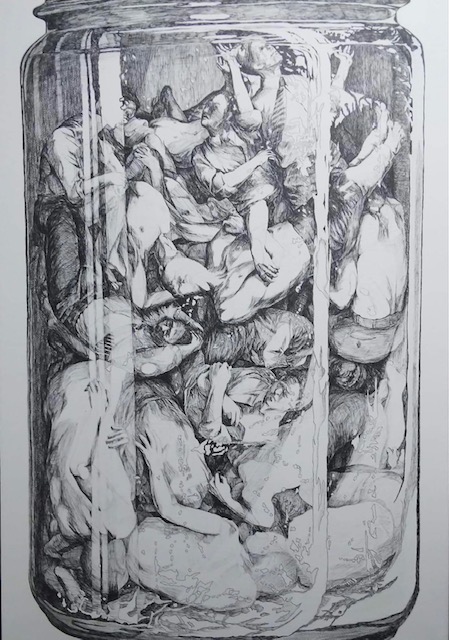
Pangaea doll
The heroine, Shoko Sato, suffers from an unexplained illness. She was wandering in illusion and fiction, but her boyfriend found the name of the disease. It was “Pangaea Syndrome”. It was a disease that caused her to have similar illusions and thoughts, and in the end to commit suicide.
Her past begins with a monologue. The ideas that emerged were always unvirgin and had already been written by someone else. Like Borges’s “Library of Babel”, there was always someone who had shown her the idea. Gradually the protagonist sees the light as well as the despair. Her finds the light of death, but the fantasy world he has cultivated speaks to him. The fantasy world invites either death or life to unfold in the world of writing.
Thoughts 10 years after publication
I waited for the prescription with silence.
The laboratory was visited by patients for whom science could not explain. Patients for whom there was no evidence, and this was my connection to my inner world. A story that was said to be difficult to understand.
The presence of this doll-like girl grew in me and pointed me to an endless fantasy world, as if she were the guide of my life.
I focused more on sensitivity than on dialogue with people. In the midst of being hated, loved and loving, in the midst of being unable to resist oblivion, while remembering, the overflowing imagination and remembrance diminished. Quitting running, I found myself asleep. It was a long time before I felt like writing again.
Suicide process Diagram: H et al ,The American Journal of Psychiatry 2006
It would be a dizzying abyss for man to face, and his face reflected in the abyss would clearly show the ugliness of his ego. However, sadly, one does not see one's own face reflected in the depths at such a time.

Takehiko Fukunaga,
Attempt at Love
Whether the end of the profound is an abyss, I don’t think it can be said so. The spirit can be cut down and the abyss can be simulated by being tortured by people with shallow ideas.
Jesus Christ did not only deal with the wise Pharisees. He had his share of abuse from idiots. However, the audience still finds in Jesus an abyss. Language and imagery, whether imagery becomes language or language takes on imagery, has always been a constant for me, but the writer loves language at the very least. The writer loves language at the very least, and waits to be discovered by Image.
Otherwise, it will not be understood by others. If others do not understand not only the language but also the image, it is meaningless.
Learning to love someone makes an abyss realised. This may be a Greek philosophical aion, perhaps, but love is a strong thing. And yet, it is also weak. It is the quality of the person who, after loving another person as if he or she were a part of his or her body, has become a part of him/her, and who, when becoming another person at a distance, becomes either the devil or the good Samaritan. Dreaming of the abyss is shaken by the other, but it is the quality of the person who holds the image.
As I said last time, it is difficult to understand why it is “consent” for a Catholic priest to hold a woman for any reason whatsoever. By their ” Ordination oaths” they are supposedly forbidden to give consent, which is a betrayal of God.I am a moderate and would not have a problem with it if the woman had “love”.
However, I only pursued this issue for a period of time because it seemed to me that there was no “love” involved. I know the name and face of the priest concerned, but I will not divulge it. I will probably take it to my grave. In my view, even if the facts are agreed, if the woman objects, the priest should resign. Even if the woman is paranoid, I believe it is retribution for breaking God’s vows. Under Japanese law, a man and a woman in a locked room can certainly be considered to have consented to sex, but in this case the woman enters with the understanding that she is Catholic and the priest is in no position to do so.
I don’t know the facts as I left this interview in the middle of the day, but my only wish was to see clearly the demand for the resignation of this priest. But to do so would require a ” wide-scale ” attack on Catholicism. But to do so would require a “widespread” attack on Catholics, for that is what a revolution is, and people will not act otherwise.
As a journalist, I was not prepared for that. I could not prepare myself as a journalist because I had sisters and bishops whom I trusted. I wonder if this priest has ever felt the cruelty of having to attack this ” wide scale”. I would like to ask this with a prayer.
In closing, I would like to explain why I have quoted the abyss in Takehiko Fukunaga’s book, because it is an apt description.
This quote was about love between a man and a woman, but the abyss itself makes no such distinction.
It is often questioned why so many of these issues remain in Catholicism, a question that is easily dismissed as “blind faith”. In fact, blind faith does exist. Some of them focus on the “abyss”.
Some of us do. I am one of them. Perhaps at least those Christians who understand the issue are looking at the abyss. After Jesus cried out ēli ēli lemā sabachthani (My God, my God, Why have You abandoned me?) on the eve of his crucifixion, why was God silent?It was the theologian Fr. Mikio Wada who asked this question. He spoke of the abyss. He spoke of an abyss, deeper than Freud’s unconscious or Jung’s collective unconscious. It is the abyss. If you go through it slowly,
It was the theologian Father Mikio Wada who asked this. He spoke of the abyss. He spoke of an abyss, deeper than Freud’s unconscious or Jung’s collective unconscious. It is the abyss. If you go through it slowly
If you experience it slowly, you will see it as a big vortex.
An abyss is not necessarily a sublime place. Nietzsche has his abysses.
I have my own abyss. There is no criterion for whose abyss is greater. The abyss is the common human God, where the values of love and death also lie. Takehiko went on to say that egoism is also reflected. So it is. If we focus on the abyss, we can indeed leave the injustice and suffering of the same community as our own abyss. Each of us has our own feelings, our own vision. We love even the darkness, that is what makes us human. Yes, man is incapable of facing egoism. That is why it is called blind faith, and believers may be guilty of it.
We must be aware, even if only a little, of what is right and what we should be, after all, following the love of Jesus.
I hope you will continue to make decisions, not only in this case, but also in the future.
The victim, as you can see from the article, tried to return to the church many times.
The victim, as you can see from the article, tried to return to the church many times. He has not been understood there and has suffered secondary and tertiary damage in the church.
Victims are not only hurt by a definite accident or incident. They are also hurt by the society that surrounds them.
They are also hurt by the society that surrounds them. If you are a Christian, you should be a little more concerned.
So why are we so widely attacked? I want you to think deeply about why we have been attacked on a wide scale.
Certainly the abyss is important.
But it is a mortal sin for a Christian not to confront egoism.
Death is the end of human life, the “Sein zum Tod”, Heidegger’s way of saying that we are on our way to death. What constitutes death has been debated for centuries, and science has decided that it begins with brain death. In Japan, the first indication of brain death began on 28 February 1999. In Japan, this is limited to cases where a legal determination of brain death has been made for organ donation. A person is not legally brain dead if they are considered clinically brain dead but do not donate their organs. While we are conscious, we can only dream about the reality of death. In “La Mori”, Maeterlinck violates the realm of the occult and leaves us with a reflection on our own near-death experience and death, which cannot be measured by the consciousness of death. The literary world actually deals more with death than with love. The most common combination is probably that of ‘love’ and ‘death’.
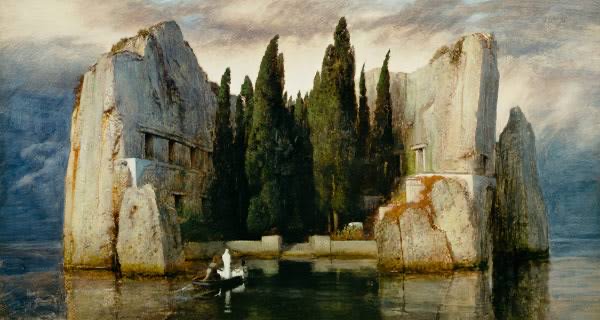
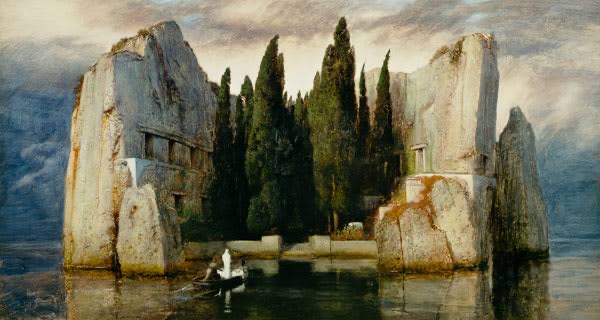
The story centres on a love triangle in which the protagonist of Takehiko Fukunaga’s “Isle of the Dead“, an aspiring writer, falls in love with two women, Ayako Aimi and Motoko Moegi, and cannot choose between them.
The story is structured around the atomic bomb, the idea of death and the idealism of the artist. Their story lives fantastically as a literary world, with the fact that life has gone mad. Fukunaga’s world on the ”Isle of the Dead” is like the dissociative symptoms of trauma in our time. Motoko has lived her inner time as a result of the atomic bombing of Hiroshima, Epoché or Abstraction her very existence in a phenomenological way. What she touches is always unfeeling. Ayako has eloped with a lover in the past, but was abandoned and attempted suicide. She lives her inner time trapped by the end of her love. However, in the chapter of the monologue “K”, the man who abandoned her lover, the author really writes about a parallel phenomenon, that is, the fact that he really loved Ayako and left her, and that they could not overlap.
In this story, it is necessary to arrange the structure of the story: the time of Kronos (Saturn), which proceeds linearly with the main character, the chapter of Kronos’ remembrance, the characters told by Kronos, Motoko’s monologue, and a man’s monologue. There, the sorrow of being left behind as people change from post-war to high economic growth is depicted. Kronos is the God of Time, and in Greek mythology, the parent of Zeus. There are two kinds of time, the weight of Kronos and the opportunity of Kairos.
While the living have much to think and say, the dead are silent in the face of the mystery of the soul.
This story is an intersection of objective tense and inner world. And the atomic bomb is represented as “Saturn” (a coterminous setting in the story). Kronos is the Greek word for Saturn. I don’t know if the author intended it, but it also has an astrological meaning (Saturn in transit brings death to many). The narrative, which has told us so much and has been winding down, comes to an end with the suicides of Motoko and Ayako. In the face of death, the living are transformed into thought forms. Despite this, the illusion of the living is still present in the life of the aspiring writer Iiba, who becomes a proxy for the wounds left by the atomic bombing on the Japanese people, and for the two women whose souls are wasting away, no matter how high the economic growth of the Japan. It seems as if the only way for the illusion of the living to have any substance is to write about it. We are living in the face of death. The moment we are alive is constantly disappearing and being renewed. Mortality was previously an illusion, a dream. But to witness the death of a loved one gives such grief that it makes the living illusory. The glory and shadow of death are so strong. Without love, the living – yes, the writer Takehiko Fukunaga’s ‘attempts at love’, Agape and Eros (Christian interpretations of the Greek) – are eclipsed by the cruelty of the world if love is lost.
Well, then,"  "what about me? "What am I then, he mutters to himself. We are alienated from the dead, and he stands there now, futile.  Is it true that life is nothing but a vain effort? Is it all just an empty void? As he reflects on this, the thick emptiness that covers the canopy gradually fades away, just as the clouds that have burned out on the distant horizon fade away (just as in a dream).

Then his consciousness is completely and noiselessly swallowed up by it.

(Takehiko Fukunaga, Isle of the Dead )
He (the protagonist) then ends up discovering through the novel the “actuation of death”, the materialisation of the living through the speaking of the living as thought bodies. Each time this happens, Japan decides to keep alive the “death” that has been left behind. As a sign that even after such misfortunes, people can still live with love knocking against love.
A ray of light shone out of the dark window in which he was standing, like an awakening, drawing a clear glow.

A ray of light shone in.


(Takehiko Fukunaga, Isle of the Dead)
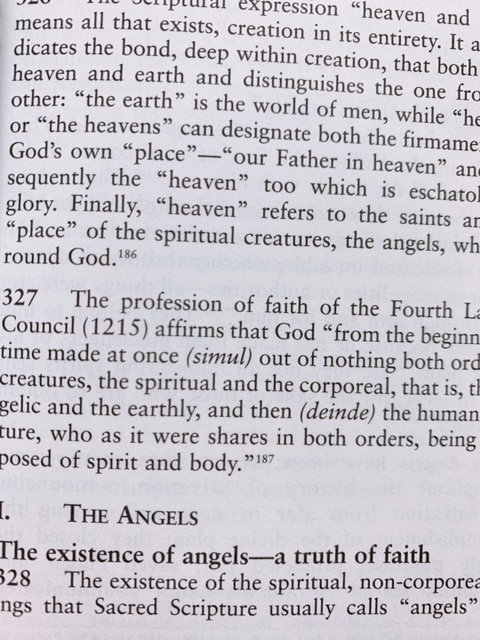
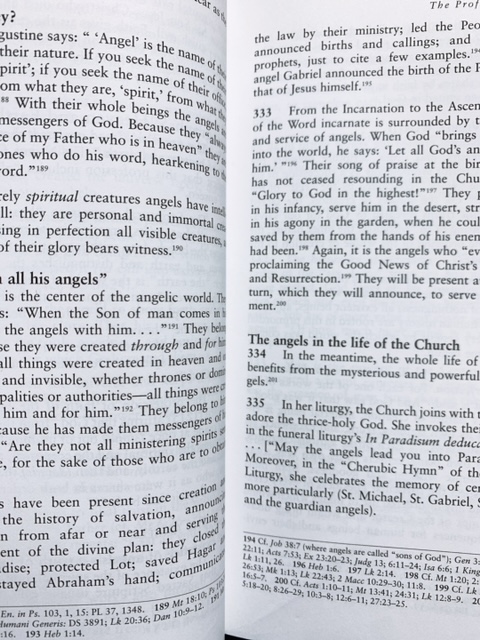
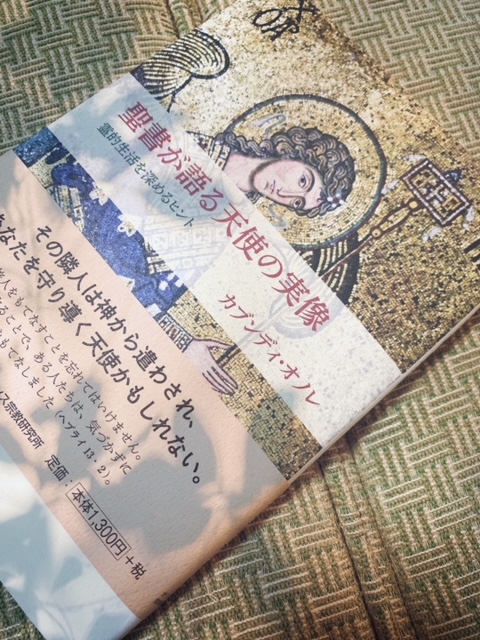
Fr. Kabundi Honoré’ ” Biblical Real image of Angels”
The meaning of my love for the Bible
①Reading the Bible makes us aware of various psychological functions. Whether this is a figment of our imagination or an archaeological fact, we experience rational (thoughts and feelings) and irrational (sensations and intuition) functions before the factual conclusion. The proposal of psychological functions is based on C. G. Jung, but those of us for whom Christianity is not the state religion will first judge whether we like the story or not (feelings). Next, we will reach to capture the system of the Bible (feeling). Then we analyses the content (thoughts), and intuitively we may temporarily try to explain the nature of Adam and Eve in Genesis, for example, and talk passionately about why women suffer. There are many choices: to repeat it again and again with changing thoughts, or to stop reading it because you don’t like it; but the person who does not let go of the Bible connects the experience of the outer world to the growth of the inner world. Following Jesus is when we reach out from our built-up inner world to the outer world.
It is service. It is love. It is evangelization.
At the same time, reading the biblical world requires a dynamic of imagination. Whether imaginary, dreamy or pictorial, what is clear is that there are no glib metaphors in the Bible. Many obstacles lie in the way of faith. This is because people’s psychological functions are processed differently from person to person, whether they become occultists and cults or exemplary Christians like Edith Stein.
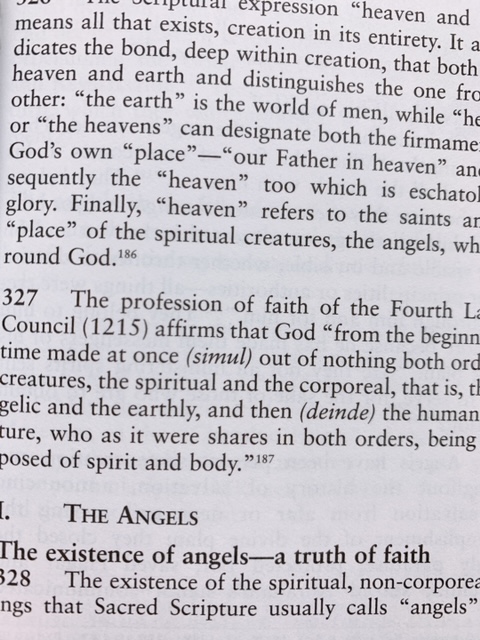
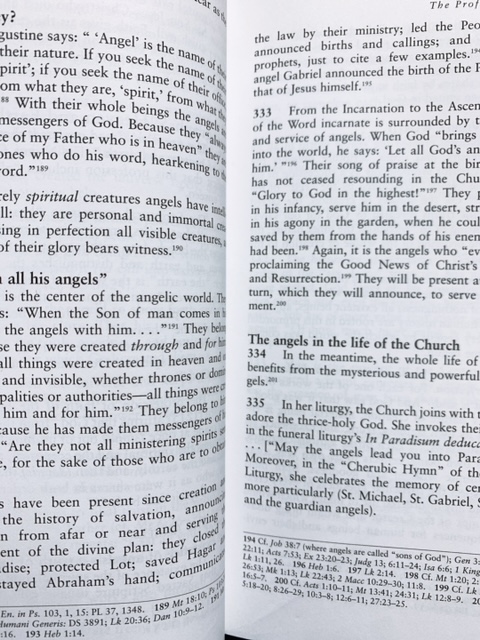
The theologian Balthasar declared Angels as Mirrors of the Human. It is the way of theology. I leave behind those who dismiss this as pictorial. The Catholic Catechism states that angels are Messengers. As I wrote above, angels do not appear to people whose inner world is clouded. Angels play an important role in proving that one’s inner world is not clouded. Throughout history, poets and writers have attempted to return to nature through various poetic inspirations, which have also preceded philosophy and psychology. If not for German mysticism, philosophy would not have been derived until the present day. The Bible is a necessary part of the history of human wisdom, and we must not forget that there are still unknowns. It is important to read it again and again, to repeat its psychological functions and to grasp how it moves towards the existence of the world.
② I love angels first of all because as a feeling I find them beautiful, and because intuitively they do not seem to be the product of a pictorial imagination. Although I have been thinking about how to express and prove this sense and intuition for a long time, angels have not been dealt with much even in Catholicism; in 2018 the Pope talked about angels, but for a while they did not seem to be a topic of conversation in Japan. So I gradually gave up the pursuit of angels.
Recently, I came across a good book.
③Fr. Kabundi Honoré’sbook ” Biblical Real image of Angels” was published by the Orient Institute of Religion. I had given up the pursuit of angels. The fog that had been clouding the mirror seemed to have lifted. The mirror shone with light.
I found it fortunate and opportune that Father was living in Japan, so I contacted him. He was very kind and told me why he had written this book. He told me that he had been travelling around Japan with his silent retreats, communing with the faithful and felt the need to draw their attention to the presence and work of the angels in order to help them develop their spirituality.
Father Honoré’s book was both scholarly and beautifully written, as if the Holy Spirit were present in the words.
Book index
Ⅰ:Angels created by God
Ⅱ:The Angelic Ranks
Ⅲ:Exceptional angels mentioned in the Bible
Ⅳ:The appearance of angels
Ⅴ:Angels’ sins and destiny
Ⅵ:Demonic means of control over man
Ⅶ:Following the angels in the spiritual life
This work is wonderful because it includes the angels of the Old Testament book of Daniel, which is not often explained by Catholics. It is important to note that angels do not float, but fly. The popular non-biblical view of angels equates angels with God and does not understand angels as floating messengers. By biblical, I mean that angels have a purpose. Flight is having a purpose. This book is a very clear explanation of the whole of biblical angels and the purpose for which they appear.
The book not only deepens our spirituality, but the stories of angels in the Bible, which are mystical in their own right, can be used to interpret the images of angels left behind by many great writers. For example, even the works of Balzac, Rilke and Shelley, who professed to be non-Catholic, often drew on the Bible for their angelic attributes. The unity and difference between the love we seek and the love angels give, the fact that angels are not gendered, the dynamism of people’s imagination and creation.
Only when people contemplate can the mystery live on. How does it happen that the dreaming of man coincides with the works of God? It is to trace what the flight of angels is like.
It might be to realize “the reflection of the purest thing” (André Paul Guillaume Gide)
It is only through faith that forgetfulness can become a mystery to accumulated memories, experiences and paradoxes.
Shakespeare said: “All the world’s a stage,And all the men and women merely players.”The stage is full of tragedy, comedy, folly, despair and cruelty. Nothing in his work has ever been made happy by breaking a biblical commandment. Hamlet completely loses his reason and even loses his beloved Ophelia to madness. Shakespeare could not have created such a tragedy without the foundation of the Bible and faith. He was well aware of the retribution brought about by the god of the script. A life that does not go mad like Hamlet’s is an angel’s inner mirror (Balthazar).
Tragedy repeats itself, but the life God has given us in this world can be made meaningful through agape and gratitude. That is certain. Simply writing about human hatred does not capture the essence of the story. In order to find the divine retribution and miracles, we need to feel our own heat through faith.
To do this, we need to know the angels better. Angels are complicated when it comes to explaining their relationship to the Trinity, but this labyrinth is the purest space of existence. Because it is pure, there are fallen angels. Even the angels let us know that we are losing the light.
It is rare to find a book so dedicated to the angels of the Bible.
Quotes
Angels are mentioned at least one hundred and eight times in the Old Testament and one hundred and sixty-five times in the New Testament.
Chapter Ⅰ – God’s Creation of Angels
Thus, the angels, before the Fall, were revealed to be very noble, sublime angels, full of wisdom and crystal.
Chapter V‐The sins and destiny of the Angels
The angels are not omniscient.
Chapter Ⅶ – Spiritual life in imitation of Angels
God does not allow us to worship angels. The Apostle Paul clearly warns against it.
それを説明するかのように神学者のバルタザールはAngels as Mirrors of the Humanと言った。ここからが、神学の道となる。これを絵空事として切り捨ててしまうのか、私はここで切り捨てた人を置いていく。人間の鏡とする天使、とはカトリックのカテキズムにあるように天使はMessengerである事を表している。先程の説明にあったように内面世界が曇った人間には、天使は映らない。天使は自分の内面世界が曇っていないかどうかを証明する重要な役割なのである。長い歴史の中で詩人や文学者は様々な詩的霊感によって自然に戻ろうとし、哲学や心理学の先行ともなっている。ドイツ神秘主義がなければ現代まで哲学は派生していない。聖書は人間の知恵の歴史として必要な存在であり、まだ未知のものがあることを忘れてはならない。何度も読んで心理的機能を繰り返し、世界の存在に向かってどう進んでいくのかを捉えていくことが重要である。
(Paul Ricoeur, Love and Justice, a book I would recommend to young philosophers and theologians)
If justice is possible because of love, can we call it love when a person is punished for doing justice, for example, the ” Capital Punishment “? Thus, love and justice are always dichotomous. Paul Ricœur’s book is a dialectical meditation on this dichotomy, trying to bridge the gap.
The point to be kept in mind is that “love” refers to Jesus Christ and “justice” to Moses.
Justice is concerned with social practice, while love is at best a motive. Justice, on the contrary, is more likely to have a narrow effect and less likely to be widely applied. We can see this in the history of Moses, when we consider the number of deaths. Even though the love of Jesus is slow in spreading, it spreads to many people. That movement is also called the grace of God. Justice is the spear, love is the shield. What non-Christians misunderstand is that they do not distinguish between God’s love and justice. (I don’t mean that as an evil thing.)
Particularly the Catholic emphasis on “God is love” has led to a number of misunderstandings.
And these misunderstandings are not limited to misunderstandings, they are also flaws in social practice due to the distorted interpretation of love. At the point where crimes committed by the clergy are covered up, for example, when clergy talk about God’s forgiveness for crimes, they are criticized in social practice as “they are distorting love”. However, through my experience as a journalist, I have also witnessed victim fraud. This experience has made me realize that the distortion of “love” is not enough. The testimony of victims, between lies and illness, takes advantage of people’s conscience and justice. It causes us to lose sight of the direction of justice.
To contemplate the dichotomy between love and justice is labour intensive and unrewarding. Many Hebrews would not have been saved if the revolution had not taken place in the time of Moses. This was the proper love and justice of the time. At the time of Jesus’ birth, it was hoped that he would be a revolutionary like Moses, but he did not make any great revolution. At first people were disappointed, but Jesus went to the poor on his own feet and saved them through love. Love is thus slow to progress and is attacked and persecuted by those who fail to understand it. Jesus’ quintessence of ‘love’ is that his justice was not in escaping justice, but in accepting the death penalty.
His justice was not in escaping justice, it was in accepting the death penalty, which is the essence of “sacrifice”, of love, of covering up all the sins of others. For those who follow Jesus, the practice of this supreme justice is no different from suicide, and whether or not Jesus himself would want people to do this has yet to be archaeologically proven. The same is true of martyrdom itself, which is not yet clear whether Jesus would have wanted it or not. But nowadays martyrdom is considered a virtue and worthy of praise, provided that the conditions are fulfilled. (Song of Solomon: Love is as strong as death)
Reading the Bible is like looking into the mirror of one’s self, a chapter which was originally in the book but was left out in the Japanese version because it was incomplete as a philosophy. This imperfection must be challenged by us, the next generation. We must return to the question of what the Bible exists for. We should read it honestly before we listen to the answers of the clergy. I urge young people to do this especially. The question that arises in the Bible is the self itself. It is a mistake to look for answers in a story, but the questions raised by the story are a guide on the journey to reality. As Paul Ricoeur says of love, it can be spoken of in both shallow and deep ways. The same is true of stories. They are made both shallow and deep. The Bible is considered a deep book, but it is less and less necessary for modern people. It was known that the world was falling according to gravity, though it was also the fall of the world. Probably the reason for the lack of attention is that there is something about Christians and the clergy that is not respected.
The bible has been around for a long time and has been interpreted by many different people. It was important that there were great men in it that we would still want to study. But we don’t have them today. They may exist, but they are not easy to find. When we lose our bearings, we need to go back to the basics of self-image as seen in the Bible. That is why the inscription on the temple of Apollo at Delphi, which existed before the Bible, says: “Know thyself”.
When you ask a Catholic priest a question, you will get a dozen different answers. The views of the Pope and theologians continue to change. However, we will come to realise this. People touched by the love of Jesus do good works voluntarily. It is not that Jesus is the only one, but that people are voluntarily awakening their conscience. I want people to know this glimmer in this age of information overload.
Paul Ricoeur’s philosophy, although it is an application of earlier phenomenology, is a “narrative theology”, the origin of the idea of the existence of Jesus. We recommend his book to many believers and students of theology who, in the future, will encounter incredible absurdities and disappointments. Paul Ricœur is a philosophy of problematic regression.
Remark.
The thought which seeks to understand God is always brought back to the story. God’s thought can only be conceived as a narrated version of a story in which the concept is carefully checked. Thus, if a thought is to think of God, it must hear the story being told.
And again, ” God seeks to be told”
Paul Ricœur (from Love and Justice, original notes)
In death, consciousness dies; in death, consciousness lives. One transcends death and remains inside it, in it.
Death, V. Jankelevich
Philosophy, I don’t know whether it is measured by talent or not. However, the younger one is, the more one feels the possibility of wisdom in undifferentiated sensibilities and thoughts. In particular, I have great expectations for Nagi,(name) whom I have set my eyes on.Some philosophies, like Kant’s and Descartes’, are structured by “regularity”, while others, like phenomenology, G. Bachelard’s and V. Jankelevich’s, are more difficult and require a unique style and a large amount of knowledge. Stepping into this difficult territory is natural for some people, and in fact it is not difficult for them. In fact, it is not difficult for some people to enter into this area, how to convey to a third person, the philosophy that cannot be conveyed, how to convey the delicacy of the internal world of human beings to the outside world.
Nagi, his reflections on death are not mere musings in a fantasy world. I will not go into details, but they emerge from his latent view of life and death and his acquired experience of death. I admire his realm of “death” which does not break off its hinges forever. The philosopher is to translate into language that which he cannot bear as he bears his cross. I feel strongly the energy of his last sentence, ” Death is something that I don’t know what it is, because it remains ambiguous”, asking the question of whether death can really be called death, even after cremation, of the remains and inorganic existence. I felt the energy and the potential in this sentence. At first glance, it seems negative and morbid, but it is the current that makes this question into a disease that is morbid.
As I said in the last issue of Takehiko Fukunaga’s “Isle of the dead”, outside of science we don’t know exactly what constitutes death. If medical treatment is developed, even brain death may be recovered. Death is always accompanied by life. Life is dying, but the ease and difficulty of accepting something like death, which relies on relative value, means that many contradictions and overlaps will occur again and again. It is into this realm of overlap that he has entered with aplomb.
Certainly his consideration of this death is worthy of the person of V. Jankelevich’s death.
Although it is the second or third person that is involved in what is the first person, death.
Since he seems not to have known Jankelevich, that is, in my opinion, the pure beginning of his view of life and death.
In Jankelevitch’s classification, first person death is one’s own death, second person death is the death of a close relative, and third person death is the death of a stranger. And the awareness of the wear and tear of time, not only for men and women, is called ” perception “. The suggestion of death is similar to the suggestion of sex. This self-consciousness, which is nothing more than ” to take it for granted”, is also purely expressed by Jankelevich. The abstract concept of death appears to people as a real event. It is not surprising that an abstract concept becomes the object of a calm, conceptual, so to speak, registered knowledge. Death is “perception” and secondly experienced as an “involvement”. First-person, lived involvement is the essential condition for ‘taking it seriously’, much less ‘taking it tragically’. Nagi’s energy to get to the essence of death without accepting any kind of intermediary is something we can only hope to see more of in the future.
I am living in the face of death, and I am sure that you are too. I think I have heard the news of death many times before. Complete strangers, close relatives, friends, lovers, companions, friends with whom I had talked about love, death and God, died alone in a hospital room. It was a shame to lose the sense of loss of real death, of how our talks about God and death were only a dream. I didn’t receive any reply from my friend, that’s all, and even though he was my friend, I didn’t have anything important to do with him, so I left him alone. But after 6 months, I got worried and contacted him, “How are you?” I contacted him. Three days later, he replied and I was busy so I swiped the notification. I was busy so I swiped the notification and later saw that he had passed away from his family.
I regret that little thing that I swiped the notification.
His last question to me was, “What do you think of God?
As if to make a mockery of my reply at that moment, the sickness lost him.
The dead know the facts about death and God. The dead know the facts about death and God.
Only the dead know how much of what the living say is imaginary, or how much of it is factual. Well, only the dead know.
Nevertheless, events and engagements come to the living as if they were speaking to them. To be able to spend a certain amount of time in mourning, to confront death as a philosophy, to confront the despair of dreams and fantasies, is to say a prayer.
The reason why I picked up Mr. Nagi this time is that I wanted to evaluate him properly once and I have high expectations for him in the future.
Congratulations on your graduation and the publication of your article in the Ministry of Education. It is a pleasure to know such an outstanding young man. I look forward to seeing your photos.






















 Chris Kyogetu